Feeds:
Posts
Comments

6 Lower Baggot Street

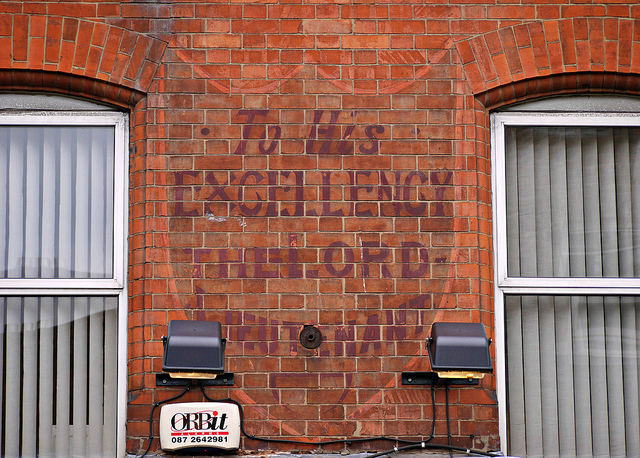
Next to Doheny and Nebitts on Baggot Street, I recently spotted a ‘ghost sign’ above Dowling’s Pharmacy. It clearly reads ‘To His Excellency, The Lord Lieutenant of Ireland’. Flickr user Mic V. has taken an excellent image of this ghost sign which shows it in better detail.

A search in the newspaper archives has not revealed much, but I’m sure someone out there knows the story of this premises or even has a photograph of it in a former life?

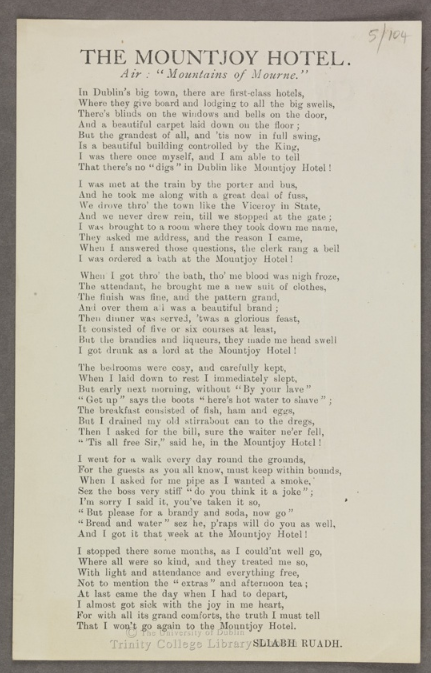
The Mountjoy Hotel, a satirical musical take on the ‘virtues’ of Dublin’s most famous prison, was written by Irish Volunteer Phil O’Neill (a.k.a. Sliabh Ruadh) in 1918. It was sung to the air of ‘The Mountains of Mourne’.

O’Neill wrote a book History of the GAA 1910-1930 in 1931 and was co-author of the Rally Round the Banner Boys book of ballads from around 1920.

Dominic Behan recorded an edited version of song for his 1963 record Peelers and Prisoners (TOP85).

Here is the original text:

The Mountjoy Hotel ‘song’. Credit – mysterypagination.wordpress.com

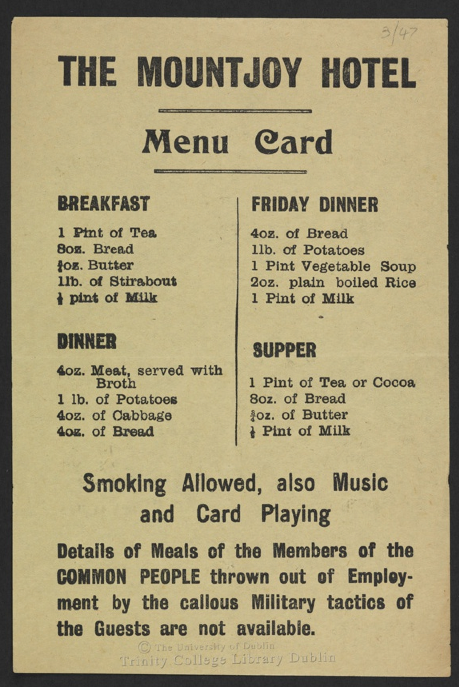
Also check out this fascinating ‘fake’ menu card drawn up by Republican prisoners for propaganda purposes – taken from The Samuels Collection in Trinity College Dublin.

The Mountjoy Hotel fake Menu Card. Credit – TCD via europeana.eu

Near TV Youtube Channel

Over the last nine months, Near TV, the community television component of the Coolock based Near Media Co-op has uploaded thirty videos onto Youtube. Quite a number should be of interest to our readers.

A short video in which Near TV talks to Dublin’s immigrant community about Gaelic Games:

A tour of the Casino at Marino, focusing on its architecture and the life of the designer James Caulfeild, 1st Earl of Charlemont:

A walkthrough of the magnificent Freemasons Lodge on Molesworth Street by Morgan McCreedy:

A tour of Glasnevin Cemetery by tour guide Shane MacThomáis:

‘Cycling With’

A newish blog which has really grabbed our attention is ‘Cycling With’, which sees Dubliners on their bikes sharing stories about the city they love. We were sent this video, which shows Architectural Historian Ellen Rowley going for a cycle, and I thought it was more than worthy of sharing here. I’ve always had an interest in Herbert Simms and we’ll some day do a brief feature in him for the site, but for now enjoy this excellent video.

Ellen Rowley is an Architectural Historian who lives with her family in Ballybough, Dublin.

We went for a cycle with Ellen and looked at the architectural heritage around parts of Dublin that often goes ignored, the architecture of the 20th Century and her special interest the social housing schemes by the former prolific city architect Herbert Simms.

Ellen recently compiled a book of essays on Irish Architecture “i.e. Patterns of Thought”.

Following on from yesterday’s look at the 1911 census, here’s a more comprehensive list at the number of atheists and agnostics in the census taken 10 years previously.

In 1901, there were 2 self-confessed Atheists and 20 self-confessed Agnostics in Dublin. The population was 439, 915. Perhaps not surprisingly neither of the 2 Atheists were Irish born. One was from Bradford and the other from the United States.

In 1911 this number had risen to 8 Atheists and 24 Agnostics. So that was a 300% increase in the number of Atheists and  20% increase in the number of Agnostics.

Here is the list:

Atheist bachelor James Honard (30), a servant from Bradford, working at 39 Dominick Street for Thomas McCormack, a Catholic Hotel Proprietor from Westmeath who employed three servants altogether.

Atheist James Honard (30) from Bradford.

Atheist Charles A Moore (35) , a Commercial Traveler from the U.S.A., boarding at 6 Wellington Quay.

Agnostic John Forsyth (46), a ‘Hand Town Bootmaker’ from Navan, Co. Meath, living with Roman Catholic wife and seven children at 4.1 Peters Row, Dublin 8.

Agnostic John Arnall (31), a ‘Metalliferous Mining Agent (Photography)’ from Surrey, England, living with his Catholic wife from London and two children at 15.2,  Grantham Street, Dublin 8.

Agnostic George William Baynham (24), a bank clerk from Dublin City, boarding with a mainly Presbyterian family at 41.2, Blessington Street, Dublin 7.

Agnostic Thomas Boyce (37), a Commercial Clerk at a Biscuit Factory from England, living with his Catholic wife Mary from Galway at 9.1 Eccles Street, Dublin 7.

Biscuit factory clerk and agnostic Thomas Boyce (37)

Agnostic Morgan Dockrell (17), a college undergraduate student from England, boarding at 5.3 Sandycove Avenue West, Co. Dublin

Agnostic Hugh B Faulkner (44), a man with ‘Dividends Interest’ from Dublin, living on his own at 13.2 Ulverton Road, Dalkey, Co. Dublin.

Agnostic John MaCallan (56), an Analytical Chemist from Dublin, living with his Presbyterian mother and two sisters at 14 Malahide Road, Malahide, Co. Dublin.

Agnostic Samuel Montague Martin (40), a Andytrical Chemist from Belfast, living with Presbyterian wife Minnie at 33 Sandymount Avenue, Dublin 4.

Agnostic Gustavys McAlpine (28), a Electrical Engineer from Egland, boarding at 50 Burrow, Howth, Co. Dublin in the house of Thomas Lanbtree (29) a Church of Ireland Railway Official from Co. Meath.

Agnostic Robert Robertson (22), single electrician, boarding at 39 Burrow, Howth, Co. Dublin the home of Thomas Ellis (37), a Catholic Clerk at a Railway Clearing House originally from Cornwall, England.
Agnostic Reginald Alfred Mitchell (31), a ‘L.L.S. Barrister-at-Law In Actual Practice’ from County Monaghan, boarding at 4 Upper Leeson Street, Dublin 4.

Agnostics Isabella Richardson (41), married, and her son Harold B (3), both from Dublin, boarding at 11 Bloomfield Avenue, Portobello, Dublin 8 in the house of Church of Ireland landlady Anna E Wolfe (50) also from Dublin.

Jews, Protestants and Agnostics boarding in Bloomfield Avenue, Portobello.

Agnostic John Strong (22), a single Engineers Apprentice from Dublin, boarding at 1 Martin Villas (?), the home of Patti Farlow (57), a Church of Ireland widow from County Wexford.

Agnostic John Edmond Walshe (54), his agnostic wife Lizzie (52) and their agnostic son Frederick Edmond (21) living at 3, Kimmage (Road?), Dublin 12. John was a retired printer, Frederick was a  Contractor Civil Servant.

Agnostic Widower Robert John Smith (44), a Bank Cashier from Dublin, boarding at 46.1 in Harrington Street, Portobello, Dublin 8, the home of Elizabeth Wannan (53), an Epescopelian Hotel Proprietress from County Wexford.

Athiest Widower Robert John Smith.

Agnostic John H Whyte (30), a carpenter from England, boarding in the home of William C Dunne, a Catholic Assurance Agent at 7 South William Place, Dublin 8.

Agnostic George Orr Wilson (70), a Land Owner from County Antrim, who lived with three servants at 73 Temple Road, Blackrock, Co. Dublin.

Today’s Irish Times article reported there has been ‘a four-fold increase in the number of people who said they had no religion, were atheists or agnostics, since 1991’ in Ireland.

While it was extremely rare, there were a small number of admitted ‘atheists’ and ‘agnostics’ in Dublin in 1911. As far as I can work out, a grand total of 32 (8 Atheists and 24 Agnostics). The population of Dublin was 480, 296.

While no one besides your family and the Census enumerator probably saw your form, it still must have been a massive step to put down either of these terms in 1911.

Approximately 7,004 people in Dublin are listed in the ‘other’ section when it came to religion. This means that either through misspelling or genuine belief they did not list any of the main eleven religions (Roman Catholic, Church of Ireland, Church of Scotland, Church of England, Presbyterian, Methodist, Independent, Baptist, Society of Friend/Quaker, Jew, Plymouth Brethren) and were not one of the 1,170 who refused to give any information on religion.

From spending a couple of hours trawling through this ‘other’ list of only 7,000 thousand people it seems quite a few, by accident, put down where they were born or their occupation in the space assigned for religion.

Others put down ‘IC’ meaning ‘Church of Ireland’ which wasn’t picked up while a huge large number misspelled Catholic and put down ‘R Cathrlick’, ‘Catorlick’, ‘R Catcholic’ ‘R Catolic’ or something similar. Quite a few were members of smaller Protestant churches like Episcopalian, Unitarian, Lutheran, Moravian, Wesleyan etc. who weren’t large enough to be included with the ‘big boys’.

However I was able to find a small handful of people who listed themselves ‘Atheist’ or ‘Agnostic’ in the 1911 census. I reckon this list is relatively comprehensive.

Here are some of their stories:

‘Atheist’ Martin Gertelesen (29) from Denmark, a Naval Engineer docked at Dun Laoghaire.

The ‘Agnostic’ Powell family from England living at 18 North Earl Street, Dublin 1. The head of the family, William (44), was a manager of a Boots pharmacy.

German Fanny Sophia Shields, (55) an ‘agnostic’, who lived with her Protestant Irish family at 12 Vernon Terrace, Clontarf, Dublin 3.

An English cooper and self-described ‘agnostic’ George Ford (24) boarding at 32.2, Montpelier Hill, Arbour Hill, Dublin 7 who lived with ten other people all of whom were Catholics or Protestants.

Robert Monteith (33) Commission Agent from Wicklow. An atheist, he lived with his Catholic family at 14.2, Monck Place, Phibsboro.

Agnostics John Forsyth (55) and son James (29), both Irish born bootmakers living at 1.1, Bride Street, Dublin 8. John’s other six (!) sons were all Catholic.

Agnostic father and son. Forsyth family, 1911.

A General Labourer and ‘agnostic’ by the name of Peter Ennis (26) who lived with his Catholic brother and mother at 4.1, Crampton Quay, Dublin 2.

James Canty (61), a porter at (James) Gate Brewery who was an ‘agnostic’ living with his Church of Ireland family at 5, Sweeney’s Lane [demolished 1930s].

Two English Agnostic Civil Servants in their 20s boarding with a Baptist family at 3, Ovoca Road, Portobello, Dublin 8.

Dubliner Michael Kavanagh (71), a self described ‘secularist’ and boot maker, living with his Catholic wife and kids at 15.1 South Anne Street, Dublin 2.

Michael Kennedy (71), self confessed secularist.

Martin Joseph Burke (34), from Dublin, an architect with the ‘H M Office of Works Ireland’ and an ‘agnostic’. Living with his German Catholic wife and child at 8, Eglinton Terrace, Donnybrook, Dublin 4.

Dubliner Joseph Patrick Savage (41), a clerk at a bakery and ‘agnostic’, living with his Presbyterian wife and family at 3.2 , Beechwood Avenue Upper, Dublin 6

Hilary Martin O’Kelly (65), Dublin born retired ‘Superintendent of Telegraph in India’ and ‘agnostic’ living with his Protestant wife and Catholic servants at 19, Leeson Park, Dublin 6.

Armagh-born ‘Agnostic’ William Henry St. Amond (59), a Commercial Traveller of Millinery [Animal] Furs, living with his Scottish Presbyterian wife at 6.1, William’s Park, Rathmines, Dublin 6.

Dubliner William Meledy Jr. (31), ‘agnostic’ and ‘Coach Body Maker’, living with his Catholic dad and brother at 5.4, Chatham Row, Dublin 2.

William Meledy Jr, 1911

Then there’s  English born ‘atheist’ William Towney (26), lamplighter, who was living with his uncle and family at 31.1 Middle Gardiner Street, Dublin 1.  His uncle James, a railway guard, and the rest of the family were Catholic.

Charles Perr (62), ‘atheist’ and photographer from England, who was boarding with a family at 13.1 Sarsfield Street, Dublin 7.

An English ‘commerical traveller’ who dealt in ‘ammunition’ by the name of Leonard Harcourt Labone (26) his wife Katie and their infant son who were all ‘atheist’ living at 9 Whitton Road, Terenure, Dublin 6.

‘Agnostic’ Arthur Corcoran (22), an ‘Abstractor Irish Land Commission Civil Servant’ from Dublin, living with his family at 11.3 Amiens Street, Dublin 1.

An English ‘coffin maker’ John Henry White (4) who listed himself, his wife and their small children as ‘agnostic’. They were living at 10.3 Camden Street, Dublin 2.
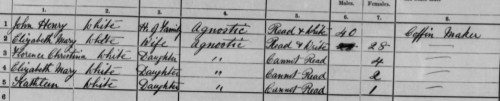
The job might have had something to do with it? Agnostic coffin maker John Henry White.

‘Agnostic’ Victor Lionel Manning (26), a Civil Servant from Dublin, living with his aunt at 26.2 Mountpleasant Square, Dublin 6.

A London bachelor by the name of John Burke (34) who was ‘Goods Porter at Railway Station’ and an ‘atheist’ living at 3.4 Bishop Street, Dublin 8.

Englishman Edward Berham Anderson (25), a ‘Distiltery Research Chemist’, living with his wife Beatrice who were both ‘agnostic’ at 18 Gilford Avenue, Sandymount, Dublin 4.

An ‘agnostic’ Scottish civil servant, Robert V Laurenson (22) boarding at 21.4 Claremount Road, Sandymount, Dublin 4 who worked as a ‘Second Division Civil Servant’.

Dublin born Philip McGrath  (47) a ‘Coach Body Maker’, who listed himself as ‘atheist’ while his wife and four children opted for ‘Roman Catholic’. The McGrath family lived at 25.4 Blackhall Street, Dublin 7.

Atheist Dubliner Philip McGrath, a Coach Maker, with his Catholic family. 1911

‘Agnostic’ Robert John Smith (54) from Dublin, a ‘Bank Cashier’ living with his Catholic daughter Mary Hutchison at 25 Crumlin Town (?) , Terenure, Dublin 6.

Cyril Dugdale (25) Civil Servant and ‘agnostic’ living at 32, St. Columba’s Road Lower, Drumcondra, Dublin 9 with his Norwegian Lutheran wife.

Single ‘atheist’ Sydney Andeson Dougherty (21), a Dubliner with no occupation, living with his mother at 17.3 Charlemont Place, Dublin 2.

Albert Edward Davis (25), Insurance Agent from Limerick and ‘agnostic’, living with his English Protestant wife at 5, Hollybank Avenue, Rathmines, Dublin 6.

‘Agnostic’ George William Parker (49), a Teacher and Author with a M.A. in Mathematics from Trinity College, who lived with his Church of Ireland wife and family at 19 Temple Gardens, Milltown, Dublin 6.

Robert John Smith, bank cashier and agnostic.

English John Lowe Featherstone (49) and a Civil Engineer, who lived with wife and two sons – all ‘agnostic’ at 73 Kenilworth Square, Rathmines, Dublin 6.

English born Percy Giènd (26) who put down ‘nothing at all’ under religion. The night the census was taken he was in the home of John Cairns, a poulter from Cavan, at 63 Lower Gardiner Street, Dublin 1.

Then there’s young Desmond (6) and Mary (4) Kidd who have ‘not yet decided’ on their religion. Cute! Living with their Protestant parent at 38, St. Kevin’s Park, Rathmines, Dublin 6.

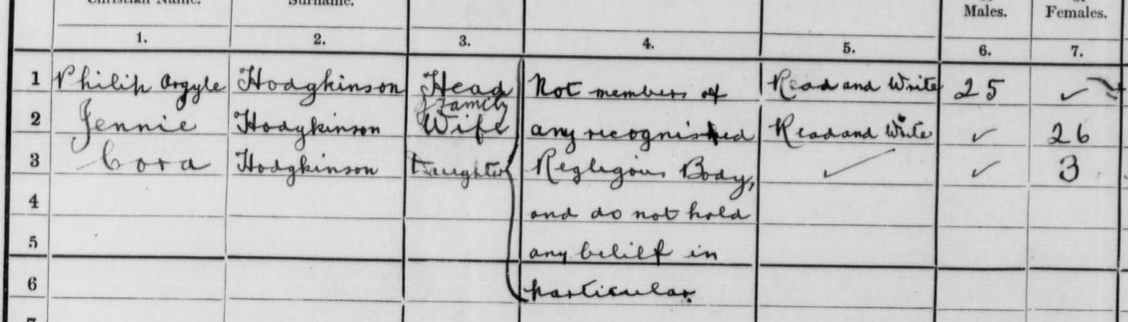
Finally, the English family Hodgkinson living at 22 Swords Street, Arbour Hill, Dublin 7 who all put down ‘Not Members of any Recognised Religious Body and Do Not Hold any Belief in Particular’. Atheist by another name!

Non-committed Hodgkinson family, 1911

I’ve found a few interesting immigrants living in Dublin in 1911 thanks to the great National Archive of Ireland (NAI) census website.

– A Swedish ‘Masseur’ by the name of  Kent Magnus Lindeberg living with his Scottish wife and Dublin born daughter in 19 Upper Leeson Street.

– Norweigian born Carl Ludwig Dybing, an Adjutant in the Salvation Army, living with his English wife Clara Dybing in 3 Mountpleasant Parade, Rathmines.

–  A 63 year old ‘hairdresser and perfumer’ by the name of Mathias Greiveldinger Prost from Luxembourg who lived with his Cork born wife and six children at 24 St. Stephen’s Green.

– There was only one Dutch person living in Dublin in 1911 and that was Fritz Hintre, a turner, living at 151 Rialto Cottages with his Irish wife and three children.
– There were eight Portuguese, mainly students, living in Dublin and only seven immigrants from Hungary. Three Greeks, none of which had Greek sounding names and seven Danish of at least three were sailors. A sizeable number of 74  Austrians, many of whom were waiters.

I’ll do something on unusual religions tomorrow.

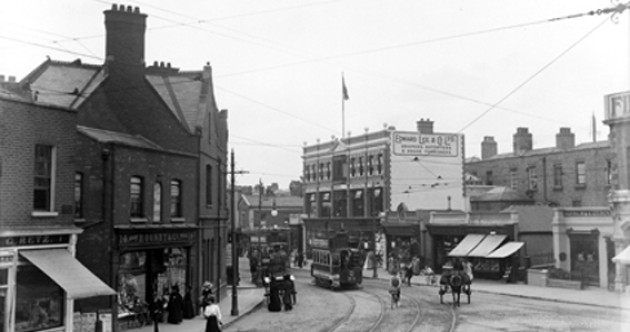
Rathmines, 1911. (thejournal.ie)

The UVF in your pocket.

I’ve always been fascinated by this coin, which I was given years ago by my father. Such coins were once pretty common in Dublin, and while most wouldn’t have thought of hanging onto them, a few people did. Frequently Dublin shoppers would look at their coinage and find the likes of ‘UVF’, ‘UDA’, and ‘REM 1690’ (Remember 1690, a reference to the Battle of the Boyne) upon their coinage.

UVF stamped coin (1961 issue date)

In recent times, it seems like dissident republicans are the ones largely responsible for the stamping of coins, and I noticed a recent Belfast Telegraph article dealing with this issue, as ‘RIRA’ has been appearing on currency in the north of Ireland.

A quick search in the archives revealed a fantastic piece in The Irish Times in February 2003 by Joe Armstrong, in which he noted that:

Perhaps the Loyalists were tapping into an earlier nationalist tradition, given that some early 19th century British coins were counter struck with the slogan ‘Repeal’, referring, of course, to the aspiration to repeal the Act of Union between Ireland and Britain.

One coin referenced in the article was said to be stamped ‘BOMB DUBLIN’, although I’ve not been able to find an image of this particular counter struck coin. The earliest reference to the vandalised coins I can find is from the Irish Independent, in an article dated December 1st 1969, in that article it was noted that a boycott of goods from the Republic in the north was intensifying, and that “the boycotting of Irish money had reached the stage that some Irish 2/- pieces are turning up stamped U.V.F”

Kapp and Peterson

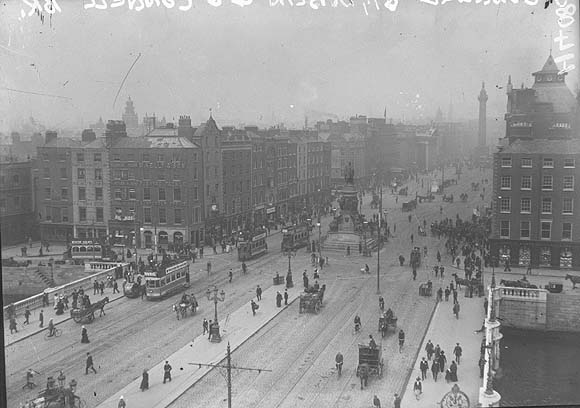
Kelly’s on the corner of O’Connell Street (then Sackville Street) and Bachelors Walk, which later became Kapp and Peterson (Image: NLI)

I noticed recently while walking through the city that Peterson pipes have moved from their Grafton Street HQ to a new premises on Nassau Street, just around the corner. The Dublin institution began life under the Kapp name, before becoming Kapp and Peterson, and later merely Petersons.

Frederick Kapp, from Nuremburg in Bavaria, opened a shop in the late 1870s in Dublin at 53 Grafton Street, which sold Briar and Meerschaum pipes. In time, this business would become known to generations of Dubliners as Kapp and Peterson, with the Peterson name coming from Charles Peterson, a Latvian immigant hired by Fredrick Kapp. In time, the Peterson family would buy-into the company and Kapp and Peterson was born.

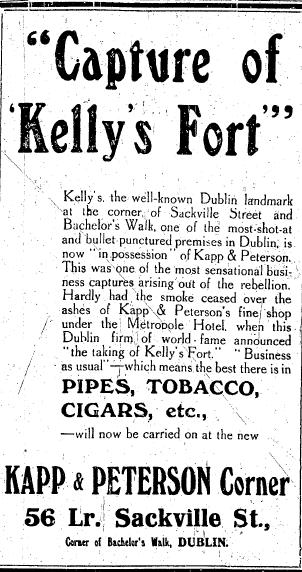
For many years Kapp and Peterson operated from a business premises at the corner of O’Connell Street and Bachelors Walk. This premises was damaged during the Easter Rising of 1916, as the below newspaper piece shows, and was acquired by the company soon after the rebellion.

Image via the fantastic http://pipedia.org/

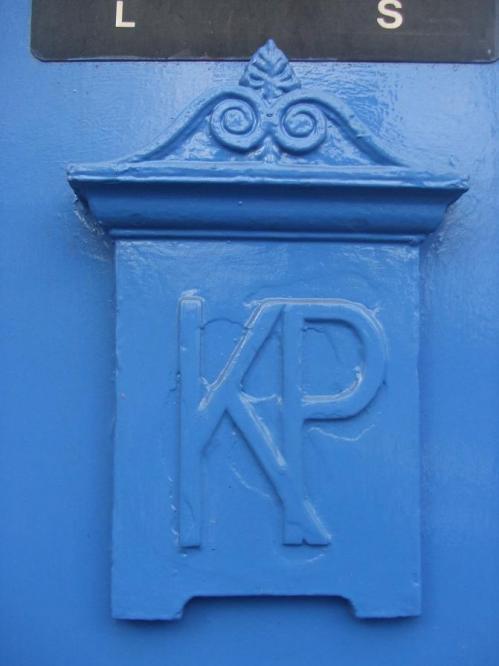
Passing this building today, Dubliners may not notice two excellent little features that hint at its former life, which we have photographed below. In the woodwork of what is now the Daniel O’Connell Newsagents, the letters KP can still clearly by seen:

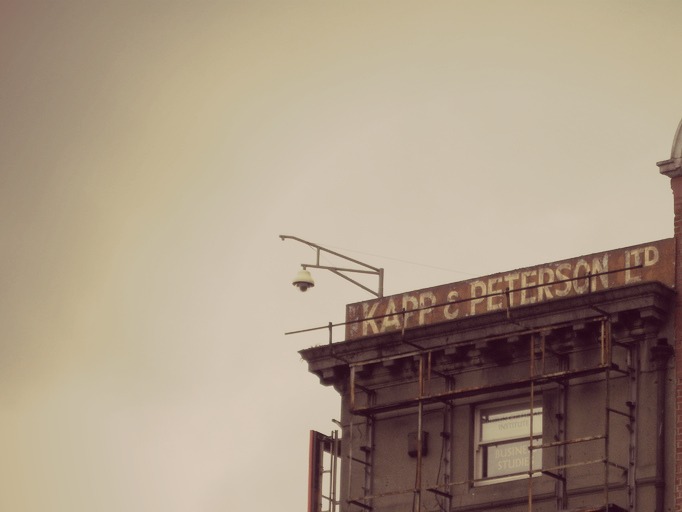
Above the building, the name ‘Kapp and Peterson’ is still perfectly visible too.

Hopefully both of these features will be preserved well into the future, as they were the kind small but historic important details in a city that can often be lost.

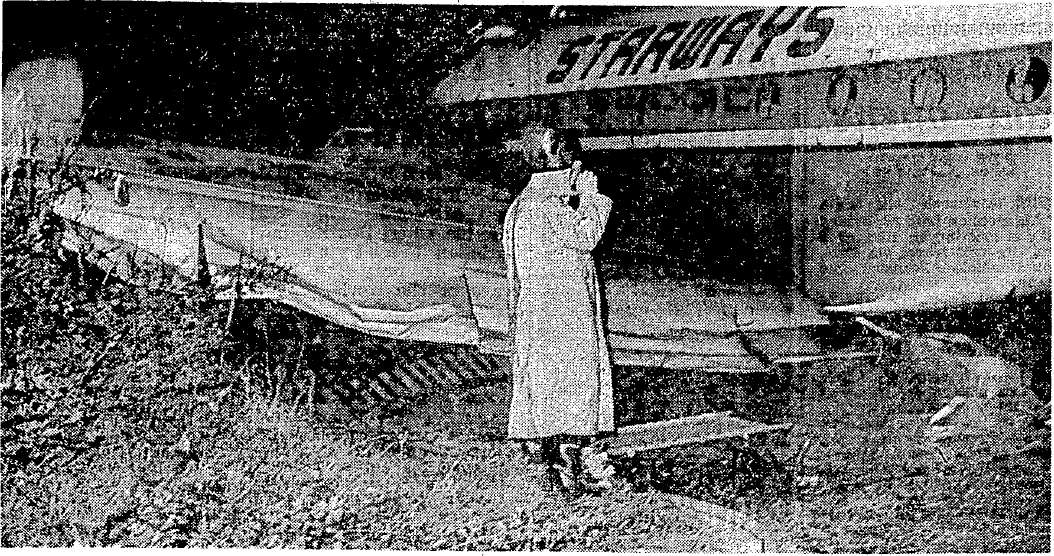
In September 1961 an Aer Rianta flight from Lourdes made a surprising landing, coming to a halt in the middle of the Dublin to Belfast road, near Cloughran. Incredibly, the 69 passengers and 4 crew on board avoided any serious injury, and about a mile and a half from their planned landing location they emerged from the plane.

Irish Press image of the plane resting on the roadway.

The plane was operated by Starways, a Liverpool based company, and was carrying Irish pilgrims. Heavy rain on the night of Tuesday, September 19th was blamed for the incident. The Irish Press described the landing, noting that “it skidded along the ground and crashed through a hedge about half a mile from the airport”. When the plane came to a halt on the road, its nose was in a ditch on one side of the road,and its tail on the far side. The captain of the plane was Ian Johnson McClean, a Glasgow native.

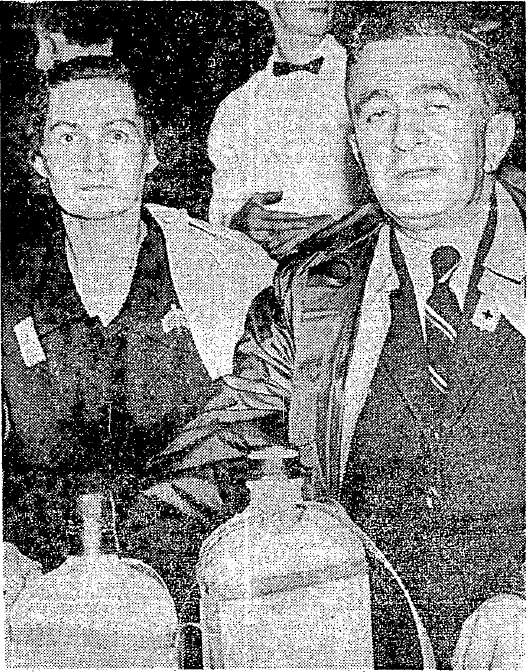
The plane came within twenty yards of striking a car, and among those on board were some members of the clergy. One couple from County Offaly attributed their survival to the bottles of Holy Water they were carrying at the time!

Holy Water saves the day (Irish Press)

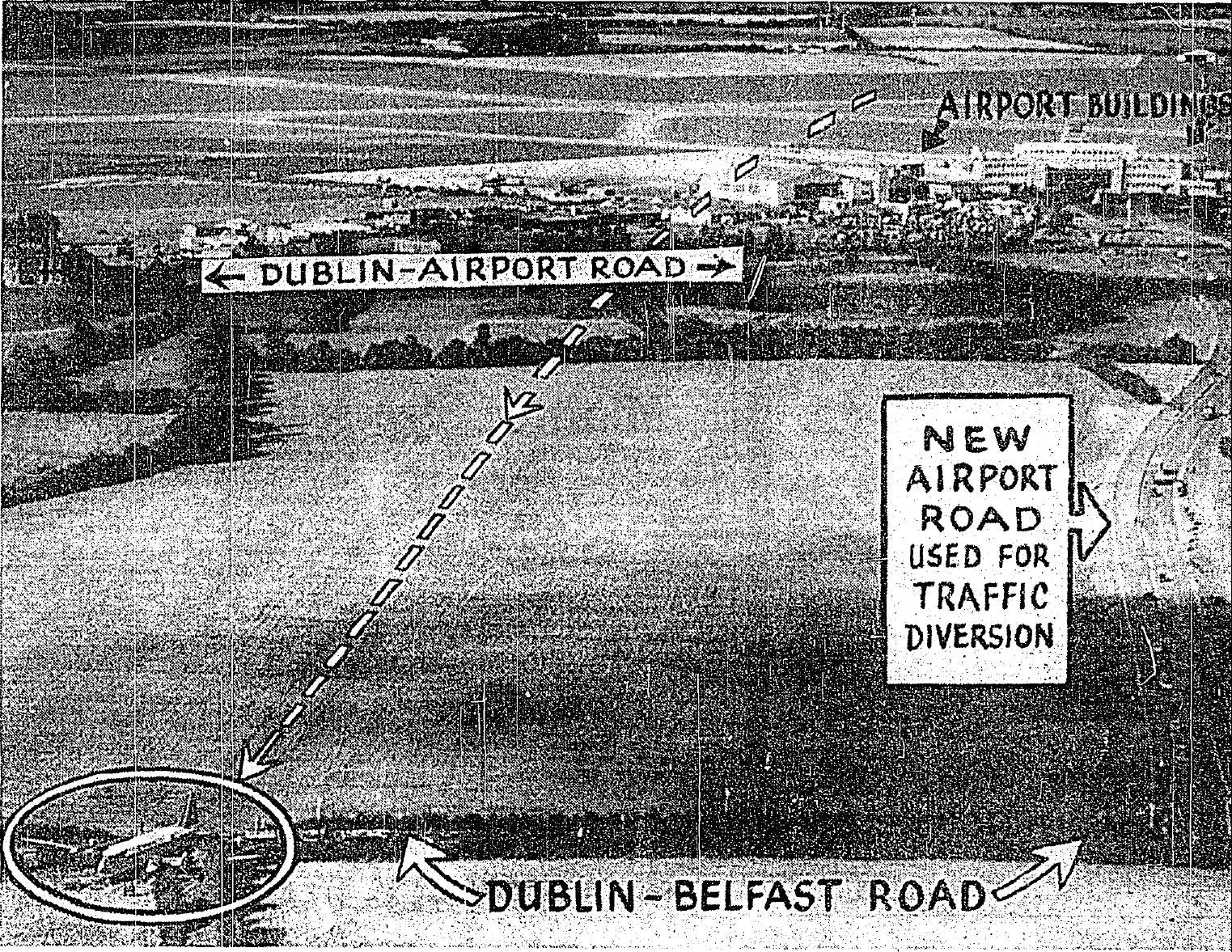
In the aftermath of the crash, the investigation into the incident revealed that the plane had almost struck the Airport Control Tower, and this Irish Independent image gave a good idea of just how serious the failed landing was, showing the distance between the airport and the place where the plane came to a halt. Unsurprisingly, most on board thanked ‘a miracle’ for their survival!

(Irish Independent).

Four years before the launch of the The Cat Laughs Comedy Festival in Kilkenny and two years before The Liffey Laugh Comedy Festival in Dublin, there came “Com-Fest ’90”.

Part of the Dublin Theatre Festival 1990, sponsored by Tenant’s Laugh and in association with Serious Productions, it was described as “Ireland’s First Festival of Live Comedy” and offered nine nights of stand-up between the 3rd and 13th of October 1990.

The international highlights were British left-wing comedian Jeremy Hardy and, his then wife, American actress and comedienne Kit Hollerbach.

Two of Ireland’s greatest sketch teams of the time were represented; Mr Trellis (Kevin Gildea, Ardal O’Hanlon and Barry Murphy) and The Quacksquad (Joe Rooney and Paul Tylak) as well as a number of Irish comedians like Ian MacPherson, Owen O’Neill, Jon Kenny who would have been considered veterans at this stage.

Then there was Sid Sinatra (a.k.a Alex Lyons who now does a lot of scriptwriting for the BBC), Mark Staunton who went onto make films, Karl MacDermott, who gave up the stand up for scriptwriting around 2000 and Niall MacAnna, now special events director with MSN.

Last but not least there were the ‘newish kid on the block’ –  Sean Hughes, Morgan Jones and Dermot Carmody who all went onto to do big things to varying degrees.

Finally, the multi-talented Shay Healy who acted as M.C.

While The Olympia and The Project Arts Centre are obviously still on the go, ‘The Goldfish Bowl Comedy Club’ in Whelans and ‘Laugh At The Loft’ in the Purty Loft in Dun Laoghaire only lasted for a couple of years after.

Dermot Carmody went onto to win the ComFest ’90 Laugh Trophy and the £1,000 prize fund.

Com Fest poster 1990 (BM collection)

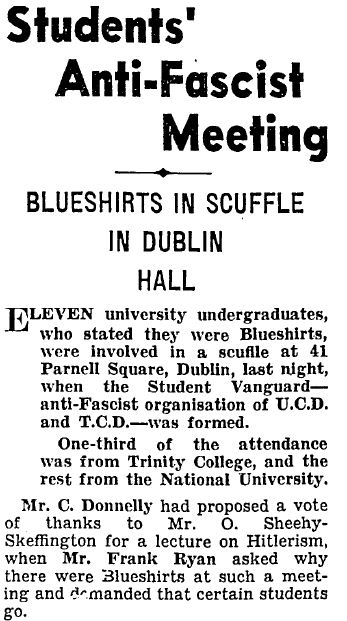
Given that this week has seen the unveiling of a mural and the erection of a plaque in memory of the Irish anti-fascists that went to fight in the Spanish Civil War 1936-39, it was great to come across the clipping below when doing research for a completely different article. Reading like a veritable who’s who of revolutionary politics, Charlie Donnelly, Frank Ryan, and the sons of Thomas McDonagh and Francis and Hannah Sheehy Skeffington all appear in an article dated May 12th 1934.

The article focuses on the foundation of a society called Student Vanguard at a meeting in a room in 41 Parnell Square. The society, a joint effort between UCD and Trinity students, unveiled its manifesto at the meeting, stating:

The Student Vanguard sees in Fascism in Ireland the bludgeon of the reactionary elements against the struggle for the national and social liberation of the Irish people.

The meeting did not go entirely to plan though, and eleven Blueshirts made their presence known at the back of the room causing a scuffle to break out and the meeting to be interrupted. Bizarrely enough, it looks very much like the Blueshirts were present, somewhat under the blessing of Charlie Donnelly, who would later fight and die in Spain, on the Republican side. A Mr. K. Patton from UCD, who declared himself a Blueshirt stated at one stage “We promised Mr. Donnelly we wouldn’t cause any trouble here tonight.”

From the Irish Press, Saturday, May 12, 1934

Frank Ryan later apologized in the meeting stating that if it was the case that the Blueshirts present were indeed there under invite, then he retracted his demand for them to leave. At the meeting, it was also stated that “Fascism (means) political, economic and cultural repression; distortion and restriction of education; the crushing of all progressive movements; perpetuation by force of ‘the present economic anarchy,’ unemployment and distress.”

Despite what seemed to pass off as a rift between two groups of students, settled by a polite handshake and an apology, a couple of years later, men from both sides would be making their way to Spain to fight on either side of the Civil War. The Blueshirts left with a fanfare, and came back without a loss in combat and with their tails between their legs. Some on the Republican side, like Michael O’Riordan and Bob Doyle would come back alive, others, like Charlie Donnelly would not.