Feeds:
Posts
Comments

1865 Advertisement for the Northumberland Hotel. (Falconer’s railway, coach, car and steam navigation guide for Ireland)

The above advertisement from 1865 notes that the Northumberland Hotel was “the most central in the City, being within a few minutes walk of all the Public Buildings”. The Northumberland Hotel went on to become Liberty Hall following its purchase by Jim Larkin of behalf of the trade union movement.

The prosperous Classon family in Dublin had been responsible for the construction of the hotel, and historian J.L McCracken noted in his brilliant study New Light at the Cape of Good Hope: William Porter, the Father of Cape Liberalism that John Classon, who managed the firm Classon and Duggan:

built on Eden Quay the Northumberland Buildings which housed stalls for the sale of fruits and other goods, offices, a weighbridge, a bath-house and a chophouse. He also built the Northumberland Hotel in Beresford Place.

McCracken’s study includes this illustration of the hotel:

From ‘New Light at the Cape of Good Hope: William Porter, the Father of Cape Liberalism’

At the time the 1865 advertisement above was taken out, the proprietor was listed as J.C Joseph. We can compare and contrast prices for the hotel with other Dublin hotels of the time through the listings below. Note that this list provides information on the cost of breakfast, dinner, tea, bed, private rooms and attendance costs in the hotels of the Dublin of the time.

Dublin hotel listings 1865

Continue Reading »

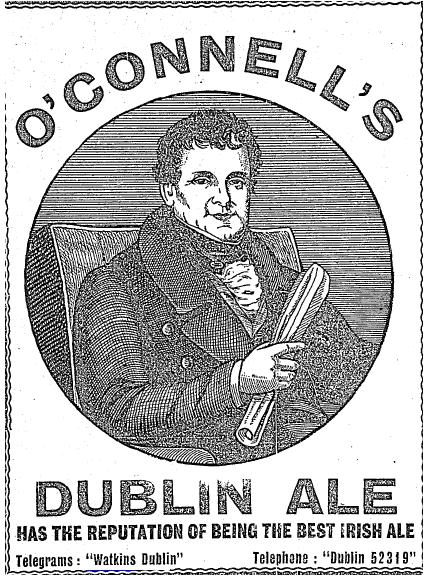
You won’t find this on tap in Dublin anywhere today.

Walking through Temple Bar, you can’t help but spot the fantastic ‘Beoir’ stickers in the windows of pubs, telling the punter that the establishment offers a selection of Irish craft beer. They are a fantastic and welcome addition to the front of Dublin pubs, and give hope that an era of new selection and taste for the Irish pub frequenter is upon us. What Daniel O’Connell failed to do (that is eh…take down Guinness in the city), Irish craft brewers may manage in time. Of course, I love a few pints of plain as much as the next Dubliner, but diversity is the spice of life.

Our pubcrawls have taken us from Windy Arbour to Lucan and everywhere in between, but I thought rather than look at a geographic location I’d go for a theme. Could we manage an entire pub crawl without a pint of Guinness or Heineken being consumed? I thought it worth a shot. Could we do it without crossing the River Liffey and staying on the northside? Challenge accepted.

The numbers were low at the outset. I’m not really surprised, as I’m up to my eyes at the minute and I don’t think I made the same gallant effort to recruit troops as the others have on past efforts. Still, anything over a dozen people entering a pub can resemble a riot and not a pub crawl, so perhaps starting with six and ending with around ten isn’t a bad days work in terms of numbers. The route I had planned would take us from The Brew Dock opposite Connolly Station to The Black Sheep on Capel Street, with plenty of variety on between.

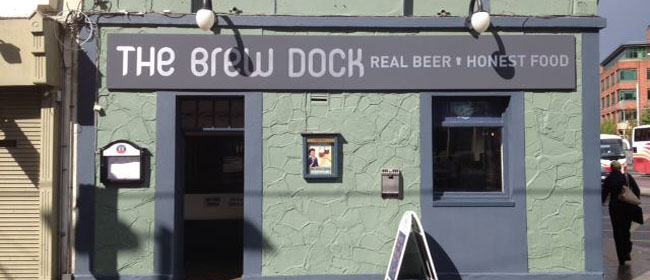
‘The Brew Dock’ (From official site)

The Brew Dock occupies what was formerly home to Kate’s Cottage opposite Connolly Station and within pissing distance of the IFSC. Kate’s Cottage always struck me as a real ‘locals’ establishment, and the outside is unrecognisable today. The folks behind Against The Grain are responsible for this new effort. Actually, they’re behind much more than that. Against The Grain, The Black Sheep, The Brew Dock and a host of brilliant Galway pubs are part of the one family tree.

‘Life is too short for crap beer’ reads the blackboard behind the counter. The selection can knock you back a bit, but we run with 5AM Saint from Brew Dog in Scotland. It’s become a CHTM favourite. It’s a damn good red ale, 5%, and something we’ve been drinking for a good while now and enjoying. It’s great to see it on tap. The only problem? A pint comes in at over €6.

Now, of course you get what you pay for and all that, but €6 for a pint is a bit much and it’s only when Ci draws by attention to it that I notice. It’d be a pricey pubcrawl at that rate across the board. Still, this is a great pub, and there’s a selection of beers at a variety of prices, and the offer of a beer of the week for €4. They seem to have a good line of coffees on offer too, and follow the company standard of offering two-for-one dinners once a week. We like this one. Will it take off and enjoy the success of its sister established Against The Grain? Who knows. The IFSC is a ghost town in many ways, it might come down to the locals warming to the change.

The company seem to have a ‘standard theme’ for their pubs, I’d like to see a bit of variety on that. There’s nothing wrong with some local history and snaps on the walls of a pub. This is a very welcome addition however, and shows that even closing inner-city pubs present an opportunity for something new.

We take off for Dorset Street and WJ Kavanagh’s. It is pissing rain, and the walk feels a lot longer than it probably is. We’d been here before. It was a decent boozer with a good pint, and a bottle of the cringy Michael Collins whiskey sat in the window back then in March 2010. Today, it’s
following the trend in Dublin at the minute and it boasts a whole new range of taps and bottles.

Continue Reading »

Released this month, 30 years ago. Described as the only song ever written in Ireland about the Leaving Cert.

The single was recorded at Lombard Sound Studios, produced by Liam Hurley, engineered by Philip Begley and released on Libra Records.

The Alsations (c1979 – 1986) were a seven piece Dublin Pub Rock band who released three singles and gigged extensively during their seven year career.

From Irishrock.org

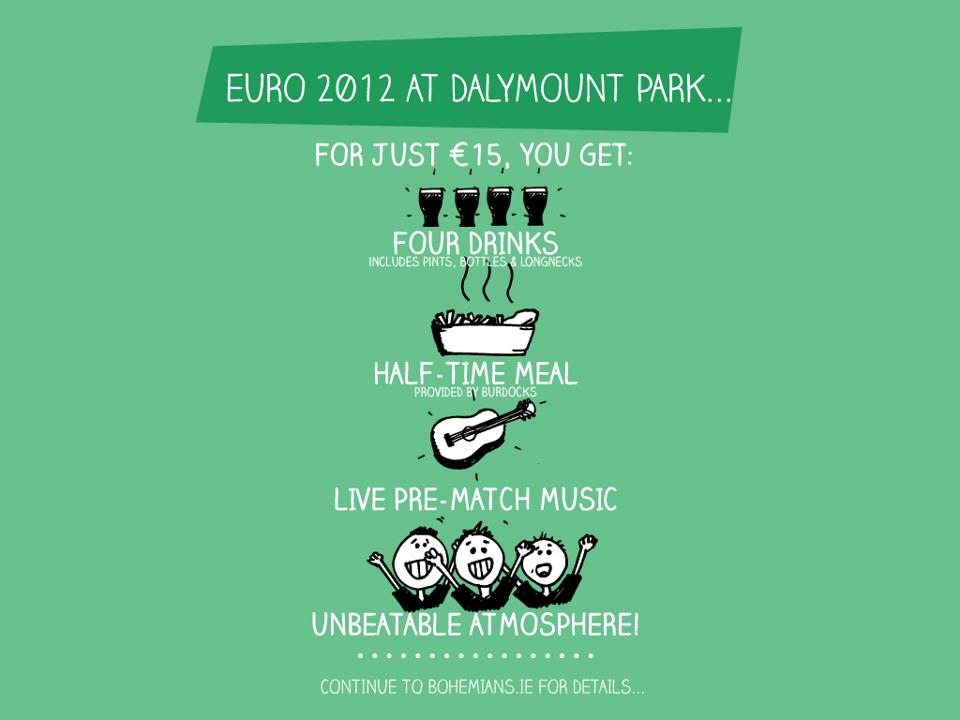
It looks like the folks at Dalymount Park are miles ahead of the competition with this offer for the upcoming Euro 2012 competition. Dalymount of course was once the home of the national side, and saw some hugely important moments in Irish football history. It’s current condition is a national disgrace. There’s more information on the deal at bohemians.ie

I reckon it has to be the No. 16 which goes from Kingston (Ballinteer) to Dublin Airport. A total of 31 stops. At least 25km.

Anyone know of a longer route?

16 bus journey

International coverage of the Easter Rising in Dublin has long fascinated me, and I have a decent collection of newspaper reports from abroad in the immediate aftermath of the rising. One of my favourites is the Portland Daily Press for May 1 1916. It reported that German officers bodies had been found in Dublin, and also reported on local expressions of support with the rebels among the Irish community in the U.S. The papers report about the “Countess of Markievicz” is interesting, noting a supposed eyewitness account of her shooting and killing a guard in front of Dublin Castle. It’s fascinating to see how news travels and is distorted or in some cases completely fabricated.

Below are some reports from the paper:

FIND OF BODIES OF TWO GERMAN OFFICERS AMONG DUBLIN DEAD.

London, April 30- Three passengers who arrived on this mornings Irish mail steamer, had an opportunity to observe the situation in Dublin at 6 o’clock Saturday evening. Just before sailing from Kingstown, two hours later, they heard a report of the unconditional surrender of the rebel leaders. Earlier in the day the lull in the fighting was attributed to a shortage in the rebels’ munitions. At the same time this reported seemed to be be belied by the sound of heavy artillery and machine gun fire, which was distinctly heard as the ship cast off.

A young officer living near Dublin, told of circumstantial reports of the findings of the bodies of two German officers with the rebel dead in Sackville Street. The representative of a large manufacturer of engines and machinery, who took an exhibit to Dublin for the spring show scheduled at the Ballsbridge grounds, which was subsequently commandeered by the military, brought interesting and fresh news.

NEWARK MEETING VOICED APPROVAL OF REVOLT IN DUBLIN

Newark, N.J, April 30- A resolution was adopted at a meeting of Irishmen here tonight approving the rebellion in Dublin and asserting that in the present crisis it would be a crime to “sit complacently by with sealed lips and palsied tongue” while the “enemy of centuries” bound their native land “to the chariot of empire”.

“To claim that even Home Rule has been secured for Ireland is to impeach our intelligence and make short of our credulity” said the resolution. “We have just reason to be skeptical of England’s good faith, and, if we were satisfied with Home Rule, which we are not, we should have to see some tangible results other than the suppression of newspapers that express the true Irish feeling, the denial of the right to emigrate, and the imprisonment, banishment and enforced conscription of Irishmen, before we would be convinced that English hypocrisy was a thing of the past.”

Continue Reading »

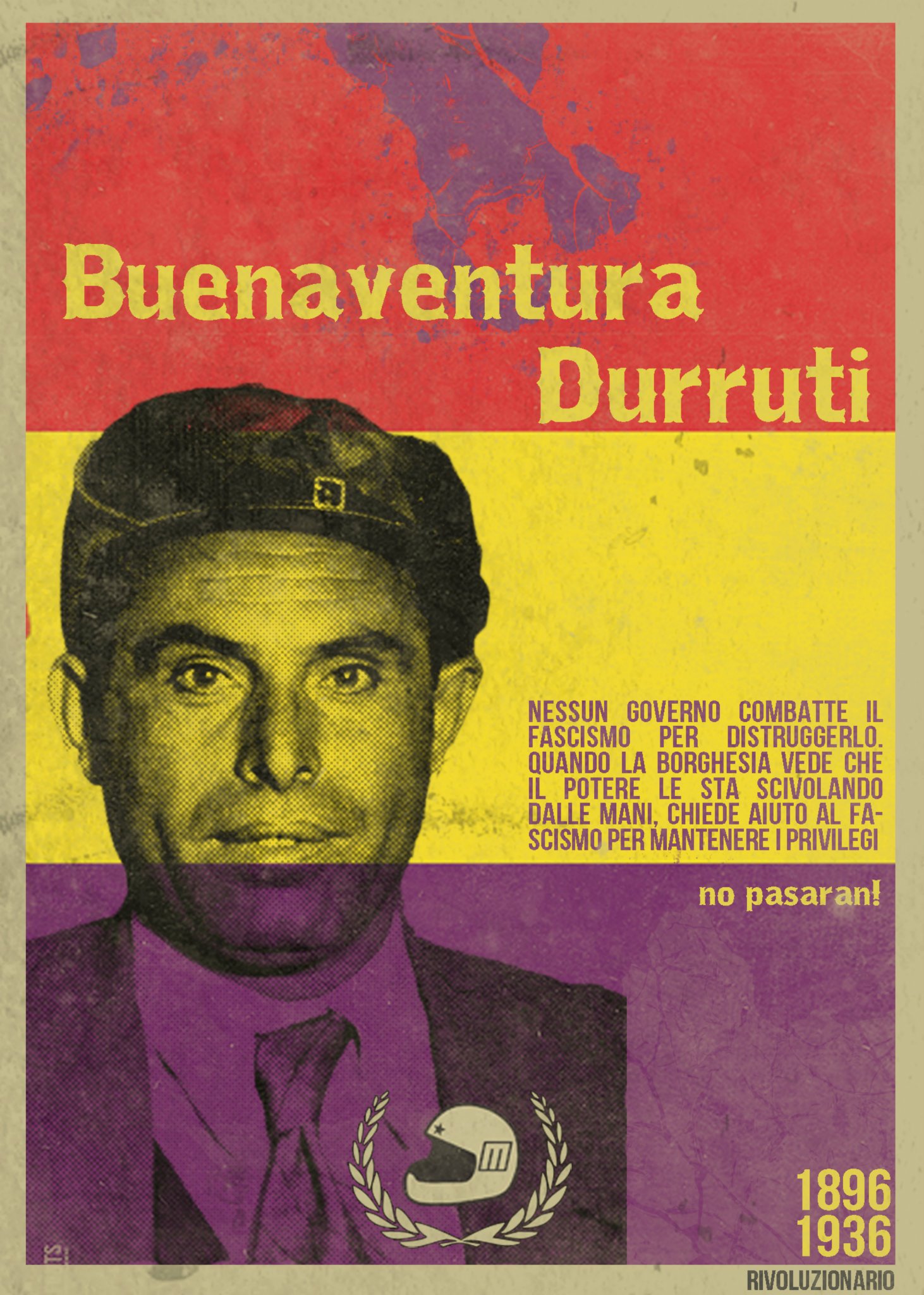
Militant (Italian group)

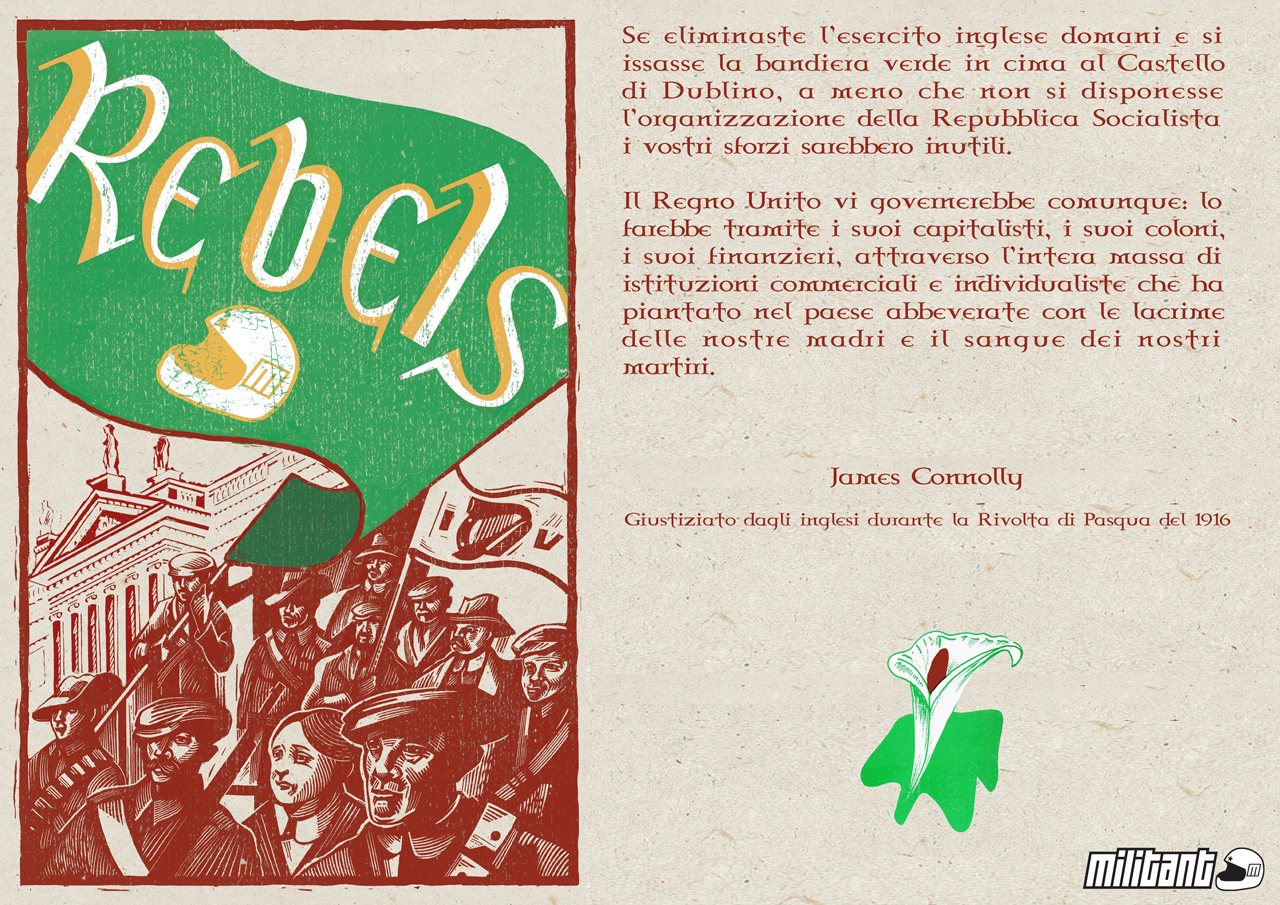
Some nice agitprop from Italian left-wing group Militant.

The James Connolly image is based on the cover of Fearghal McGarry 2011 book ‘Rebels Voices from the Easter Rising’.

The quote is as follows:

If you remove the English army tomorrow and hoist the green flag over Dublin Castle, unless you set about the organization of the Socialist Republic your efforts would be in vain. England would still rule you. She would rule you through her capitalists, through her landlords, through her financiers, through the whole array of commercial and individualist institutions she has planted in this country and watered with the tears of our mothers and the blood of our martyrs. – (Shan Van Vocht January, 1897. Reprinted in P. Beresford Ellis (ed.), “James Connolly – Selected Writings”, p. 124.)

James Connolly – Militant

Durruti – Militant

Chess board – Militant

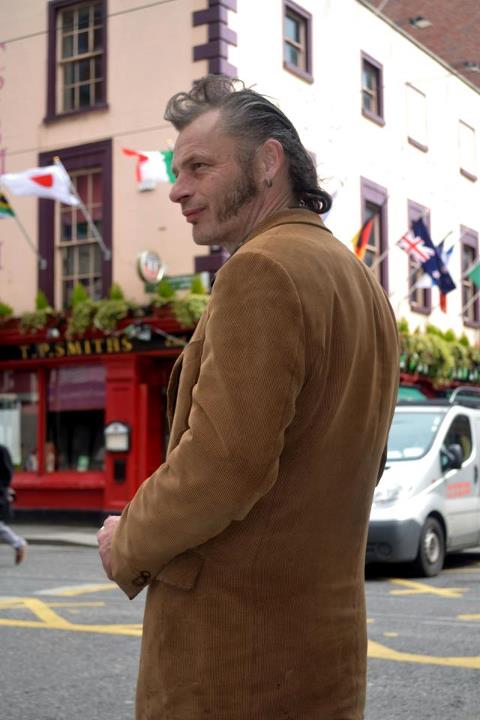
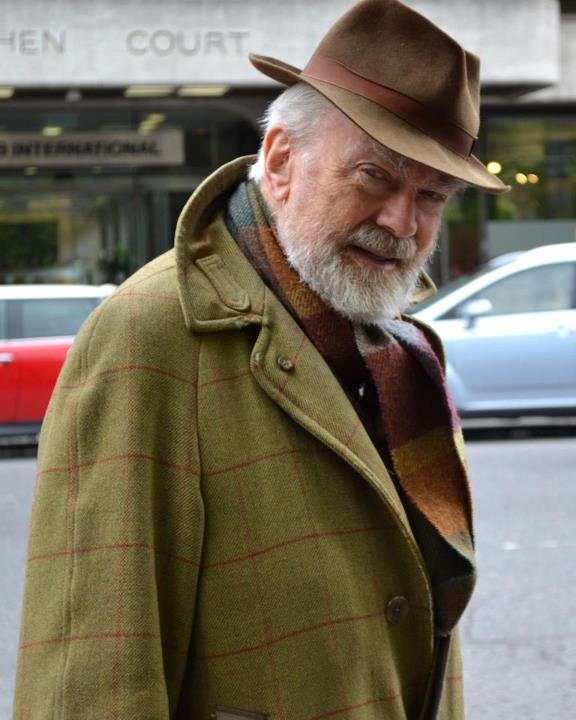
‘Humans of Dublin’

I’m a big fan of the Facebook page ‘Humans of New York’, and in excess of 118,000 other people are too. It ‘s a fantastic idea, photographing New Yorkers as they go about their business, and in many cases giving a brief bio or background information. In the last few years there was an explosion in ‘street style’ blogs, but they tended to say nothing about anything beyond where someone bought their jeans.

I stumbled across ‘Humans of Dublin’ today. A relatively new Facebook page, with a modest following of just under 800 users, but deserving of much more. Pop over for a look. The below are just a selection of images from the site. We wish them every success.

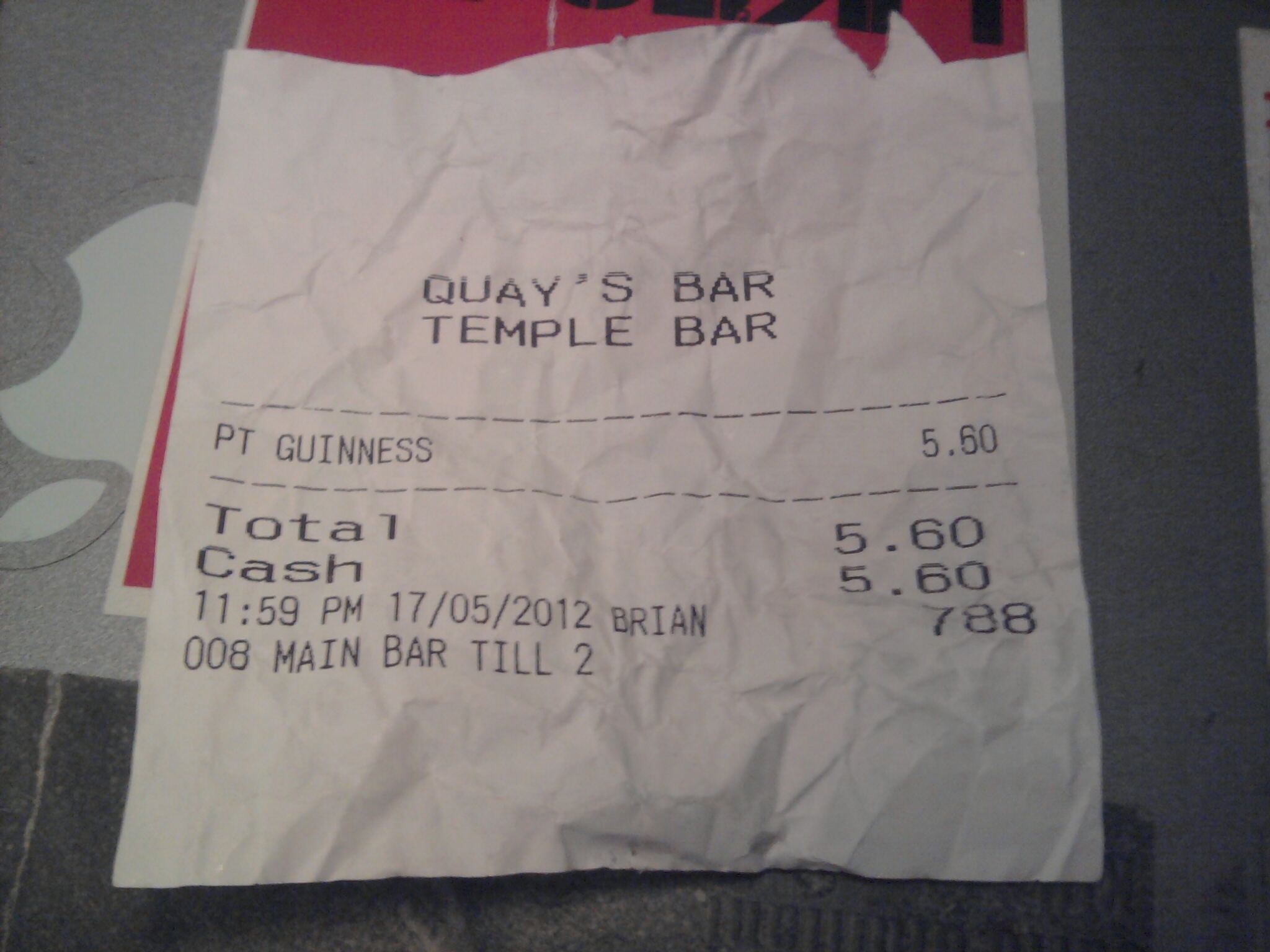
Competition for the most expensive pint of Guinness in Dublin here, I somehow found myself in The Quays in Temple Bar recently and was obliged to pay a staggering €5.60 for a pint. Its one of those pubs with the bad kind of trad blaring out at three in the afternoon so you’d expect it to be that bit more expensive than normal but… €5.60?!

Whilst there, we got chatting to a couple from Paris who asked us if these were “typical Dublin prices?” When someone from Paris complains about the price of a pint, you know you’re doing something wrong…  Anyone else know of a more expensive one?

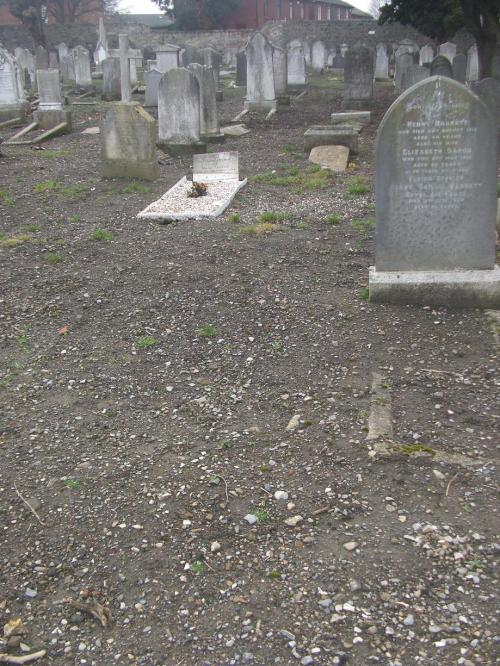
The unmarked final resting place of Captain Ingram of the Dublin Fire Brigade.

This is a monumental year for the Dublin Fire Brigade, with it marking 150 years in the service of the people of the capital. Yet many will be surprised to hear that the first Chief Officer of the Dublin Fire Brigade, Captain James Robert Ingram, is today buried in an unmarked grave in Mount Jerome Cemetery. Recent research has brought to light the fact that Ingram, who modelled the first Dublin Fire Brigade on that of New York City, died not fighting the flames of Dublin but rather due to tuberculosis.

Dublin has had provisions for fighting fires since the late sixteenth century, indeed Parish churches were required to keep buckets and ladders in an ordinance of 1592, but the city itself purchased its first fire engines in 1711. In 2011, the 300th anniversary of this event passed the city by without being marked in any way. Saint Werburgh’s Church on Werburgh Street boasts the oldest surviving fire appliances in the city. Such appliances are said to be origins of the term ‘parish pump’, a term more often heard in Irish political life than fire fighting today.

In 1862, Dublin got a municipal fire service, established following a series of serious fires in the city, including one at the Kildare Street Club in November of 1860, which cost three lives and destroyed the home from home of the Anglo Irish ascendency. The contemporary fire service of the city dates back to 1862, established by an Act of Parliameant. In its search for a man to lead this new service, the Dublin Corporation turned to James Robert Ingram, a Dubliner who had learned the trade on the streets of New York, despite having been born in the Irish capital in 1830. Ingram had emigrated to New York in 1851, first earning a living as a bank note engraver, before joining the Niagra Hose Company in Lower Manhattan, one of the many colourful volunteer fire companies which made up the New York Fire Department. Ingram was an active member of the Freemasons during his time in the United States. His firefighting experience in the United States made him the perfect candidate in the eyes of the Dublin Corporation to head up their new planned ‘Department’ at home.

With Ingram’s appointment, the ‘Dublin Fire Department’ as it was initially known was born. Ingram recruited 40 men, many of them previously sailors, and perhaps in tribute to his former colleagues in the New York Fire Department, Dublin’s earliest firefighters wore a uniform of red flannel shirts. The officers of this new service wore a uniform which was a copy of the frock coat and kepi of a United States Army officer.

Ingram’s headquarters was established at South William Street, in the premises which in later years would become the Civic Museum. This incredibly important historic site, Dublin’s first firestation, is unmarked today with no plaque upon it informing Dublin of what once stood opposite the location of the Pygmalion bar and club today. There was also a substation at Winetavern Street, on the site of what is today the Civic Offices.

Ingram’s small band of firefighters found themselves up against many different threats in Victorian Dublin. The tenements, mills and factories of Dubin all presented their own dangers. The Corporation decorated many of these early firefighters for their efforts. At times, Ingram would find himself having to resort to most unusual methods. On one occasion Ingram stemmed the flow of burning spirits from a distillery in the Liberties by loading horse manure onto the streets, and on another occasion he dealt with a ship drifting into Dublin Port ablaze by ordering the Royal Navy to open fire on it and sink it into the bay.

This heroic public servant, a remarkabe character, died in May of 1882, twenty years after his return to his home city to found what we now know as Dublin Fire Brigade. He died at the young age of 52. For a man who had fought the flames of New York and then Dublin, it was tragic that tuberculosis would claim his life. This shocking fact has now become clear through a recently discovered report from Captain Thomas Purcell, a later head of the Dublin Fire Brigade who, in 1892, would compile a list detailing the cause of death for members of the brigade in the decade prior. The nature of Ingram’s job brought him into the tenements of Dublin, where tubercuosis was rife among the working class and impoverished of the city.

With such focus on the 150th anniversary of the Dublin Fire Brigade, will the final resting place of the founder of Dublin’s public fire service be marked? It is believed the Dublin City Council wish to mark the anniversary through the erection of a city centre statue and a number of social events, but perhaps a marker, a simple stone, could be spared for the man who started it all?

—–

The history of the Dublin Fire Brigade is documented in Tom Geraghty and Trevor Whitehead’s study ‘The Dublin Fire Brigade’, issued by Dublin City Council. Las Fallon’s upcoming study on trade unionism and republicanism within the Brigade will be published later this year by South Dublin County Council.

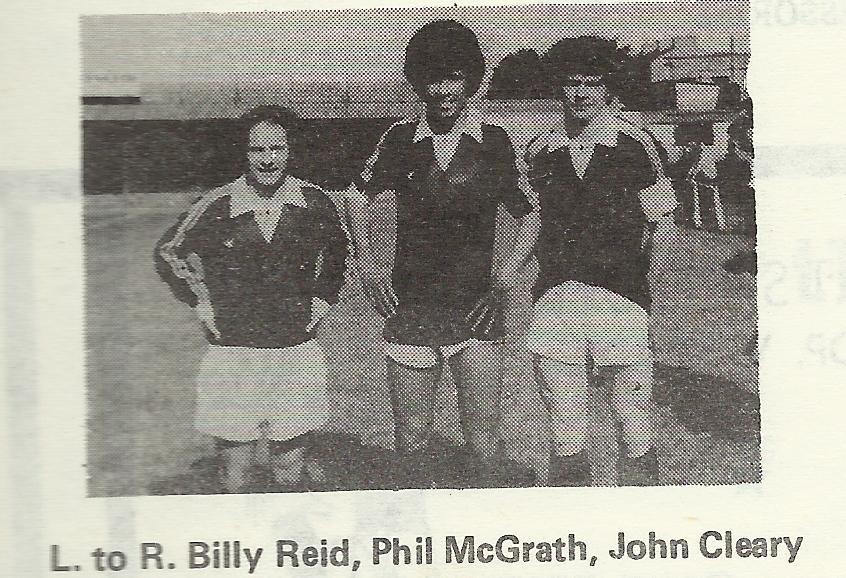
A Come Here To Me classic, Paul (or eh…Phil) McGrath and his first appearance in a Saint Patrick’s Atheltic match programme.

The Irish Football Programme Club are holding their Annual Programme Fair this Sunday. It will be held in St Andrews Resource Centre, Pearse Street, Dublin 2, running from 10am to 2pm. There will be a large selection of programmes, tickets, books, badges and other football memorabilia on sale. It’s always a good day out, and features plenty of League of Ireland programmes which should keep many CHTM readers happy.

Perfect weather for a kickabout afterwards too.

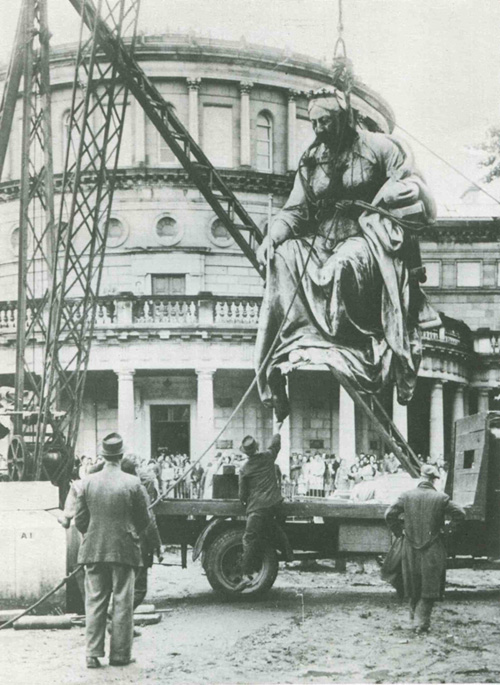
The removal of the Queen Victoria statue from Leinster House.

Writing from the Phoenix Park on August 6th 1849, in a letter addressed to the Belgian King, Queen Victoria noted that “you see more ragged and wretched people here than I ever saw anywhere else.” Victoria’s visit occurred at a time Ireland was still in great anguish following the famine, and Victoria has rather unforgettably come to be remembered as the ‘Famine Queen’.

In 1895, The Nation newspaper noted that Irish migrants in New York had celebrated Victoria’s Jubilee with “the most appropriate celebration”, staging demonstrations and distributing political literature to highlight their view that:

some of the benefits conferred upon Ireland during Victoria’s murderous reign: Died of famine 1,500,000; evicted 3,668,000; expatriated 4,200,000; emigrants who died of ship fever, 57,000; imprisoned under the Coercion Acts, over 3,000; butchered in suppressed public meetings, 300; Coercion Acts, 53; executed for resisting tyranny, 95; died in English dungeons, 270; newspapers suppressed, 12.

Victoria passed in January of 1901, having made her last visit to Ireland the year prior. That visit had been met by considerable protest. Helena Molony, a republican activist who was active with the Inghinide na h-Éireann organisation, a name which translates into ‘Daughters of Ireland’, noted that the organisation came into being primarily out of opposition to Victoria’s visit. She noted that “it came into being as a counterblast to the orgy of flunkeyism which was displayed on that occasion, including the exploitation of the school children- to provide demonstrations of loyalty on behalf of the Irish natives.”

In 1902, The Irish Times wrote that John Hughes,R.H.A, who had been commissioned to prepare a statue of Victoria for placement in Dublin “had risen to the heights of the task which he was called upon to undertake, and the result is a piece of workmanship as dignified as it is beautiful.” The paper outlined their belief that the work would “increase the reputation of Mr. Hughes, and add materially to the artistic wealth of Dublin.”

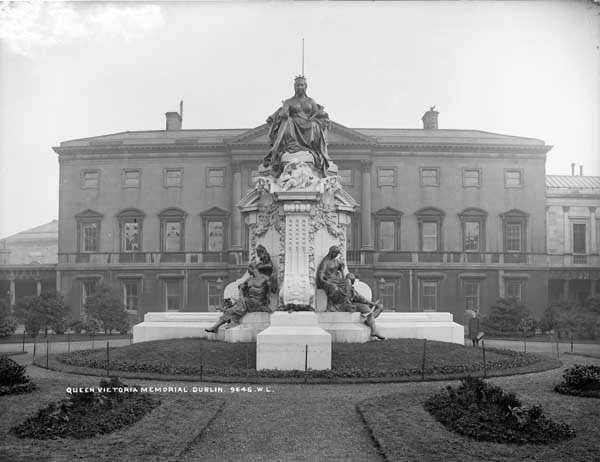
It was unveiled on February 17th 1908 in the grounds of Leinster House at a ceremony which saw about 1,000 troops on parade, and a large number of invited guests. The Lord Lieutenant was chosen to unveil the monument, and he noted that “we are assembled here to dedicate this noble work of art to the perpetual commemoration of a great personality and a great life.” The statue of Victoria, made of bronze, was an impressive 15 foot. Its location placed it “before the Museum of Science and Art and the National Library, and in front of the historic building, Leinster House, now the home of the Royal Dublin Society.” The RDS had also become to a statue of Prince Albert, after initial efforts to place him at College Green had failed. Henry Grattan would instead occupy that space.

The statue as it sat on the Leinster Lawn (NLI)

Continue Reading »