Feeds:
Posts
Comments

Cool, culture jamming art project called ElephantInTheRoom based out of D7.

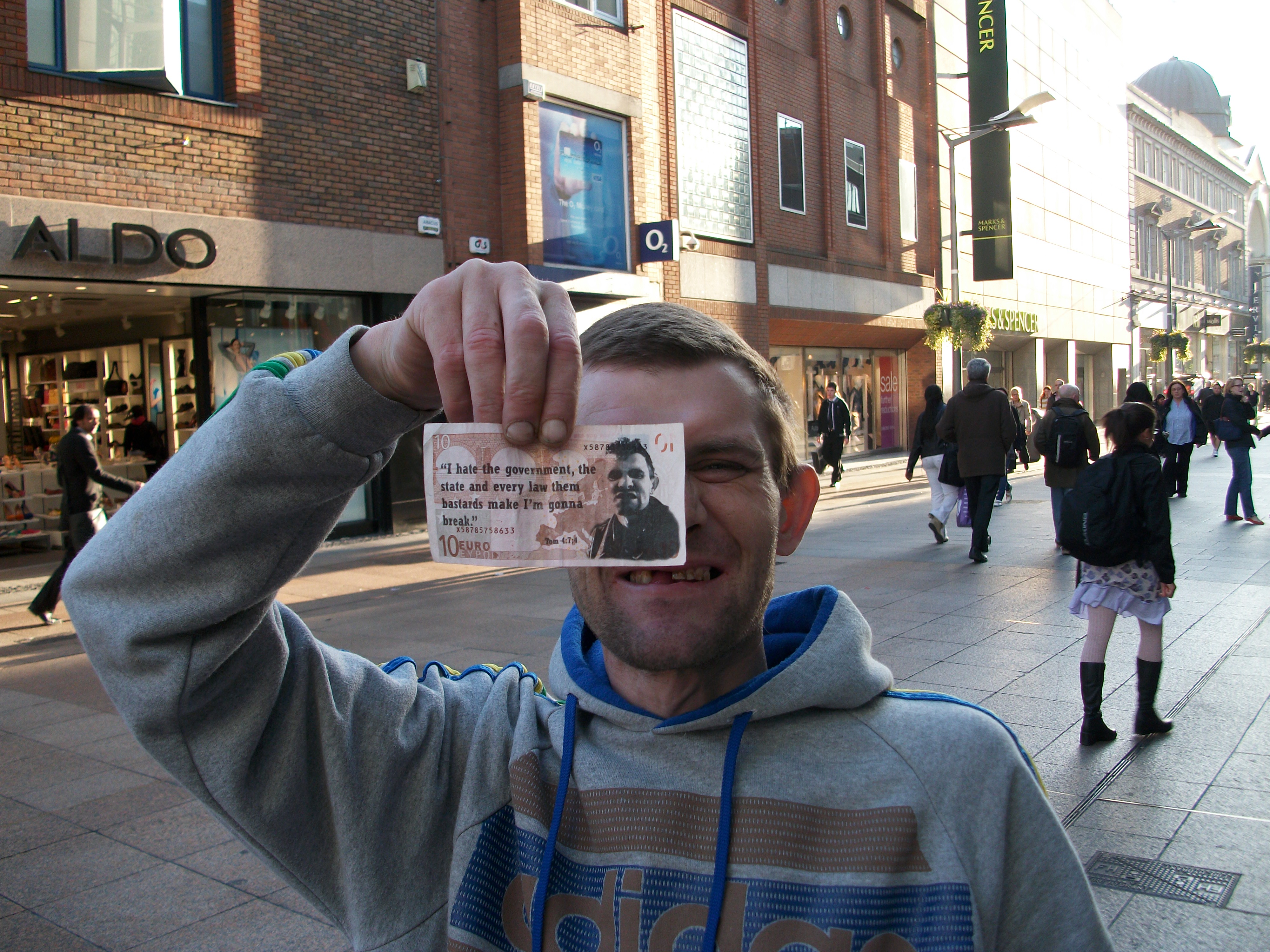
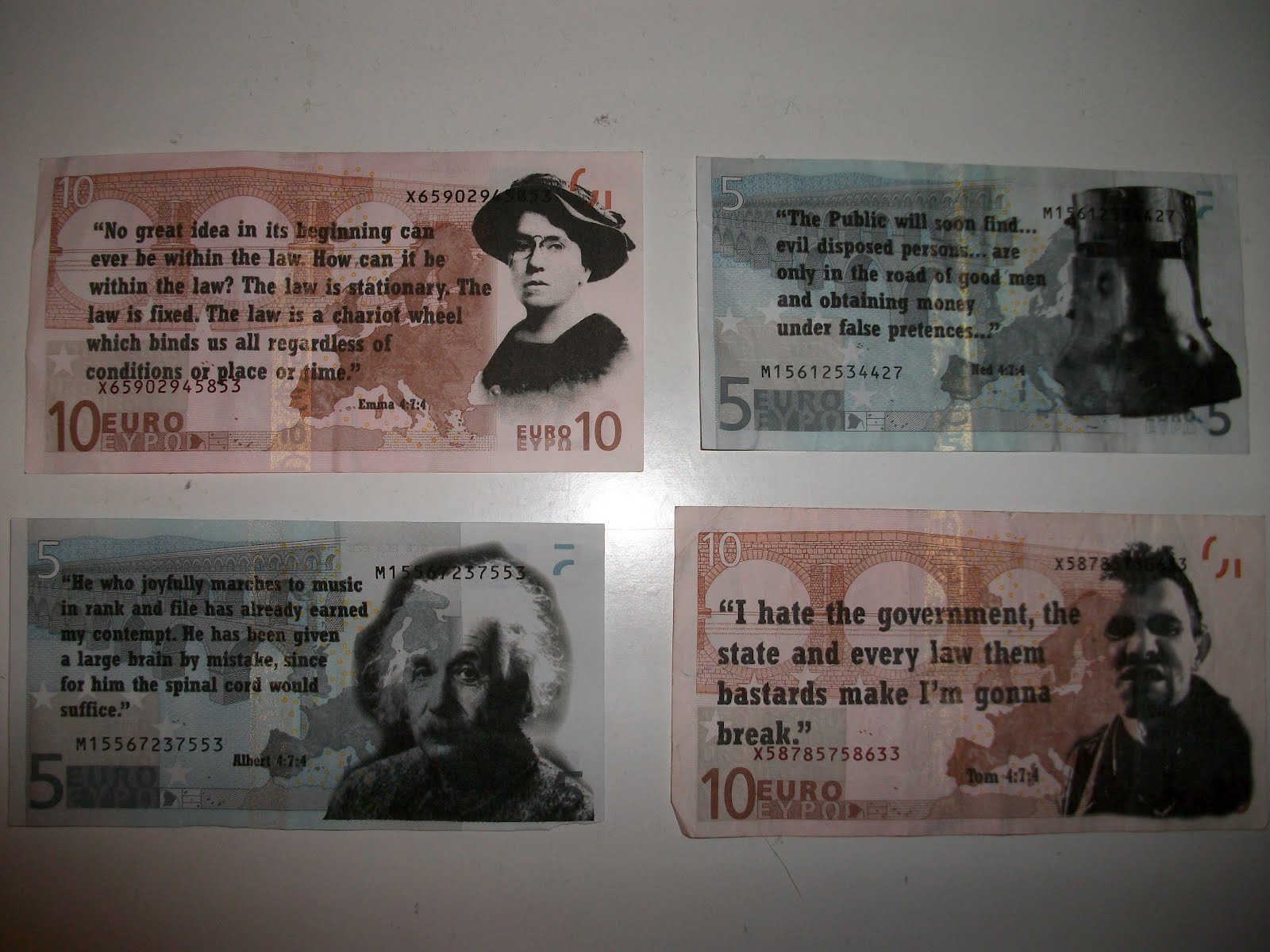
One aspect has been stenciling slogans from Emma Goldman, Ned Kelly, Albert Einstein and MC Tomo Kiernan ‘Dublin’s Rapping Busker’ onto currency and recirculating it.

Credit - elephantinroom101.blogspot.com

Tomo seems happy about it anyway!

Credit - elephantinroom101.blogspot.com

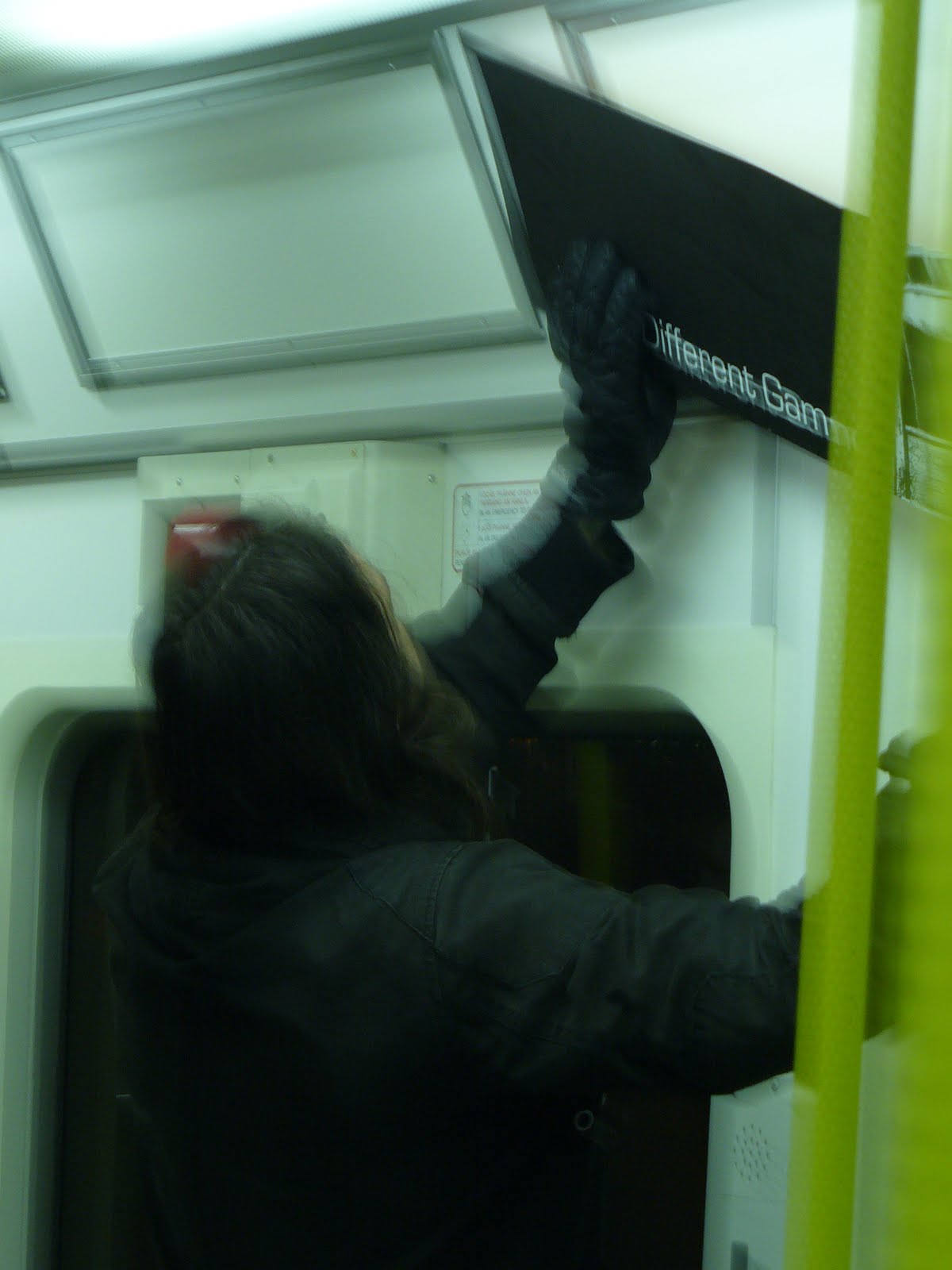
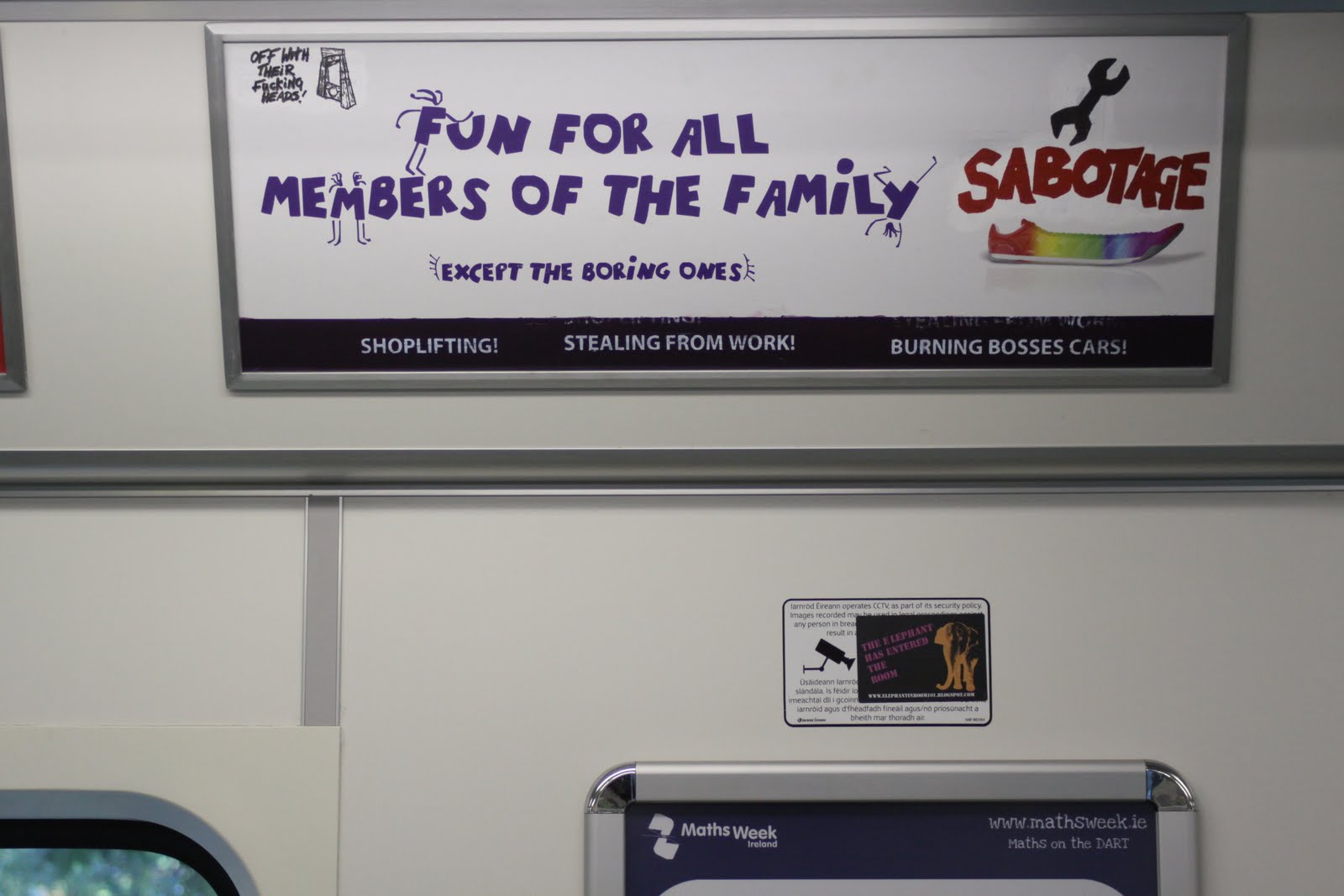
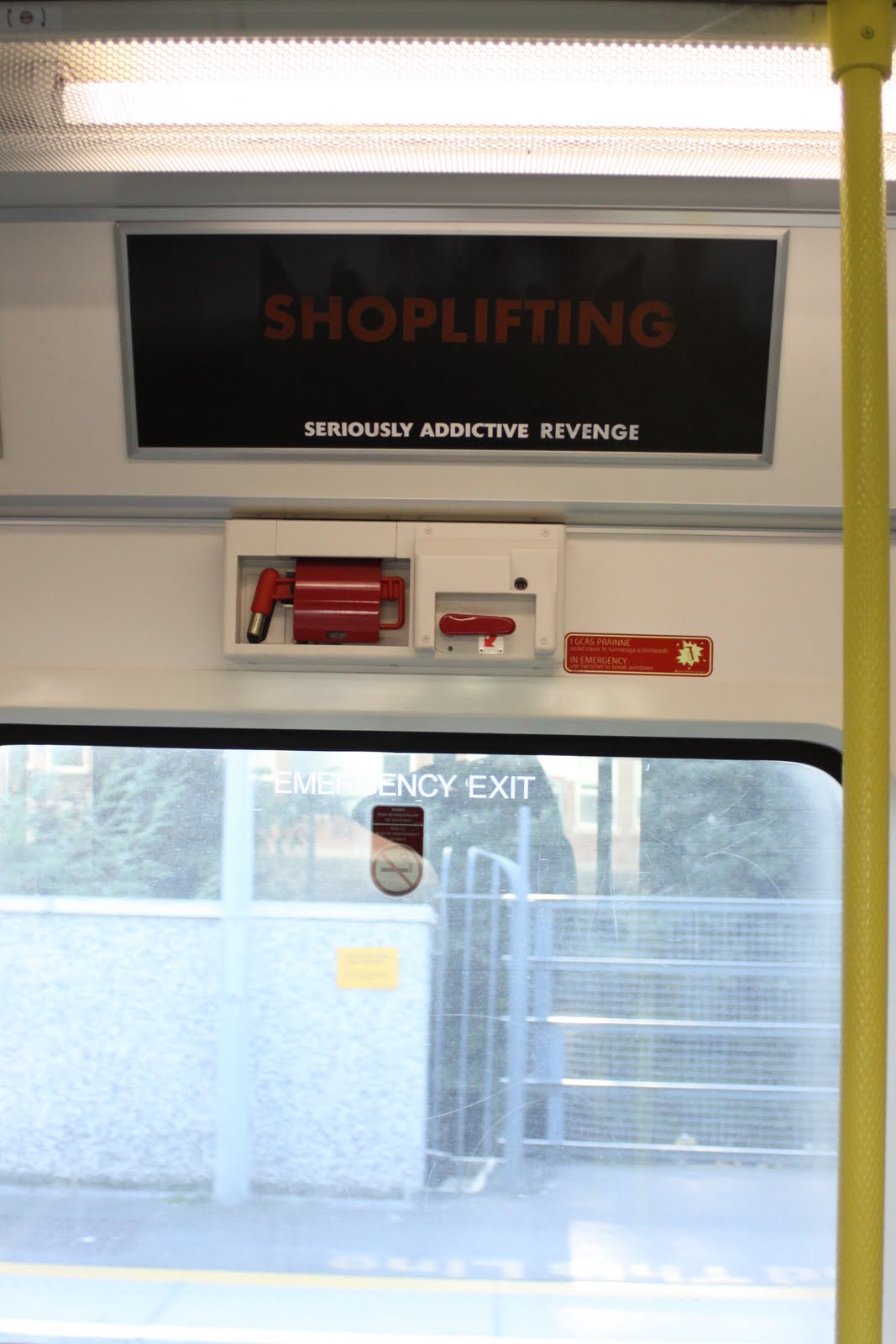
They’ve also been behind some ‘adbusting’ on the dart.

Credit - elephantinroom101.blogspot.com

Credit - elephantinroom101.blogspot.com

Credit - elephantinroom101.blogspot.com

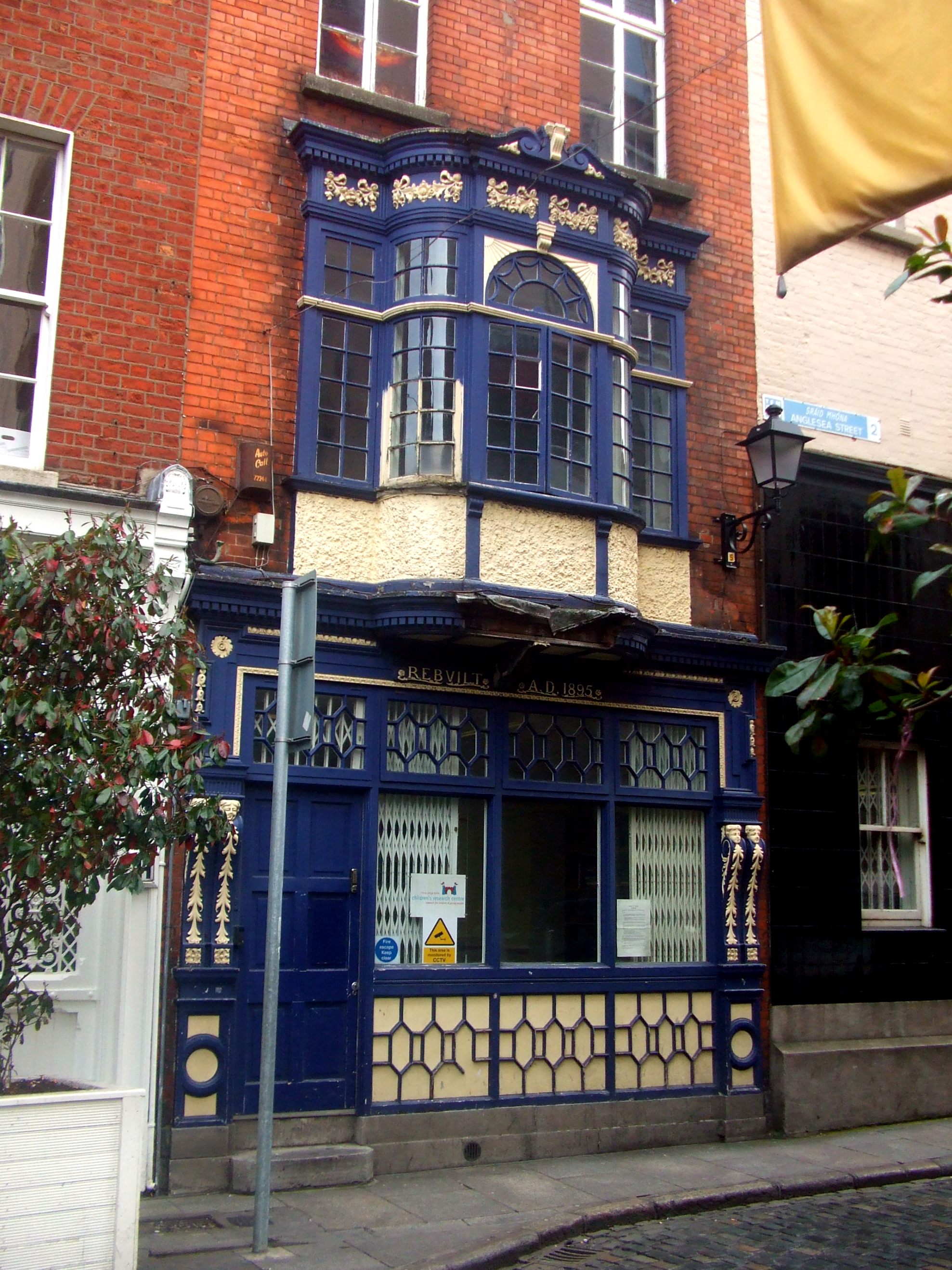
This is a stunning building I’ve passed maybe a hundred times in the last year, but have only now stopped to admire. 30 Anglesea Street is home to the Children’s Research Centre of Trinity College Dublin, and the building is very striking. The front of the building notes that it was rebuilt in the year 1895.

Sean Murphy has written of the origins of the name ‘Anglesea Street’ in his excellent history of the Temple Bar area, noting that:

Anglesea Street commemorates another prominent resident of the area, Arthur Annesley, created Earl of Anglesea in 1661. This Earl was great-grandfather of James Annesley, the principal figure in the famous Anglesea peerage case who died in 1760. Notable residents of Anglesea Street included the architect Thomas Cooley, who died at his house there in 1784, and Richard Edward Mercier, publisher of Anthologia Hibernica and other works. The Irish Stock Exchange has been located in Anglesea Street since 1878.

Continue Reading »

The historiography of any period is never complete. For young historians, the period known commonly as the ‘Irish revolutionary period’ can appear one with little room for new writers, with so much written on the pivotal events and personas.

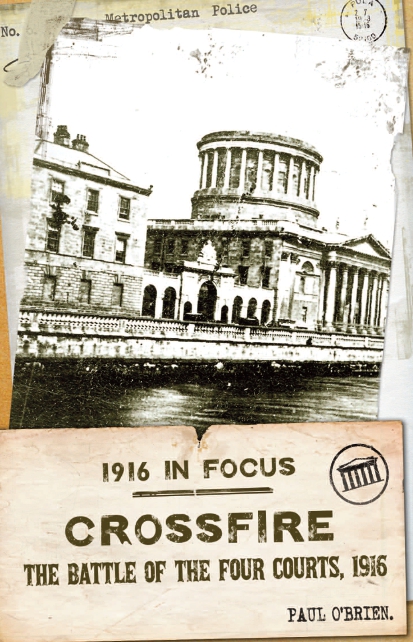
Thankfully, recent years have seen historians engage with the ‘Irish revolution’ in new and exciting ways, moving beyond the macro and looking at individual events and themes in greater detail. A particular effort of note would be Mercier’s top class ‘Military History of the Irish Civil War’ series, but in the field of biography O’Brien’s new ‘Sixteen Lives’ series will see first biographies of some of the executed leaders of 1916 published. New Island books have launched ‘1916 In Focus’, with Paul O’Brien’s study of the Four Courts garrison during Easter Week the first work in the series.

O’Brien’s last effort, ‘Uncommon Valour’, which looked at the South Dublin Union, was reviewed here on the blog in February 2010. Looking at key battles and events in Easter 1916, O’Brien has managed to turn events that take up a few paragraphs in broad-histories into full works, which gives you an in-depth look at some characters who somehow often manage to escape from the narrative of other works.

The Four Courts is more so associated with the Civil War in the popular memory of Dubliners, but some of the bloodiest events of the Rising occurred in the area around the courts. The area which saw heavy fighting during the Rising between the 1st Battalion of the Irish Volunteers and British Military Forces was an area home to some of the poorest Dubliners in tenement dwellings, not far for example from the buildings which had collapsed on Church Street in 1913, killing seven. Edward Daly commanded the forces which occupied the Four Courts and surrounding areas. He would later be executed for his role in the week.

Continue Reading »

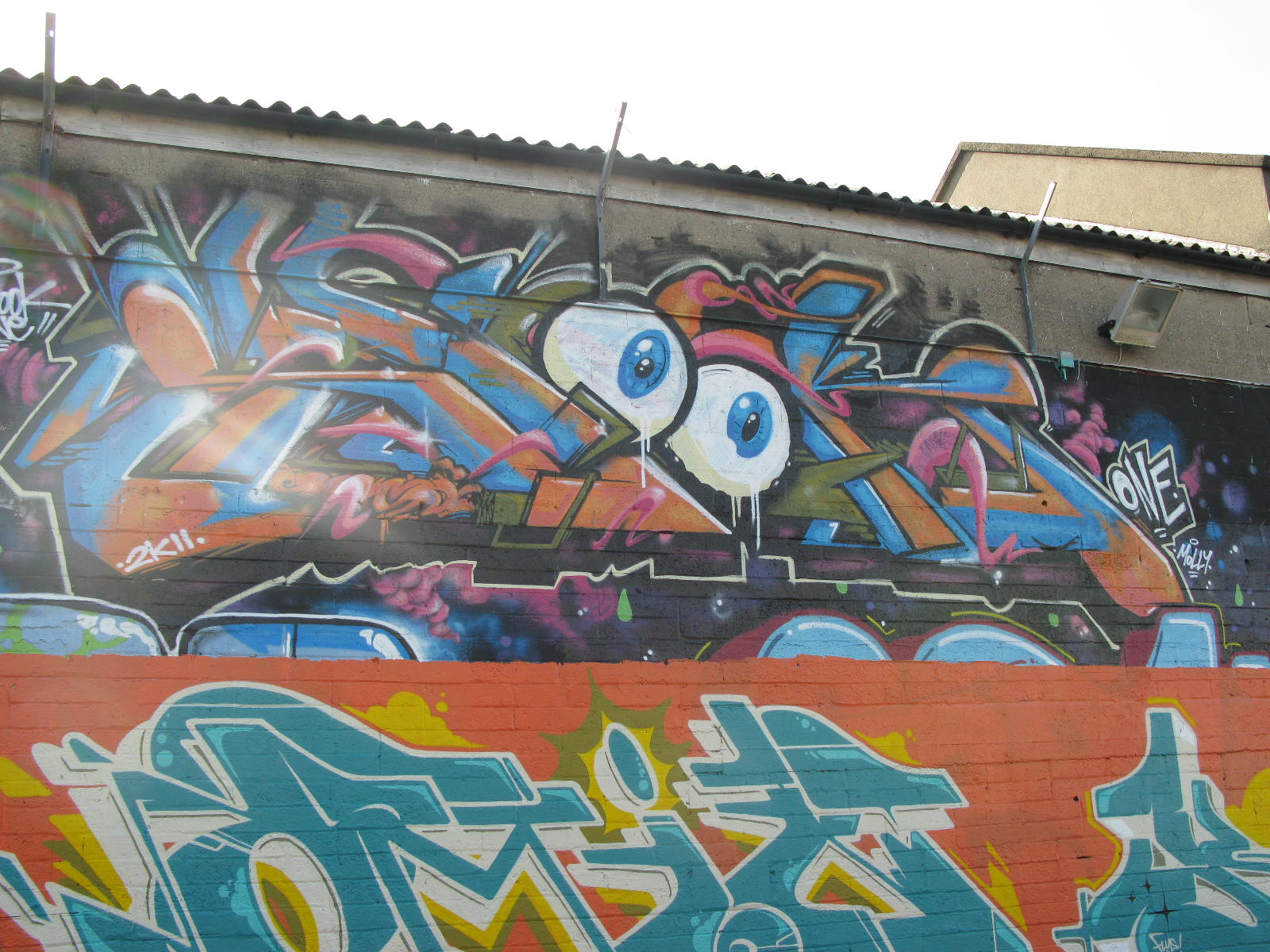
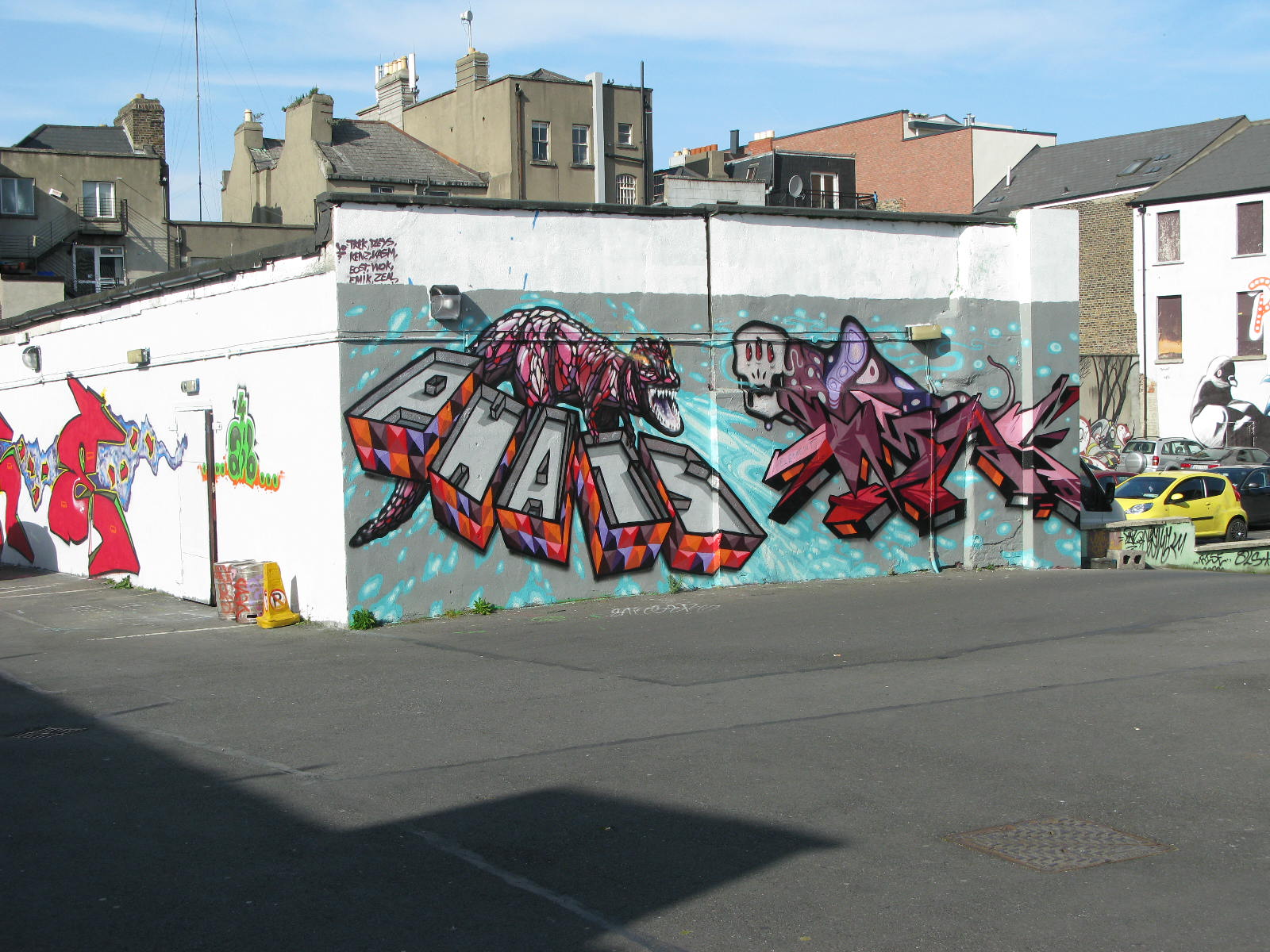
Its a scary thought,  but its almost two years since I went down to the Tivoli Theatre carpark to check out the art on display. I ventured down during the week to have another look and wasn’t disappointed. The results of the annual All City Easter Jam, and its coming up to that time of year again. Details of the event can be found here and the Facebook event is here.

Continue Reading »

Only Fools and Horses

I couldn’t help but notice this photo from the Smithfield Horse Market at the weekend has picked well over 2,000 likes in 21 minutes on Facebook, posted by the popular football ultras page ‘Ultra Style’. Watch it travel around the internet from here folks.

Firemen Nugent, McArdle and Malone. All three perished in the Pearse Street Fire of 1936.

The Dublin Fire Brigade turns 150 years old this year. We’ve had some excellent material on the site in the past relating to the DFB, most of it courtesy of my father Las, a former curator at the Dublin Fire Brigade Museum and a serving member of the Brigade.

It’s an important aspect of the history of the city, and indeed of the working class of the city in particular. From the very origins of the modern force to the industrial disputes of its more recent past, we’ve shared a wide variety of content here on the site. My particular favourite posts from the below have been the architects drawing of Pearse Street station, the feature on the assistance provided by the Dublin Fire Brigade in Belfast during WWII and the leaflets relating to the 1988 industrial dispute.

'FBU' coverage of the Dublin 1988 strike.

Collection of posts:


The Pearse Street fire, 1936. Three fireman died in a blaze on Pearse Street.

Arthur Guinness and Sons Fire Brigade.

Saving the Pram (The Abbey Theatre fire, 1951)

‘Rats with Matches’ (Dublin Fire Brigade 1914 Annual Report)

‘Politics and the Parish Pump’

An Interesting Tug-of-War! The DFB versus the DMP

Original architects drawing for Tara Street Fire Station.

When Dublin Fire Brigade rushed north during WWII.

Dublin Fire Brigade 1988 industrial dispute leaflet (Sinn Féin)

The British FBU (Fire Brigade Union) and the 1988 Dublin Fire Brigade strike.


Irish Workers Group- Class Struggle (1988 strike)

Willie Bermingham 1942-1990

Going to answer ‘Joe Edelstein’s Alarm’

Members of the Arthur Guinness and Sons Fire Brigade in training at the Brewery.

The 1947 funeral of ‘Nazi master spy’ Hermann Goertz at Deansgrange Cemetery, Dublin has been discussed quite a bit recently. The Irish Times as part of their ‘From the archives’ column reprinted the paper’s original article on the funeral back in May and the incident was also included in Shane MacThomas’ new book Dead Interesting which features stories from Dublin’s graveyards.

A scene from the funeral. Published first in The Irish Independent, Oct 22 1961.

Much has been made of the major role that women played at the funeral. The Irish Times reported that it was women who wore “most” of the Swastika badges in the crowd, that it was a woman who placed a large swastika flag on the coffin and it was also a woman who whispered ‘Heil, Hitler’ and gave a Nazi salute just after the burial. The paper also noted cards on wreaths announced they were from “Maisie”, “Mary” and “My dearest friend – from Bridie”.

A woman makes the Nazi salute at the funeral. The Irish Times, May 27 1947.

There can be no doubt that the “Mary” and “Bridie” were the Farrell Sisters from Glenegeary whom Goertz lived with up to his suicide.

Spinster sisters Mary and Bride (aka Brigid or Bridie) Farrell (sometimes misspelled as O’Farrell) lived at 7 Spencer Villas in Glenageary, South Dublin. It was this address that Goertz gave when he was in the High Court in April 1947 fighting his deportation order.

Like the other women, such as Caitlín Brugha, Iseult Gonne, Mary Coffey, Helena Molony, Maise O’Mahony (another name on a wreath), who helped Goertz it can be accepted that the Farrell sisters held anti-British and pro-Irish Republican sympathies.

Letter from Bride Farrell to The Irish Press. June 17, 1947.

Bride, who was the youngest daughter of Sylvester and Maria Farrell, died on May 11 1966 at St Michael’s Hospital. It is not known when her only sister Mary passed away.

In 1974, under the cover of darkness, a group of German ex-army officers exhumed Goertz’s remians and re-interned them in the German War Cemetery in Glencree, Co. Wicklow where they remain to this day.

German Military Cemetery, Glencree, Co. Wicklow.

Some great footage of Dublin here, and the sounds come from LLCR ‘Rock Box’ back in the 1980s, playing a mix of hip hop and electro. Well done to YouTuber deejaymek getting it up. Some of the shout outs are quality. “All the breakers meeting at the Central Bank tomorrow at 3!”

I’m not a photographer.

Below are some photos taken on a stroll through the city, little things that caught my eye and seemed perfect for Come Here To Me.

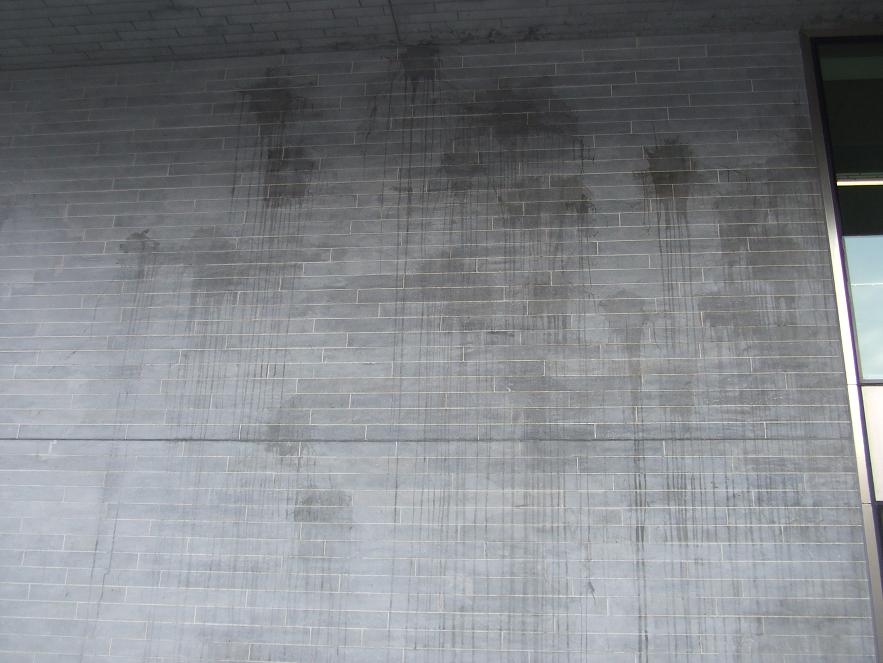
Back in November 2010, a Union of Students in Ireland demo saw students occupy the Department of Finance on Merrion Row, with the building getting pelted with eggs in the process. Passing it yesterday, I noticed that it looks almost like it happened yesterday.

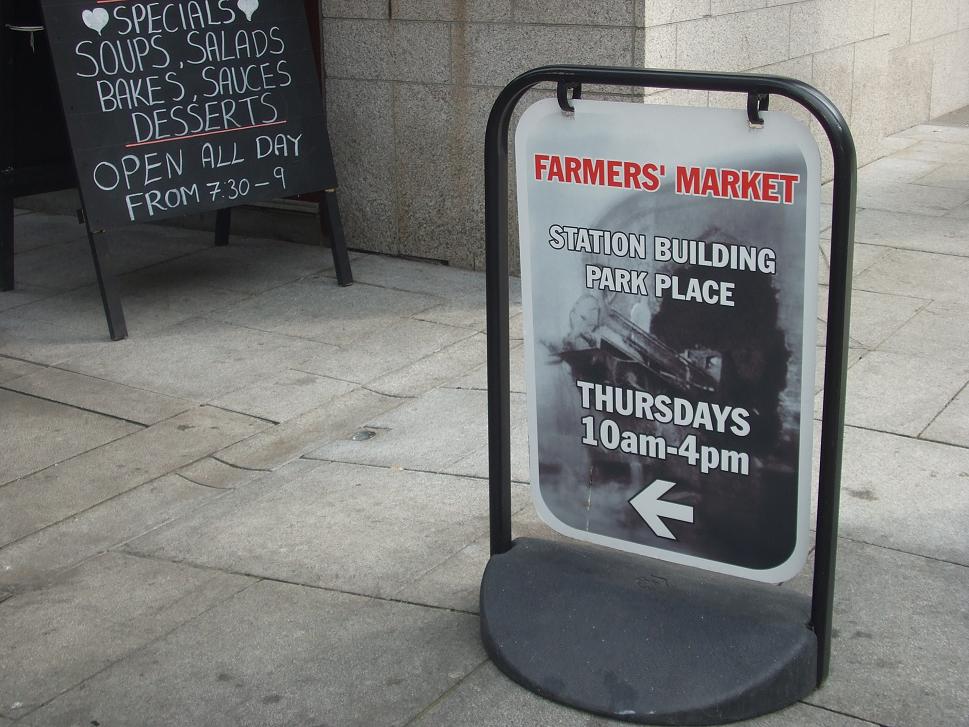
I like little nods to the history of Dublin, like this one on Harcourt Street, advertising a market in the location where in 1900 The Wicklow, which was carrying cattle, ended up suspended over Hatch Street having smashed through the outer train station wall.

The Irish Times reported at the time:

All went well with the train until it was approaching Harcourt Street Station, at half-past four o’clock, when Hyland, it is believed , found he could not get his brakes to act, owing to the slippery nature of the wheels and rails combined with the fact that the train was very heavy. Speed could not be slackened, and the engine with its heavy load dashed through the station to the great alarm of the people on the platform, who saw that an accident of a serious nature must result, nor were they mistaken.

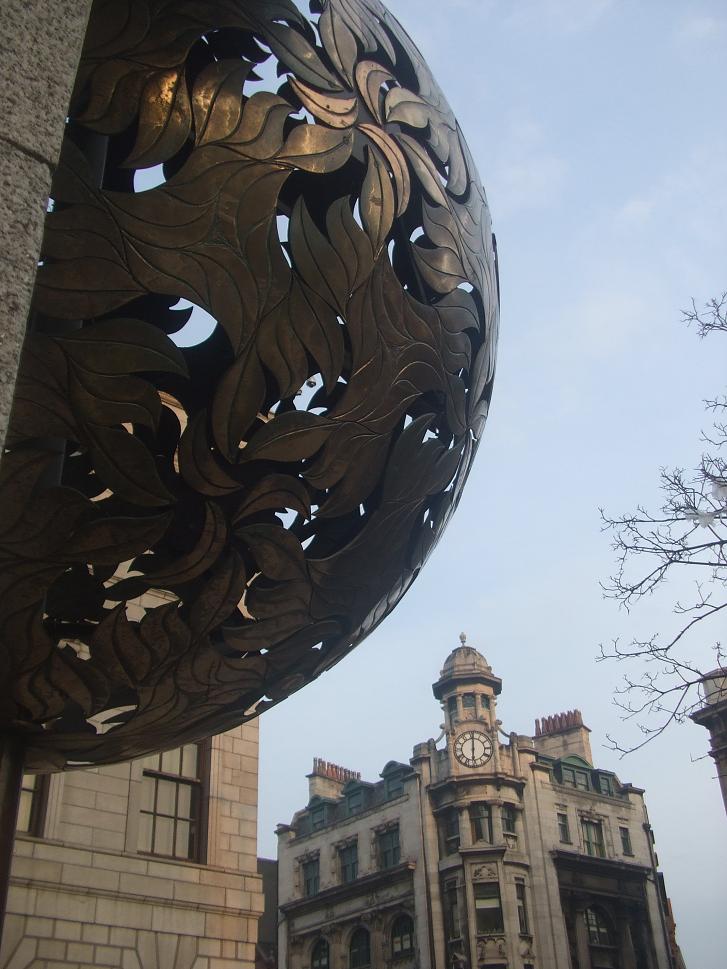
The tents are gone, but I’m starting to think the ‘Tree of Gold’ might be slightly more embarrassing if the worlds media descend on Dame Street. Like the spire symbolising Ireland’s rise to economic prosperity, the Tree of Gold hasn’t aged well.

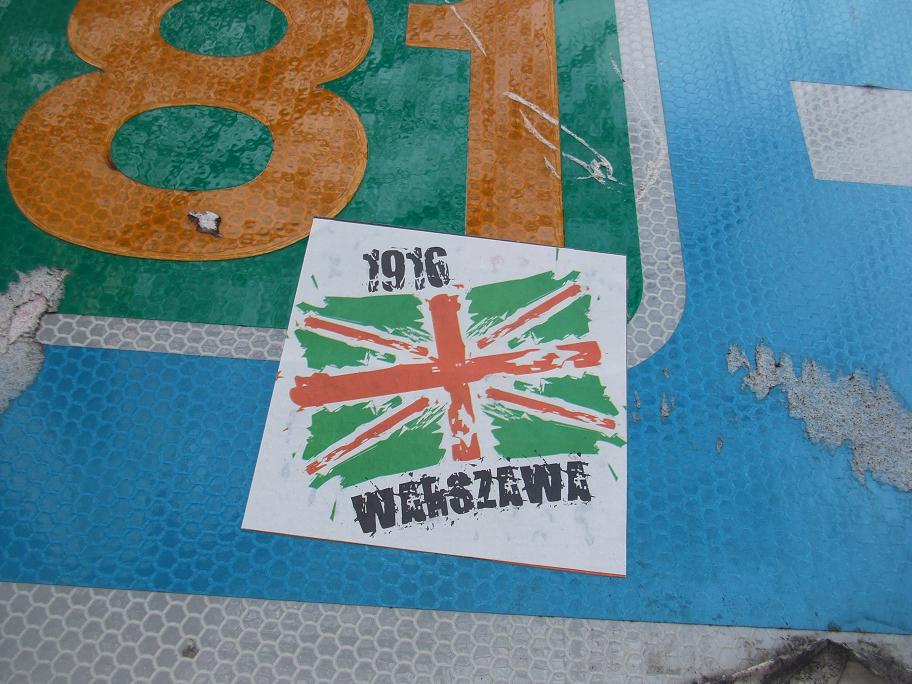
Dublin is still sticker city in my eyes, and for the most part it seems the Council are happy enough to leave them be. This strange Irish Union Jack sticker has me baffled.

Continue Reading »

Stein Opticians

The Irish-Jewish family, Stein, have run an optician’s in Dublin for nearly seventy years. They are perhaps best known for their 1983 David vs Goliath battle, where they fought bitterly to save their practice on Harcourt Road from the developer’s bulldozer.

Dublin born Mendel Stein (1915 – 2000) grew up in Victoria Street in the heart of Portobello, then known as ‘Little Jerusalem’. Studying to become an ophthalmic optician, he set up his practice at 36 Harcourt Road in 1944.

Advertisement for Stein's. The Irish Independent, Mar 05, 1946.

For the next forty-one years, he remained one of the most popular opticians in the city and his practice, known as ‘The Eye’, became “a place for encounter, conversation and spirited views on the life of Harcourt Road and the universe beyond” [1]. Mendel became a close friends with Michael MacLiammoir, Hilton Edwards, Harry Kernoff and others at the heart of Dublin’s art and theatre scenes.

But then in 1983 the Clancourt Group announced that they wanted to build a seven-storey office block which would involve demolishing the terrace to make way for the new Harcourt Centre.

While other property owners and lessees of buildings due for demolition accepted the substantial compensation, Mendel decided that he wasn’t going to give in so easily. He said that he would not leave until they gave him a new shop in the immediate vicinity and a guarantee that his (beautiful) shopfront would be preserved.

The Irish Press. Oct 12, 1983.

This window of the shopfront was “in the shape of an eye, whose pupil is reflected in a circular mirror on a facing wall inside”. Frank McDonald of The Irish Times described it at the time as “a masterpiece of its period (which) arguably should have been officially listed for preservation”. [2]

By the end of it, his single-story shop was the “only surviving remnant” of Harcourt Road despite the fact that the tiny building was perched on the edge of a ‘cliff’ while the new block was under construction. The late Brendan Glacken later recalled a story that during this time a young quick-witted Dubliner shouted into Mendel “Hey mister, your extension is coming on great!”.

"Stein's Opticians at Harcourt Road with the new office block behind it". The Irish Times, May 31, 1983. Photographer - Peter Thursfield.

Spurred on by local support, Mendel held out and eventually received a guarantee that the shop would be taken down intact and re-erected at a new location in nearby Grantham Street off Camden Street.

Joined at this stage in the practice by his daughter Ameila, Mendel worked at his new Grantham Street address until he reached his 80s. He passed away in June 2000.

Amelia, an award-winning photographer who has worked with Irish artists such as The Hothouse Flowers, Aslan, The Cranberries, still runs the family optician business  today from 4 Camden Market, Grantham Street.

Stein Opticians, Grantham St.(Google street view)

[1] The Irish Times. Dec 7, 2000.
[2] The Irish Times. May 31, 1983.
Architects drawing for fire station (L Fallon Collection)

Above is the original architects drawing for Tara Street Fire Station. In the mind of many Dubliners the building is on Pearse Street, but owing to its postbox being on Tara Street it is ‘Tara Street Fire Station’. This image has not appeared online before.

The station was opened in 1907, by the then Lord Mayor Joseph Nanetti. Nanetti was not only Dublin’s only Lord Mayor to come from the Italian community, he was also the first Lord Mayor to come from the Labour movement.

The site of the fire station holds a special place in the history of the Italian community in Dublin, because as Vinnie Caprani noted in A View From The Dart (1984), the Lord Mayor of Dublin “…found himself opening a fire station on the exact spot where Giuseppe Cervi had set up Dublin’s first mobile chipper, “thus giving Dubliners the ‘wan-and-wan’, a meal which quickly became as popular on the working-class menu as the more traditional coddle or tripe-and-onions.”

Looking at the architects drawing and the building today, it’s clear the final tower design was different from that envisioned by the architect at first. It is said the tower of the fire station was used by British forces in 1916 to attack rebel outposts, and Liberty Hall which it was believed at first was the rebel headquarters. Shane MacThomáis noted in his day by day account of the Rising that:

From Wednesday onwards rifle and machine-gun fire on the GPO and its outposts, particularly those at the junction of O’Connell Street with the Quays, became heavy and ceaseless. Much of it came from Trinity College and the tower of Tara Street Fire Station across the river.

In this image below, showing members of the Irish Citizen Army on the roof of Liberty Hall, the tower can clearly be seen in the distance.

This postcard below comes from the time of the opening and shows the building more or less as it is today. It is difficult to understand today just what a presence this building would have had on the capitals skyline. The purpose of the tower was to serve as a lookout post, and also to allow for full lengths of the canvas hose used at the time to be hung up to dry.

Ironically, Liberty Hall is a considerably taller building than it today.

"The new fire brigade station, Gt. Brunswick Street Dublin." (L.Fallon collection)

More info here.