Feeds:
Posts
Comments

Posts Tagged ‘dublin’

January 30:

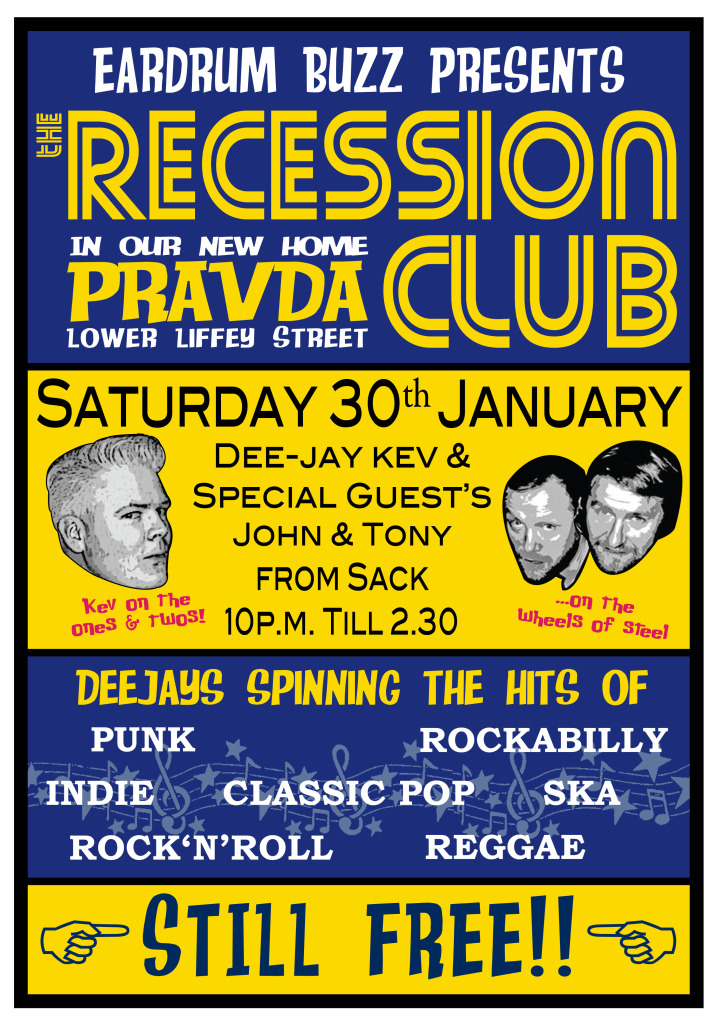
After you’ve recovered from the January Punky Reggae Party, head into town on Saturday for the Recession Club. Moving their operation from Shebeen Chic to Pravda, expect the usual classic sounds of punk, ska and rockabilly.

January Recession Club

February 6:

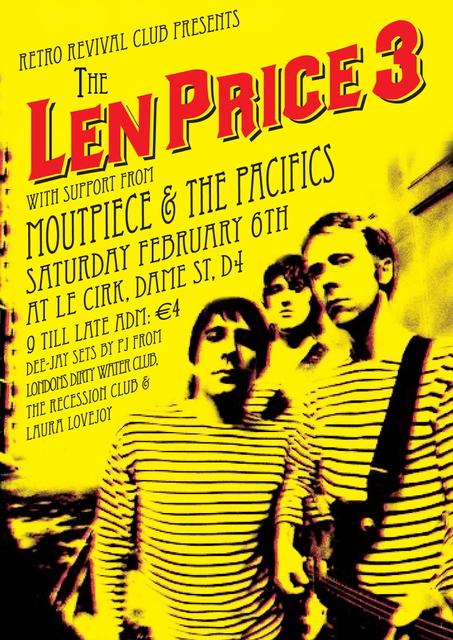
Garage rock n roll with the lovely Laura Lovejoy on decks.

February Retro Revival Club

March 13:

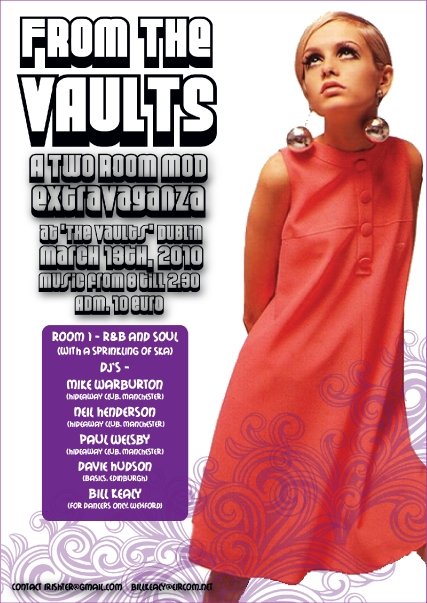
A two room ‘Mod Extravaganza’ featuring the best DJs from Manchester, Edinburgh, Belfast and Wexford.

March 'From The Vaults' Mod & Soul Night

April 10:

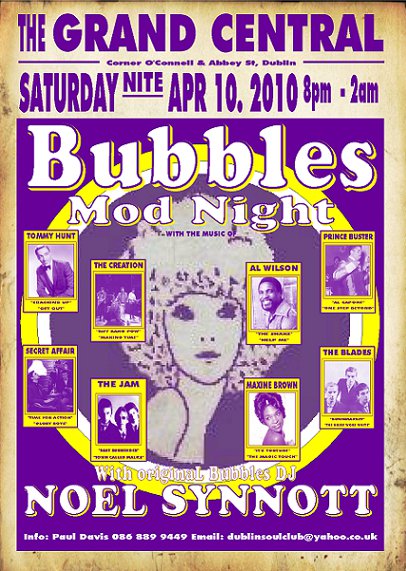
Bubbles, the legendary Dublin 80s Mod night, is back with a vengeance for one night only.

April Bubbles Mod Night.

May 23:

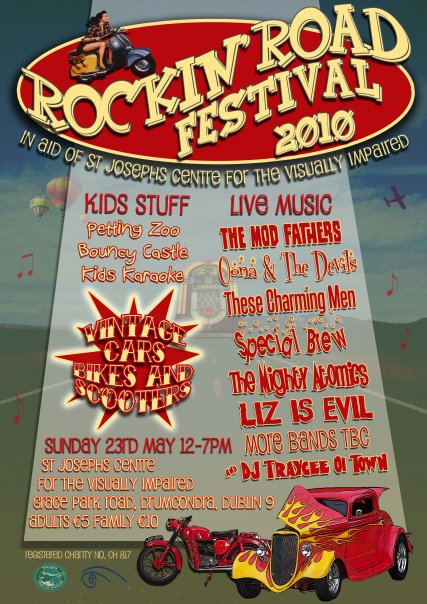
A one day festival featuring the island’s best mod, ska and rockabilly bands. Something for everyone and all for a good cause.

May 'Rockin Road' Festival

Read Full Post »

I’m not sure if the same situation carries here in Dublin, it probably does up in North County anyways, but the mother said something today that put the notion of it back in my head… When I was younger, much younger, you’d hear tell in the house of “Oh, she has the cure for the croup” or “He has the cure for the shingles, he inherited it from his father.” This mysterious cure, administered in secret in the homes of even more mysterious septuagenarians was spoken of in hushed reverent tones in households and bars all over town, and was seen as a gift or a burden, or in some cases, a bit of both. The “man” or the “woman” was generally a bit… odd, and more often than not would be quite pious, but fond of a drop at the same time, their methods for ridding you of whatever they had the cure for, secret to only them.

Old People: They can cure you.

Old people: They can cure you.

My first memory of hearing something like this was many moons ago and was a story about the Da, who for thirty years had been burdened with a wart on his thumb the size of an old penny. On his rounds, this caused him great discomfort, be he tweaking at cars, fixing a lock, or replacing a door for the woman down the road or whatever job he was doing in his job away from a job, he often came home with his hand covered in blood. Not nice for him, and not nice to hear about either. One day, my brother in law stopped by for a cuppa on his break from work and said “Jaysus Dick, would you ever get that looked after. I know a man down in Caseys who said to write your name on a bit of paper and give it to him; he has the cure for the warts.” So, with that, the Da wrote his name on a bit of paper and gave it to the brother who went back to work that evening and passed it on to “the man.” Now, I’ve absolutely no idea of what the hell happened after he got the bit of paper, but within a week, that wart of thirty years was gone. Sounds mental, I know, but it’s true.

I could dismiss it as myth and superstition, had I not experienced it myself, having had a similar, though much, much worse ailment to the Da. This time, though, it meant a visit out to a whitethorn bush in an ancient, crumbling graveyard around 12 miles outside of Mullingar. Three visits, dipping your hands in a little pot of water in the middle of the bush each time, and the warts would be gone. Now I’m not superstitious in the slightest; but after three visits, the warts shrinking each time, and a week after my last visit, they were gone. I won’t shock you by telling how many there were but, to say losing them was a relief would be the understatement of the century.

I know of an old friend, crippled with shingles so much that he had to be carried into an old ladies house three times in a week, for “the cure.” He went from being crippled, to being up and about, though having shed four stone in the two weeks he was sick, (I jest not; he wasted away,) it took a lot longer to recover fully. But he went from being laid out in a bed in his kitchen, in so much pain it hurt to blink, to walking around again, it was close to a miracle. Now, I never would have thought this lady was one of the religious types of faith healer, she was closer to the mad cat lady type, but this “cure” worked anyways. The Ma had a similar complaint shortly after the Da passed away and went to the same lady and she described to me how it worked. On each visit, the woman would welcome the Ma into her home, take off her wedding ring, bless it, and touch the inflicted part of her body (In my Ma’s case, it was around her ear) with it, while muttering a few words, of prayer or what, I don’t know. She would do this for a few minutes, and then sit you up and talk the head off you apparently. She was a mine of knowledge, and would describe the healing properties of various common garden plants and herbs, lamenting the fact that a lot of the weeds and herbs are much harder to come by these days, and harping onto the Ma about the wonders of apple cider vinegar . I’d love to get an interview with this woman, the Ma says she’s a wonderful lady; sure we might have a look into it in the future.

My nephew, who is now in his eighteenth year, gave us many a sleepless night in the first year of his life, a small little thing but his body was wracked with croup (Think of the cough you hear from auld lads down the pub, forty a day and ten half ones before bed and put that cough in the body of a wee baba. The cough now IS probably from forty a day and ten half ones before bed but thats another story.) This went on for ages though, the medicine given by the doctor not having the slightest bit of effect, nor the nights of boiling kettles in the room, hoping the steam would clear the chest out. So “the man” was called upon to administer “the cure,” which, if I remember correctly involved him laying a hand on his chest and muttering a few words. Within a week, the cough was gone. I know, again with the jiggery pokery but…

Now it’s an odd tradition, I know. And certainly not one with my political persuasion I should have any time for. But whether it’s a psychological thing or whatever I don’t know, and to be honest, care; it’s an interesting one. So whether it’s a cough that ails you, or you have a wart you need rid of, give me a bell. I know a man.

Read Full Post »

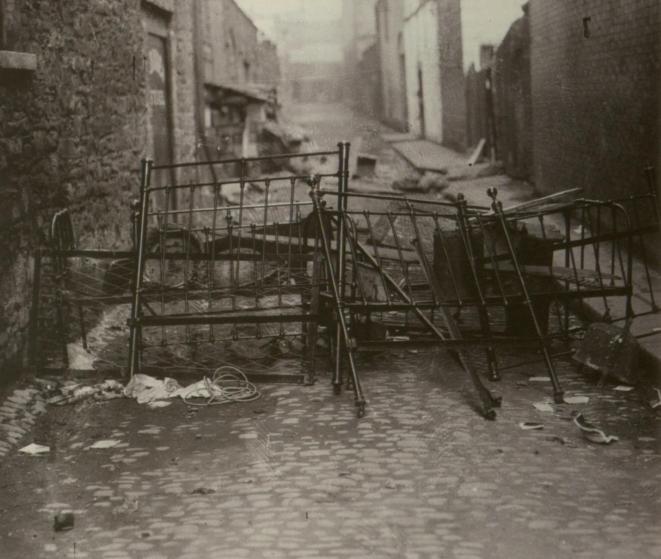
A WD Hogan snap of a Dublin Republican barricade

An interesting exhibition in Temple Bar, of the photography of W.D Hogan taken between 1920 and 1923, taking in the Tan War and the Civil War. During work experience as a youngster in Collins Barracks I got a unique insight of the Cashman Archive, taking in the work of Joseph Cashman in the ‘revolutionary years’ with fantastic images from Dublin in particular at the time. Cashman got many great shots of the personalities and forces of the time, including both the Citizen Army and the Irish Volunteers.

This exhibition, opening on the 16th of January, is of different stock. Here, there is a particular emphasis on the ordinary people of the city and country, as war raged around them. Hogan was given the official sanction of Sinn Féin during the Tan War, and later that of the state army.

The National Photographic Archives site observes that

The 167 photographs featuring in the exhibition were compiled by Captain Rev Denis J Wilson, Chaplain to the Free State army during the 1920s.

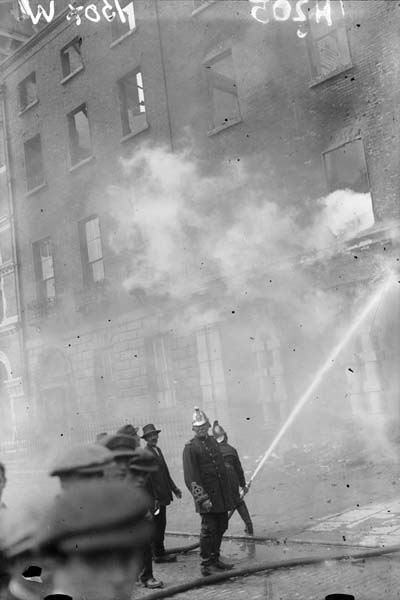
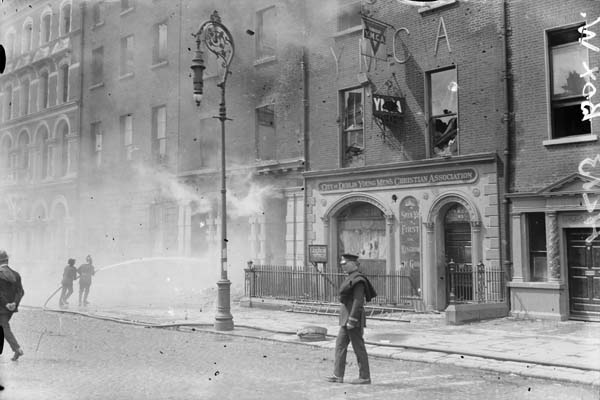
Interestingly, the exhibition contains photos of state-forces entering Cork after the fall of the ‘Munster Republic’, the last stronghold of republicans holding out against the Anglo-Irish Treaty, and photos of the burning of Balbriggen by Black and Tans, along with shots of iconic events like the burning of the Custom House and the assault on the Four Courts.

Opening Hours (Runs until May 24th)
National Photographic Archive, Temple Bar

Mon – Fri: 10am – 5pm
Saturday: 10am – 2.00pm

Fantastic images of the 1913-22 period can be viewed at the National Library Digital Collection

Spot Kevin Myers Grand Uncle, Captain Myers of the DFB

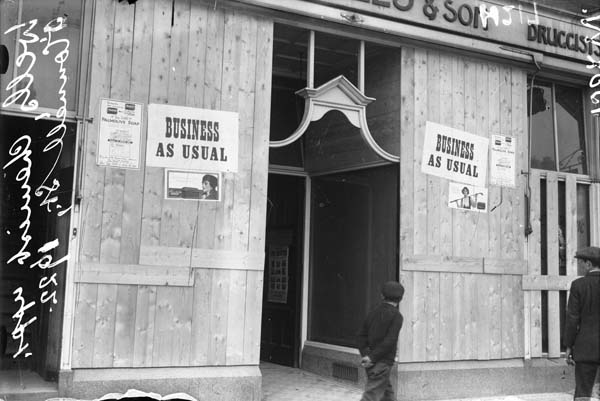
Businss As Usual, 1922

Dublins YMCA ablaze in '22

Read Full Post »

Whilst very tempted to write a review of Colm McPhersons “The Seafarer” that just gave it five stars and said “go see it and you’ll understand why,” I do understand reviews don’t work like that so I‘ve bulked it up a little. But I mean it; before I even start the review, that’s exactly what I feel like saying; go see it and you‘ll understand.

Under the advice of a good friend, and having just written an article on the history of the Hellfire Club, one slow Saturday afternoon in January, six of us headed along to a matinee showing of a play said to be inspired by the tale of the Bucks on Montpellier Hill, when Beelzebub himself showed up during a late night game of cards, and upon losing, stamped his hoof on the floor and took off. (That mark, according to local superstitious types, can still be seen today.)

The Seafarer

The Seafarer, from last years run at An Grianán.

Captivating from the start, the story, the characters and the actors that portray them are so… familiar. Bleak, but uproariously funny, there’s a comedy in the dark, unfolding drama and maybe it’s comedy that only the Irish can understand. For while I found it hard to retain my laughter at times, as did most of the audience, half of our company were not from this Island and thought we were sick, or mad, or both, to be laughing at the despair portrayed on stage. McPherson even admitted this himself, saying Irish audiences would understand the play better than those in London or New York.

Set in Baldoyle, but namedropping an expanse of Dublin streets and pubs, the plot centres around the return of Sharkey (Liam Carney) to Dublin at Christmas time to the house his newly-visually-impaired brother Richard (Maelíosa Stafford) inherited from their parents.  Chaotic from the start, Richard and pal Ivan (Don Wycherly) test Sharkey’s patience to the limit as he tries to stay off the drink for a third consecutive day, as they nurse the mother of all hangovers, sneakily tucking into a bottle Gold Label for breakfast. I can’t compliment Don Wycherly’s performance enough; I spent most of the play watching him rather than what was going on on-stage as he stayed in character for the full three hours. Ivan is the epitomy of the lovable Irish scally- Disheveled, simple, nervous, good natured and an out-and-out alcoholic. I’d do him an injustice to describe him as any more than that; what he does on stage is just… madcap, hilarious and truly brilliant. 

The story unfolds as Sharkey’s past unravels, and it’s with the arrival of Nicky (Played by Phelim Drew, son of a hero of ours here at CHTM, Ronnie,) and Mr. Lockhart (Nick Dunning) that we get the real story about Sharkey, an alcoholic, a “Useless Eegit” whose life has been “nothing more than a series of fuck-ups” but who has “Potential” according to his loving brother Richard. As they start into their annual game of poker, and the ante’s get higher and higher, Mr. Lockhart reveals himself to Sharkey as the devil, come to claim his soul, having been beaten by Sharkey before, he doesn’t intend to get beaten again. 

The play takes a sidelong glance at the Irish relationship with alcohol, our begrudgery and our inability to share problems. And though the overriding mood of the play is bleak, dark and disparaging, the wit and feelings of hope and redemption win through, and as they say, hope springs, and you do walk out of the play with a smile on your face.

I’ll finish as I started and say go see this play, it runs until January 30th in the Abbey and tickets start at €25.

Read Full Post »

(Once a month the three writers behind ComeHereToMe, joined by a small group of friends, visit five Dublin pubs and then write about their experiences. A different person each month picks the five pubs and they make sure not to give away any details. What fun.)

January was my month and I had picked the pubs carefully:

• Hartigan’s (For its links to UCD.)
• The Baggott Inn (For its links to Irish rock music history.)
• The Horse show bar in The Shelbourne Hotel (For its sheer beauty and history.)
• The International (For its importance in the history of Irish comedy.)
• Neary’s (For family links. This was the only pub in Dublin my grandmother ever entered ‘because of their sandwiches’.)

Out of the original five, on the day itself, three were closed. For future reference, don’t pick the Sunday after New Year’s Eve for a pub crawl in Dublin City. Things aren’t back to normal yet.

I chose the Royal College of Surgeons at 1 Saint Stephens Green as the meeting point, hoping to throw people off as to where we were going. The location meant that we just as easily could have  made our way down to Camden Street or Dawson. The RSCI is also a building of great historical significance, namely the role it played in the 1916 Easter Rising, as well as the fact that it was built on a old Quaker burial ground.

At 4:32pm approximately, the five us began our January Pub Crawl cautiously making our way across the icy pavements towards Leeson Street, stopping at 68 St. Stephen’s Green, – ‘Newman House’. I announced to the group that this would be our only stop of a historical nature during the day before telling them the story of the Whaley family who built the house, their son Thomas ‘Buck’ Whaley and a dare devil bet involving a horse, a carriage and a first floor window that occurred sometime in the 1780s.

As we turned the corner, I was taken by surprise to see that Hartigan’s was closed. Undaunted by this initial set back, we crossed the road to Hourican’s, the pub that sits directly opposite. This is one of those forgotten pubs, one that thousands of people pass on their bus everyday, but very few venture into. The pub itself was quite pleasant. If I remember correctly, it had a lovely wooden interior decorated with a few more ‘Irish street signs’ and old advertisements than was necessary. The barman was extremely friendly, offering to bring us down our drinks. We had a lovely pint, a chat and then were on our way.
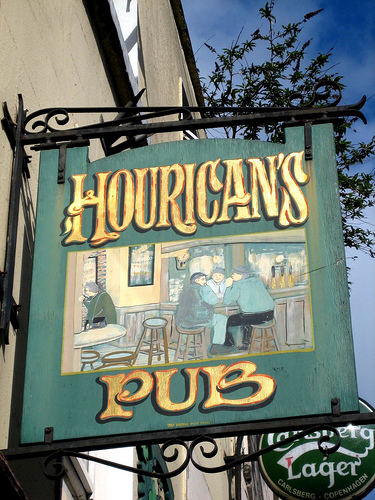
Hourican's. (Flickr user ihourahane)

As I said, I had hoped to bring the gang down to The Baggott Inn next. Though I’ve heard it’s lost all its charm, no one can deny its important connection to the development of Irish punk and new wave in the late 1970s and early 1980s. It was not to be. The doors were firmly locked.

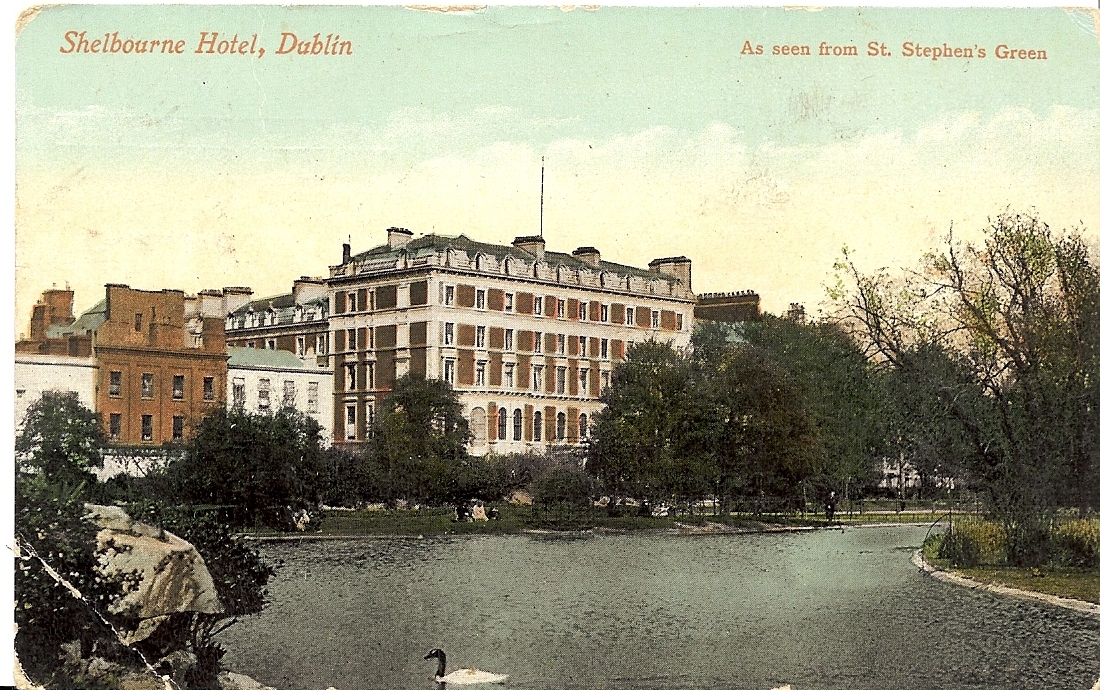
So instead we had to skip ahead to The Shelbourne. One of my favourite buildings in Dublin, I don’t think I need to argue its historical significance. The Shelbourne has stood over the Green since 1824 and played an important role in the 1916 Rising and the drafting of the Irish Constitution in 1922, which occurred in Room 112.
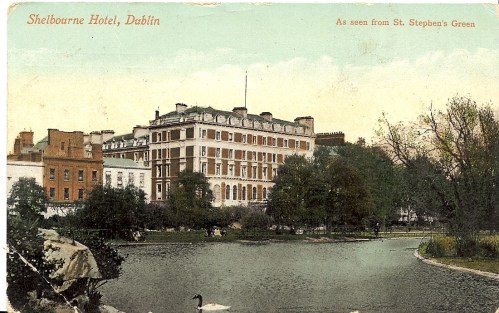
The Shelbourne (Kevin O’Sullivan - Pues Occurences)

My favourite historical anecdote about the hotel dates from a little earlier. In 1911, Adolf Hitler’s half brother, Alois Hitler Jr., worked as a waiter in the hotel. During his time in the city, he met a Clondalkin woman called Bridget Dowling. They eloped to London, later having a child called William Patrick “Paddy” Hitler who only passed away in 1987.
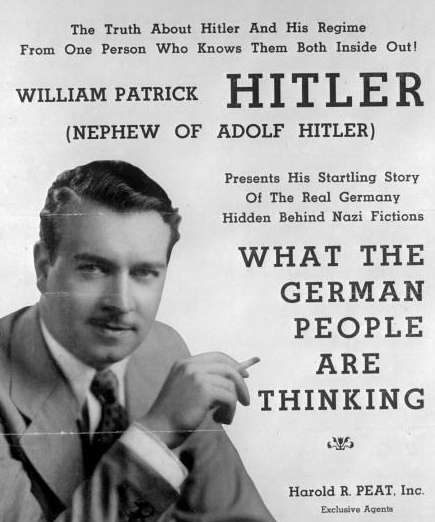
William Patrick Hitler's father Alois Hitler was a waiter in The Shelbourne

I had wanted to visit the Horse Shoe bar (rumoured to have been where The Chieftains formed) but unfortunately it was closed. Instead we had to visit the Shelbourne’s new ‘No. 27’ bar. Though by now a clichéd term, it was fitting to mutter “recession, what recession?” while walking through the crowd. With eyes definitely on the five young males who were looking very out of place, we didn’t savor our pretty average pints and were soon making our way out of the revolving doors.

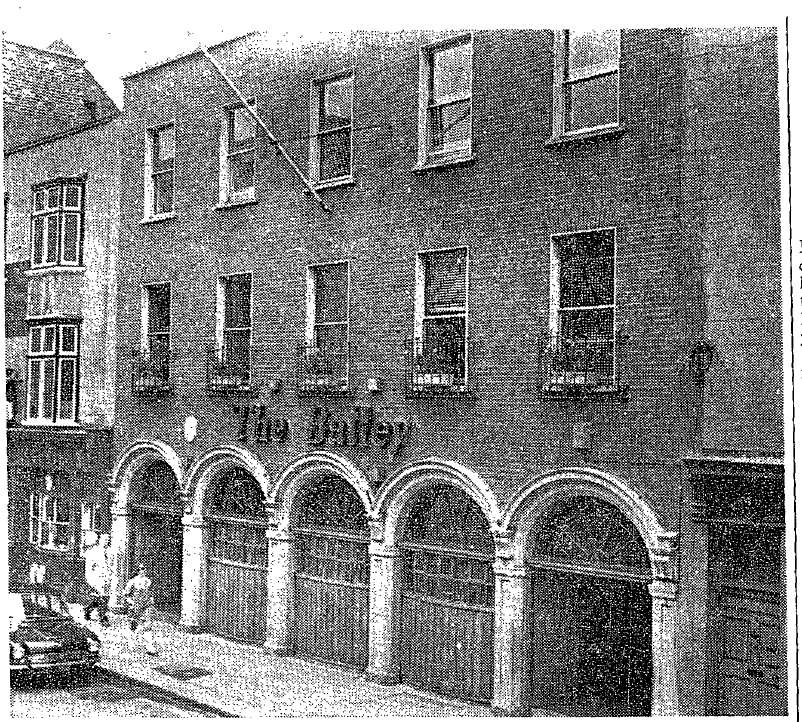
Knowing that I had now one pub extra to add to our tour, I took my uncle’s advice and chose The Bailey. I’ll say more about its history than our visit there. Once a pub of  literary renown, it has been in business since 1837. Charles Parnell was once a regular patron,  as was James Joyce, Oscar Wilde and George Bernard Shaw. Later Arthur Griffith was the centre of a group that met there including Oliver St. Gogarty, Seamus O’Sullivan (poet and editor of The Dublin Magazine), Padraic Colum (poet and dramatist) and James Stephens (novelist).
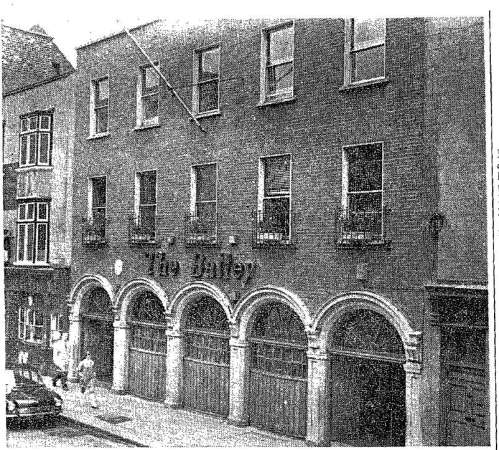
The Bailey, 1971. (c) The Irish Times

In the 1950s, it became the regular haunt of Brendan Behan, Liam O’Flaherty and Brian O’Nolan (Flann O’Brien). At the time, the owner of The Bailey, John Ryan, was an editor and publisher. He was the founding editor of Envoy (1949-51), a “short lived but important” literary magazine. During the first half of the 1970s, he edited the Dublin Magazine and was secretary of the James Joyce Society of Ireland.

“It was also the site of the door of 7 Eccles Street, the home of James Joyce’s protagonist from Ulysses, Leopold Bloom. The door was presented to the pub and publicly unveiled on June 16, 1967, by poet Patrick Kavanagh who had saved it from a renovator’s axe” – Brian Thomsen

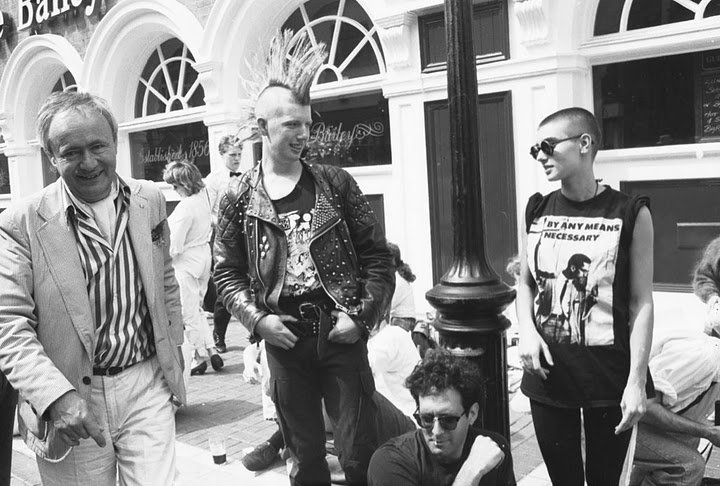
In the 1980s, it became the haunt of a whole new generation of poets and writers – Phil Lynott and Thin Lizzy, Bono and U2, Bob Geldof and The Boomtown Rats, Philip Chevron and The Radiators from Space and Sinead O’Connor.
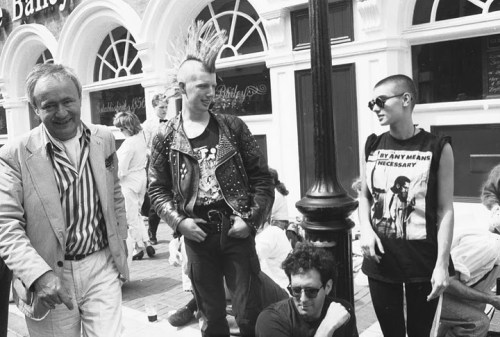
Sinead O'Connor with punk outside The Bailey. Photo - Wally.

It has since lost all of its charm. In 1995, the pub was gutted and sold to the Thomas Read Co. while all of its fittings and fixtures “with approximately 140 prints and paintings” were put up for auction. It is now just another upmarket, ‘trendy’ bar.

We moved on to The International at the corner of Wicklow and South William Street. A beautiful pub, it was no surprise to see that there were no seats in the main bar but we more than happy to take our drinks to the cozy basement. The bartender was happy to turn down the blaring music and we chatted away about the weather, the economy and other important matters.
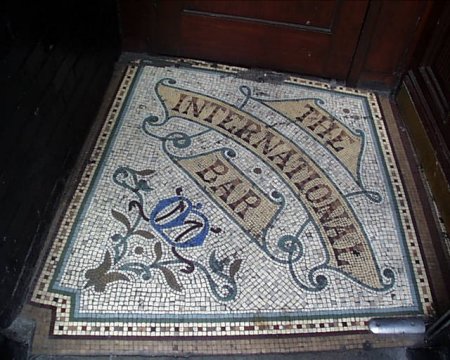
The International Bar © The Chicago Bar Project

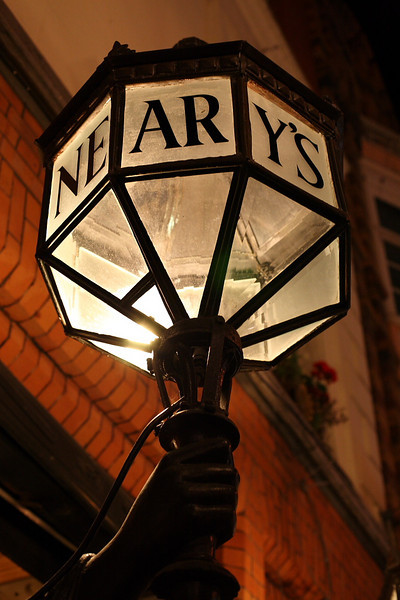
Pressing on, we slipped down Coppinger Row across Clarendon Street, onto the lovely Chatham Street and past the two brass hand held glowing lamps into the welcoming door of Neary’s. As I might have guessed by this stage, the superior upstairs part of the pub (The Chatham Lounge) was closed but we were able to find two tables downstairs in a quiet corner at the back of the bar.

Due its close proximity to the Gaiety, it is frequented by figures from the world of theatre. A back door beside the toilets leads to a lane which in turn leads to the back door of the Gaiety itself. The actor Alan Devlin famously used this as a escape route in 1987:

“Perhaps (Devlin’s) finest hour came while he was playing Sir Joseph Porter in the Gaiety Theatre’s 1987 production of HMS Pinafore.

As stage legend has it, Gilbert and Sullivan’s much-loved operetta was wandering to its predictable conclusion when Devlin turned to the audience, said: “F**k this for a game of soldiers, I’m going home,” and clambered through the orchestra pit, shouting: “Finish it yourself!” and vanished. Still dressed in the flamboyant costume of an admiral, Devlin (scuttled) into Neary’s bar, where he approached the counter, drew his sword and demanded a pint.

And thanks to radio mike technology, the cast and audience in the theatre next door were still able to hear the thespian, ordering a round of drinks and fearlessly critiquing the production he had recently departed.” – Joe O’Shea

By this stage, our conversation was beginning to really flow, as the one pint one pub rule was set aside and a number of friends joined us at this late stage of proceedings.

Albeit with a few hiccups, the ComeHereToMe January Pub Crawl was a success and I look forward to my turn again so I can visit some the pubs that were closed that day. Onwards to February…

January’s five pubs were:
1. Hourican’s, 7 Lower Leeson Street.
2. The Shelbourne, 21 St. Stephen’s Green
3. The Bailey, 2 Duke Street.
4. The International, 23 Wicklow Street.
5. Neary’s, 1 Chatham Street.

Read Full Post »
I’ve been wandering the steets of Dublin quite a bit in the last few days, and on Thursday found myself in the Castle itself. Looking up at the gates of the inner courtyard, I was reminded about a short but interesting titbit of local history. Atop the gates sits a statue of Iustitia, or Lady Justice to you and me.

Iustitia (Lady Justice,) Dublin Castle.

Now the interesting thing about this statue, erected by British Authorities in 1751, is that it betrays many of the characteristics statues of this type are supposed to adhere to. Iustitia, in representing Justice, is supposed to be blindfolded- Blind to discrimination. Here, her eyes are unbound. Her scales, are always to be in working order and perfectly level; Innocent until proven guilty- Here, they always tilt in one way; Funnily enough, they lean to the side of the gate that Revenue, and Dublin’s Tax Office is situated. Her sword, meant to be pointing downwards is held provocatively upright and she looks at it with a smile on her face.

What really got to people when she was erected however, is the direction she is faced; You will find statues of lady justice in Government buildings all over the world, and you will find her looking out over the city. Only in Dublin, does she face into the courtyard, turning her back on the people of Dublin. Just a thought; How could the tribunals held regularly in the Castle ever come out with a fair and honest representation of Justice when Lady Justice herself presides over them with her back to the people and a smile on her face?

Read Full Post »

Erich Hartmann (1922-1999). Born in Munich, Hartmann emigrated to the US in 1938. He enlisted in the US army and served in the Normandy invasion. On his return to New York, he worked as a freelance photographer and was invited to join Magnum in 1952. He served as a Board member 1967-1986 and as President 1985-86. As a photojournalist, he travelled all over the world on assignments from newspapers, magazines and corporate clients.

Hartmann took over 3,000 images during his “own journey of discovery through Dublin” in 1964 but unfortunately only a few are available online.

© Erich Hartmann / Magnum Photos

Read Full Post »

“There will be a gig in The Button Factory on Jan 12th.with The O’Catháins, Frankie Lane,Noel Heavey, Davoc Rynne, Andy Rynne,Tom Tuohy,Ann Egan agus mise.The gig is part of the County Sessions and will feature songs and music from Kildare.It will be hosted by Luka Bloom”

-christymoore.com

The Button Factory in Dublin has been playing home to fantastic ‘county nights’ now since last year, with several counties including the capital down so far. Guests to date have included Matt Molloy of The Chieftains and ‘THAT pub’ fame and Colin Mac Con Iomaire.

Next Tuesday sees Kildare rise to the Dublin stage. The night, hosted by Luka Bloom, features the likes of Tom Touhy and Noel Heavy, along with the classic Christy Moore.

Tickets are €17.50 and available now from tickets.ie. The three of us from CHTM! made our way to the Dublin night last month and enjoyed every minute of it, so another trip may well be in order….

Doors: 8PM, Show: 9PM

Read Full Post »

Dublin City has had it’s fair share of hell-raisers in the last century or so, mostly a product of purveyors of Arthur Guinness’ finest. But the history of hell- raising goes back well before the birth of the black stuff; most infamously in Irish history in the half-century before the good man himself poured his first pint and let it settle when Dublin was host to it’s own Hellfire Club.

The first Hellfire Club was founded by the Duke of Wharton in London in 1719 and was and was an exclusive club, mainly populated by a class of rich, landed Gentry called “Bucks” who chose to pursue a certain type of enjoyment which generally involved a pious mix of gambling, blaspheming, whoring, drinking, violence and even the odd touch of Satanism. (Though there is little evidence of this, it is something that is seen to go hand in hand with the original Hellfire Club and seems to stem from them calling each other “Devils.”) Their behaviour was seen as an affront to the ideals of the church and the sacred principles of religion; corrupting to the minds and morals of young people. Wharton’s club came to an end in 1721 when George I put forward a bill “against ‘horrid impieties'” (or immorality), aimed specifically at the Hellfire Club. (1)

Medmenham Abbey, reputed home of the first ever Hellfire Club

From their ashes, The Dublin Hell-Fire Club was founded by Richard Parsons (1st Earl of Rosse and founder of the first Irish Lodge of Freemasons,) and Colonel Jack St Leger (The son of a rich landowner from Kildare, notorious for gambling large amounts of money on ridiculous wagers.) The Club motto was “Fais ce que tu voudras,” or “Do as thou wilt,” a nod to Rabelais’ Theatre of the Absurd. Meetings started with all members sitting around a circular table upon which was placed a huge punch bowl of scaltheen, a rancid mixture of Irish whiskey and melted butter. After toasting the Devil and drinking to the ‘damnation of the Church and its prelates’ the bucks would pour scaltheen over a cat, obtained for the occasion, and set fire to the poor feline. After this, the decadence could begin in earnest.

The club had various headquarters around Dublin such as the now demolished Eagle Tavern on Cork Hill, founded by Parsons sometime around 1735. The Eagle Tavern and Cork Hill are now no more, lost in the regeneration of Temple Bar. We do know that the Tavern was situated close to the IFI and the Quakers Hall in Temple Bar. (2) Another favorite meeting place was Daly’s Club, College Green. Here, shutters were kept closed in the morning so that members with hangovers could gamble and drink by candlelight. One notorious incident occurred here when a member, Buck Sheely was caught cheating at cards. A ‘court’ was convened presided over by Buck English; His verdict was that Sheely was to be hurled through the window of the third floor gaming room- he died in the fall, impaled on the railings below.

The Hellfire Club, Montpellier Hill

Perhaps the most famous of the meeting places of the Hellfire Club was on Montpellier Hill, in the Dublin mountains, not far from Rathfarnham. It was built around 1725 on land purchased from the Duke of Wharton (founder of the first ever Hellfire Club) by William Connolly, a speaker in the Irish House of Commons. According to local legend, an ancient Cairn erected to the old pagan gods of Ireland had been demolished to make way for the lodge. Many of the stones from the Cairn were used in the construction of the house. Shortly after its completion, a powerful storm blew the slated roof away. It was replaced by a stone roof which remains intact today. For at least 20 years Mountpelier House flourished until the Bucks ruined it sometime around 1740. The story of the disaster is well known. As with the roof blowing off during its construction; local myth held that its destruction was a punishment for the desecration of the Cairn it was built upon.

At this time the ‘Principal’ of the Hellfire Club was a man of huge wealth called Richard Chappell Whaley. His nickname was ‘Burn-Chapel’ Whaley because of his hatred of religion and in particular, the Roman Catholic church. He would amuse himself on Sundays by riding around Dublin setting fire to the thatched roofs of Catholic chapels. It was he who caused the downfall of Mountpelier House. “After an unfrocked clergyman had performed a Black Mass in one of the two upstairs rooms in Mountpelier House, the ceremony ending in the usual drunken revelry, a footman picking his way through the sprawling bodies spilt some drink on Richard Whaley’s coat. Whaley reacted by pouring brandy over the footman and setting him alight. The man fled downstairs clutching at a tapestry hanging by the hall door, trying to douse the flames. Within minutes the whole house was ablaze.” (3) Many Bucks died in the fire, but Whaley managed to survive by leaping out of a window. At the age of 59, he married a woman 40 years his junior. Their son, Thomas ‘Buck’ Whaley was to become the most famous Buck of all. “Born in 1766, it was Buck Whaley who rallied the Hell-Fire club from the low ebb to which it had sunk after the burning of Mountpelier House declaring his intention of ‘defying God and man in nightly revels’.” (4)

Bucks of the Limerick Hellfire Club

Before I go into the Buck Whaley himself, here’s a piece of poetry about the Limerick Hellfire Club pictured above and it tells us a little about what shenanigans they, and the other Hellfire clubs around the country got up to:

‘But if in endless drinking you delight,

Croker will ply you till you sink outright.

Croker for swilling floods of wine renowned,

Whose matchless Board with various plenty crowned.

Eternal scenes of Riot, Mirth and noise,

With all the thunder of the Nenagh boys;

We laugh, we roar, the ceaseless bumpers fly,

Till the sun purples o’er the morning sky.

And if unruly Passions chance to rise,

A willing Wench the Firgrove still supplies’. (5)

Buck Whaley inherited a huge fortune after the death of his father, being granted a yearly allowance of £900 at the age of 16. He had an eventful upbringing, jumping between tutors in England and France before returning home having spent some time in jail. Obviously having inherited some of his fathers hatred of the church, he was thrown into jail in Marseilles, having “insulted, violently assaulted and raising his sacrilegious hands against a Priest.” He escaped a long sentence by being secreted out of the country by friends of his lawyer. While his inheritence at the time was huge, arguably, he won an even greater fortune at the gaming tables as well as partaking in some bizarre wagers. In one wager he won £25,000 from the Duke of Leinster by riding to Jerusalem and back within a year. While seeing the sights, this was not a pious pilgrimage and he later boasted of playing handball against the Walls of Jerusalem and having drunk his way there. On another occasion, for a bet of £12,000, he rode a beautiful white Arab stallion in a death-defying leap from the drawing room on the second floor of his father’s house on Stephen’s Green, over a carriage parked outside the door, and onto the street, 30-odd feet below. He won his wager, surviving with a broken leg, but killed the horse.

Remorse, however, befell Buck Whaley as his life went on and so he resolved to seek absolution for his sins. Whilst praying in St Audoen’s Church, just off modern day Thomas’ Street, he had a vision of the Devil creeping down the aisle towards him. Seized with terror, he ran from the church and fled Ireland forever.

He lived the last few years of his life, with his mistress, now his wife, in a mansion he built on the Isle of Man, where he wrote his memoirs. Repentant in his sickness and misery, he wrote “I thought that a faithful picture of my youthful eccentricities, drawn with justice and impartiality, would not be unacceptable to my country- men, and particularly to my younger friends, who will find some few examples which they may follow with advantage, but many more which they ought to avoid.” (6)

He died at the age of 34 of sclerosis of the liver. With his death the Dublin Hell-Fire Club ceased to exist.

Footnotes:

1: http://en.wikipedia.org/wiki/Hellfire_Club

2: http://homepage.eircom.net/%257Eseanjmurphy/dublin/templebar.htm

3: Taken from Setanta Orienteers by Robert Whaley, page 1

4: http://www.archive.org/stream/cu31924028518730/cu31924028518730_djvu.txt (Whaley’s memoirs)

5: http://www.askaboutireland.ie/reading-room/history-heritage/big-houses-of-ireland/glin-castle-co.-limerick/the-four-brothers/edmond-fitzgerald-20th-kn/

6: http://www.archive.org/stream/cu31924028518730/cu31924028518730_djvu.txt

Read Full Post »

Truth, in matters of religion, is simply the opinion that has survived.

The media is awash with reports that Archbishop Ryan Park in Dublin city centre is to be renamed. Situated in Merrion Square, opposite the Dail, the park features a good sized playground, Michael Collins bust, a fine collection of antique Dublin lampposts and most famously- a fantastic Oscar Wilde statue and art installation with some of his best pieces of wit featured.

The parks history is long and diverse to say the least. In the 19th century it served as a refuge for victims of the famine, but in the 1920s it fell into the hands of the church. Their aim was to build a cathedral on the site, but this never came about so the church (Or more specifically Archbishop Ryan) handed the park over to the city of Dublin in the 1970s.

Dublin councillers have voted to rename the park as “a gesture to all of those who suffered as a result of clerical abuse”.

Of course, Wilde isn’t the only option. George William Russell (The famous AE) and W.B Yeats both lived in Merrion Square. Still, perhaps the resident of Number 1 most deserves the accolade. What better way to show the modern worlds definition of “gross indecency” is far removed from that which made Wilde a ‘criminal’.

A FACEBOOK GROUP SUPPORTING THE MOVE HAS BEEN SET UP, CLICK HERE

Read Full Post »

A nice little find on Youtube. A 27 mins documentary in which “Brendan Behan acts as guide to Dublin as he tells tales about the city”. The programme, which was made two years after Behan’s death, was made up of ‘reconstructed’ commentary and interviews with relatives.

There are conversations with Brendan Behan’s father Stephen, his mother Kathleen and his widow Beatrice as well as beautiful old footage of O’Connell Street and the ‘Little Jerusalem’ area of Clanbrassil Street. The soundtrack is by The Dubliners.

Read Full Post »
Peter's Pub

After Mother Nature tried her best to put us off our stride, and herself and Irish Rail conspired to delay me getting back to Dublin and causing the CHTM pub crawl to kick off a little later than usual, we met at Traitors Gate, well wrapped up against a very chilly Dublin Sunday evening. Traitors Gate as its known colloquially is the archway leading into Stephens Green and is so called because the inscriptions on its underside are the names of the Irishmen who fought and died in WW1, a subject that is still the inspiration for many an argument in Irish households. We had a quick gander at the names while waiting for a new attendee, JBrophy and decided to scarper as soon as he arrived, the cold being the cause; luckily we didn’t have too far to go to our first port of call which was to be Peters Pub, around the back of Stephens Green Shopping Centre. A lovely spot this, I’d been here a few times before when ambling around during the day – When you can get a seat, it’s the business; A pint and a toasted sandwich, I don’t think there’s a better combination. Unfortunately, the place was packed to the rafters with people stopping off for a break from the shopping and bags and big coats meant a tight squeeze for all. Not to be deterred, we took position at the back door and sampled the fare. A nice pint it has to be said but not a fantastic one, and at €4.80 was a little steep. But, no matter, it was grand and warm and the company and banter was good.


the Lord Edward.

With the lack of seats an issue, we didn’t stay long and were soon on our way to our next destination, The Lord Edward just across from Christchurch. A little moment of panic hit when the place looked like it was closed but that subsided quickly when we got around to the front door and it opened like a doorway into a different world, nice and warm with the offer of a tasty scoop at a bargain price of €4. I think we’d all been in here at various stages but I’ve always enjoyed the pint, a touch soft but tasty and much needed. The location of the pub was also a factor, being next to Burdocks was a big deciding factor. We got a few stools inside the door and were joined by another new head in the shape of kbranno, bringing his experience into the mix. A nice pub for a bit of banter this, though I’m not sure how many people were watching the Tenerife game on the telly above our heads. DFallon did comment though, that those among us that are into football drifted into a dreamlike state watching the game, it has that capacity to usurp conversation really. So we snapped out of it, got back to conversation and finished the pints. Out one door we went and in another, as we left for Leo Burdocks for a battered sausage and a scoop of chips.

The Brazen Head

You don’t get that too often, the free scoop of chips thrown in, but it was much appreciated and needed as we strolled through the cold to our next stop, The Brazen Head, on Lower Bridge Street. They say this is the oldest pub in Dublin and I don’t disagree. It’s a lovely place, one that a few of us had never thought to frequent, it being a little out of the way. Plenty to look at and talk about in here as we supped our pints in the “Robert Emmett” room, with all the signed dollars of visiting tourists and ancient posters on the walls. Again, we went back above the €4.50 mark for the scoop here but I’d say it was worth it- we got some nice seats and bantered back and forth about the man who the room was named after. While his speech from the dock has been repeated a thousand times, his rebellion itself was not so much brave as… a bit mad really. There’s quirks galore in this pub, if only you had the time to explore them, but the one that stands out is the etching on the window halfway up the stairs- A visiting journeyman etched his name, his occupation and the date on the window with his ring; dated at 1796, it was only a couple of years before the rebellion of 1798… I liked this pub but the night was getting on and we still had two stops to go.

Frank Ryans

For our first foray into the North-side, we headed across to Frank Ryans, Queen Street. I don’t know how I wasn’t in this place before, as although the Frank Ryan who owned this place was of no relation to the one who fought in the Spanish Civil War, the name inspired (as it always does) no end of conversation. I love a pub with an open fire and this place provided us with one, and a pool table, good music, warmth and a more-than-decent pint for €4.30. I think we all liked this place a lot and promised a return. The kitch décor of the place wasn’t too OTT but still seemed a little out of place, as it’s a locals pub and it doesn’t need the boots hanging from the roof or the Ballybofey signpost to make it Irish. If anything, they make it Oirish, and that’s not a good thing. We stayed for a couple here, such was the welcome, good music being played at a low volume, and the quality of the stout. A nice touch was the board with the newspaper clippings over the jacks; without it, I never would have known that Ho-Chi-Min worked as a kitchen porter in London…

So onwards and upwards to the highlight of the night; How could you venture down this part of the city without visiting The Cobblestone Bar in Smithfield Square- What a pub. They say you get the best Trad sessions in Dublin here and they aren’t too far off the mark. Far enough away from town to dissuade the cheesy ‘old sod’ ballad bollocks, the musicians here are top notch. We didn’t get much of a chance to enjoy it, such were the crowds thronged around the music, leaving us in a precarious position beside the front door, and so we headed down into the bowels of the pub, and got a nice spot out of the way. The pint was without a doubt the best of the night, you know when you get a top pint as it satisfies down to the last mouthful, the head stayed creamy and white on each of the pints we had, a joy to behold and far from some of the muck you pick up around the Temple Bar area. I really like this pub, I haven’t been here enough, it’s only a ten minute walk from O’Connell Street but psychologically much further I guess… But, I reckon Sunday nights visit will be the boot up the arse we need to start heading there on a more regular basis. I don’t know how to describe it; this place just feels like a pub is supposed to feel, the hum of conversation and laughter, the musicians in the corner, top barstaff and good craic.

So there you go, part three of the CHTM pubcrawls, and a nice trip across the city it was too. Next months pubs will be chosen by JCarax, and I’m looking forward to it already!

December’s five pubs were:

1. Peter’s Pub, South William Street.

2. The Lord Edward, Christchurch Place.

3. The Brazen Head, Lower Bridge Street.

4. Frank Ryan and Sons, Queen Street.

5. The Cobblestone, King Street North.

Read Full Post »
« Newer Posts - Older Posts »