Feeds:
Posts
Comments

Archive for 2010

Image and video hosting by TinyPic

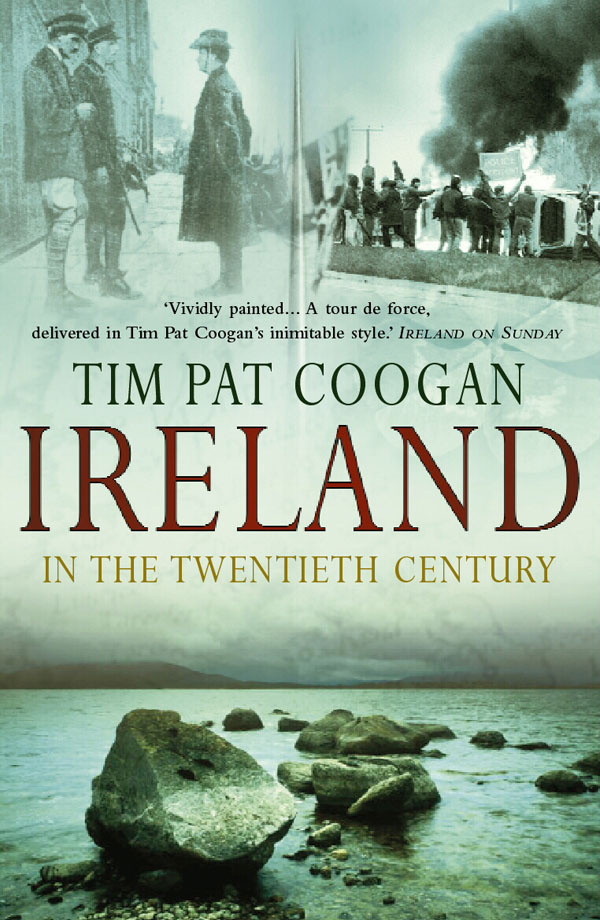
An excellent choice of image too, showing the surrender by Padraig Pearse and Elizabeth O’ Farrell to British forces, represented by General Lowe and Major de Courcy-Wheeler, his staff officer.

As a youngster, one of the first books I read on Irish history was Tim Pat Coogan’s ‘Ireland In The Twentieth Century’. Here’s the cover. Look at the feet of Elizabeth O’ Farrell above, and then look at the bookcover.

Best of luck to all involved with the meeting, I look forward to attending.

Read Full Post »

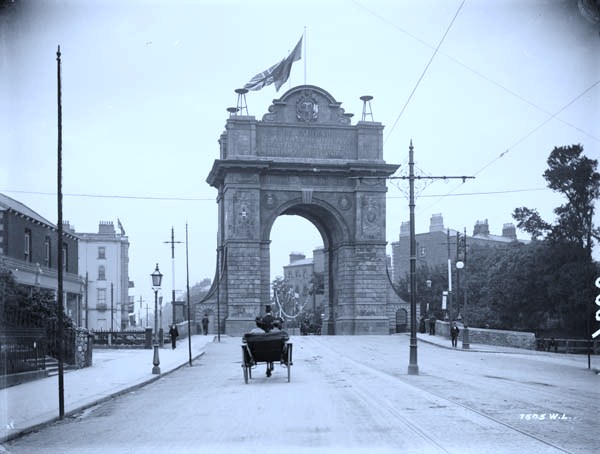
A bit of a mystery post this. On going through the National Libraries excellent online collection of photographs (which can be found here) I found the glass plate below. And while there were a set of mock gates erected on Leeson Street Bridge for the visit of Queen Victoria in 1900, they don’t fit the description that follows and besides, the scene looks much older than 1900.

Dublin City Gates?

The large mock medieval castle gate and tower erected at the bridge echoed the more ancient gate to the walled city of Dublin. The 70 foot high tower made of wood, covered in canvas and painted to imitate the 16th century stonework of medieval Baggotrath Castle. A number of beefeaters in their tradition costumes flanked the gate and a stand was erected nearby to seat various dignitaries…

 An image of the above gates can be seen below, as found here.

Leeson Gates, as from Chapters of Dublin

 As you can see the two gates look very different- but the top one definitely looks like Leeson Street Bridge if you were heading towards town from the UCD direction. The visit of Queen Victoria to Dublin was a momentous one. An estimated 200, 000 lined the streets of Dublin and the occasion was marked by declaration of a public holiday. The Queen was presented with the keys of the city from the Lord Mayor and was given a rapturous welcome from the students of Trinity College as she passed by on her way to the Phoenix Park.

If anyone could shed any light on the first gate, an e-mail to ci_murray@hotmail.com would be much obliged. Alternatively, you can comment on here.

Read Full Post »

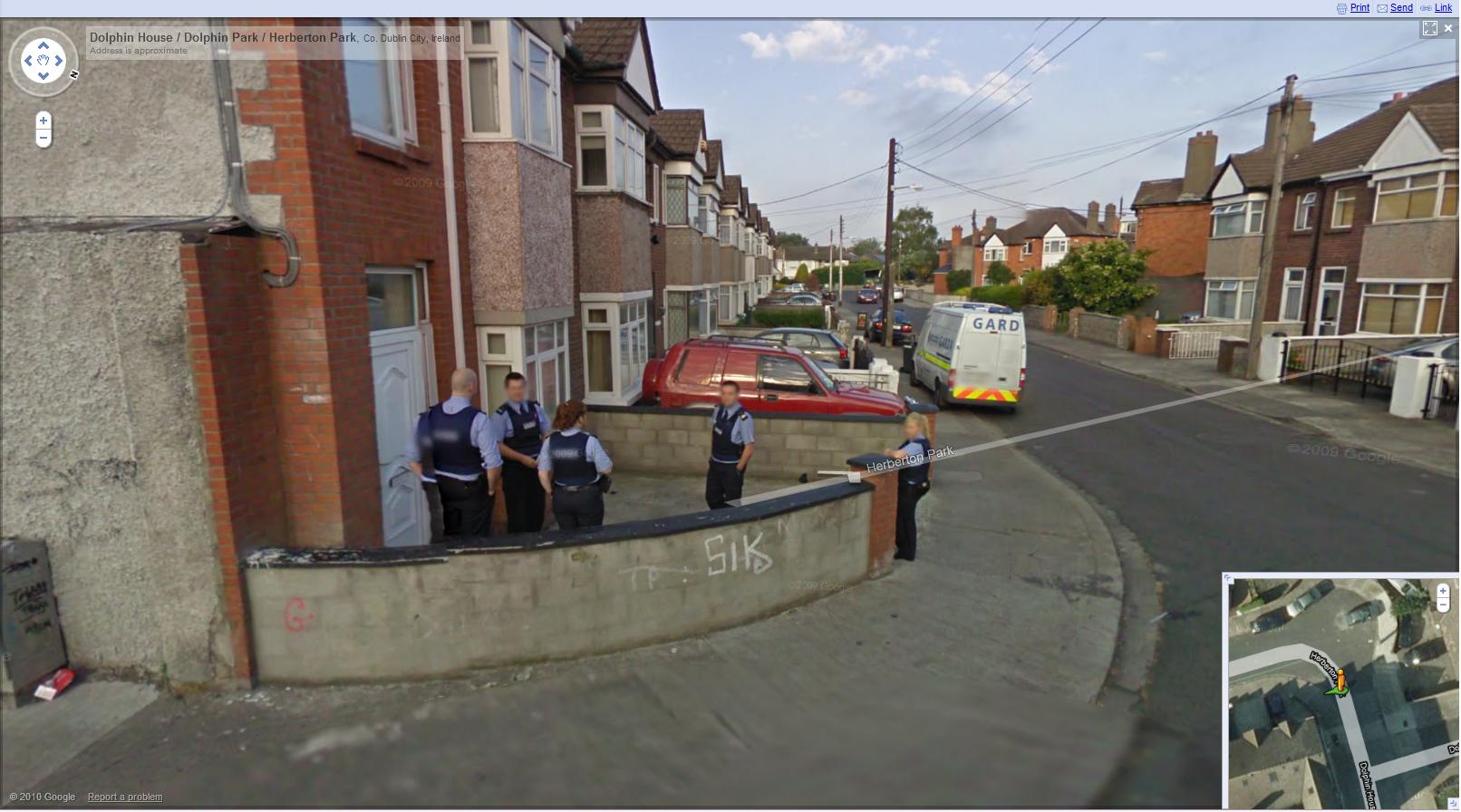
More fun from Dublin Google Street View.

Kudos to 'Bermo' for finding.

Read Full Post »

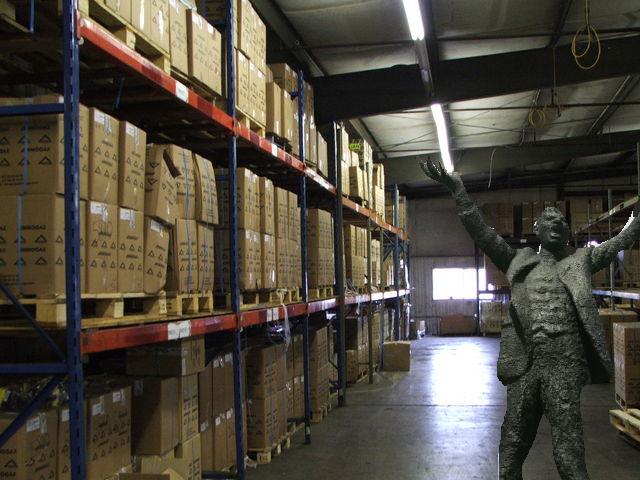
A friend linked me to this story earlier on from breakingnews.ie. Work on the Metro means that the statues on O’Connell Street are going to be moved to Collins Barracks from next year.

“Tom Manning from the Railway Procurement Agency said it is hoped to have the statues back on O’Connell Street in 2016 for the 100th anniversary of 1916.”

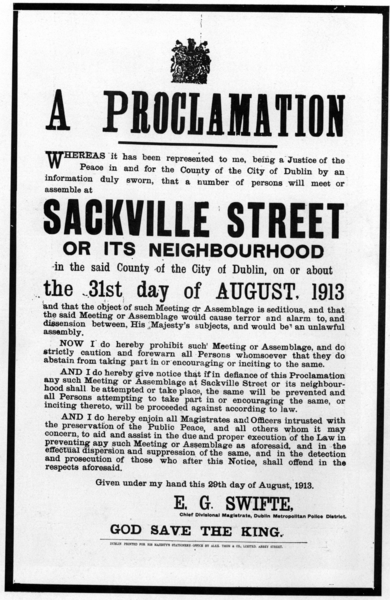
One-hundred years on from the great strike of 1913, O’Connell Street could be without Big Jim? Interesting. Tour guides all over the city dread the day O’Connell himself is moved no doubt, though the arrival of a construction site on O’Connell Street once more means we can at least expect an Orange Order march.

Read Full Post »

Throw in the towel.

Spotted on the Pats site this morning. Fair play Stacey, there’s hope yet.

I’ve a friend who follows Bohs and was offered a sizeable bribe in terms of branded merchandise from a certain Pat ‘Saintsmania’ Dolan as a youth to transfer from one side to the other. Needless to say, he turned it down. Stacey on the otherhand….

Read Full Post »

El Classico. The Eternal Derby. The Old Firm. El Superclassico. In cities across the world, there is always one game that captures the imagination, the wits and emotions of the masses. From Rome to Liverpool, Glasgow to Buenos Aires, football fans wait tentatively for those days of the season where you meet your fiercest rivals; shaking in anticipation, that constantly nervous feeling grips at your every bone. Sometimes its pure fear, that sick feeling in the pit of your stomach- a dull ache that spreads into your chest the closer the time comes, culminating in chest pains and a dry throat on the day itself. Hoarse before the game even starts having spent the last couple of days yammering onto anyone who’ll listen, whether they have an interest or not, about the game in question. Drunk on the occasion, not on the pints you swallow before it, you know you’ve got just a couple of hours before you’re walking home with either your head in the clouds or the gutter.

Clash of the Titans

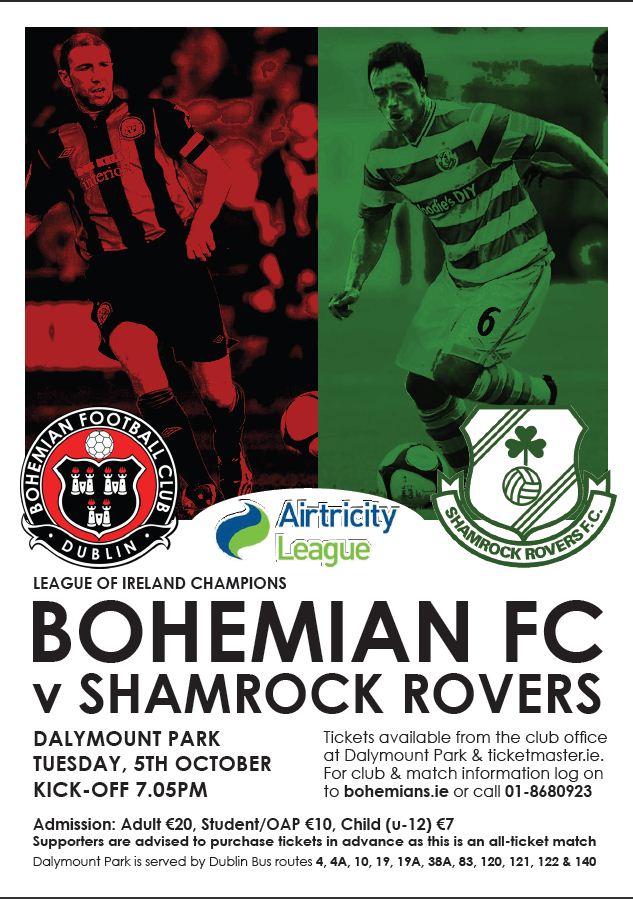
That feeling is with me now. For tomorrow night, in Dalymount Park, arguably the most important derby in recent memory is taking place. Shamrock Rovers sit at the top of the table, five points clear of Bohemians with four games to go. A win for Bohs tomorrow pegs that back to two points with three games to go. All to play for you might say. And to be honest, its mere luck that has Bohs in this position-where they have bottled it this season, Rovers have also. So for the last four games, it really is a case of who bottles it less, starting with tomorrow night. What used to be a stroll in the park, three points in the bag for Bohs game is now turning into a nightmare, if memory serves, Bohs haven’t beaten Rovers since the 2-0 victory at Dalymount in March last year- and that seems like an awful long time ago now. It should be a tight affair, Rovers losing Bayly and Murphy to red cards in Friday nights shock loss to UCD and Bohs losing Quigley for a stupid headbutt and O’Connor for a silly challenge outside the box during the dour draw with Bray.

We are Bohs!

To be honest, the nerves are at me already, and have been since Saturday morning. This game always sets the pulse racing for me, the amicable respect generally shown between League of Ireland fans goes out the window and it’s all out war for the evening. The Northside versus The Southside; The Clash of the Titans. Its an all ticket affair so if you’re on for it, get yourself to the bar in Dalyer tonight and pick one up; I can’t bloody wait. Never mind your Anfield or Stadio Olympico; theres nowhere I would rather be tomorrow night than Dalymount Park.

Come on Bohs.

Read Full Post »

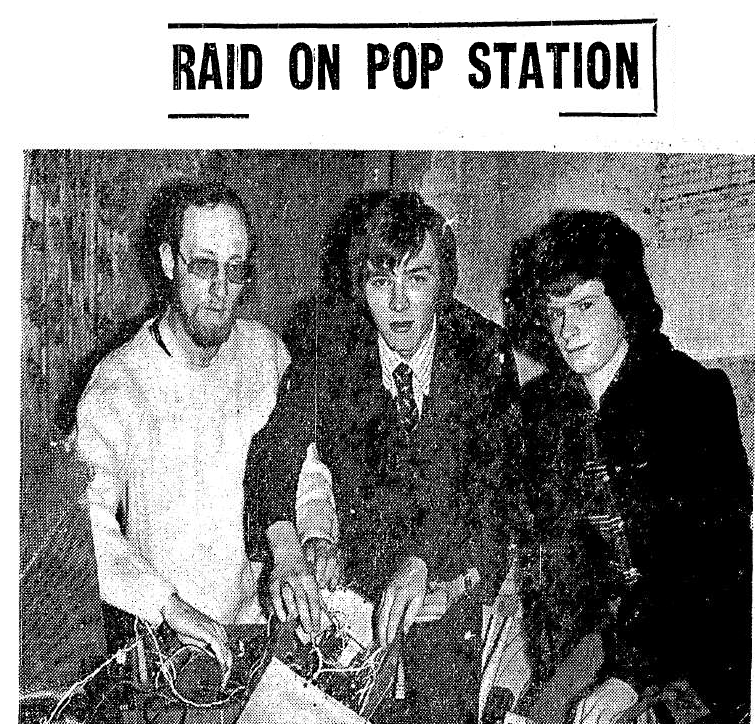
On December 22 1967, a group of schoolboys on their holidays began transmitting music and stories across the airwaves. The Irish Times noted that the transmissions had come from “somewhere south of the Liffey” and that the young boys had made two one hour broadcasts, at 8am and 12.30pm.


“…pop music programmes were interspersed with greetings from the announcer to school-friends. The transmissions also featured excerpts from the satirical magazine, Private Eye”

At 1.30, a young boy in fits of laughter told listeners that if they wanted to hear the news they had come to the wrong place and needed to turn to Radio Eireann.

The Department of Posts and Telegraphs didn’t see the funny side in this schoolboy prank. A spokesman warned the youngsters that they would track the schoolboys down. As far as I can see, the promised second day of broadcasting never came from Radio Jacqueline, and the boys probably went back to school in January with an excellent story to tell about how they made the national media through their DJ exploits.

A much more infamous station preceded Jacqueline, and that was Radio Juliet from Cork. A newspaper report into it in 1964 described it as the nations first “non-political pirate radio station”,and it was also the work of a small group of schoolchildren. They numbered a dozen or so. A spokesman for the group (in which the average age was 16) remarked that after a few days in operation over the summer holidays of ’64, it was becoming “too hot to handle” and it was time to wrap up operations. The boys had made a six shilling investment in the station, the cost of a transmitter which one of them built.

Amazingly, on the Cork station, the Irish language featured too.

“One third of the announcements were made in Irish, he said, and this was an ideal way of promoting the language”.

The late 1970s and early 1980s of course saw an explosion in pirate radio stations, not least in working class pockets of Dublin. In the summer of 1981 several Fianna Fail TDs and Ministers landed themselves in hot water for using pirate stations to advertise political message. Liam Lawlor used a Ballyfermot Pirate Station to thank the hugely popular Peace Corp youth group there for their efforts and a “great day” he’d enjoyed in their company.

What about Fine Gael?
“We’re using them in relation to our youth policy and Dublin plan” said Mr. Bill O’ Herlihy, the RTE sports commentator who is working in Fine Gael HQ.

Radio Dublin makes the news, '78.

Efforts to shut pirate stations across the capital frequently led to the courtroom. In 1978 “Captain” Eamonn Cooke of Radio Dublin was hit with a £35 fine for running a pirate station out of Sarsfield Terrace in Inchicore, the famous Radio Dublin. An Irish Independent report into the court case felt it important to note that “During the entire two hour case Mr. Cooke was accompanied by Radio Dublin disc jokey, blonde Sylvia McKenna, dressed in tight grey jeans and a sweater”. Good journalism that.

(more…)

Read Full Post »

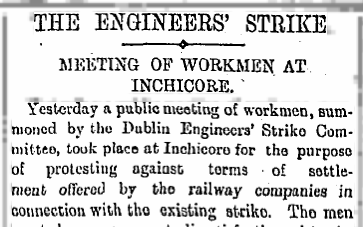
The 1902 strike was one of the bitterest and strongly fought in the city’s history. Led by the Amalgamated Society of Engineers (ASE) and over the issue of wage increases, the strike lasted 25 weeks. The following extract, regarding the issue of British scabs, recently caught my attention. It is from Hugh Geraghty and Peter Rigney’s excellent article ‘The EngineersStrike in Inchicore Railway Works, 1902‘ from Saothar Volume 9.

The blacklegs at Inchicore were housed in wooden huts built inside the works wall … They worked the normal fifty-four hour week for thirty shillings and all efforts were made to keep them content – “They left the work by train to Kingsbridge”. Bed, board, tobacco, ping-pong, piano playing, air gun practicing, skittles, cards and dominoes”

Nevertheless, they lead what was described as ‘prisoner of war’ existence, being unable to leave the works, even in groups and under police protection, without being attacked by the people of the area. On June 7 for example, four scabs were out walking, accompanied by policeman. They were attacked by a group of strikers and beaten, one being hospitalised. On another occasion, an attempt was made to set fire to the scabs’ living quarters.

As the summer progressed, an English or Scottish accent became a dangerous attribute in the Inchicore area. Three innocent Englishmen, employees of Guinness, were beaten while walking up Inchicore Road, being mistaken for scabs.

Billy Walker, a retired fitter whose father was on strike, recalled some incidents:

They were about to hang a scab on the lamp-post opposite Cleary’s pub. Father Ryan saved him. The RIC came along then and my father would have been arrested expect Mrs. Tuite pulled him into her house. Mick Flynn threw a scab off the top of the tram, he got six months, but a job later in Broadstone”.

The Irish Times. Monday, July 28, 1902.

Read Full Post »

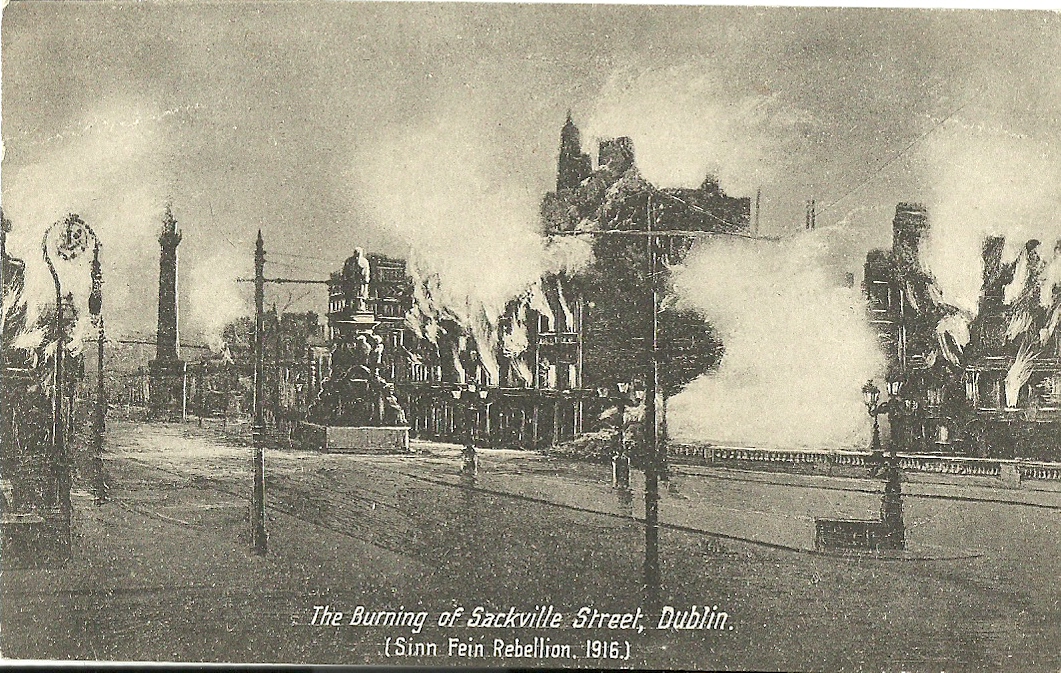
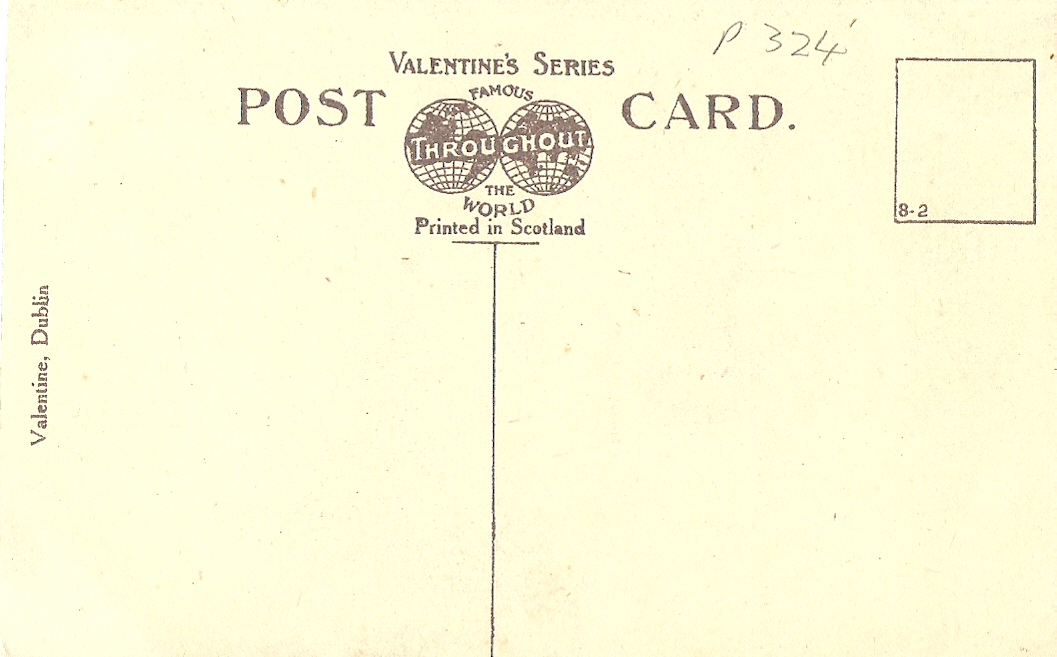
This is a nice little land, and what I like most about it is that it’s one of the ‘Sinn Féin Rebellion’ postcards I’d not seen before. Printed in Scotland, it’s from the famous Valentine Company.

Read Full Post »

As you should know by now, every month this blog organises a pub-crawl. In rotation, a different person chooses the five pubs in advance, picks a meeting point in the city and makes sure not to let any details slip to the rest of the group about what pubs are to be visited.

Sunday, 19th September. 4pm, Love Lane.

Myself, HXCI and veteran JFlood meet up to start our 13th pub crawl.

This time around I chose the area of Beggars Bush and Lower Baggot Street. Firstly, because I worked in the neighborhood over the summer and though I got to know the place well, never set foot in any of its watering holes and secondly, seeing as it was the day of the All Ireland final, I guessed it was far enough away from Croke Park to ensure a pub crawl free of hordes of GAA fans.

Setting off at a few minutes past four, we crossed the historic Mount Street bridge, past No. 25 Northumberland Road, and into the area knows as Beggars Bush. (Yes, it did get its name for being the “traditional assembly-point for country vagrants”)

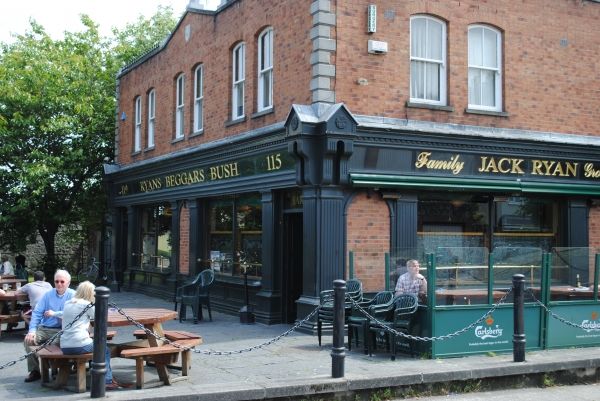
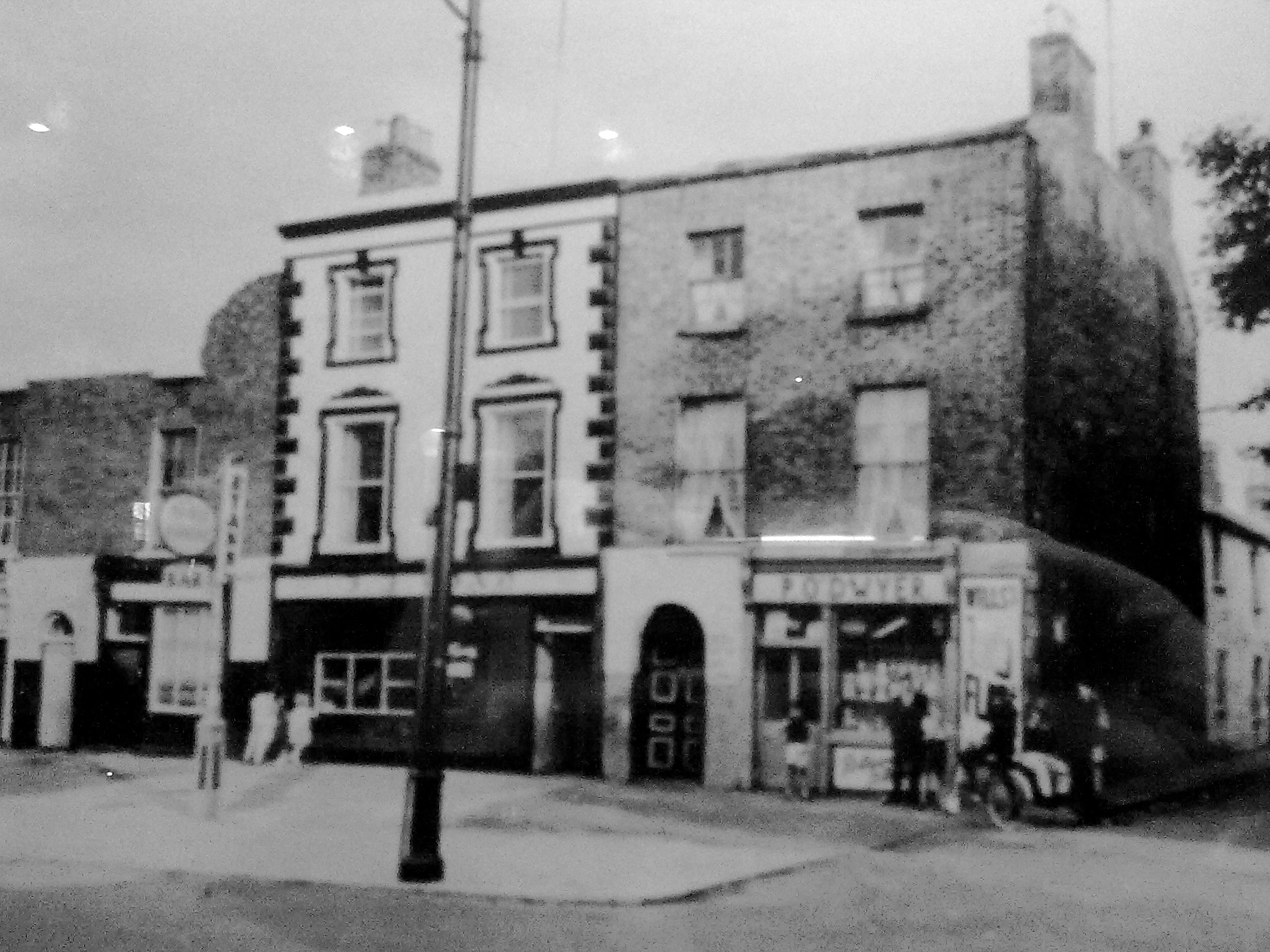
Our first stop of the afternoon was Jack Ryans of Beggars Bush. The first thing that struck was me was the amount of photographs along the wall opposite the bar. Thankfully they weren’t all the all too frequent mix match of Italia ’90 posters, cliche paddy wackery saying and reproduction sign posts. The photographs, all of the immediate area, showed the changes that had occurred over the last 300 years. That’s what you want to see in a pub. Something original. Something that you wouldn’t see anywhere else. I had read online that there was a picture of American poet John Berryman on the walls as well, who lived in the area and frequented Ryan’s Lounge in the 1960s, but I couldn’t see it myself.

We took our perfectly poured pints from the friendly barman (who said thanks at least three times) and settled down in the lounge. Here, we were joined by DFallon who admitted to taking the scenic route from the Quays to Beggars Bush (via Leeson Street!). At €3.80 a pint, these were the cheapest and quite possibly the best pints we had this pub crawl.
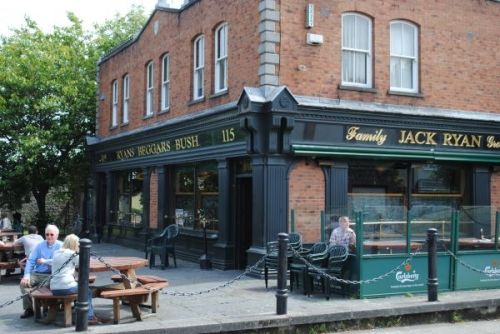
Jack Ryans, Beggars Bush. 2010
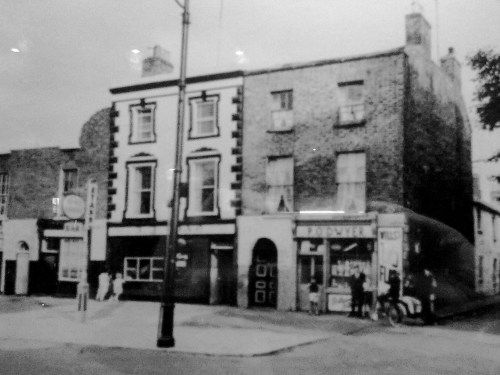
Jack Ryans, Beggars Bush. 1962.

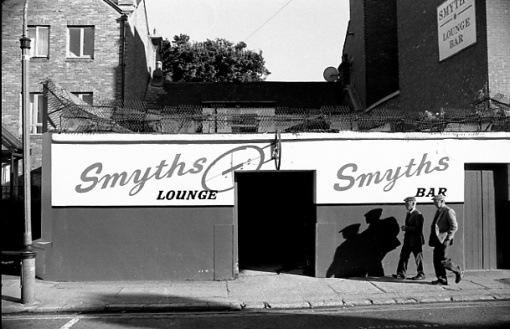
After a lengthy discussion on the recently screened James Connolly documentary, we left Jack Ryans and headed down Haddington Road, past the Church bell tower that British snipers used during the Rising, and into Smyths, the less upmarket neighbour of The 51. Smyth’s is a perfectly nice, small pub that proved to be a life-saver as it began to lash rain shortly after we arrived. (It became famous in 1999 for being the first pub in Irish history to be sold online) We were the only ones in the ‘Bar’ side of the pub and enjoyed our window seats. The pints were fine and came to €4.50 each. A price that you’d expect to pay for a pint of Guinness in Dublin city but it was noted that Jack Ryans (The Beggars Bush) which was less than 5 minutes walk away charged 70c less. JFlood, the only smoker of the group, remarked on the large, plastic covered ‘smoking area’ at the back entrance of the bar.
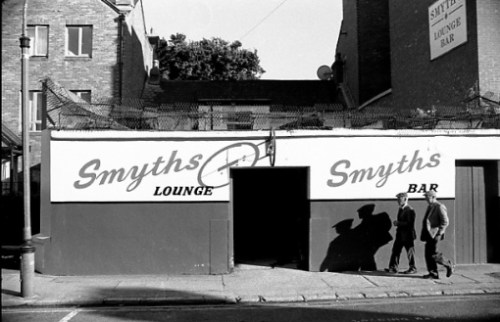
Back entrance to Smyths. Undated.

Onwards and upwards. We slipped down Eastmoreland Lane and took a right, bringing us onto Upper Baggot Street. (I hate backtracking on pub crawls). The Waterloo and Searsons are next door to each other and during my ‘pub crawl homework’, it was a difficult choice on which one to pick. I had never set foot in either. In the end, I chose The Waterloo manly for the fact that Searsons had been recently bought over by the Superpub empire Thomas Reads. I had hoped The Waterloo retained some charm, it was like many other pubs in Dublin in the 1960s, a haunt of Patrick Kavanagh and Brendan Behan.

Today, the Waterloo is a large, ‘trendy’ bar. ‘Souless’ might be a little bit strong, but it’s not far off. The most memorable physical aspect of the place is the towering church-like roof. There was a Christening party well under way upstairs but we managed to get decent enough seats in the empty smoking room. A couple of kids started the classic game of seeing ‘who can run around our table as fast as possible without hurting themselves’. One little boy banged his hand against a table and started crying, he lost. Finishing our average pints (€4.50) and grabbing a handful of free leaflets and magazine on the way out, we made our way back Southside.

Stomach’s were growling at this stage, so we made a pit stop at Beshoff’s on Mespil Road. Here, we were joined by our Corkonian CHTM! pub crawl virgin Mary who was in jolly moods after the Rebel County’s win.
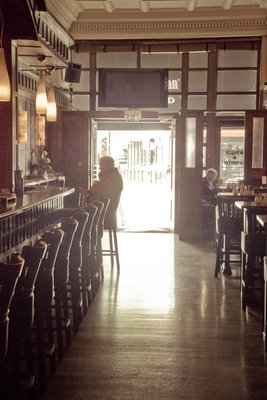
The Waterloo.

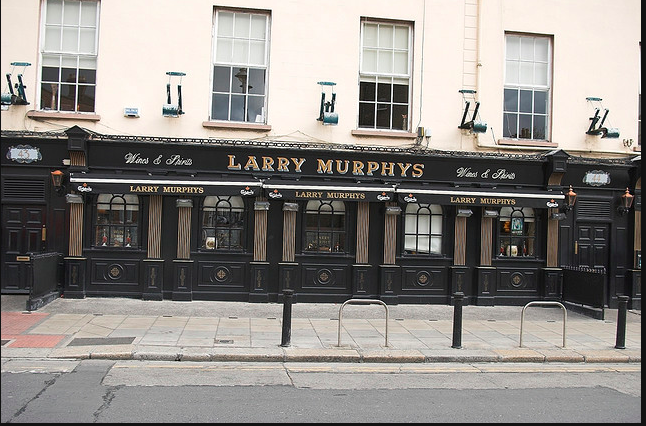
Our fourth stop of the evening was Larry Murphy’s on Lower Baggot Street. I expecting more from the place. It was empty, dark and a little bit depressing. No one was particularly happy with their pints (€4.50). The decor wasn’t interesting, the barman wasn’t very friendly and the loud jukebox music didn’t really help sell the place. We were great happy to move off. (That saying the pub does enjoy favourable reviews on Yelp, they all mention “after -work” weekday drinks though)
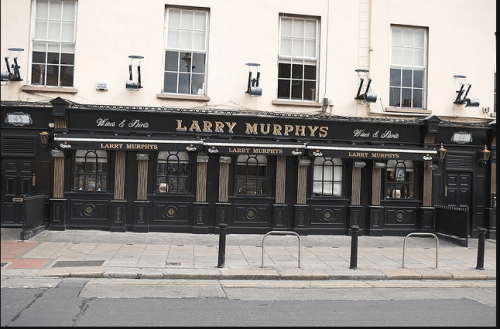
Larry Murphy's Pub. (Photo - Chris Brearley)

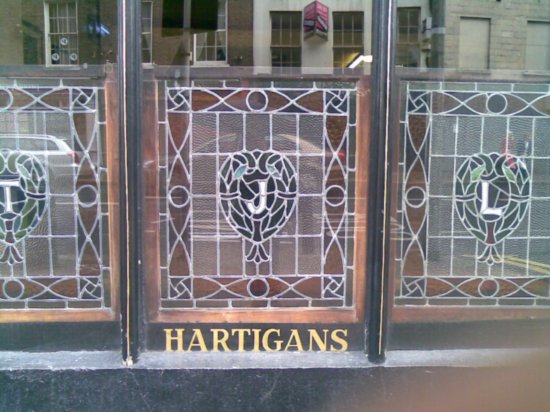
Last but not least was Hartigan’s. I had originally had picked it out for my first pub crawl but like a lot of pubs that day, it was closed. The wooden paneling and general decor was quite nice on the eye. Despite having such strong links with generations of UCD students, I was a bit disappointed about the lack of Earlsfort Terrace memorabilia on the walls. (Former residents of nearby Hatch Hall (UCD student residency) still meet socially in Hartigans pub on the first Wednesday of every calendar month; a social gathering known as “Hatch Wednesday”)

Though Mary was disappointed with the response of the bartender after she asked for her pint of Carlsberg to be changed, nearly everyone agreed that these were the best pints of Guinness (€4.35) of the pub crawl. Close call between Hartigan’s and The Beggars Bush definitely.
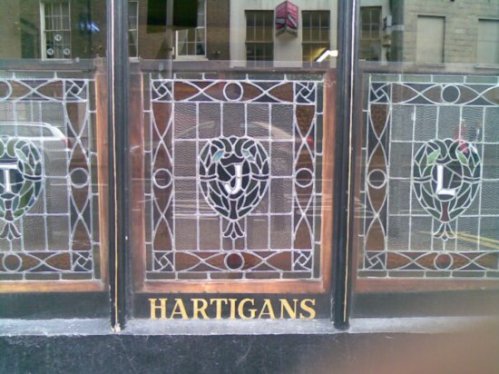
Hartigan's

If you ever find yourself in the Beggars Bush area, do drop into Jack Ryans. If you ever get stuck in bad weather on Haddington Road, check out Smyth’s rather than The 51. I wouldn’t go out of my way but if your ever on Lower Baggot Street, The Waterloo is probably your best bet. Avoid Larry Murphy’s unless there’s a big after-work session going on and if you like your Guinness, you could do a lot worse than Hartigan’s.

Read Full Post »

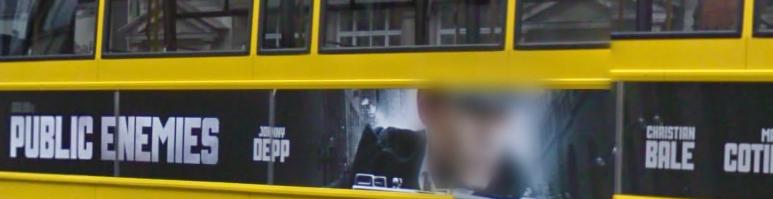
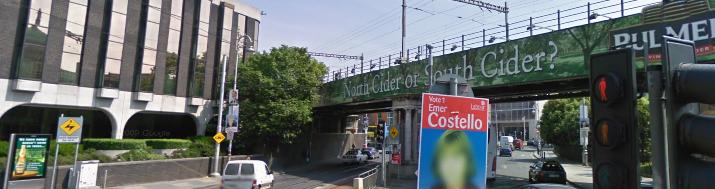
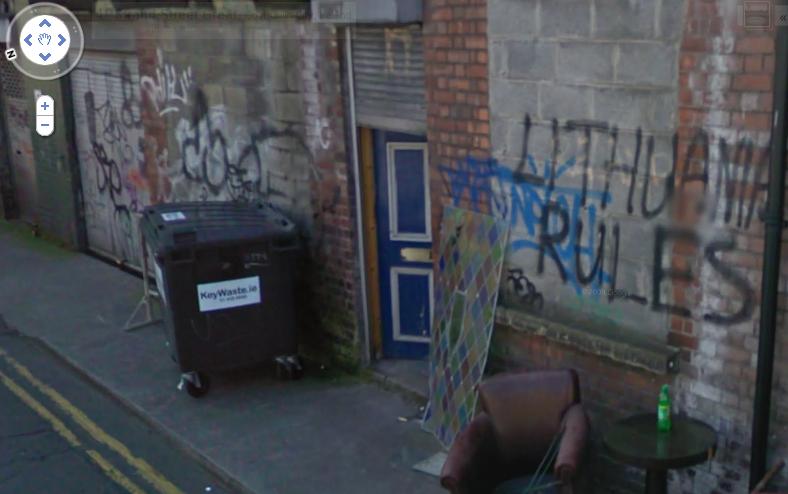
Help! I’m addicted. Anyone else? Exploring Dublin in Google Maps has become the new lunch time hobby of just about everyone in seems. Blurred out election posters and bus ads are just some of the gems in there, you can read graffiti long gone too. Jaycarax booted up some gems earlier on, and friends are reporting sightings of family pets and indeed family members all over the county.

I’ve spent the last hour or so looking at some long gone graffiti and businesses for example. Look at the site of The Workman’s Club on the quays, or hop up to The Bernard Shaw and see what art was on the walls around it. Looking at your own house is an obvious one, and probably the first thing everyone does. The shots of Dublin are from 2009 (A friend told me this recently, but to make sure I popped up to the Guinness Brewery and had a look at the front signage) and so much can change in a year.

Lithuania Rules, just beyond Lower Liffey Street, is still there.

Below image spotted by JayCarax.

Darndale

Knock yourselves out over on Google.ie.

Read Full Post »
Dole TV 2.

Original image from a recent Union of Students in Ireland protest.

The folks at DCTV are quick of the mark with this one, episode 2 of Dole TV arrives an exact week after the first one. Perhaps weekly sometimes really does mean weekly, and I envy their commitment and work ethic!

What’s in this one? More music, this time from Lunitic and Paul O’ Toole. Reports from protests on the cutting of Community Development Programme funding feature too, and of course with the week that was in it ‘that’ interview from outside Leinster House in the wake of gategate was always going to make its way in. Another excellent effort, and the quote of the week comes from none other than my favourite writer Brian O’ Nol……sorry,Myles na Gopaleen.

Read Full Post »
« Newer Posts - Older Posts »