In his excellent and highly entertaining history of the city of Dublin published in 1861, J.T Gilbert wrote of the arrival of George Frideric Handel to Dublin:
Handel, driven by ‘the goddess of dulness to “the Hibernian shore,” arrived in Dublin on the 18th of November, 1741, six weeks after the opening of the Music Hall, and issued the following public notice of his intended performances:-
“At the new Musick Hall in Fishamble-street, on Wednesday next, being the 23rd day of Dec., (1741). Mr. Handel’s Musical Entertainments will be opened, in which will be performed L’Allegro il Penseroso, il Moderato, with two Concertos for several instruments, and a Concerto on the Organ. To begin at 7 o’Clock. Tickets for that night will be delivered to the Subscribers (by sending their Subscription Ticket), on Tuesday and Wednesday next, at the place of Performance, from 9 o’Clock in the Morning till 3 in the afternoon; and attendance will be given this Day and on Monday next, at Mr. Handel’s House in Abby-street near Liffey-street, from 9 o’Clock in the morning till 3 in the afternoon, in order to receive the subscription money, at which time each Subscriber will have a ticket delivered to him, which entitles him to three tickets each night, either for ladies or gentlemen.
“N.B., Subscriptions are likewise taken in at the same place. Books may be had at the said place, price, a British sixpence.”
It is, in my mind, one of Dublin’s great claims to fame that the first performance of Handel’s Messiah took place in our city. When first performed, with seven hundred people present, the work raised more than £400 in aid of “The Charitable Infirmary, Mercer’s Hospital and the Releasement of Prisoners’.
Jonathan Swift famously objected to the work, and almost forbid singers from Saint Patrick’s Cathedral where he was Dean from partaking. Swift was opposed to the title of the work, and insisted it be titled ‘A Sacred Oratorio’. Ultimately the choir used contained boys from Saint Patrick’s Cathedral. What a bizarre tragedy it would have been had the great Swift and Handel clashed in such a manner that would have prevented the works premiere here. It was said that when Handel went to take his leave of Dean Swift, he remarked “Oh, a German and a genius! A prodigy!”
I feel a great sorrow on Fishamble Street thinking of how a part of Dublin’s history was lost forever here to the diggers and construction of the Civic Offices. A great street, first laid down by the Vikings to connect the Liffey to High Street, it has a remarkable story to tell. Neal’s Music Hall and Handel’s time in Dublin is one chapter in its amazing story, and one we should remember.
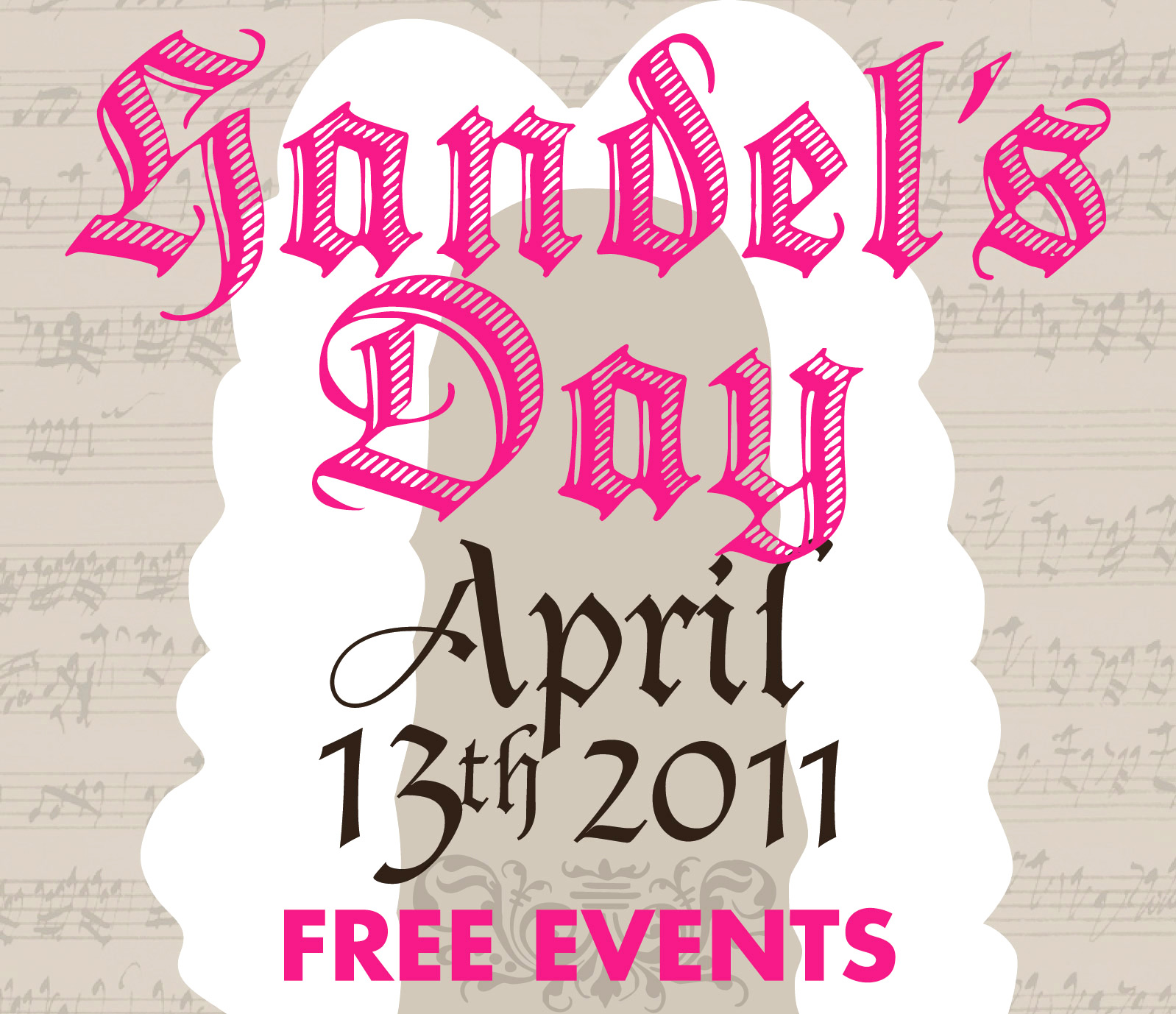
The Temple Bar Cultural Trust have once again organised a day of events to mark Handel’s Day on Wednesday April 13th. These events include a walking tour from Pat Liddy and ‘Messiah on the Street’, a performance on Fishamble Street itself conducted by Proinnsías Ó Duinn with live accompaniment from the National Sinfonia.
More information can be found here.

 Click on the book for more.
 Click on the book for more.
 Donal
Donal Ciarán
 Sam
Sam


 Come Here To Me!
Great stuff! And for those who can spare a bit of cash, the UCD Choral Scholars along with the UCD Orchestra and members of the EU Chamber Orchestra are performing Handel’s Messiah on the 20th and 21st April. See http://www.ucdchoralscholars.ie for details.
It doesn’t have to be Christmas time to see and hear this fantastic work!
I always loved the following line from Faulkner’s Journal (April 10-13 1742):
“The Stewards of the Charitable Musical Society request the Favour of the ladies not come with hoops* this day to the Musick Hall in Fishamble. The Gentlemen are desired to come without their swords.”
*hoop framed skirts.
They were asked to come without hoops and swords in order to increase capacity. 🙂