Feeds:
Posts
Comments

Archive for the ‘Dublin History’ Category

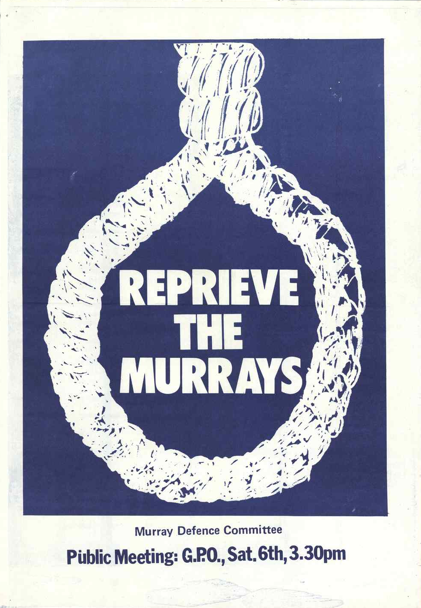
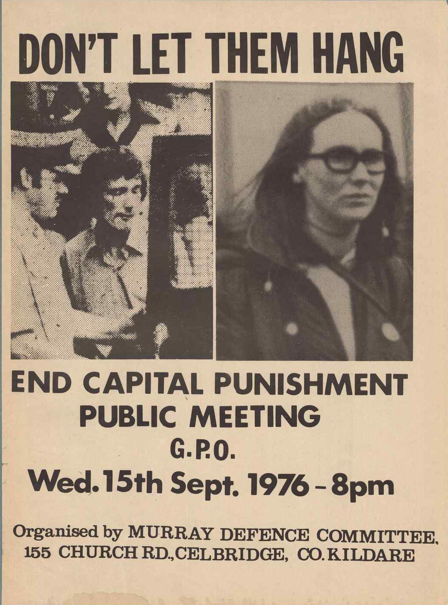
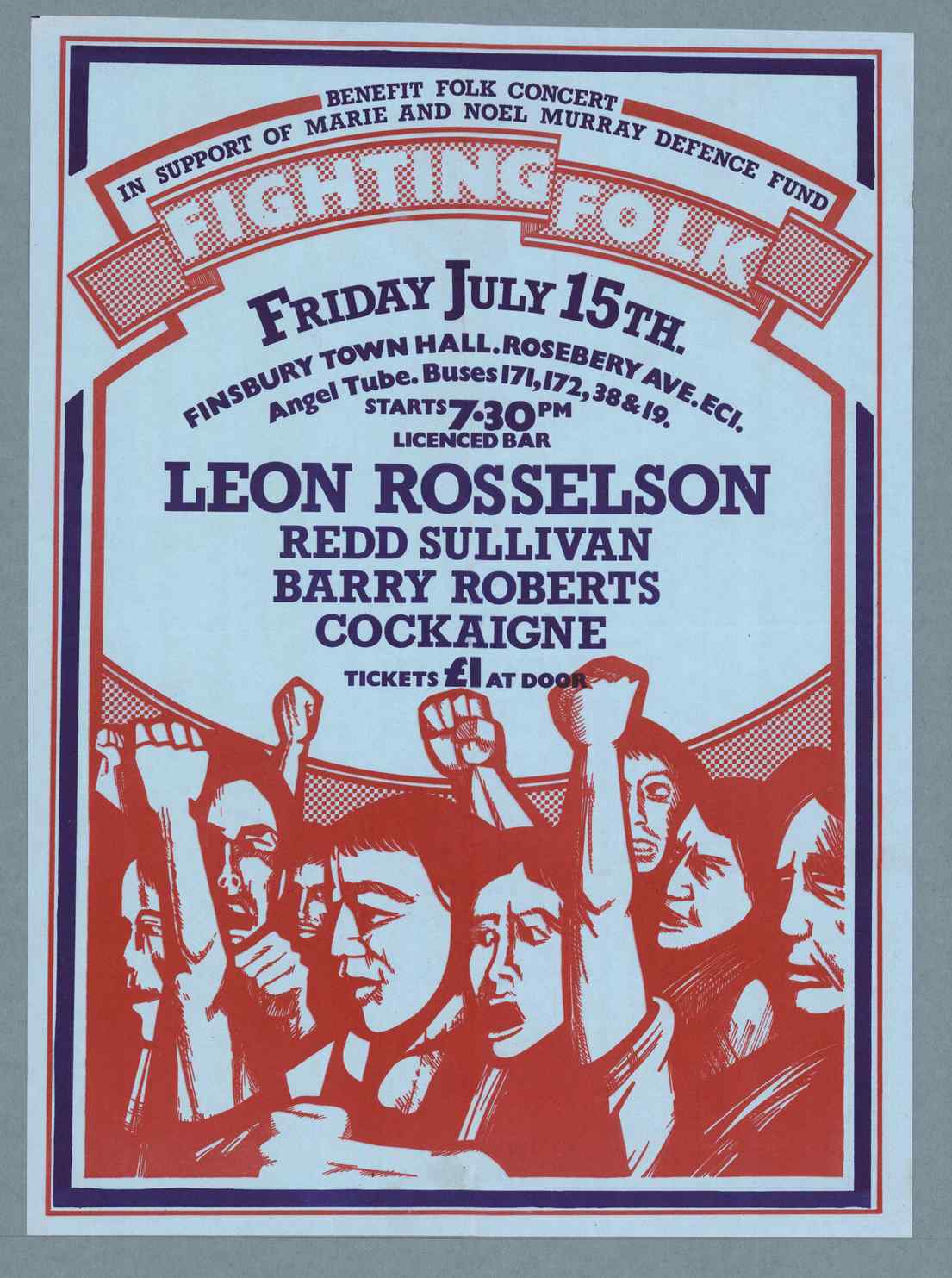
All of the following posters are from the Dutch International Institute of Social History (IISH) website.

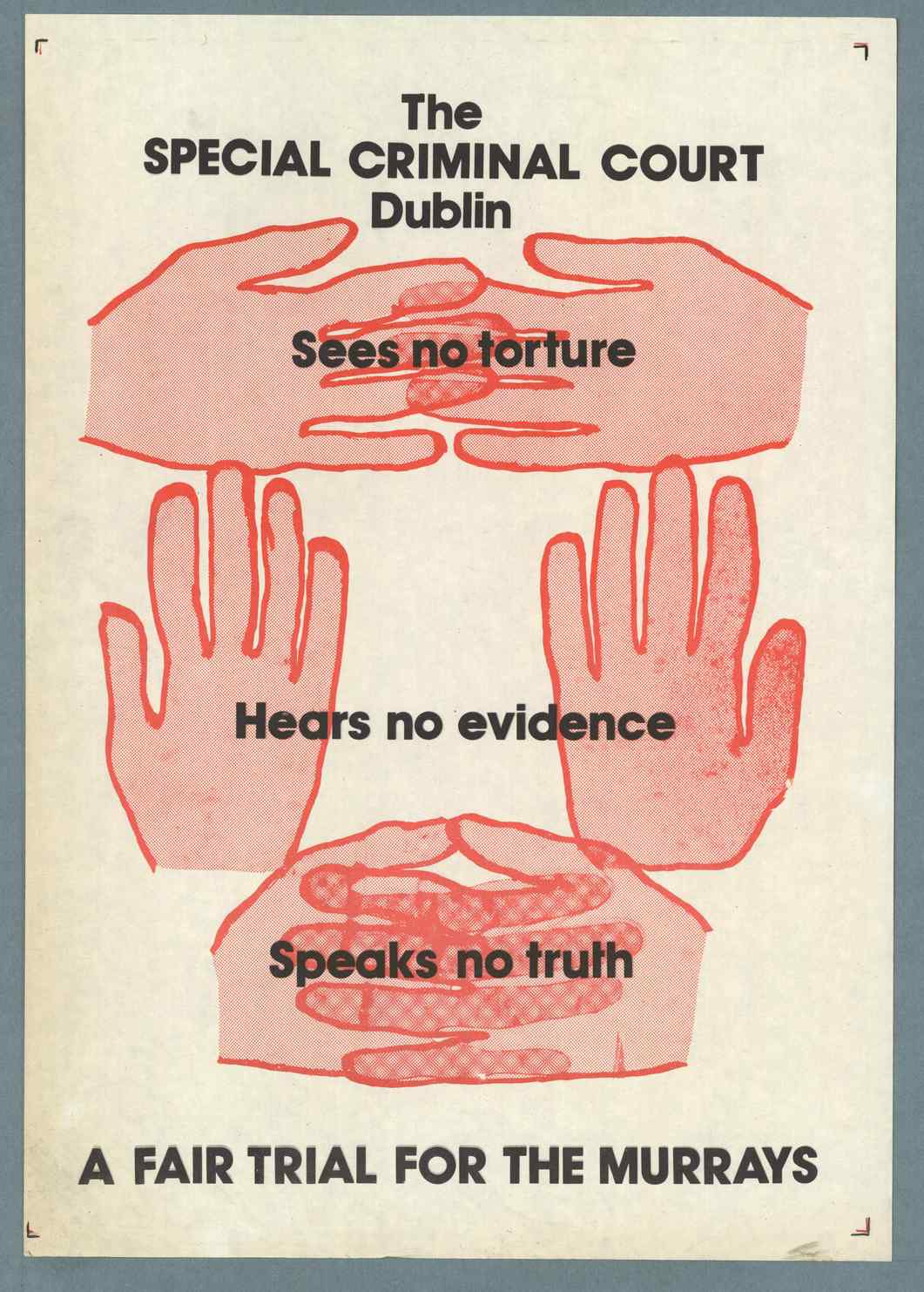
They are related to the international defence campaign to save the Murrays from death penalty in the late 1970s. Noel and Marie Murray, former members of Official Sinn Fein, were sentenced to death in June 1976 for the killing of an off-duty Garda during a bank raid as part of a group called the armed ‘anarchist’ group.

From Cedar Lounge Revolution:

Noel Murray had been a member of Sinn Féin from 1966 and had gone with Official Sinn Féin in 1970. Marie Murray had been active in the Housing Action Committee in Dublin in 1969 from which she had joined OSF the following year. Both had left OSF in 1973 but remained politically active…

On appeal and retrial they were convicted of murder and received the lesser sentence of life imprisonment.

Posters from the Irish campaign:

Irish Murrays poster, 1976

Irish campaign poster, 1976

Irish Murrays campaign, 1976

‘Murray Defence Committee’ poster , 1976

Irish Murrays 1976

‘Murray Defence Committee’, 1976

Murrays defence 1976

‘Murray Defence Committee’ poster, September 1976

Irish Murrays Campaign, c. 1975

‘Murrays Campaign for Conjugal Rights in Irish Prisons’, c. 1976

Posters from the English campaign:

England Murrays campaign, 1976

Poster from the English campaign, 1976

England Murrays campaign, 1977

Murrays support gig in London, 1977

(more…)

Read Full Post »

Meeting Room is a recent and powerful documentary concerning the Concerned Parents Against Drugs movement, looking at those who stood up to drug dealers in the inner-city in the early 1980s. The film includes interviews with the late Tony Gregory, John ‘Whacker’ Humphries, Bernie Howard, Mick Rafferty, Padraig Yeates, Chris McCarthy and Fr Jim Smyth. This is a very important historical documentary which deserves a larger audience.

Christy Moore also features in the documentary, performing his song in honour of ‘Whacker’ Humphries.

Whacker Humphries took the dealers on
And he fought them tooth and nail
A squad of well armed soldiers brought him to the Portlaoise Jail
He tried to protect his children, found guilty of a crime
One man gets a pension, another man gets time

Read Full Post »

Merrion Square Park, surrounded by beautiful Georgian houses, is one of my favourite of Dublin’s city centre parks. Known until recently as Archbishop Ryan Park, the heavy criticism of that Archbishop in a recent report on the abuse of children by the Catholic Church led to the renaming of the park.

This park was historically open only on a private basis to residents of the square, much like St. Stephen’s Green was prior to its opening to the public in 1880, at the expense of Lord Ardilaun of the Guinness family.

In the 1920s Merrion Square Park was considered as a location for the construction of the War Memorial Gardens, in honour of Irishmen who had died fighting in the First World War. Its proximity to the Dáil was one factor that stood in the way of any such plan however, with one Senator asking at the time if ‘the very heart of Dublin, under the very walls of the seat of Government’ was a suitable location for such a memorial, in the still-volatile political environment of the day. The site was later considered as a location for the construction of a new Catholic Cathedral in Dublin. It was reported in the media in May 1938 that the site had been “taken over” by the Archbishop of Dublin, with the Irish Independent referring to it in a report as “the site of Dublin’s new Catholic Cathedral”. It had been purchased some years previously by the church, for the tidy sum of £100,000. The Cathedral project never materialised however, leading to decades of debate on the future of the park. In 1944 for example Jim Larkin Jnr, son of the 1913 leader, asked in the Dáil in the park could be “made available for the use and enjoyment of the public or as a children’s playground”, but no attempts were made by the government to bring about such a situation.
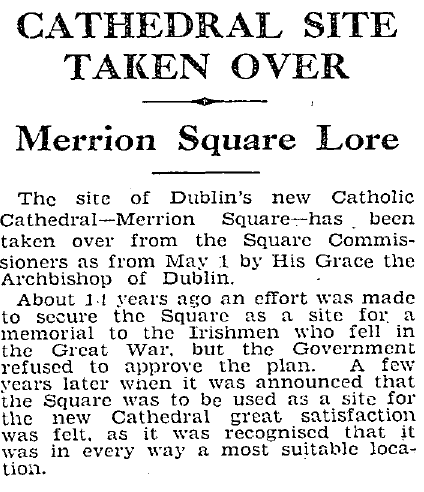
1938 report on the park.

1938 report on the park.

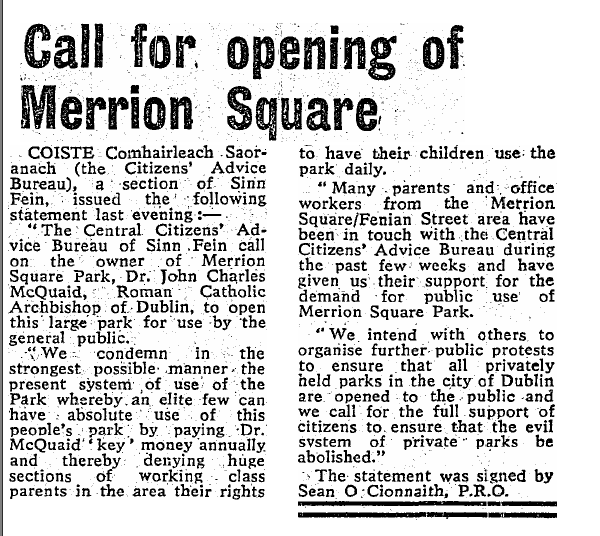
In 1970, Sinn Féin and others launched protests against the status of the park, claiming that it was still open only to residents of the square who rented keys at the price of £10 per annum from Archbishop John Charles McQuaid. This fee was later disputed by the Catholic Church, who claimed the fee was just over £4 per annum. Archbishop McQuaid had strongly backed the original proposals to build a Cathedral on the site, but with that plan long scrapped and the park still in the ownership of the Catholic Church, the Archbishop’s decision to grant access only to those willing to pay for the pleasure of strolling through the park proved controversial. The first occupation of the park saw over 50 activists, including residents from the nearby Fenian Street and Merrion Square, breaching the gates of the park and proclaiming it a “People’s Park”. Boldly, Sinn Féin also distributed keys to the park from their offices at 30 Gardiner Place, leading to the locks of Merrion Square being changed on occasion, a costly annoyance for authorities as new keys had to be distributed.
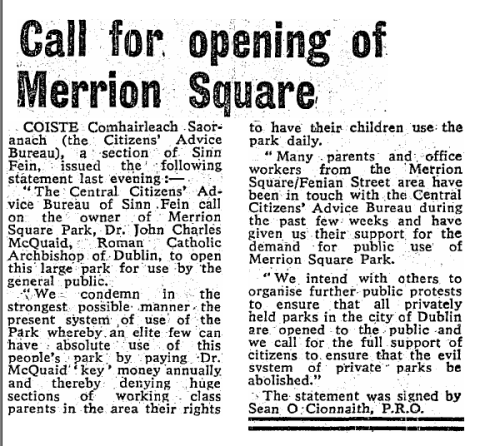
Sinn Féin statement in the Sunday Independent, July 1970.

Sinn Féin statement in the Sunday Independent, July 1970.


Sinn Féin were heavily involved in the Dublin Housing Action Committee, active in the same period, a militant campaign against the inadequate housing on offer to working class Dubliners at the time. This movement had been involved in many political occupations, as well as squatting actions. The action around Merrion Square can be seen as part of a broader campaign over the ownership of the city. In July 1970, the same month the actions at Merrion Square Park began, 500 people attended a protest at the G.P.O on O’Connell Street against proposed legislation which would aim to tackle “forcible entry and occupation”. There was a widespread belief that the actions of housing activists in the city motivated the government to consider such legislation.
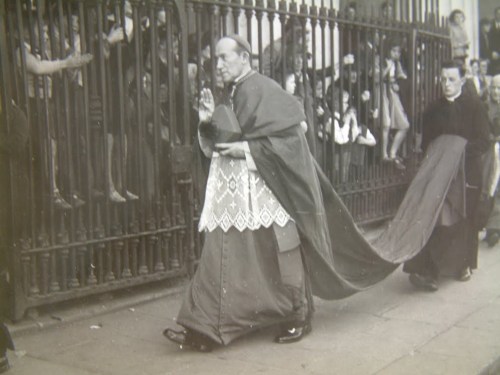
Archbishop McQuaid, targeted by Sinn Féin protests in 1970 over Merrion Square Park.

Archbishop McQuaid, targeted by Sinn Féin protests in 1970 over Merrion Square Park.

One resident of the park complained in a newspaper after the protest that “When Sinn Féin entered Merrion Square…they immediately began to play football across the tennis courts, thereby destroying the surface which has taken months of preparation for the tennis season.”

Beyond Sinn Féin, the private nature of the park attracted protest from others, including young messenger boys employed by the nearby E.S.B, who claimed that a letter had been sent by MacQuaid to their employer informing them they were no longer permitted to play football in the park! The boys mounted a protest outside of the park. The Labour Party also succeeded in gathering thousands of signatures for a petition calling for the parks opening.

A year on from the protests, it was reported that An Taisce were in discussion with the Archbishop of Dublin regarding the parks future, and the possibility of opening it to the broader public. The Catholic Church went to great lengths to insist this was of their own deciding, and not influenced by any protest.

Merrion Square itself saw very significant political violence in 1972 when a crowd laid siege to the British Embassy following Bloody Sunday. In The Lost Revolution: The Story of the Official IRA and the Workers’ Party, a story is recounted by one OIRA member at the time who remembered attempting to blow the doors off the building, by placing explosives inside of coffins that students had carried to the embassy. After two further days of protest and disturbances outside the embassy, it was eventually burnt on 2 February 1972.

In April 1974 the park was handed over, and it was reported in the newspapers on the day after the opening of the park that “hundreds of children cheered when, for the first time in 200 years, the padlocks were removed from the gates of Merrion Square Park yesterday.” Today, the park is open to the public throughout the year, with several festivals hosted within it annually for the public to enjoy.

Read Full Post »
A 1793 illustration of the Tholsel, Dublin. (Malton)

A 1793 illustration of the Tholsel, Dublin. (Malton)

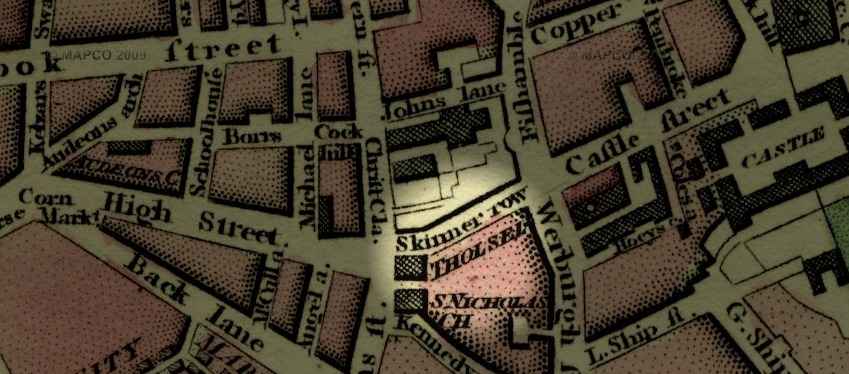
The Tholsel was an important administrative building in Dublin historically, which stood on the junction of Skinner’s Row, Nicholas Street and High Street. It occupied the site where Jury’s Hotel stands today, opposite Christchurch Cathedral. The building was demolished in 1820, with no trace of it remaining at its original location. Essentially, its name meant ‘toll-gatherer’s stall’, and it would have served as a sort of City Hall, meeting chamber and exchange. The initial Tholsel was built in the fourteenth century, though the building portrayed in the illustration above was constructed between 1673 and 1683. While the building is long gone, this post will look at a piece of it which remains on public view, below the city.

The location of the Tholsel historically in Dublin. From 1798 map of Dublin. Credit: http://dublin1798.com/

The location of the Tholsel historically in Dublin. From 1798 map of Dublin. Credit: http://dublin1798.com/

In his study of Protestant Dublin in the seventeenth and eighteenth centuries, Robin Usher writes that ‘the building was roughly square in plan and abutted on one side by houses. The elevations consisted of an arcaded ground storey, open to the elements on the north and western sides’, and that ‘The city assembly and the board of alderman met in richly ornamented rooms over the ground floor loggia, itself fitted out as the merchants’ exchange.’ Upon the building were two statues, honouring King Charles II., and his brother, James Duke of York, along with the Royal Coat of Arms. J.T Gilbert in his classic history of the city noted:

The two statues above referred to were executed by William De Keysar, and in the Acts of Assembly for 1684 appears his petition for payment of ” twenty-nine pounds, due him on contract for cutting the statues set upon the front of the Tholsel, and for finishing the pedestals under the said statues.

This statues are clearly visible in an image from The History and Antiquities of the City of Dublin (1776), hosted online by Dublin City Public Libraries.

Gilbert notes in his history of Dublin that following the victory of King William of Orange at the Battle of the Boyne ‘the Roman Catholic citizens were obliged, by proclamation, to deposit their arms in the Tholsel’. Dublin historian Frank Hopkins has stated that the Tholsel had also hosted a huge banquet in honour of General Ginkel, an officer of King William of Orange, following the Siege of Limerick. On occasion, the festivities were not limited to the wealthy and powerful, and ‘at certain times of the year, the exterior of the building was lit with candles, and free beer was dispensed to the citizens, who gathered outside around large bonfires.’ In 1718 the absolutely huge sum of £1,000 was offered to anyone who could detect and identify those who had broken into the Tholsel and defaced and cut the portrait of King George I. that was on display inside of it. The Tholsel also featured in the punishment of criminals, who were ‘whipped at a cart’s tail from the Tholsel to the Parliament House’, the distance between Jury’s Hotel and College Green today.

Incorrigible malefactors or offenders were usually sentenced in the Lord Mayor’s Court to be whipped at a cart’s tail from the Tholsel to the Parliament House, to be placed in the stocks, or to be scourged at the “whipping post” erected here for the purpose. Libellous publications condemned by Parliament, gaming tables, and fraudulent goods seized by the Lord Mayor, were publicly burned at the Tholsel

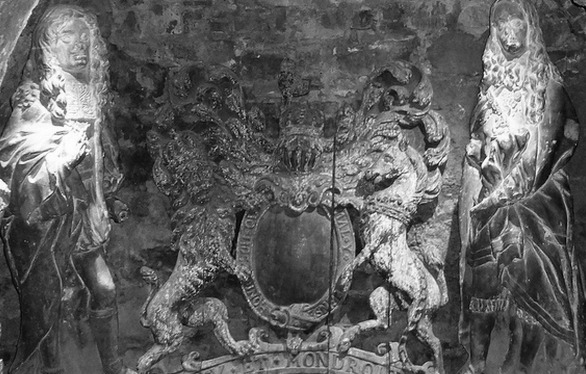
Those who wish to see a piece of the Tholsel for themselves do not have to go far in Dublin. In the crypt of Christchurch Cathedral the statues that once adorned the building are still on public display, along with the Royal Coat of Arms. They serve as a brilliant and often overlooked reminder of what was once a central building in the running of the city.

The statues on display today at Christchurch.

The statues on display today at Christchurch.

Read Full Post »

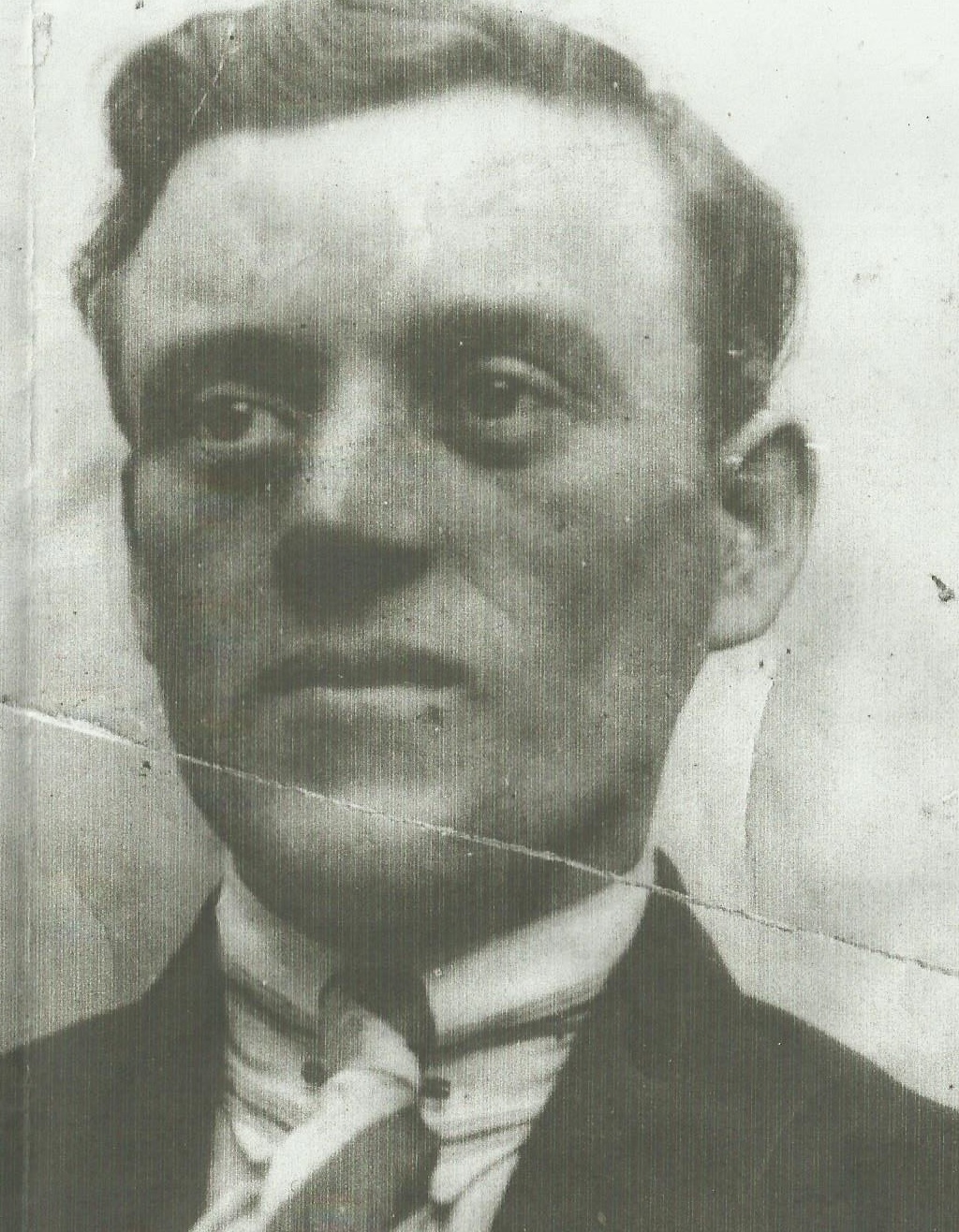
Andrew O'Neill.

Andrew O’Neill.

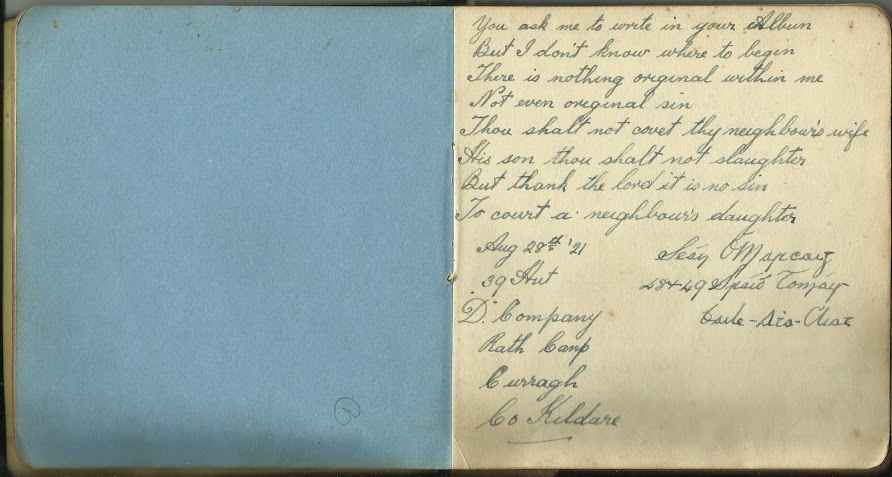
These brilliant scans below are a selection of pages from a 1921 autograph book belonging to Andrew O’Neill. Born in Dublin in 1897, O’Neill hailed from Asylum Yard, in the heart of working class Dublin. Andrew would see action during the Easter Rising at Boland’s Mills as a member of the Irish Volunteers, serving with the 3rd Battalion. Andrew would also partake in the War of Independence which followed the rebellion, and was interned during this period. Later, with the foundation of the Irish Free State, O’Neill would join its new emerging armed forces, although he would leave the Free State Army in 1924, going on to work a number of other jobs including a period as a porter in the Customs House, one of the symbols of the Irish revolution owing to the IRA attack upon it during the War of Independence.O’Neill left a wife and three children behind him at the time of his death, and among his personal items was a priceless collection of autographs from other republicans he had been interned with.

The first page of Andrew's book, giving his own name and address.

The first page of Andrew’s book, giving his own name and address.

The entries I have posted here are a selection of entries from fellow republican internees. Some have penned poems in tribute, while others have drawn illustrations of life inside and outside of the camp. The most striking entry in the autograph book for me is this one, showing prisoners and guards inside of the camp. It appears to be signed ‘P.C’:

Auto Book 20 (1)

This scan shows another drawn illustration, this time showing two figures in discussion about the status of the prisoners. On the other page Liam O’Reilly, giving an address in Tuam, has signed Andrew’s book:

Auto Book  18

One further drawing appears in the autograph book, this time coming from “P.Byrne”.

Auto Book 17 (1)

In addition to the drawings, the autograph book contains several poems, including a poem in honour of Irish republicans who were executed at Mountjoy Prison in Dublin.

Man do you hear them shooting
The women moan and sigh
But the lads themselves are laughing
God that’s the way to die

Auto Book 16

In another poem, one fellow Dublin republican writes

You ask me to write in your album
But I don’t know where to begin
There is nothing original within me
Not even original sin

Auto Book 7 (1)

These kind of brilliant family mementos are to be found across Dublin, and with so much emphasis on historical commemoration and the business of centenaries, these are the kind of items that have great value to young historians and those with an interest in the past.

My sincere thanks to the O’Neill family, Una Wogan, Tom Geraghty and others who have assisted with getting this selection of pages from Andrew’s autograph book here online. The book remains in family ownership.

Read Full Post »

Last night was an absolutely huge night in Irish football terms, at both ends of the table. Saint Patrick’s Athletic managed to go three points clear of a seemingly unstoppable Dundalk, while at the other end, Bohs took a very vital three points from Shelbourne, in a game many saw as a northside relegation scrap between the two. There were massive travelling supports in both Inchicore and Tolka Park, and these two images below capture the colour and the passion of the night differently.

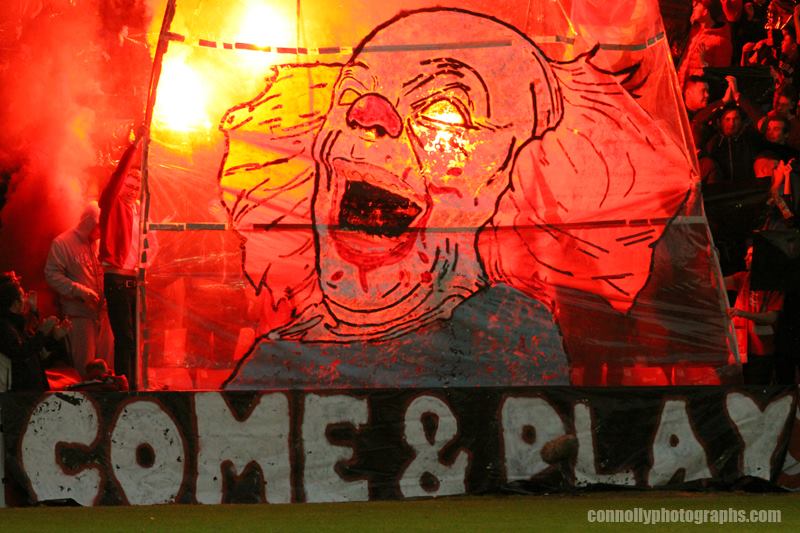
In Inchicore, both sets of supporters lit up Emmet Road, with Dundalk squeezed into the shed behind the goal. In a brilliant coincidence, the Dundalk banner featured Jigsaw from the film series ‘Saw’ asking Saint Patrick’s if they “want to play a game”. The Patrick’s banner invited Dundalk to “come and play”. The game was at times lacklustre but at other times thrilling, regardless however I think the colour and noise made it a good one for the television cameras.

Saint Patrick's Athletic supporters invite Dundalk to 'Come and Play'. IMAGE: Darragh Connolly Photography

Saint Patrick’s Athletic supporters invite Dundalk to ‘Come and Play’. IMAGE: Darragh Connolly Photography

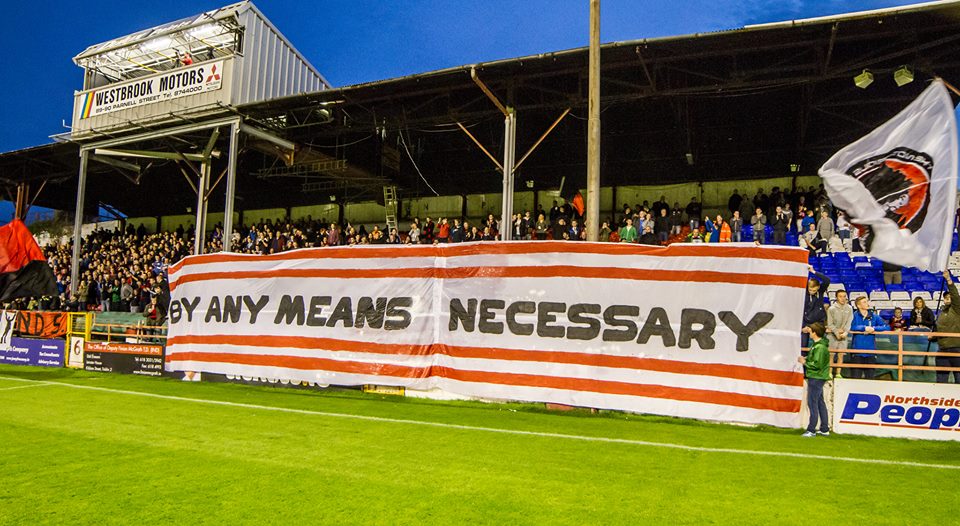
At Tolka Park, Bohs captured the importance of the clash with a banner on the importance of remaining in the top tier ‘by any means neccessary’.

Bohs supporters at Tolka Park. IMAGE: Paul Reynolds.

Bohs supporters at Tolka Park. IMAGE: Paul Reynolds.

While Giovanni Trapattoni stating that Ireland had no football league may have been a case of something getting lost in translation,and was deeply ironic giving the fact so many of his own starting eleven have played in the domestic league, the next five weeks will see some brilliant battles at both ends of the table, in a league which deserves the support of Irish people.

Read Full Post »

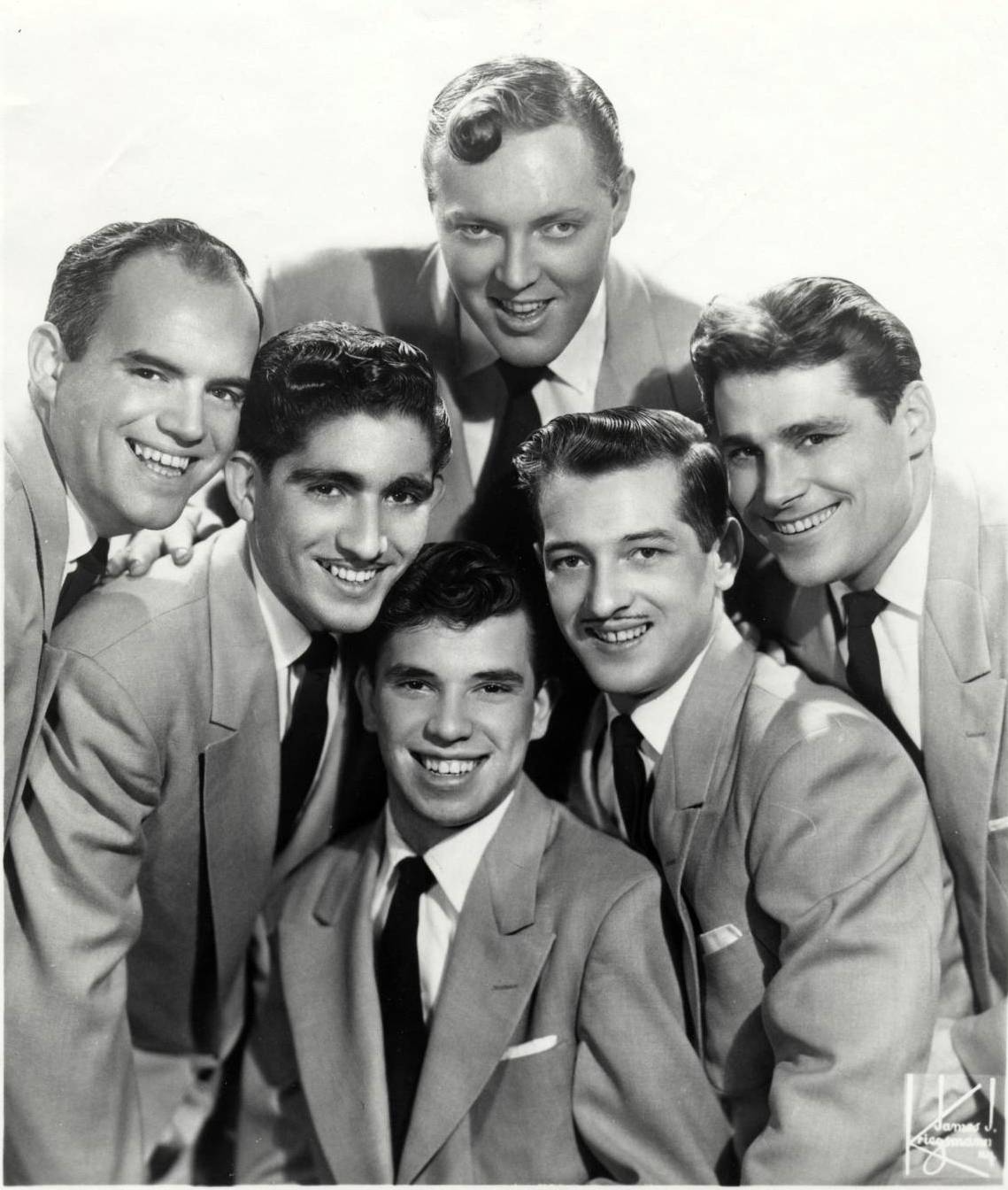
Bill Haley and his Comets, stars of 'Rock Around the Clock'. Via www.fanpop.com

Bill Haley and his Comets, stars of ‘Rock Around the Clock’, discussed below. Via http://www.fanpop.com

When researching Dublin’s ‘Animal Gangs’ of the 1930s and 40s recently, the story and mythology of Garda James ‘Lugs’ Branigan came into play, with Dubliners of a certain age not only considering Lugs the downfall of the ‘Animal Gangs’, but also crediting him with taking the fight to the Teddy Boys of the 1950s. Like so many youth subcultures which would take hold in twentieth century Ireland, the Teddy Boys had originated in Britain, where working class youths took to dressing in a style which had been popular with dandies in the Edwardian period, and taking to rock and roll as their music of choice. Much of the reputation of the Teddy Boys in Dublin came from the hugely popular film screenings of Rock Around the Clock in 1957, a film Branigan would claim to have seen almost sixty times, though not voluntarily!

In Bernard Neary’s biography of the famous Garda, he claims that:

When the film Rock Around the Clock, commenced showing in Dublin cinemas, it hit the headlines and remained there during much of 1957…. not the film itself, but the antics of the Teddy Boys, who flocked, en masse and often, to see their very own movie. The Teddy Boys would riot in the cinemas, ripping up seats with flick knives,throwing bottles and other missiles from the balconies and engaging in fist and sometimes chain fights, causing great consternation.

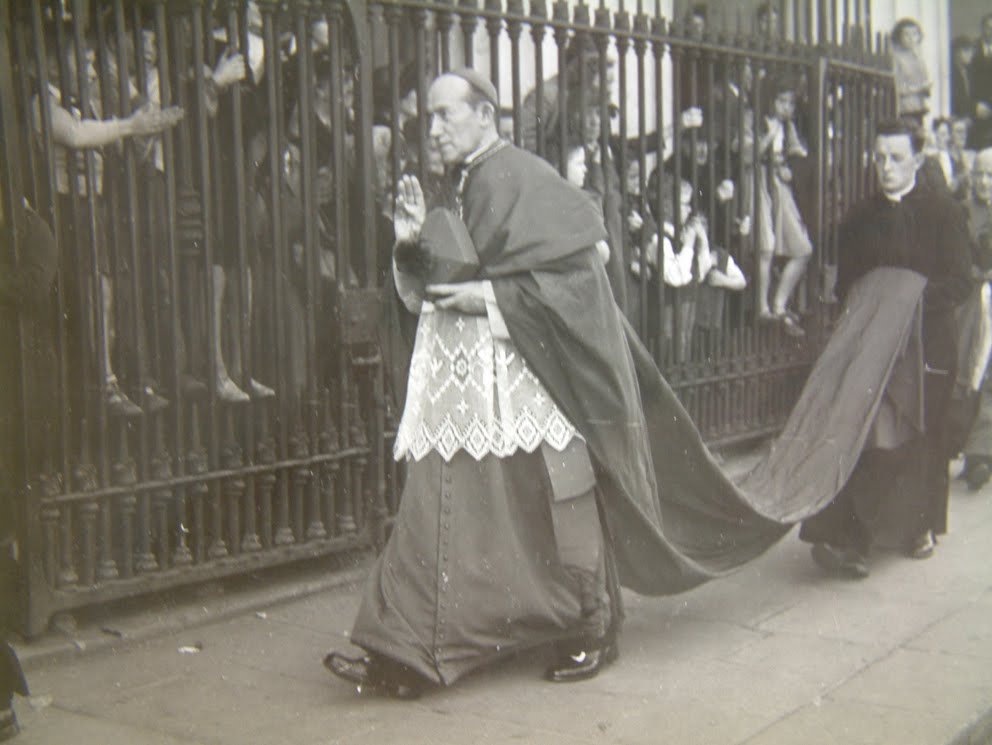
Garda James Branigan. In Dublin folklore, Branigan is said to have battled the Teddy Boys.

Garda James Branigan. In Dublin folklore, Branigan is said to have battled the Teddy Boys.

The common perception was that these young Irish men were not alone being influenced by British fashion and trends, but were also “returned Irish emigrants from Britain”, according to Gardaí. One Dublin tailor told The Irish Times that “no reputable Irish tailoring establishment would undertake to make an Edwardian costume”, but one suburban Garda brilliantly told the paper that “if I had to be going around investigating all the outlandishly dressed young people in this area to see if they were Teddy Boys when would I ever get time to be a policeman!”

“Eccentrically dressed” youngsters were denounced in the same newspaper for causing a row at a disco in Malahide in 1954, one of the earliest references to the youths in Irish media. Noting that the Dublin youths are “said to be more peaceful than their London counterparts”, the paper still reported that their “extreme” jitterbug dancing and attitude had resulted in local young men in Malahide taking it upon themselves to inform the youths that they were not welcome.

One columnist in The Irish Times blamed the Teddy Boys for spoiling New Years’ Eve leading into 1955, when trouble in the city saw a police baton charge near Christchurch Cathedral. Six people were injured and shop windows broken by Dublin youths, but high spirits and even violence on the night was nothing new in the city. The newspaper columnist defended the Gardaí, and noted that

Knowing the Guards as I do, I don’t believe that either the older ones or the younger ones are baton happy. Having seen some of the Teddy Boys I feel they are just the type that would provoke a riot. The Teddy Boys are all for liberty, their kind of liberty.

Denunciation of the youths was particularly strong in the Dáil, though like today the hysteric language of politicians seemed a million miles removed from the realities of life at the time. P.J Bourke, a longstanding Fianna Fáil TD, rose in July of 1956 to condemn the Teddy Boys, claiming that “lack of parental control is the whole cause of the trouble; parents let these boys out to make a disgrace of themselves.”

I hold that the Department should put 40 or 50 policemen into plain clothes to clean up the city and county of these brats and bring them under control. There is no use in using plámás when dealing with these people. It is a terrible thing that a decent boy and girl cannot go to a dance hall without having a knife or bottle pulled on them by people going around in gangs. These youths are now going into the country because they have been banished from a lot of places in the city. They have a special haircut and a kind of uniform.

(more…)

Read Full Post »

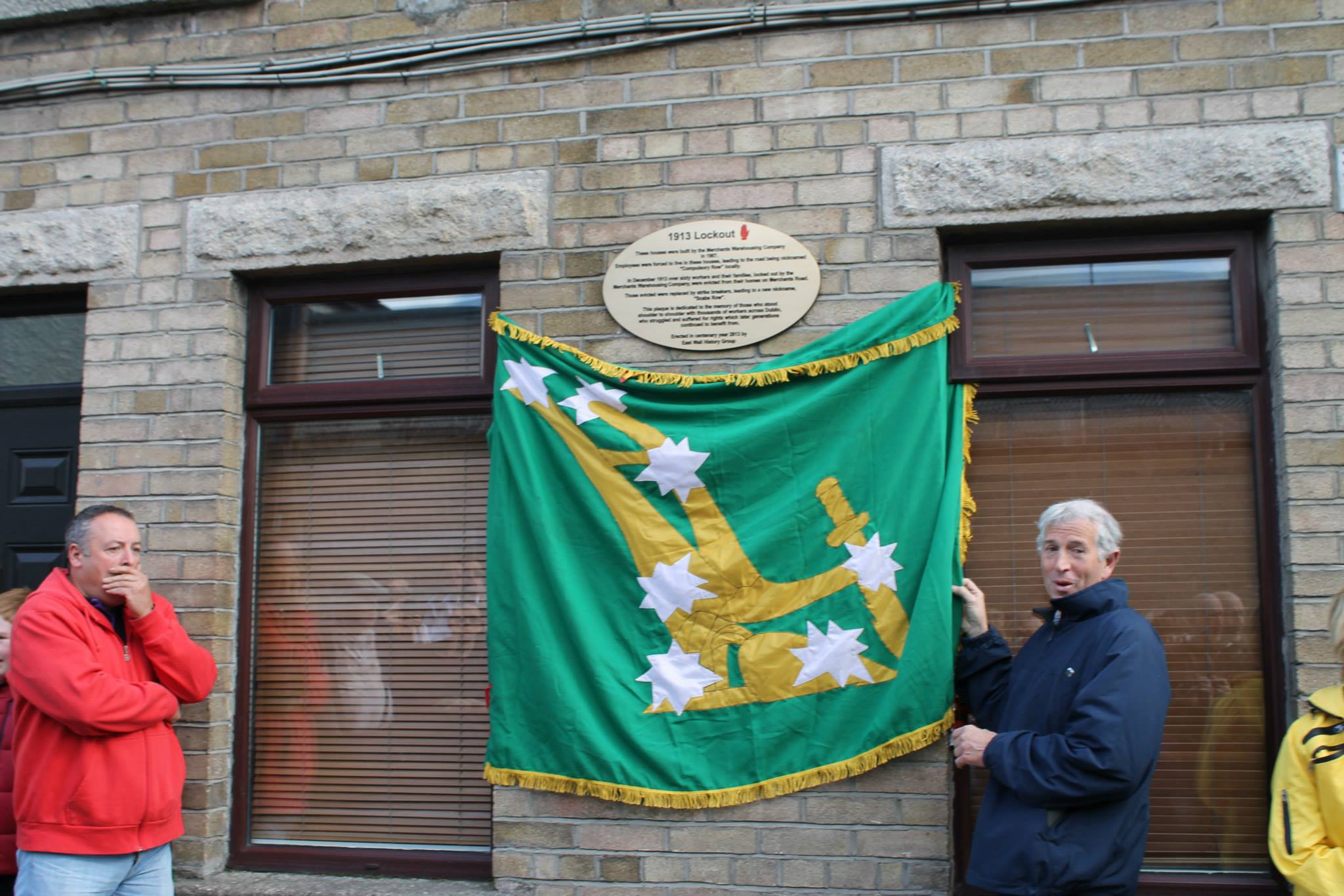
Today saw the unveiling of a plaque and historical mural in honour of East Wall residents who found themselves evicted during the 1913 Lockout a century ago. 62 workers and their families were evicted from company owned houses on Merchants Road in December 1913, with their only crime being their commitment to their union and their class.

Those evicted were replaced by scab labourers and their families, leading to the street becoming known as ‘Scabs Road’ in local lore. Many local people and others from across the city came together today for a moving and important commemorative event. Our thanks to Bas Ó Curraoin for permission to reproduce the images below on Come Here To Me. All images are his.

The mural commemorating the evictions. This mural is based on a real newspaper image from the time.

The mural commemorating the evictions. This mural is based on a real newspaper image from the time.

Joe Mooney of the local historical society spoke of the symbolism and imagery of this powerful mural, highlighting the lyrics which come from New York band Black 47. Joe noted the importance of the symbolism of the red hand, though hijacked by sectarian and reactionary loyalist elements, this symbol was proudly worn a hundred years ago by ITGWU and Irish Citizen Army members.

The plaque in honour of the evicted families.

The plaque in honour of the evicted families.

The plaque gives great detail on the story of the evictions, and indeed the construction of the houses on the street. Workers were forced to move into the homes at the time they were constructed, leading James Connolly and others to label the street “Compulsory Row.” Far from the Iveagh Trust and other such schemes, it is important to stress that while these houses were superior to much of the substandard housing in Dublin at the time, they were still built with profit in mind and were imposed on families.

Bas3

A nice feature of the event today was the fact it began and ended at the nearby St Joseph’s Co-Ed School. Children from this school had gone on strike in 1911, demanding shorter hours, cheaper books and an end to canings, with the influence of the emerging militant trade union movement obvious in their campaign. The presence of so many relatives of the evicted today really made the event, and reminded us that in the context of history a century really isn’t that long.

Marching back to the school.

Marching back to the school.

Congratulations to the East Wall History Group who organised the events today. You can learn more about them here.

Read Full Post »

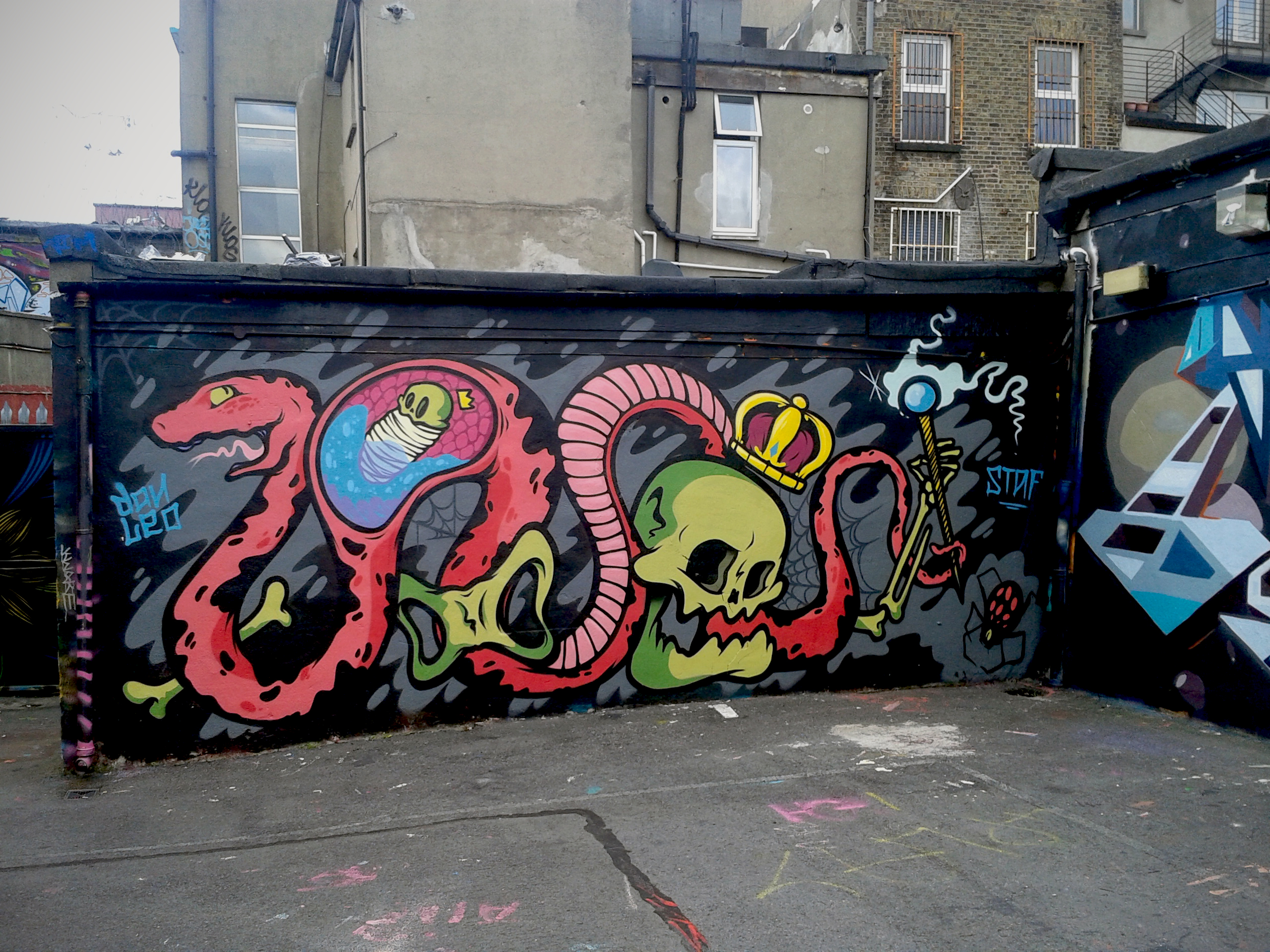
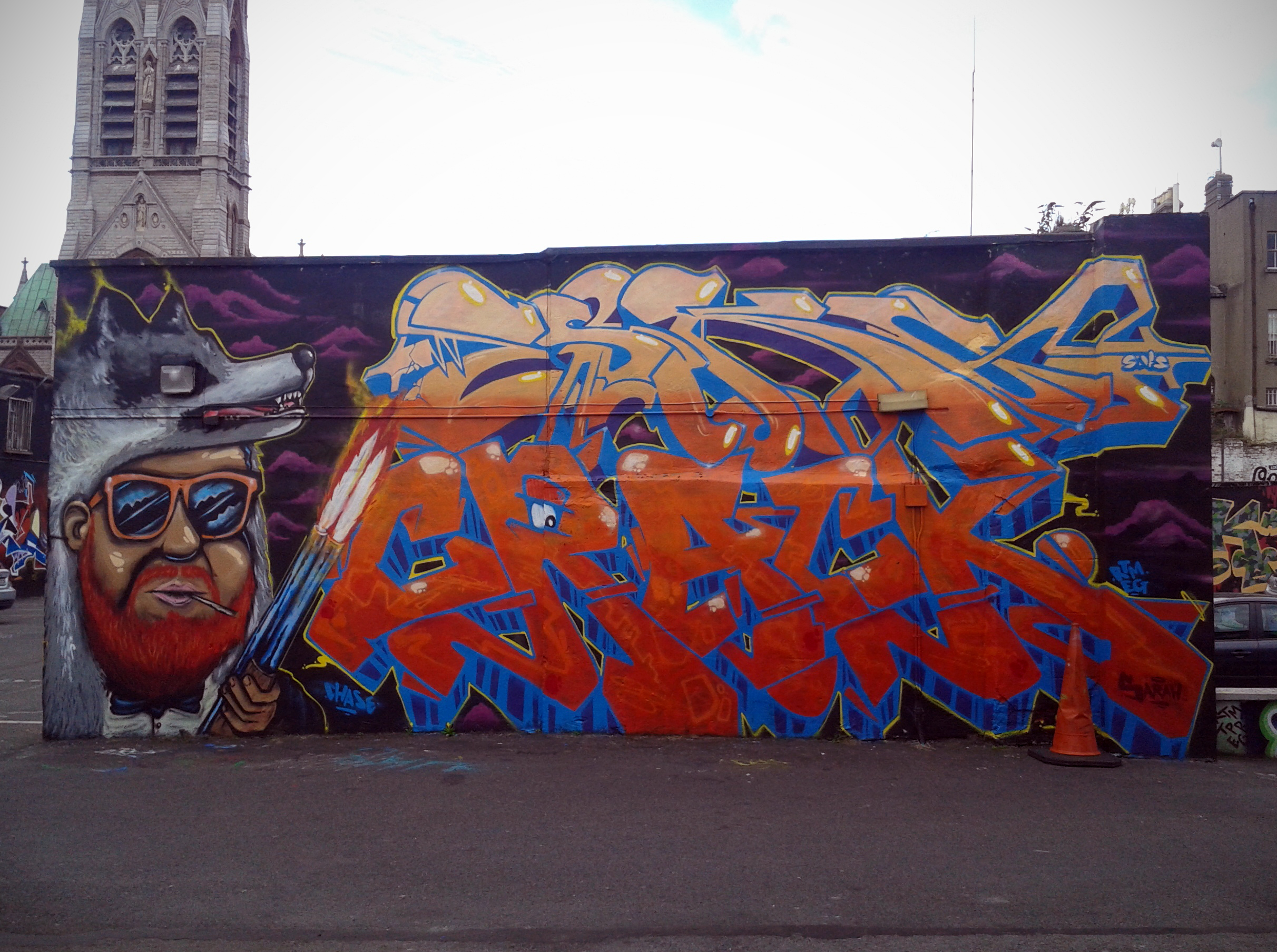
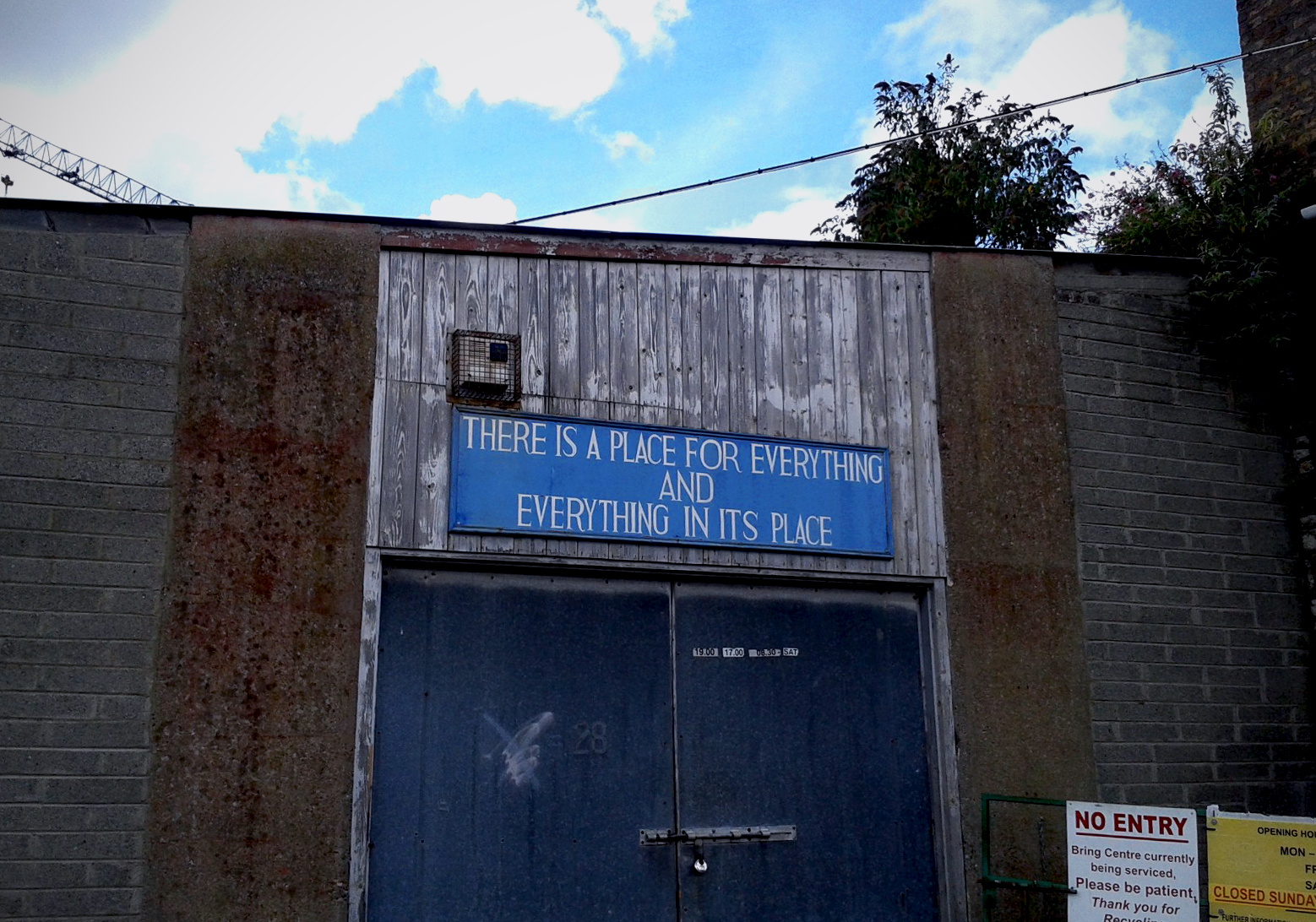
The first post from me in a while this, and a bit of a mixed bag. The first four are from the Tivoli carpark, post-this years grafitti/ skate jam. The second two are dropped in to break up the post, the first a sign  spotted at the council offices in Rathmines, and the second, a group of workers abseiling down the side of Liberty Hall. The second lot of graf pictures is from the back of the Bernard Shaw, easily the best spot in Dublin for ever changing talent. Inside and out, the walls are covered with pieces from Dublin’s best artists, including our good friend Maser; the “Swim” piece is his, and was a work in progress at the time the below was snapped.

WP_000318 (2)

WP_000338 (2)

WP_000323 (2)

WP_000320 (2)


place


(more…)

Read Full Post »

The word ‘joyrider’ is of North American origin and became popular as a term in Britain and Ireland in the early 1910s. It was defined as a ‘ride at high speed’ and initially applied to all those who took their cars out for recreational drives. It was later used negatively to describe car owners who took non-essential rides at the time of petrol shortages during World War One.

Car Wreck in Washington D.C, 1921 (via Reddit)

Car Wreck in Washington D.C, 1921 (via Reddit)

During the interwar period (1918-1939), the term took on its modern connotation of a ‘fast and dangerous ride in a stolen vehicle’ . Dublin, along with London, Manchester and other large cities, started to develop a problem with joyriding in the mid 1920s. At the time, it was considered as mainly frowned-upon high-jinks and pranks as opposed to dangerous anti-social behaviour. Historian Claire Millis described it, in an Irish context, as a ‘mild enough outlet for underemployed and envious youth’. She also points to the fact that many newspapers, especially provincial ones, used ‘joyriding’ as a barely disguised euphemism for sex.

The Irish Times reported on 24 September 1923:

A Bedford two-seater motor car, belonging to Mr. Erley, Rockview, Coliemore Road, Dalkey … which had been stolen … late on Saturday night was found abandoned at Harbour Road, Dalkey yesterday morning. It was badly damaged and evidently ran against the harbour wall.

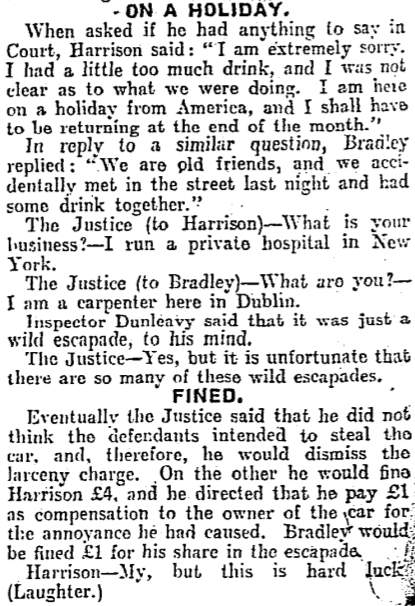
A ‘well dressed American visitor’ Christopher Harrison and a friend James Bradley, a carpenter of South Circular Road, were fined £6 in total in August 1929 for taking a car from Waterloo Road for a joyride.

21 August 1929. The Irish Times.

21 August 1929. The Irish Times.

In September 1929, Reginald McCoy from Elinton in Dundrum was charged with stealing a motor cycle from Molesworth Street. In court, he said that he had ‘only taken it for a joyride’. He drove it to Mayor Street where he hit a pothole and damaged the machine to the extent of £10. McCoy said he willing to pay for the damage caused. (Indo, 19 Sep ’29)

Three teenagers in January 1930 robbed a Morris Cowley car worth £60 from outside an office on Middle Abbey Street and were caught in Drumcondra after going at a speed of over 45 miles per hour. Eugene Caldwell (17), Patrick Hughes (17), both of Lower Dominic Street, and Patrick Scully (16) of O’Daly Road in Drumcondra were first spotted by a Garda driving on the wrong side of the road by Sir John Rogerson’s quay. Two Garda on motor cycles gave chase and followed the stolen car around Drumcondra, Marino and Drumcondra before they managed to get in front it causing a collision. (IT, 8 Jan ’30)

Two young men – John Walshe of Reginald Street and Peter Borgan of Parnell Street – were remanded on bail in May 1930 for driving a car through Capel Street and Parliament Street in a reckless manner, injuring three children in the process. Their lawyer said the charge was the outcome of a ‘joyride’ gone wrong. (IT, 20 May ’30)

26 November 1930. The Irish Times.

26 November 1930. The Irish Times.

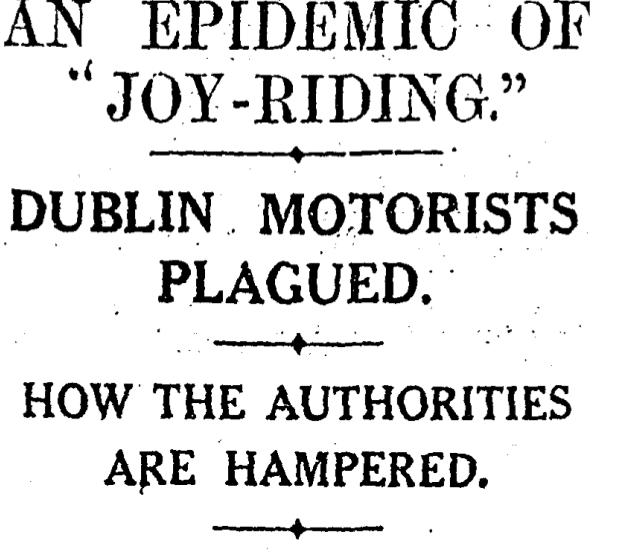
By the end of 1930, the police announced that an average of three cars a day were being stolen by joy riders in Dublin city. The vast majority of which were found abandoned and undamaged twenty four hours later. Often they were found within a few miles of the city, having been driven until the petrol supply is exhausted. Interestingly The Irish Times of 26 November 1930 said that a ‘large proportion’ of the joyriders ‘are young people in good positions’ with the minority belonging to the ‘poorer classes’.

(more…)

Read Full Post »

While the destruction of British symbolism was a common occurrence here in the decades following independence, it was largely confined to statues and monuments of individuals that republicans objected to, like Horatio Nelson or King William of Orange. In the 1950s however there were two attempts made on the War Memorial Gardens at Islandbridge. Neither succeeded in doing any lasting long-term damage to the gardens, although the Cenotaph was damaged by the blasts. A blast on Christmas Day in 1956 was sufficiently loud to wake up people in Finglas and Castleknock, according to The Irish Times.

Poppy wreaths at the War Memorial Gardens, Islandbridge.

Poppy wreaths at the War Memorial Gardens, Islandbridge.

The War Memorial Gardens at Islandbridge are the work of Edwin Lutyens, a celebrated London architect. While largely completed by 1939, there is a certain irony in the fact a memorial garden constructed to remember those who perished in the First World War had its opening delayed by the outbreak of the Second World War and the political instability it caused. Incredibly, it was not until 1988 that the Gardens were formally dedicated and formally opened to the public, though it had long been a place of commemoration and remembrance by then.

On 25 December 1956, a blast at 1am at the War Memorial Gardens occurred when a charge of high explosive was placed on the granite base of the large memorial cross. The blast may have awoken people in suburbs well beyond the memorial, but it failed to do any real lasting damage to the memorial itself. The British Legion condemned the attack as “a most disgraceful affair, particularly at Christmas.” The cross, made of granite from Wicklow, withstood the power of the explosion, with Gardaí believing the people responsible for the explosion “were not used to handling charges.” Despite not succeeding in doing any real damage, the bomb attempt did succeed in attracting considerable media attention, with the New York Times and other international outlets reporting on the Christmas Day attack. This wasn’t the first time republicans had attacked such symbols on Christmas Day, as on Christmas morning 1944 the statue of Lord Gough in the Phoenix Park was beheaded, though the head would later be found in the Liffey!

A young boy playing in the grounds of the War Memorial Gardens, early 1960s (NLI, Wiltshire Photographic Collection)

A young boy playing in the grounds of the War Memorial Gardens, early 1960s (NLI, Wiltshire Photographic Collection)

While the explosion in Dublin had been a failure, the following year a British Legion memorial at Pery Square in Limerick would be shattered by the force of an explosion. On 8 August 1957 it was reported that “the 20ft high memorial, which was erected in 1932, was shattered, and houses in the vicinity suffered damage when windows were blown in.” Condemning the attack, The Irish Times asked “what kind of mentality can justify to itself these childish conspiracies to remove from our midst symbols of what is, after all, our own history?” The attack was unclaimed by any republican group at the time.

Despite the attack on Christmas Day 1956, the gardens remained a focal point for Remembrance Sunday events in Dublin, and in November 1957 huge numbers of British Army veterans paraded in the memorial gardens, while it was noted former soldiers also paraded “via Parnell St. and O’Connell St. to Bachelor’s Walk.” There were no reports of clashes, something which had been rather common during such parades in the 1920s and 1930s. The laying of wreaths at Islandbridge became an annual event.

Independent photo showing  parading veterans in the Memorial Gardens, November 1957.

Independent photo showing parading veterans in the Memorial Gardens, November 1957.

A follow-up attempt on the Dublin gardens took place in October 1958, and it was reported that “the flash of the explosion was seen in Rialto, almost two miles away.” Once more, the huge cross withstood a republican bomb with only minor damage to show. The Irish Republican Publicity Bureau denied any involvement in the attack. Five men were later arrested and questioned about the explosion, though it remained an unsolved incident.

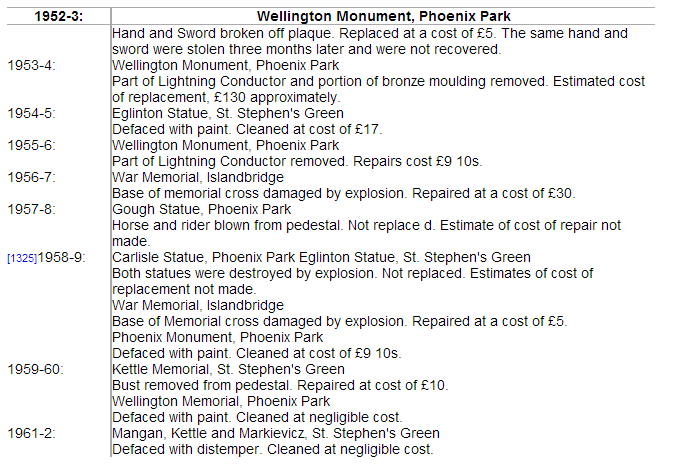
In 1961, the issue of attacks on the War Memorial Gardens and other memorials and monuments was raised in the Dáil. Asked to give an idea of the extent of damage to monuments in recent years, Minister Joseph Brennan gave the following details. It looks like the Duke of Wellington got a particularly hard time!

The Islandbridge memorial is not the only WWI memorial in Dublin, and readers may be interested in a previous CHTM article looking at the Trinity College Dublin war memorial.

Read Full Post »

The Cobblestone has become the favourite haunt of those with an interest in social and political history, with the Stoneybatter & Smithfield People’s History Project and others hosting meetings there. Another group of individuals have organised a great talk there for this Thursday, looking at radical politics in the late 1960s and into the 1970s.

RadicalPolitics

The organisers of this meeting have been doing brilliant work in recent times recording the memories of some who were active in radical politics at the time, for example interviewing veteran republican Liam Sutcliffe, who participated in the explosion which destroyed the O’Connell Street monument of Admiral Nelson. They have also interviewed Jim Lane, who has a long history of activism in socialist-republican politics in Cork. These interviews are an invaluable resource to those interested in this aspect of Irish history.

Read Full Post »

« Newer Posts - Older Posts »