Feeds:
Posts
Comments

Archive for the ‘Dublin History’ Category

Recently, I asked a group of friends if they could name the Lord Mayor of Dublin. Most couldn’t. While the office today doesn’t inspire or hold much of a public role in the city, historically some interesting characters have held the honour. Over the next while, we’re going to profile a few of them on the site, beginning with Mark Rainsford.

Sir Mark Rainsford was Lord Mayor of Dublin from 1700 to 1701, and to me remains one of the most interesting individuals to have held the office. Rainsford was the 36th Lord Mayor of Dublin. During this period the statue of King William of Orange on College Green was unveiled by him, a monument which would become a centre of protest and celebration for generations in the capital. Rainsford was also the original founder of the brewery at St. James’ Gate, which would later become the Guinness Brewery. Rainsford Street, next to the brewery today, is named in his honour.

From Guinness’s Brewery in the Irish Economy 1759-1876 (Cambridge, 1960), we know that the premises at St. James’ Gate which is today the celebrated Guinness Brewery was owned in 1670 by Alderman Giles Mee, who himself went on to become Lord Mayor of Dublin. On his passing, the brewery was giving to his son in law, Alderman Sir Mark Rainsford, who also inherited certain water rights in the district. Rainsford thus began brewing “beer and fine ales” in the brewery, being succeeded in this position by his son of the same name at the time of his own death. The younger Mark would lease the premises out for a term of ninety-nine years, but it did come back into the ownership and management of the Rainsford’s in 1750, 9 years before Arthur Guinness would take ownership of the site. The Rainsford’s leased the brewery to Guinness for a sum of £100, and £45 a year thereafter. The lease would run for an incredible nine thousand years!

In 1700, Sir Mark Rainsford became the Lord Mayor of Dublin, following in the footsteps of Sir Anthony Piercy. Rainsford had previously held the office of Sheriff. During his year as Lord Mayor, Rainsford would oversee the unveiling of the statue of King William of Orange on College Green.
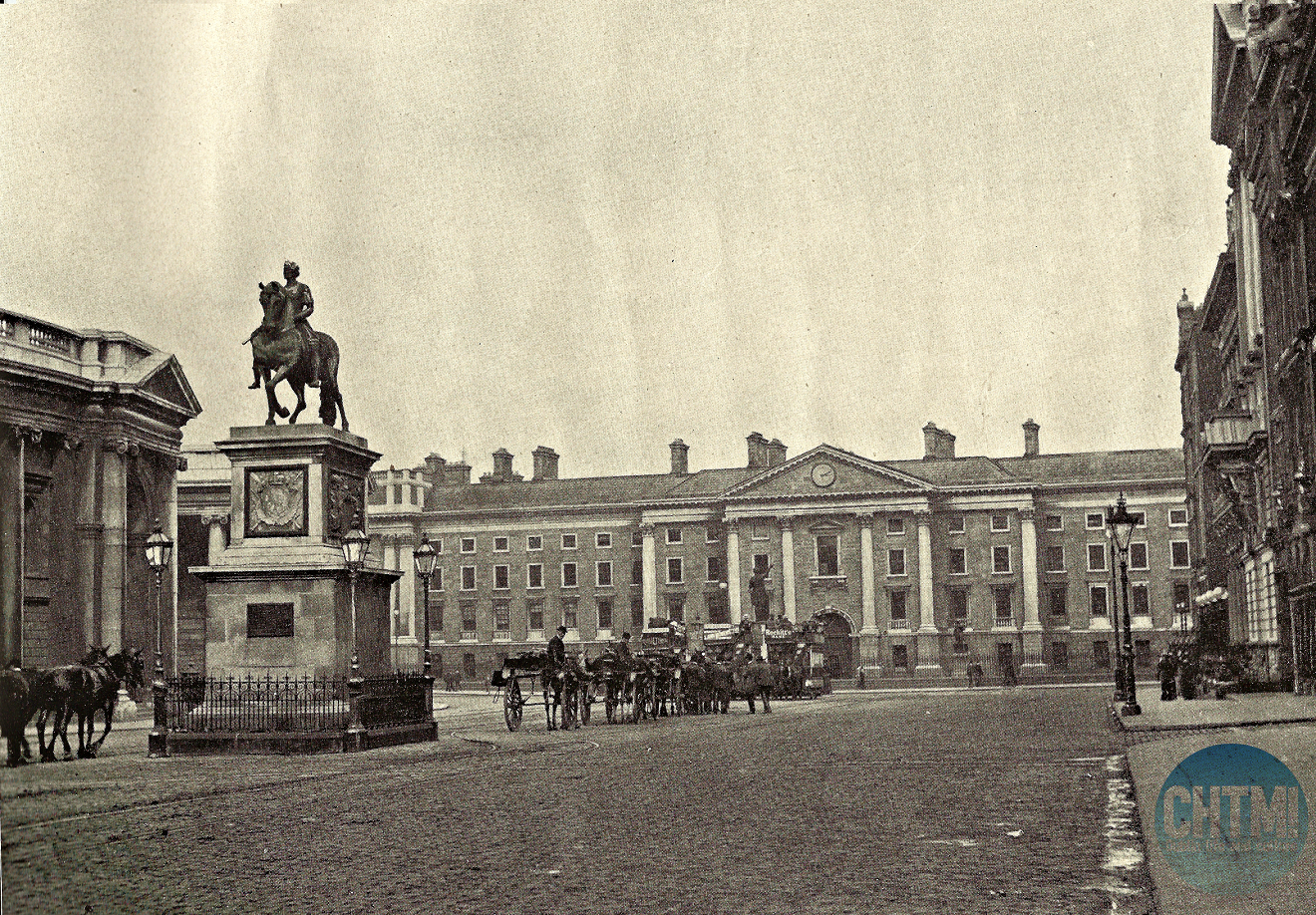
(‘Ireland In Pictures, 1898′)

Grinling Gibbon’s statue became a magnet for both protests of dissent and commemorations of loyalty to the divisive figure. On the anniversary of King William’s victory at the Battle of the Boyle, and on his birthday in November, this statue was the location of celebrations in his honour. The statue would be cleaned, with orange lilies and ribbons placed upon it, and symbolically green ribbons and Shamrock would be placed below the horses uplifted foot (See: The Book of Days: A Miscellany of Popular Antiquities: Volume 2 London,1869). No statue in Dublin was as frequently targeted by vandals and political opponents as this one. In one episode in June 1710, the statue was robbed of its regal sword and martial baton, which led to the Corporation offering a huge reward of £100 for information which could catch the guilty party. Three students of Trinity College Dublin were charged with the act, and condemned to a harsh six months imprisonment, a fine of £100 each and forced to stand before the statue bearing the slogan “I stand here for defacing the statue of our glorious deliverer, the late King William.” Their fines were significantly reduced in the end, though the lads were expelled from Trinity College. The statue was removed from the Dublin streetscape following a bombing following independence, something we’ll be returning to on the site later.

One British publication wrote in 1898 that:

This equestrian statue of William III stands in College Green, and has stood there, more or less, since A.D 1701. We say “more or less” because no statue in the world, perhaps, has been subject to so many vicissitudes. It has been insulted, mutilated and blown up so many times, that the original figure, never particularly graceful, is now a battered wreck, pieced and patched together, like an old, worn out garment.

The plaque upon the statue noted that:

I am seeing here the Third King of Great Britain, France and Hibernia./ For the keeping of Religious Reinstated Laws. / Bring Freedom and this Statue To the eminent citizens of Dublin. / It was begun A.D 1700 Sir Anthony Percy, Lord Mayor. Charles Forrest, James Barlow – Esquires Sheriffs / Finished, A.D 1701 Sir Mark Rainsford, Lord Mayor. John Eceles, Ralph Gore – Esquires Sheriffs

The great occasion around the unveiling of the statue was the highlight of Rainsford’s year as Lord Mayor. In his personal life, he married twice, first to the daughter of Giles Mee, from whom we acquired the St.James’ Gate Brewery. He would marry for a second time in 1695 at St.Michan’s in Dublin, to a woman named Isabella Bolton.

The role of the Rainsford family in Dublin history and brewing history is evident today in the naming of ‘Rainsford Street’, next to the Guinness Brewery. Rainsford was followed by Samuel Walton, who became the 37th Lord Mayor. Rainsford passed away in November 1709, aged 57.

Read Full Post »

Almost thirty years before Paul Howard began his spoof Ross O’Carroll-Kelly column in The Sunday Tribune, Dublin born journalist Alan Bestic wrote an extremely accurate and humorous description of Dublin’s upper middle class.

He called them:

…The scampi belt, the Bacardi brigade. They own a house in Foxrock and have a Mercedes on the firm. The wife has a Mini for shopping and a swimming pool in the garden is on order. There is a cottage in Connemara – ‘I can really think down there’ – wine name-droppers, BA (pass), top convent wife with Ulysses in the handbag. Oyster festival but not Galway races. Hard tennis court, yacht in the front garden during winter … unhappy people with easy laughs and eyes that are always moving, looking for Murphy, wondering whether he is watching and whether he has a mohair suit too … blurred carbons of English suburbans from the mock stockbroker belt …

This quote is taken from Bestic’s seminal book The Importance Of Being Irish published in 1969 and described at the time as “an affectionately critical enquiry into the anatomy of modern Ireland”.

Cover of The Importance Of Being Irish (1969). Credit – antiqbook.nl

Bestic worked with The Irish Times, the Irish Press and other newspapers in Dublin from 1940 until 1950. During that time, he became the first Irish print journalist to report from Poland and East Germany after the war.

In 1950, he moved to London’s Fleet Street. Returning to his home town of Dublin in the late 1960s, he was overwhelmed by the social and economic changes that had occurred in the country and so wrote The Importance Of Being Irish.

Interestingly he was described by journalist Liam MacGaghann in the late 1970s as a “republican with respect to James Connolly’s principles, putting humanitarianism before unvarnished tribalism”.

Bestic was still writing as late as March 2001 for The Daily Telegraph.

Another footnote is that his father, Captain Albert Arthur Bestic, was the third officer on the Lusitania when she was torpedoed off the Head of Kinsale in 1915. As well as this, he was in command of the SS Isolda, when she was bombed by the Nazis off the coast of Wexford during World War Two with the loss of seven lives. He published his memoirs (see below) in 1957 and passed away in his home in Bray five years later.

Cover of Kicking Canvas (1958). Credit – Flickr user ‘Boy de Haas’

Read Full Post »

A divided Rathmines

As a poster on Boards.ie stated recently – “Rathmines has always been odd like that, in that you have … urban poverty mixed in closely with affluence.”

From the early 1900s to the late 1970s, only a couple of streets separated the gorgeous Georgian houses of Mount Pleasant Square and the poverty-stricken slum of Mount Pleasant Buildings.

Mount Pleasant Square. (Credit – Archiseek poster ‘GrahamH’)

Mount Pleasant Square, described by Susan Roundtre “as one of the most beautiful early 19th-century squares in Dublin” and by GrahamH from Archiseek as “one of the most charming enclaves of Georgian houses in the city”, was built in the 1830s. Mainly occupied by doctors and solicitors, they had squash, badminton and tennis courts as well as a private garden on their doorstep.

The two areas in Rathmines, c1907

Mount Pleasant Buildings, a stones throw away, were a block of ten large flats situated in a small area on the hill between Ranelagh and Rathmines. They later became a by-word for poverty and bad planning.

Rathmines Urban District Council started building the blocks around 1901, to provide accommodation for the “working classes” of the area. They were taken over, as was the Council by Dublin Corporation in 1930, and completed in 1931. In all there were 246 flats; 60 one-roomed, 150 two-roomed and 36 three-roomed.

Mount Pleasant Buildings, date unknown. (Dublin.ie user – woodies)

Rampant unemployment and a lack of basic sporting and community facilities led to anti-social behaviour. The former caretaker of the Buildings has said that “things really started to come apart in the late ’40s”. Petty crime and anti-social behaviour increased.  The area began to attract a bad name for itself. Journalist Maev Ann Wren summed up the situation by saying that “if all these inadequate or problem families are placed together it seems inevitable that a problem area will result”.

A documentary from the late 1960s on Dublin poverty focused on Mount Pleasant Buildings. It speaks for itself:

Former resident and author Lee Dunne published his best-selling Goodbye to the Hill in 1965. It was a fictionalised account of growing up in the area. Banned due to some sexual content, it went onto sell over a million copies.

(Another famous resident was the film star Constance Smith who lived there with her family in the 1940s)

In April 1966, Michael Vinny in The Irish Times described Keogh Square, Corporation Place and Mount Pleasant Buildings as “the three Dublin ghettos … used by the Corporation as dumping grounds for problem families.”

In January 1970, the Trinity News paper reported on its front page about a group of students in Ranelagh who were “attacked, terrorised and beaten up by hooligans” who tried to gate crash a party they were having. The students were attacked by bottles, frying pans, belts and metal bars. Two of their windows were put in. It was noted that the “attackers disappeared into the nearby Mount Pleasant Buildings, a Corporation house area popularly known as ‘The Hill’ (which) is notorious for gang violence”.

Eileen O’Brien column in The Irish Times in December 1970 was particularly harrowing. Titled ‘Living in fear in Ranelagh’, she talked to a number of frightened residents including  an old woman who after coming home from a short stay in hospital found her flat wrecked and her clothes, coal and a statue of the Sacred Heart, that had belonged to her father, robbed.

Mountpleasant Buldings 1973. (Credit – dublin.ie user Mountpleasant damntheweatherman)

In June 1973, a former resident who had recently moved into new corporation flats in Fenian Street had this to say about Mount Pleasant Buildings:

(It) was an awful place. We had only a communal toilet and wash-house. You had to go down a passage for water and the windows were getting broke all the time. It was a woeful place to live in, woeful … (It) was not too bad at first. I was there 17 years, and at first they you alone. Lately there are gangs there … You could not go out.

In the 1970s, the buildings were “deemed unfit for human habitation” and the first block was demolished in October 1972. By July 1977, only ten families remained. Six were squatting.

(more…)

Read Full Post »

On April 12th 1956, two Irish students stole one of the 39 contested Hugh Lane paintings from the prestigious Tate Gallery in London.

Dubliner Paul Hogan (25), studying at the Dublin College of Art, and his companion Bill Fogarty, a veterinary student from Galway, took the Jour D’Ete (Summer’s Day) by Berthe Morisot and kept it for four days. The painting was worth £10,000, now about £7 million.

Jour D’Ete (Summer’s Day) by Berthe Morisot (Credit – bildindex.de)

The action was taken to highlight the popular feeling that Lane’s paintings should have been on display in Dublin and not London. Hugh Lane, a successful art dealer, had originally bequeathed his collection of modern paintings to Ireland but he then made a second will and left everything to London’s Tate Gallery. However, Lane, shortly before he died in a shipwreck in 1915, wrote yet another will leaving everything to a gallery in Dublin. Because no one witnessed this will, the English courts refused to recognise it as a legal document. For the following decades, there were various unsuccessful attempts by those in the Arts  community and in the government in Ireland to claim the paintings back.

After reading an article about the situation in 1959, Hogan and pal Fogarty started talking:

“I told my friend Bill Fogarty about it and he said why didn’t someone do something about it? By the end of the evening it was, why don’t WE do something? (The) idea was simple – a Dublin man should go and claim it because the collection should have been in Dublin (1)

Hogan recalls the action:

The approach we adopted was the most obvious one, the theory that normal behavior attracts no attention. I was an art student and I had a portfolio and I had established certain rights in the gallery but I had been working there for some days and I was a familiar figure so I was allowed to move through the gallery and extraordinarily out of the gallery with this valuable painting. (2)

While Fogarty pretended to make a copy of the painting on a sketchpad, Hogan lifted it off the wall and put it inside the large portfolio he had brought with him for that purpose. They worked quickly and it only took a moment to hide the painting.

I was to run out the front door with it where a photographer was waiting to take a picture. I thought I would probably then be overpowered. We hoped we would get a modest amount of publicity and force the authorities to do something. We thought we might spend a few days in jail but that would be it.

Paul Hogan leaving the Tate Gallery with the painting under his arm. (Credit – jazyky.smp.cz)

The statement made via the Irish National Student Council (INSC) was headline news:

The authority for this action is the codicil to the will of Hugh Lane, dated 1915, bequeathing the 39 treasures to the City of Dublin. This action has been taken in the Irish National Interest.

(In October of the previous year, members of the INSC had occupied Nelson’s Pillar. Dropping a banner of Kevin Barry over the edge, they tried to melt Nelson’s statue with homemade “flame throwers”.)

The Irish Press front page. Apr 13, 1956.

They hid the painting in the flat of an Irish female friend in London and four days days later, a companion of the duo handed the painting in to the Irish embassy. “We didn’t want to keep it. The whole point of the robbery was to get people talking about the situation.” remembers Hogan

By 1959, just three years after the raid, agreement was reached between Ireland and the UK that the paintings would be shared. In 1979, London ceded many more (on long-term loan), and in 1993, the Hugh Lane Director, Barbara Dawson negotiated a ‘rotating arrangement’ for the major Impressionist painting. Jour D’Ete  finally returned to Dublin in 1999 along with the 38 other pieces.

Hogan in later life was employed by Ireland’s Export Promotions Board, Coras Trachtala Teo.

Fogarty passed away in 2002. This spurred on Hogan to tell the full story story of their dramatic escapade to RTE Radio. A 26mins documentary, ‘Coup De Tate‘, was made by RTE television in 2003.

He has no regrets:

The whole point of the thing was to kick start negotiations. Because of what we did talks had to start and a settlement resulted.  It is the reason that some of the most famous paintings in the world now hang in the Hugh Lane Gallery in Dublin

(1) The People, 15 December 2002

(2) Paul Hogan, RTE Radio archive, John Bowman show, April, 2008.

Read Full Post »

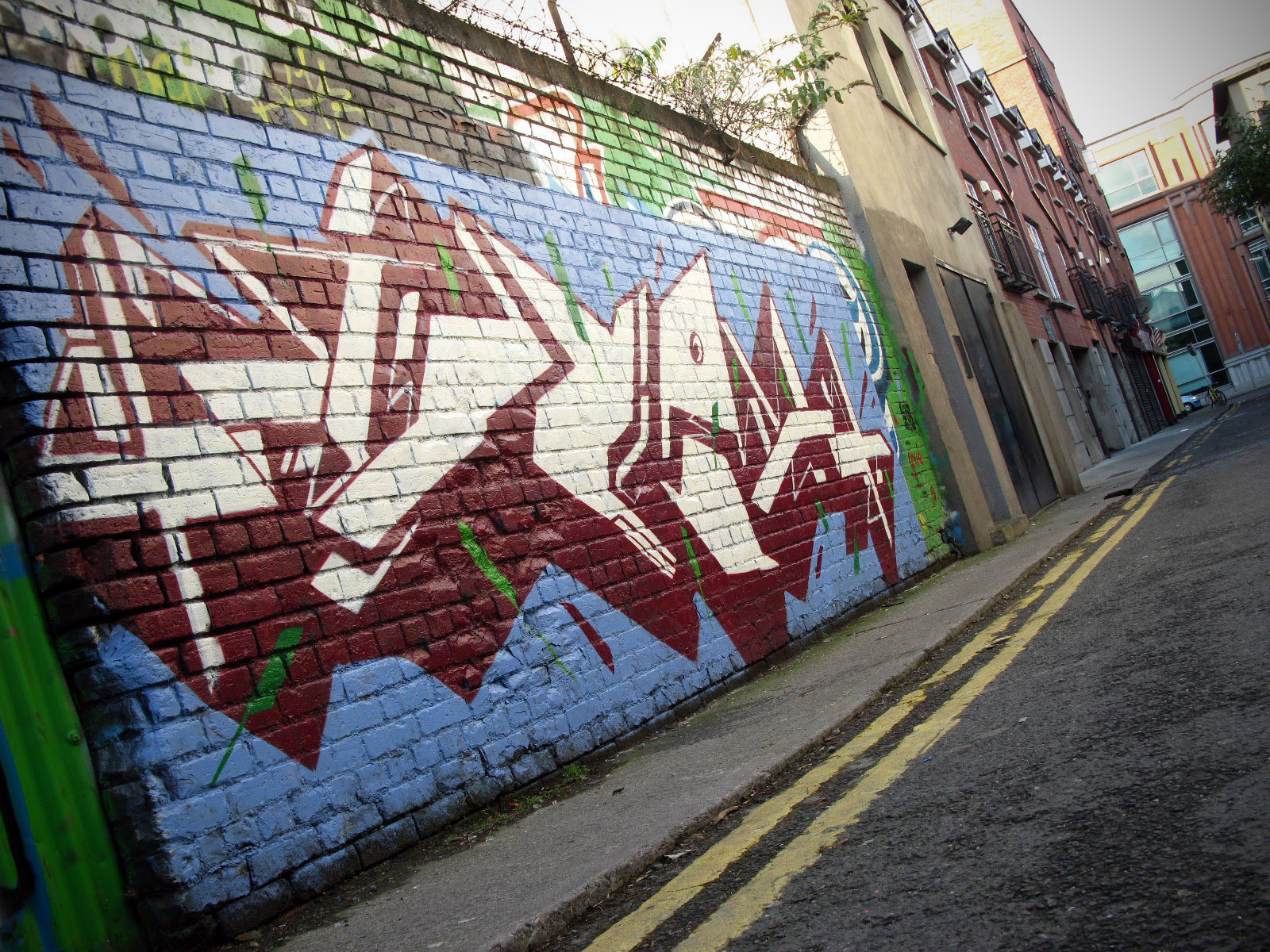
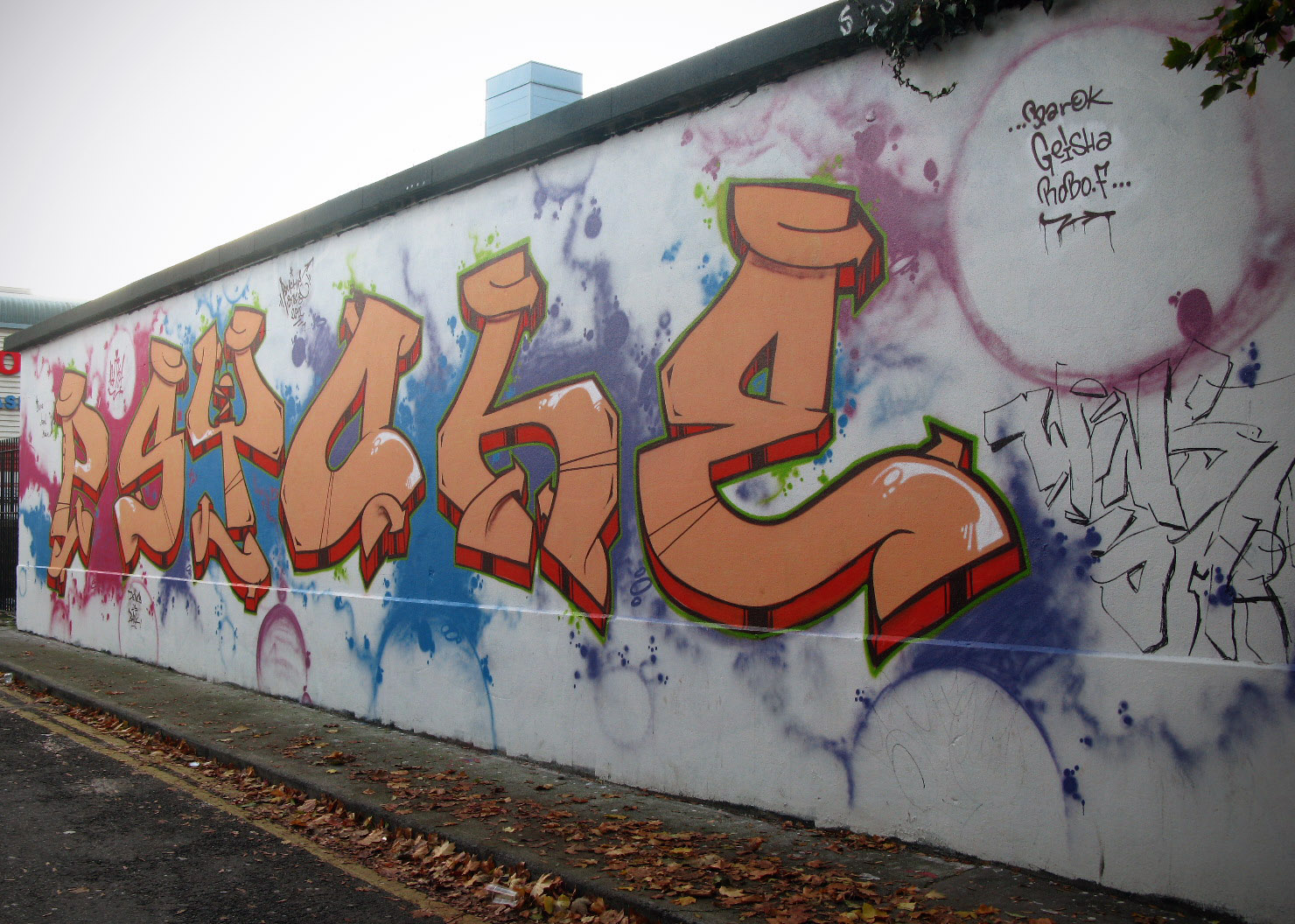
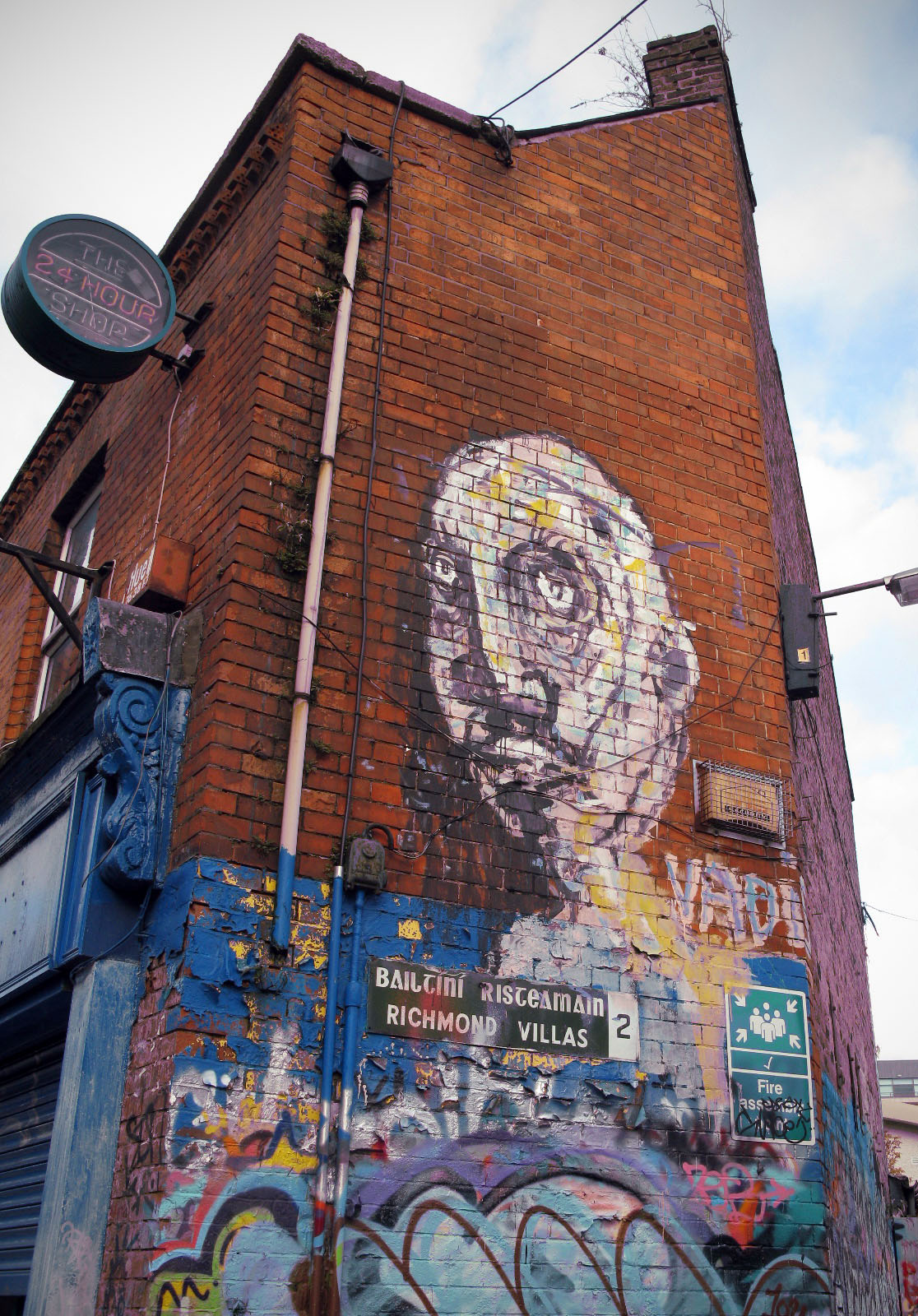
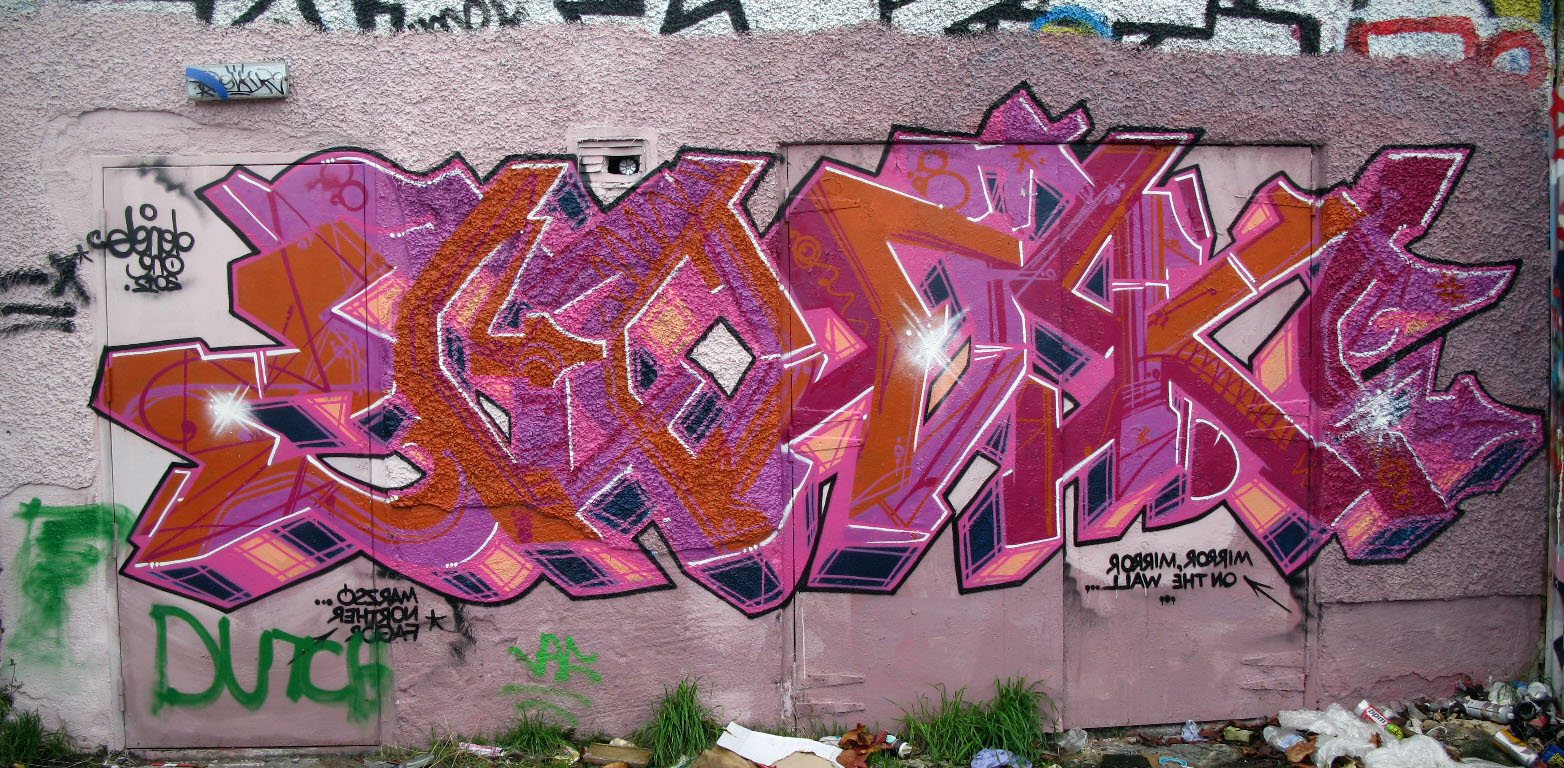
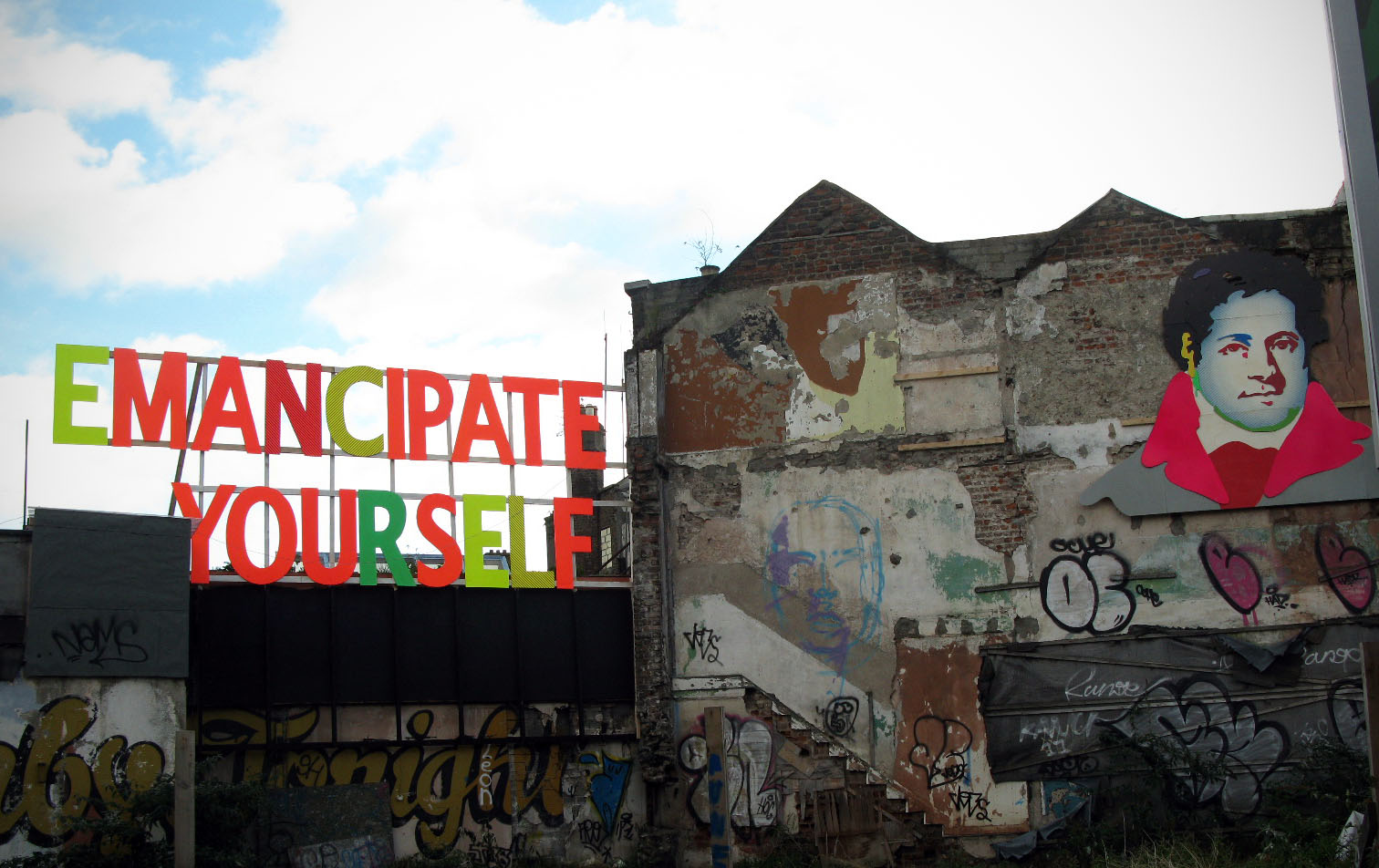
My apologies to Poxbottle, who asked that any posts referring to Irish graffiti not be called “The writings on the wall…” Its only for this short series, I swear! Anyways, last week I put up some images of the street art behind the Bernard Shaw and said I was going to follow it up, so here it is… The lane behind Whelan’s/ The Village. I’m hoping to get another couple of these posts up in the next week or so, there’s a some more hidden spots around Dublin city where our street artists show off their talents that are worth documenting…

(more…)

Read Full Post »

While recently a man diving from the edge of space down to earth captivated millions worldwide, in more simple times it didn’t take quite as much. Back in April 1848, Dublin was enthralled by the sight of balloonist John Hampton, who carried out an ascension and parachute jump from the Rotunda Gardens.

Advertisement for the jump, from the U.S Library of Congress Digital Collection.

A fascinating character, Englishmen John Hampton holds the honour of being the first man to make a parachute descent, having done so in October 1838 at Cheltenham in England. In the promotional material for his Dublin jump in 1848 it was noted that “this daring experiment was accomplished by himself, no one being with him in the car of the balloon, and the separation took place at the altitude of 10,000 feet.”

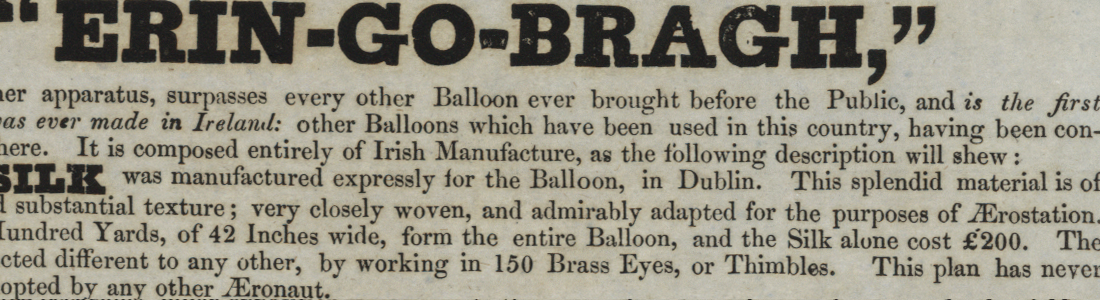
Hampton had ascended over Ireland in a balloon before, but there was huge public interest in this event which would see him also carry out a parachute descent. The balloon he would leap from was the ‘Erin Go Bragh’, which promoters noted was the first such balloon ever made in Ireland.

Details of the balloon from promotional material. Via the U.S Library of Congress Digital Collection.

In the archives of the Freeman’s Journal, I could find reference to a balloon in October 1844, when a subscription was launched to present Hampton with a balloon from the “Citizens of Dublin”. Maurice O’Connell had chaired the meeting which launched this subscription, a son of ‘The Liberator’ Daniel O’Connell. The reasoning for this incredible act of charity towards Hampton was that a previous ascent over Dublin had ended in his balloon igniting and exploding over Dublin owing to a fire in a northside chimney! He had escaped fine and unharmed, as detailed in F.E Dillon’s 1955 article ‘Ballooning in Dublin’ for the Old Dublin Society journal Dublin Historical Record.

In the centre of the balloons belt was emblazoned the national emblem, under the well known motto of ‘gentle when stroked, fierce when provoked’. The figure of Hibernia was shown on the balloon, as was the Dublin coat of arms, an Irish round tour and other Irish imagery. Incredibly, promotional advertising for the event would note that:”The balloon is capable of ascending with six persons, any lady or gentleman desirous of ascending with Mr.Hampton may ascertain the terms on applying to him at the Rotundo.” Newspaper reports at the time noted this to be the first parachute descent in Dublin. Hampton would ultimately land at the gasworks in Ringsend, and Hampton was joined by his wife and another lady. Hampton had feared a wet landing, and had offered a financial reward to the first boat to arrive to his aid in such a scenario. When he landed at the gasworks, he was quickly surrounded by Dubliners seeking money, despite still being on land!

Today, a plaque in Cheltenham marks the incredible historic moment when Hampton became the first man to successfully parachute to the ground. His descent on that occasion lasted twelve minutes and forty seconds.

The plaque in Cheltenham today (Credit toFlickr user getgood)

Read Full Post »

Following on from the posts looking at atheists and agnostics and foreign nationals in the 1911 census, I’ve found a number of unusual religions in Dublin in 1911:

Percy Oswald Reeves (40), a “Follower of the Buddha”, a single lodger from England living at 25.2 Kenilworth Square, Dublin 6. Reeves worked as a “Artist Craftsman and Teacher, Enamelling and Metal Work”.

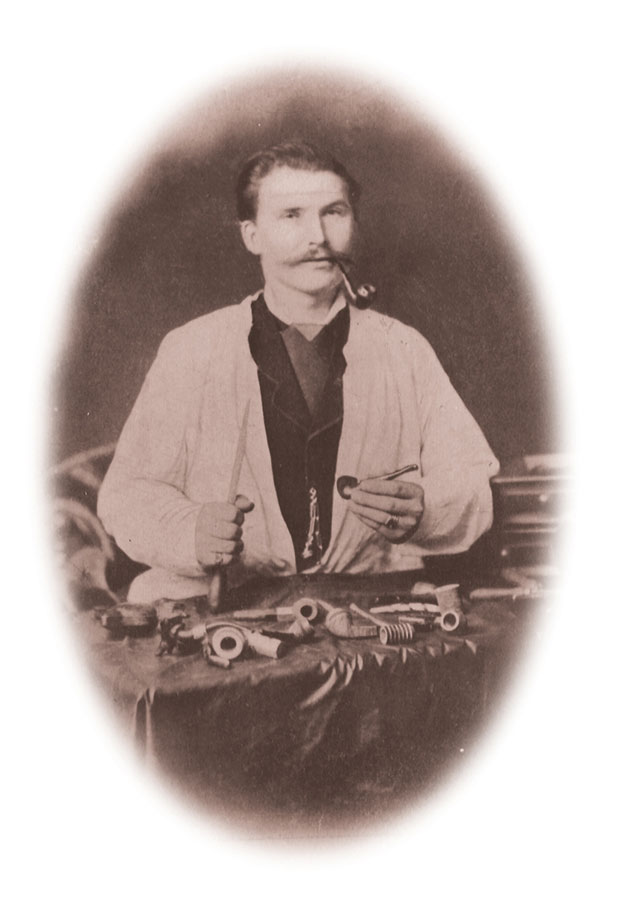
Charles Peterson (60), a pipe maker from Riga, Lativa, living at 114 Leinster Road, Rathmines, Dublin 6. He listed his religion as “Free Thinker” as did brother and fellow pipe maker John (45) and another relation and scholar Conrad (21). Petersons, who sell pipes, tobacco and cigars, are still in business to this day.

Charles Peterson, looking well. Credit – http://www.peterson.ie

Coonoor Kinshnaswamy (22), a married “Hindu” from India working as a “Nurse to Small Boy” for the Watson family at 16.2 Sandycove Avenue, County Dublin.

Julius Shillman (53) a “Traveler” from Russia, his “Mid-Wife” wife and six children living at 33 Victoria Street, Portobelllo, Dublin 8. All listed their religion as “Israelite”.

Olive Fox (27) from England and her visitor friend Ella Toring (43) (a.k.a. Ella Young) from Antrim at 14, Dundrum, County Dublin. Both did not list their occupation but put down “Pagan” as their religion.

Olive Fox (27) and friend in Dundrum

Eileen Hawkes (36), a Civil Servant, and her sister Louisa (24), a Musician, living at 35 Chelmsford Road, Ranelagh, Dublin 6. From Limerick, both listed their religion as “Suffragette”.

Robert Foran (50) from Cork, a 2nd Class Assistant Accountant in the Army Account Department, and his wife Kathleen (46) from Armagh who both listed their religion as  “None, a Pantheist. They were living at 1 Brooklyn Terrace, Dublin 8.

Robert Thomas Hamilton (61), who lived with his wife, daughter, sister in law and servant, at 52 Pembroke Road, Dublin 8. Hamilton put down himself and the household, bar the Catholic servant, as “Simple Believes in the Lord Jesus Christ the Son of God Who Came in to the World to Save Sinners – Not Attached to any Denomination Meet for Worship with other Christians at Massion Hall, Dublin”. Hamilton was formerly “Head of Teaching (at the) Irish Railway Clearing House”.

Robert Thomas Hamilton (61) and family in Dublin 8

John McDonagh Grant (28), a single boarder from Scotland living at 55 Sydney Parade Avenue, Dublin 4. A “private secretary, manager and journalist”, Grant listed his religion as “Christian certainly but non churchman”.  [Note: Transcription is wrong. See original transcript]

David Houston (57), a college lecturer from Antrim, down as a “Rationalist” living with his son, two servants and a visitor. Living at 13 Haroldsgrange, Rathfarnham, Dublin 14.

Ralph Jack Richard Mecredy (22) (More info on him, see here), a medical student from Down, and four other “Buddhists” living at 9 Gilford Road, Sandymount, Dublin 4. Fellow 22 year old and medical student Francis Clements Crosslee from Down. Elizabeth May Warrington (38) and her daughter Isobel Warrington (17) both born in India. Finally Arthur William Garbutt (22), a journalist from England.

Ralph Jack Richard Mecredy (22) and friends in Sandymount

Four “Samuelite” boarders living at 103 Phibsborough Road, Dublin 7. Alexander Leitch (21), a Second Division Clerk in the General Register Office from Scotland; Charles S Lafferty (23), a dentistry student and his brother Henry A (20), a agricultural student from Tyrone and Daniell A McLoughlin (19), a student of medicine from Derry. Anyone know what a Samuelite was/is?

Maria J O’ Connor (50), a widow living off “Private Income” who listed her religion as “Ceased to belong to any”, living at 40 Killiney, County Dublin.

Robert Emmet Coates (48), a Dublin bookseller and his wife Caroline (46) from Armagh living at 7 Butterfield, Rathfarnham, Dublin 14. Both listed their religion as Universal Brotherhood and Theosophical Society“.

Read Full Post »

“The delights a stroll around Dublin can bring you. I’ve always carried my camera around with me, but have only recently started to take it out and not give a shite that I look like a tourist.”

If you like graffiti, and well, taking pictures of graffiti like us, there are some hidden gems around Dublin. The Tivoli Carpark is one that we generally return to, as the annual Jam there always provides… Below is another, the lane behind the Bernard Shaw, Richmond Street. I’ve only put up nine snaps, I could have taken a hell of a lot more but this post would have been very long if I did… I’ll have another photo piece in a couple of days from another spot just around the corner that’s worth checking out. Click “continue reading” to see the full post…

(more…)

Read Full Post »

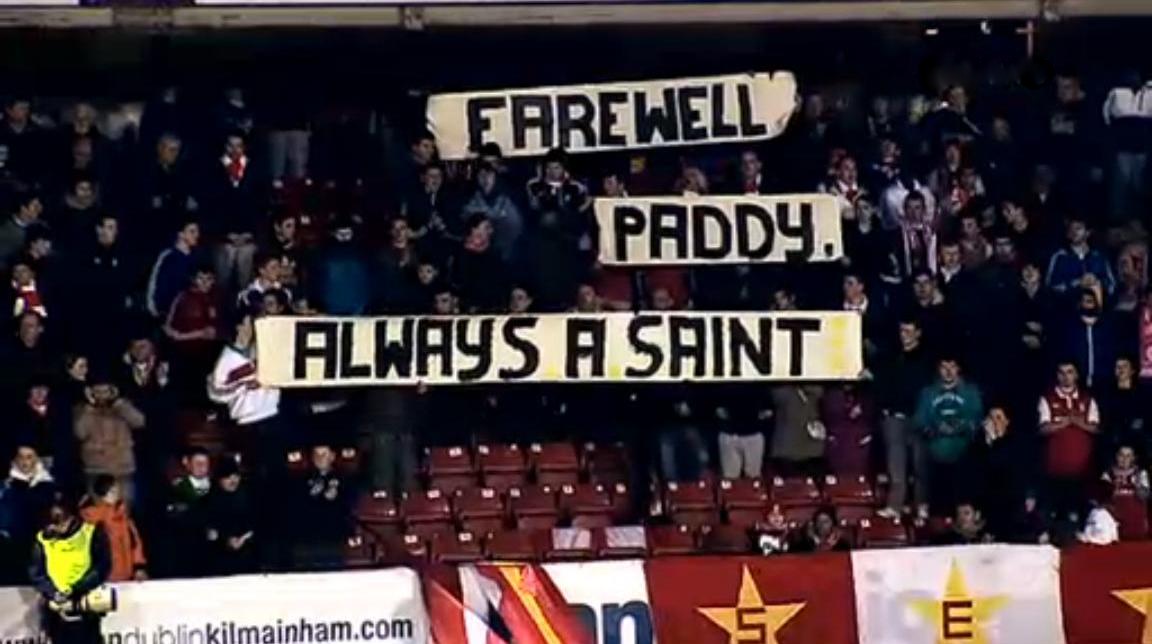
I was sent this one earlier on, and I had to smile. ‘Bucko’s Red Army’ by the brilliantly named Joxer and the Skidmarks has been released to coincide with the FAI Cup Final on Sunday, a replay of the 2006 final which Saint Patrick’s Athletic lost 4-3 to Derry City.

Come on you Saints, no time to waste, Revenge for Zero-Six
Go out against the Candystripes and we can get our kicks
Fahey said he’ll be there, I hope it’s not a lie
He’s said he’ll come and bang the drum with the S.E.I.

Some in the crowd on Sunday will remember the boys of ’59 and ’61, who last brought the cup home to Inchicore. They’ll remember Willie Peyton, who last won it for us. They’ll remember the late and great Paddy Ginger O’Rourke. Those of us too young to remember those finals will be hoping for new heroes.

Tickets priced €10 for adults and €5 for children are available now from the Saint Patrick’s Athletic offices in Inchicore, Ticketmaster and on the day at Lansdowne Road.

Read Full Post »

Thanks to Sarah Rose Parsons for bringing our attention to these beautiful colourised slides of Dublin City from the Special Collections at University of California, Santa Cruz. The photographer is unknown but we are told they were taken between 1932 and 1935.

Our old friend Henry Grattan is looking well here. The two benches and the telephone boxes are long gone today but the two gas lamp standards, decorated with carved Hippocampus (Sea Horses) still remain. There used to be four but the other two disappeared sometime in the 20th century. For more historic pictures of the statue, check out an old post of ours from January 2010.

Henry Grattan (1932 – 1935). Credit – University of California, Santa Cruz

O’Meara’s public house, known as The Irish House, which sat on the corner of Winetavern Street and Wood Quay from 1870 to 1968 is seen here with a group of relatively well dressed children outside. For more on this pub, have a look at one of our posts from May.

The Irish House pub (1932 – 1935). Credit – University of California, Santa Cruz

This looks like a drayman taking a break from work. My g-grand uncle was a drayman with Murphys Brewery in Cork in the early 1900s. I read in the book A Bottle of Guinness Please that the arrival of motor transport in the 1930s quickly killed off this occupation. The author David Hughes said that Guinness closed their stables in 1932 apparently. So it’s interesting to see that this chap was still working in the middle years of that decade, possibly with another brewery? Or is he employed in another occupation altogether?

A worn drayman with top hat and grey mustache in Dublin (1932-1935). Credit – University of California, Santa Cruz

View the other 23 slides here at the Retronaut website.

Read Full Post »

This brilliant image was posted to the James Connolly Bridge Campaign page by Moira Murphy, and shows the great Edinburgh trade unionist as you’ve never seen him before. If you don’t get the reference, it comes from the character Bane in Batman who urges the citizens of Gotham to “take control” of their city. We like it.

We’re still torn between the James Connolly Bridge and Job Bridge, but we’ll see how it goes.

Read Full Post »

A recently vandalised Derry cow. (Belfast Telegraph)

A part of me couldn’t help but laugh recently hearing news from Derry, where the CowParade recently rolled into town and was attacked. A Belfast Telegraph reported from October 10th notes that:

Two of the fibreglass animals which form part of the CowParade NI were targeted at the weekend.

The two life-sized sculptures were located in the heart of the city centre at a landscaped park opposite the Guildhall.
The cows were painted by local artists and community groups at the Playhouse Theatre and at Maydown.

They are now being removed so the damage can be assessed, and as a result of the destruction they will be relocated indoors once repaired.

Next year marks a decade since fiberglass cows were placed across the city of Dublin as part of the same project, with many of them vandalised and ultimately moved indoors. Even then, they were targeted in many cases.

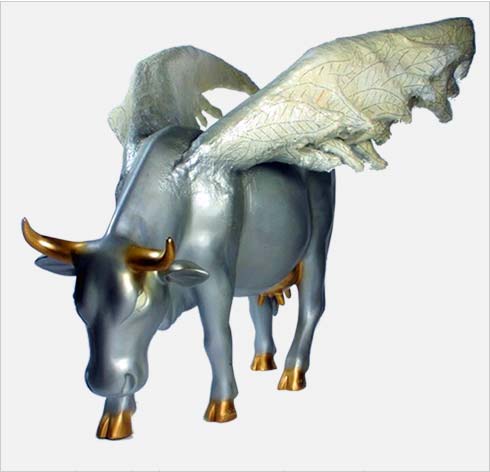
‘When Cows Fly’ – one of the vandalised Dublin cows.

CowParade events have been staged in over 75 cities worldwide, including New York, Istanbul and Milan. The project began in 1999, and it describes itself as the “largest and most successful public art event in the world.” The project has raised in excess of thirty million Dollars for charities worldwide, yet it’s 2003 run in Dublin was marred by the destruction of many of the cows, with Dublin becoming the only city at the time where the exhibition had to become an entirely indoors affair.

The CowParade in Dublin attracted a lot of media attention in the run up the public art project launching, with Kevin Sharkey discussing the project on the Late Late Show months before the cows were placed on Dublin’s streets. In an interview prior to the launch of CowParade, the CEO of Bord Fáilte told the Irish Independent that “the challenge is to be different from other cities, to somehow better everything that’s gone before us and really capture that quirky Dublin humour.”

Robert Ballagh, John Rocha, Gavin Friday, Graham Knuttel, Andrea Corr, Ronnie Woods and Felim Egan were just some of the names involved in the project here, and Rocha’s cow would sell for an incredible €125,000, bought by the Wagamamma restaurant in Dublin city centre.

The cows proved an irresistible temptation to Dublin vandals. In an interview with The Irish Times, Gerard Beshoff (director of the CowParade in Dulin) noted that at first only 10 cows were exhibited on the streets, and all 10 were vandalised within days. One cow was decapitated, while another had its wings cut from it. The cow on Liffey Street, which stood outside Pravda, was damaged in such a manner that a saw would have been required. The head of the cow was later discovered outside Cleary’s on O’Connell Street.

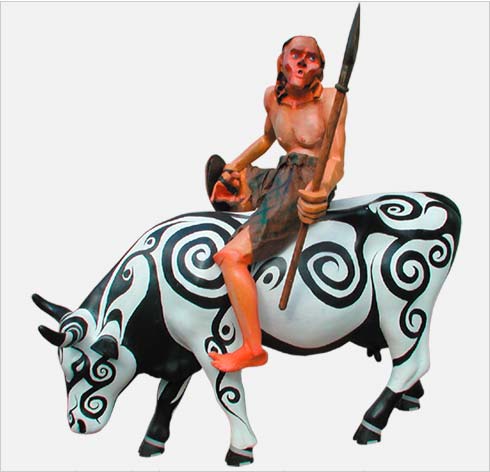
‘Moo Chulainn’ displayed on Dawson Street.

Organisers had planned to place 69 of the cows on the streets of Dublin, but the plan was quickly abandoned. Of the 69 which were placed around the capital indoors and outdoors, half were vandalised. They were eventually auctioned in November at the Four Seasons Hotel, before the CowParade moved on to pastures new.

The vandalism of the cows in Dublin sparked discussion both at home and abroad. Dr. Sarah Wagner-McCoy, an assistant professor at Reed College,noted that:

In other cities, the public loved the cows so much that they would defend them if anyone tried to vandalize them, but in Dublin, the cows were smashed, stolen, beheaded and covered in graffiti, even after the exhibit was officially over and the cows were moved to less public places.

Wagner-McCoy’s suggested that this phenomenon went back to the destruction of monuments in Dublin historically, which had been found politically disagreeable by Irish nationalists. Perhaps a better historic precedent was the ‘Bowl of Light’, which had sat on O’Connell Bridge prior to part of it being flung into the river by vandals in 1953.

“It’s so depressing, but not surprising” said Amy Wallace, a CowParade Ireland account executive, to The Irish Times at the time of the pointless vandalism.”The awful thing is, we were kind of expecting it in Dublin.”

‘Tiogar: Celtic Tiger’ – Displayed in the IFSC.

Read Full Post »

« Newer Posts - Older Posts »