Feeds:
Posts
Comments

Archive for the ‘Dublin History’ Category

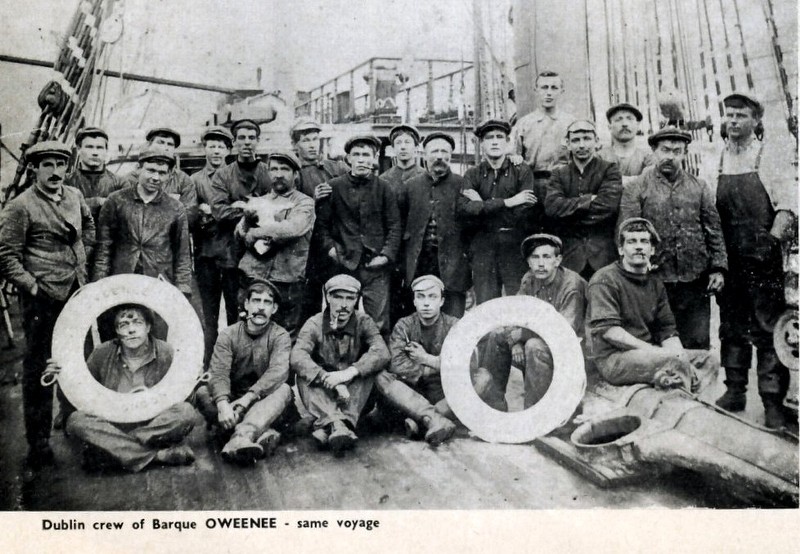
The Dublin Dockworkers Preservation Society exhibition will be in Liberty Hall later in the month for anyone who hasn’t had a chance to see the collection yet. It is always worth taking the time to see these photos where they belong, hung up and on display.

You can explore the fantastic archive online here, and they’re a fantastic insight into an important aspect of Dublin’s working class history.

From Dublin Dockworkers Preservation Society online collection.

From Dublin Dockworkers Preservation Society online collection.

Read Full Post »

I collect old postcards of Dublin, in particular postcards of the monuments and statues of the city. It’s a cheap and cheerful hobby really, and I’ve accumulated a nice enough collection more for the love of it than anything. They go well with some posts on here, such as the ‘Statues of Dublin’ series, and they’re generally nice to look at. The city has changed in many ways of course and that is always evident. In some cases, they come with scrawled writing on the back and an indication of a former romance or the like.

Below are a few favourites from my own collection.

The O’Connell Statue.

The O’Connell Statue is surely one of the most iconic Dublin images. We featured it rather unusually on the site, by looking at the time it was bombed by Northern Irish loyalists.

Nelson’s Pillar

When Nelson’s Pillar was blown up in 1966,its head was stolen from storage by a group of students from the NCAD. It ended up in a London antique shop, under the ownership of Mr. Benny Gray. At one stage it had appeared on stage with The Dubliners at the Gate Theatre.

In September of 1966 Gray arrived in Dublin on O’Connell Street atop a lorry, with the much sought after head alongside him. He was also joined, for the hell of it, by The Dubliners folk band. The Dubliners launched into ‘Nelsons Return’, a rewritten version of their popular smash hit ‘Nelsons Farewell’, composed at the time of the explosion. He inquired to a bemused crowd through a megaphone if anyone among them was a trustee of the pillar who could accept the head, a Corporation official came forward. Mr.Gray said it was “lots of fun” having the head in his shop, but the Corporation failed to see the funny side. A spokesperson made it clear the head was not to do anymore travelling.

I recently heard Nelson jokingly referred to as Admiral Blownapart.

Gough Monument, Phoenix Park.

The unfortunate Gough monument has featured on Come Here To Me before. It was infamously bombed in 1957, leading to the emergence of a great poem, something we talk about in the post I’ve linked to:

There are strange things done from twelve to one
In the hollow at Phaynix Park,
There’s maidens mobbed and gentlemen robbed
In the bushes after dark;
But the strangest of all within human recall
Concerns the statue of Gough,
’Twas a terrible fact, and a most wicked act,
For his bollix they tried to blow off!

(more…)

Read Full Post »

The People’s Garden in the Phoenix Park is home to a magnificent statue of Sean Heuston, one of the sixteen men executed for their role in leading the 1916 uprising.

Only a short walk from Heuston, one comes to the the remnants of a memorial to the old order in the form of the plinth belonging to the statue of George William Frederick Howard, the 7th Earl of Carlisle. Born in Westminster in April 1802, Howard had served as Lord Lieutenant of Ireland on two separate occasions in the 1850s and 60s. It was one of several statues targeted by militant Irish republicans in the decades following independence, bombed in July of 1958. Lord Gough, who also stood in the Phoenix Park, was badly damaged by an explosion the following year.

The statue (number 3) as shown in ‘The Graphic’, August 17th 1878 ( Fallon collection)

The statue was unveiled by Earl Spencer, the Lord Lieutenant of Ireland, on May 2nd 1870. Paid for by public subscription, newspaper reports give an account of a rather unusual ceremony. It was noted for example in The Irish Times that:

There was no formal ceremonial, and no display of oratory. It was rightly felt that to touch upon all the merits of Lord Carlisle would be impossible, and that it was better not to speak imperfectly of his character and deeds.

John Henry Foley was the sculptor. The location of the statue, inside the People’s Garden, was chosen as the Earl had contributed towards the People’s Garden as a place for “the recreation and instruction of the poor of Dublin.” The statue showed the Earl of Carlisle in the robes of the Grand Master of the Order of Saint Patrick, and The Irish Times noted that the statue, as a work of art, “is not unworthy of the known fame of the artist.”

The statue sat upon a granite pedestal, still with us today. Within this pedestal was a marble slab, which read:

George Wm. Frederick, seventh Earl of Carlisle, K.G
Chief Secretary for Ireland, 1835 to 1841;
Lord Lieutenant of Ireland, 1855-1858 and 1859 to 1864
Born 1802. Died 1864.

Image of Carlisle monument from the Lawrence Collection (NLI)

On July 28th 1958 an explosion would cause serious damage to Foley’s work. It was reported the following day that the statue was embedded two feet in the soil next to its pedestal, giving some idea of the power of the blast. The Irish Republican Publicity Bureau came forward immediately to distance itself from the explosion.

Pedestal intact, great damage was down to the statue of the Earl by the explosion (The Irish Times)

Within a month of the Carlisle statue being bombed, a monument in Stephen’s Green to the 13th Earl of Winton was also targeted by republicans. Unlike explosions prior to it against symbols of British rule in Ireland, the explosion in Stephen’s Green almost resulted in a loss of life, with a civilian and two Gardaí lucky to come away with their lives. The Irish Times noted after it that “the great Tsars were guilty of real tyranny; yet the peasants and the workers of the Soviet Union have allowed their monuments to stand in peace.”

Read Full Post »

Walking down Thomas Street, I couldn’t help but notice Foley’s Pharmacy’s have given over their windows to all sorts of interesting local history, including some great old newspaper reports on Bang Bang among other things. I don’t know if its only temporary or if they’ve always featured local history in their shop display window, but fair play and I certainly encourage it.

Read Full Post »

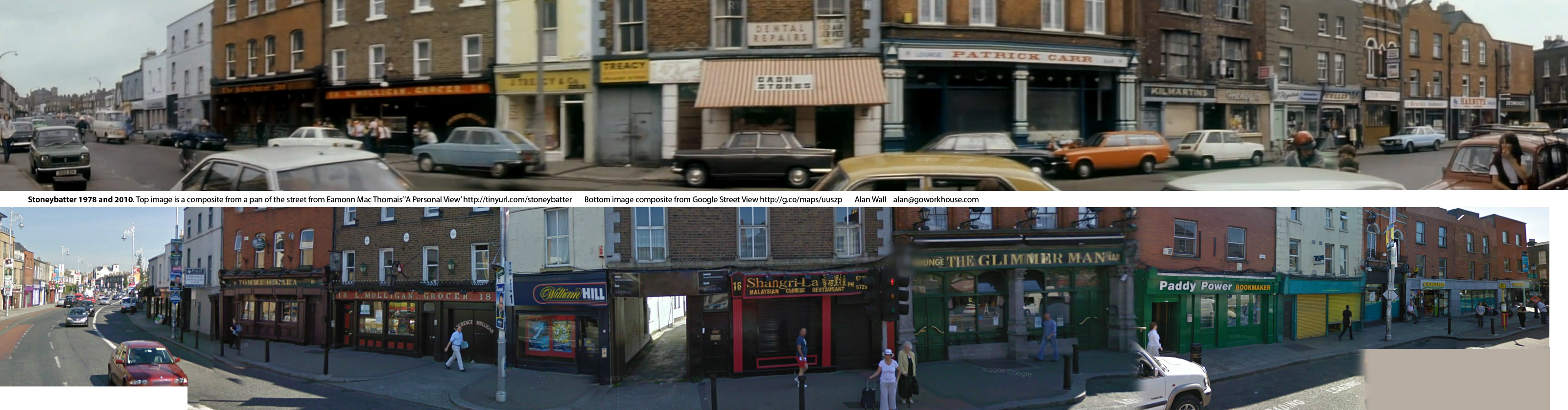
Stoneybatter 1978/Stoneybatter 2010. Click to enlarge

Alan Wall (of Workhouse) sent this on to us via Twitter. You’ll need to click on the image to enlarge it and explore. A fantastic idea, the top half shows a composite of Stoneybatter as it appears in Éamonn MacThomais’ Dublin:A Personal View. Below it, Alan has placed a composite of Stoneybatter today via Google Street View. The buildings themselves are the same, of course shopfronts and businesses have changed, but look at L.Mulligan’s pub! L.Mulligan’s is a favourite haunt of mine today, loyal to the cause of the microbrewery.

MacThomais’ Dublin:A Personal View is available to view in full on YouTube today, and is a truly fantastic effort, the mans love and enthusiasm for Dublin shone through in all he did. Here is the first part to enjoy.

Read Full Post »

The Harry Clarke House on Thomas Street is a part of the National College of Art and Design (NCAD). A firestation had stood on Thomas Street, opened in the year 1913, and below is a drawing showing the ‘Elevation of Thomas Street Fire Station’. Recently, we posted the original architects drawing for Tara Street Fire Station. The old drawings and plans for these stations are magnificent, and in time I hope to post more.

'Elevation of Thomas Street Fire Station' (Fallon Collection)

Earlier in the week we posted on the ambitious proposals for Thomas Street from the people at the Dublin Civic Trust. This street really is the heart of the city, and hopefully its rich cultural and architectural history will some day be properly appreciated.

Read Full Post »

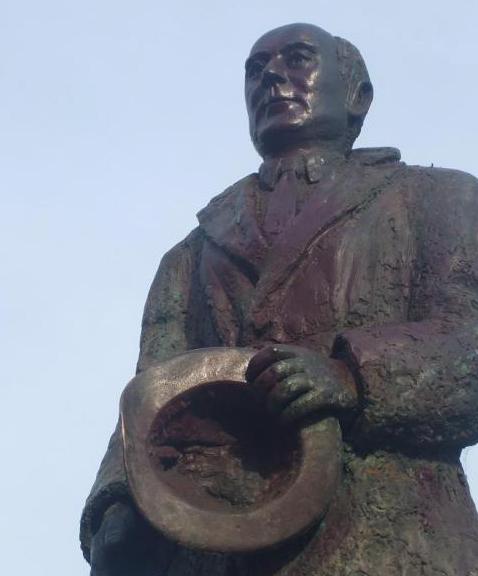
Statues have long been divisive in Dublin of course, and the statues of figures associated with the British Empire have long been targeted by Irish republicans. As we’ve featured on Come Here To Me before, statues of Irish nationalists in Dublin have on occasion been targeted by Loyalists too. Truly remarkable however is the statue of Seán Russell in Fairview Park, owing to the numerous attacks of a political nature upon it. Russell was a veteran republican who partook in the Easter Rising and the War of Independence, before going on to senior positions in the IRA in the 1920s and 30s. He died in 1940 upon a German U-Boat, on route to Ireland. Frank Ryan was also upon the U-Boat, and returned to Germany. Russell’s statue has been targeted by both the Right and the Left, and remains considerably controversial to this day.

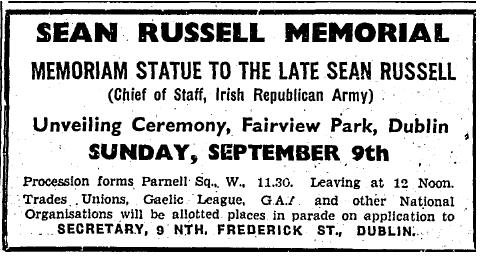
Advertisement in various newspapers prior to the unveiling.

The Seán Russell statue was unveiled on Sunday, September 9th 1951. A march of over 1,000 republicans made their way to the monument from Parnell Square, where they were joined by members of the public. A Garda Special Branch report into the march noted that among the organisations and individuals present were in excess of 130 Dublin IRA men led by Cathal Goulding, Cumann na mBán, the ‘Girls Piper Band’ from Dublin, the Transport Workers’ Union Band and republican contingents from both Cork and the north. Members of the Dublin Corporation and the GAA were also identified by the Special Branch. Republican representatives from Clan na nGael in America were among the crowd and would play a leading role in the ceremony at Fairview.

When the march reached Fairview, where members of the public awaited it, numbers grew considerably. The report noted that:

The procession marched to Fairview via O’Connell Street, Amiens Street, North Strand, arriving at Fairview Park at about 1pm where the general public had already assembled in large numbers, many no doubt attending from the point of view of curiosity.

Nevertheless, the crowd at this period was not far short of five thousand people, including those on the paths and roadway outside the Park proper.

(more…)

Read Full Post »

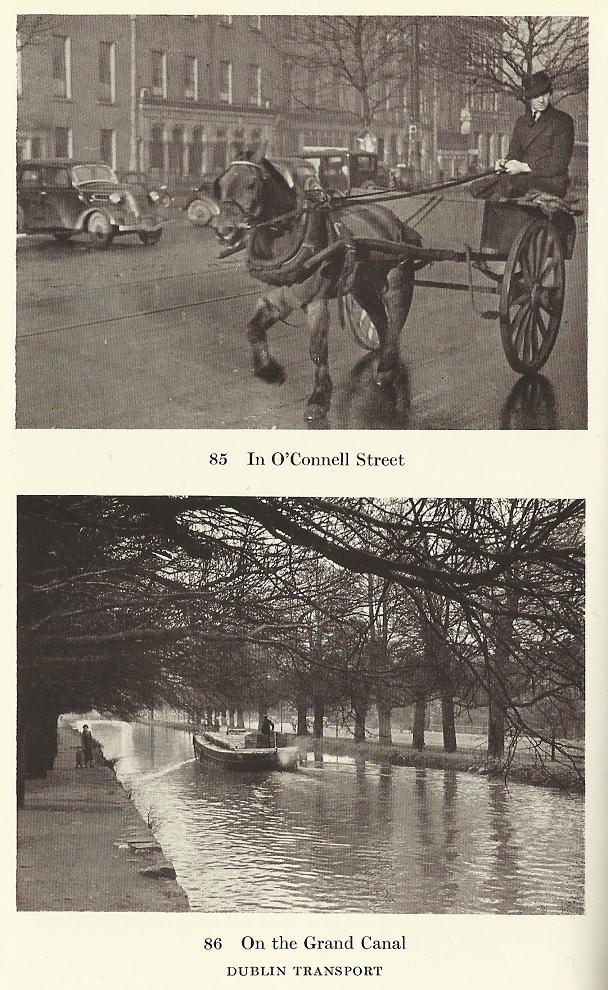
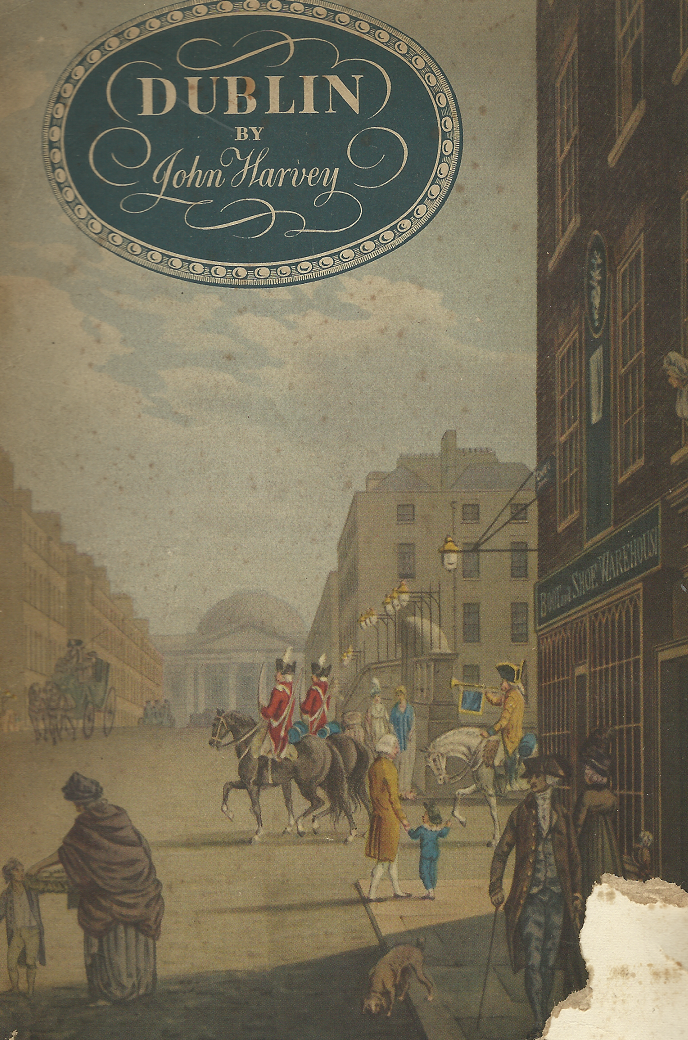
I’m a big fan of books on Dublin from decades gone by, in particular guide books or studies written by ‘outsiders’. John Harvey’s Dublin: A Study In Environment (1949) was begging me to buy it when I spotted it sitting in Chapters second hand section, and I couldn’t resist. The book comes with the endorsement of Bernard Shaw who writes “I wish it had been available when I was a youth in Dublin. To me it is intensely interesting.”

Harvey begins his work by noting that:

“Dublin is still a city almost unknown to English people, and the loss is ours. Between the mountains and the sea, it is one of the most fortunate of European capitals, and it has the enormous advantage of consisting mainly of buildings produced at the peak of its historic culture.”

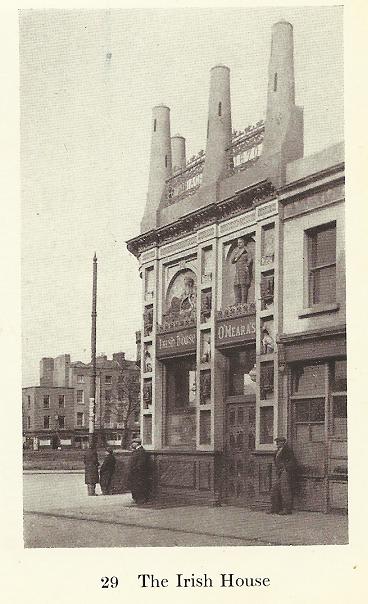
The book contains many fantastic images of the city, showing Dubliners at work as well as some fantastic buildings of the period, such as The Irish House pub at Wood Quay which is no longer with us.

Bank of Ireland, College Green.

The Irish House.

Harvey doesn’t shy away from sharing opinions among historical facts and information on sites of interest in Dublin. “Nationalism is nonsense; but it can have indirect results which do make sense” he writes, as “so far as Dublin is now both a flourishing and a promising city, it is the outcome of nationalism, building on the remains of an alien aristocratic regime.” Harvey doesn’t shy away from attacking Irish nationalists on occasion, for example taking aim at the “political hooligans” who destroyed John Van Nost’s statue of George II inside St. Stephen’s Green.

Ireland, Harvey noted, suffered from an “extremely thin-skinned moral censorship”, a censorship “so wide that the banning of books and cutting of films reaches a humorously fantastic point.”

Harvey is completely correct in his commentary on Dublin’s ancient cathedrals, noting that they were both “…subjected to the horrors of well-meant ‘restoration’, which as usual destroyed the greater part of their original character and beauty. Both buildings were in a very dilapidated state, and urgently needed repair, but the work actually done was so extensive as to be even more disastrous than contemporary work at English churches.”

Harvey writes of what he sees as the perception of the British people in Ireland, a rather damning indictment that “‘The British’ in many an Irish mouth has implications only equaled by those of les boches in France; it is one of the few sad instances where the Irish sense of humour is lost.”
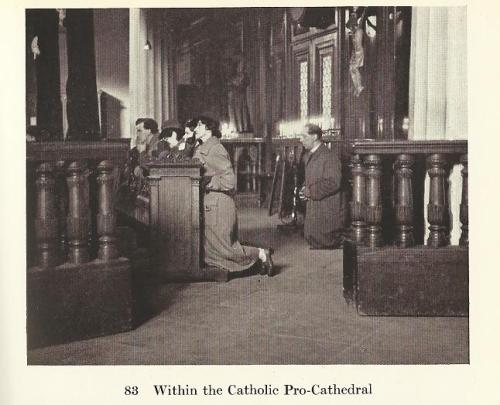
Mass goers.

Refreshingly for such a study, the tenement poverty of the inner-city features, which Harvey stressing that “except for O’Connell Street and Parnell Street, practically the whole of the northern half of the eighteenth-century city is one enormous slum.”
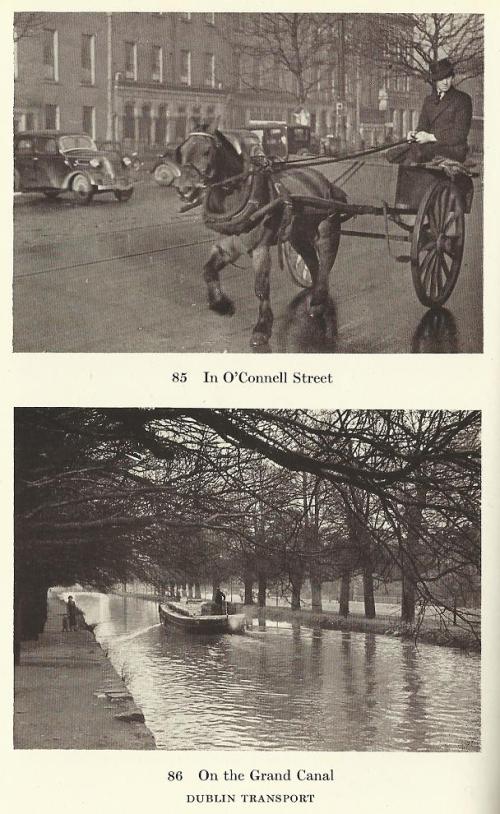
Harvey’s book is an enjoyable read, loaded with opinion on not only Dublin and Dubliners but also the political questions of the day, and the relationship between Ireland and Britain. Batsford, its publishers, produced a series on “British Cities” in the style of Harvey’s effort, and all contained the same style of maps and in excess of 100 images.

“To an Englishman Dublin has the virtues of a foreign capital without the drawbacks: artificial animosities have not annulled the kinship which has grown up through centuries of intermarriage between the people’s of the British Isles. Dublin seems to foreshadow the qualities of a new type of supra-national city; let us have a look at her.”

Read Full Post »

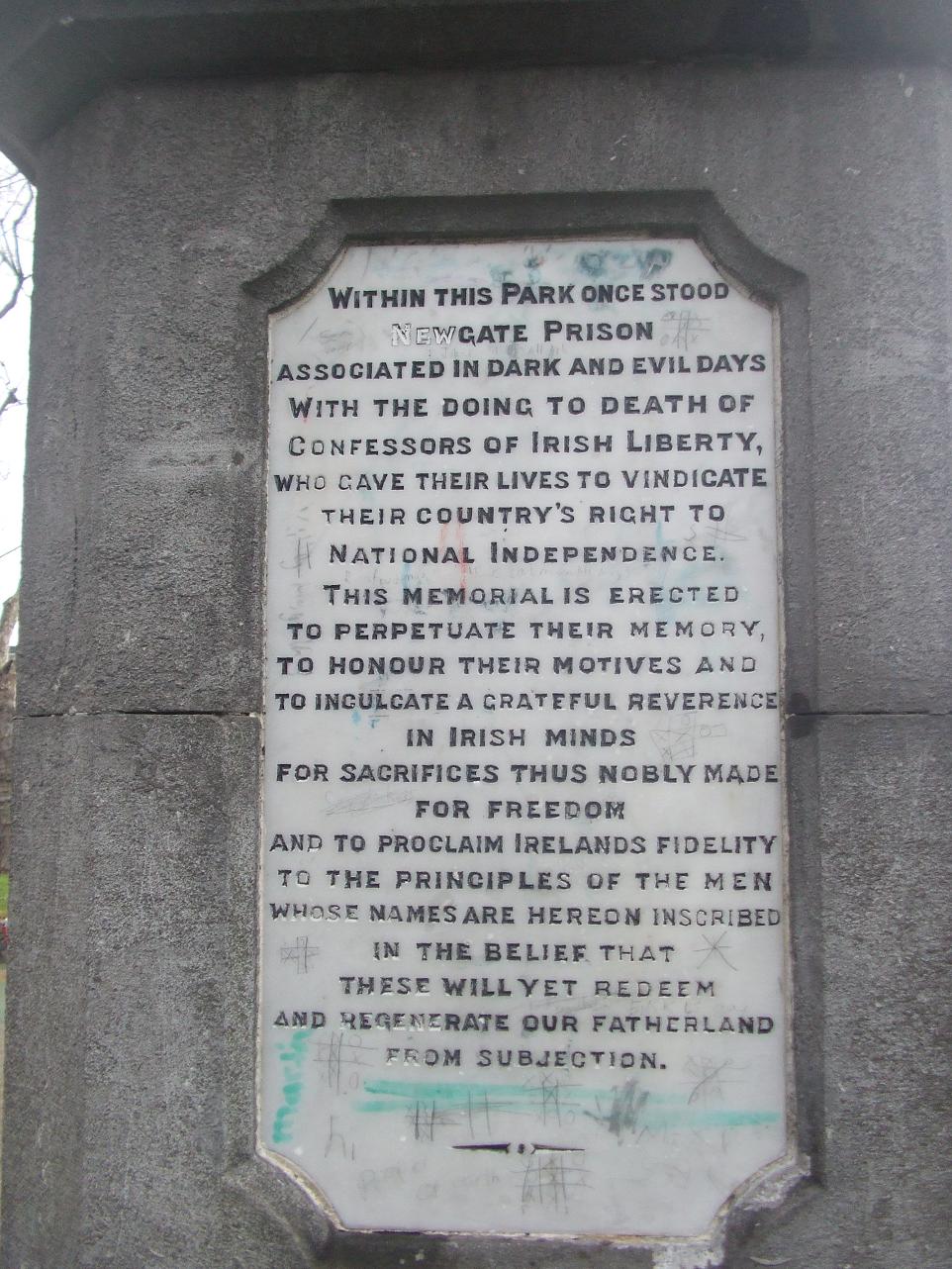
A magnificent statue at St Michan’s Park opposite the Little Green Street Gallery caught my eye recently. The statue stands within a park which was once the location of Newgate Prison, which the statue tells us was “associated in dark and evil days with the doing to death of confessors of Irish liberty, who gave their lives to vindicate their country’s right to national independence.”

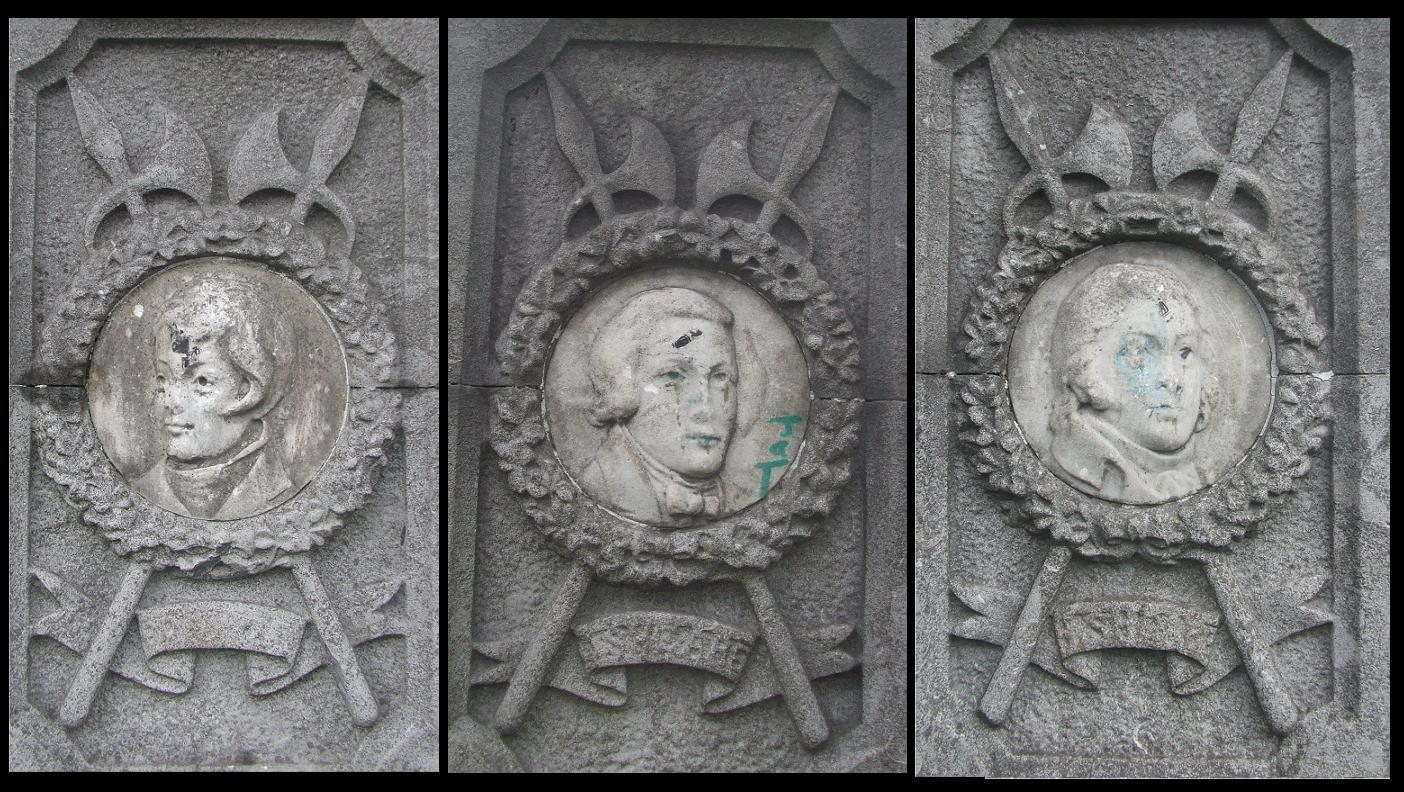
Around the monument, the faces of figures associated with the 1798 republican insurection are to be seen. Lord Edward Fitzgerald can be seen in the front of the monument, while the Brothers Sheares are found on each side. Lord Edward died of gunshout wounds at the Newgate Prison as the United Irishmen rebellion broke out, and today his body is to be found in Saint Werburgh’s Church. It’s a great irony that Major Henry C. Sirr, who led the arrest party to capture Fitzgerald, is buried in the grounds of that same historic church.

Henry and John Sheares are perhaps not as widely remembered today as Fitzgerald, though they are fascinating characters in their own right. The brothers, sons of a Parliamentarian, had witnessed the radical changes to society brought by the French revolution firsthand and were enthusiastic members of the United Irishmen. They were executed n July 14th 1798, as the rebellion raged, having been betrayed by spies inside the movement. The pikes featured have of course come to symbolise the 1798 uprising in Irish popular history.

(more…)

Read Full Post »

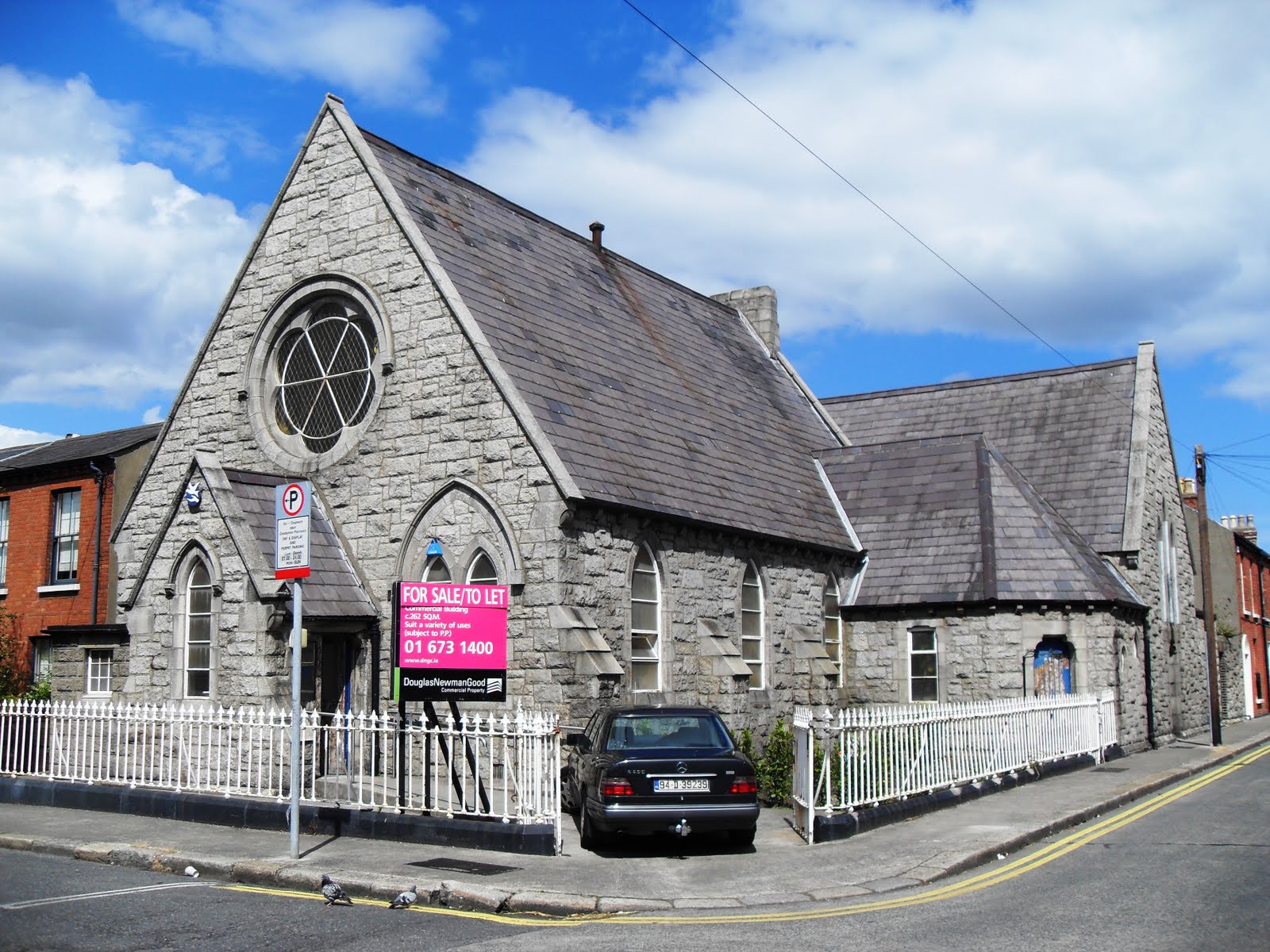
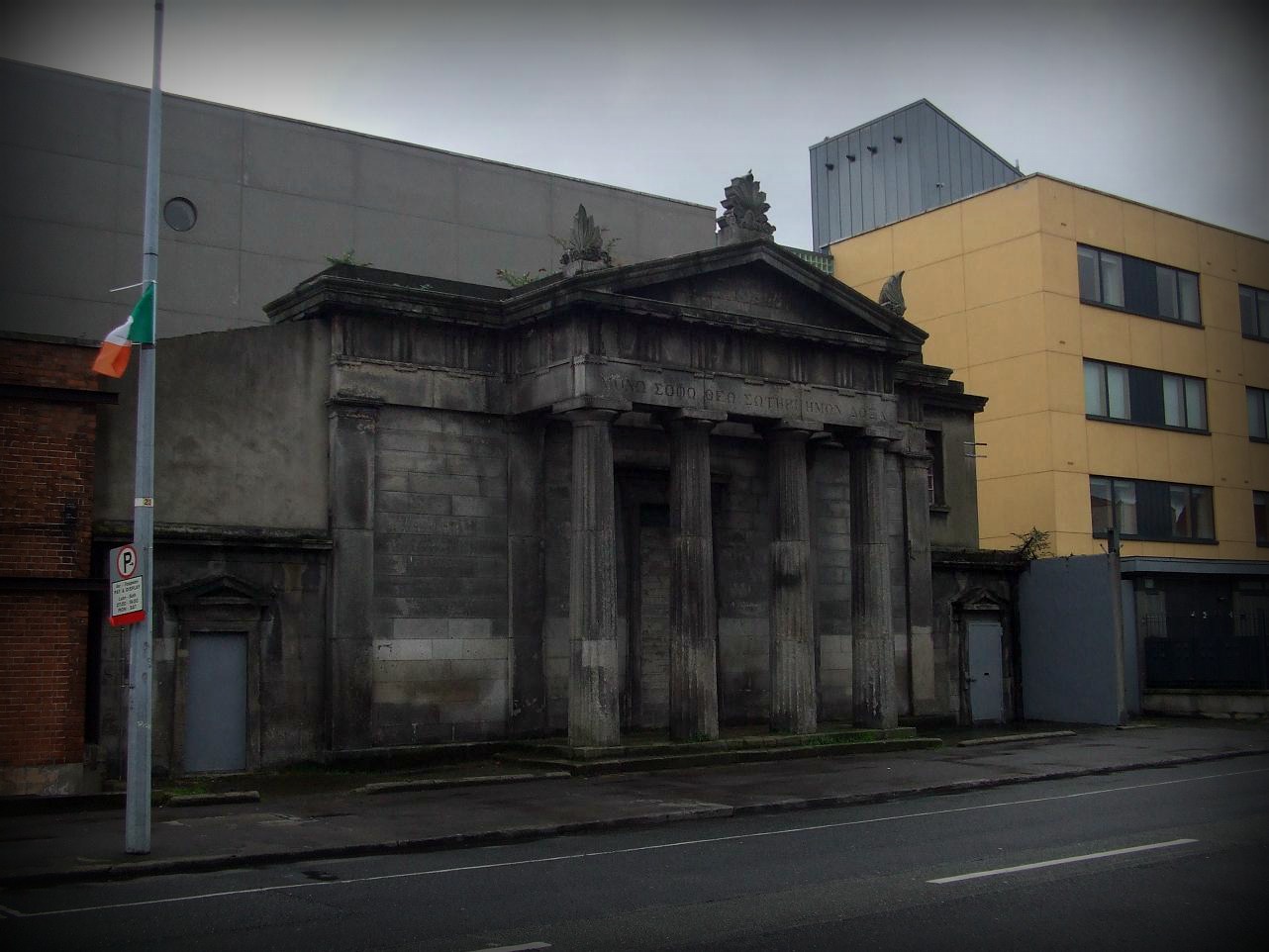
An historic church hidden away in Portobello (Dublin 8) is currently up for sale.

Rev. has written a bit about the building’s history:

The granite-block former Kingsland Place Church was designed by John McCurdy in 1870 for the Primitive Wesleyan Methodist Church, and opened in 1871. From the 1950s, the church was used as the Women’s Employment Exchange, and it stands as a reminder of another religious minority that has been lost to this part of Dublin.

It’s yours for €850,000 via Douglas Newman Good.

Kingsland Place Church. (Picture credit - http://revpatrickcomerford.blogspot.com)

Read Full Post »
Walking down Sean MacDermott Street recently, I was drawn to this building as I am each time I go down there. It had to be photographed. The contrast between it and all around it is something else, and I had to do some digging to find out more. The natural man to ask was Terry Fagan of the North Inner City Folklore Project, who has written on the history of the area, in particular Monto. An interview we recorded with Terry appeared on the site before.

This was the Scots Presbyterian Church which later relocated to the corner of Howth Road and Clontarf Road, opposite Fairview Park and Clontarf DART station, Terry informed me. While digging around revealed some discussion the architectural merits of the building, Terry gave some interesting social insight on the church:

They helped the ladies of the night in the Monto who wanted out from that life. They ran a school across the road from the church which attracted a lot of poor children who went to get the free soup.

In 1910 the bishop’s built a school on Rutland Street to counter act the work of the free-soupers. There was hand to hand fighting by different groups to prevent the children going to the Presbyterian school as they used to come home with anti-Catholic literature.

This was like a red rag to a bull to the groups who marched on the school “To save the souls of the Children”. The school closed up sometime in the late 1960s.

A poster on broadsheet.ie noted that the church had even appeared on the cover of the single Keep On Chewin’ from Jubilee Allstars! The building featured on broadsheet as one of their frequent posts on unusual locations in the city.

Read Full Post »

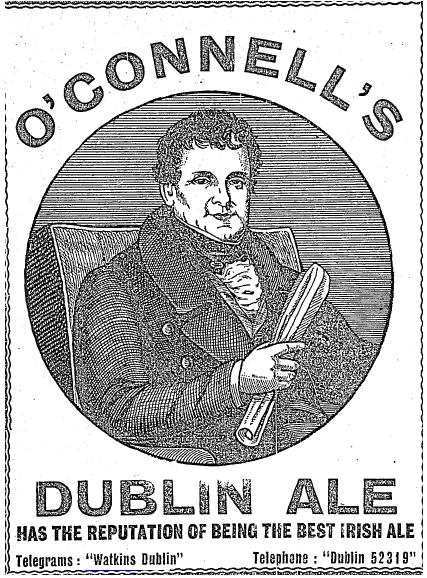
I had to laugh seeing this advertisement for O’Connell’s Ale popping up frequently in An Phoblacht in the early 1930s. Daniel O’Connell of course was far from a militant republican, and one wonders how he’d feel on the pages of that organ!

Daniel O’Connnell Jr. had famously acquired the Phoenix Brewery in James’s street in 1831, which produced O’Connell’s Ale. It should be noted that O’Connell and the Guinness family were at times political rivals, something best captured by the 1841 ‘Repeal Election’, where O’Connell had stood against and defeated Arthur Guinness Jr. This period would see a sizeable boycott of Guinness, dubbed “Protestant Porter” by sections of the populace, though this was against the wishes of O’Connell himself.

John D’Arcy continued to brew O’Connell Ale after the family had ceased their role in brewing, and in time production moved to the Anchor Brewery in Usher Street. Watkins eventually took up the brewing of O’Connell Ale, and this advertisement was placed by them in the pages of leading newspapers in the 1930s.

While Arthur had failed to defeat O’Connell at the Ballot Box, I always wonder what O’Connell would think of the Guinness Empire today every time I see a Diaego truck pass his statue.

Read Full Post »
« Newer Posts - Older Posts »