Feeds:
Posts
Comments

Archive for the ‘Dublin History’ Category

Today is Holocaust Memorial Day. With that in mind, I dipped into an old Come Here To Me article which was the popular review we carried out of the Jewish Museum in Portobello.

A small, touching plaque features upstairs in the restored synagogue to Ettie Steinberg. Herself and her son were to become the only Irish citizens to perish in the Holocaust. Ettie was raised in Raymond Terrace. The horrific figure of six million can be difficult to comprehend, but when the story of one individual is brought to life, not least a Dubliner born only a short walk from the Museum, the horror of those years becomes clearer.

Ettie’s family were oiginally from Czechoslovakia, and had come to Ireland from London in 1926. She married a Belgian man in 1937, and moved to Belgium with him before going on to Paris two years later. In 1942, Ettie and her young son, born in Paris, were transported to Auschwitz by the Nazis. In his wonderful work Jews In Twentieth-Century Ireland , Dermot Keough wrote that:

By a strange irony, the Steinberg’s in Dublin had secured visas for Ettie and her family through the British Home Office in Belfast. The visas were sent immediately to Toulouse but they arrived too late. Ettie and her family had been rounded up the day before and sent to the camp at Drancy, outside Paris. They were transported to Auschwitz and to their immediate death.

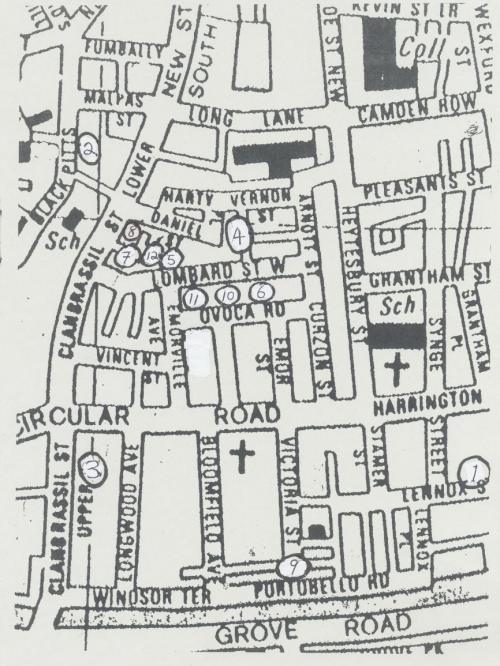
The map below shows that area that once made up ‘Dublin’s Little Jerusalem’, and was first uploaded to Come Here To Me by jaycarax here, at the time of a fascinating documentary on the murders of two Jewish men in the area in the early 1920s.

Read Full Post »

Snap of Eoin O’Duffy’s Irish Brigade returning from Spain after a pretty disastrous and embarassing campaign which only lasted six months. Getting drunk regularly and, in their first action, coming under friendly fire from an allied Falangist unit from the Canary Islands, it is likely that Franco was glad to see the back of the Irish Brigade.

Brendan Behan famously quipped that “they certainly made history (as) they seemed to be the only army that went out to war, ever, and came back with more”. This is because a number of Irish men in the Spanish Legion(?) decided to get a lift home with O’Duffy and co. when they were leaving.

1937, Dublin, Ireland --- Irish Brigade Returns from Spain --- Image by © Hulton-Deutsch Collection/CORBIS

Read Full Post »

Dublin Shortcuts

Though they didn’t quite make the Lanes of Dublin list, these little shortcuts still deserve a mention.

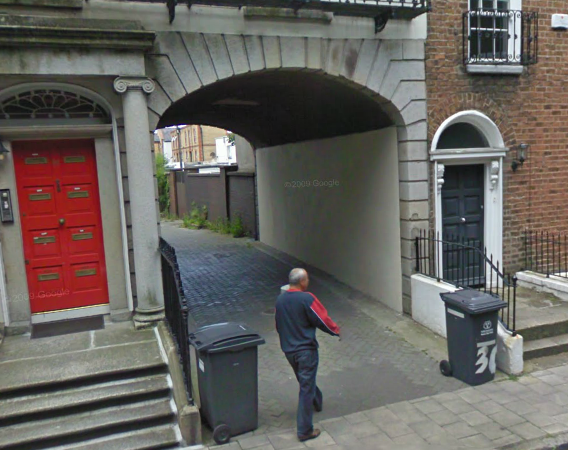
Lower Mount Pleasant Avenue, Rathmines shortcut:

Mountpleasant Sq. West entrance

Lwr. Mt. Pleasant. Ave. entrance

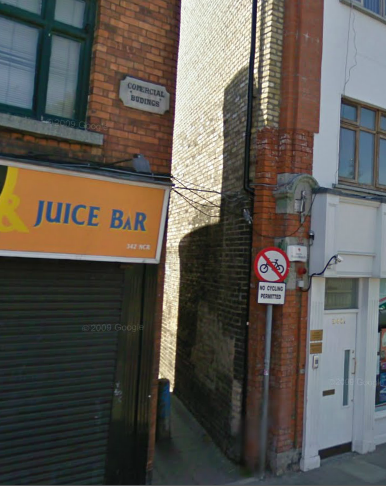
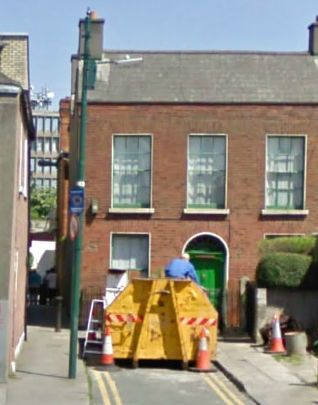
– Phibsborough Terrace shortcut:

View from North Circular Rd. down to Phibsborough Ave.

View from Phibsborough Ave. down to North Circular Rd.

(more…)

Read Full Post »

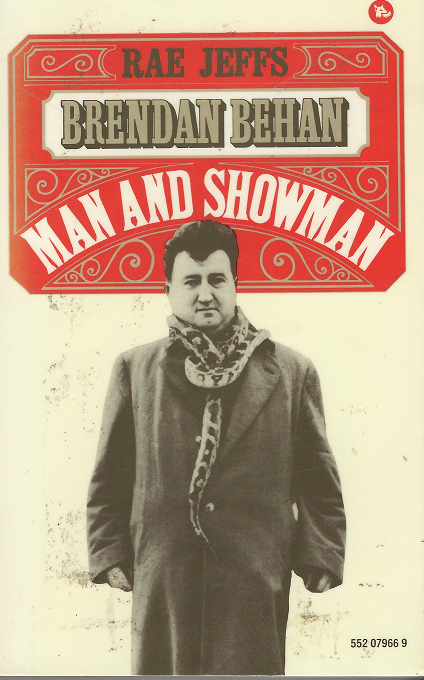
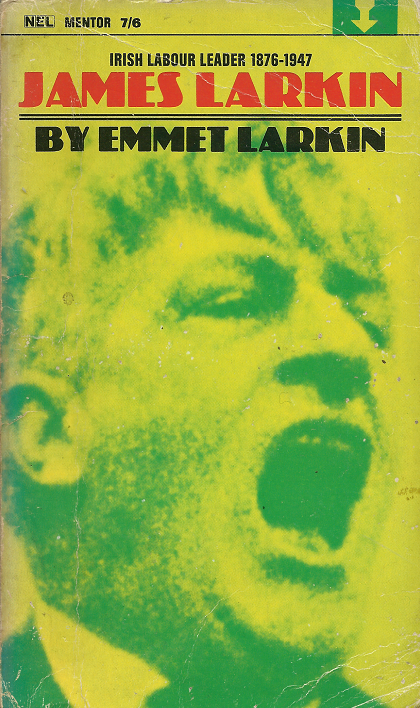
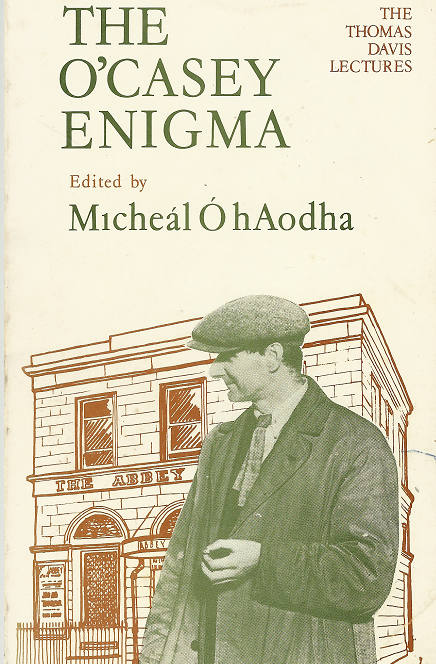
More vintage book covers.

I wanted to follow up a a recent post looking at some vintage book covers by scanning some more, as they hold a huge appeal to people for various reasons. Friends with a love of design as much as those with a love of history are fascinated by the book covers of old of course.

The below, almost entirely, come from the collection of my brother. The Behan biography is one of my favourite book covers of all time, but they’re all excellent in their one way.

If this is your thing, pop over to the hitone vintage Irish book cover blog from designer Niall McCormack, his collection is stunning.

Rae Jeffs, Brendan Behan: Man and Showman (Corgi, 1968)

Emmet Larkin- James Larkin (New English Library, 1968)

Micháel Ó hAodha- The O’Casey Enigma (Mercier, 1980)

Peadar O’Donnell- Islanders (Mercier, 1965)

(more…)

Read Full Post »

From The Irish Times, December 18 1961. A fine base for Lord Gough, but no sign of the man himself.

We’ve looked at plaques in considerable detail on the site, and one thing I really want to get around to in time is the statues of Dublin. ‘All the fellas between Charles Stewart Parnell and Daniel O’Connell’, with the exception of William Smith O’Brien, have gone unexamined. How many Dubliners can name all the statues on O’Connell Street?

We looked briefly too at the loyalist bombing of the Daniel O’Connell statue in 1969, and jaycarax had a fascinating photographic history of Henry Grattan’s statue, the Trinity graduate facing his Alma Mater at College Green.

Of the statues no longer with us, Lord Gough’s has always been particularly interesting to me for a few reasons. Like Victoria, he is a Dublin statue which has ended up many miles from home, though not vanished quite as far as herself (she’s in Australia, for anyone who doesn’t know). The statue was the site of Winston Churchill’s earliest childhood memory, and it is a statue that was in and out of the newspapers for a long time prior to its ultimate removal from the Phoenix Park. It also inspired my favourite Dublin poem, which for a long time was falsely attributed to Brendan Behan, for example even in Ulick O’Connor’s biography of the man, but was in fact the work of quintessential Dub Vincent Caprani. The statue is the work of the great John Henry Foley, responsible also for Daniel O’Connell’s statue at the top of O’Connell Street and the Trinity duo of Burke and Goldsmith among others.

John Henry Foley

Winston Churchill recalled in his autobiographical work My Early Life 1874-1904, that his earliest memories from childhood were set here in Dublin. Asking “when does one first begin to remember?” he went on the write about the unveiling of John Henry Foley’s equestrian statue to imperial war hero Lord Gough at the Phoenix Park in Dublin in 1878. Churchill spent some of his earliest years in Dublin where his Grandfather had been appointed Viceroy and employed Churchill’s father as his private secretary. Churchill’s earliest memory was of his grandfather unveiling the doomed statue.

A great black crowd, scarlet soldiers on horse-back, strings pulling away a brown shiny sheet, the Old Duke, the formidable grandpa, talking loudly to the crowd. I recall even a phrase he used: ‘And with a withering volley he shattered the enemy’s line.’ I quite understood that he was speaking about war and fighting and that a volley meant what the black-coated soldiers (riflemen) used to do with loud bangs so often in the Phoenix Park where I was taken for morning walks.

(more…)

Read Full Post »

So it seems the banks have taken another pub from us. The victim this time? Kate’s Cottage on the corner of Store Street and Amien’s Street. Its not a pub I’d frequent too often, although I was there to witness Keith Fahey’s first goal for the national side in that game against Armenia in late 2010 so I do have some fond memories of the place.  Shame.

Appoinment of Official Liquidator: Kate’s Cottage Limited
16 January 2012

P J Lynch of 5-7 Westland Square, Pearse Street, Dublin 2 was appointed official Liquidator on 16th January 2012
Petitioner: Collector General
Solicitor for the Petitioner: Marie-Claire Maney, Revenue Solicitor
Registered address: 1 Store Street, Dublin 1
Last accounts filed: 31/05/2010
CRO number: 403192

Read Full Post »

Peader Clancy, Conor Clune and Dick McKee, three Irish Republican Army (IRA) members were killed by British soldiers in Dublin Castle on the evening of November 21 1920.

The British authorities claimed they were shot in a scuffle following the attempted escape of the three men while their family and the republican movement claimed they were shot in cold blood after being tortured.

Though the date is wrong (November 24 when it should November 21), Corbis have uploaded an amazing picture apparently showing the three men in Dublin Castle hours before their death.

© Underwood & Underwood/CORBIS

The caption was obviously written by someone who believed the police’s version of events:

The scene in the Military Guard room, Exchange Court, Dublin, before the Sinn Fein prisoners, McGee, Claucy, and Clune escaped. The sentry is reclining on a couch, reading a paper, gun by side. Facing him were the three prisoners on a bench.


Below is a short clip of the funerals of the three men:

Read Full Post »

Historic photos of the past from the North Inner City Folklore Project at The Lab art space.

Frequently we draw upon the work of historians much longer in the field, and the work of Terry Fagan and the North Inner City Folklore Project has appeared on this site on several occasions. We have had reports from the 2011 (Patrick Heeny) and 2010 (Connolly Siblings and Molly O’Reilly) North Inner City Folklore Project Easter commemorations, and in the past we’ve drawn upon Terry’s research on a range of topics from Monto to women in the republican movement. The beauty of Terry’s work is the fact he is a local, raised in the Corporation Buildings. People are always more willing to talk to their own. Terry is refreshingly dismissive of the nonsense one often hears that “we were poor but we were happy”, and rather the Folklore Project focuses on telling Dublin’s history from a working class perspective, warts and all.

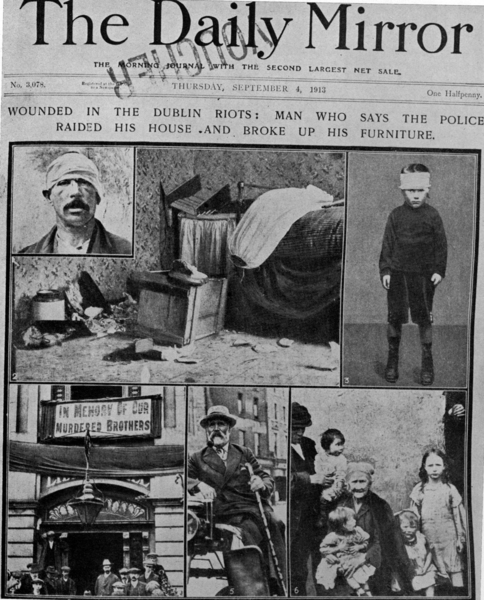
Newspaper report of DMP riot in Corporation Buildings, 1913.

I’d long wanted to sit down with Terry Fagan and talk about the complex history of the north inner city, but not limit ourselves to one specific subject. I met him at the small flat which has become a sort of HQ for the project in the heart of the community in which he grew up, and talk for well over an hour on the history of the local area. When walking through the area with Terry, we constantly passed people who know him and acknowledge him, the area is not only his historical area of expertise but also very dear to him.

If you listen to this interview, which I feel confident in saying will appeal to many of you regardless of whether or not history is the main draw for you to the site, you’ll hear a whole range of topics discussed. The tragic history of prostitution in Dublin’s inner-city (over 1,600 women worked in brothels in the city at one point), the history of youth criminality and gang culture, the forgotten history of women in the area, the role of the Legion of Mary in changing Monto and the revolutionary period were all discussed.

In this interview there are stories as diverse as Maud Gonne and the Countess visiting the north inner-city tenements at the time of the Lockout to stories of the ‘Solemn Blessing of Monto’ by the Catholic Church and Frank Duff. There are stories which show the failures of both church and state in this area historically, but there’s also stories of hope. Stories of how a working class community decided to mark and honour it’s own history. There are huge personalities who shine through in this interview, like Lugs Branigan and Jim Larkin, but there’s also stories of the community as a whole.

I had some technical issues at the very beginning, but this opens with Terry answering my first question, which is what it was like growing up in the Corporation Buildings. He began by talking about those buildings, his school days at the ‘Red Brick Slaughterhouse’ and more besides. The interview below is one hour and twenty minutes long, put the kettle on and enjoy.

Read Full Post »

Plaque photographed in The Irish Times, November 1980

The plaques of the city are something we return to time and time again. Indeed, you may have noticed at the very top of the page we’ve given over a section of the blog to some of the more unusual plaques in Dublin, in pieces which often examine the history (and controversies!) around some of the plaques on the walls (or in the pavements) of Dublin.

One of the most unusual plaques ever unveiled in this city must be the one above but, a fascinating insight into Irish society in the late 70s and early 80s some would say! This plaque was unveiled at Dublin Airport in November 1980, marking the very spot where Pope John Paul first touched Irish soil. The Minister for Transport unveiled the plaque. Being located where it is, it is obviously a plaque very few Dubliners beyond those in the pay of the Airport will ever see.

The minister had come straight to the unveiling from the funeral service of Frank Duff! Frank Duff was the founder of the Legion of Mary, a radical Catholic organisation often accredited with “cleaning up” the notorious Monto, the red-light district of Dublin for so long.

The plaque was designed and commissioned by Aer Rianta. Also present at the short ceremony was the Lord Mayor of Dublin, Fergus O’Brien.

Read Full Post »

The Irish Press, April 25 1966

The fiftieth anniversary of the 1916 rising was of course a monumental moment in the history of the Irish state. It was marked in a wide variety of ways, for example in Dublin with the opening of the Garden of Remembrance and the pageant Aiséirí at Croke Park on Easter Sunday, not to mention a full military parade on our main thoroughfare.

As Fintan O’Toole noted in a 2011 Irish Times article on commemorating the Rising:

The 50th anniversary in 1966 was perhaps the nearest thing to a broadly embraced national celebration, with everything from postage stamps to the renaming of train stations, and from Hugh Leonard’s TV re-enactment, Insurrection , to a pageant in Croke Park.

One of the more unusual manners in which the anniversary was marked was at Dalymount Park, where the FAI Cup Final would take place on the exact anniversary of the rising, April 24th.

The 1966 FAI Cup final was by all accounts not a beautiful game of football. Indeed, The Irish Times went as far as to say it was “among the most disappointing finals ever”. Shamrock Rovers and Limerick would play it out at Dalymount Park, with the game ending in a two-nil victory to the Dubliners, but prior to kickoff the crowd would witness something rather unusual.

Over 200 veterans of the 1916 rising accepted a special invitation to attend the final from the FAI, and among the survivors to attend the final was President Eamon deValera. The Irish Times of April 23rd noted the men were to parade in the centre of the pitch, salute the President and then there would be the playing of the Last Post before the veterans would then make their way to a special seating area in the stands. The Fintan Lalor Pipe Band led proceedings.

Oscar Traynor is a name today associated with football among the youth of the city for the cup named in his honour, but the one-time FAI President was also a veteran of the Easter Rising of 1916. Traynor had a great love of the beautiful game, and had toured Europe with Belfast Celtic in 1912. His Witness Statement to the Bureau of Military History on his role in the 1916 rising is quite a good read, and begins almost with this excellent line.

I was connected with football up to that and I broke with football when I saw that there was something serious pending.

Something serious indeed!

Veteran of the Easter Rising and later FAI President Oscar Traynor

Traynor passed away in 1963, but the Irish Independent report on the 1966 final would note that the pre-match ceremony “was a historic occasion with the freedom fighters of 1916 taking part beforehand in ceremonies which would have brought joy to the heart of the late president of the FAI, Oscar Traynor. The final itself, however, brought little joy to the hearts of the 26,898 spectators who gave it their disapproval in the slow hand-clap in the second half.”

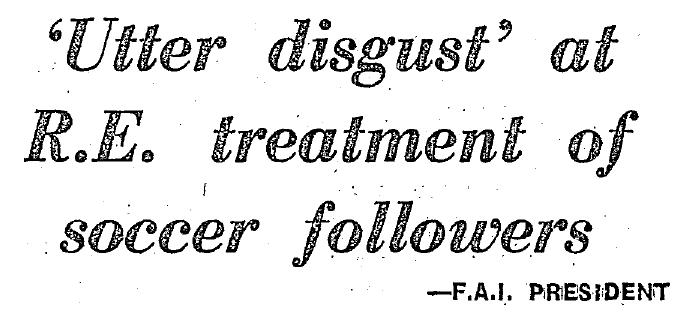
The FAI took aim at Radio Eireann the following day for not broadcasting the FAI Cup Final. The FAI President and Minister for Health Donagh O’Malley took aim at the station, stating “it would be remiss of me if I did not express my utter disgust at the manner in which the broascasting authority in this country has treated soccer followers.”

A historic day for Irish soccer, but not broadcast by Radio Eireann.

Sportsfile today have some excellent images from the 1966 clash, as mentioned above said to among the worst FAI Cup Finals ever played, but sadly no images of the 1916 commemoration prior to kick off.

Long on my list of books to read is Sean Ryan’s history of the FAI Cup. The cup has many interesting stories of course, and it’s role in marking the fiftieth anniversary of the Easter Rising shouldn’t be forgotten.

Read Full Post »
There were  a number of highly significant and influential one-day and two-day Punk and New Wave festivals from mid 1977 to late 1978 in Dublin.

The first was the Belfield Festival in UCD which took place on 25 June 1977. The line up was The Radiators from Space, The Undertones, The Vipers, Revolver and The Gamblers. Sadly the gig is perhaps best known for the tragic fatal stabbing which took place on the night.

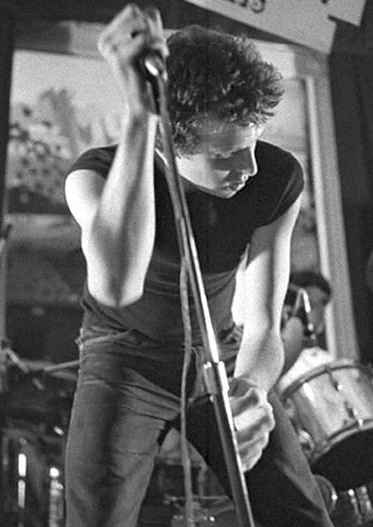
Philip Byrne of Revolver. (Picture: U2TheEarlyDaze)

Secondly, there was the first annual New Wave Festival which took place over two nights in The Project Arts Centre on 8 – 9 November 1977. The first night saw The Vipers and The Gamblers and the second night Revolver, Fabulous Fabrics and The Kamikaze Kids.

Paul Boyle (The Vipers), Steve Jones (The Sex Pistols), George Sweeney (The Vipers) & Larry Mullen (U2) at the Hot Press Xmas Party, '78. (Picture: U2TheEarlyDaze)

Thirdly, there was the one day Punk Festival on 28 November 1978 in St. Anthony’s Hall on the quays. The line up was The New Versions, Berlin, Virgin Prunes, Strange Movements, the Skank Mooks and The Citizens.

Strange Movements (Picture - Irishrock.org)

Anyone have any memories, pictures or gig posters of the above, please do get in touch.

Read Full Post »

The story of the dispute between the owner of the Forum Cinema in Dun Laoghaire and the Irish Transport and General Workers Union in 1979 is a fascinating one.

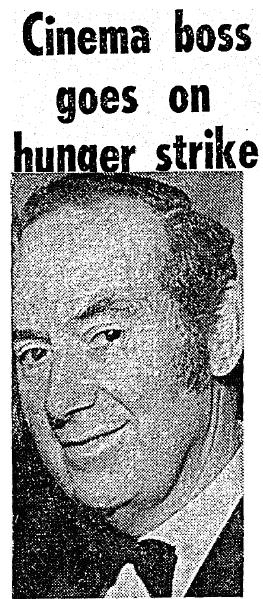
On November 19 1979, Barney O’Reilly went on hungerstrike with the intention of drawing public attention to a dispute involving his cinema and the Irish Transport and General Workers Union.

The Irish Press reported that Mr.O’Reilly had told them he would “neither eat nor open the door until he had the choice to run his cinema as a non-union house. After the film was run in the cinema last night he locked the door to begin his protest.”

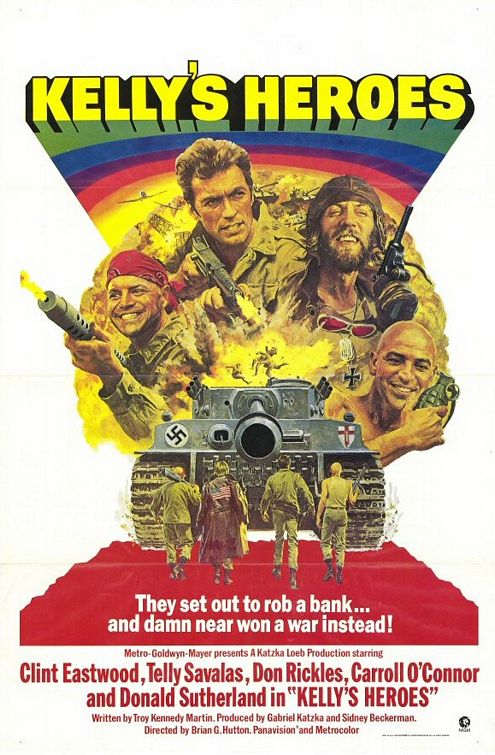
O’Reilly had been in dispute with the No.7 branch of the union, with members of the union refusing to co-operate with him. The first film due to be shown in his brand new cinema was Kelly’s Heroes which was distributed by M.G.M, but I.T.G.W.U members inside M.G.M’s dispatch department refused to handle a film intended to be shown in the Forum Cinema, owing to O’Reilly’s anti-union policies. The Irish Times noted O’Reilly had to replace the planned film with The Trials Of Oscar Wilde at short notice.

The Irish Times report at the start of O’Reilly’s hunger strike noted that he had spent £25,000 on renovating the cinema, formerly the Astoria, and that he intended to use a small-skeleton staff, unpaid and consisting mainly of family members for the first three months following opening.

Patrons who arrived at the cinema to see Kelly’s Heroes were met by a sign informing them that because of “victimisation and intimidation by the Irish Transport and General Workers Union” the film could not be shown. The union had blacklisted the cinema until O’Reilly agreed to employ union labour.

An I.T.G.W.U spokesperson told newspapers at the time that their letter to O’Reilly had gone unresponded to, a letter in which they informed him that they represented cinema workers in the Dublin and Bray areas. Members of the union who had been working in The Forum cinema installing automated equipment then withdrew their labour.

I.T.G.W.U members at other cinemas in Dublin had engaged in radical action in the 1970s, for example the sit-in protests which occurred at both the Ambassador and Academy Cinemas in 1977 with the announcement of the closure of those two cinemas. Earlier, in 1973, a strike of 300 I.T.G.W.U workers against Odeon Ltd. had closed nine cinemas in Dublin and Bray.

The hunger strike went on for a number of days. The Irish Press noted that on the fifth day of the strike O’Reilly was visited by a doctor who advised him to end his fast, and it was upon the advice of this doctor that O’Reilly thankfully ended his five day hunger strike. He told The Irish Press that his 120-hour fast had led to “other people and organisations getting involved” and brought public attention to his cause.

The Forum cinema is no longer with us, demolished in the summer of 2002, having closed in 1999. It was a small, two-screen cinema, and sadly many such cinemas would lose out in the days of the new multiplex outlets. As Justin Comiskey wrote in The Irish Times at the time of the Forum’s closure: ‘Small cinemas are dead, long live the multiplexes. That would appear to be the message following the closure of The Forum in Glasthule four weeks ago, leaving two small independent cinemas in Dublin.’

I’d be interested in hearing more from people about relations between the I.T.G.W.U and The Forum cinema following this dispute.

On a sidenote, some of you may remember a recent piece on this site from jaycarax which looked at a Dublin industrial dispute which lasted fourteen years. It occurred in Dun Laoghaire too, at Downey’s Pub.

Read Full Post »

« Newer Posts - Older Posts »