Feeds:
Posts
Comments

Archive for the ‘Dublin History’ Category

While doing a bit of online searching for possible summer student internships for myself, I came across this very interesting PHD studentship from the University of the West of England.

It’s offering a part-time PhD Studentship in Popular Music and Everyday Life as part of the Bristol Live Independent Music Archive Project (BLIMA) which was set up to ‘compile an archive of the city of Bristol’s live independent music scene, from 1950 to the present’. The PhD studentship comprises of ‘an annual bursary of £3,000 plus tuition fees paid for up to five years’.

Wouldn’t it be fantastic to set a similar thing up focusing on Dublin? I wonder who would be interested in funding it: IMRO, Hot Press, The Arts Council, Project Arts Centre, U2 and the boys?

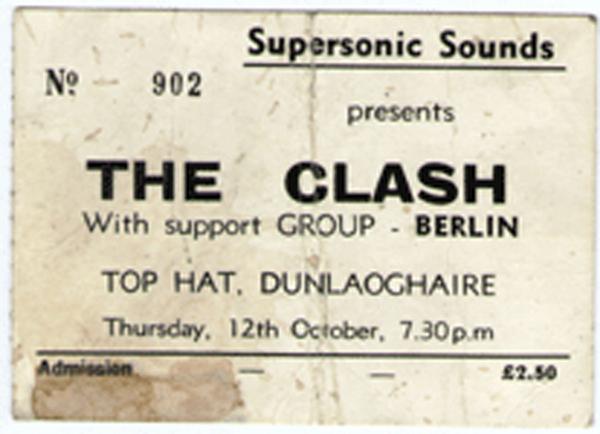
October 1978

Read Full Post »

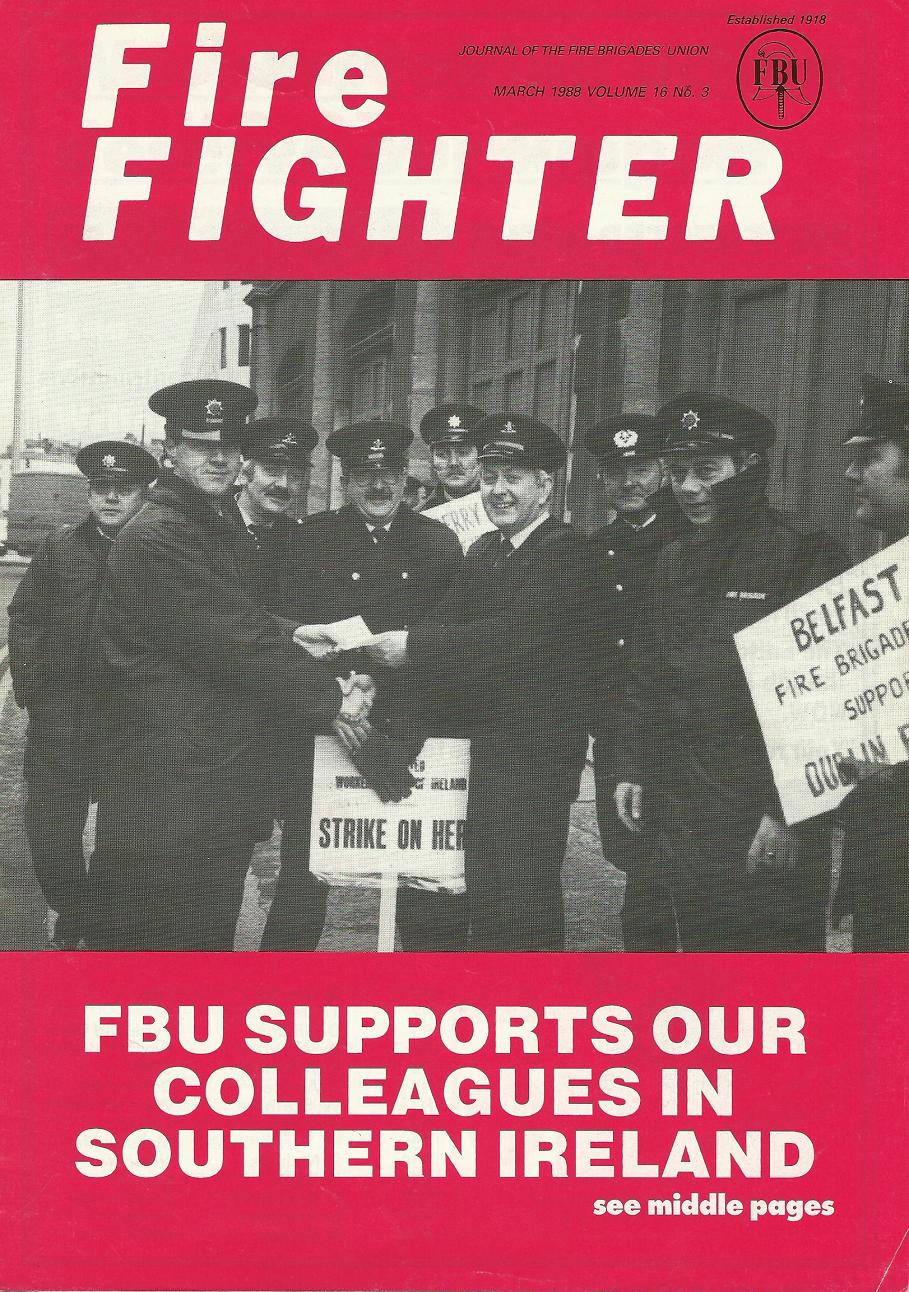
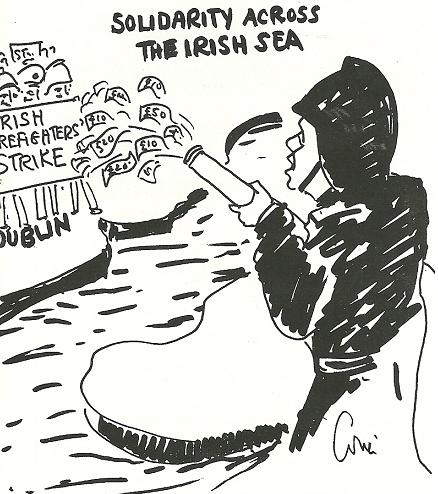
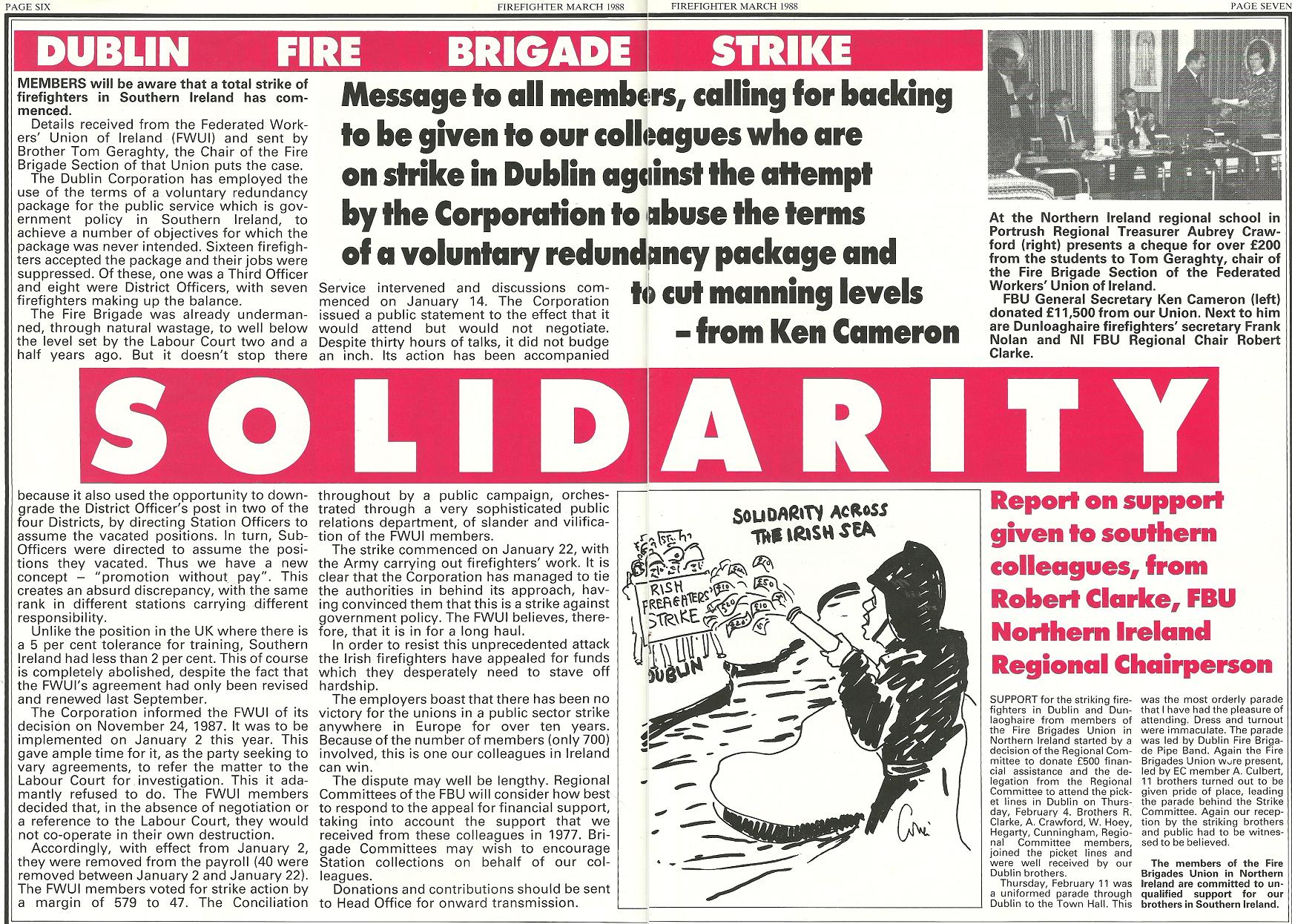
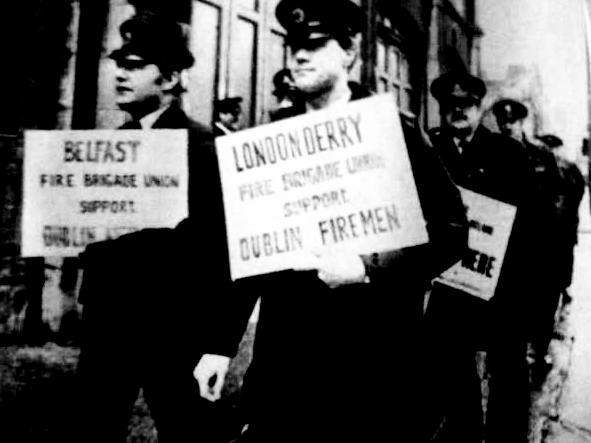
Firefighters in London have been in the news recently as a result of industrial action against savage attacks on their working conditions. These scans come from the magazine of the FBU,Firefighter, during the 1988 dispute in Dublin. It is a show of solidarity from the UK union to the Dublin firefighters. I have also scanned up an image from the strike, showing a ‘Londonderry FBU’ placard on the streets of Dublin. At a time of political tension in the six counties, firefighters there ignored sectarian divisions and supported their Dublin colleagues. With events in London, this is a timely reminder of what international support can mean to a strike. It has never been scanned online before.

Read Full Post »

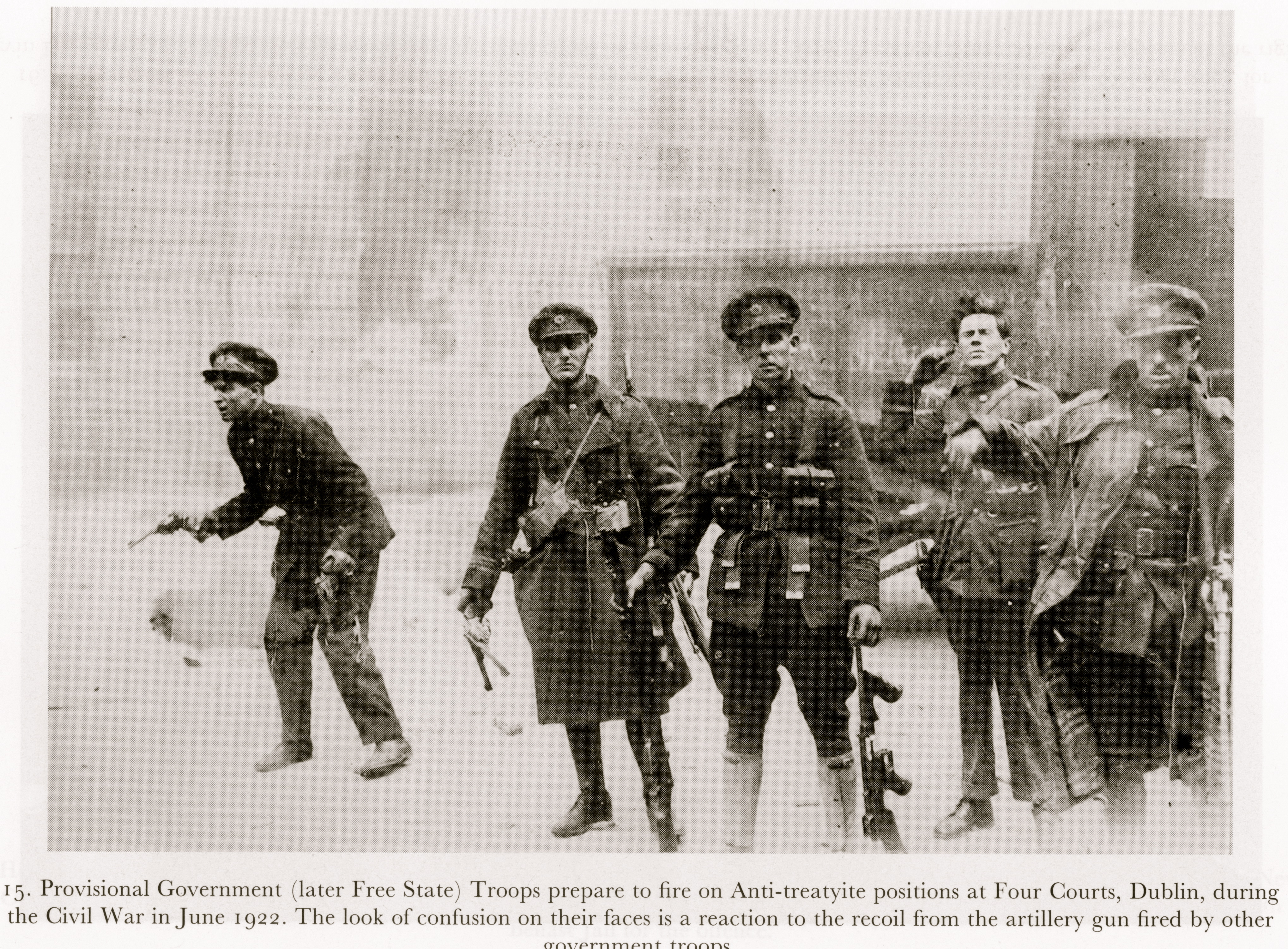
While reading Francis Costello’s excellent The Irish Revolution and its Aftermath, 1916-1923, I came across these three fantastic pictures. What struck me first was that the fact that I didn’t recognise any of them. The second thing that was surprising was that I couldn’t find any of the pictures online after a rake of google searches. So, I scanned them onto my laptop and re-touched them a bit using I-Photo. Enjoy.

Francis Costello, The Irish revolution and its aftermath, 1916-1923: years of revolt (Dublin, 2003), p. 220

Francis Costello, The Irish revolution and its aftermath, 1916-1923: years of revolt (Dublin, 2003), p. 225

Francis Costello, The Irish revolution and its aftermath, 1916-1923: years of revolt (Dublin, 2003), p. 227

Read Full Post »

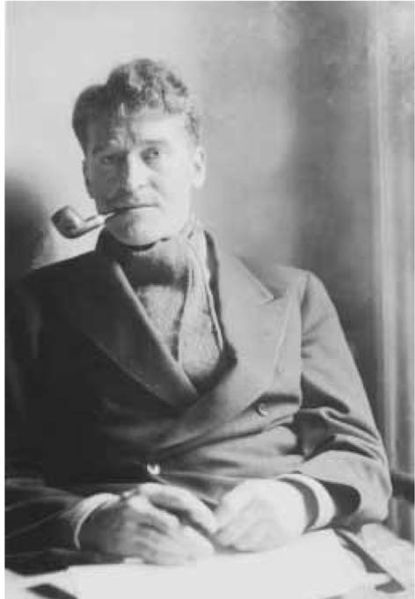
An interesting character I came across while reading Liam Cahill’s ‘Forgotten Revolution: Limerick Soviet 1919’. Farren was one four trade union leaders who traveled to Dublin to offer their support. He is described as having ‘had taken part in the 1916 Rising and was one of a group of trade union leaders with nationalist sympathies who were arrested afterwards’ [1] In the June 1915 College Green by-election, he came bitterly close to beating John Nannetti of the Irish Parliamentary Party. [2]

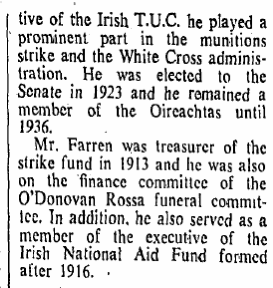
I haven’t been able to find much more information on him. This Irish Times obituary is probably the best I’ll come across.

Does anyone know if he actually took part in the Rising and if so, where he fought?

Monday, March 28, 1955 (1/2)

Monday, March 28, 1955 (2/2)


[1] Liam Cahill, Forgotten revolution: Limerick Soviet 1919 : a threat to British power in Ireland (Dublin, 1990), p. 109

[2] Pádraig Yeates, Lockout: Dublin 1913 (Dublin, 2000), p, 575

Read Full Post »

“Luke (Kelly) also opened our eyes to the working class songs from the north of England. Songs that we never knew existed before. The geordie songs. The songs of the miners….”

One of my biggest regrets of the summer just gone is missing the excellent Frank Harte Festival, a tribute to one of the cities greatest singers, the late Frank Harte. He was raised only a stones throw from me in Chapelizod. There, his father ran the public house ‘The Tap’. Frank, an architect by trade, was not alone an unrivalled singer but also a collector of songs.

“The thoughts of a song dying with a singer or lying in a book or a tape on a shelf gathering dust fills me with horror.” So wrote Frank in his introduction notes to his timeless ‘Songs of Dublin’ collection.

Singing Voices was a collection of five broadcasts Frank did for RTE. We’ve only stumbled across them here and they all make for excellent listening. I hope you enjoy them as much as I have.

Songs of work and social protest – The Labouring Voice

Famine Songs – The Hungry Voice

Songs of the capital city – The Dublin Voice

Songs of Emigration – The Irish American Voice

Traditional singing styles in Ireland – The Singers’ Voices

They can be played over here, on the RTE site.

Also, here are two tunes from Frank I had uploaded months ago with the aim of sharing with you to promote the festival. The Shan Van Vocht is a song dealing with the 1798 rebellion, while Building Up And Tearing England Down is a well known song about Irish emigrants in England.

Shan Van Vocht by Frank Harte.

Building Up And Tearing England Down- Frank Harte

Read Full Post »

Here’s a couple of PDFs that I’ve recently stumbled across that might be of interest to our readers:

Seven Women of the Labour Movement 1916 by Sinéad McCoole

The Bureau of Military History 1913-1921 Index to Contributors by the Bureau of Military History

Symbolising the State — the iconography of O’Connell Street and environs after Independence (1922) by Yvonne Whelan (2001)

Dublin 1610 to 1756 by by Colm Lennon (2008)

The Bohemian Football Club: The Enduring Legacy of an Idle Youth by Ciarán Priestly (2010)


A scene taken from Colm Lennon's 'Dublin 1610 to 1756'

Read Full Post »

Yesterday we linked to a three-part History Channel documentary on the world underneath the city of Dublin. It reminded me of something I’d read along the way, so I rooted out a book. The excerpt below comes from Padraic O’ Farrell’s ‘The Ernie O’ Malley Story’ (Mercier,1983)

“Ernie received a note written by Rory O’ Connor in Mountjoy on 12 September. It told him of a tunnel leading to the Four Courts which could be used if they had left any important documents behind. One piece of folklore attached to that area of the city concerned a tunnel from there to Christchurch, built in the thirteenth century when a Dominican friary of St. Saviour occupied the Four Courts site. Towards the end of the nineteenth century, an army officer was accidentally locked in the tunnel which was used for storing ceremonial paraphernalia. He was soon documented as ‘missing, presumed dead’ until the next occasion demanding the opening of the tunnel. Near its entrance was discovered the skeleton of the officer and in the bones of his right hand was his sword. Lying about were the broken bone fragments of up to 250 rats that had attacked and had been beaten off by the mans sword before he himself was overcome.”

Excellent. Does anyone know any more about this tale?

Read Full Post »

This is a pretty interesting American TV documentary from The History Channel. The camera work is at times very irritating (more hip hop music video than history documentary) but there are some great bits across the videos. A look at the River Poddle underneath the city is particularly interesting. Almost four miles of an underground Dubliners will, for the most part, never see. Saint Michan’s Church features too, with “lifelong Northsider” Pat Liddy on hand to show the presenter around. It’s difficult to disagree with the presenters assertion that Saint Michan’s is an excellent argument for cremation! All in all, a very good effort.

All three parts are below. Thanks to YouTuber dubbigot for taking the time to boot these up. I always say it, but if you have gems like these get them up!

(more…)

Read Full Post »

“At first my only reaction was horror that Irishmen could commit such a crime against England. I was sure that that phase had ended with the Boer War in which father had fought, because one of his favourite songs said so:

You used to call us traitors because of agitators,
But you can’t call us traitors now.”

But the English were calling us traitors again, and they seemed to be right”

From Frank O’Connor- An Only Child.
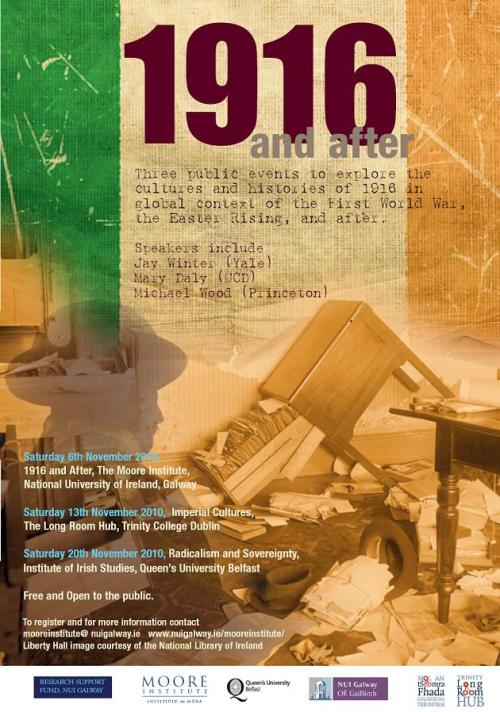
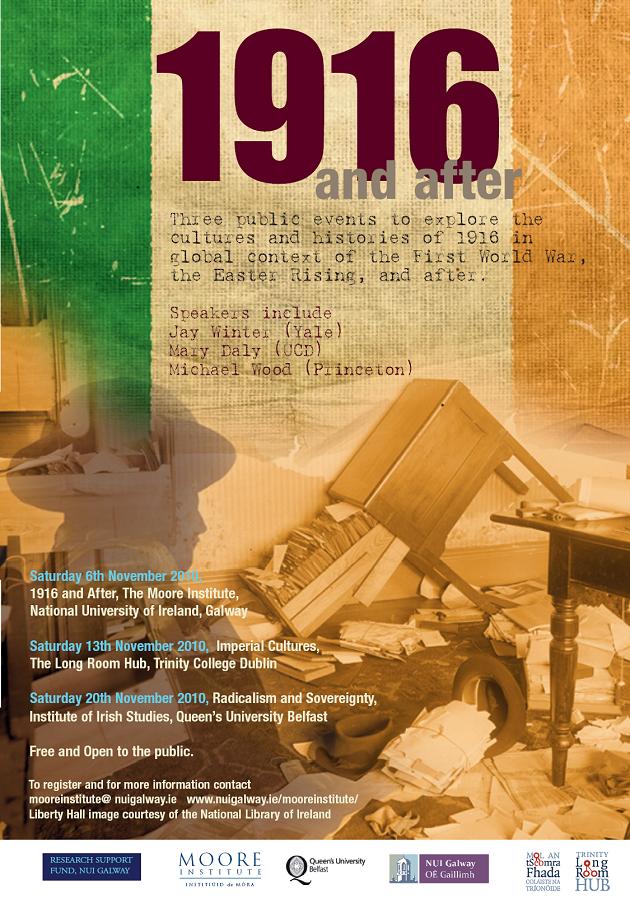
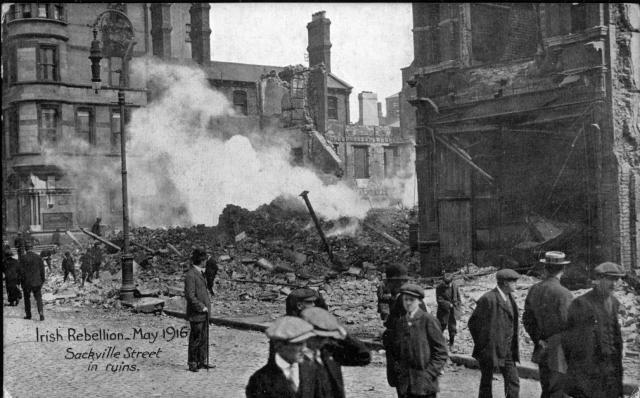
This upcoming series of talks on the 1916 rebellion is interesting in that it is not geographically limited to the capital, but includes events at NUI Galway and Queens University Belfast. The event in Dublin, at Trinity College Dublin, will focus on ‘Imperial Cultures’. I will be on hand to provide a brief walking tour of some key sites to those attending the event. It is free to the public, but you’re requested to register in advance.

If you are attending, or are interested in the rebellion, perhaps these Come Here To Me pieces will be of interest to you:

This 1966 Irish Socialist booklet on the rebellion includes a number of rare articles.

How They Saw The Rising. The words of British Soldiers, Anarchists, Novelists, Poets, Medical Students, Revolutionaries and Daughters.

Sean Connolly plaque launch report. Includes audio and images from the launch of a plaque to Sean Connolly and his siblings, as well as Molly O’ Reilly.

Another perspective on the rebellion, from a Sherwood Forester who witnessed a friend “..shot through the head leading a rush on a fortified corner house”

The Thomas Weafer plaque on O’ Connell Street, so often overlooked.

The Pearse Street Fire Disaster. This article includes some previously unpublished images. Volunteer Robert Malone died in this fire in 1936.

Jennie Wyse Power’s shop on Henry Street is a unique plaque frequently overlooked.

The Teachings Of Patrick Pearse pamphlet from 1966 is interesting. It is the work of A. Raftery.


“James Connolly- Murdered May 12th 1916”

A familiar sight to Dubliners inside Dublin Castle ,a key site of the rebellion, frequently missed by the visiting eye.

The Yiddish election leaflet of James Connolly (1902)

An interesting piece on the Dublin home addresses of James Connolly.
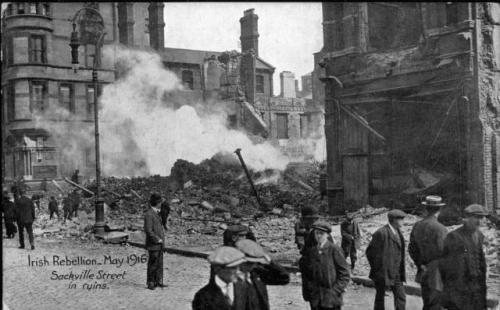
Sackville Street.

Read Full Post »
I love going through items relating to the family history, and this is an interesting piece from my grandfather on my mothers side. It’s an Irish ex-servicemen’s card from the Guinness brewery. My grandfather, A/Cpol. Philip Tierney, served as a military policeman during the ‘Emergency’. His reference signed by his commanding officer,Capt. Edward Cassidy, notes that “The a/n (above named) has served in the Military Police Service since 29/8/1941 and has been directly under my command for the past two years. During that time he has proved himself an excellent Police-man, diligent, and thoroughly concientious in the performance of all duties assigned to him. He is of excellent character and familiar with all aspects of Police duty.”

The ‘ex-servicemen’s association’ in the brewery was comprised of those who had served with the British army, while after the second World War in light of the vast numbers of men who served during the ‘Emergency’, the creation of this association came about. It seems to have been short lived. It is an unusual piece of Guinness history.

On a personal note, it’s pretty cool to know where my grandparents were living at the time (Philip Tierney is listed as having lived at 43 Camden Street). With granny coming from Cornmarket, and her mother the same, we’ve remained true to the southside. They later moved to Ballyfermot.

Read Full Post »

Another gem from British Pathé showing London Lord Mayor Ralph Edgar Perring (1905-1998) visiting Dublin in 1962. Scenes of St. James Gate and the Mansion House.

Read Full Post »
To those who missed it last week, you have till November 1st to watch this fascinating documentary about the murders of two Jewish men in Dublin in the early 1920s.

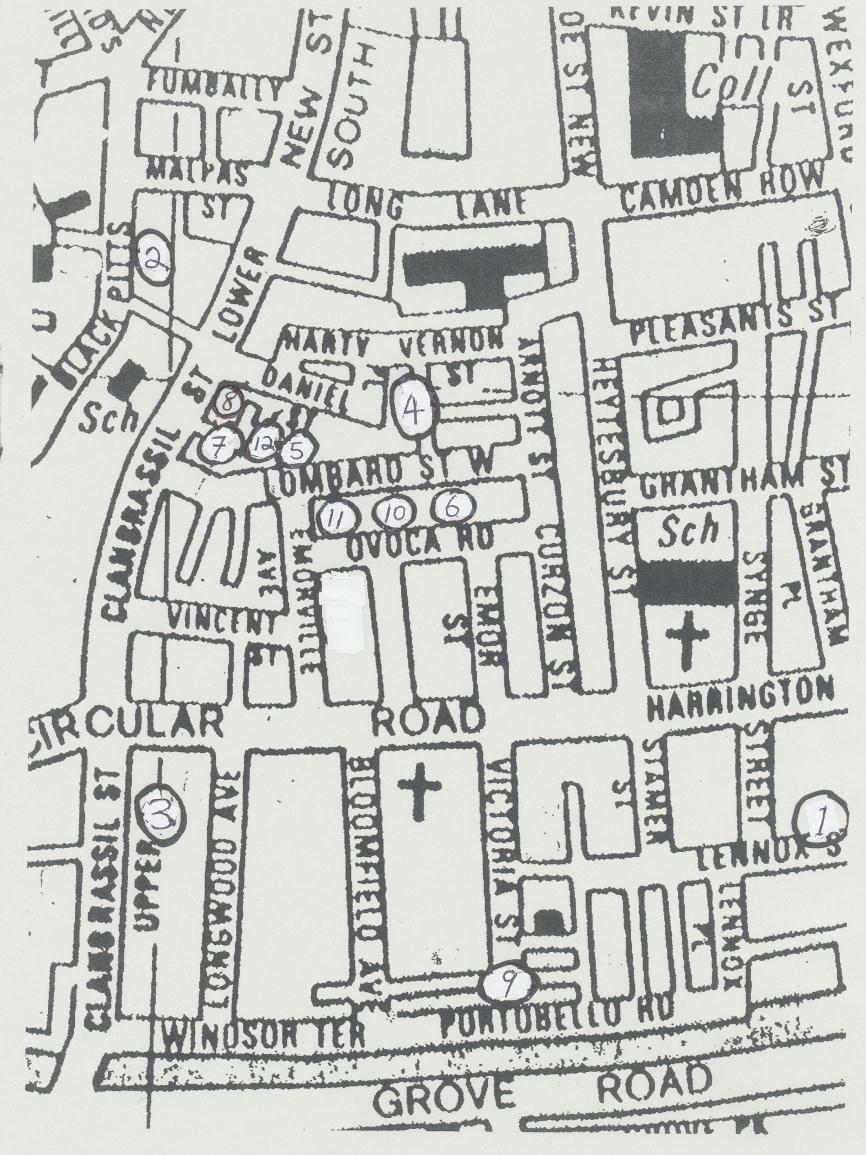
Even though the Dublin of 1923 was a troubled place, recovering from the war of independence and the very recent civil war, the city was shocked by a spate of murderous attacks on Jewish men walking home to the area off the South Circular Road, known then, as “Little Jerusalem”. Bernard Goldberg, a 42 year old jeweller from Manchester and Ernest Kahan, a 24 year old civil servant in the Dept of Agriculture, were attacked and shot dead. Within the space of two weeks, two Jewish men had been shot dead and two more had been badly injured – the tightly knit jewish community in Dublin now feared the worst – that this was the beginning of a cold blooded anti-semitic campaign.

Despite extensive Police investigations – the killers were never found.

This is a story of intrigue, mystery, scandal, divided loyalties and cover up. For over 80 years the details of the story have remained shrouded in secrecy. For the first time on television CSÍ will piece together what really happened. Who the chief suspects were and what happened to them. And we uncover the trauma that the murders inflicted on the families of those left behind, trauma that ripples on to this day.


Map of Dublin’s “Little Jerusalem” (Adapted from Educational Jewish Aspects of James Joyce’s “Ulysses,” 5)


Read Full Post »
« Newer Posts - Older Posts »