Feeds:
Posts
Comments

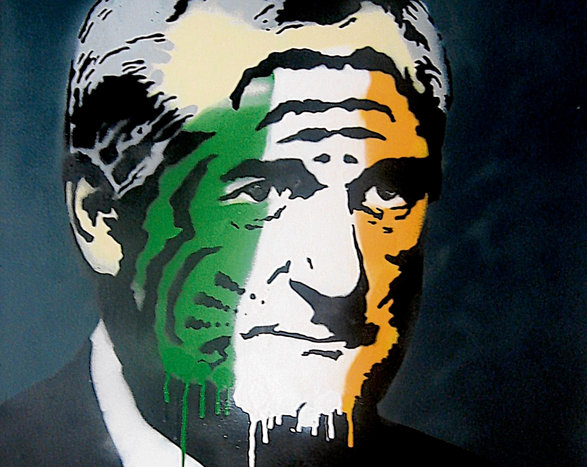
ADW's excellent take on Bertie Ahern.

I’ve a bit in the latest CrisisJam over on the excellent Politico.ie looking at the historical context of the collapse of Fianna Fail’s support in the capital. You can read it here.

Fianna Fail, Sean Lemass told a gathering of youth party members in Inchicore in November 1947, had “… more wage-earners in its ranks than any Labour Party, and more farmers than any Farmers Party.”

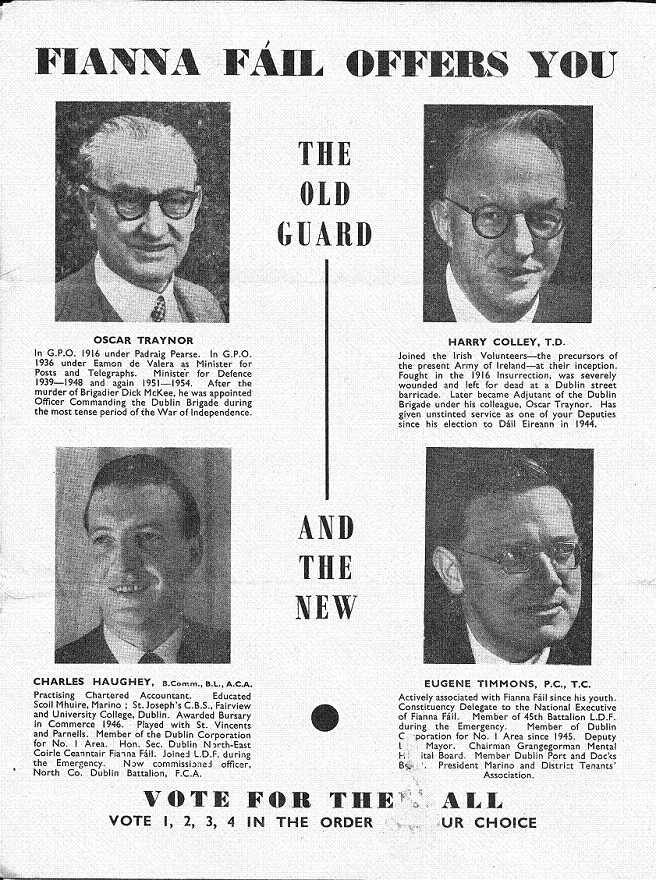
The class make-up of the party in Dublin was always a matter of considerable pride, when coupled with the historic roots of the party in the anti-treaty IRA. In 1954, when a young Charles Haughey was put before the people as a part of the “New Guard” of the party, he shared space on his inaugural election leaflet with Oscar Traynor and Harry Colley. Traynor was among the most highly regarded of the ‘men of Easter Week’, serving in the Metropole Hotel with the GPO Garrison during the rising. Harry Colley, the leaflet noted, had been “..left for dead at a Dublin street barricade.” Almost 40 years on from the rising, Fianna Fail was still presenting itself as the party, and indeed the vanguard, of Irish republicanism. New candidates like Haughey often came from the same bloodline as many of the ‘Old Guard’.

The Fianna Fail election leaflet mentioned in the piece, introducing a certain Charles Haughey to the fold, was uploaded here on Come Here To Me in the past. You can read it here.
If your heading to one gig this weekend, I’d recommend GhostPoet in The Grand Social tonight. Doors 9pm, €10 entry.

Recently migrated from the capital city of the West Midlands – Coventry – to the southerly climes of London, Ghostpoet looks set to make his mark on 2011. The softly spoken 24 year-old has already won over BBC Radio 1’s foremost tastemaker Gilles Peterson with a handful of off-kilter, loopy electronic ditties blessed with his delightfully rambling musings on modern life.

Afterwards? Get your reggae/dub fix at Roots Pon De Corner down at The Dark House Inn.

In its first few months in existance, the Roots Corner Sessions have quickly become one of the premier nights in Dublin for quality roots music. For March, two of the countries leading roots sounds will be passing thru the Dark Horse venue, starting with Galways finest, The Rootical Soundsystem.

We have a few posts on here about Dublin’s Nitelink, including one of my favourite DFallon posts ever,  about his travails in Leixlip at silly o’clock in the morning having fallen asleep on one (if you haven’t read it yet, do so.) In the last couple of months, we’ve shared scary news of an impending cancellation of the service, set up a Facebook page to save it, and broken news of its current status.

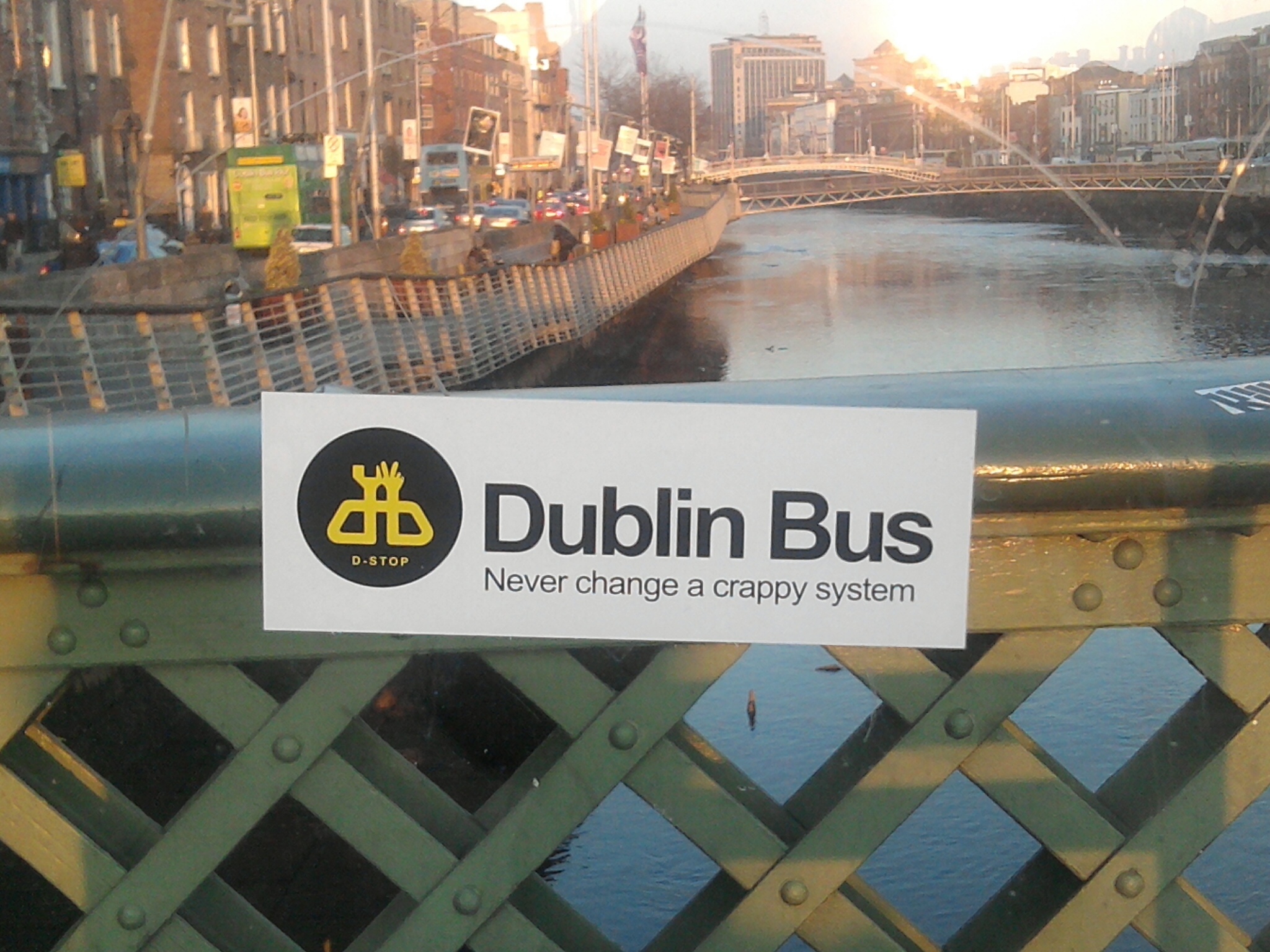
Dublin Bus- Never change a crappy system.

So, when I saw the above stickers on Henry Grattan Bridge, I couldn’t help but grin and get the camera out. I don’t know how long the stickers have been about but what I do know is I WANT ONE.

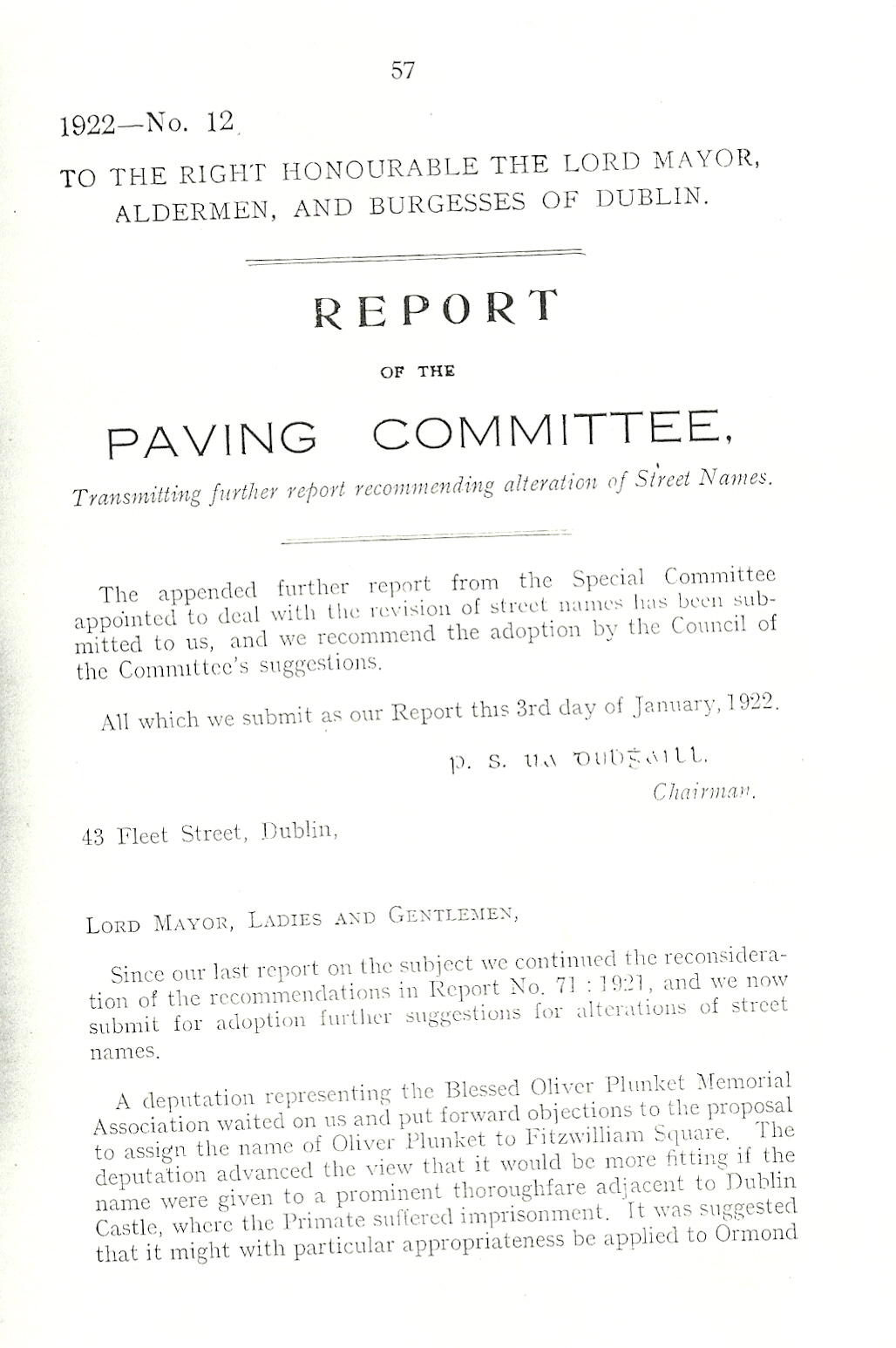
This comes from the Dublin Corporation Minute Books and is from the Report of the Paving Committee. It suggests a number of name changes for the capital, many of which are to acknowledge historical connections to certain streets.

Among the name changes proposed were:

Beresford Place (at Liberty Hall)- Rename Connolly Place.
Fitzwilliam Square- Rename Plunket Square
Brunswick Street- Rename Channel Row
D’Olier Street- rename Smith O’Brien Street
Henry Street- To be united with Mary Street
Nassau Street- Rename Tubber Patrick Street

These are just a few of the recommendations. As ever, click to expand.


Continue Reading »

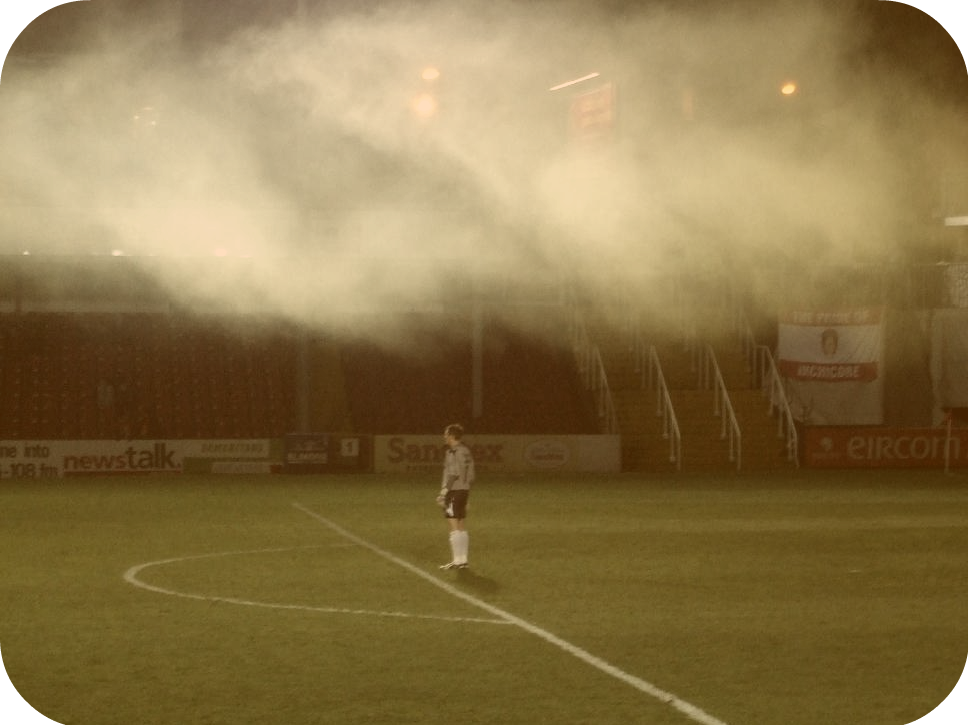
Football is back.

Cliftonville versus Saint Patrick’s Athletic, played out under a beautiful yellow smoke last night in Inchicore. Glad to have it back.

Mad stuff.

Have you seen the video of Usher hanging out in Dublin yet? It was taken after his show on Feb 27.

1:02 – Usher in Bruxelles off Grafton Street
1:22 – Usher strolls into Charlies on George’s Street
2:15 – Taxi pulled over by Gardai. Apparently all they wanted was an autograph!

According to RTE, the singer visited Bruxelles on Harry Street at 12.45am along with his bodyguard, crew, chauffeur and tour photographer.

“I asked him what he’d like to drink and he said, ‘Guinness, of course’ so I asked him would he like to pour his own. He jumped at the chance.” says barman Dermott Hayes.

As mentioned before, last weekend was a busy one for CHTM! with involvement in the Punky Reggae Party gig on Friday night, the Sounds of Resistance gig on the Saturday night and the latest pub crawl scheduled for Sunday afternoon. Before the pub crawl though, JayCarax had lined up a walking tour of Grangegorman Military Cemetery for us, led by Ray Bateson, author of “They Died by Pearse’s Side,” historian and specialist on those killed in the Easter Rebellion, 1916. We were joined on the tour by comrades from Story Map, the Chasing the Light photography blog, and Irish History Podcast.

Grangegorman Military Cemetery

Grangegorman Military Cemetary lies 2.5 miles from the GPO, but ask any Dubliner about it’s existence and who’s buried there, and you can be guaranteed you’ll get a blank face from the majority of them. Located on Blackhorse Avenue, not far from The Hole in the Wall pub, it is the resting place of British soldiers who died or were killed in action on this island. Whilst, for obvious reasons, a large portion of our interest was given to those who died on Easter Week, there are graves scattered around of those who came/ were sent here to recover from wounds received in the trenches of World War 1 and a long line of graves for those who died in the sinking of the RMS Leinster in 1918.

5th Lancers, 25th April, 1916

Military casualties (not counting police) in the Easter Rebellion were around the 120 mark, with those killed serving a variety of different battalions though most notably, large numbers from the South Staffs and the Sherwood Foresters battalion, killed in the Battle for Mount Street Bridge. Battalion badges are marked on the headstones along with the name of the person buried, their rank and the date of their death whilst a very few have personal inscriptions. Matching the battalions and dates from the gravestones with the known events in Easter week can give us an idea of where these British soldiers met their deaths. The grave above bearing the date 25th April and the soldier’s battalion, the 5th Lancers, suggests for example, he was wounded the ambush of the ammunitions convoy by Ned Daly’s garrison at the Four Courts and died the following day.

Continue Reading »

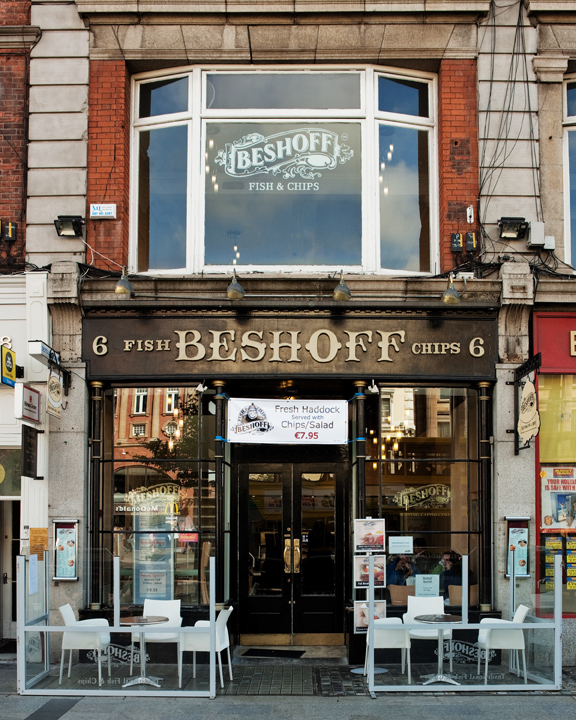
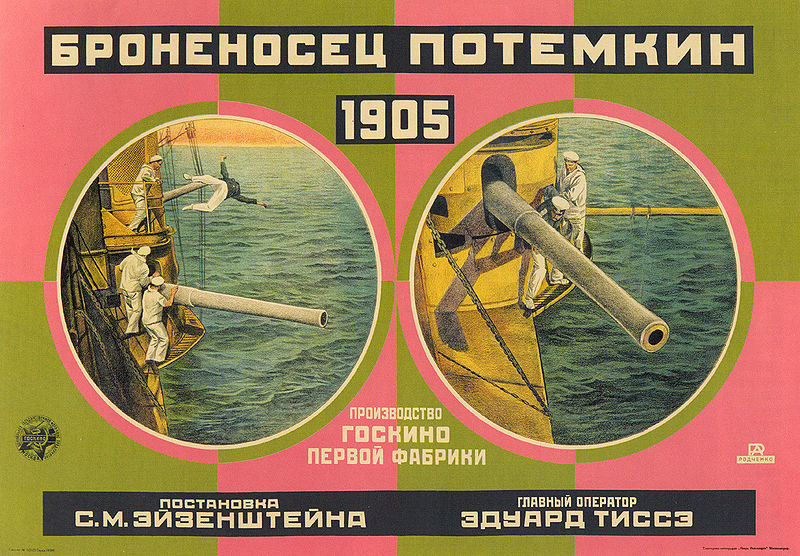
My thanks to Dara McH for getting onto my Facebook page quick as a flash after the last post on the IFI screening of the Battleship Potemkin. Dara linked me to an interview with the oldest surviving member of the Potemkin, a famous adopted Dubliner by the name of Beshoff. “Dublin is missling a plaque” he wrote .Too right.

Sam has previously done some digging on the oldest restaurants in the capital, but the story of Ivan Beshoff is something in a similar field I hope one of us can get stuck into in future. I think he’s mentioned doing it before in passing, and it’s a fascinating tale worth the research.

Check this out, it’s “..an interview between Ivan Beshoff and international journalist Enzo Farinella produced for the Italian News Agency (ANSA) in 1987 and published in several Italian newspapers.”

In Ireland Ivan Beshoff made many friends. “I knew Eamon De Valera, Countress Markievicz, George Shannon and many others. All my life I had to suffer a lot. Immediately after the Civil War of 1922 I was arrested by the Fine Gael Government as a spy. George Shannon had me imprisoned for a month while my friend De Valera had me arrested in Galway in 1932, holding me at the prison in Limerick”.

“I worked at this time with oil products from Russia. At the beginning of the second world war the oil company had stopped working in Ireland. It was then that I opened my first fish and chip shop in North Strand Road that unfortunately was bombed by the Germans. From there I transferred to another place that now I have passed on to my son Anthony. For this reason we know the Italian community in Dublin well.”

The Battleship Potemkin (1925) is one of my favourite films and undoubtedly one of the most inspiring films of all time, not least for that scene at the Odessa Steps. The film will be shown on March 5th (5pm) at the Irish Film Institute in Temple Bar, as part of of the Dublin Festival of Russian Culture. Interestingly, it will be re-released in April.

Eisenstein’s influential masterpiece about the navy mutiny that sparked off the Russian Revolution has been newly restored by the Deutsche Kinemathek. Edmund Meisel’s original score is played by the 55-piece Deutsches Filmorchester Babelsberg, conducted by Helmut Imig [more].

Battleship Potemkin is showing as part of Dublin’s Festival of Russian Culture and will be re-released in April. Preview courtesy of the British Film Institute.

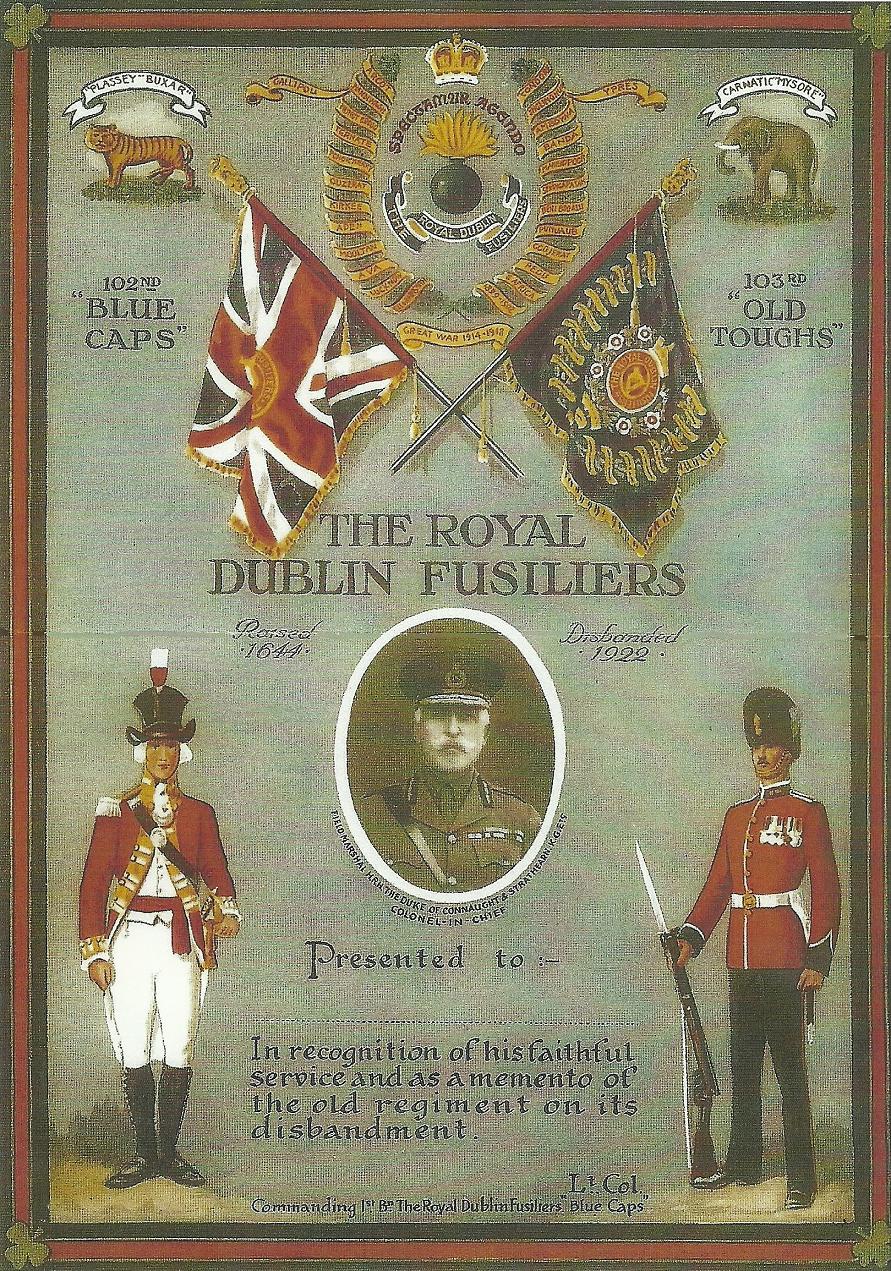
This is a nice little piece I thought worth scanning up, awarded to the men of the Royal Dublin Fusiliers upon in recognition of “faithful service” and for being a “member of the old regiment on its disbandment.”

Its visually quite stunning, not least on top where one finds the exploits of the regiment abroad listed.

We frequently feature the history of the republican and socialist movements in the capital, but the Royal Dublin Fusiliers have a central role in the history of the capital too.

Where did February go? Apparently, it only has 28 days. I feel like two days have been stolen on me. The surprise arrival of March this morning reminded me to boot up the poster for this event, the second symposium organised by the people behind the group history blog Pue’s Occurrences.

Pue’s is one of my favourite blogs. I wrote this piece for it in the past on the great Black and Tans/Auxiliary Cadets dispute (Or eh…great to those of us who get upset about such things) and I really enjoy the approach taken by the sites editors to the study of history. Their first symposium, Blogging The Humanities, was a huge success. Most importantly of all, we got to put some faces to names. The internet works that way, you know a name well before you’ve ever shook hands.

This symposium is a follow-up to last year’s ‘Blogging the humanities’. One of the topics that came out of that day as a central area of concern was the legitimacy of blogging as a medium. What is the status of a blog? What use is it to those engaged in arts and humanities research and practice? Should blogs be seen as legitimate teaching, research and outreach tools? The day will consist of two sessions and a roundtable, in which speakers who have used blogging in a variety of contexts will give their perspectives and respond to questions. There will be plenty of time for discussion. The event is open to all and we especially encourage non-academic members of the blogosphere, blogging skeptics and aspiring bloggers to attend.

The draft programme for the event can be read here.

But my like you shall ne’er see again,
I found for the most of you places,
You are the most ungrateful of men
And I’m bound to say so to your faces
For the rol, lol the rol, lol the ree…

I was struck by this excerpt from a great song my brother produced from ‘The Mercier Book of Old Irish Street Ballads’, written to sum up the feelings of a ‘Crafty Codger’ upon the overthrow of his political party. It was hard not to be reminded of the sentiments over the course of the last 48 hours, with some excellent ‘I FIXED THE ROADS’ speeches delivered on the way out the door. The little people just don’t know what’s good for them….