Feeds:
Posts
Comments

Game On! Review

The Barbican Art Gallery in London had a real brain wave with this one. Like footage of Italia 90 or the times when you spent more time in the air than in the airport, people are nostalgic for classic video games to say the least. I actually still have a Sega Mega Drive upstairs, and next to it there is a Nintendo Gamecube. Her run didn’t last long, granted.

Game On! gives the visitor the chance to play dozens of classics at the top of O’ Connell Street, these ranging from Street Fighter to Donkey Kong and whichever ones made you an anti-social git as a child. Personally, it was a combination of Sonic and various sub par football games. I was skeptical of visiting this exhibition owing to the door-tax at first, but now it’s €5 an hour Monday to Thursday. An hour became two. Two nearly became three.

The first video game, the rubbishly titled Spacewar,features here. The game that led to the downfall of the western youth. Arcade games feature prominently here, but space is given also to consoles. Atari, Sega, Nintendo…… it’s difficult not to feel much older than you are. Video games change rapidly of course, and this is evident as you walk through the exhibition. Young kids literally laugh at games you thought were advanced in their day. When you get up to Halo you kinda see what they were laughing at. We’ve come a long way.

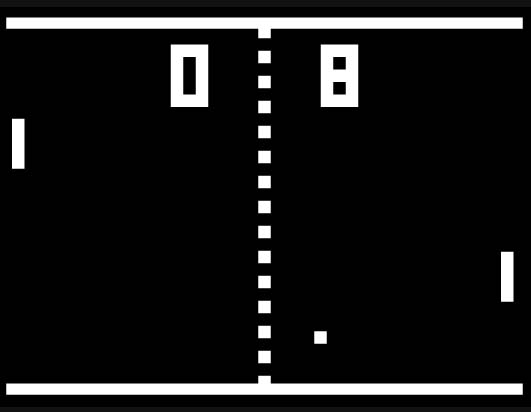
The complaints I heard were excellent. Saturn Bomberman is only 6 player , being among the better ones. Playing Pong on a big screen is priceless but, as is watching the new generation who started with FIFA 08 or something higher getting frustrated with the oldies. “Fuck this! I haven’t got the patience!” is heard on more than one occasion from people more familiar with Grand Theft Auto than the Sega Mega Drive.

The exhibition examines the contributions of various regions to video game culture, from the Japanese to the Americans. Looking at some of the leading developers from each region, you get hands on with some of the leading games from afar. All games are set to free mode (they’d want to be!) though sometimes you will end up waiting. Many of us are here to play the same games it seems.

Is it worth a visit? It is now. The price has dropped. It is worth a five Euro note. In fact, as I proved, it’s worth two. Near the end we’re shown examples of what may be ahead of us in terms of video gaming, and it makes you wonder if one day kids will laugh at Halo and the sort. No doubt they will.


Game On! runs at the Ambassador until January 30

Too lazy for the library

Here’s a couple of PDFs that I’ve recently stumbled across that might be of interest to our readers:

Seven Women of the Labour Movement 1916 by Sinéad McCoole

The Bureau of Military History 1913-1921 Index to Contributors by the Bureau of Military History

Symbolising the State — the iconography of O’Connell Street and environs after Independence (1922) by Yvonne Whelan (2001)

Dublin 1610 to 1756 by by Colm Lennon (2008)

The Bohemian Football Club: The Enduring Legacy of an Idle Youth by Ciarán Priestly (2010)


A scene taken from Colm Lennon's 'Dublin 1610 to 1756'

Yesterday we linked to a three-part History Channel documentary on the world underneath the city of Dublin. It reminded me of something I’d read along the way, so I rooted out a book. The excerpt below comes from Padraic O’ Farrell’s ‘The Ernie O’ Malley Story’ (Mercier,1983)

“Ernie received a note written by Rory O’ Connor in Mountjoy on 12 September. It told him of a tunnel leading to the Four Courts which could be used if they had left any important documents behind. One piece of folklore attached to that area of the city concerned a tunnel from there to Christchurch, built in the thirteenth century when a Dominican friary of St. Saviour occupied the Four Courts site. Towards the end of the nineteenth century, an army officer was accidentally locked in the tunnel which was used for storing ceremonial paraphernalia. He was soon documented as ‘missing, presumed dead’ until the next occasion demanding the opening of the tunnel. Near its entrance was discovered the skeleton of the officer and in the bones of his right hand was his sword. Lying about were the broken bone fragments of up to 250 rats that had attacked and had been beaten off by the mans sword before he himself was overcome.”

Excellent. Does anyone know any more about this tale?

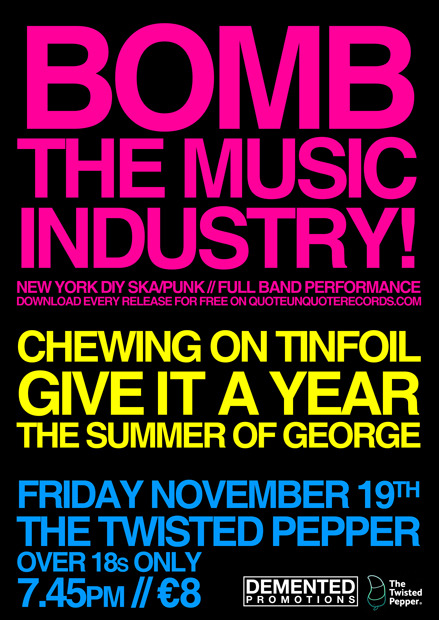
Bomb The Music Industry!

Ever since my cell phone, I never have a pen.
And I don’t speak in English, I speak in predictive text.
Ever since we got our cable, I never have anything to do…..

Feck sake. I can’t make this one as I will be in Glasgow Airport at the time.

I really enjoy the music of Bomb The Music Industry!, I’ve been to see frontman Jeff Rosenstock in the past, in what I remember to have been Greystones. BTMI! are a musical collective from New York who best fit into the punk/ska school. All their music is available online for free, over here. That sums up the bands DIY work ethic pretty well. They also try to ensure as many gigs as possible are All Ages. Unfortunately, the Dublin gig is not so.

The night before this gig, they play Katie Gallaghers in Bray with a 7pm start.

Bomb the Music Industry! plays a blend of several musical styles anchored onto ska and punk. They’re often compared to bands from previous waves of ska such as the Blue Meanies, Fishbone or Big D and the Kids Table that blended a range of influences and experimental effects onto the ska framework common in each band’s respective eras. Bomb the Music Industry! also share similarities with popular ska/punk and punk acts such as Catch-22 and Slapstick.

Keeping It Peel.

Football and Music is one of my favourite blogs, despite knowing absolutely nothing about football in the UK it seems to be a very similar passion to those of us who follow the League of Ireland. From Serious Drinking’s Love On The Terraces to the ever classic All I Want For Christmas Is A Dukla Prague Away Kit, the site is a tribute to the connection between the beautiful game and music.

John Peel was a hero to many. The legendary DJ, who died in 2004, had everyone from Planxty to Atari Teenage Riot in for a ‘Peel Session’. Below, to mark the anniversary of his passing and as part of the excellent ‘Keeping It Peel’ idea from Football and Music, we bring you Fools Gold and Emerald from Dubliners Thin Lizzy, from a Peel Session in 1976.

Thin Lizzy- Fools Gold (Peel Session 76)

Thin Lizzy- Emerald (Peel Session 76)

The wheels on the bus…..

Who says the youth today are unproductive?

This is a pretty interesting American TV documentary from The History Channel. The camera work is at times very irritating (more hip hop music video than history documentary) but there are some great bits across the videos. A look at the River Poddle underneath the city is particularly interesting. Almost four miles of an underground Dubliners will, for the most part, never see. Saint Michan’s Church features too, with “lifelong Northsider” Pat Liddy on hand to show the presenter around. It’s difficult to disagree with the presenters assertion that Saint Michan’s is an excellent argument for cremation! All in all, a very good effort.

All three parts are below. Thanks to YouTuber dubbigot for taking the time to boot these up. I always say it, but if you have gems like these get them up!

Continue Reading »

Arthur Scargill with the striking Dunnes workers

One of the best images from the lengthy Dunnes stores dispute of the 1980s shows one of the workers, Michelle Gavin, being presented with a birthday cake to mark her 21st birthday on the picket lines. An incredible image, it is difficult to imagine many 21 year olds today who would have the willpower or resolve of Michelle and her co-workers.

Strike! tells the story of that strike, and those behind it. It has previously ran in the city to great acclaim, and now returns for a second run. It is a fictionalised account of events, which uses visuals and music from the period in its production. With a cast of twenty young people, it is interesting to note that quite like many of us in blogland, many of these actors would not have been born at the time the dispute began.

Mary Manning, in refusing to handle Outspan grapefruit, began a dispute that would drag on for longer than the lockout of 1913. Ultimately, the workers would win. Their story should be told.

STRIKE! is coming back to the Samuel Beckett for 13 performances from Tuesday 26th October. Then it will perform in the Axis: Ballymun for 5 nights from Tuesday 6th November. Tickets cost 15.99/11.99 (concession)

So here’s to the girls of Dublin City who stretched their hands across the sea
That action surely is a lesson in workers’ solidarity
Here’s to the folk who heed the boycott, won’t buy Cape and spurn Outspan
And to the lad who joined the lasses
Ten young women and one young man

-Ewan MacColl.

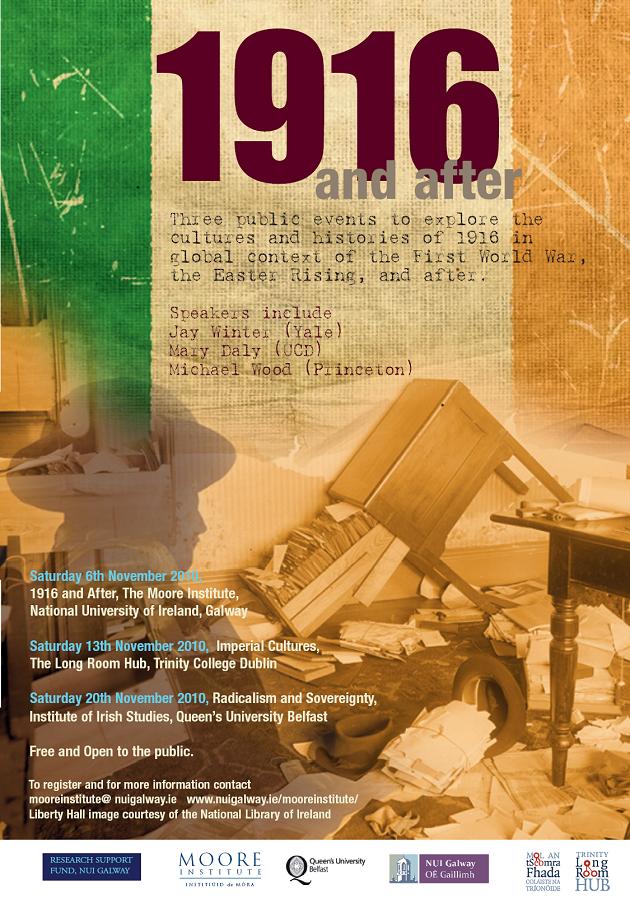
‘1916 And After’

“At first my only reaction was horror that Irishmen could commit such a crime against England. I was sure that that phase had ended with the Boer War in which father had fought, because one of his favourite songs said so:

You used to call us traitors because of agitators,
But you can’t call us traitors now.”

But the English were calling us traitors again, and they seemed to be right”

From Frank O’Connor- An Only Child.

This upcoming series of talks on the 1916 rebellion is interesting in that it is not geographically limited to the capital, but includes events at NUI Galway and Queens University Belfast. The event in Dublin, at Trinity College Dublin, will focus on ‘Imperial Cultures’. I will be on hand to provide a brief walking tour of some key sites to those attending the event. It is free to the public, but you’re requested to register in advance.

If you are attending, or are interested in the rebellion, perhaps these Come Here To Me pieces will be of interest to you:

This 1966 Irish Socialist booklet on the rebellion includes a number of rare articles.

How They Saw The Rising. The words of British Soldiers, Anarchists, Novelists, Poets, Medical Students, Revolutionaries and Daughters.

Sean Connolly plaque launch report. Includes audio and images from the launch of a plaque to Sean Connolly and his siblings, as well as Molly O’ Reilly.

Another perspective on the rebellion, from a Sherwood Forester who witnessed a friend “..shot through the head leading a rush on a fortified corner house”

The Thomas Weafer plaque on O’ Connell Street, so often overlooked.

The Pearse Street Fire Disaster. This article includes some previously unpublished images. Volunteer Robert Malone died in this fire in 1936.

Jennie Wyse Power’s shop on Henry Street is a unique plaque frequently overlooked.

The Teachings Of Patrick Pearse pamphlet from 1966 is interesting. It is the work of A. Raftery.


“James Connolly- Murdered May 12th 1916”

A familiar sight to Dubliners inside Dublin Castle ,a key site of the rebellion, frequently missed by the visiting eye.

The Yiddish election leaflet of James Connolly (1902)

An interesting piece on the Dublin home addresses of James Connolly.

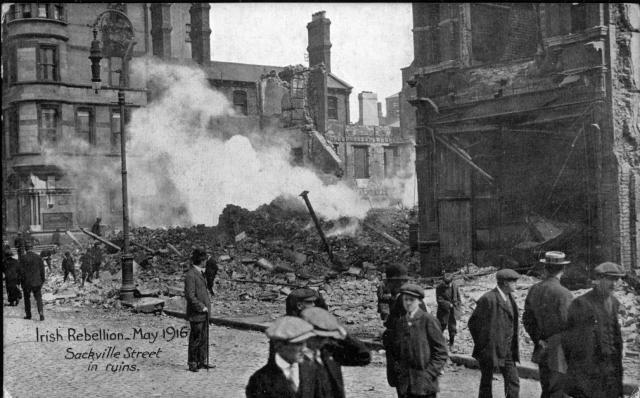
Sackville Street.

A certain northsider gives me hope. The ode to Damien Dempsey on the side of The Good Bits may be gone, but The Good Bits itself seems here to stay. No small achievement in this part of the city, where this premises has become the Dublin pub equivalent of ‘that house on the corner’. People seemed to move in and out of here all the time.

I’ve been here before, a few times. Down in the cave, where the music is thumping and the place is busy. We review pubs on this site, and not nightclubs, so that aspect of the place doesn’t count to us purists. I’m here to see what kind of pub The Good Bits makes. I had planned to include this on my last pub crawl, only to be met by the sight you fear most before your pub crawl departs. A ‘CLOSED’ sign.

Firstly, there is much more than a new name to this place. A lot of thought has gone into the interior. You forget details like this when you’ve been into a packed nightclub, and so you need to see the place again in a new light. I’d popped in Friday briefly to collect something and decided that was my lunch hour sorted for the next day, purely on liking the look of the place.

The lunch offers are good, a nice range of tapas options joined by a few standards. I’m racing the clock so wolf down a steak sambo with a pint, and both get high marks. The staff are bang on, attentive and friendly. My lunch hour consists of me rushing in the door of somewhere and ordering before I’ve sat down, but they’re understanding. The Guinness lives up to the reputation, as a few people had told me it was a good bet during the day. As a rule I don’t order Guinness in any nightclub environment, but to call The Good Bits a nightclub is doing a disservice to its qualities as a pub.

I throw a quick eye about and while the decor is quite minimalist, it works. Despite being here for quite a while now too (I dare say longer than some previous tenants!) the place is not at all showing any wear or tear. As a rule of thumb I never state why we’re looking around a boozer, but a member of staff asks me if I’ve not been before and we strike up a quick conversation on the place and how it has met the challenges of location, being just a tad outside the main ‘night club’ part of town. It looks as fresh as the first I entered it. The crowd during the day seem a good bit older than the night owls unsurprisingly, I get the impression I’m not the only one on a lunch break.

Any complaints? Not really, just get someone to give the front a lick of paint again. The Good Bits Gives Me Hope for Store Street, let’s hope she sticks around.

I love going through items relating to the family history, and this is an interesting piece from my grandfather on my mothers side. It’s an Irish ex-servicemen’s card from the Guinness brewery. My grandfather, A/Cpol. Philip Tierney, served as a military policeman during the ‘Emergency’. His reference signed by his commanding officer,Capt. Edward Cassidy, notes that “The a/n (above named) has served in the Military Police Service since 29/8/1941 and has been directly under my command for the past two years. During that time he has proved himself an excellent Police-man, diligent, and thoroughly concientious in the performance of all duties assigned to him. He is of excellent character and familiar with all aspects of Police duty.”

The ‘ex-servicemen’s association’ in the brewery was comprised of those who had served with the British army, while after the second World War in light of the vast numbers of men who served during the ‘Emergency’, the creation of this association came about. It seems to have been short lived. It is an unusual piece of Guinness history.

On a personal note, it’s pretty cool to know where my grandparents were living at the time (Philip Tierney is listed as having lived at 43 Camden Street). With granny coming from Cornmarket, and her mother the same, we’ve remained true to the southside. They later moved to Ballyfermot.

“Lord Major In Eire”

Another gem from British Pathé showing London Lord Mayor Ralph Edgar Perring (1905-1998) visiting Dublin in 1962. Scenes of St. James Gate and the Mansion House.