
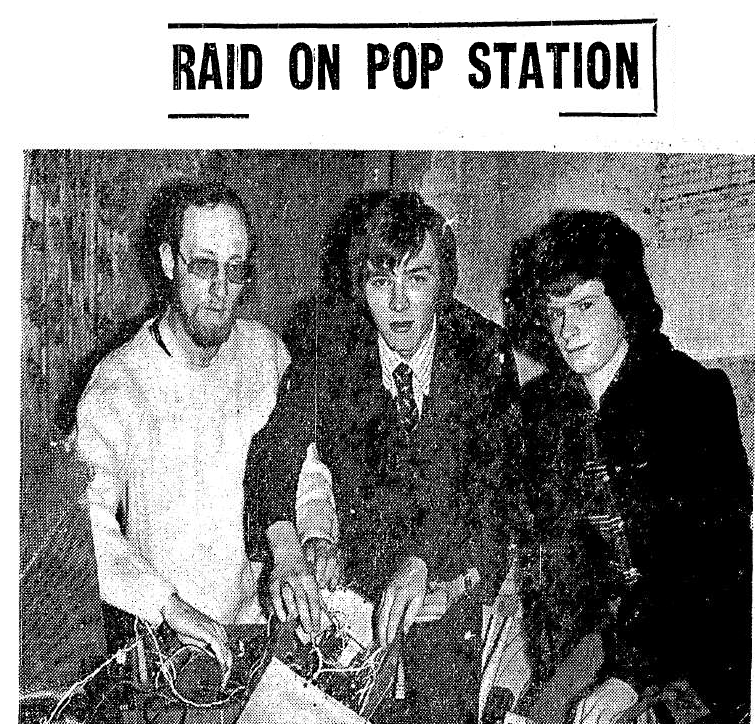
On December 22 1967, a group of schoolboys on their holidays began transmitting music and stories across the airwaves. The Irish Times noted that the transmissions had come from “somewhere south of the Liffey” and that the young boys had made two one hour broadcasts, at 8am and 12.30pm.
“…pop music programmes were interspersed with greetings from the announcer to school-friends. The transmissions also featured excerpts from the satirical magazine, Private Eye”
At 1.30, a young boy in fits of laughter told listeners that if they wanted to hear the news they had come to the wrong place and needed to turn to Radio Eireann.
The Department of Posts and Telegraphs didn’t see the funny side in this schoolboy prank. A spokesman warned the youngsters that they would track the schoolboys down. As far as I can see, the promised second day of broadcasting never came from Radio Jacqueline, and the boys probably went back to school in January with an excellent story to tell about how they made the national media through their DJ exploits.
A much more infamous station preceded Jacqueline, and that was Radio Juliet from Cork. A newspaper report into it in 1964 described it as the nations first “non-political pirate radio station”,and it was also the work of a small group of schoolchildren. They numbered a dozen or so. A spokesman for the group (in which the average age was 16) remarked that after a few days in operation over the summer holidays of ’64, it was becoming “too hot to handle” and it was time to wrap up operations. The boys had made a six shilling investment in the station, the cost of a transmitter which one of them built.
Amazingly, on the Cork station, the Irish language featured too.
“One third of the announcements were made in Irish, he said, and this was an ideal way of promoting the language”.
The late 1970s and early 1980s of course saw an explosion in pirate radio stations, not least in working class pockets of Dublin. In the summer of 1981 several Fianna Fail TDs and Ministers landed themselves in hot water for using pirate stations to advertise political message. Liam Lawlor used a Ballyfermot Pirate Station to thank the hugely popular Peace Corp youth group there for their efforts and a “great day” he’d enjoyed in their company.
What about Fine Gael?
“We’re using them in relation to our youth policy and Dublin plan” said Mr. Bill O’ Herlihy, the RTE sports commentator who is working in Fine Gael HQ.

Radio Dublin makes the news, '78.
Efforts to shut pirate stations across the capital frequently led to the courtroom. In 1978 “Captain” Eamonn Cooke of Radio Dublin was hit with a £35 fine for running a pirate station out of Sarsfield Terrace in Inchicore, the famous Radio Dublin. An Irish Independent report into the court case felt it important to note that “During the entire two hour case Mr. Cooke was accompanied by Radio Dublin disc jokey, blonde Sylvia McKenna, dressed in tight grey jeans and a sweater”. Good journalism that.
Continue Reading »














 Click on the book for more.
 Click on the book for more.
 Donal
Donal Ciarán
 Sam
Sam


 Come Here To Me!