Feeds:
Posts
Comments

Bohemian F.C supporters with F.A.Ilure and GAVIN OUT banners.

My thanks to one of the lads (CHEERS LUKE!) from thebohs.com for linking to this on our Facebook,after I mentioned it in the
match piece below but was unable to locate a snap online.

The banners were clear from the far end of the stadium, and on the night they were taken out the stadium had a few F.A.I blazers knocking about owing to the presence of a certain Italian watching the match.

This reminded me to root this out, my Ireland kit from circa 2007.

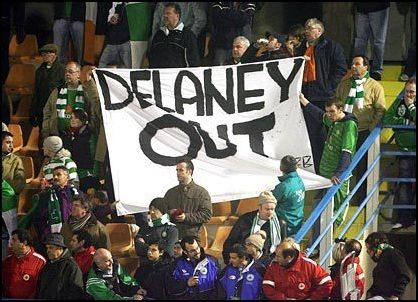
NBB 'Delaney Out' banner.

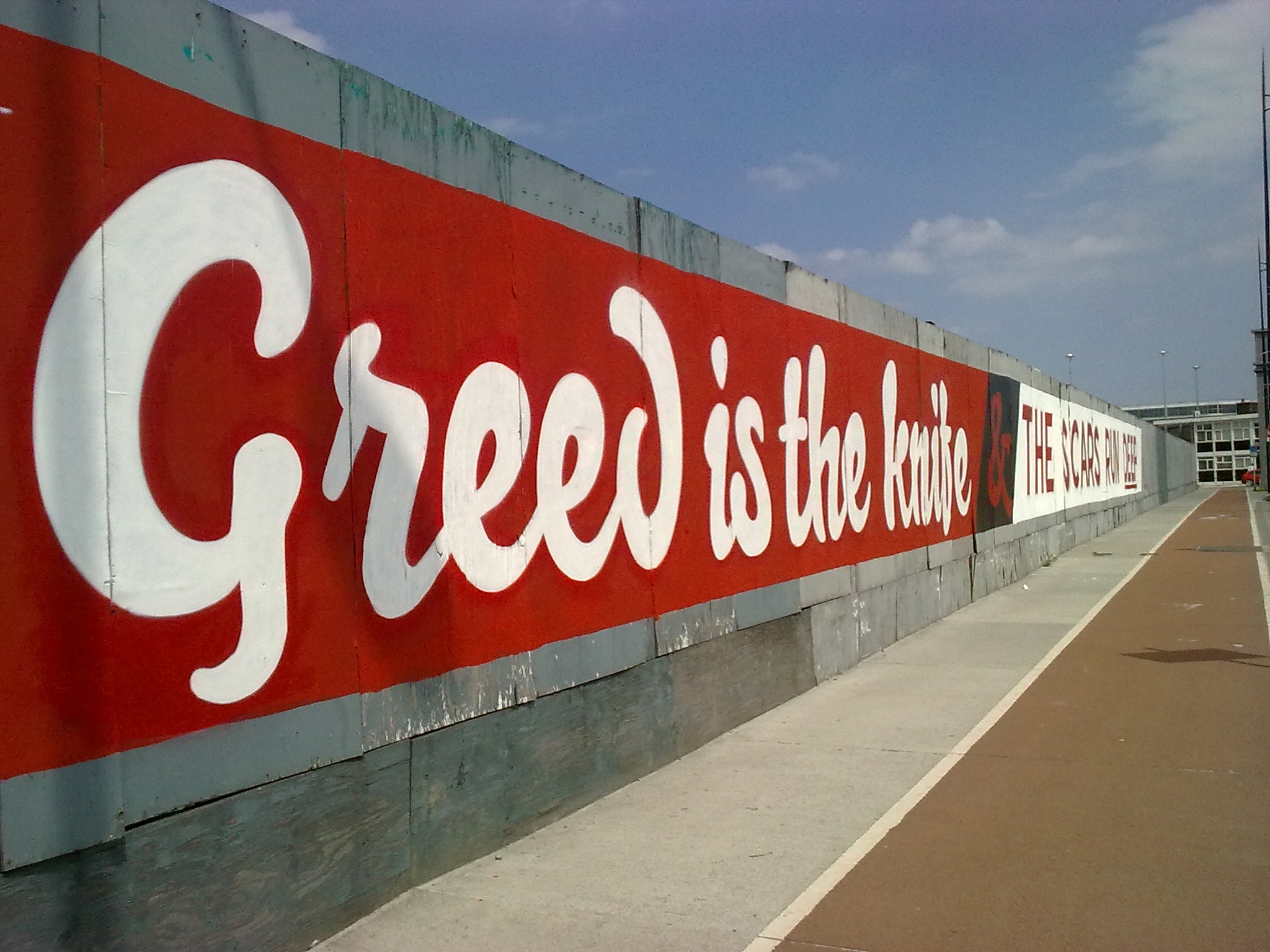
Greed is the knife and the scars run deep...

 Any regular readers will know that we’ve been following the Maser/ Damien Dempsey project very closely; And on Sunday I came across my favourite piece from the project so far. Located between the Point and the Port Tunnel,  and spanning close to fifty feet are the words “Greed is the knife and the scars run deep,” lyrics taken from one of my favourite Damo songs, Colony. Youtube it, the song sends shudders up my spine every time. The raw anger in his voice when he sings the line “But if you’ve any kind of mind, you’ll see that all of humankind are the children of this earth, and your hate for them will chew you up and spit you out” will forever be one of my favourite lyrics. Amazing. Just… Amazing.

We’ll continue to keep you posted with pictures of the pieces as we find them; Rumour has it a new one has gone up at the Bernard Shaw. Anyone who spots new ones, please give us a shout on here.

A friend of ours Andrew has created this fascinating google map of sites of significance to current and historical radical struggles.

While the map covers the whole island, it focuses particularly on Dublin. It’s particularly apt to post in the run up to Sunday’s radical walking tour of the city.

The markers are as follows:

Green – Old History (Pre 20th century)

Red- History (1900-1980)

Yellow – Recent (1980-yesterday)

Blue – Current (Locations that are still active in some sense)

Purple – Stops on the Feminist Walking Tour 2010

As much as I love this pub, I must love reading reviews of this pub even more.

It’s amazing how much people, especially younger people, can seem taken aback by the place.

The Porterhouse she ain’t. The taps when you walk in are a no nonsense affair. Not quite Henry Ford and the famous “..any colour you want as long as it’s black” comment, but not a million miles off. Let’s be honest, for ninety percent of the punters here at any given time, it’s black.

Yet , there is quite a bit more to a pub like this than the pints. Colm Tóibín was on the money when he stated that, when it came to Dublin pubs, “There are four or five that have survived the ravages of new money”

When a pub remains in the hands of one family for so long, as this one has, tradition becomes so firmly implanted in the place you’d need to knock it down and build some dire three floor disco-pub to undo it at this stage.

Glasnevin Cemetery is the rowdy next door neighbour to the quiet, content Kavanagh’s.

In any other community, the cemetery and pub might be the other way around. Still, only a stones-throw (literally) from the front door of this pub, you have the burial place of over one million individuals. Frank Ryan and Eoin O’ Duffy, Jim Larkin and William Martin Murphy, Cathal Brugha and Kevin O’ Higgins- all together. Not to mention a Big Fella and a Long Fellow.
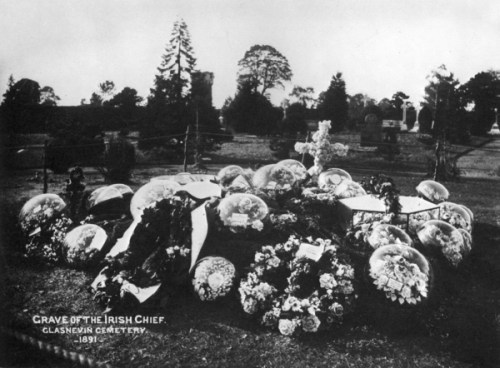
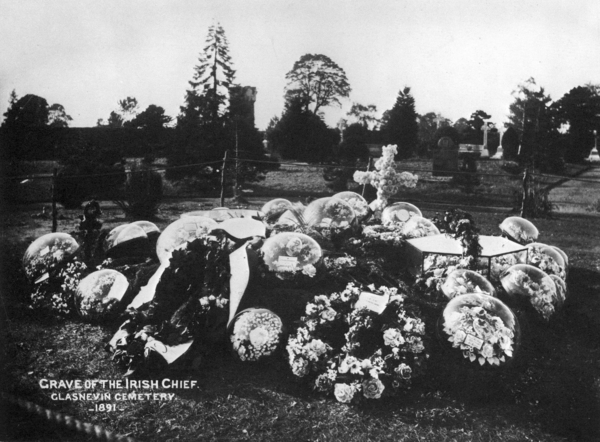
1891, Parnell is laid to rest in Glasnevin.

Only recently on the fantastic Glasnevin Cemetery Tour did I fully stop and appreciate the surreal nature of the manner in which old and bitter Irish conflicts are at rest there. A pub can not grow up on the edge of such an amazing place and not be shaped by it.

Stories, legends or otherwise, have spread. The best is surely that of the Cemetery staff in years long past arriving to find a number of coffins sitting outside the pub, as opposed to inside the gates. I don’t doubt such tales for a second. A pub on the edge of a graveyard is, to me, akin to a fireworks factory beside an incinerator.

So, the place naturally has character in excess. If this was in the city centre, you wouldn’t be able to see for all the flashing photographty you’d no doubt have to put up with from tourists. Swinging doors, a true staple of a sort of Irish pub long gone, make you long for something you never knew in reality and could only read about. The pub is authentically old. There are publicans all over the island battering tables with objects to make them look old (Well, not literally…I hope) to create some sort of old ‘Oirish’ pub experience. You can’t create it but, especially not when you’ve put 5 widescreen televisions into your pub and half your customers are only there to watch Manchester United.

There isn’t a telly in sight here. Nor can you hear a Lady Gaga song, or any song for that matter. It’s a reflection on the punters and regulars that the sound of chat and laughter is enough to carry the day in a pub like this. Some pubs probably need the television sets to be honest. I’ve been in pubs where silence would be the only thing worse than the music selection on offer.

While O’Donoghues and a few other gems have sadly succumbed to the suits and faster pace of a new Dublin, a new faster paced Dublin has to slow down when it enters Kavanagh’s. Let us hope a few more generations will rise to the challenge of running the place. It’s in good hands.

Sunday week, the 30th of May, I will be one of the guides on a walking tour taking in some of the radical history of Dublin city centre.

The Walking Tour is taking place as part of the Fifth Dublin Anarchist Bookfair, hosted by the Workers Solidarity Movement. Many of our readers here have a keen interest in radical history, and talks like “A History of Irish Revolutions” (Conor Kostick) and “The Lost Revolution – the Success & Failures of the Workers Party” (Brian Hanley and Scott Millar) at the bookfair are of particular note in that field.

The tour is completely free (I felt the need to ‘bold’ that, students eh?) and I would hope will end with some good discussion. Many of my own chosen sites have a particular focus on Dublin through the revolutionary years, with some unusual War of Independence and Civil War sites. Union history, feminist history, student history and much more besides will feature.

So, come meet dfallon in real life ( “Him? Really?”), learn something new, and enjoy a walk around our lovely and historic city.

The tour has a Facebook event page, here.

An interesting find. A radio documentary on the Dublin punk scene from 1981 presented by the late Gerry Ryan and produced by Ed Mulhall, the current Managing Director of News in RTE.

Opening with the classic new wave single ‘Over 21’ by Berlin, the show has interviews with members of Irish Punk bands The Threat, The Peridots, the Nun Atax, Microdisney, the Virgin Prunes, the Vipers, Revolver and Berlin. Unfortunately there’s no introductions for the interviewees, so there’s no way of knowing who’s who. The only people I can recognise are Dave Fanning and Bob Geldof.

There’s particularly interesting points made during the program about the idea of bands ‘selling out’, the role of ‘class’ in the punk movement and the relationship between punks and violence.

You can listen to the radio documentary by clicking on the link in the first line of this post. Below, I’ve uploaded the song which the documentary takes its name from, ‘Over 21’ by Berlin.

Berlin – Over 21 by matchgrams

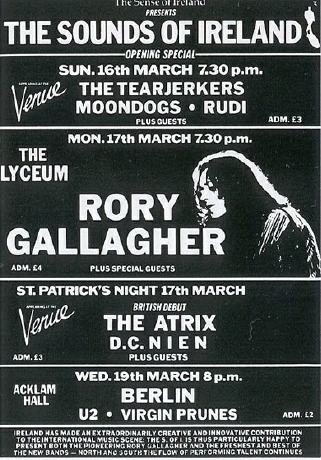
The Sounds of Ireland Festival in London, 1981. As you can see 'Berlin' were ahead of U2 on the bill.

The Sounds of Ireland Festival in London, 1981. As you can see Berlin were ahead of U2 on the bill.

The annual Match Programme Fair is coming up again, at St Andrews Parish Centre on Pearse Street.

It takes place on Sunday, May 30th

I only recently uncovered a box of copies of the SuperSaint programme from 1998-1999 and 1999-2000 under the bed, absolute gems. Every programme from 1999-2000 in particular opens with a 1,000 word essay from Pat Dolan on whatever was getting on his nerves that week.

For example,in Issue 13 of the campaign, Galway United at home, Dolan noted that

It is certainly not satisfactory for our youth to believe that supporting their team is about sitting in front of the TV. It is something bordering almost on fraud for RTE’s over exposed Premiership to rely on opinions of people not qualified to comment. As someone who has analysed games for TV and radio, both live in the stadium and ‘live’ in the studio in front of the telly, I can tell you that you can only truly appreciate the pattern of the game and the wider picture if you actually attend the match! How gullible as a nation have we become that we accept people pontificating about the merits of English soccer and decrying the merits of Irish soccer, who attend neither.

Indeed.

As well as a trip to Pearse Street, you could do worse than to make a trip out to the Phoenix Park for a free month long exhibition there on the history of football in the park.

“The exhibition was launched to mark the FAI taking over the lease for the football facilities in the Phoenix Park, which are known as ‘the Fifteen Acres’. The exhibition contains photographs documenting the history of football in the Fifteen Acres, beginning with the foundation of Bohemian Football Club at the Gate Lodge of the Phoenix Park on September 6th 1890 and including photographs of football clubs from the late 19th century right through to the present day”

Do both on the same day and then go home, stick the scarf on, play some Subbuteo and give Jack’s Heroes a spin.

Salt and Vinegar?

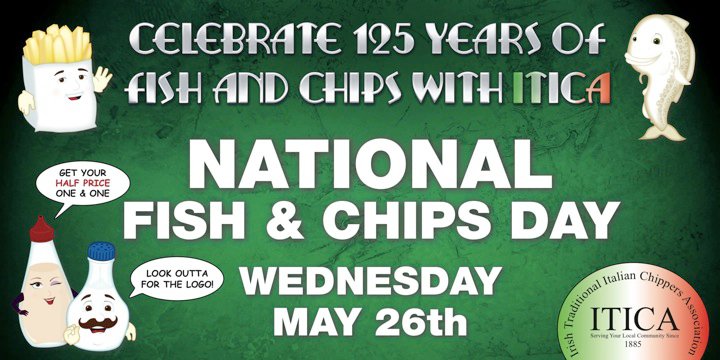
On Wednesday, May 26 a number of traditional Italian chippers in Dublin (and the rest of the country) will be offering half price fish and chips to celebrate ‘National Fish & Chips’ day. Click here for the list of participating outlets.

That’s dinner sorted so.

There was a very interesting feature in last week’s Sunday Tribune on the history on Dublin Chippers focusing on the Toni’s in Inchicore, Rimini’s in Whitehall, Salveta’s in Blanchardstown and Borza’s in Dalkey. Also worth checking out is this piece by our mate JamesR who wrote an excellent article on Dublin’s chippers a couple of years back.

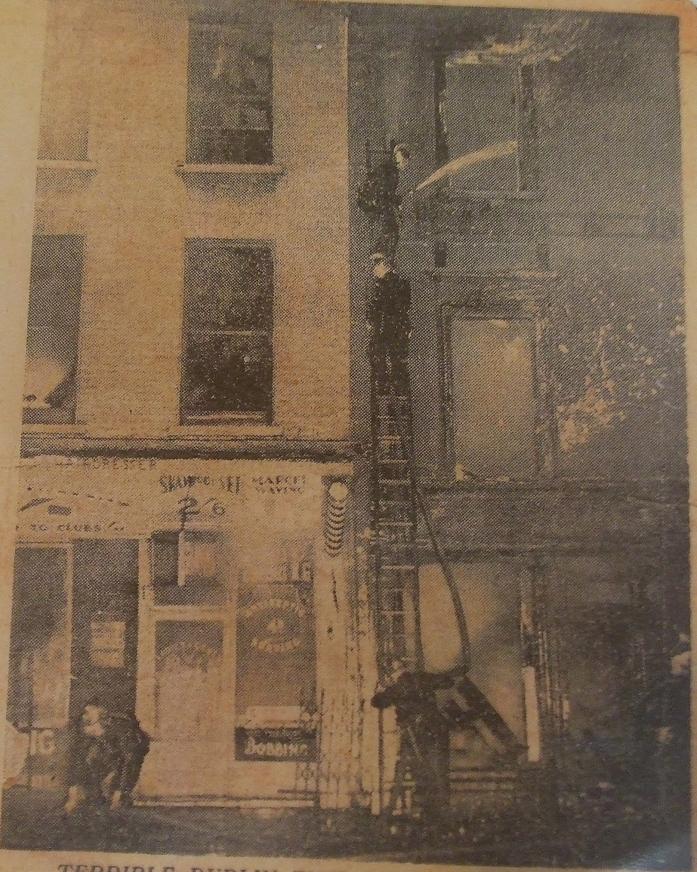
This article aims to provide a brief overview of the Pearse Street Fire of 1936. It is by no means a complete overview of events and I recommend anyone seeking more information on the incident consult ‘A Triple Tragedy in Dublin, The Pearse Street Fire, 1936’, by A.P Behan. That paper was published in the Dublin Historical Record (ISSN 0012-6861, Spring 1997). I have relied on it, and newspapers of the period, for much of the information below.

Men fight the blaze, image taken from Independent. This image was taken moments before an explosion in the premises.

Writing in the Irish Independent in the immediate aftermath of the event , Anthony Flynn wrote of the risks men in the Dublin Fire Brigade faced in the line of work.

The fireman himself thinks only of duty. That duty is clear and defined. And our Dublin firemen do not hesitate. In Pearse Street, as on countless other occasions, these men faced death. Three of them died, displaying a courage equal, if indeed, it does not transcend, that of the battlefield.

The premises of Exide Batteries, at 164 Pearse Street, had been the site of a horrific blaze on the night of Monday October 5th. Due to the proximity of Tara Street Fire Station, it took less than two minutes for the men to arrive on scene. The fire had been detected by the tenants above Exide Batteries at 10.50 p.m. In the definitive history of the Dublin Fire Brigade (The Dublin Fire Brigade: A History of the Brigade, the Fires and the Emergencies, by Trevor Whitehead and Tom Geraghty)they note that

Number 163 housed a barber’s shop at ground level and a private hotel occupying the upper floors. Number 164 had a retail shop belonging to Exide Batteries Ltd. on the front ground floor, vacant offices on the first floor and a family of seven living on the top floor. The basements, although not connected,were the location of a factory in which Exide batteries were assembled….

The fire was fought in terrible conditions. The water supply in the area was nowhere near adequate, for example. A.P Behan stated in his paper ‘A Triple Tragedy in Dublin, The Pearse Street Fire, 1936’ that

There was practically no volume of water and no pressure. Onlookers were incensed at the firemen having to fight such fire in these conditions, and the absence of adequate water supply had the result that the firemen had to get so close to the fire that their uniforms were scorched

Two explosions ripped the premises apart. Initially, two firemen were thought missing in the premises, but quickly it became apparent a third was missing. It was not until about 10 in the morning the next day that the third body was found. The three Dublin firefighters killed in the line of duty were:

Fireman Robert Malone– a veteran of the 1916 Rising who had served as a Lieutenant with “D” Company 3rd Battalion at Bolands Mills Garrison, under Eamon de Valera. He left a wife and child behind.

Fireman Thomas Nugent– who was engaged to be married.

Fireman Peter McArdle– who left a wife and seven children (His funeral mass card is shown below)

Continue Reading »

Another Sunny Day

Lane behind 16 Moore Street

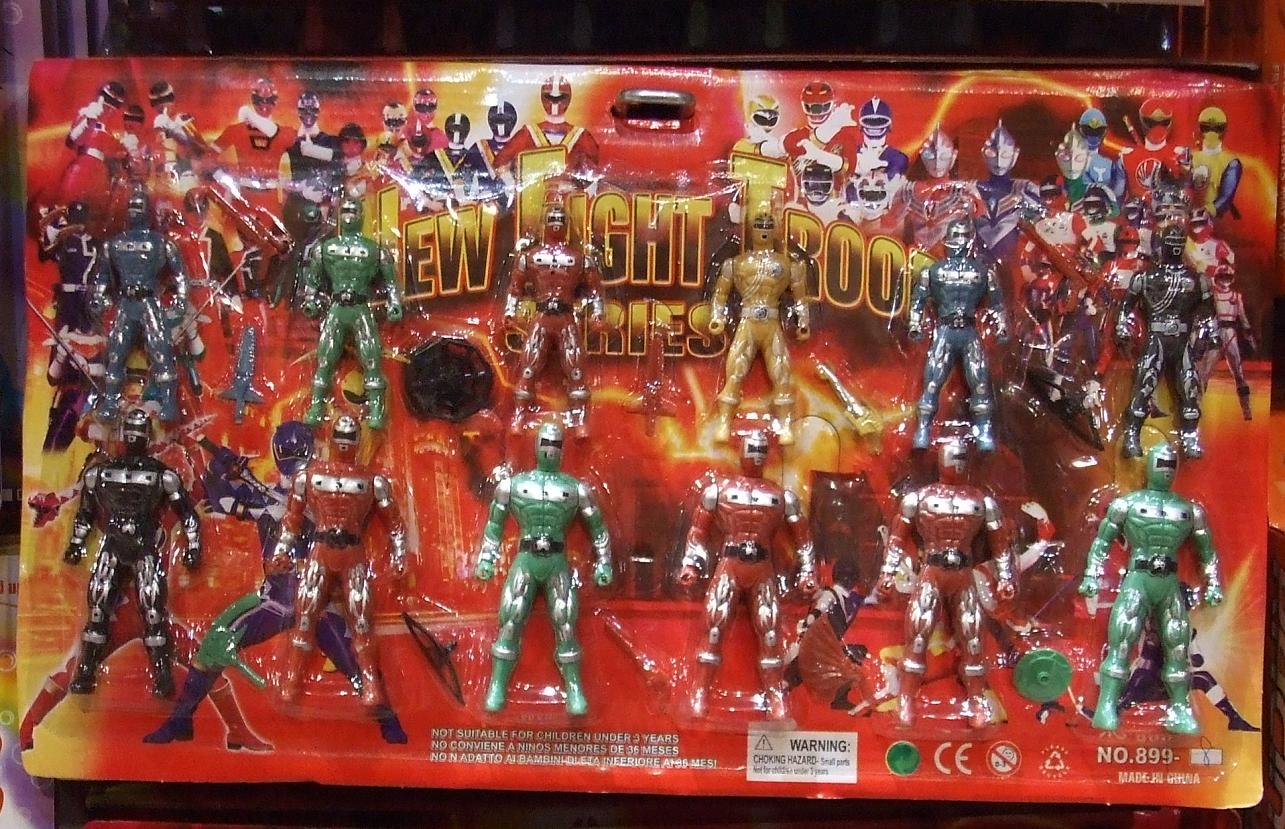
Pound Shop Power Rangers

Docklands Booksale

Apparently there’s 40,000+ books up for grabs at this two day book sale in aid of a number of good causes including Age Action Ireland, Care Local and the Docklands Seniors Provider Forum. I’d love to check it out but I have exams today (one in a few hours!) and tomorrow.

Friday 14th May 11am – 7pm
Saturday 15th 10am – 5pm

National College of Ireland,
Mayor Square, (IFSC Campus),
Dublin 1.

Books!

C’mon YBIG

The nice people at YBIG (Or You Boys In Green)have uploaded their new online magazine, which you can check out here. When you’re flicking through it, be aware that the Star ads open fancy pop up video footage. Nothing like having headphones in, the volume up, and hearing Mr. Betfair Dunphy talking away to himself (while sitting on a swively chair in Tallaght Stadium)

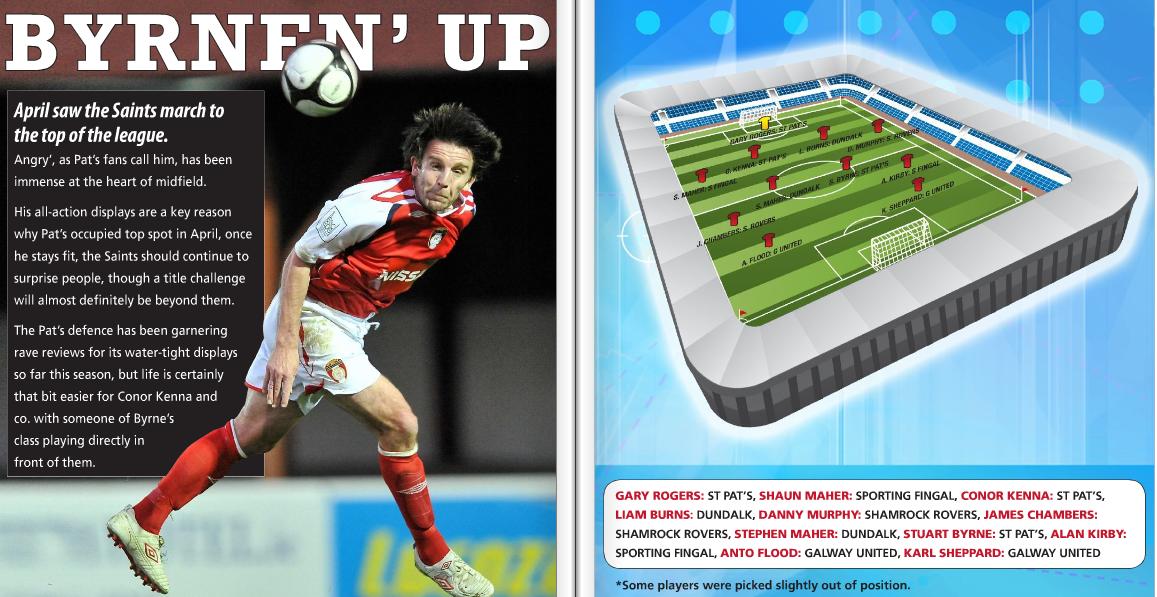
An example of content.

Along with plenty of League of Ireland coverage, it’s got plenty on the national team, a nice historical piece on an encounter between West Germany and the Republic and some great video content. It’s the future. There’s even a video of that cheating French bastard (language, Timothy) doing cocaine. You’ll get it when you click it.

Hopefully this isn’t the end of the lovely bus-friendly regular YBIG magazine.