Feeds:
Posts
Comments

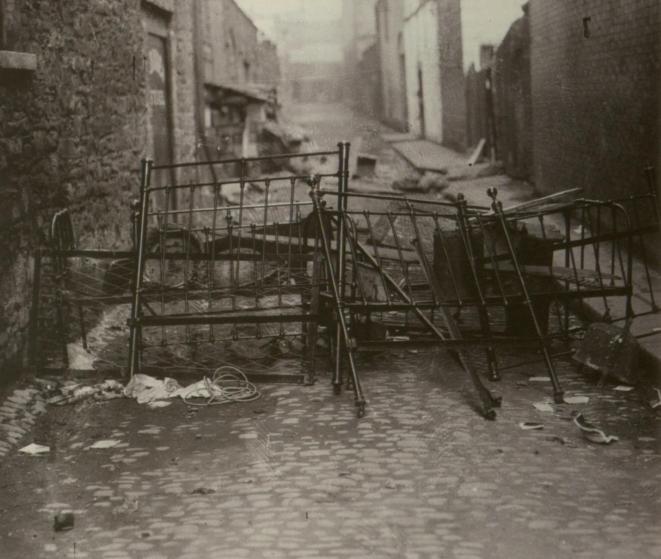
A WD Hogan snap of a Dublin Republican barricade

An interesting exhibition in Temple Bar, of the photography of W.D Hogan taken between 1920 and 1923, taking in the Tan War and the Civil War. During work experience as a youngster in Collins Barracks I got a unique insight of the Cashman Archive, taking in the work of Joseph Cashman in the ‘revolutionary years’ with fantastic images from Dublin in particular at the time. Cashman got many great shots of the personalities and forces of the time, including both the Citizen Army and the Irish Volunteers.

This exhibition, opening on the 16th of January, is of different stock. Here, there is a particular emphasis on the ordinary people of the city and country, as war raged around them. Hogan was given the official sanction of Sinn Féin during the Tan War, and later that of the state army.

The National Photographic Archives site observes that

The 167 photographs featuring in the exhibition were compiled by Captain Rev Denis J Wilson, Chaplain to the Free State army during the 1920s.

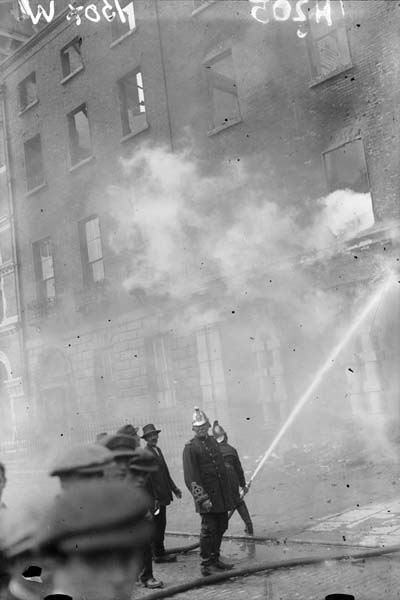
Interestingly, the exhibition contains photos of state-forces entering Cork after the fall of the ‘Munster Republic’, the last stronghold of republicans holding out against the Anglo-Irish Treaty, and photos of the burning of Balbriggen by Black and Tans, along with shots of iconic events like the burning of the Custom House and the assault on the Four Courts.

Opening Hours (Runs until May 24th)
National Photographic Archive, Temple Bar

Mon – Fri: 10am – 5pm
Saturday: 10am – 2.00pm

Fantastic images of the 1913-22 period can be viewed at the National Library Digital Collection

Spot Kevin Myers Grand Uncle, Captain Myers of the DFB

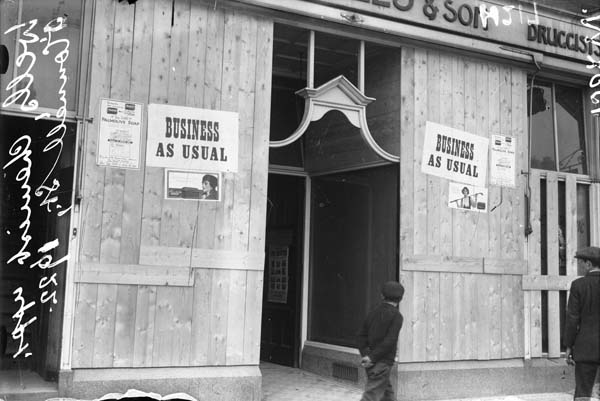
Businss As Usual, 1922

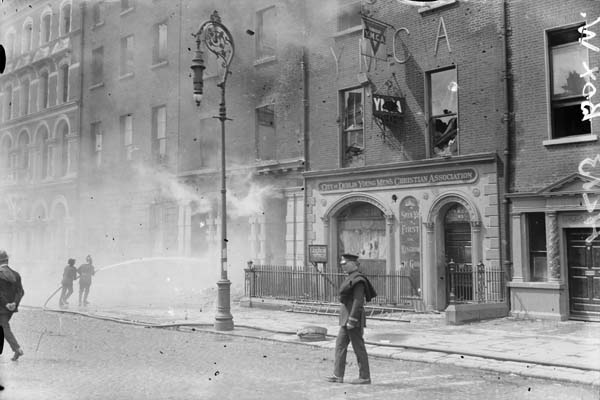
Dublins YMCA ablaze in '22

Jacolette

I stumbled upon a great new blog, called Jacolette, which focusing on vernacular photography, mainly Irish and amateur.

Most of these photographs were found in charity shops, skips or bought from online auctions and I am interested in the process whereby they have become separated from the families who once valued them.

Some gems include a picture of three Dublin men drinking that was “found in a skip on Oxmantown Road”, a number of Irish American mugshots that the the author bought on Ebay and some beautiful shots of O’Connell Street taken from Nelson’s Pillar in September 1942.

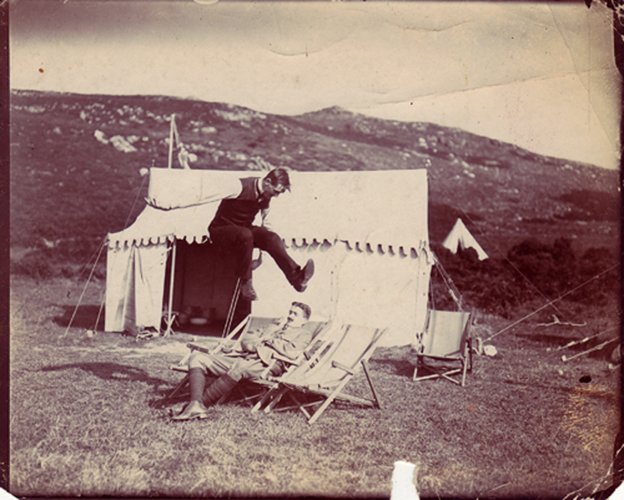
Hi-jinks in Dublin!

Whilst very tempted to write a review of Colm McPhersons “The Seafarer” that just gave it five stars and said “go see it and you’ll understand why,” I do understand reviews don’t work like that so I‘ve bulked it up a little. But I mean it; before I even start the review, that’s exactly what I feel like saying; go see it and you‘ll understand.

Under the advice of a good friend, and having just written an article on the history of the Hellfire Club, one slow Saturday afternoon in January, six of us headed along to a matinee showing of a play said to be inspired by the tale of the Bucks on Montpellier Hill, when Beelzebub himself showed up during a late night game of cards, and upon losing, stamped his hoof on the floor and took off. (That mark, according to local superstitious types, can still be seen today.)

The Seafarer

The Seafarer, from last years run at An Grianán.

Captivating from the start, the story, the characters and the actors that portray them are so… familiar. Bleak, but uproariously funny, there’s a comedy in the dark, unfolding drama and maybe it’s comedy that only the Irish can understand. For while I found it hard to retain my laughter at times, as did most of the audience, half of our company were not from this Island and thought we were sick, or mad, or both, to be laughing at the despair portrayed on stage. McPherson even admitted this himself, saying Irish audiences would understand the play better than those in London or New York.

Set in Baldoyle, but namedropping an expanse of Dublin streets and pubs, the plot centres around the return of Sharkey (Liam Carney) to Dublin at Christmas time to the house his newly-visually-impaired brother Richard (Maelíosa Stafford) inherited from their parents.  Chaotic from the start, Richard and pal Ivan (Don Wycherly) test Sharkey’s patience to the limit as he tries to stay off the drink for a third consecutive day, as they nurse the mother of all hangovers, sneakily tucking into a bottle Gold Label for breakfast. I can’t compliment Don Wycherly’s performance enough; I spent most of the play watching him rather than what was going on on-stage as he stayed in character for the full three hours. Ivan is the epitomy of the lovable Irish scally- Disheveled, simple, nervous, good natured and an out-and-out alcoholic. I’d do him an injustice to describe him as any more than that; what he does on stage is just… madcap, hilarious and truly brilliant. 

The story unfolds as Sharkey’s past unravels, and it’s with the arrival of Nicky (Played by Phelim Drew, son of a hero of ours here at CHTM, Ronnie,) and Mr. Lockhart (Nick Dunning) that we get the real story about Sharkey, an alcoholic, a “Useless Eegit” whose life has been “nothing more than a series of fuck-ups” but who has “Potential” according to his loving brother Richard. As they start into their annual game of poker, and the ante’s get higher and higher, Mr. Lockhart reveals himself to Sharkey as the devil, come to claim his soul, having been beaten by Sharkey before, he doesn’t intend to get beaten again. 

The play takes a sidelong glance at the Irish relationship with alcohol, our begrudgery and our inability to share problems. And though the overriding mood of the play is bleak, dark and disparaging, the wit and feelings of hope and redemption win through, and as they say, hope springs, and you do walk out of the play with a smile on your face.

I’ll finish as I started and say go see this play, it runs until January 30th in the Abbey and tickets start at €25.

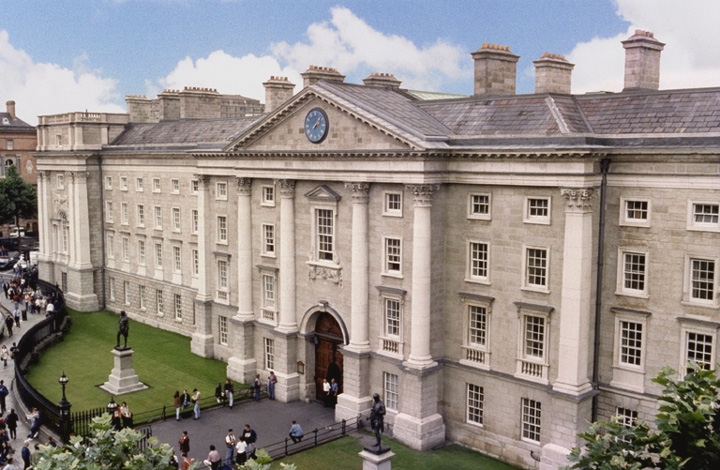
Despite being a Dubliner, I’m slowly earning my degree in Maynooth ‘across the border’. Like all Dubliners though, I must walk past Trinity College at least twice or three times a week, and seize any opportunity to go for a walk within its grounds. Me, the Americans, the hidden UCD scarves and the odd Trinity student running across the grass late. I used to get lucky and spot Brendan Kennelly or David Norris with good frequency, but the last ‘famous person’ I spotted inside the gates of Trinity was a Fianna Fail Junior Minister getting the walkabouts.

Trinity College Dublin

So today, while doing the usual third level exam thing (Of eh…sitting on Facebook for a few hours.), I spotted this.

‘Overheard at Trinity College Dublin’. A new venture, it has already attracted over 900 students (Well, I can spot at least 4 NUI Maynooth students along with myself having a look) and the submissions are flowing. Some great Dublin wit in there, and some stuff that just made me laugh out loud for various reasons.

Some gems:

“”no like i actually scored the ents officer last year…. he brought me up to his office!”

“And has anyone heard that story about the BESS student who asked, in a tutorial, if Karl Marx was a follower of Hitler’s?”

“Ok, to find the determinant of a…what’s it called again?”
“I think it’s called….a two box”

An American tourist to me, outside the Arts Block- “can you tell me where Kellys Book is?”

Give it a look. Hopefully Belfield, Maynooth and other campuses will follow.
The stuff I’ve heard in Maynooth, I could write a book.

The Trinity Ball, apparently.

All of these designs are by the talented Niall McCormack. You may also recognise his work with U:MACK gig promorters. He has his own blog, a fascinating mix of vintage Irish book covers, old advertisement and cigarette cards.

“When the Blueshirts –the Irish fascists- caught me on a demonstration through D’Olier Street I was surrounded by a crowd of them. They got me down a laneway off Dame Street and were hammering me. The Police came and they joined in and then arrested me, dragging me up to O’ Connell Bridge to an inspector who was sympathetic…

When I was with the inspector for a moment,he said, ‘Can you run?’

I said ‘Yes!’ and was across the bridge like a hare”
Bob Doyle in Marx Arthurs fantastic ‘Real Band Of Brothers’

Bob Doyle was an interesting, and very complex character.

In 1933, a mob besieged Connolly House in Dublin. Connolly House of course was the home of the Communist Party of Ireland, and the hysteria was religious by nature. On the 29th of March, this crowd proceeded to set fire to the building, with Gardaí estimating the crowd to be in the region of five to six thousand people. One of those people was a certain Mr. Bob Doyle.

Bob would later end up joining the Dublin IRA, and joining the International Brigades in Spain. Not an easy task mind, as to get there he endured quite the hard life. Learning that the last group to depart for Spain from Ireland were gone, he decided to “get there on his own steam”, staying in Salvation Army shelters like that in Great Peter Street, Westminster. He ended up getting a job as a kitchen porter (“like Ho Chi Minh” he observes, in Max Arthurs book!) and even spent time in Marseilles sleeping on park benches and later hoped a ship to Spain, making a jump for the jetty and pulling a runner as the captain of the shop shouted “POLICIA!” at the top of his lungs. Some journey before seeing a single rifle.

A fantastic obituary to Doyle in The Independent noted that

During the Notting Hill race riots of 1958, Doyle, who lived in the area, organised patrols to protect immigrant West Indians as well as a demonstration which he headed carrying a placard saying “No Little Rock Here”. He also drew regular Sunday crowds of up to 600 at Speakers’ Corner, where he would attract attention by setting fire to newspapers and saying “That’s what I think of the capitalist press”. Trips to Spain were an opportunity to distribute anti-Franco leaflets: he scattered them in Madrid among football crowds and on buses before making a swift getaway.

‘Brigadista’ is the title of not alone Doyles autobiography (A fantastic read in itself) but also a recorded interview with Bob. His last one, in fact. Recorded by Dublin Community Television (DCTV) , the conversation took place during Doyles last visit to Dublin (He spent his later years living in London) This interview is essential viewing. A one on one conversation with Trade Unionist Mick O’ Reily, Doyle discusses not alone Spain but also Dublin and London.

(Once a month the three writers behind ComeHereToMe, joined by a small group of friends, visit five Dublin pubs and then write about their experiences. A different person each month picks the five pubs and they make sure not to give away any details. What fun.)

January was my month and I had picked the pubs carefully:

• Hartigan’s (For its links to UCD.)
• The Baggott Inn (For its links to Irish rock music history.)
• The Horse show bar in The Shelbourne Hotel (For its sheer beauty and history.)
• The International (For its importance in the history of Irish comedy.)
• Neary’s (For family links. This was the only pub in Dublin my grandmother ever entered ‘because of their sandwiches’.)

Out of the original five, on the day itself, three were closed. For future reference, don’t pick the Sunday after New Year’s Eve for a pub crawl in Dublin City. Things aren’t back to normal yet.

I chose the Royal College of Surgeons at 1 Saint Stephens Green as the meeting point, hoping to throw people off as to where we were going. The location meant that we just as easily could have  made our way down to Camden Street or Dawson. The RSCI is also a building of great historical significance, namely the role it played in the 1916 Easter Rising, as well as the fact that it was built on a old Quaker burial ground.

At 4:32pm approximately, the five us began our January Pub Crawl cautiously making our way across the icy pavements towards Leeson Street, stopping at 68 St. Stephen’s Green, – ‘Newman House’. I announced to the group that this would be our only stop of a historical nature during the day before telling them the story of the Whaley family who built the house, their son Thomas ‘Buck’ Whaley and a dare devil bet involving a horse, a carriage and a first floor window that occurred sometime in the 1780s.

As we turned the corner, I was taken by surprise to see that Hartigan’s was closed. Undaunted by this initial set back, we crossed the road to Hourican’s, the pub that sits directly opposite. This is one of those forgotten pubs, one that thousands of people pass on their bus everyday, but very few venture into. The pub itself was quite pleasant. If I remember correctly, it had a lovely wooden interior decorated with a few more ‘Irish street signs’ and old advertisements than was necessary. The barman was extremely friendly, offering to bring us down our drinks. We had a lovely pint, a chat and then were on our way.
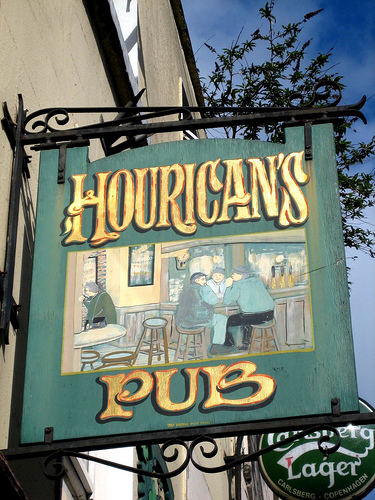
Hourican's. (Flickr user ihourahane)

As I said, I had hoped to bring the gang down to The Baggott Inn next. Though I’ve heard it’s lost all its charm, no one can deny its important connection to the development of Irish punk and new wave in the late 1970s and early 1980s. It was not to be. The doors were firmly locked.

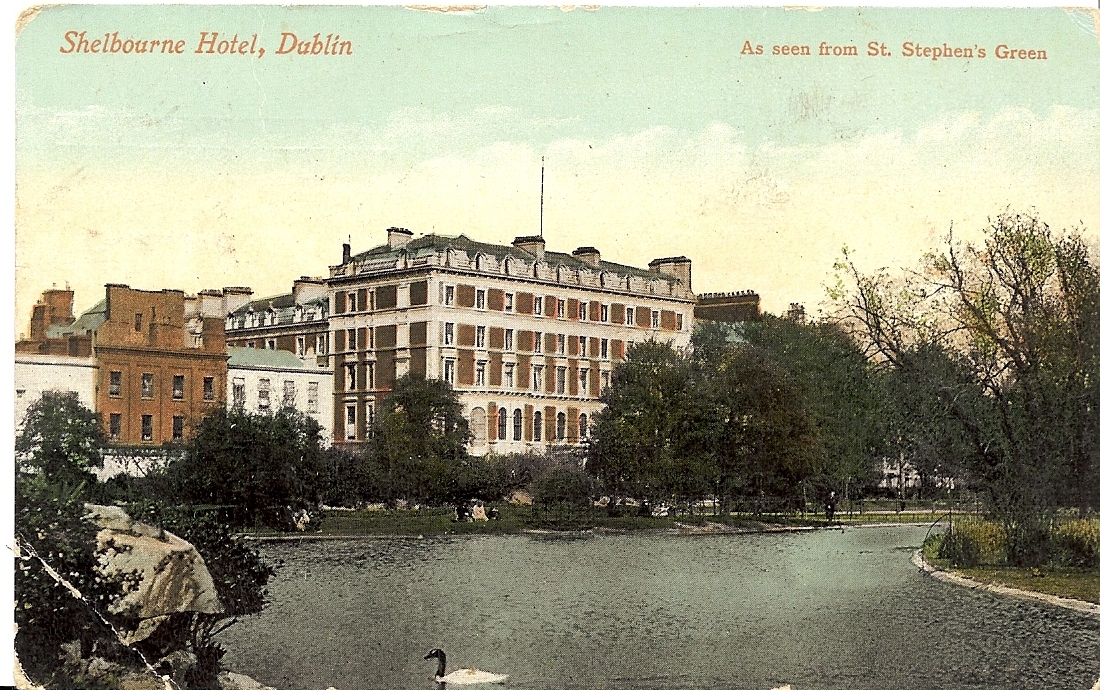
So instead we had to skip ahead to The Shelbourne. One of my favourite buildings in Dublin, I don’t think I need to argue its historical significance. The Shelbourne has stood over the Green since 1824 and played an important role in the 1916 Rising and the drafting of the Irish Constitution in 1922, which occurred in Room 112.
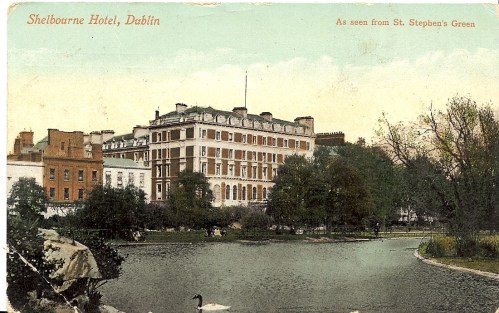
The Shelbourne (Kevin O’Sullivan - Pues Occurences)

My favourite historical anecdote about the hotel dates from a little earlier. In 1911, Adolf Hitler’s half brother, Alois Hitler Jr., worked as a waiter in the hotel. During his time in the city, he met a Clondalkin woman called Bridget Dowling. They eloped to London, later having a child called William Patrick “Paddy” Hitler who only passed away in 1987.
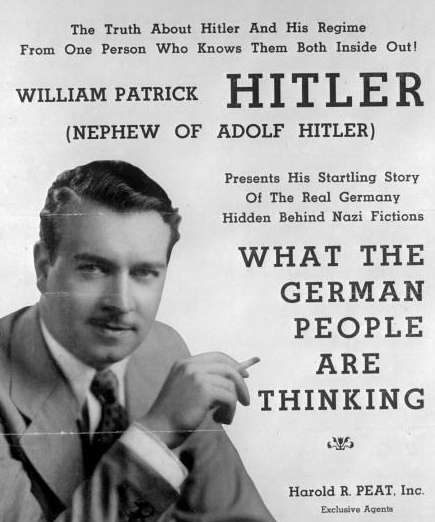
William Patrick Hitler's father Alois Hitler was a waiter in The Shelbourne

I had wanted to visit the Horse Shoe bar (rumoured to have been where The Chieftains formed) but unfortunately it was closed. Instead we had to visit the Shelbourne’s new ‘No. 27’ bar. Though by now a clichéd term, it was fitting to mutter “recession, what recession?” while walking through the crowd. With eyes definitely on the five young males who were looking very out of place, we didn’t savor our pretty average pints and were soon making our way out of the revolving doors.

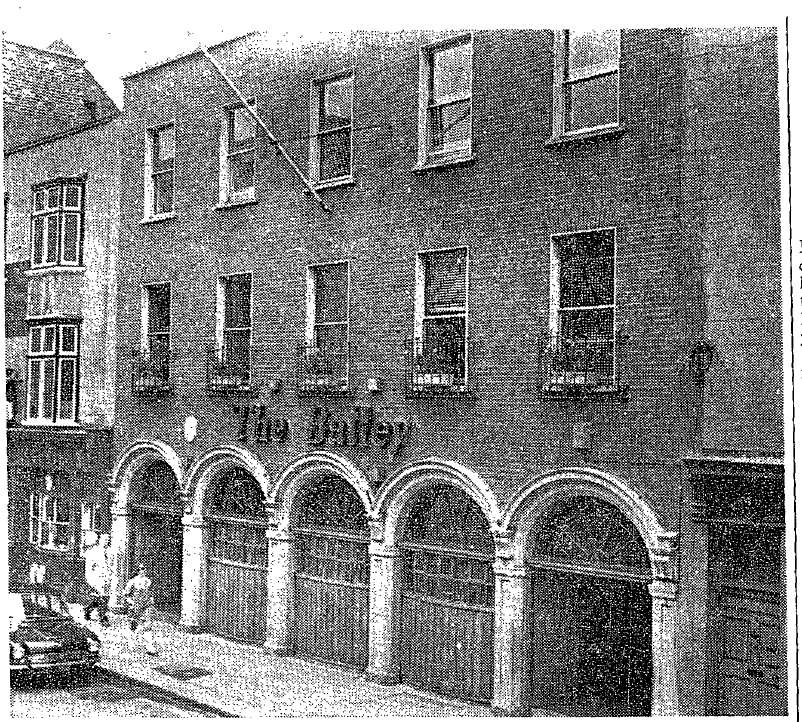
Knowing that I had now one pub extra to add to our tour, I took my uncle’s advice and chose The Bailey. I’ll say more about its history than our visit there. Once a pub of  literary renown, it has been in business since 1837. Charles Parnell was once a regular patron,  as was James Joyce, Oscar Wilde and George Bernard Shaw. Later Arthur Griffith was the centre of a group that met there including Oliver St. Gogarty, Seamus O’Sullivan (poet and editor of The Dublin Magazine), Padraic Colum (poet and dramatist) and James Stephens (novelist).
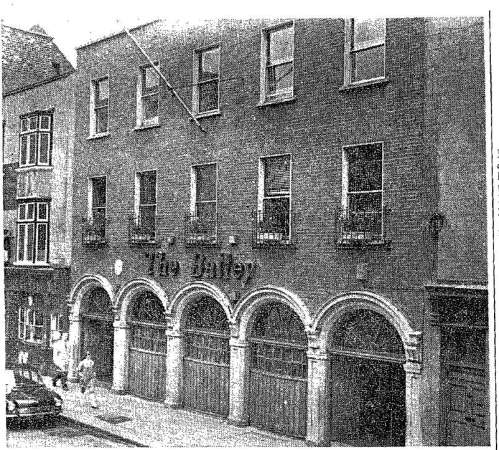
The Bailey, 1971. (c) The Irish Times

In the 1950s, it became the regular haunt of Brendan Behan, Liam O’Flaherty and Brian O’Nolan (Flann O’Brien). At the time, the owner of The Bailey, John Ryan, was an editor and publisher. He was the founding editor of Envoy (1949-51), a “short lived but important” literary magazine. During the first half of the 1970s, he edited the Dublin Magazine and was secretary of the James Joyce Society of Ireland.

“It was also the site of the door of 7 Eccles Street, the home of James Joyce’s protagonist from Ulysses, Leopold Bloom. The door was presented to the pub and publicly unveiled on June 16, 1967, by poet Patrick Kavanagh who had saved it from a renovator’s axe” – Brian Thomsen

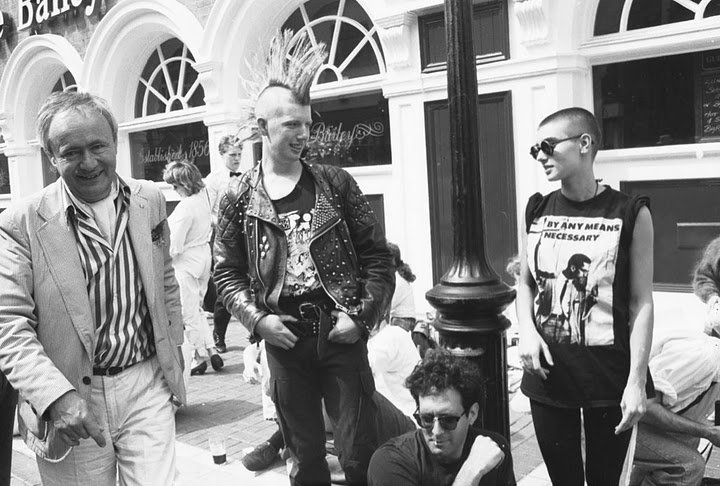
In the 1980s, it became the haunt of a whole new generation of poets and writers – Phil Lynott and Thin Lizzy, Bono and U2, Bob Geldof and The Boomtown Rats, Philip Chevron and The Radiators from Space and Sinead O’Connor.
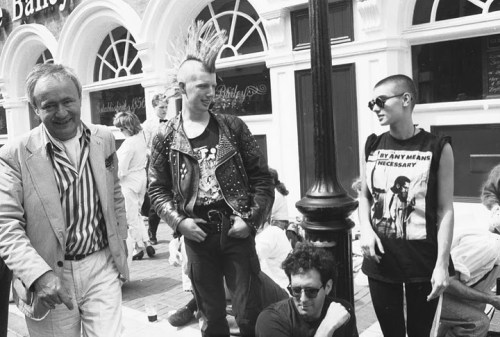
Sinead O'Connor with punk outside The Bailey. Photo - Wally.

It has since lost all of its charm. In 1995, the pub was gutted and sold to the Thomas Read Co. while all of its fittings and fixtures “with approximately 140 prints and paintings” were put up for auction. It is now just another upmarket, ‘trendy’ bar.

We moved on to The International at the corner of Wicklow and South William Street. A beautiful pub, it was no surprise to see that there were no seats in the main bar but we more than happy to take our drinks to the cozy basement. The bartender was happy to turn down the blaring music and we chatted away about the weather, the economy and other important matters.
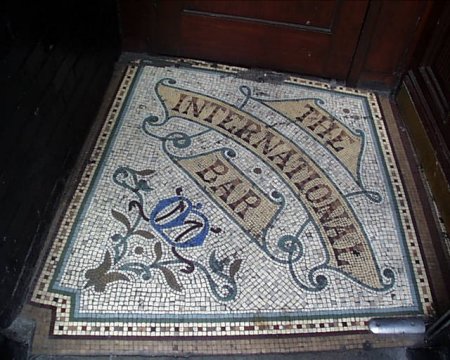
The International Bar © The Chicago Bar Project

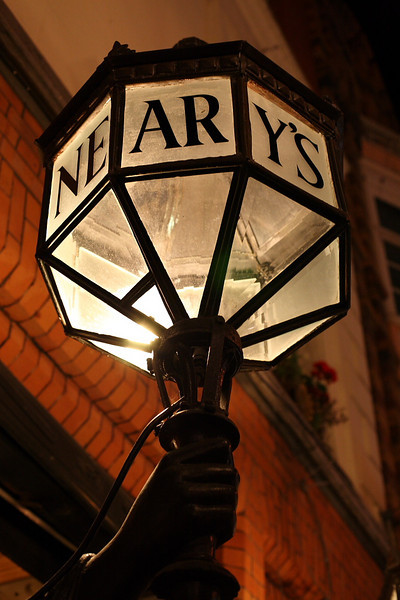
Pressing on, we slipped down Coppinger Row across Clarendon Street, onto the lovely Chatham Street and past the two brass hand held glowing lamps into the welcoming door of Neary’s. As I might have guessed by this stage, the superior upstairs part of the pub (The Chatham Lounge) was closed but we were able to find two tables downstairs in a quiet corner at the back of the bar.

Due its close proximity to the Gaiety, it is frequented by figures from the world of theatre. A back door beside the toilets leads to a lane which in turn leads to the back door of the Gaiety itself. The actor Alan Devlin famously used this as a escape route in 1987:

“Perhaps (Devlin’s) finest hour came while he was playing Sir Joseph Porter in the Gaiety Theatre’s 1987 production of HMS Pinafore.

As stage legend has it, Gilbert and Sullivan’s much-loved operetta was wandering to its predictable conclusion when Devlin turned to the audience, said: “F**k this for a game of soldiers, I’m going home,” and clambered through the orchestra pit, shouting: “Finish it yourself!” and vanished. Still dressed in the flamboyant costume of an admiral, Devlin (scuttled) into Neary’s bar, where he approached the counter, drew his sword and demanded a pint.

And thanks to radio mike technology, the cast and audience in the theatre next door were still able to hear the thespian, ordering a round of drinks and fearlessly critiquing the production he had recently departed.” – Joe O’Shea

By this stage, our conversation was beginning to really flow, as the one pint one pub rule was set aside and a number of friends joined us at this late stage of proceedings.

Albeit with a few hiccups, the ComeHereToMe January Pub Crawl was a success and I look forward to my turn again so I can visit some the pubs that were closed that day. Onwards to February…

January’s five pubs were:
1. Hourican’s, 7 Lower Leeson Street.
2. The Shelbourne, 21 St. Stephen’s Green
3. The Bailey, 2 Duke Street.
4. The International, 23 Wicklow Street.
5. Neary’s, 1 Chatham Street.
And Justice for all?

I’ve been wandering the steets of Dublin quite a bit in the last few days, and on Thursday found myself in the Castle itself. Looking up at the gates of the inner courtyard, I was reminded about a short but interesting titbit of local history. Atop the gates sits a statue of Iustitia, or Lady Justice to you and me.

Iustitia (Lady Justice,) Dublin Castle.

Now the interesting thing about this statue, erected by British Authorities in 1751, is that it betrays many of the characteristics statues of this type are supposed to adhere to. Iustitia, in representing Justice, is supposed to be blindfolded- Blind to discrimination. Here, her eyes are unbound. Her scales, are always to be in working order and perfectly level; Innocent until proven guilty- Here, they always tilt in one way; Funnily enough, they lean to the side of the gate that Revenue, and Dublin’s Tax Office is situated. Her sword, meant to be pointing downwards is held provocatively upright and she looks at it with a smile on her face.

What really got to people when she was erected however, is the direction she is faced; You will find statues of lady justice in Government buildings all over the world, and you will find her looking out over the city. Only in Dublin, does she face into the courtyard, turning her back on the people of Dublin. Just a thought; How could the tribunals held regularly in the Castle ever come out with a fair and honest representation of Justice when Lady Justice herself presides over them with her back to the people and a smile on her face?

Erich Hartmann (1922-1999). Born in Munich, Hartmann emigrated to the US in 1938. He enlisted in the US army and served in the Normandy invasion. On his return to New York, he worked as a freelance photographer and was invited to join Magnum in 1952. He served as a Board member 1967-1986 and as President 1985-86. As a photojournalist, he travelled all over the world on assignments from newspapers, magazines and corporate clients.

Hartmann took over 3,000 images during his “own journey of discovery through Dublin” in 1964 but unfortunately only a few are available online.

© Erich Hartmann / Magnum Photos

Liam Weldons 'Dark Horse On The Wind'


“Yet there’s always hope in anyone singing as well as this man sings on this record, singing words as true and as deeply felt as these, in this voice both lonely and full of power. This is Dublin singing and Irish singing, as Dublin as the Easter Rising, as Irish as the Love Songs of Connacht or Flanders fields or the Limerick Soviet that got clobbered”

-Pearse Hutchinson on Liam Weldons ‘Dark Horse On The Wind’

James Connolly (Track 5)

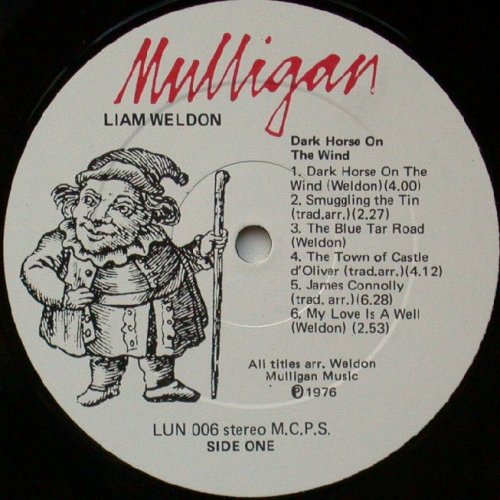
Liam Weldons ‘Dark Horse On The Wind’ is one of the classic Dublin albums. Both my own parents are of Ballyfermot stock, and Liam lived opposite my mothers family home where she says a familiar face or two could often be seen. Ballyfermot played no small part in the ‘Folk Renaissance’ of the 1960s and 70s of course, with Downeys and other pubs in the area hosting fantastic singers nights and sessions, the Ballyfermot Phoenix Folk Night in particular. The Fureys of course were a huge part of the scene locally, as was Liam, but names and faces like Christy Moore would swing by on occasion too. Only quite recently I saw Andy Irvine upstairs in Downeys, so some of the tradition remains.

I’m rambling here however, back to ‘Dark Horse On The Wind’. A ’76 classic from Mulligan Records. A class act, thankfully brought back to us in 1999 with a star-studded launch in the Cobblestone (sadly on the other side of the city from Ballyfermot, but all is forgiven) An album that opens with a song reflecting on the troubles of the time in which it was written, lamenting our dead and cursing the nature of the “nation of the blind” that ensured yet more would join then. An album that closes with a beautiful song about, of all the innocent things in the world, the Jinny Joe. Between the Mausers and the Jinny Joes, we find songs of love and songs of class conflict. Blue Tar Road in particular dealing with, what Liam himself termed

“Travellers being pushed from pillar to post by the corporation and even some mortgage-minded vigilante type citizens”

Fintan Vallely, writing in the Sunday Tribune in 1999 about the songs of Liam Weldon, stated that


“Uncompromising, these challenged the middle-class complacency of the Irish Free State, and dangerously he trod ground shared with critics of a Irish national identity which he believed in”

That perfect Dublin mix, of the personal and political, the songs of love and the songs of liberty, is what makes ‘Dark Horse On The Wind’ the classic it is. Here, you’ll find ‘James Connolly’ (perhaps the best rendition I’ve heard, and a song of a man Liam termed “Irelands greatest socialist revolutionary”) and Smuggling The Tin, a nice short number on smuggling tin across the border into the free state.

While Liam was unsure who had written James Connolly, in ‘One Voice’ Christy Moore writes that he himself had

“…long since recorded it before I learned that it was written by Patrick Galvin, the Cork poet and writer. We have subsequently met.

….I did a subsequent recording for an album commemorating 100 years of the Scottish Trade Union council. The inclusion of the song caused anger among certain Scottish Trade Unionists who cared not that Connolly gave his life, living and dying, for all workers north, south, east and west. It was ironic uproar indeed, for Connolly was born in Edinburgh in 1869”

Liam Weldon passed away in 1995.


Smuggling The Tin (Track 2)

Combining my love of making lists and anecdotal Dublin history, I’ve been trying to work out what the oldest restaurant in Dublin City is. The following rules apply:

1) It has to be an actual restaurant, not a pub that serves food.
2) Restaurants within hotels don’t count.
3) It has to be in the same premises. (We’ve made one exception with The Unicorn, seeing as it only moved around the corner and remained within the same family.)

+ Beaufield Mews, Stillorgan. (Estd. 1950). CLOSED 2019

+ The Unicorn, 12B Merrion Court (Originally established in 1938 at 11 Merrion Row, it moved to Merrion Court in the early 1960s.) CLOSED 2017

+ The Trocadero, 4 St. Andrew’s Street (Estd. 1956)

+ Nico’s, 53 Dame Street (Estd. 1964) – CLOSED 2018

+ The Lord Edward restaurant, 23 Christchurch Place (Estd. 1967) –  CLOSED 2015

+ The Gigs Place, South Richmond Street (Estd. 1970) – CLOSED 2012

+ Captain America’s, 44 Grafton Street (Estd. 1971)

+ King Sitric, Howth (Estd. 1971)

+ Flanagan’s, 61 Upper O’Connell Street (Estd. 1980)

+ The Lobster Pot, 9 Ballsbridge Terrace (Estd. 1980)

+ Kingsland, 15 Dame Street (Estd. c. 1980) – CLOSED 2011

+ The Bad Ass Cafe, 9-10 Crown Alley (Estd. 1983)

+ Kite’s Chinese restaurant, 17 Ballsbridge Terrace, D4 (Estd. 1983)

+ Independent Pizza Company, 28 Drumcondra Rd Lower, Drumcondra (Estd. 1984)

+ Cornucopia, 19 Wicklow Street (Estd. 1986)

+ Da Vincenzo’s, 133 Upper Leeson Street (Estd. 1988) – CLOSED c. 2012

+ The Elephant and Castle, 18 Temple Bar (Estd. 1989)

+ Roly’s, 7 Ballsbridge Terrace (Estd. 1992)

Jammets Restaurant, Estd. 1901 on Andrews St moved to Nassau St. in 1927 and closed in 1967.

Get CHTM updates straight to your Facebook homepage

Find us here! Thanks for all your support to date.