Feeds:
Posts
Comments

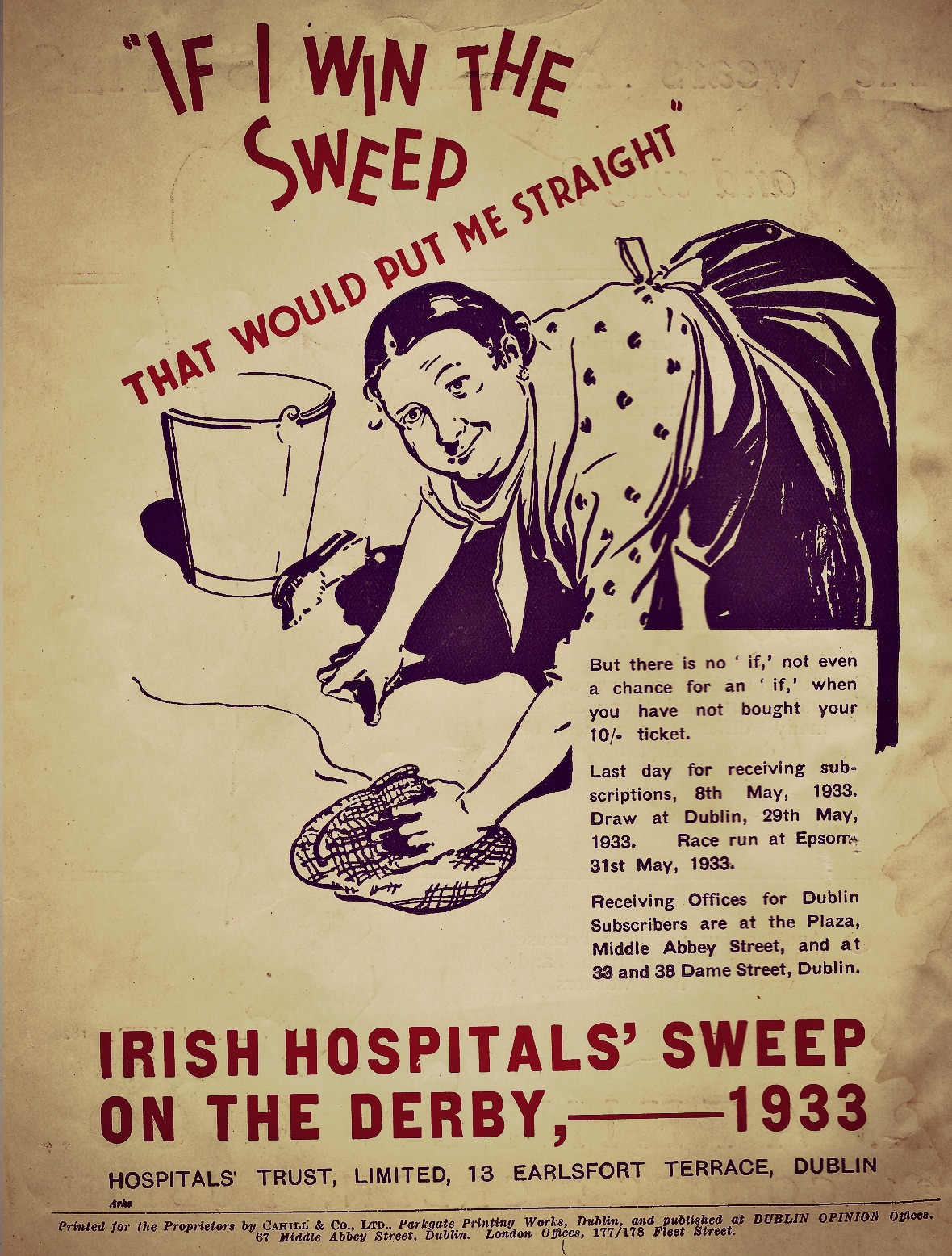
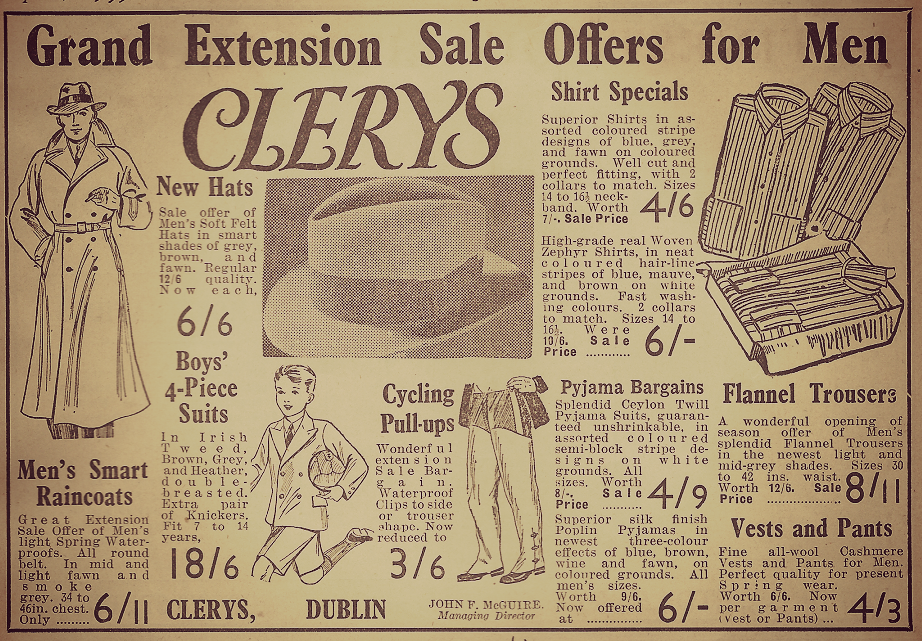
These fantastic advertisements have all been taken from the April 1933 edition of Dublin Opinion magazine. I’ve always had a fascination with old advertisements, and these are some of the more interesting ones in the pages of the magazine.

Some have been chosen for their illustrations, others for the product being sold.

Electricity Supply Board

Irish Hospital Sweeps

Clerys, O’Connell Street.

Continue Reading »

Previously, I’ve looked at what I consider some classic Dublin books on the site, with G.Ivan Morris’ In Dublin’s Fair City (1947) and John Harvey’s Dublin (1949) featuring in the past.

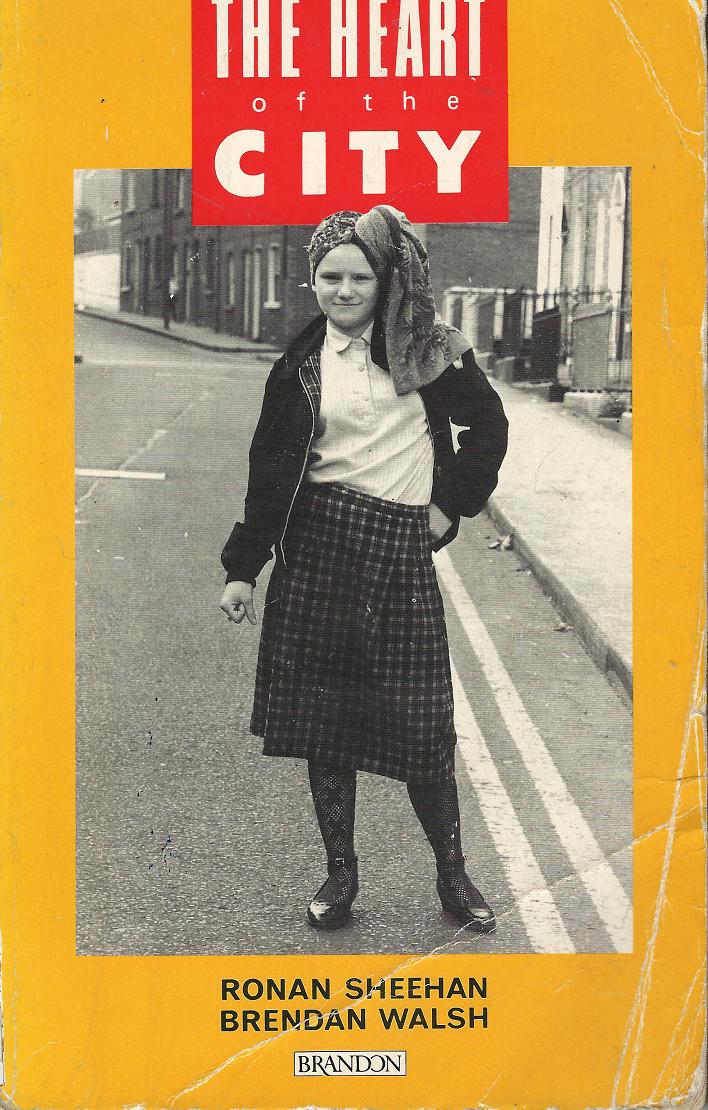
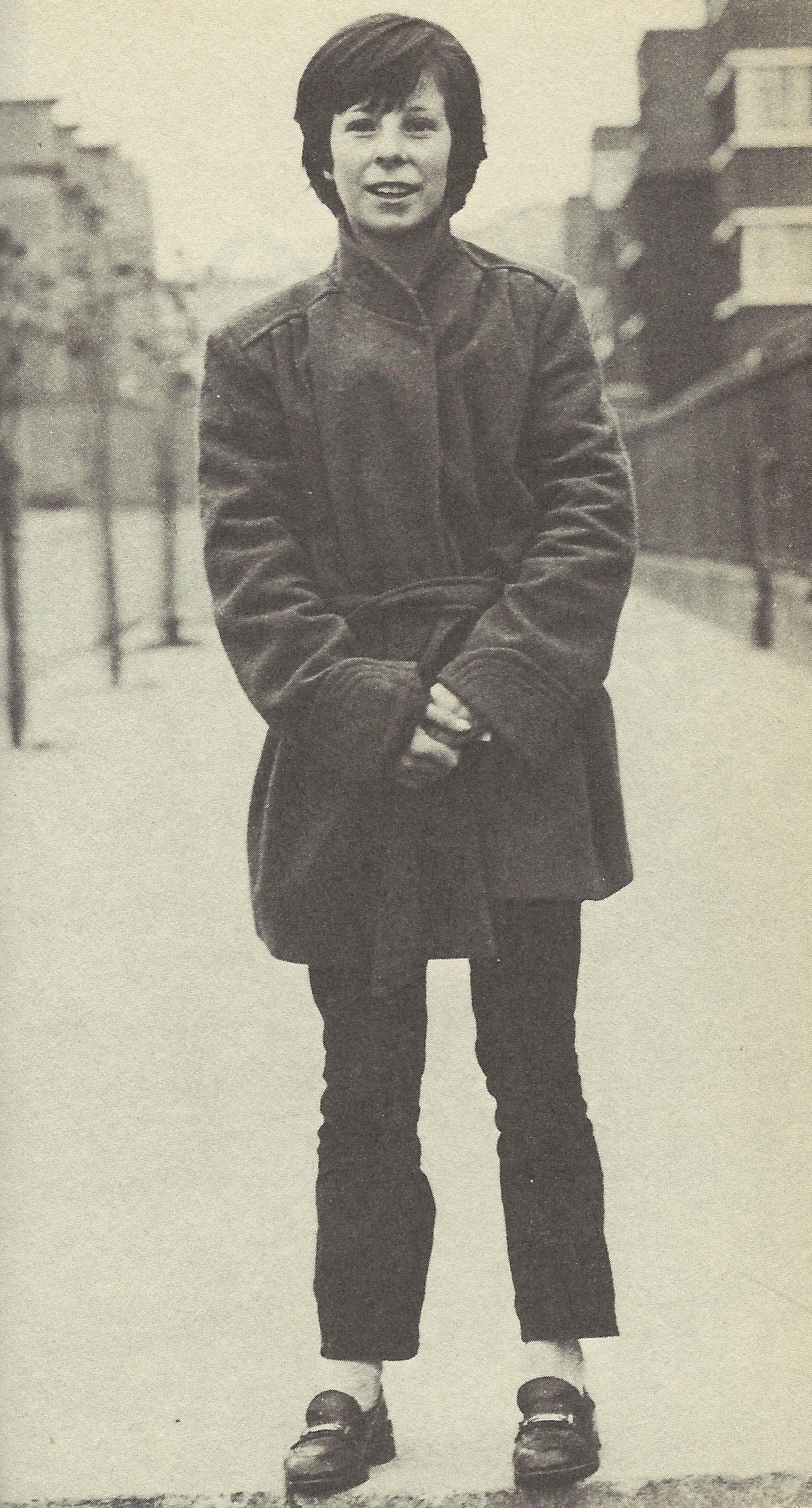
This post deals with the excellent book The Heart of the City, released in 1988. The book was a collaboration between Ronan Sheehan, who wrote the text, and photographer Brendan Walsh. It is a book I stumbled across by chance, but which I consider one of the finest studies of inner-city Dublin produced to date.

‘The Heart Of The City’ (Brandon Books, 1988)

Divided into chapters like ‘The New Deal’, ‘The 1930s’, ‘Heroin’, and ‘Moral Issues of the Catholic Church’, it’s fair to say the book isn’t setting out to paint some sort of idyllic picture of life in inner-city Dublin, but at the same time it neither sets out to paint a truly grim picture. It shows the real community of the inner-city, and the good and the bad that comes with life there. The introduction from Peter Sheridan is a good an introduction as I’ve seen in any book.

The city centre is a barometer of how we measure ourselves: ‘inner city’ has become media shorthand for all things negative and I propose its abolition. The city centre is the heart that pumps life to the outer limbs. It is tradition. It is our past. It is now, the living city, and it is intimately concerned with what we are and how. It is collectively owned in a way that Raheny, or Churchtown, Howth or Dalkey could never be. It must be the concern of all when the city is subjected to, at best, atrocious planning, at worst, willful destruction.

‘The Heart Of The City’ (Brandon Books, 1988)

Continue Reading »

A screengrab of the cover page of Oscar Traynor’s statement to the Bureau of Military History.

I’m over the moon to see the Bureau of Military History statements from the revolutionary period have gone online as PDFs, making them accessible to the general public at the click of a button. You can access them by clicking here. Previously, you had to travel to the National Archives of the Military History Archives to view these priceless documents. They recall the recollections of participants in the revolutionary period, and were collected by the state between 1947 and 1957. As a primary source they are priceless, though it should be noted they are by no means the only such source, with Ernie O’Malley for example interviewing men and women about their involvement in the period too. Focusing on the period 1913-21, the BMH statements stop just short of the civil war in 1922, whereas O’Malley and others who have carried out such research tended to ask about that period of history too.

The statements can be searched for key words, or you can browse alphabetically. In addition to the Witness Statements, the BMH website has uploaded priceless audio interviews with some participants in the revolutionary period, including Maud Gonne McBride, William O’Brien and others. They can be heard here.

The site is also home to some rare images from the period, available to view in great detail. This image below shows a raid on Sinn Féin HQ on Harcourt Street in September 1919.

‘P11: (a) Raid by British Military on Sinn Fein H. Q., Harcourt St., Dublin, September 1919.’ (BMH)

The hosting of these statements online for the general public, making them accessible to people far and wide, is a great achievement and the BMH deserve credit for their efforts. In the run up to the centenaries of the Lockout, the Easter Rising and the War of Independence, these files are now where they belong at last.

…thankfully. Can you imagine if there were two?

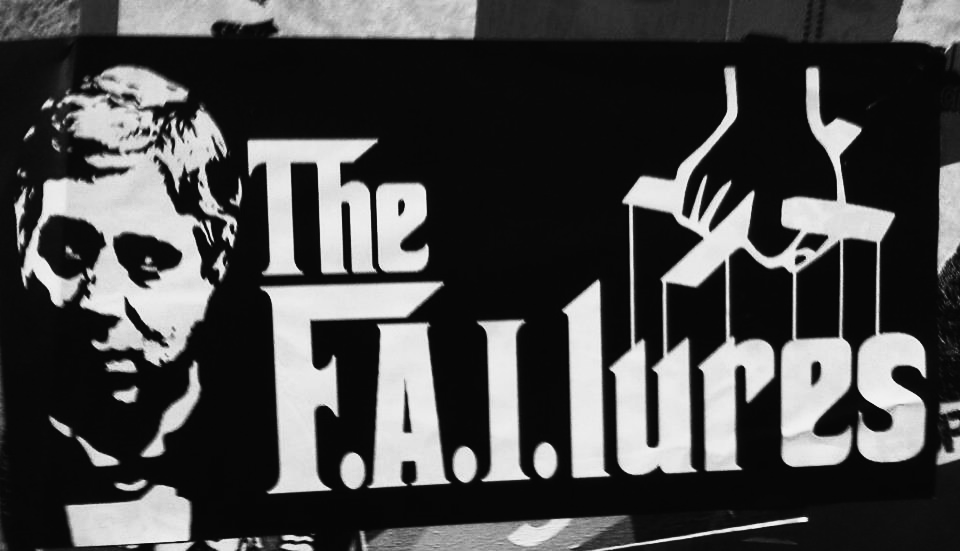
We’re big fans of these stickers appearing across the city, taking a shot at John Delaney and the Football Association of Ireland. Following his recent pay cut, John now takes home €360,000. Hard times.

Dancing on the Waves

The circumstances that have brought this position about have been created and deliberately encouraged, by both the State and the administrators of local government in this city. We had here some months ago in this City of Dublin a floating ballroom on the Liffey and on that floating ballroom we had an imported band, brought over from London. There was money spent by our local administrators on that ballroom…

The above is an excerpt from the Poor Relief (Dublin) Bill, 1929. The Bill was put forward in order to help relieve the the impoverished in the greater Dublin area as the Free State, still in its infancy, struggled to deal with societal problems, yet still had money to put a floating ballroom on the Liffey during a Civic Week the same year, importing a  band from London and causing much consternation in Dáil Éireann.

The offending barge…

The questions were put to General Mulcahy of the Cumann na nGaedhael led 6th Dáil by a Mr. Eamonn Cooney, who, though a member of Fianna Fáil, made quite an impassioned speech about the haves and the have- nots of Dublin, that can be found here.

Very little about the barge itself can be found, and it resides now, a rusting wreck, on the scrub-lands at Bull Island.

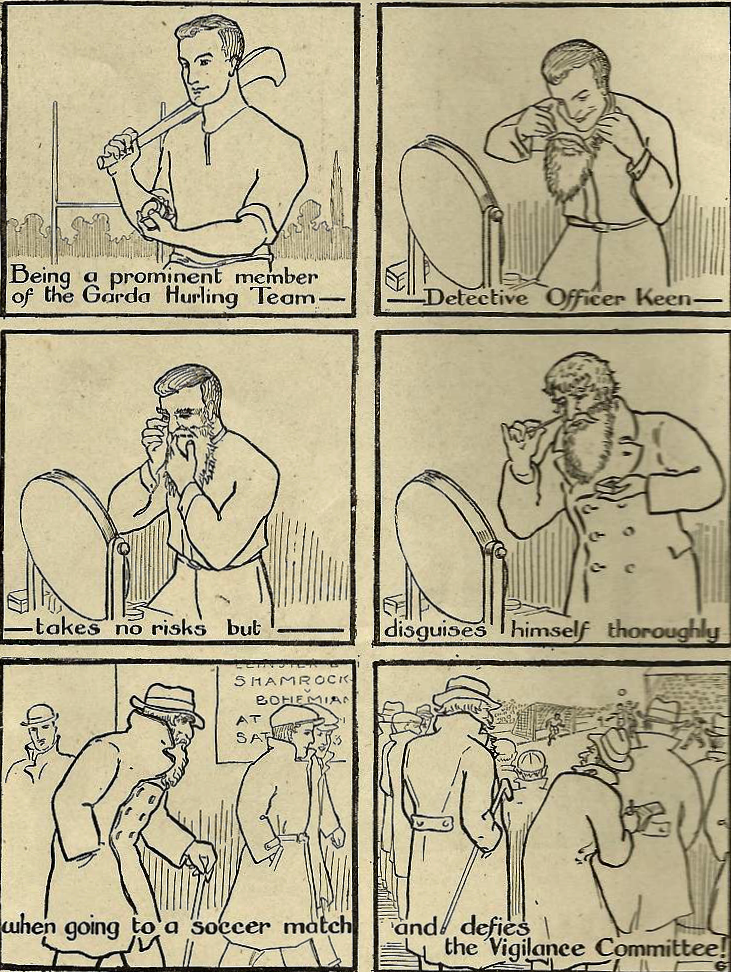
I’m a huge fan of Dublin Opinion, the classic magazine which prided itself on being the “National Humorous journal of Ireland”. I try to pick up issues of magazines like it whenever they pop up, as they’re a goldmine of content. Not only the articles and comics, but even the advertisements, are priceless. The cartoon below from the April 1933 edition of the magazine. The cartoon pokes fun at the strict ban on GAA players attending or taking part in soccer matches.

An Irish Times report of January 23 1929, reported one speaker at a GAA convention stating that

The atmosphere connected with Rugby and ‘soccer’ was inimical to Irish nationalism, and it would be very unwise to remove the ban at this stage

One speaker went one further, arguing that removing the GAA ban on the playing of ‘foreign sports’ would amount to treachery.

Mr. Murphy, Clarecastle, said that they would be deserting the Gaels in the six counties if they remove the ban.

Dublin Opinion, April 1933.

Are you a trade union member or are you a
resident of an area or a member of a family with
strong connections to the 1913 Lockout?

Are you interested in recording and preserving
stories of the Lockout and analysing its importance
one hundred years on?

Would you like to contribute to an oral history of
the Lockout to be published in 2013?

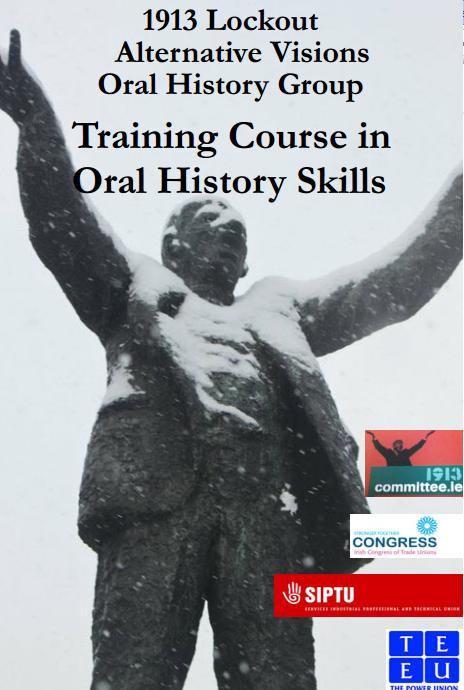
It really is time to get the ball rolling as far as 2013 goes, and the centenary of the Lockout gets closer and closer with each day. As part of the centenary plans from the 1913 Committee, an oral history group will be established. Few events hold the folk memory of the Lockout in Dublin, and if your family were involved in the dispute and a stories have been passed down, it’s time to get them on tape. This project is FETAC accredited and runs for six weeks from 15 September. All the info is in the PDF flyer below, click the link under the image for more.


Click here to access the flyer for the Oral History project

Dublin,1867.

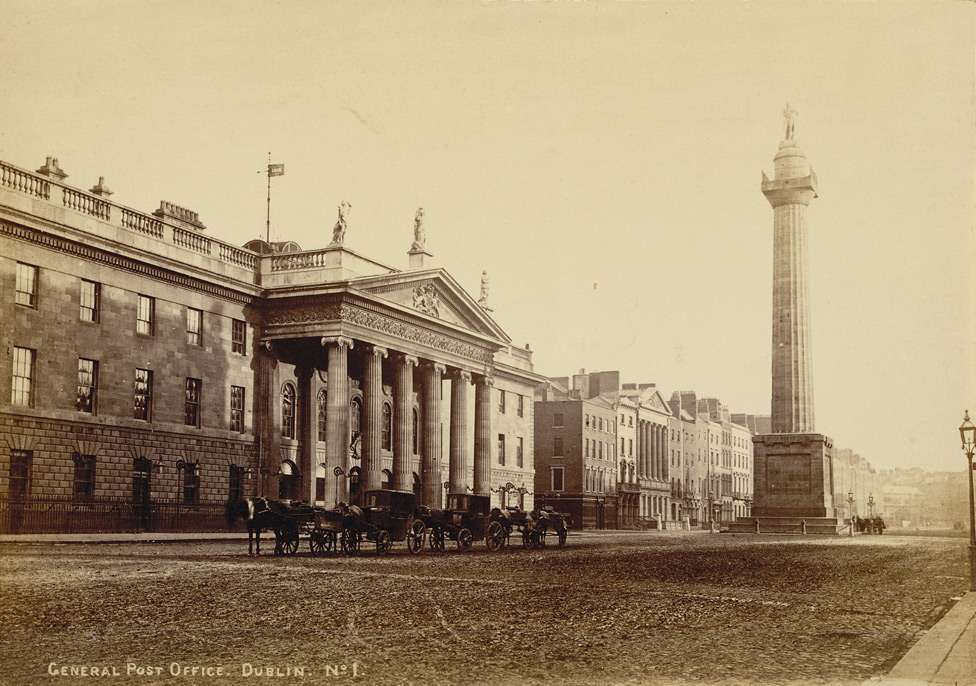
The images below form part of a great series of Dublin images taken in 1867 by Frederick H. Mares. Today, they are held by the British Library. They were part of his work ‘Photographs of Dublin’. The below images and their descriptions come from the British Library digital collection.

The Chapel Royal, Dublin Castle. (British Library)

The Castle of Dublin is divided by a range of buildings into two courts or yards, the upper and the lower, into the former of which the principal entrance from Castle-street leads. The Lower Yard contains the Birmingham or Record Tower, the only remaining portion of the ancient fortress founded in 1205, and completed in 1220, by Henry de Londres, the notorious archbishop, whose name has been handed down to posterity with the unenviable sobriquet of ‘Scorchbill,’ from his having treacherously burned the writs and papers by which his tenantry held their houses and farms.

In close proximity to this rough and rude specimen of the fortifications of feudal times is the beautiful Chapel Royal, built on the site of an older structure (taken down in 1808), from the plans of Mr. Francis Johnson, at an expense of £42,000.

This beautiful edifice is seventy-three feet long, and thirty-five broad. The exterior is ornamented with no less than ninety heads, including all the sovereigns of England…The chapel was opened for worship in the year 1814.”

General Post Office, Sackville Street. (British Library)

The General Post Office stands on the west side of Sackville-street. It is 223 feet in front, 150 in depth, and three stories, or fifty feet, in height, to the top of the cornice. In front is a grand portico, eighty feet wide, of six fluted pillars of the Ionic order, four and a-half feet in diameter. The frieze of the entablature is highly enriched, and in the tympanum of the pediment are the royal arms. The pediment is surmounted by three statues, representing Hibernia,…Mercury,…and Fidelity…

A handsome balustrade surmounts the cornice, giving an elegant finish to the whole. With the exception of the portico, which is of Portland stone, the whole is of mountain granite. The building is after a design of Francis Johnston, Esq., and the foundation stone was laid by his Excellancy Earl Whitworth, on the 12th August, 1815, and was completed for about £50,000. The board-room contains a white marble bust of his excellency, over the chimney-piece.

Near the Post Office is situated Nelson’s Pillar. It consists of a pedestal, column, and capital of the Doric order, which is surmounted by a statue of Lord Nelson, leaning against the capstan of a ship. The entire height of the column and statue is 134 feet. There is an internal stair, by which the top can be reached, and from which a view of the city, bay, and surrounding country is obtained.”

Continue Reading »

Michael O’Riordan (1917 – 2007), International Bridgade veteran and former General Secretary of the Communist Party of Ireland, ran for election six times from 1946 to 1973.

His last campaign in 1973, running in the Dublin Central constituency for the 20th Dail, was captured by RTE for their current affairs programme ‘Tangents’, which was broadcast after the main evening news from 1972 to 1974.

In this short two minute clip, O’Riordan is first seen outside an Unemployment Exchange canvassing people for his vote using a microphone attached to the car.

0:22 in. O’Riordan speaking outside the Bride Street Labour Exchange

Secondly, in presumably the CPI’s office, O’Riordan is interviewed by John O’Donoghue of RTÉ and is asked about the public’s attitude to the Communist Party and whether more people will vote for him this time around.

0:51 in. CPI offices I assume?

O’Donoghue describes the event as “first person to stand for the Communist Party in a general election since the 1930s” but I am confused by this as he had run a number of times in the 1950s and 1960s?

During one memorable election campaign in the 1960s, left-wing folk singer Luke Kelly did his best to help O’Riordan. As the story goes:

We had met on his return from Britain and shared a personal-political friendship. When I stood as a party candidate the help of Luke in his artistic capacity was invoked. We billed our public appearance at the then waste ground across from Christ Church Cathedral. That evening a big audience turned up and Luke performed his overture of working class and national rebel songs. The crowd grew even bigger and then with a rousing finale he stepped back to give the floor to the candidate. I went to the microphone, glancing down to straighten my speech notes, and then looked up to find that 90 per cent of the crowd had evaporated in the wake of Luke. When next we met I greeted him as ‘Comrade Pied Piper of Hammelin’.

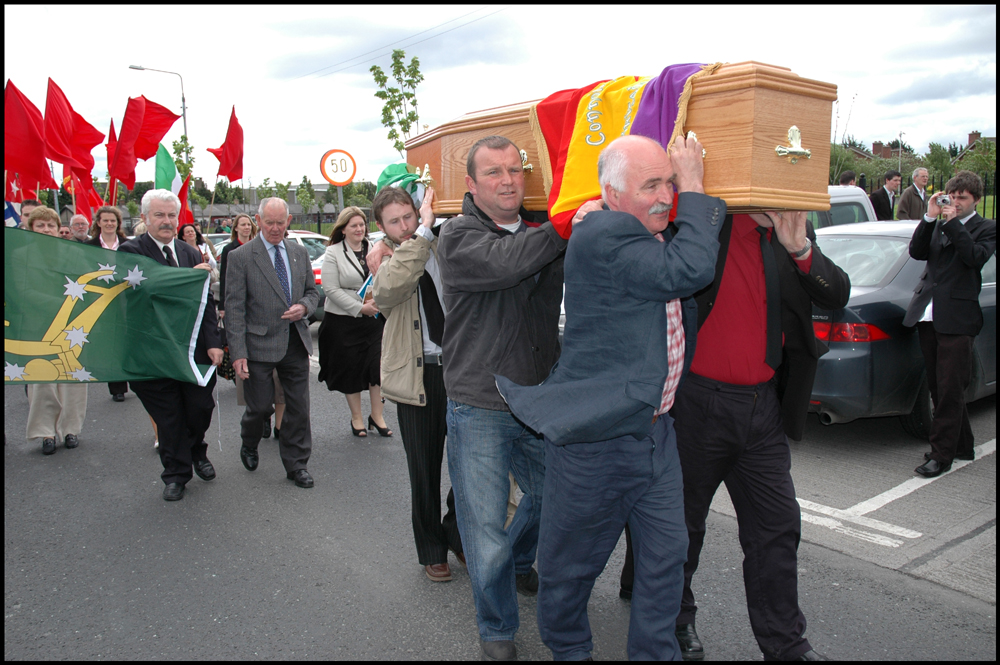
O’Riordan passed away in 2006 and his funeral was attended by over a thousand mourners.

Funeral of Michael O’Riordan, 2006. Indymedia.ie

We’ve a long running series on Come Here To Me looking at the statues of Dublin, ranging from the controversial (Sean Russell comes to mind) to the removed (Victoria for example), and even looking at unusual moments like the bombing of the Daniel O’Connell statue by loyalists in 1969.

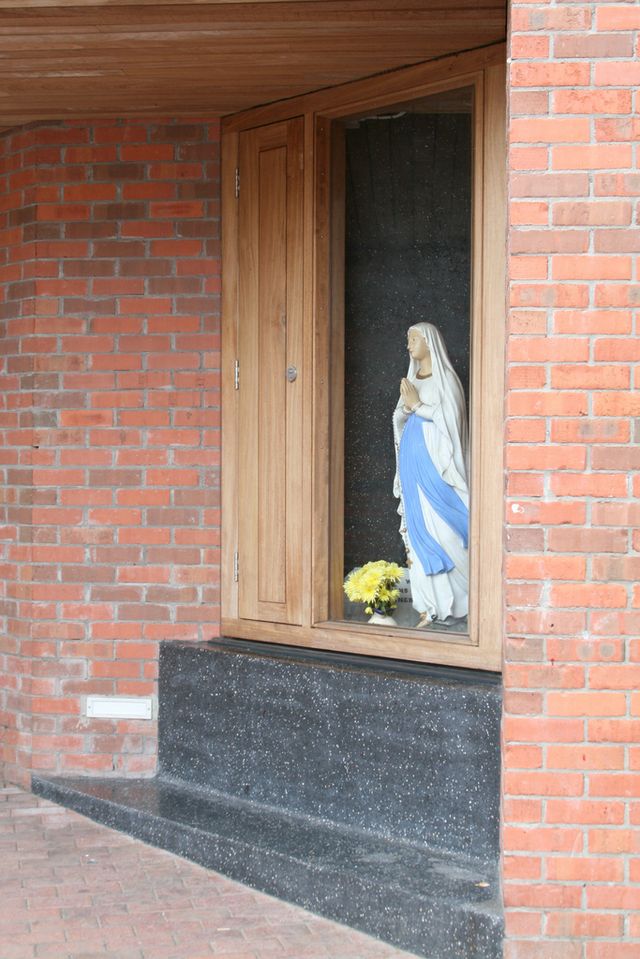
One fascinating series of statues in Dublin we didn’t get around to however are the Marian statues that dot the city. All over Dublin, and especially working class pockets of the city and suburbs, statues to the Virgin Mary are to be found. Eoin O’Mahony in NUI Maynooth has been working on a thesis on the subject of Dublin’s Marian statues and it seemed right up our street for an interview. As Eoin states in the interview, “their significance comes from the fact that they are neither within churches or within people’s homes but on nominally public land.” It’s an interesting read, looking at what these statues mean today and if their place in the minds of Dubliners has been altered given the reports of child abuse in the church in recent years. If you’re like me, you’ll find that after reading this you’ll begin noticing these statues left, right and centre!

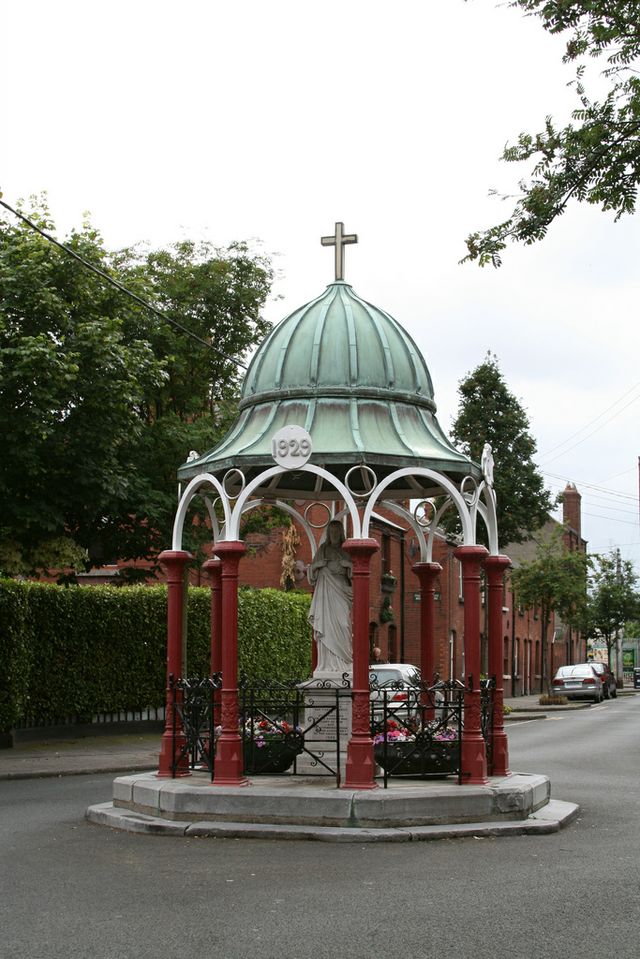
Reginald St. (Eoin O’Mahony)


Eoin, what brought you to study Dublin’s Marian statues in the first place?

At the moment, I am researching public and private Catholicism in Ireland because I’m trying to understand what we mean by secularisation. A lot of formal social science research tends to put secularisation on the basis of a decline in religious influence. I think my own research tends towards placing religion in some spaces and not in others. That these spaces have meaning for fewer people is a lot more complex than saying religion is simply disappearing. And so I am looking at the maintenance and public discussion about these statues, about 28 of them across the city. Part of this is trying to understand why they are placed on green space near housing. Another part is trying to make sense about why they survive as places of significance for some. An entry question for me is, if Ireland is or has become more secular, why has no one taken a lump hammer to these stautes?

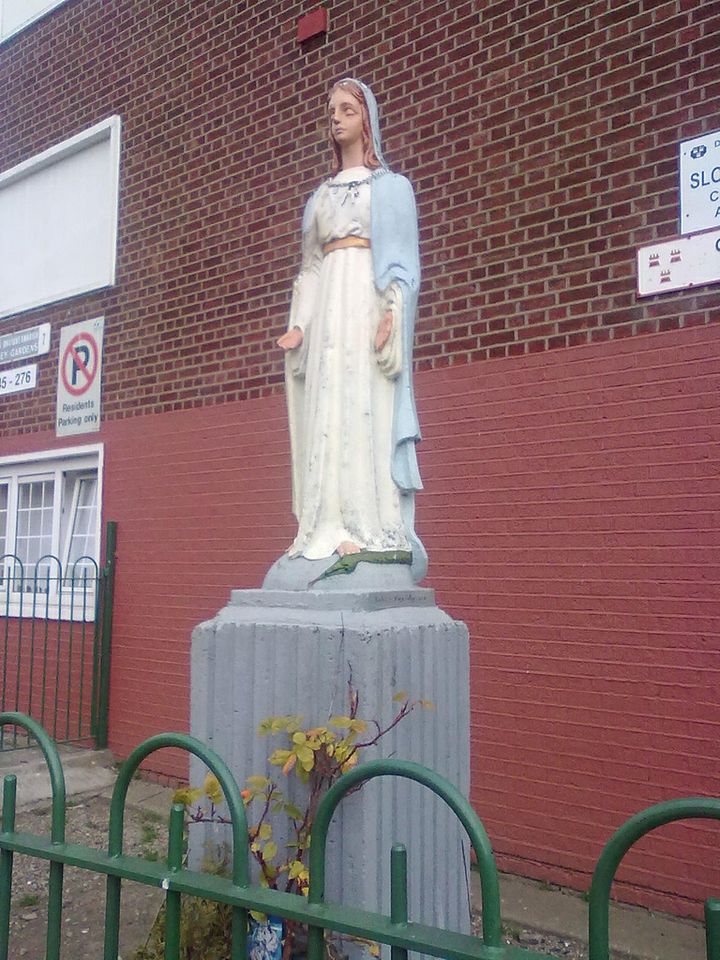
Marian statue in O Devaney Gardens. (Eoin O’Mahony)

You said that you’re looking at 28 Marian statues in Dublin. I’ve seen some of them but are there really that many?

There are more than 28 for sure and they’re not all statues of Mary. A handful of them are Sacred Heart statues but that’s another story. I’ve noticed that most of them are in and near housing areas, most of them public housing areas built in and around the Marian Year of 1954. People might have noticed the large canopy on the junction of Gray and Reginald streets in Dublin 8. If you walk along Meath Street and look up to the right past the bookies you cannot miss it. It is a large canopied structure originally built as a water fountain until the top was knocked off during the War of Independence. The local residents created a Sacred Heart shrine of it after this time and it was rededicated for the Papal visit in 1979. Beyond that however, I would like to know how this maintains its meaning for people in that area and how it did it retain a status of not being an impediment to traffic for example. How something in the landscape that gets defined as an impediment goes to the heart of the re-creation that occurs in town planning. Now there’s nothing in the Corporation’s minutes about this or any other structure being erected or retained. I would like to figure out why not?

There’s a statue nearby in a new housing complex called the Timberyard, it’s on the corner of Weaver’s and Cork streets. If you look at the apex of the building there’s a small statue of Mary built into the building itself and has a kneeling step. The thing to note about this statue is that it re-places a statue that sat on that derelict site for over ten years. The old timber yard that used to lie here has been replaced by an apartment block called The Timberyard and the same statue sits on the site. In fact, the principal architect for this building told me that there was a specific request at planning stage for the statue to be placed on the site somewhere. The story goes that the original shrine was put in the skip when site clearance took place. One of the builders however took it back out and gave it to a local resident while the construction took place. The architect told me that a specific space was created for Our Lady of the Liberties in the new building because it meant something to those who were to move in there. In my own research I noted that it stands at a significant point of access although few enough people cross themselves when passing as may have been the case in the past.

The Timberyard statue discussed above (Eoin O’Mahony)

Continue Reading »

A fascinating and well-made three and a half minute mini-doc focusing on the history of the Irish LGBT community in film and TV. It wad directed and produced by Anna Rodgers for the GAZE Dublin International LGBT Film Festival which takes place between the 2nd and 6th of August.

Some interesting screengrabs:

0:40 in. Shows ‘Union of School Students’ (USS), Workers Solidarity Movement (WSM) and the Irish Republican Socialist Party (IRSP) marching on a Gay Liberation (?) protest.

0:44 in. Front of the Dublin Gay & Lesbian Pride March ’92

1:14 in. Nora Bennis “The fabric of our society is disintegrating”

We do not want contraception, abortion, divorce, homosexuality, secular schools or any of the trappings of an uninspiring secular Ireland.

So summed up the politics of Úna Bean Mhic Mhathúna in a letter to The Irish Times on 4 May 1976.

Una pictured in The Irish Independent, June 10 1986.

Una*, along with her friend and fellow campaigner Mena Cribben, is another colourful character in the world of reactionary Irish politics. She has been a dominant figure for over forty years as a founding member of Mna na hEireann (c. 1972 – late 1970s) and the Irish Housewives Union (c. 1980 – early 1990s). She has also been active with the Council for Family Rights (1980s), the Anti-Abortion Campaign (1983), the No Divorce Campaign (1996/97), Friends of Youth Defence (1990s) and Cóir (2000s).

Una grew up in Gurranabraher on the north side of Cork city. Her brother Larry White, a leading local activist with Saorise Éire (offshoot of Saor Éire), was shot dead by the Official IRA in 1975.

Una’s mother Mrs. Mary White was also a devout Catholic as this 2001 obituary illustrates:

Solas (Youth Defence magazine). July 2001.

Una married Seamus, a renowned folk singer from West Clare who has worked with Conradh na Gaeilge and Comhaltas Ceoltóirí Éireann, in the late 1960s.

Along with Áine Ní Mhurchú,  Una formed Mná na hÉireann (‘Women of Ireland’) in 1972 to fight against “the legalisation of contraception, abortion and divorce.” In an interview with Irish Times journalist Mary Leland the following year, Una proclaimed that:

a handful of women in Dublin … claim to be speaking for the majority of women in Ireland we believe that it’s not a majority opinion at all. The same number of women are always involved, and some of them, the most vociferous are foreigners.

Una also spoke fondly of “when Ireland was truly Ireland when we had our own language, culture and religion (and when) we were a moral nation”. She told the journalist that “abortion and contraception, as far we’re concerned, are one and the same” and went on to say:

We don’t believe that anyone makes the conscious decision to to use artificial contraception; they do it under the pressure from propaganda. If they were to make a conscious decision they would have to know all the aspects of whatever method they were using and therefore they would be making a conscious decision to kill a child. And that’s murder.

Letter to the Irish Times. 25 Oct 1973.

In April 1974, Mná na hÉireann distributed leaflets outside Catholic Churches in Cork which proclaimed that “Ireland could easily support 40 million people and that the Billings method of Birth Control was 100% sure and safe”. It transpired that some local parish priests had given the group permission to distribute the leaflets and put up posters.

A description of the group in The Irish Times, 31 Dec 1975.

Continue Reading »