Feeds:
Posts
Comments

Archive for the ‘Dublin History’ Category

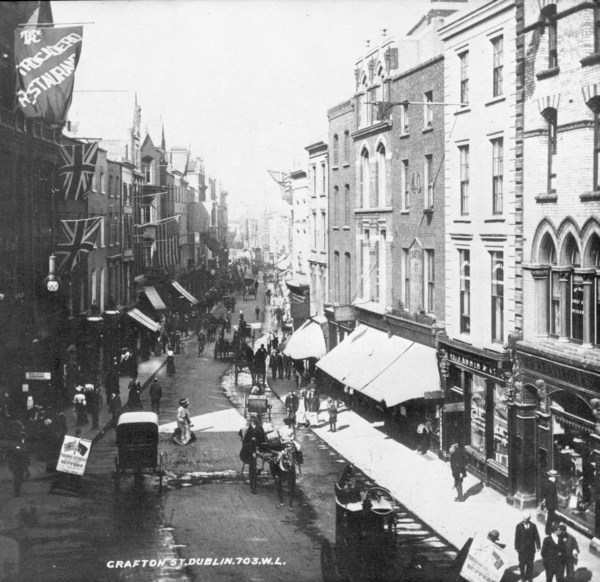
Grafton Street, 1911.

A timely gem this, from the National Archives online site.

I have gone from a weekly visitor to the Archives to never having time to set foot in the place owing to work,and you’d miss it. This leaflet is taken from 1911, and written by James Connolly. It can be read by expanding the image below.

Fellow-workers, stand by the dignity of your class. All these parading royalties, all this insolent aristocracy, all these grovelling, dirt-eating capitalist traitors, all these are but signs of disease in any social state – diseases which a royal visit brings to a head and spews in all its nastiness before our horrified eyes. But as the recognition of the disease is the first stage towards its cure, so that we may rid our social state of its political and social diseases, we must recognise the elements of corruption.

(more…)

Read Full Post »

(Hopefully this will be the first of a series on movies set or filmed in Dublin.)

Though set in Liverpool, Willy Russell’s Educating Rita about a young working class girl (Julie Waters) hoping to better herself by studying literature, was filmed in Ireland. TCD, UCD, Maynooth, Phoenix Park, Connolly Station and Ringsend all make appearances.

Various shots of Trinity College. Byrant’s (Michael Caine) office was filmed in the rooms of the College Historical Society and the University Philosophical Society respectively, and while the building was considerably refurnished, the production chose to leave portraits of Douglas Hyde and Isaac Butt and committee photographs in the former and a bust of John Pentland Mahaffy in the latter.

02:13 – Southside quays opposite Liberty Hall. 02:48 – Rathgar. 10:15 – South Lotts, Ringsend.

01:31 – Pub, Exterior. The Dame Tavern. 01:54 – Pub, Interior. The Stags Head. 06:24 – Church of the Holy Family, Aughrim Street.

04:33 – 04:44 – Belfield, UCD. 04:45 – 04:57: Maynooth College. 05:01 – Library. UCD? NUIM? TCD? 05:35 – NUIM? 07:37 – The old Connolly DART station. 08:22 – People’s Gardens, Phoenix Park. 09:35 – Crosthwaite Park, Dublin.

04:04 – Dobbin’s Wine Bistro – 15 Stephens Lane.

05:40 – “Flamingo, Parkes Hotel” Stillorgan Park Hotel, Stillorgan Road, Dublin. 08:29 – Ringsend

Read Full Post »

Orange Dublin

(Note: As an atheist and socialist, I have no time for the Orange Order but as a Dubliner and student of history, it is important to cover all parts of our city’s culture and past.)

Click to listen.

In case you missed it, RTE Radio 1 had a very interesting radio documentary on the Orange Order in Dublin. You can listen to it here. (It’s rare to hear self-described “working class” Dublin men talking about their allegiance to the British crown!)

In 1795, the Orange Order was founded in Dublin, where the Grand Lodge was first opened on Dawson Street in 1798. Today, the Dublin and Wicklow District LOL 1313 meets at their hall on the Northumberland Road. The lodge’s website has a number of fascinating bits of information, including this on the Civil War and 1930s period:

“Dublin was therefore, as the administrative Capital of the Island, the natural headquarters for the Orange Institution and remained such until the Headquarters Buildings, the Fowler Memorial Hall in Rutland Square, was severely damaged in the Civil War. The Headquarters, situated in what is now Parnell Square, at the top of O’Connell Street, had been seized by the IRA, and in conjunction with the Rotunda, used as their headquarters.

Following its evacuation by the IRA all the books and documents which had survived the siege were removed to Belfast where they were safely stored. The last public parade in Dublin was in 1936, when the Brethren were attacked as they walked from the Fowler Hall to Amiens St Station to travel by train to Belfast, for the annual 12th of July celebrations.”

Read Full Post »

One of the worst thought-out advertisements I’ve ever seen, I nearly choked on my Corn Flakes when I spotted this yesterday.

I’m sure Larkin would be delighted. Bankers are workers too.

Image and video hosting by TinyPic

Read Full Post »

I recently did a wonderful module in college which took in early Dublin life, and the walled viking town. After any degree of research into Viking Dublin, one can’t help but see the Civic Offces at Wood Quay as perhaps the greatest defeat of Irish historians and archaeologists.

Today, I stumbled across this gem on YouTube from 1979.

Excellent, and a YouTube gem providing interesting insight into long and hard fought political campaign.
For anyone interested in this period of history, you could do worse than to check out the Irish History Podcast homepage, where you’ll find a series of podcasts on the Vikings.

Outline of a viking plot today, beside Christchurch at Wood Quay.

Read Full Post »

Writing a piece on the modern disappearance of Liberty Lane, got me thinking about other streets and alleys in Dublin that have since changed beyond recognition.

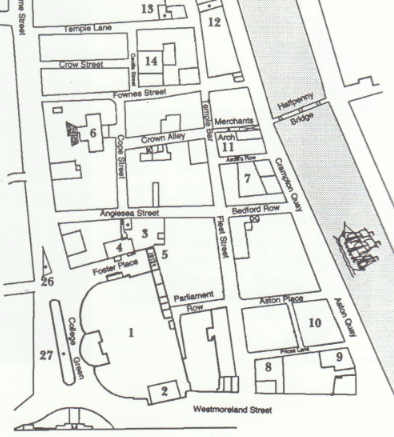
For hundreds of years, it was possible for Dubliners to cross from College Green to Fleet Street via Turnstile Lane and Alley.

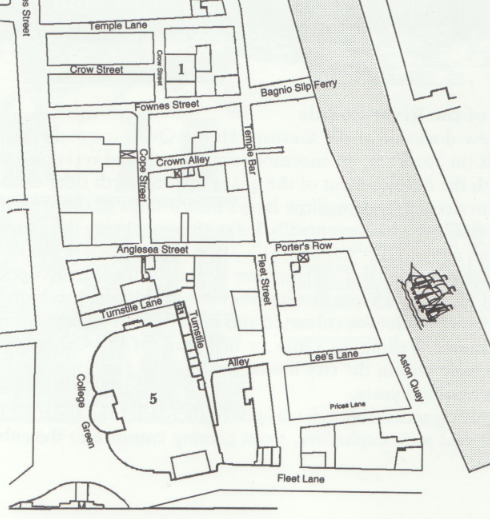
The map below, kindly reproduced with Pat Liddy’s permission, shows in the bottom left side how this was possible.

Temple Bar, 1760s. 'Temple Bar - Dublin. An Illustrated History', Pat Liddy, (Dublin, 1992), p. 32

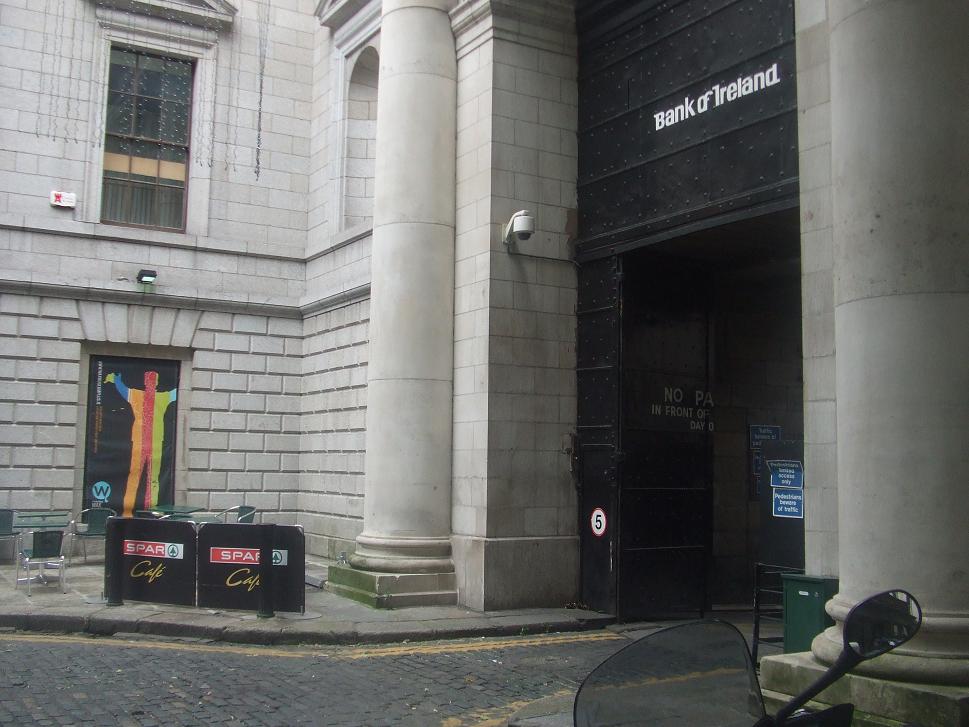
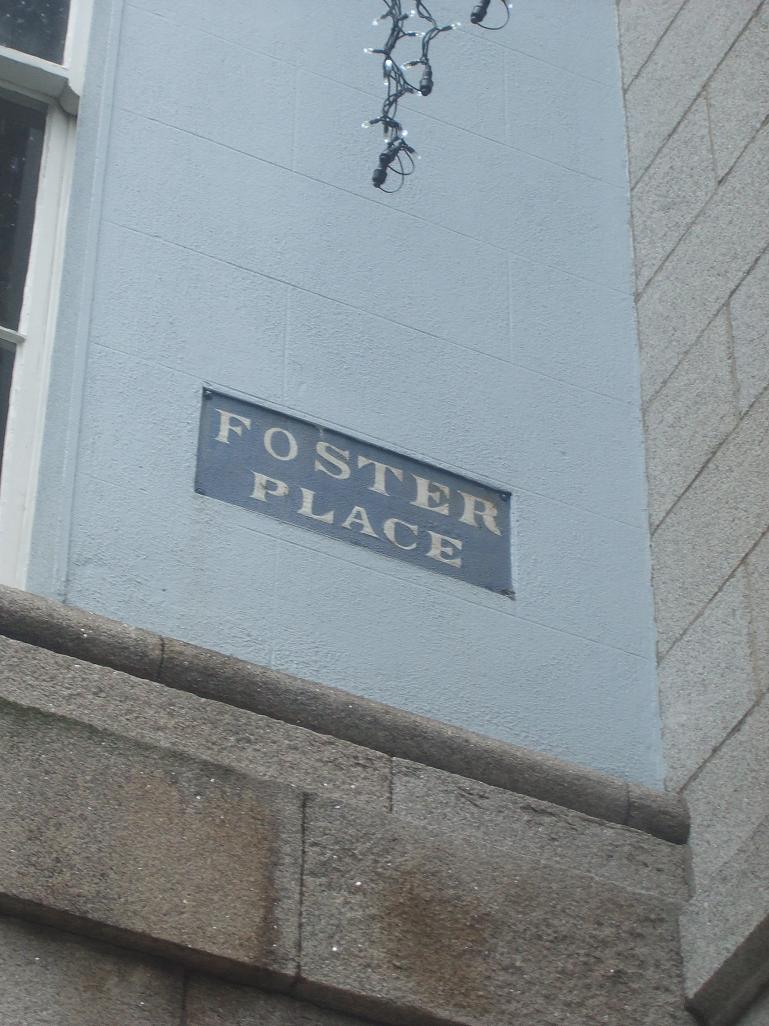
In the 1780s, Turnstile Lane was widened considerably and renamed Fosters Place after John Foster (1740 – 1828), the last speaker of the Irish House of Commons. Turnstile Alley was renamed Parliament Row c. 1775. A narrow alleyway still linked the two but this was finally closed in 1928 due to the construction of the Bank Armoury.

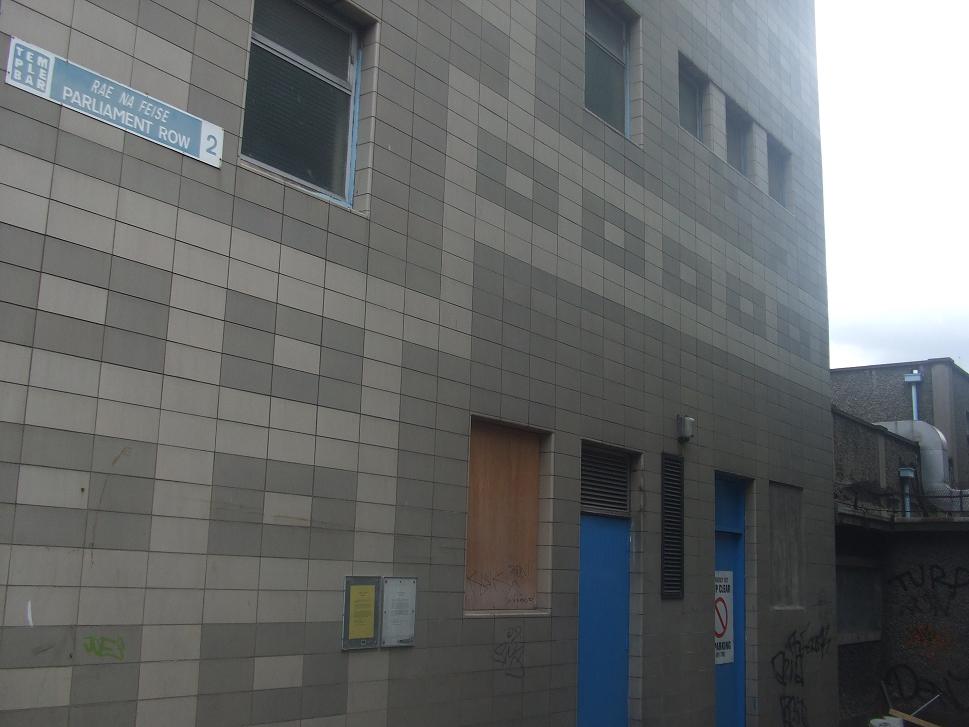
Parliament Row today. Nothing more than a Car Park entrance and a bottle bank.

The Irishman’s Diary in The Irish Times on May 30, 1928 noted that “the closing of the passage at the ‘back of the bank’ … is causing much inconvenience to the many busy people who found it a short cut”.

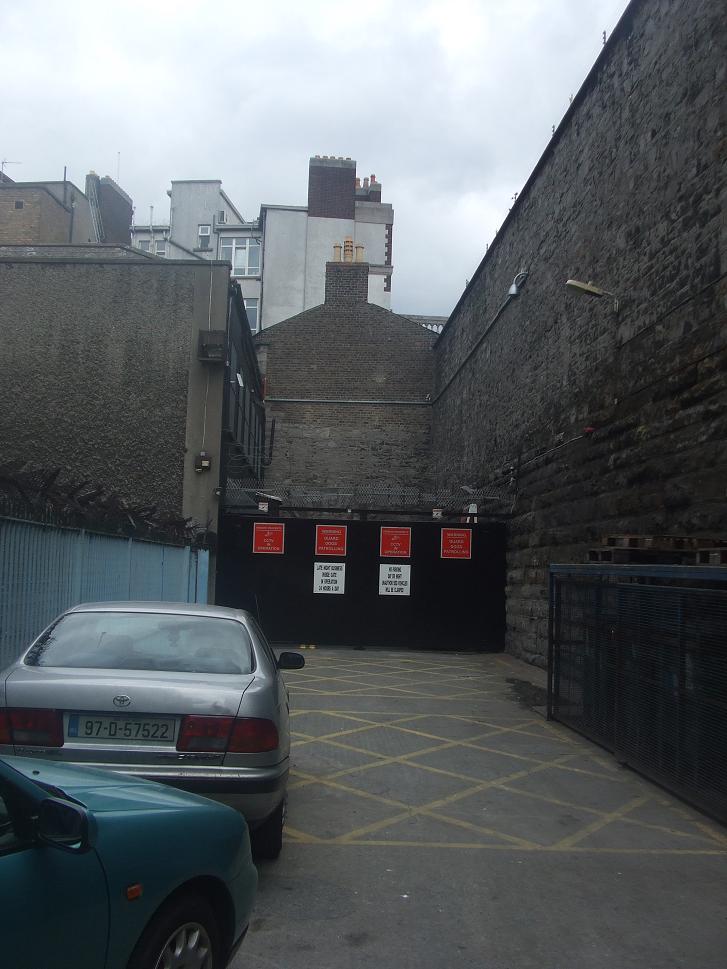
Another view of the modern Parliament Row.

The modern map of Temple Bar below illustrates just how much has changed not least the blocking off of Turnstile Lane and Alley.  The cobbled Fosters Place is now most familiar to Dubliners for its Starbucks, taxi rank and new Wax Museum while Parliament Row has nothing much to boast for except a Car Park entrance and bottle bank.

Temple Bar, 1990s. 'Temple Bar - Dublin. An Illustrated History', Pat Liddy, (Dublin, 1992), p. 67

Fosters Place today. The road that swings right used to once lead to Fleet Street.


Read Full Post »

It’s a good question for a pub quiz- How many bridges span the Liffey from Heuston Station to where Dublin meets the sea? No doubt you’ll get a plethora of answers, but you’ll rarely get the right one. You can guarantee people will forget that two bridges traverse the water at Heuston, they’ll forget about the little Rory O’Moore Bridge that has more history than most of them, or the DART Loopline at Butt Bridge. They might even forget the ugly abomination that is the East Link, the last connection between Northside and Southside before Dublin Bay separates the two…

Perhaps Dublin's best known bridge, The Ha'Penny Bridge.

The correct answer, if you want to know, is seventeen, starting at Sean Heuston Bridge and working all the way along the river to the Eastlink Bridge at Dublin Port. I’m not going to cover them all in this piece; I won’t be covering the bridges we all know, like O’Connell Bridge or the Ha’penny Bridge for that matter. What I will do is take a look at some of the ones to the west of O’Connell Bridge; ones I find interesting mainly due to who they’re named after or because of their historical importance.

-Sean Heuston Bridge (ex-King’s Bridge, Sarsfield Bridge) 1829

The first incarnation of the bridge was built in 1828/ 9 and named Kings Bridge to commemorate a visit by George IV to Dublin in 1821.  After the declaration of the Free State  in 1922, it was renamed Sarsfield Bridge, in memory of Patrick Sarsfield, leader of the Jacobite Rebellion of 1641. (I’ll talk about the 1641 Rebellion later.) In 1941 the bridge was again re-named, this time after Sean Heuston, a member of Na Fianna h-Éireann who played a prominent role in the Easter Rising of 1916.

At 19 years of age, Seán Heuston was Captain of a twenty three strong company of men, mostly Fianna h-Éireann members around his own age, who were directed by James Connolly to take “The  Mendicity (Institute on Ushers Island) at all costs”. Their goal was to prevent British re-inforcements coming into the city from The Curragh Camp and the West. They held out until Wednesday afternoon, until they were scattered by the 10th Battalion of the Royal Dublin Fusiliers. One of the more striking stories of the Rebellion (or one of countless stories to tell of that week) is that of the Liutenant of the 10th Battalion, Lieutenant Gerald Aloysius Neilan who was shot and killed by a sniper from the Mendicity, while his brother Anthony Neilan took part in the Rising on the Rebel side. He was one of two Liutenants killed in Dublin that day, with another nine members of the 10th Batt. killed at the Mendicity,  as per a report to Prime Minister Asquith by General Sir John Maxwell.  Seán Houston was captured with 22 other men and executed by firing squad on May 8, 1916 in Kilmainham Jail on the charge that he “… did take part in an armed rebellion and in the waging of wars against His Majesty the king such act of being of such a nature as to be calculated to be prejudicial to the defence of the Realm and being done with the intention and for the purpose of assisting the enemy.”

 Kingsbridge Station was later renamed Heuston Station in his honour.

Nothing like this anymore of course, theres more silt than water under it, and the LUAS runs across it!

The Bridge itself was reconstructed in 2003 and now carries the LUAS from Tallaght to the Point.

– Rory O’Moore Bridge, (ex- Victoria & Albert Bridge, Queen Victoria Bridge) Watling Street to Ellis Street, 1859 (Previous structures: 1670, 1704)

“Oh lives there the traitor who’d shrink from the strife, who would add to the length of his forfeited life. And his country, his kindred, his faith would abjure; No we’ll strike for old Ireland and Rory O’Moore.” (more…)

Read Full Post »
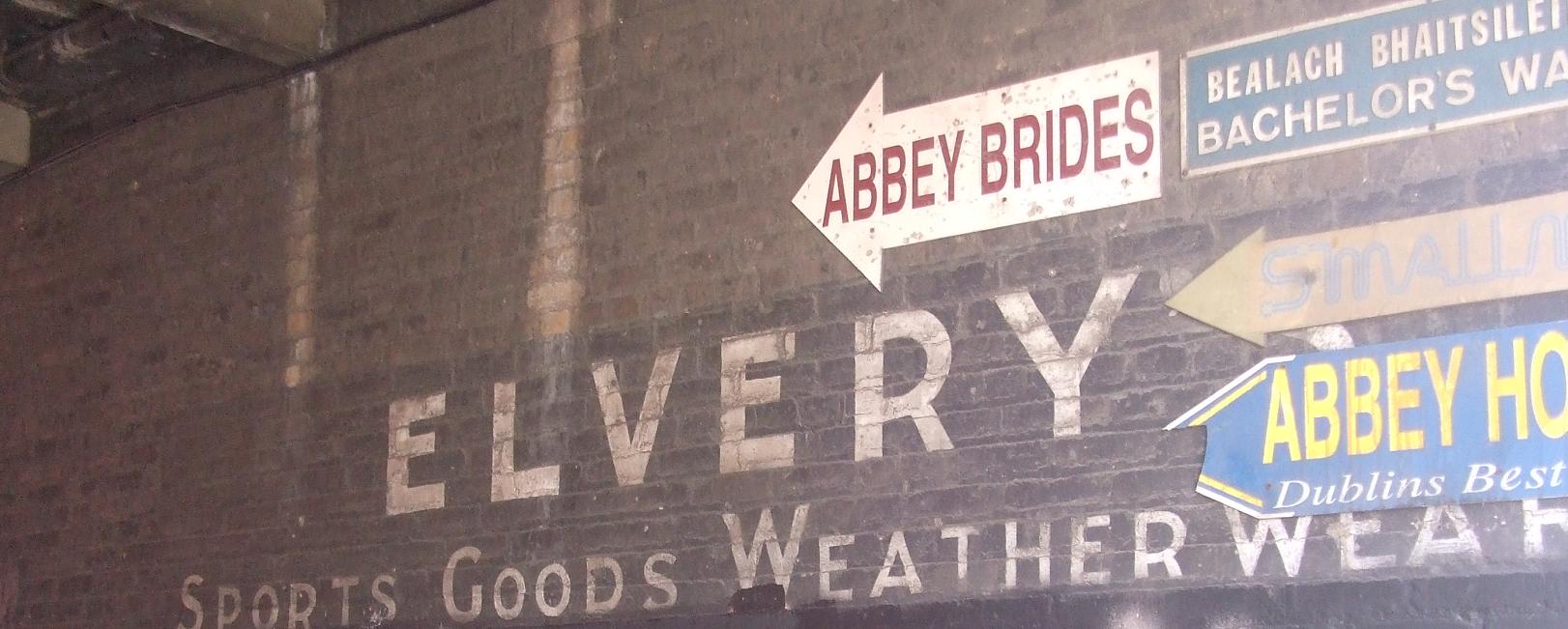
I’ve always liked this old school advertisement for Elvery Sports, in the laneway opposite The Oval pub. Elvery’s is Ireland’s oldest sports shop, founded in 1847. It’s long been a staple of Dublin and indeed Irish life, with strong links to domestic sports. The Elvery’s at the bottom of O’ Connell Street was one I always had a soft spot for, owing to the reappearing Saint Patrick’s Athletic F.C jersey in the window. Behind enemy lines, looking pretty on the northside.

There is a great story told in the wonderful Forth The Banners Go book, taking in the reminiscences of William O’ Brien, where he retells a tale about James Connolly being arrested outside this Elvery’s for a series of public speeches he had given in Dublin, breaking a proclamation forbidding any meetings being held.

That Elvery’s is gone now, making the above a ‘ghost sign’.

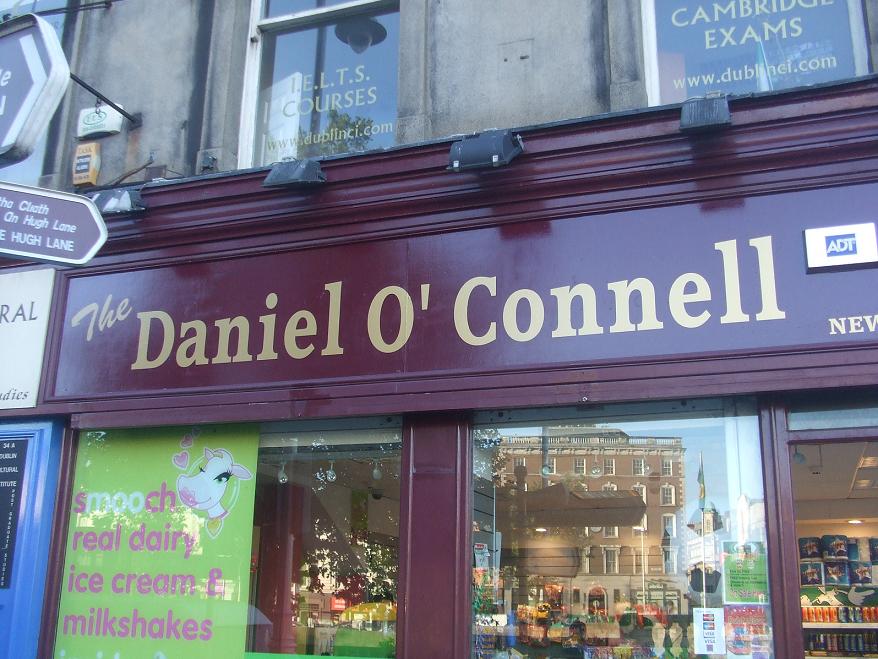
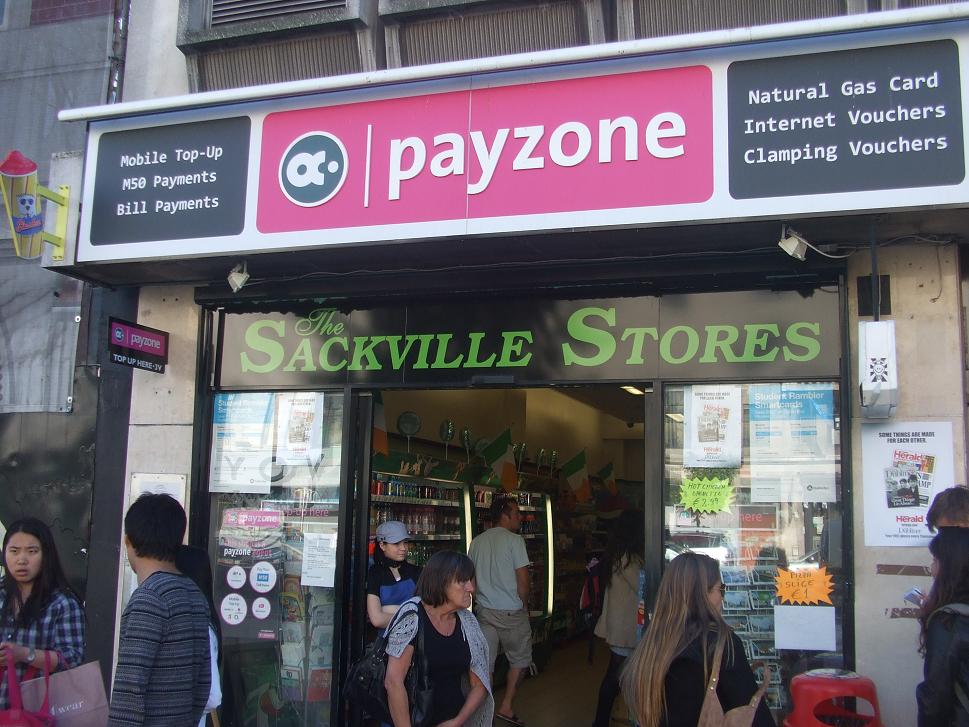
It’s been replaced with this:

A newsagents named after ‘The Liberator’, and former Lord Mayor of Dublin Daniel O’Connell. Directly opposite his statue, it’s sure to do a roaring trade in postcards, miniature busts of the man himself and student bus tickets.

It’s not the first newsagents on the street to tip its hat in the direction of history however. Further down the street, and on the same side, you come to this:

Sackville Street was, of course, the name of O’ Connell Street before the establishment of the Irish Free State.The name ‘Sackville Street’ was in honour of one time Lord Lieutenant of Ireland Lionel Cranfield Sackville, Duke of Dorset.

The ruins of Sackville Street, 1916.

Interesting nods to the past, from the most unlikely of sources.

Read Full Post »

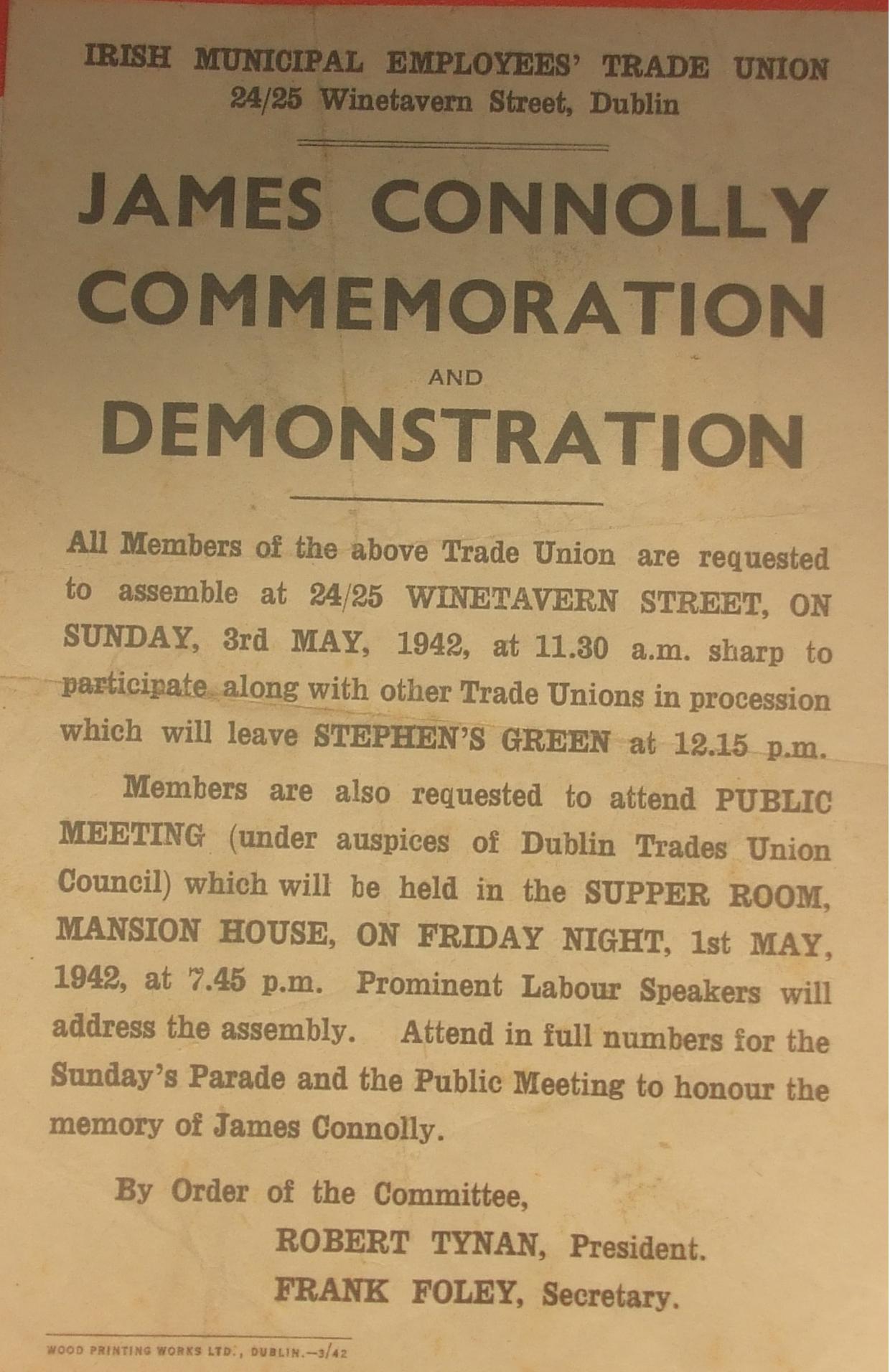
This is a nice find, from the Irish Municipal Employees’ Trade Union, 1942.

The back of the leaflet was clearly used in 1942 by someone dealing with union finances, as it is littered with figures and sums.

Union members are encouraged to attend a commemoration in memory of Connolly on May Day, and also to show up a demonstration on the 3rd of May, “…to participate along with other Trade Unions in procession, which will leave STEPHEN’S GREEN at 12.15 pm”

Of all places, it showed up recently in the books of the Dublin Fire Brigade Union, loaned to the DFB Museum. The things that show up in books eh?

Read Full Post »

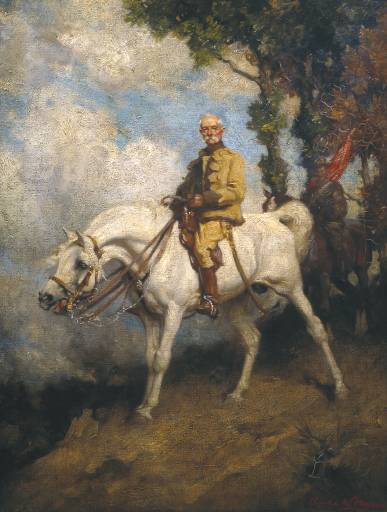
Field-Marshal Earl Roberts on his Charger 'Vonolel', from the Tate Collection.

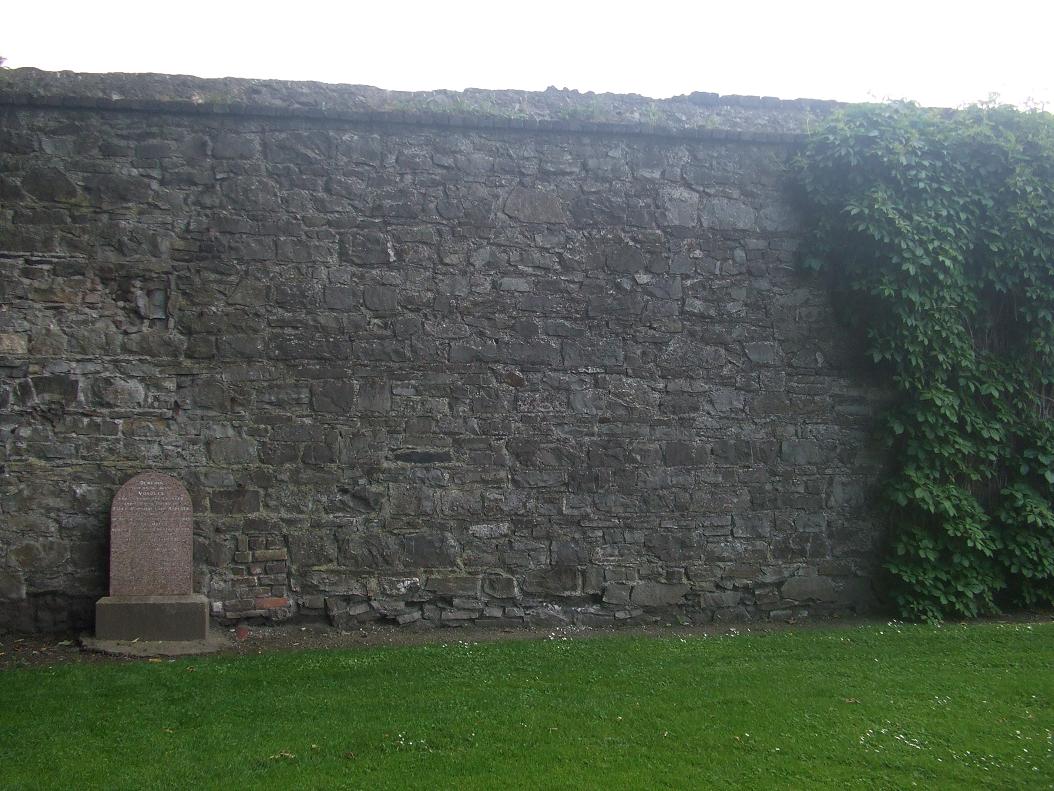
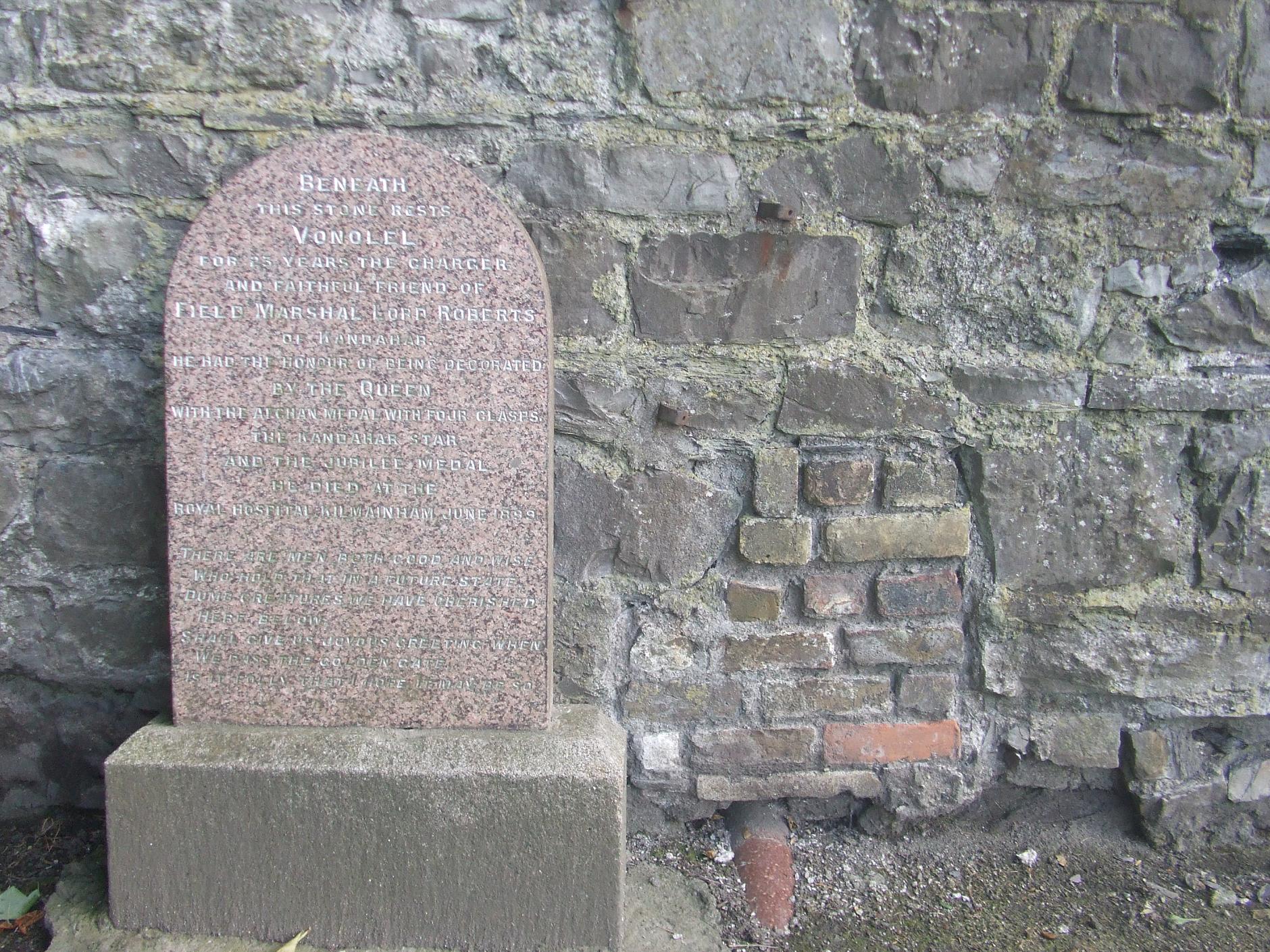
Many people walking the grounds of the Royal Hospital in Kilmainham will pass a small grave without noticing, and yet this grave is perhaps the most unusual grave in Dublin itself. In the grounds of the Hospital, one finds the final resting place of ‘Vonolel’, twenty-nine years old on passing, but a veteran of conflict.

“When the Queen awarded medals to her officers and men who has taken part in the Afghan campaign and in the expedition to Kandahar, she did not forget Vonolel. Lord Roberts hung round the animals neck the Kabul medal, with four clasps, and the bronze Kandahar star. The gallant horse wore these medals on that day in June when the nation celebrated the Queen’s Diamond Jubilee”

So read The Irish Times of October 21, 1899.

Much more information on the horse can be gathered from an earlier piece however, dating from January of the same year, when Vonolel was still living. In it, it was noted that Vonolel had come to England “having been practically all over the world with his master”. He was described as “..a type of the highest class of Arab charger” and it was noted that “he traces his descent from the best blood of the desert” It was also noted that his medals were only worn on special occasions!

The grave of Vonolel, in the Royal Hospital Kilmainham.

It was 1877 when Vonolel was purchased from a horse dealer in Bombay, at the age of four. He was named after a great Lushai chief. He would become closely associated with Field Marshal Frederick Sleigh Roberts, a man with family links to the city of Waterford. It is perhaps with the Battle of Kandahar, the last serious engagement of the Anglo-Afghan war, that Roberts (and by extension Vonolel) is most closely associated. For victory in the Battle of Kandahar, Roberts received the thanks of Parliament.

Vonolel was retired to the Curragh in Kildare, and his grave notes that he passed away while at the Royal Hospital in Kilmainham, in June 1899. Roberts was said to be heartbroken, and Vonolel was buried in the rose gardens of the Royal Hospital Kilmainham. His military exploits are acknowledged, as is his character.

Included on the headstone are the lines:

There are men both good and wise
Who hold that in a future state
Dumb creatures we have cherished here below
Shall give us joyous greeting when
We pass the golden gate
Is it folly that I hope it may be so?

Why not stop by the grave of Vonolel the next time you find yourself in Kilmainham, and see for yourself what must surely be one of Dublin’s most unusual graves.

Read Full Post »

What links this familiar ghost sign and my favourite street name in Dublin?

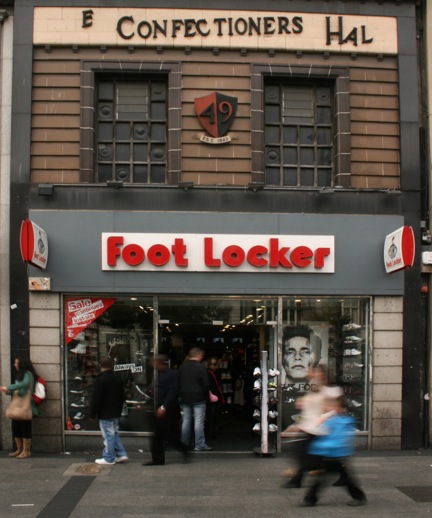
(Th)e Confectioner’s Hal(l), O'Connell Street. (Picture - Lisa Cassidy)

Lemons.

Or to be more precise, the Lemon family.

They were the proprietors of the above ‘The Confectioner’s Hall’, a beloved sweet shop for generations of Dubliners. Opening on that very spot in 1842, it only closed its doors in 1984. More on this history of the company can be read here, an excellent article on the Irish Architecture Forum blog by Lisa Cassidy.

One of my favourite street name in Dublin is Lemon Street, which is just off Grafton Street. It was named after Graham Lemon and his family who owned property in the area. (It certainly has a better ring to it than its previous name – Little Grafton Street).

So, what’s your favourite street name in Dublin?

Read Full Post »

“He is a man of lofty character and of high ideals, and evokes in men of the most diverse opinion a common admiration of his chivalry and honour”
Irish Literature-Volume 7 (1904), taken from the entry on John O’ Leary

Recently, we posted a series of images and audio recordings from the launch of a plaque to the memory of the Connolly siblings of the Irish Citizen Army. That plaque was put in place by the excellent North Inner City Folklore Project.

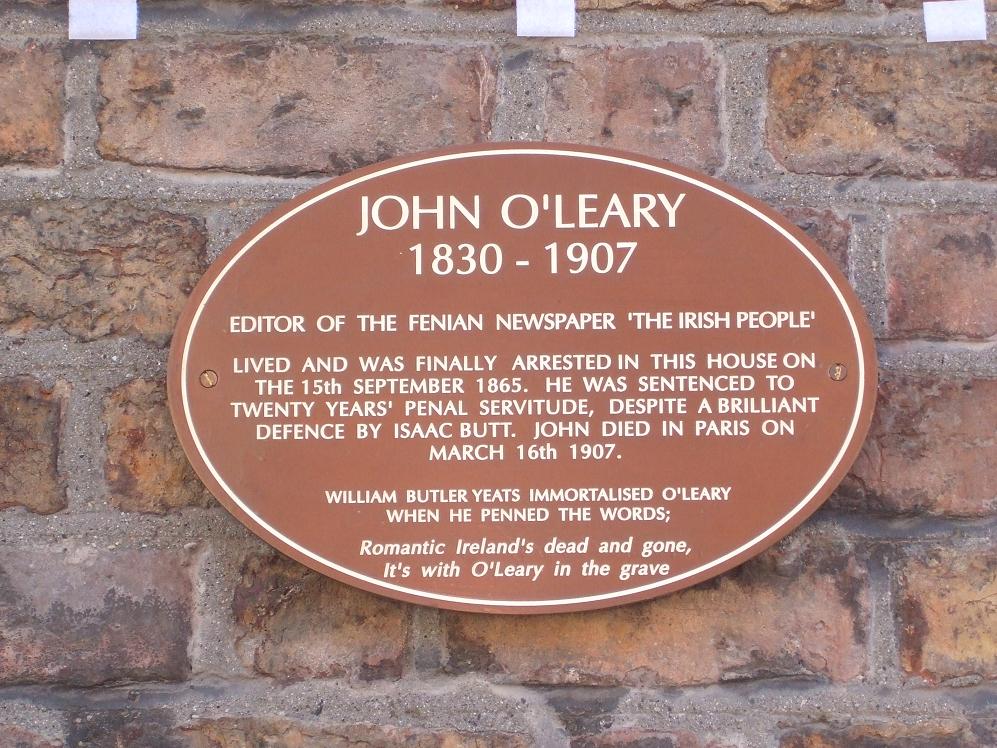
Yesterday, another most welcome plaque was unveiled north of the Liffey, this time in Palmerston Place. The plaque marks the home of Tipperary born Fenian leader John O’ Leary, and acknowledges his role as editor of The Irish People newspaper.

“…O Donovan Rossa, O’ Leary, Luby and others long associated with separatism and republicanism were regularly to be found in or around the Irish People office. And the paper always made the most of the fact that the Fenian Brotherhood in the United States was not a secret organisation…”
– Taken from The Green Flag by Robert Kee

(more…)

Read Full Post »

« Newer Posts - Older Posts »