Feeds:
Posts
Comments

Archive for the ‘Dublin History’ Category

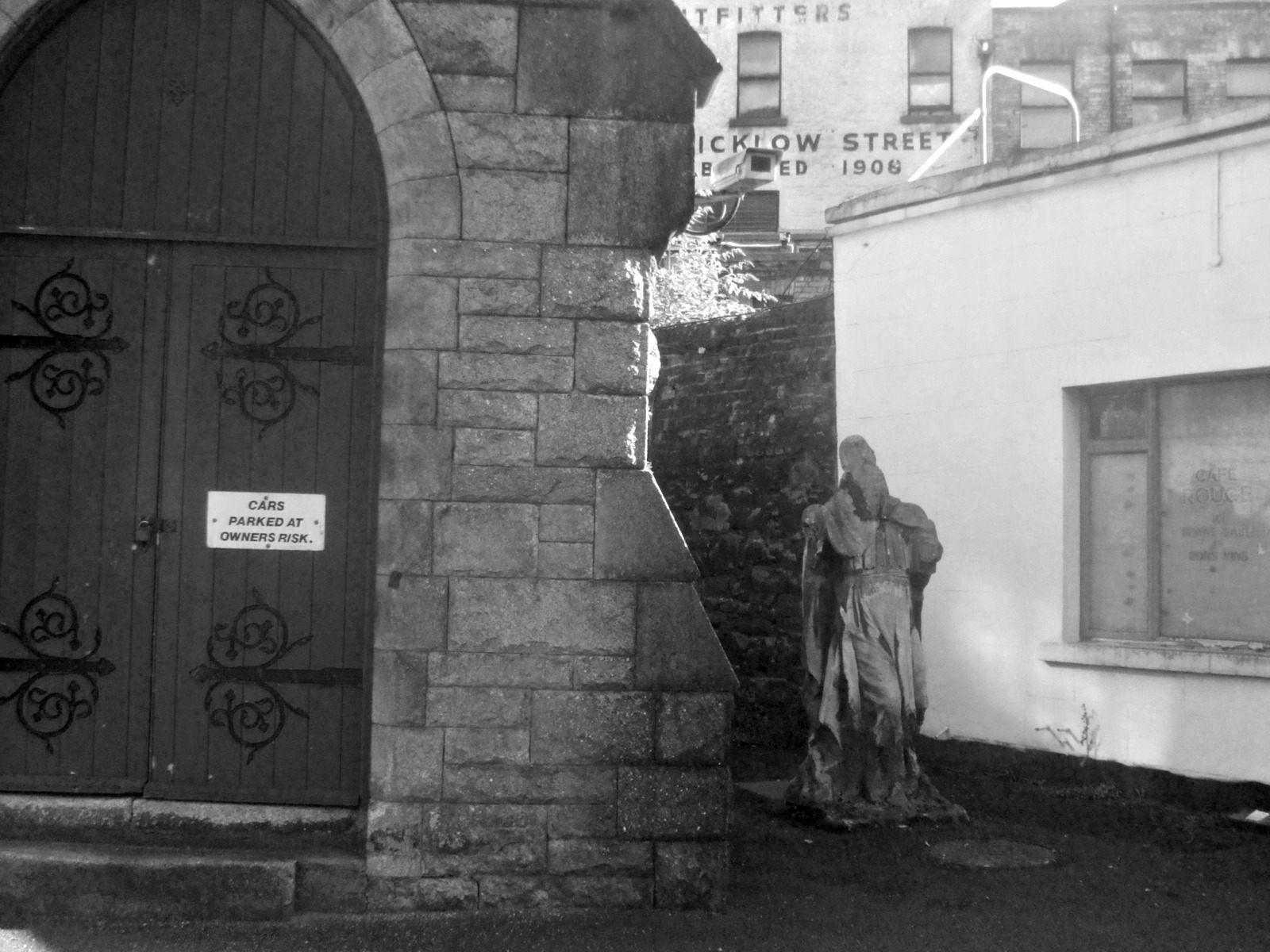
The statue of Saint Andrew, at the back of Saint Andrew’s Church in Dublin city centre

Passing St.Andrew’s Church recently, which today is home to the Dublin Tourism Centre, a statue in the car park grabbed my eye. Going in for a look, a badly weathered statue stood in the very corner of the church car park, forgotten by time. I took a few photographs and decided I’d investigate it at a later date.

The badly weathered statue is of Saint Andrew himself, and is all the remains of an older version of the church. Saint Andrew’s has a long and interesting history, once serving as the parish church for the Irish Parliament, an institution so rotten it succeeded in abolishing itself in very dubious circumstances in 1800. Since 1996, the building has been home to the Dublin Tourism Centre.

Next to the Irish Parliament on College Green, Daly’s Club thrived in the eighteenth century. Daly’s was a private members club with a notorious reputation which had first been housed at numbers 1-3 Dame Street, before making the move to 3 College Green in the 1790s. It was said to be named after Denis Daly, a Galway politician, wealthy landowner and friend of Henry Grattan.
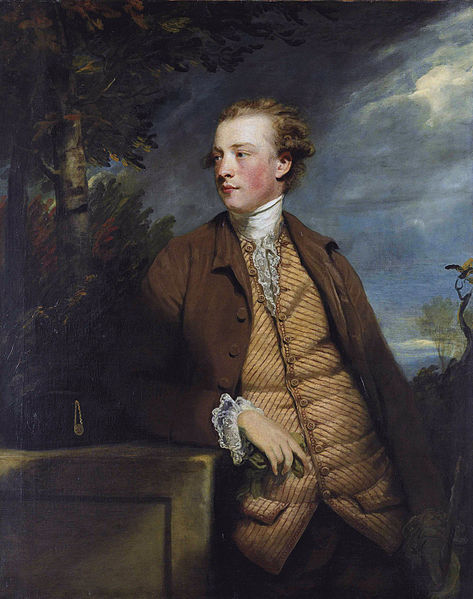
Denis Daly (1748 – 10 October 1791)

An 1815 text, The Travellers New Guide Through Ireland, contains an entry on the club and notes that:

On the northside of College Green stands Daly’s Club House, a very neat building, constructed of hewn mountain stone. It is appropriated for the accommodation and entertainment of noblemen and gentlemen, composing this fashionable and expensive club.

The connection between Daly’s and the neighbouring Parliament was firm. As Christine Casey has noted, it was even reputed that Parliaments division bells would ring in the club house. J.T Gilbert described the club in good detail in his A History of the City of Dublin, noting that:

the new edifice, designed by Francis Johnston, extending from the corner of Anglesey-Street to Foster Place, was opened, for the first time, with a grand dinner, on the 16th of February 1791.The house was furnished in a superb manner, with grand lustres, inlaid tables, and marble chimney-pieces; the chairs and sofas were white and gold, covered by the richest “Aurora silk”.

Gilbert went on to note that the club was not alone the “chief resort of the aristocracy and Members of Parliament”, but was indeed connected to Parliament, via a footpath across Foster Place which led from “the Western Portico of the Parliament House to a door, since converted into a window, on the eastern side of the Club-house.”

The proximity of the eastern side of the club at Foster Place to the Irish Parliament is clear from this fantastic image in the National Library of Ireland collection.
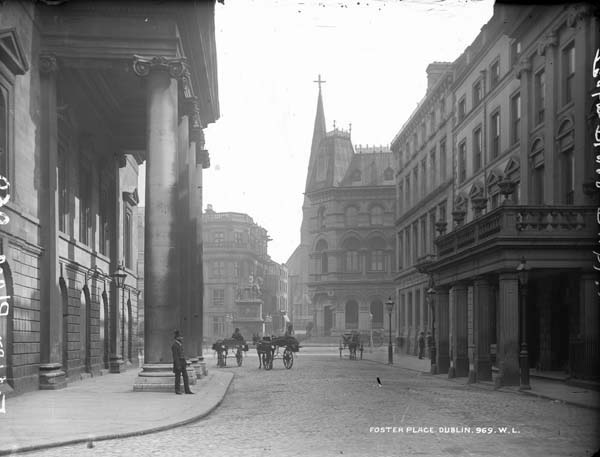
Foster Place, Dublin (National Library of Ireland)

So, what connects this one time Buswell’s Hotel (I couldn’t resist!) to the statue of Saint Andrew? A Dublin legend, which could be fact or fiction, has it that the statue was used for target practice by members of the infamous establishment. Frank Hopkins in his classic Hidden Dublin recounts how “there were even tales of club members using the statue of St. Andrew in St. Andrew’s Church for target practice”, while the tourism centre themselves make a similar claim,noting in their history of the church that “now eroded due to the ravages of time, and as a result of its use as a pistol practice target by the members of Daly’s Social Club”.
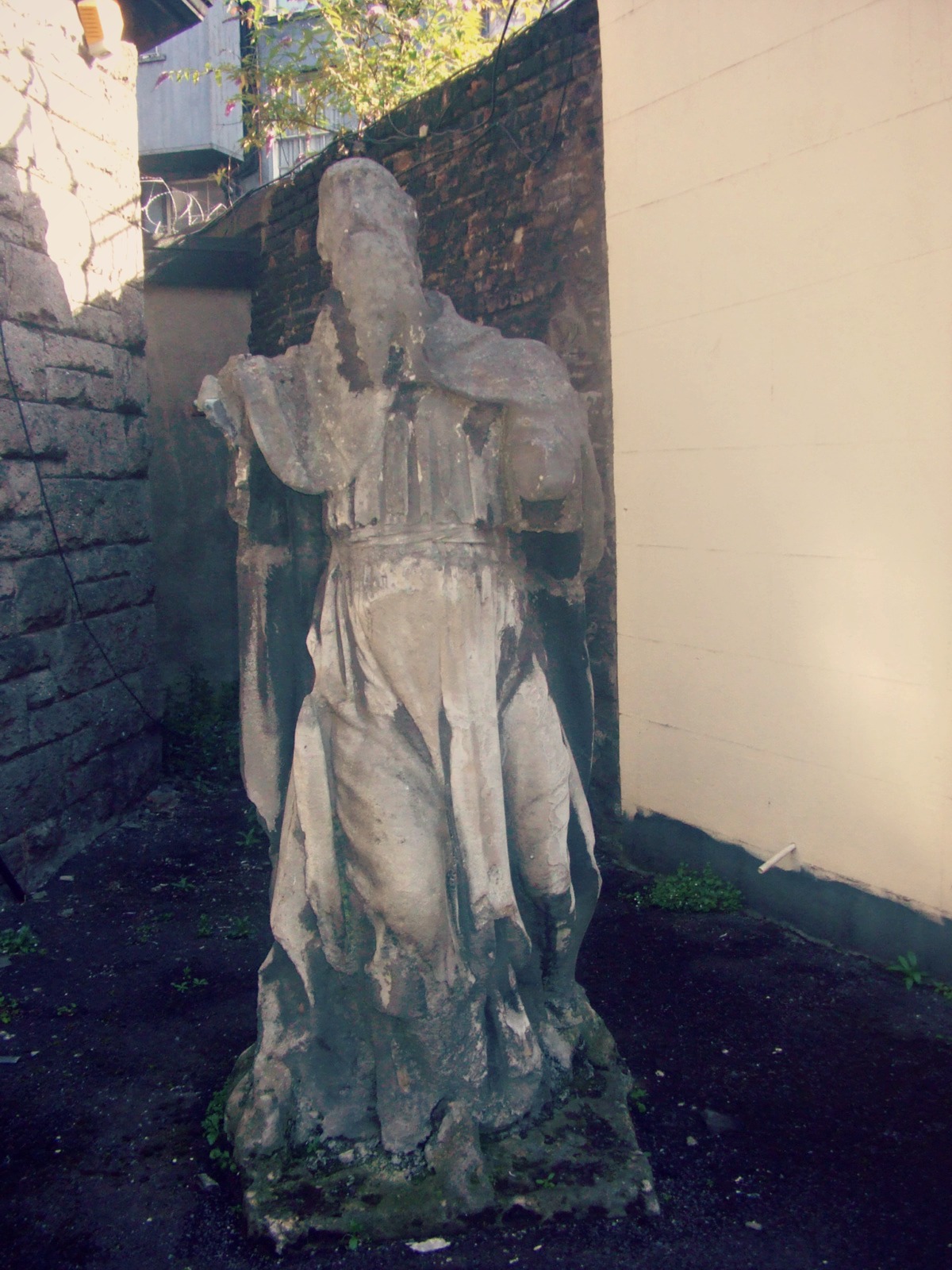
The statue today.

How much of the legend of Saint Andrew being fired upon by the drinking, gambling politicians of Daly’s Club is fact and how much is fiction? It’s a great Dublin story regardless, and the badly weathered statue on the edge of the car park is something worth taking the time to check out if you’re in that part of town.

Read Full Post »

Dublin enjoys dozens of colloquial terms for neighborhoods and areas in the city, many of whom have now been assimilated into everyday language.

I’ve tried to compile a list of ones that I can think of. Others may be more ‘true’ than others. Have I forgotten any?

Colloquial areas:

Perrystown, “a small south Dublin suburb located between Terenure, Greenhills, Templeogue and Crumlin” which was probably named after a former family of landowners in the area, the Perrys. While technically not an “unofficial area”. It would probably be better described as a small suburb within a larger one? Wikipedia says it is known as “The Secret Suburb” by its residents.

Cowtown, an area in Dublin 7 beside Stoneybatter where there was once sprawling cattle markets. Street names like Oxo, Nialler, Murtagh, Beneeder, the Norrier leave a reminder of the area’s past.

Informal group of Bohs supporters who live or grew up in the area.

Maryland, a name for a small area just off Cork St.

Broadstone, an area of the North inner city bounded roughly by Phibsborough Road and Constitution Hill to the West, North Circular Road to the north, and Dorset Street and Bolton Street to the south-east.

Harmonstown, is a small suburban locality straddling the boundary between modern-day Artane and Raheny. The locality is bounded by the railway cutting, the Springdale Road Linear Park and Brookwood Avenue. It also borders Killester and Clontarf.

Summerhill, an area of the North Inner City. Anyone suggest what area actually constitutes Summerhill i.e. what boundries etc.?

Historical areas that have dissapeared or have changed their name:

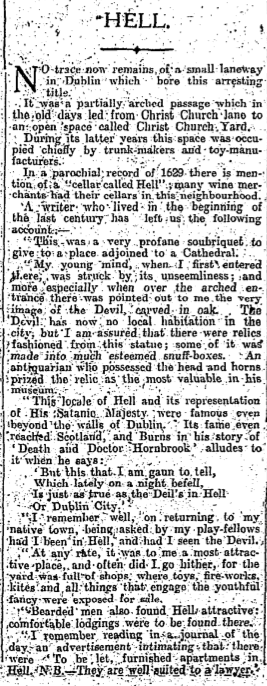
Hell, a popular term in the 17th century for the area around Christ Church Yard.

A description of ‘Hell’ from The Irish Times (10 Mar 1923)

The Monto, nickname for a one-time notorious red light district bounded by Talbot Street, Amiens Street, Gardiner Street and Seán McDermott Street (formerly Gloucester Street).

Mud Island/Friend’s Field/French Field, previous names for Ballybough.

Doyle’s Town, previous name for Baldoyle.

Annadale, previous name for Fairview

Ballyboother, previous name for Booterstown.

Scald Hill, previous name for Sandymount

Cullenswood, a previous name for the area around Ranelagh and Rathmines

Nicknames:

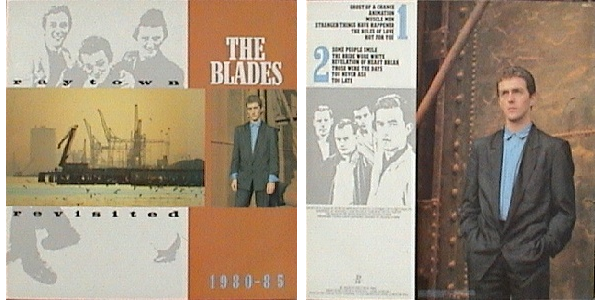
Raytown is a nickname for Ringsend, reflecting its history as a fishing village.

The Blades’ 1985 singles compilation, ‘Raytown Revisted’. The band all grew up in the area.

Nine Arches, previous nick name for the area around Milltown

Read Full Post »

“The delights a stroll around Dublin can bring you. I’ve always carried my camera around with me, but have only recently started to take it out and not give a shite that I look like a tourist.”

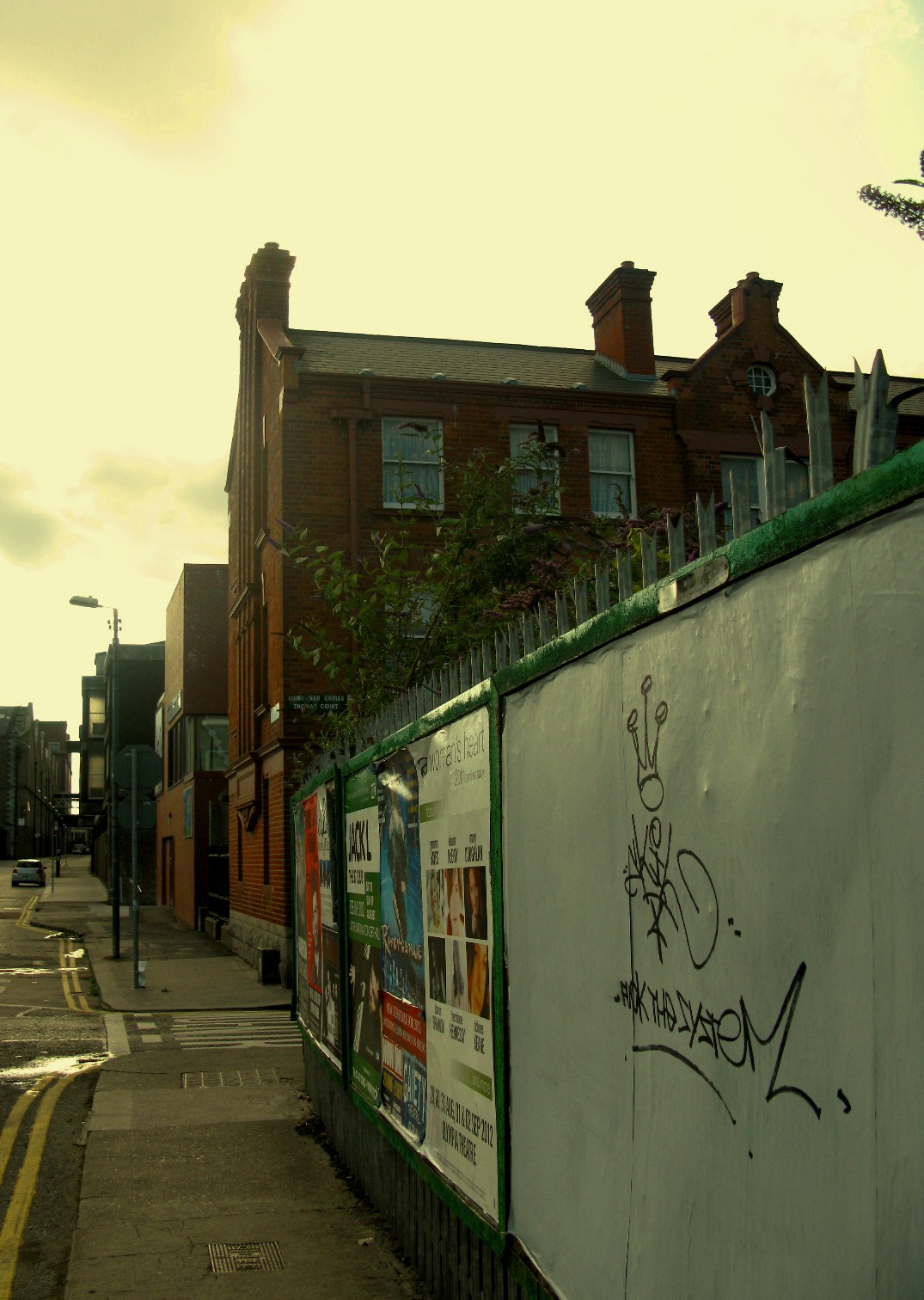
The last couple of months have been busy, and I haven’t gotten out with the camera as much as I would like. Hence, I’m a little rusty. I hope to remedy this though, and over the next while, hope to get one post of pictures up a fortnight… I’ll start off with the below, looking down toward School Street from Earl Street South- “Fuck the System.”

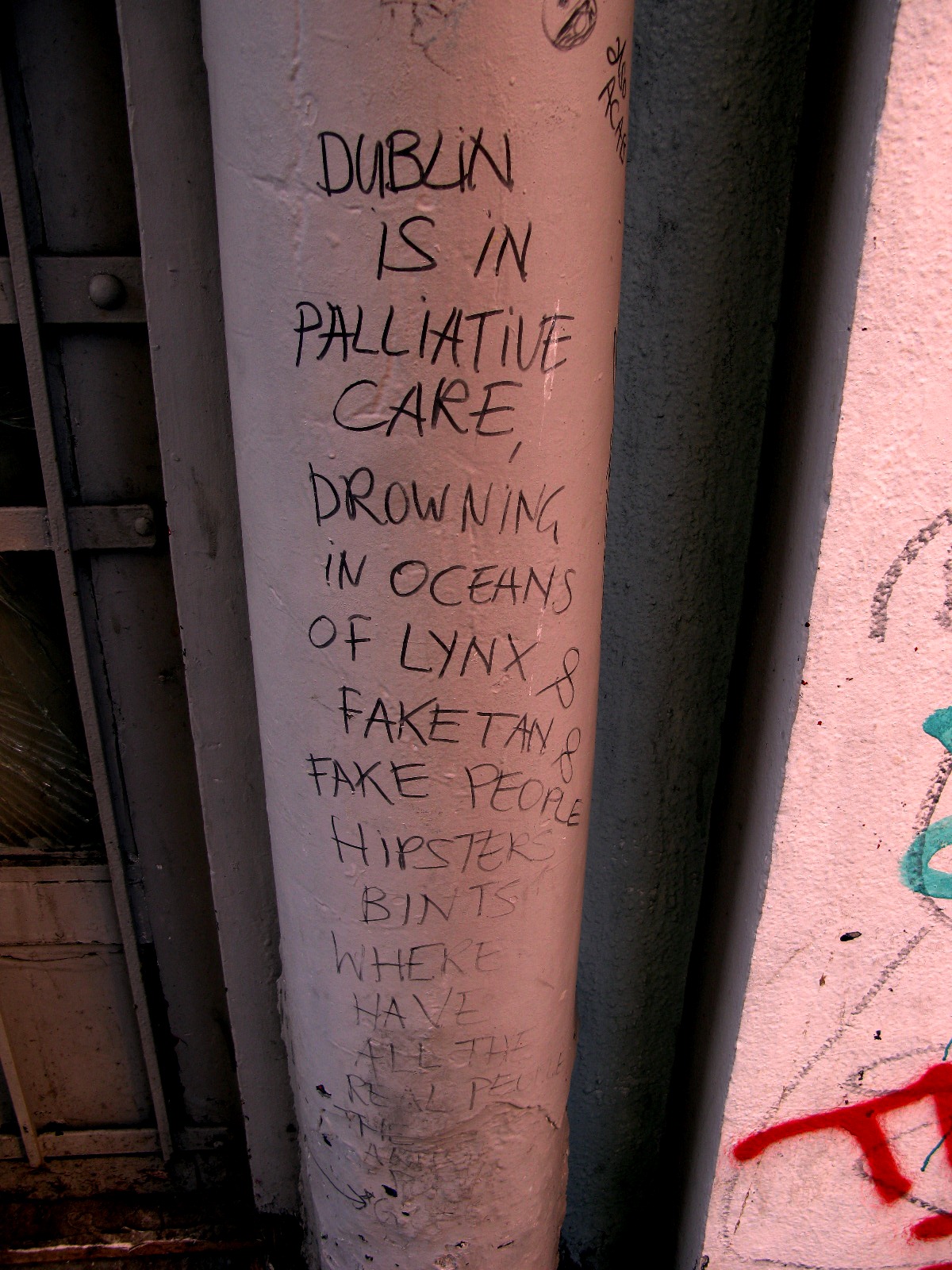
“Dublin is in palliative care, drowning in oceans of Lynx and fake tan and fake people. Hipsters, bints, where have all the real people…” something, something, angry rant, something.

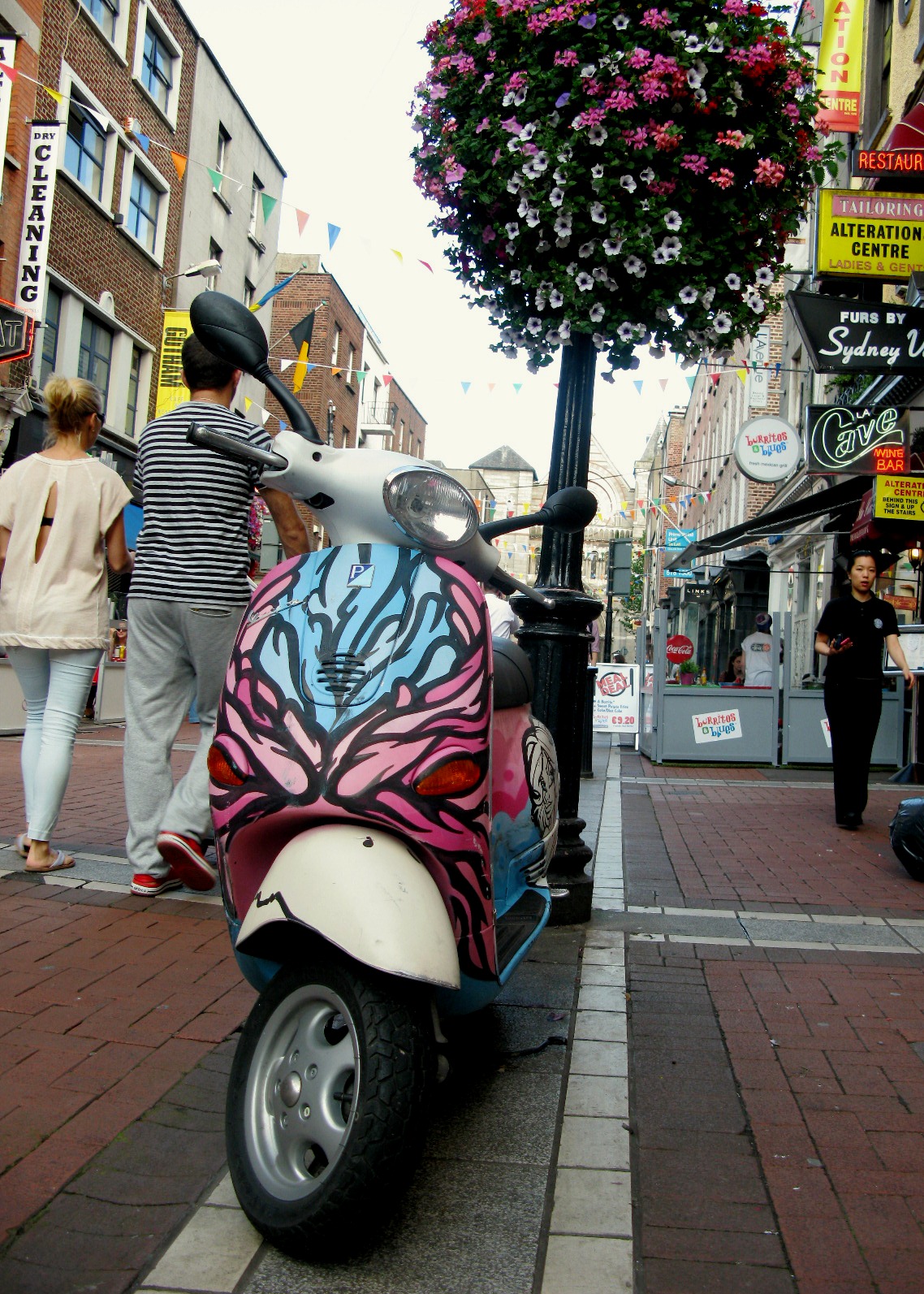
I hoped to have two scooters in this piece, one far more impressive than the one below, but an unfortunate incident of a disappearing memory card means there’s just this one. Just off Grafton Street, a beauty. The blokier version will appear in the next “A few quick snaps” post.

(more…)

Read Full Post »

Firefighter Frank Brennan saving the pram from Sean O’Casey’s ‘The Plough and the Stars’ following a fire which gutted the Abbey Theatre.

Over the years I’ve dipped into some amazing items in my fathers collection for the blog. A serving firefighter with the Dublin Fire Brigade, he’s built up an impressive collection of items relevant to the history of firefighting in Dublin historically. He has also completed a book which is forthcoming on the Brigade entitled ‘Dublin Fire Brigade and the Irish Revolution.’ It will be launched in early September. The Dublin Fire Brigade were the first unionised fire service in Europe, and interestingly his research has uncovered that many men within the job were active in republican and trade union politics during the Irish revolutionary period, with the Irish Volunteers, the Irish Citizen Army and later the Irish Republican Army.

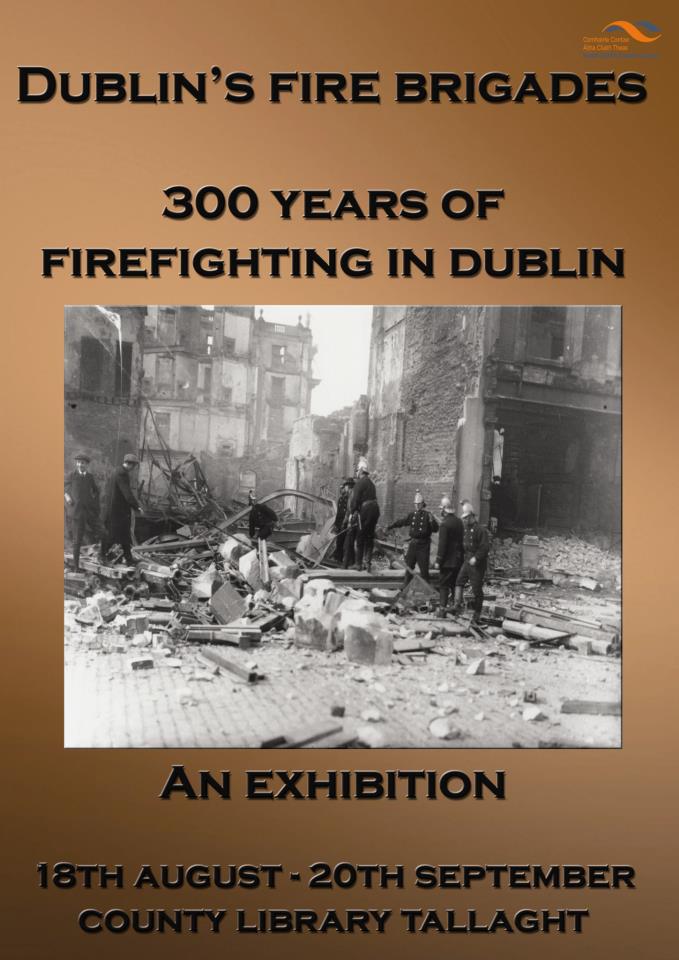
To coincide with the book, which is published by South Dublin County Council, an exhibition on the history of firefighting in Dublin will be hosted in the County Library in Tallaght. It’s a Heritage Week project with the South Dublin County Council, and in conjunction with the Fire Service Trust.

The exhibition will offer new insight to a lot of people on issues like the early days of firefighting in Dublin. One thing we’ve looked at in the past on the site here for example is the days of the old ‘Parish Pump’, , like when in 1711 the Lord Mayor of Dublin ordered that each Parish within Dublin hold two water fire engines, for the purpose of combating fires which broke out in the city.

In 1862, Dublin got its municipal fire service, with the remarkable Captain James Robert Ingram at its head. Ingram was a veteran of the New York Fire Department, not to mention a Freemason and a man who applied some unusual methods to the job of firefighting. He once dealt with a ship drifting into Dublin Port ablaze by ordering the Royal Navy to open fire on it and sink it into the bay, for example!

Fireman Robert Malone, who died in the Pearse Street blaze of 1936, the worst disaster in the history of the Dublin Fire Brigade. A veteran of the 1916 Rising who had served as a Lieutenant with “D” Company 3rd Battalion at Bolands Mills Garrison, under Eamon de Valera. Malone was awarded full IRA honours at his funeral.

(more…)

Read Full Post »

LIFE Magazine, a leading U.S magazine of the day, ran an interesting feature on Dublin in their 24 July 1939 edition. The magazine frequently gave coverage to events on the island of Ireland, and the article in this particular edition was titled ‘Ireland: A new flag brings hope to an old and pious land.’

The magazine heaped praise on Eamon de Valera, noting that the ‘long-lipped Spanish-Irishman’ had run the country single-handed since 1932, and noting that ‘he has dealt drastically with the ex-overlords of England.’

Written at a time of conflict in Europe, the magazine felt compelled to note that ‘Ireland is very hospitable to Nazis. Their leader in Ireland is Doctor Adolph Mahr, president of the Éire National Museum whose staff supplies him with complete air views of Ireland’. It goes on to note that newsreels of Hitler were warmly greeted in Dublin picture houses.

Pro-IRA graffiti on Kilmainham Jail (LIFE Magazine, 24 July 1939)

the magazine included this fantastic image of an ‘IRA speaker’ addressing a crowd in Dublin, and noted that the IRA’s bombing campaign in mainland Britain enjoyed a degree of public support from the Irish public.

IRA speaker in Dublin (LIFE Magazine 24 July 1939)

Trinity College is noted to be the cultural heart of the city, but we are told it is still an almost exclusively Protestant institution.

Trinity College Dublin (LIFE Magazine, 24 July 1939)

The article includes a wide variety of images from across the island of Ireland, in terms of Dublin images I think this one is striking, taking during a farmers march in the capital.

Farmers protest in Dublin (LIFE Magazine, 24 July 1939)


The article can be read in its entirety here.

Read Full Post »

Horatio Nelson, who gazed over Dubliners from 1808 until 1966.

At several times during the course of its existence on O’Connell Street, the removal of Nelson’s Pillar from its location was proposed by different sections of Irish society. Interestingly, in some cases it was argued that the monument should be moved rather than permanently removed from the streets of Dublin. In 1925, it was proposed to move the Pillar to the Hill of Howth, an idea which seemed to enjoy strong support from some of the City Commissioners of the day.

A poem entitled ‘Dublin’s Doggerels’ from 1886 shows that debate on moving the Pillar had long existed prior to 1925. In one verse it was noted that:

Some say the Phoenix Park would do
That won’t go down with me.
There’s one commander there; the two
Perhaps would disagree

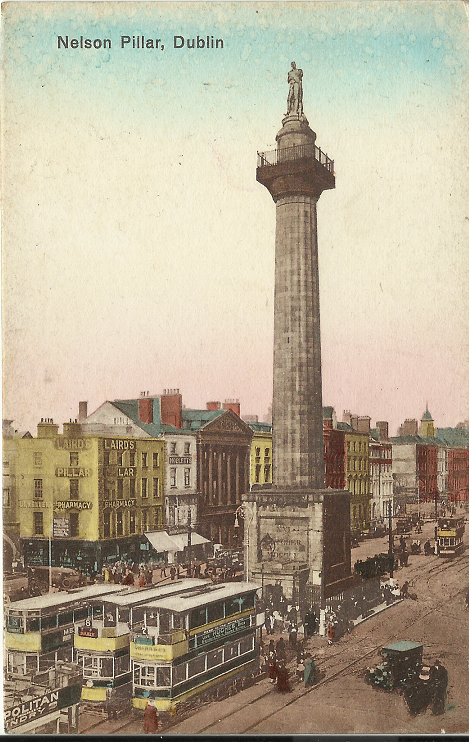
A postcard image of the Nelson Pillar (Fallon collection)

By the mid 1920s a wide variety of people and organisations were calling for its removal of the monument with even the Royal Institute of the Architects of Ireland wading in on the debate, noting that in their opinion the monument “though possessing definite architectural merit, is so wrongly placed in its present position that it ought to be removed to a more suitable site.”

The Irish Independent noted in 1925 that:

One wonders why the proposal to remove the Nelson Pillar should be made now. We are told it has no political significance. The cost of taking down the Pillar would be considerable and it would be so much public money wasted at a time when the rates are very high and every penny the Commissioners can spare is urgently needed for constructive work.

(more…)

Read Full Post »

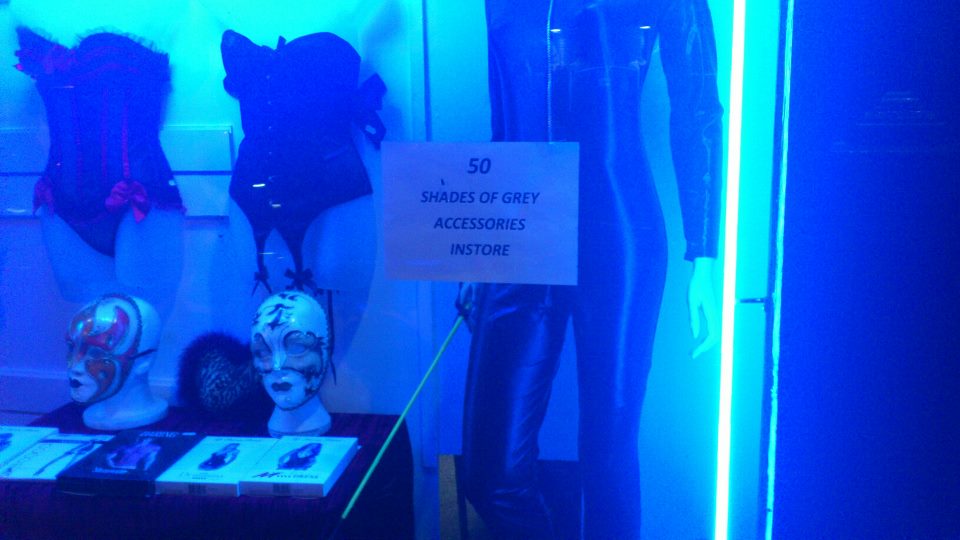
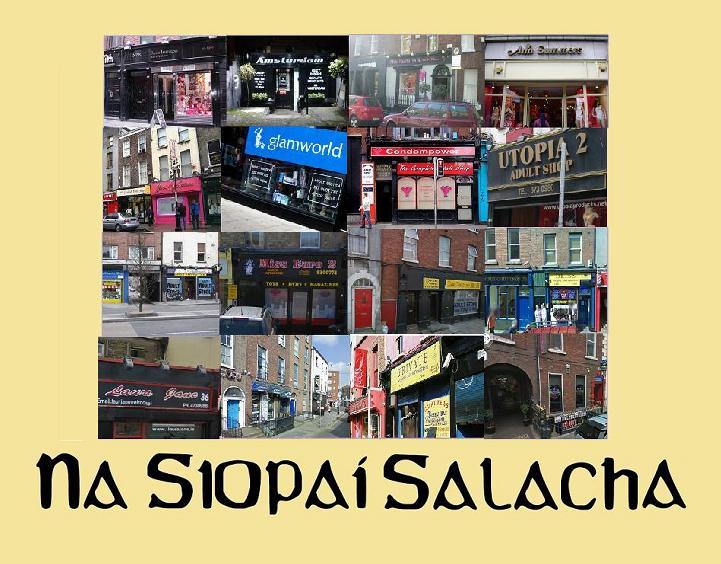
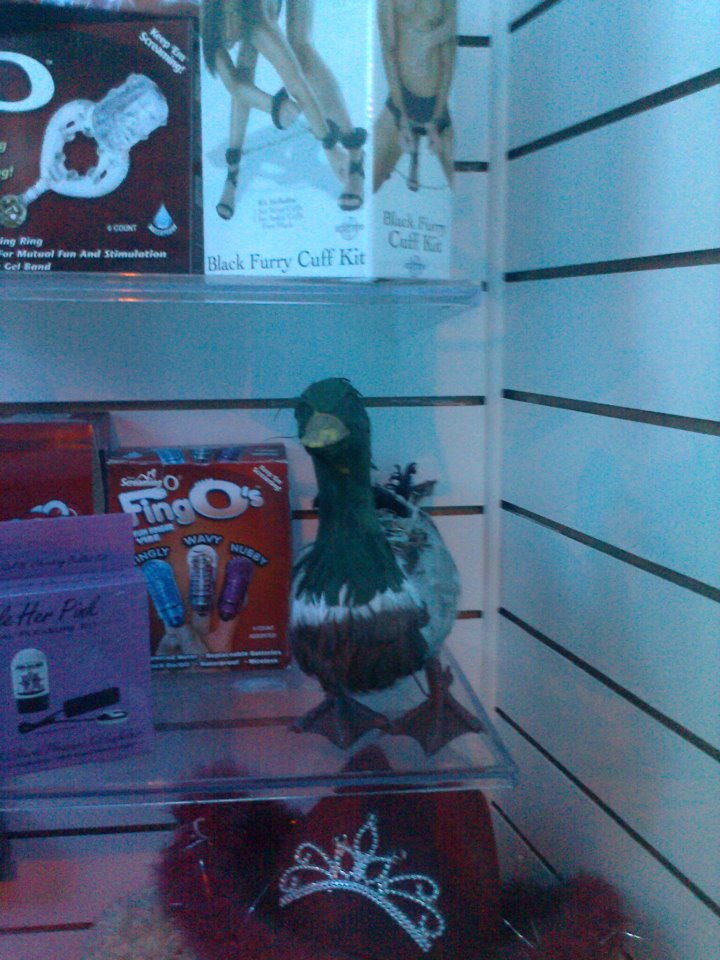
My friend Angela snapped this image of a rather odd sign in the window of a Capel Street adult shop. I forgot to ask if it was the same shop which recently featured this duck in its window display. Back in February, we featured a piece on the history of the adult shops of Dublin.

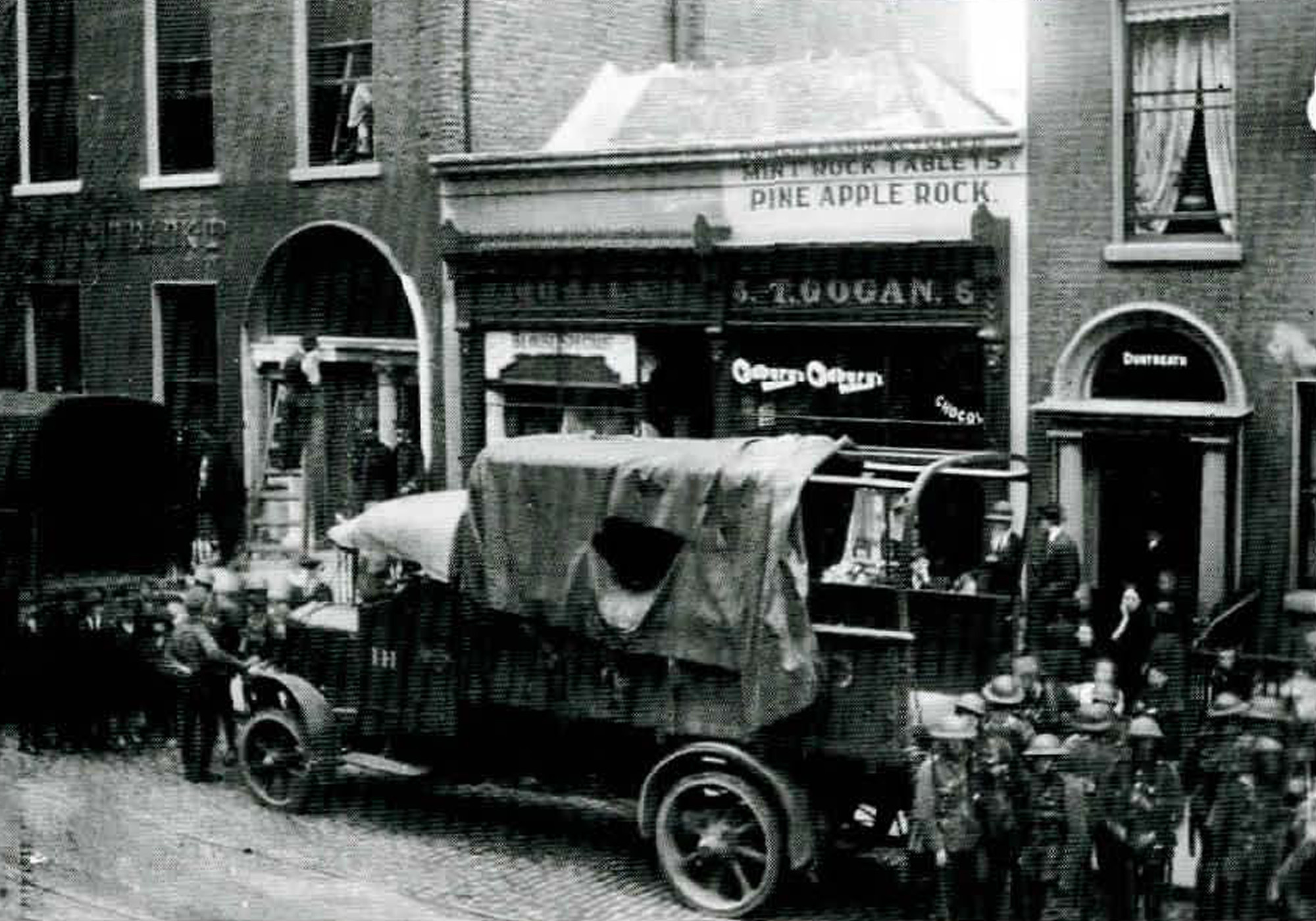
When Utopia made the short journey into the Irish capital in 1993, it arrived on Capel Street, today home to more sex shops than any other street in Dublin. Utopia however, was about to become Utophia. While the signwriting tradition is sadly dying out in Dublin today, and hand painted shop fronts are few and far between, a painter was given the honour of putting the name above the door of Dubin’s first sex shop. Incredibly, and in the spirit of a good Dublin story, he spelt it wrong and Utophia was born, as it was to remain.

CHTM’s take on the classic ‘Doors of Dublin’/’Pubs of Dublin’/’Cliches of Dublin’ posters.

Read Full Post »

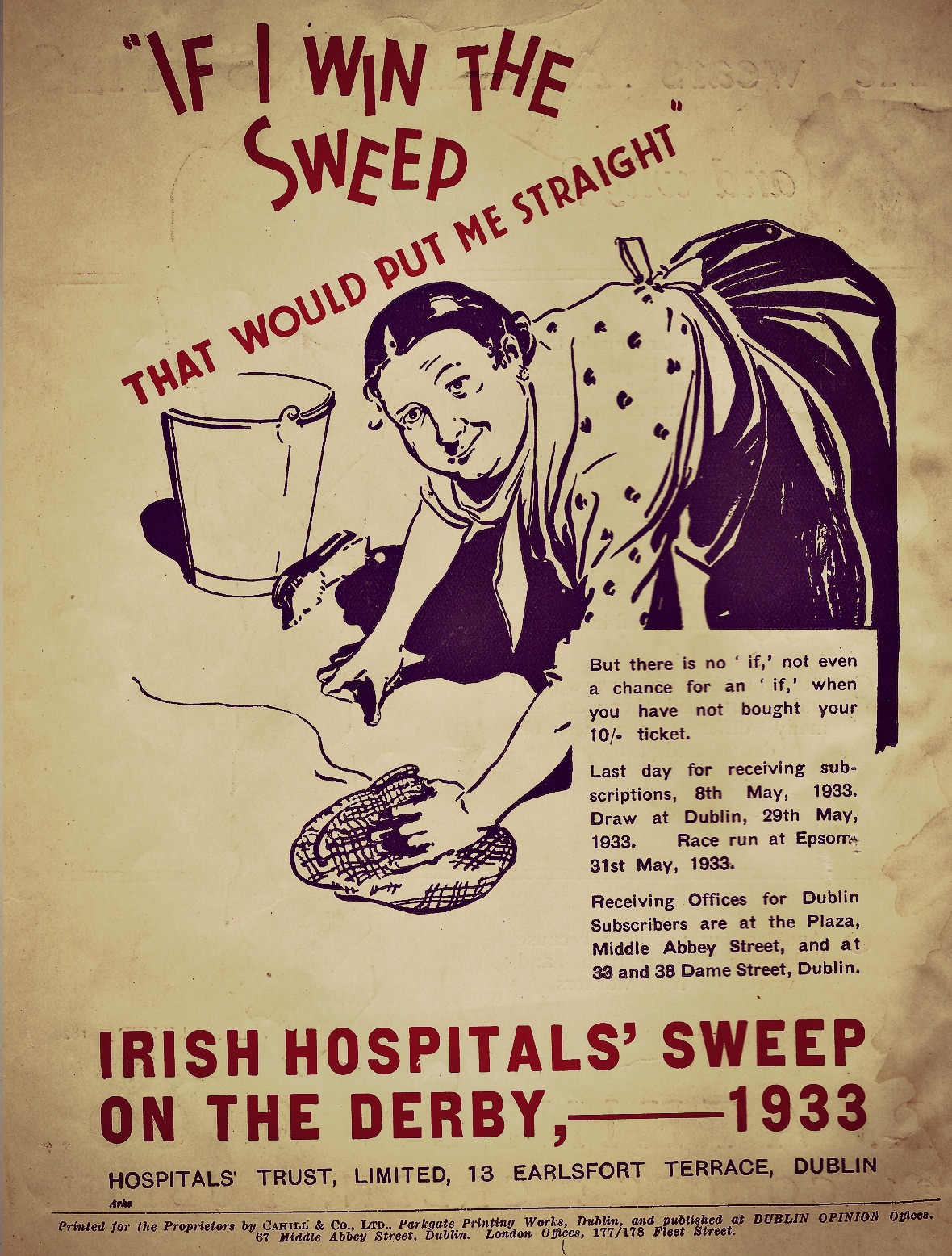
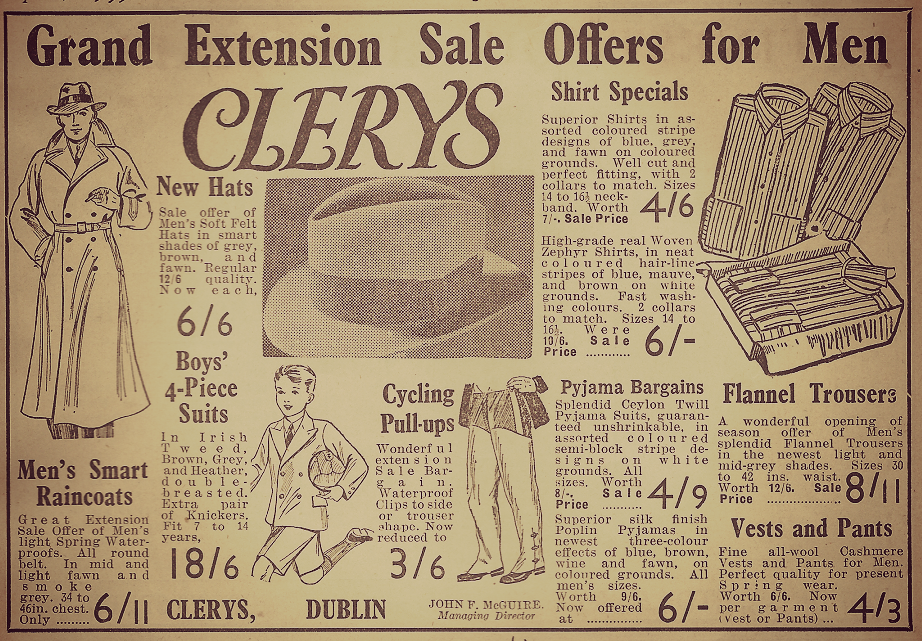
These fantastic advertisements have all been taken from the April 1933 edition of Dublin Opinion magazine. I’ve always had a fascination with old advertisements, and these are some of the more interesting ones in the pages of the magazine.

Some have been chosen for their illustrations, others for the product being sold.

Electricity Supply Board

Irish Hospital Sweeps

Clerys, O’Connell Street.

(more…)

Read Full Post »

Previously, I’ve looked at what I consider some classic Dublin books on the site, with G.Ivan Morris’ In Dublin’s Fair City (1947) and John Harvey’s Dublin (1949) featuring in the past.

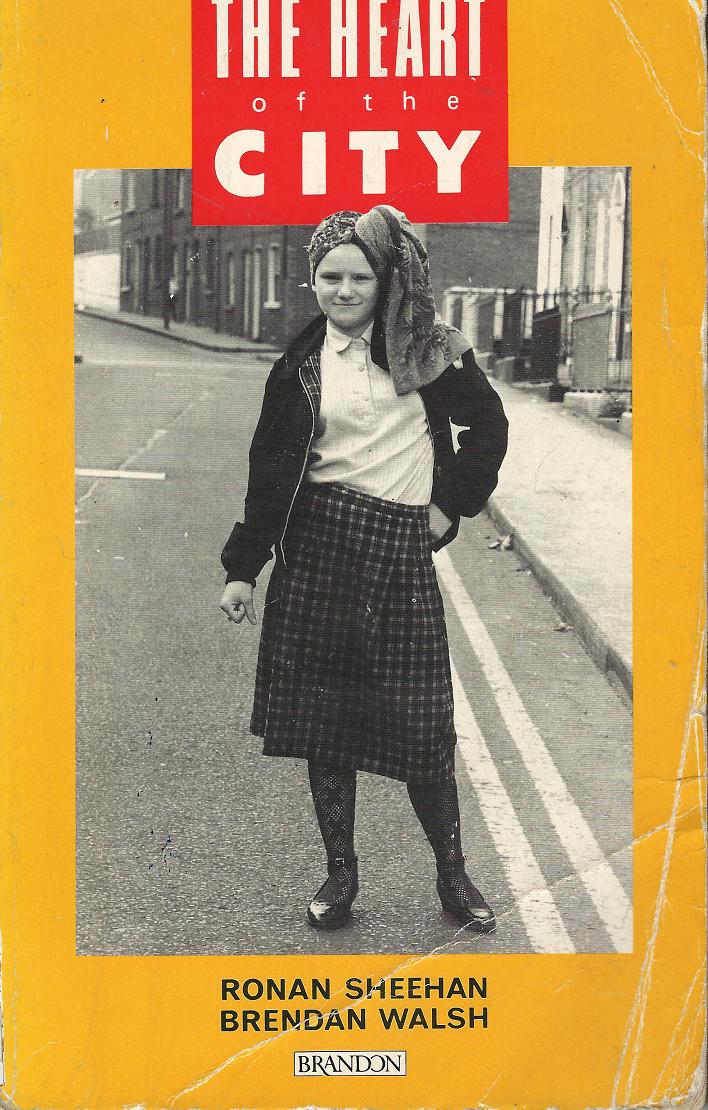
This post deals with the excellent book The Heart of the City, released in 1988. The book was a collaboration between Ronan Sheehan, who wrote the text, and photographer Brendan Walsh. It is a book I stumbled across by chance, but which I consider one of the finest studies of inner-city Dublin produced to date.

‘The Heart Of The City’ (Brandon Books, 1988)

Divided into chapters like ‘The New Deal’, ‘The 1930s’, ‘Heroin’, and ‘Moral Issues of the Catholic Church’, it’s fair to say the book isn’t setting out to paint some sort of idyllic picture of life in inner-city Dublin, but at the same time it neither sets out to paint a truly grim picture. It shows the real community of the inner-city, and the good and the bad that comes with life there. The introduction from Peter Sheridan is a good an introduction as I’ve seen in any book.

The city centre is a barometer of how we measure ourselves: ‘inner city’ has become media shorthand for all things negative and I propose its abolition. The city centre is the heart that pumps life to the outer limbs. It is tradition. It is our past. It is now, the living city, and it is intimately concerned with what we are and how. It is collectively owned in a way that Raheny, or Churchtown, Howth or Dalkey could never be. It must be the concern of all when the city is subjected to, at best, atrocious planning, at worst, willful destruction.

‘The Heart Of The City’ (Brandon Books, 1988)

(more…)

Read Full Post »

A screengrab of the cover page of Oscar Traynor’s statement to the Bureau of Military History.

I’m over the moon to see the Bureau of Military History statements from the revolutionary period have gone online as PDFs, making them accessible to the general public at the click of a button. You can access them by clicking here. Previously, you had to travel to the National Archives of the Military History Archives to view these priceless documents. They recall the recollections of participants in the revolutionary period, and were collected by the state between 1947 and 1957. As a primary source they are priceless, though it should be noted they are by no means the only such source, with Ernie O’Malley for example interviewing men and women about their involvement in the period too. Focusing on the period 1913-21, the BMH statements stop just short of the civil war in 1922, whereas O’Malley and others who have carried out such research tended to ask about that period of history too.

The statements can be searched for key words, or you can browse alphabetically. In addition to the Witness Statements, the BMH website has uploaded priceless audio interviews with some participants in the revolutionary period, including Maud Gonne McBride, William O’Brien and others. They can be heard here.

The site is also home to some rare images from the period, available to view in great detail. This image below shows a raid on Sinn Féin HQ on Harcourt Street in September 1919.

‘P11: (a) Raid by British Military on Sinn Fein H. Q., Harcourt St., Dublin, September 1919.’ (BMH)

The hosting of these statements online for the general public, making them accessible to people far and wide, is a great achievement and the BMH deserve credit for their efforts. In the run up to the centenaries of the Lockout, the Easter Rising and the War of Independence, these files are now where they belong at last.

Read Full Post »

The circumstances that have brought this position about have been created and deliberately encouraged, by both the State and the administrators of local government in this city. We had here some months ago in this City of Dublin a floating ballroom on the Liffey and on that floating ballroom we had an imported band, brought over from London. There was money spent by our local administrators on that ballroom…

The above is an excerpt from the Poor Relief (Dublin) Bill, 1929. The Bill was put forward in order to help relieve the the impoverished in the greater Dublin area as the Free State, still in its infancy, struggled to deal with societal problems, yet still had money to put a floating ballroom on the Liffey during a Civic Week the same year, importing a  band from London and causing much consternation in Dáil Éireann.

The offending barge…

The questions were put to General Mulcahy of the Cumann na nGaedhael led 6th Dáil by a Mr. Eamonn Cooney, who, though a member of Fianna Fáil, made quite an impassioned speech about the haves and the have- nots of Dublin, that can be found here.

Very little about the barge itself can be found, and it resides now, a rusting wreck, on the scrub-lands at Bull Island.

Read Full Post »

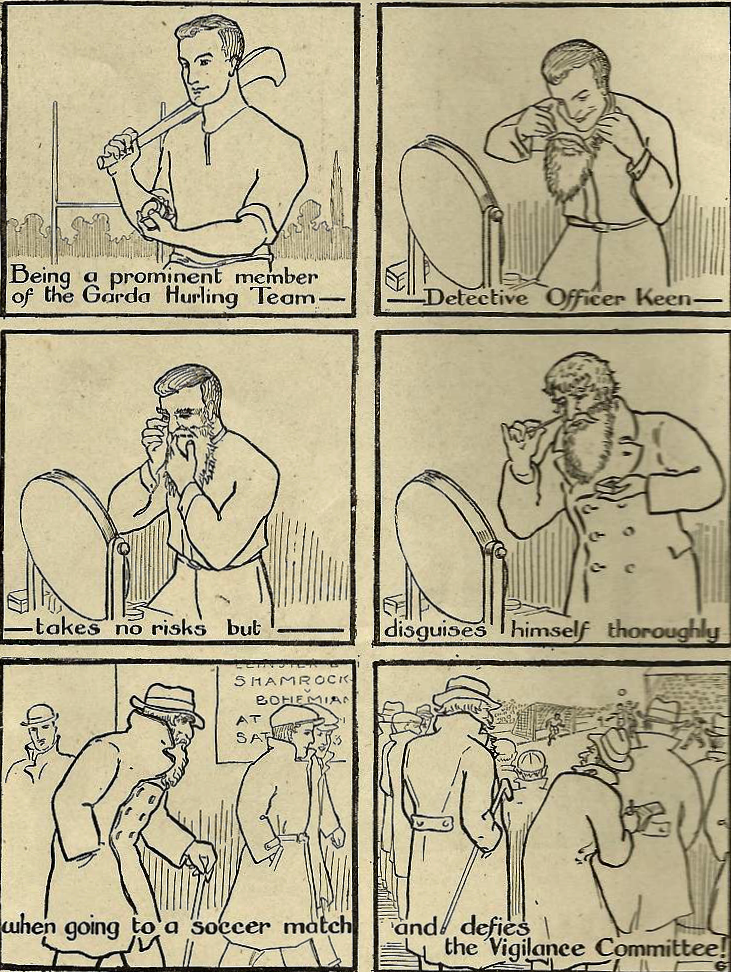
I’m a huge fan of Dublin Opinion, the classic magazine which prided itself on being the “National Humorous journal of Ireland”. I try to pick up issues of magazines like it whenever they pop up, as they’re a goldmine of content. Not only the articles and comics, but even the advertisements, are priceless. The cartoon below from the April 1933 edition of the magazine. The cartoon pokes fun at the strict ban on GAA players attending or taking part in soccer matches.

An Irish Times report of January 23 1929, reported one speaker at a GAA convention stating that

The atmosphere connected with Rugby and ‘soccer’ was inimical to Irish nationalism, and it would be very unwise to remove the ban at this stage

One speaker went one further, arguing that removing the GAA ban on the playing of ‘foreign sports’ would amount to treachery.

Mr. Murphy, Clarecastle, said that they would be deserting the Gaels in the six counties if they remove the ban.

Dublin Opinion, April 1933.

Read Full Post »

« Newer Posts - Older Posts »