Feeds:
Posts
Comments

Archive for the ‘Photography’ Category

The circumstances that have brought this position about have been created and deliberately encouraged, by both the State and the administrators of local government in this city. We had here some months ago in this City of Dublin a floating ballroom on the Liffey and on that floating ballroom we had an imported band, brought over from London. There was money spent by our local administrators on that ballroom…

The above is an excerpt from the Poor Relief (Dublin) Bill, 1929. The Bill was put forward in order to help relieve the the impoverished in the greater Dublin area as the Free State, still in its infancy, struggled to deal with societal problems, yet still had money to put a floating ballroom on the Liffey during a Civic Week the same year, importing a  band from London and causing much consternation in Dáil Éireann.

The offending barge…

The questions were put to General Mulcahy of the Cumann na nGaedhael led 6th Dáil by a Mr. Eamonn Cooney, who, though a member of Fianna Fáil, made quite an impassioned speech about the haves and the have- nots of Dublin, that can be found here.

Very little about the barge itself can be found, and it resides now, a rusting wreck, on the scrub-lands at Bull Island.

Read Full Post »

There was a time when transport by tram around Dublin wasn’t restricted to two bizarrely unconnected routes, when tramlines extended miles in every direction, spreading from O’Connell Street outwards like arteries from a heart to Dublin’s rapidly expanding suburbs.

Three companies operated the trams initially, the Dublin Tramways Company, the North Dublin Street Tramways Company,  and Dublin Central Tramways. These companies united in 1880, forming the Dublin United Tramways Company, with 137 trams running routes which totaled over 32 miles. The last horse tram ran in January 1901,  by which time Dublin had completely electrified it’s system, now with 66 miles of track, of which nearly 50 were owned by the DUTC.
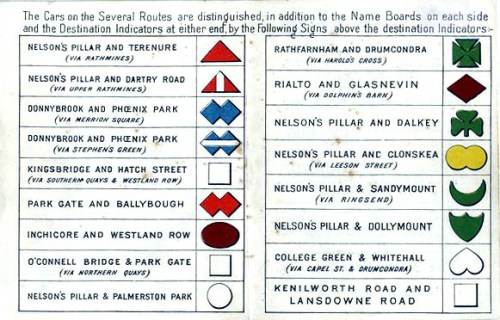
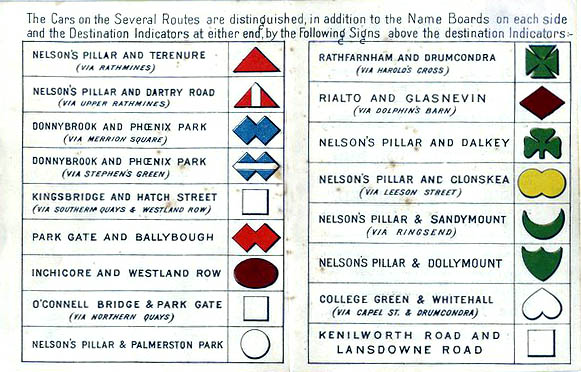
As well as numbers, the trams also had colourful route indicators. Uploaded by JadedIsle

The first tram came into service in February 1872, and ran from College Green to Rathgar. The trams generally operated within the City Centre or stretching to the more affluent South Dublin suburbs. Traveling on the trams, in the early days at least, was a luxury only Dublin’s white collar workers could afford. The majority of trams started at, or stopped nearby Nelson’s Pillar, and their terminus’  stretched to the likes of Sandymount, Blackrock, Dun Laoghaire, Dalkey and Terenure, as can be seen on the route identifier above. As well as featuring in a high percentage of photo’s of Dublin streets at the turn of the last century, they played parts in the Easter Rising, being toppled and bombed and their wreckage used for barricades, and feature in Joyce’s Ulysses.
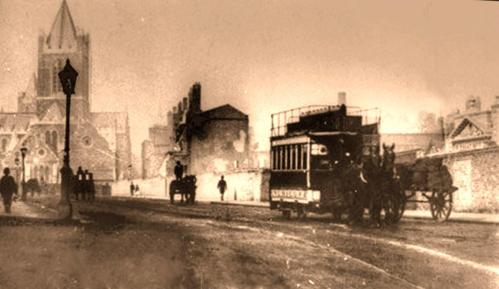
Uploaded by Cracker on dublin.ie

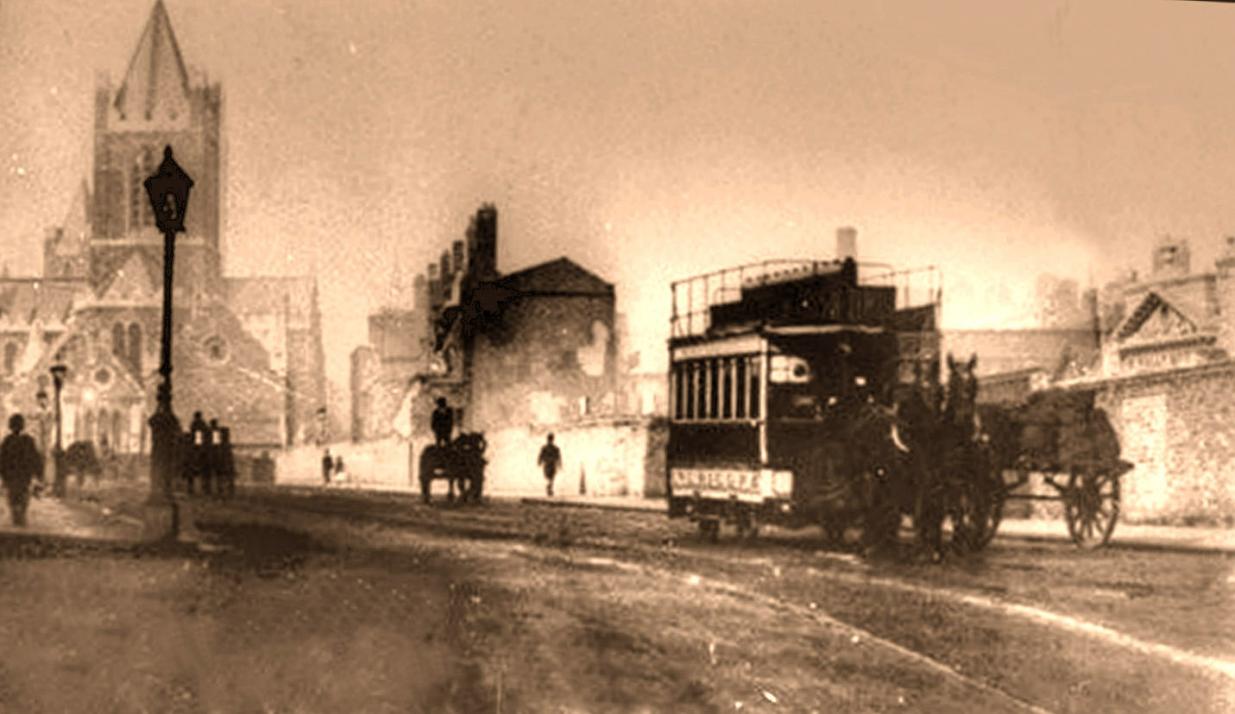
What must have been the 21 tram to Inchicore

For over twenty years after the introduction of electric trams here, Dublin was a pioneer in tram building, the works in Inchicore churning out carriages whose design would be copied worldwide. But the introduction of the car to Irish roads, the growth in their use in the twenties,  and the newly designed four wheeled “bogey,” or basically a precursor to the bus saw the abandonment of many trams. The last tram in Dublin City ran on on 9th July 1949,  with the Howth Head line lasting another ten years before it too succumbed to progress. Some of their lines can still be found around the city, relics of a time past.
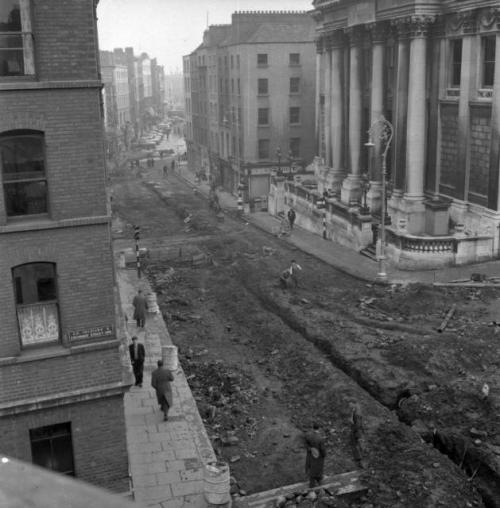
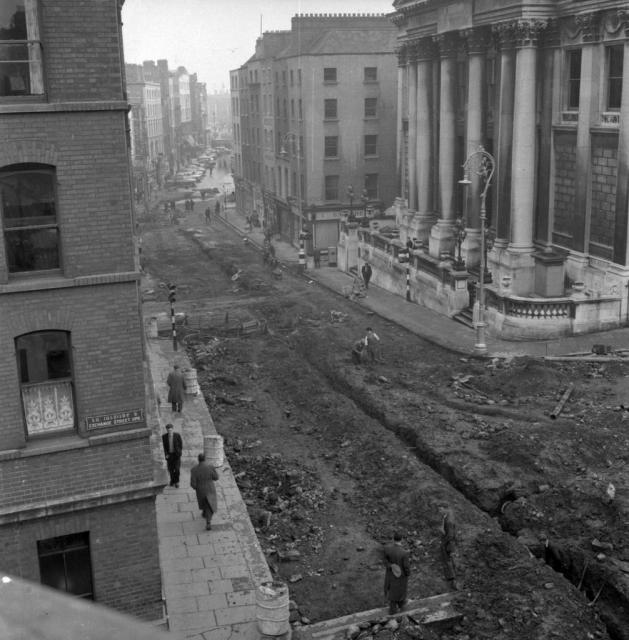
Removing the tracks at Lord Edward Street

A copy of the Dublin United Tramways Company from 2010 has been uploaded by the National Archives of Ireland and can be found here. The image of workers removing the tracks from Cork Street is from the Dublin City Council’s Photographic Collection.

Read Full Post »

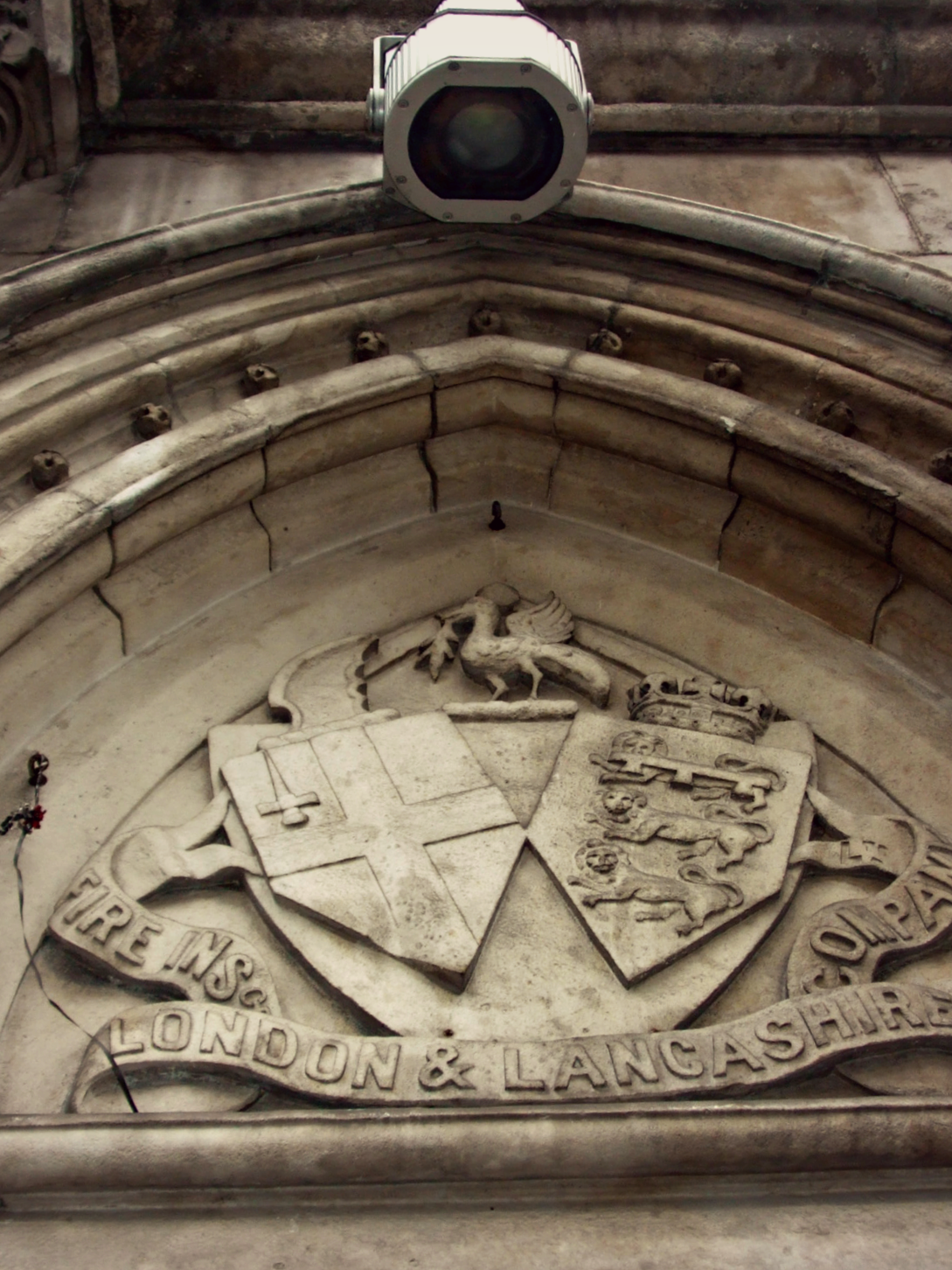
The Lafayette Building on the corner of D’Olier Street and Westmoreland Street is a real Dublin landmark, and stands in great contrast to O’Connell Bridge House next to it. It seems younger Dubs refer to O’Connell Bridge House as the ‘Heineken Building’, but the corporate advertising on the building has changed several times! The Lafayette Building, which looks straight down O’Connell Street, is a far more visually pleasing building. It takes its contemporary name from the famous Lafayette photographers. As Christian Casey has noted in her architectural study of Dublin, it was built for the Liverpool and Lanchasire Insurance Company in the 1890s. Casey has described the building as a “Portland stone baronial excercise with Gothic and Ruskinian leanings”. J.J O’Callaghan was the architect, and the work was dubbed ‘O’Callaghan’s Chance’ by his contemporaries!

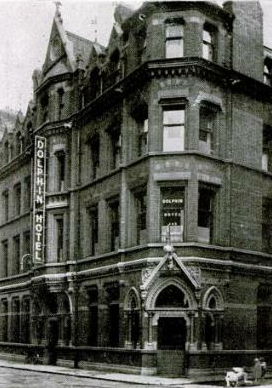
O’Callaghan’s contribution to Dublin’s architecture was significant, and as Frederick O’Dwyer has noted he designed a number of Dublin public houses for example, among them Mooney’s on Harry Street but also pubs on Baggot Street, Amiens Street and South Richmond Street among others. O’Callaghan was the architect responsible for the Dolphin Hotel, which for many years was to be found at Essex Street in Temple Bar. The building remains today.

The Dolphin Hotel in the 1930s.

The stonework of the Lafayette Building gives some indication of its former life. Above the Westmoreland Street entrance to the building, the London and Lanchasire Insurance Company logo can be seen. The building was originally constructed for use by this company:

London and Lanchasire Insurance Company.

(more…)

Read Full Post »

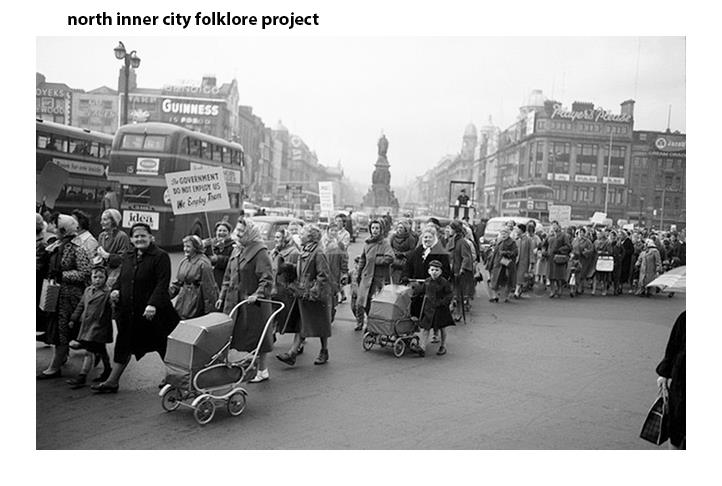
Some fantastic images here of Dublin women protesting in 1963 against the controversial ‘Turnover Tax’, which is explained in this blast from the past from The Irish Times. So controversial was the tax, it led to insults flying across the Dáil floor including “Thugs”, “Yellow”, “Contemptible”, “Coward”, “Perjurer” and “Low thing”. The images come primarily from the news media of the day, and are the kind of wonderful images that are forgotten to history unless someone goes about bringing them to public attention. The North Inner City Folklore Project thankfully saw the historic value of the images.

I like this first one for the fantastic slogan on the placard, “Stupid Men Make Stupid Taxes”. It shows a crowd of demonstrators passing College Green.

The Garda in the traffic box makes this one for me, although you’d miss him on first glance. Daniel O’Connell looks over proceedings.

Lastly, we have the protestors best weapon making an appearance, the megaphone!

Read Full Post »

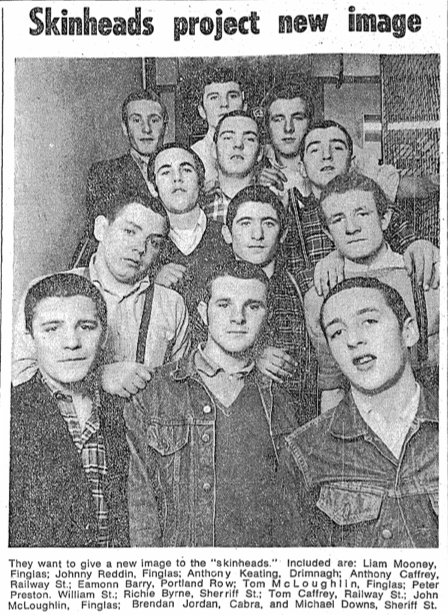
A fascinating November 1970 article from the Sunday Independent – published in full:

Members of Dublin’s only skinhead club are out to dispel the image many of the public have of them being drug users, troublemakers and street-corner idlers.

This afternoon 100 of the city’s poor children will crowd into their tiny club, the “Boot Inn”, in Middle Abbey Street for a Halloween party. The basement club has been specially decorated for the occasion and all the members of the club chipped in 10/- each for party hats, balloons, minerals and food.

Yesterday they treated 40 other children to a big party at the club and immediately afterwards the skinheads began cleaning up the place and washing the dishes for today’s party.

The skinheads are planning another big “do” for these children at Christmas. Meanwhile they are in the process of forming their own football team and hope to enter one of the city’s football leagues.

Nineteen-year-old John McKoughlin, Finglas West, who is manager of the club, said: “We just want to try and correct thus bad image which the public has of us. We are barred from every dancehall in Dublin while long haired youths are allowed in. None of our members has ever been in trouble and we have a commitment at all our dances to prevent drug-pushers entering the club. We don’t allow drugs in our club”.

Another leading member of the club, Thomas Caffrey (21), Liberty House, said that other skinheads – there are about 500 in Dublin – had tried to force their way into the club, but they were stopped.

Here is the fantastically vivid and informative accompanying picture:

Sunday Independent – Nov 01, 1970.

For similar newspaper cuttings and pictures, check out the ever expanding photo album from the Where Were You? Facebook page.

Read Full Post »

I’m a big fan of the Facebook page ‘Humans of New York’, and in excess of 118,000 other people are too. It ‘s a fantastic idea, photographing New Yorkers as they go about their business, and in many cases giving a brief bio or background information. In the last few years there was an explosion in ‘street style’ blogs, but they tended to say nothing about anything beyond where someone bought their jeans.

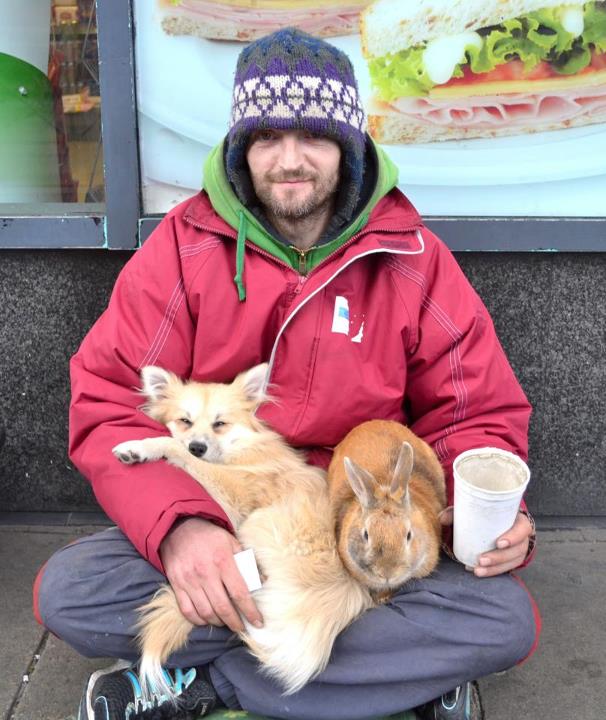
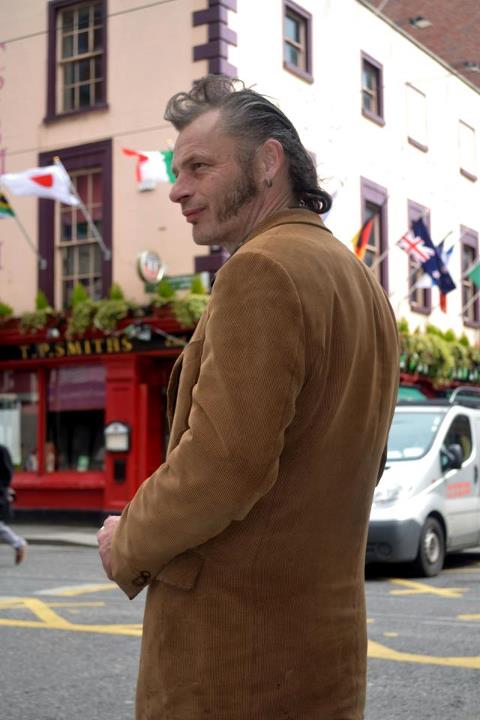
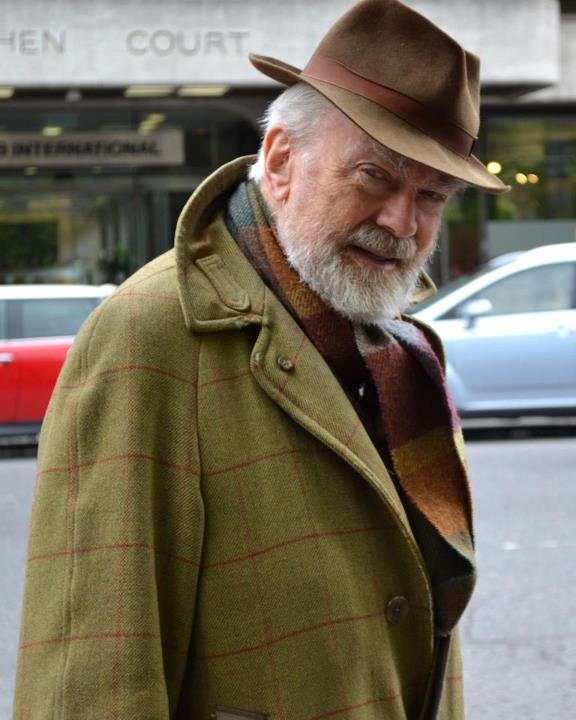
I stumbled across ‘Humans of Dublin’ today. A relatively new Facebook page, with a modest following of just under 800 users, but deserving of much more. Pop over for a look. The below are just a selection of images from the site. We wish them every success.

Read Full Post »

The story that spawned a t-shirt.

Casa Rebelde, Crow St.

Fair play to Kev Squires for designing and Dixie in Casa Rebelde for printing.

Design – K. Squires

Limited print run. €19.95 RRP. Buy online or in store (Crow St, Temple Bar).

Read Full Post »
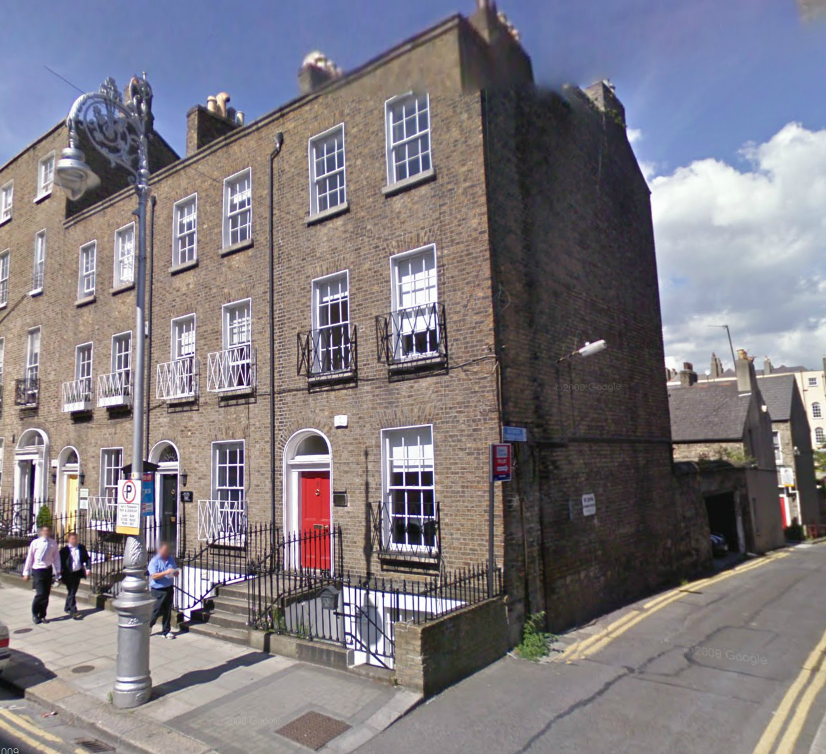
While heading to the Sugar Club yesterday from Baggot Street, I stumbled across this tiny little row of terraced houses off Lower Pembroke Street beside Fitzwilliam Square.

You can see the start of the terrace, the house with the red door, down the lane. (Picture – Google maps)

Totally overshadowed by the office buildings surrounding it, the hidden away terrace only has three houses on each side.

Anyone know anything more about them?

Mackies Place, Dublin. (Picture – JayCarax)

Read Full Post »

“The delights a stroll around Dublin can bring you. I’ve always carried my camera around with me, but have only recently started to take it out and not give a shite that I look like a tourist.

Sometimes I even post the resulting photographs up here. Below are the fruits of this weeks labours…

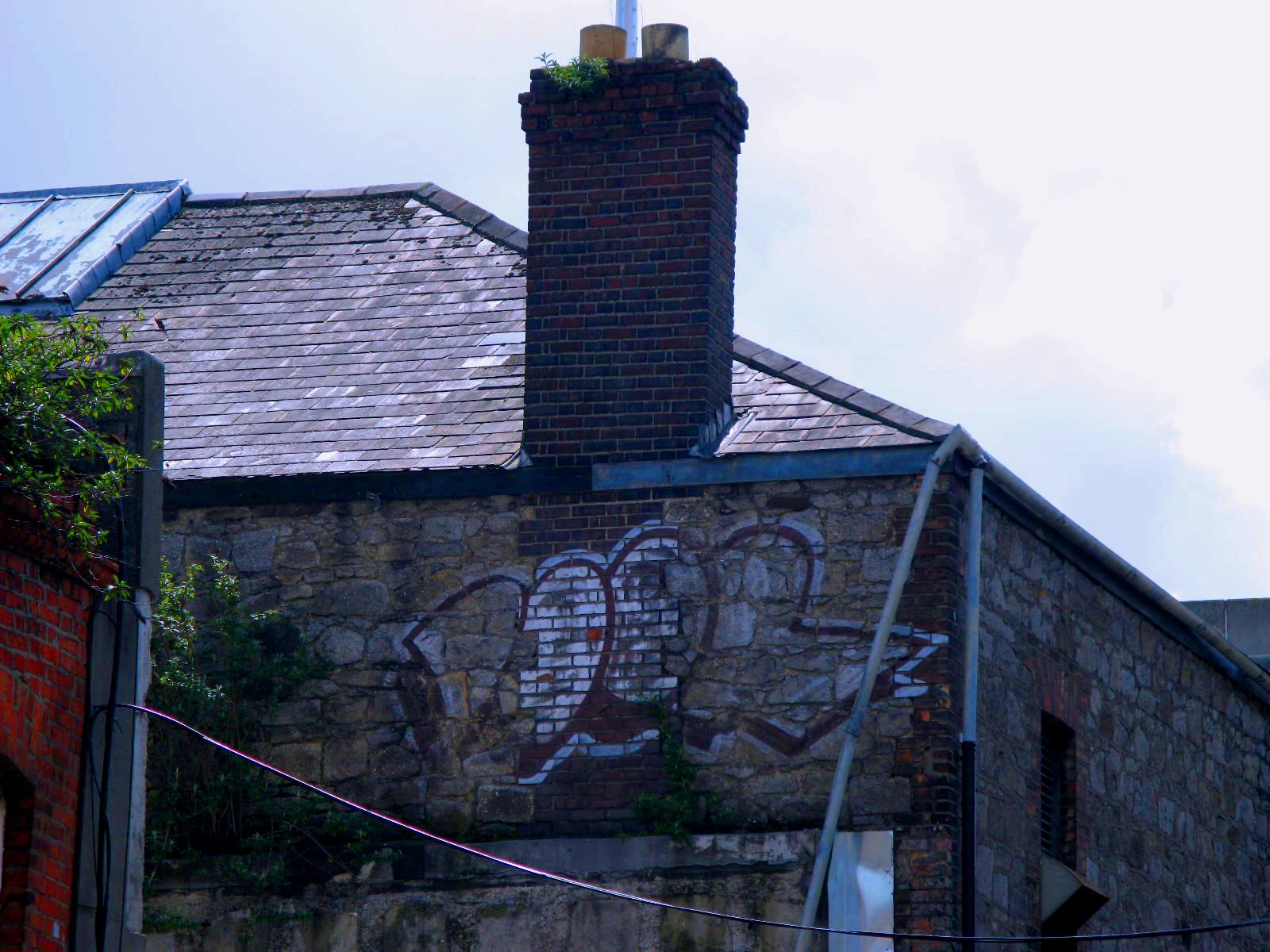
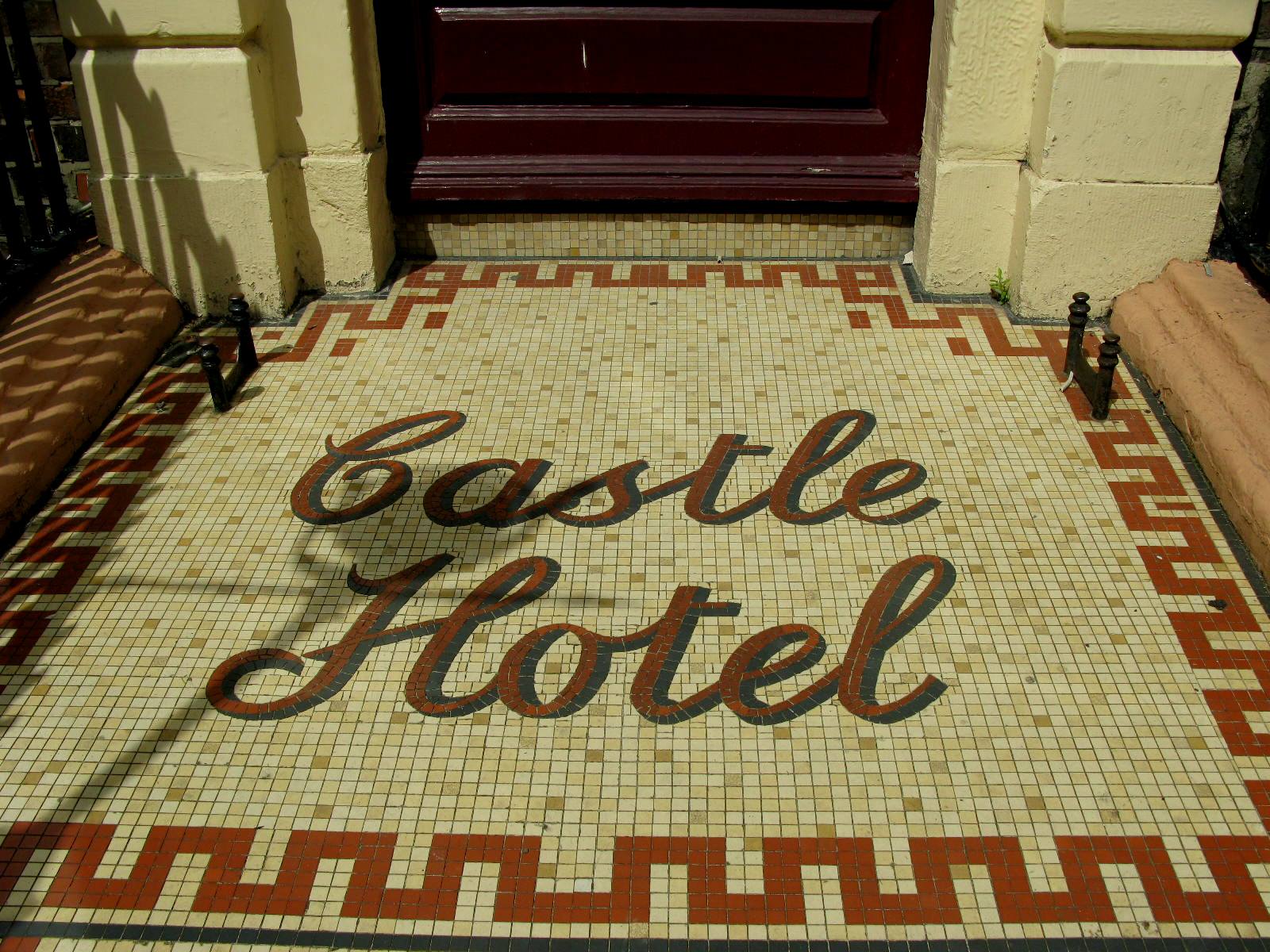
Anyone who can tell me where the above is, I’ll buy you a pint. Below, the Castle Hotel on Great Denmark Street.

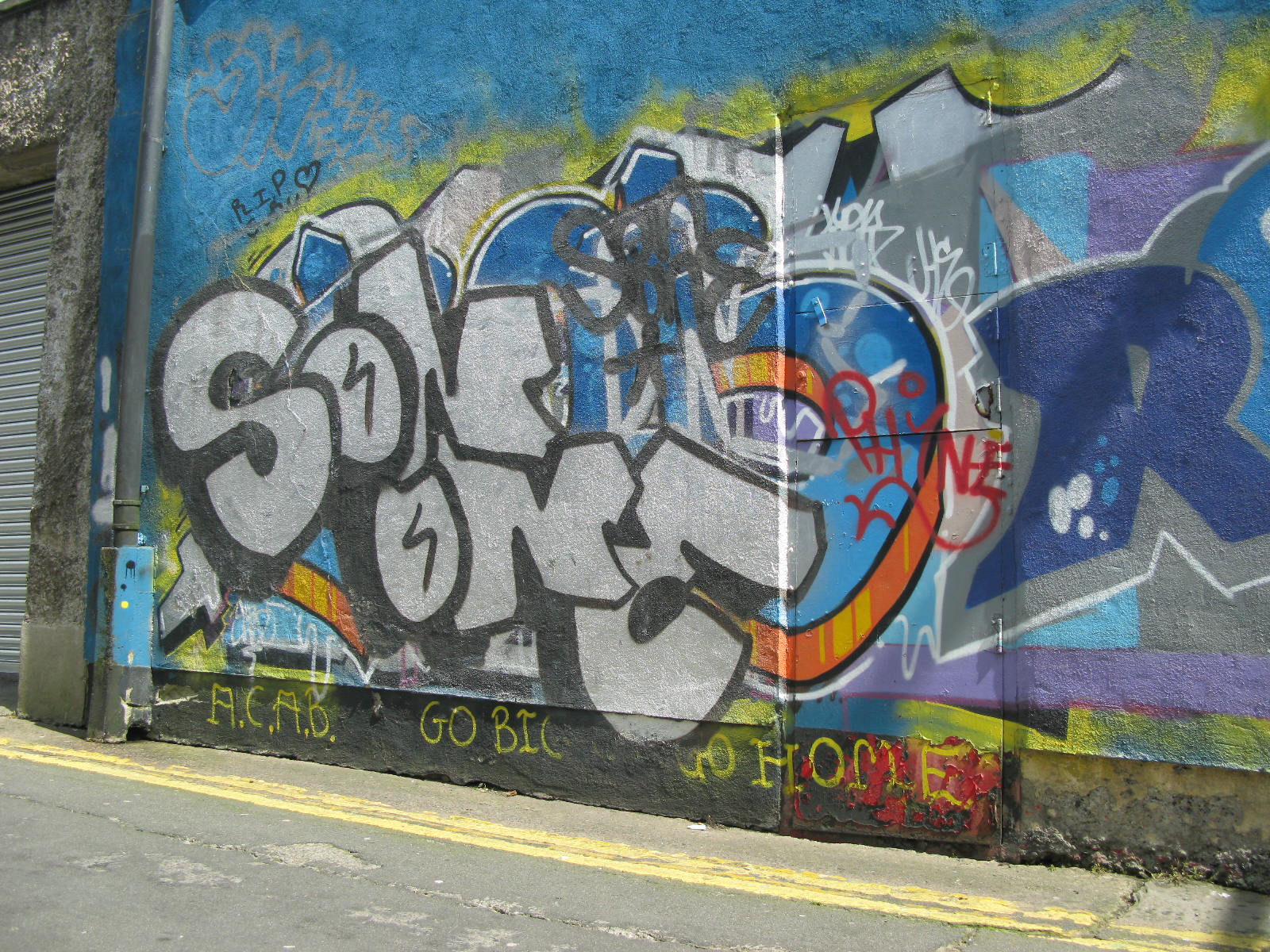
Below is a selection of graffiti from Rutland Place, a street in Dublin I’d never been down prior today… Bizaarely enough, you think you know the city inside out and then somewhere new suprises you. Pics read left to right, a good 30 foot of tags.

(more…)

Read Full Post »

I passed these earlier on today and was fortunate to be carrying a camera. The gate hinges of the National Concert Hall are truly fantastic, massive cast iron hands that grab your attention as you pass. A description of the Earlsfort Terrace gates comes from Alfred G. Jones, architect for the Dublin Exhibition of 1865, who noted that:

The principal entrance to the building is from Earlsfort-terrace, through six pairs of gates which form a portion of the enclosure wall and chain railing; this runs the entire length of Earlsfort-terrace, for a distance of 250 feet along Hatch-street. Each of the gate entrances has four piers of granite, circular on plan, 3 feet 3 inches at base, 8 feet 6 inches high, and surmounted with a cast-iron lamp-post 7 feet high. The iron gates are 15 feet wide, and 6 feet high, hung to massive cast iron hands, which are leaded into the stone piers.

The source of Jones’ comments is the old reliable Archiseek, who have a great article on the 1865 Dublin exhibition available to read here.

Read Full Post »
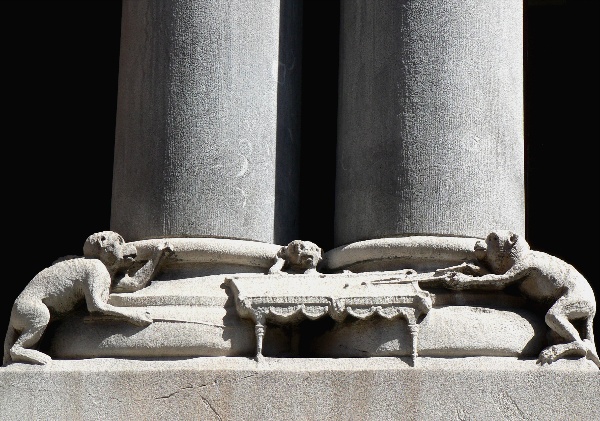
One of the most unusual and amusing architectural details in the city, in my opinion, is the stone carving of monkeys playing billiards on a window column at No. 1 Kildare Street.

Monkeys playing billards (c) Flickr user ramson

Now housing the the Alliance Française, the beautiful building was built for the Kildare Street Club in 1860-1 by architects Thomas Deane and Benjamin Woodward. Founded in 1782, the club was based at No. 6 Kildare Street from 1782 – 1860 and then at No. 1 Kildare Street from 1861 – 1977.

A fire ripped apart its original premises on 11 November 1860 killing three maid-servants and destroying their 15,000 volume library. A superstitious person might see something in the fact on May 4 1967, a fire swept through the top floor of No. 1 Kildare Street causing extensive damage.

The club merged with the Dublin University Club in 1976, thereafter sharing the premises of the latter at 17, St Stephen’s Green. However it still owns No.1 Kildare Street and currently leases the building out to a Heraldic Museum and the Alliance Française.

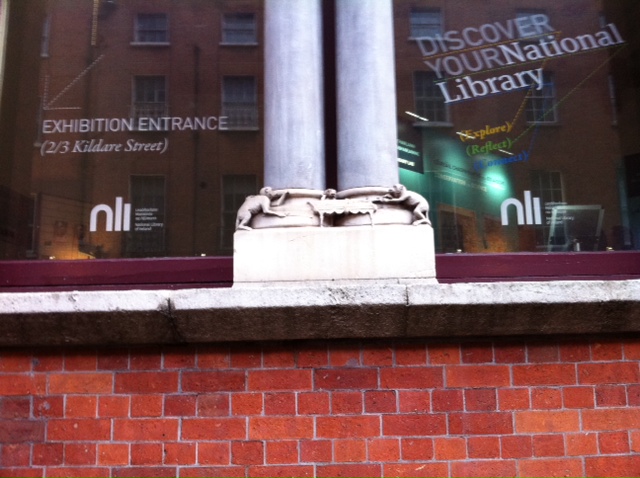
(c) A wider shot showing the monekys. From ‘http://deise-dispatches.blogspot.com/’

Debate on who the actual sculptor of the monkeys was as been going on for several decades. The three main candidates being Charles W. Harrison, the O’Shea brothers and Charles W. Purdy (Purdy & Son).

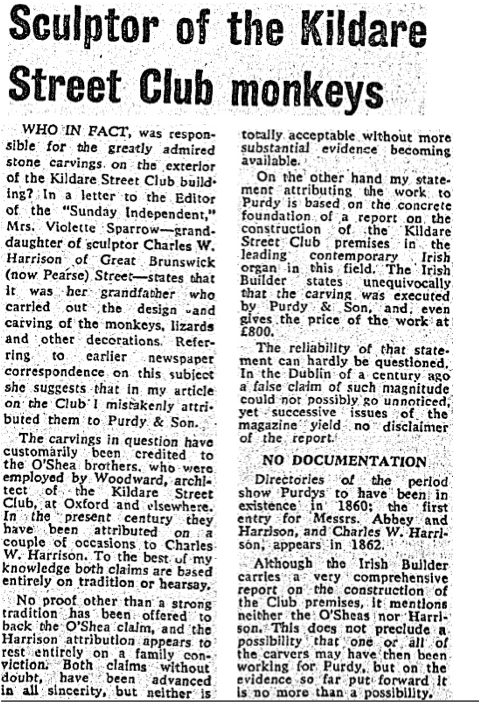
This author of this Sunday Independent article from 1969 is of the opinion that that they were the handywork of Purdey & Son.

Sunday Independent. Nov 02, 1969.

While an Irish Times article (Nov 25, 1961) alleges it was the O’Shea brothers and a piece from the Irish Press (Nov 7, 1975) states that it was Charles W. Harrison. For the record, it seems our friends over at Archiseek are on the pro O’Shea side.

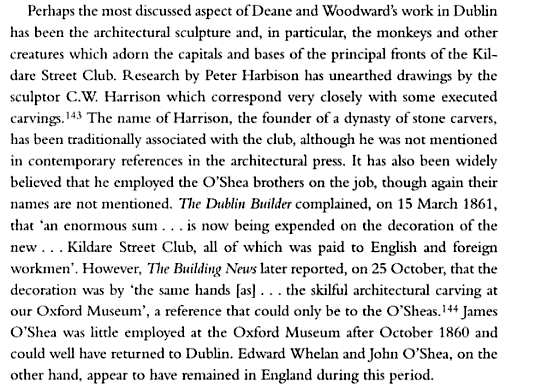
Frederick O’Dwyer in his 1997 book The Architecture of Deane and Woodward gave his own opinions on the matter:

Frederick O’Dwyer, The Architecture of Deane and Woodward (Cork, 1997), 336.

Either way, the monkeys are a wonderful piece of work. They themselves have been the source of many jokes, table quiz questions and riddles as this Irish Times piece from August 15 1928 suggests:

Quidung. An Irishman’s Diary. August 15, 1928.

Read Full Post »
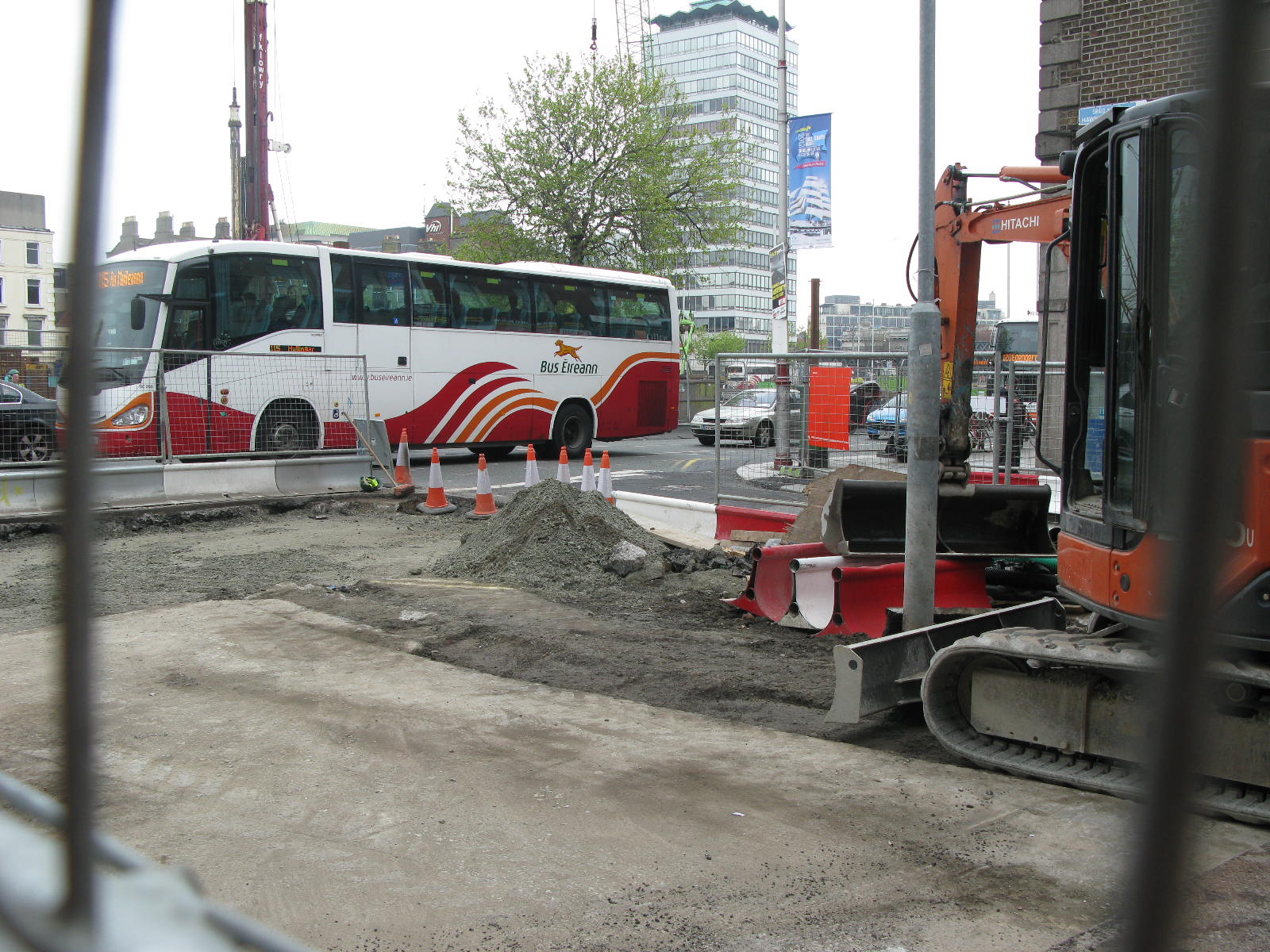
Walking down Hawkin’s Street today taking pictures for another project and had to double take when I got to the Junction with Burgh Quay- The Sheehan monument has vanished! No doubt removed to make way for what seems to be Dublin’s least required bridge connecting Marlborough Street and Hawkin’s Street, does anyone have any idea where they’re putting it?!

Above is the memorial as it was. It’s going to be redundant anywhere else, given that it is a memorial to Patrick Sheehan, a member of the DMP who entered an open sewer in 1905 to rescue a workman named John Flemming who was overcome by fumes. He succumbed himself and both men died. Listed as helping are Tom Rochford, Clerk Of Works and Kevin Fitzpatrick, a Hackney driver. Below is the scene today:

So… Does anyone know the memorial’s fate?

Read Full Post »
« Newer Posts - Older Posts »