Feeds:
Posts
Comments

Archive for the ‘Photography’ Category

10. Skippers Alley

Between Lower Bridge Street and Winetavern Street, four alleyways used to extend from Merchants Quay to Cook Street,  now only one, Skippers Alley, can be traced today in the modern landscape.

From 1798:

Lower Bridge St.

|Swan Alley| |Skippers Alley| |Chapel Yard| |Rosemary Lane|                 

Winetavern St.
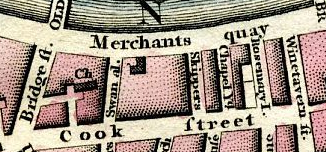
1798

Things looked the same in the middle of the 19th century, though the Chapel Yard has been renamed Adam & Eve (after the tavern and then church situated there):
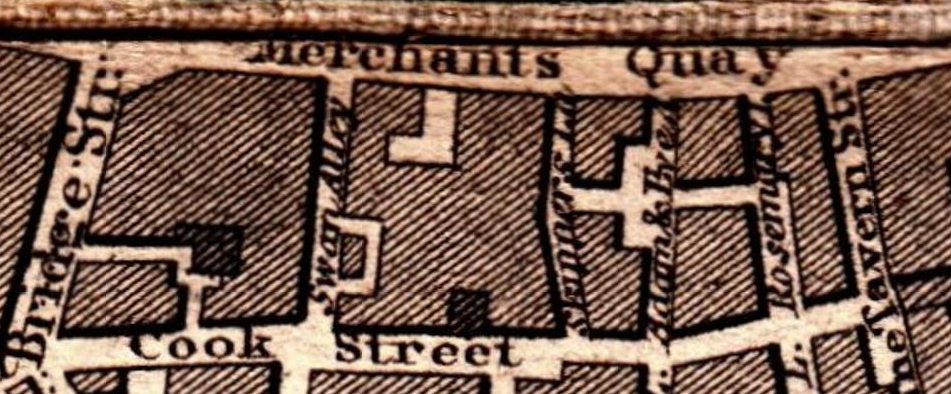
1836

Today, only one of those four remains – Skippers Alley and it can be seen on Google Maps (just before the ‘M’ in Merchants Quay) It’s quite unusual that Google Maps included such as nondescrript lane, they usually don’t.
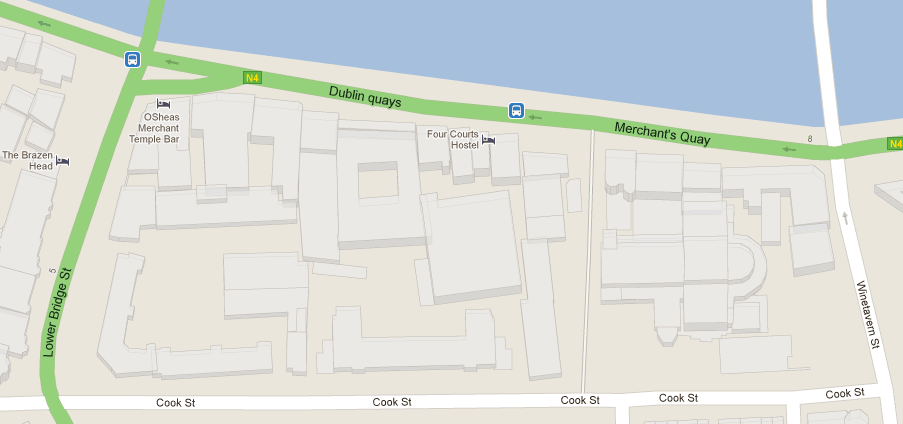
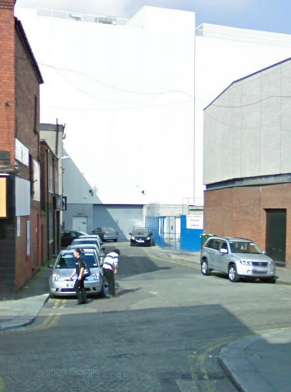
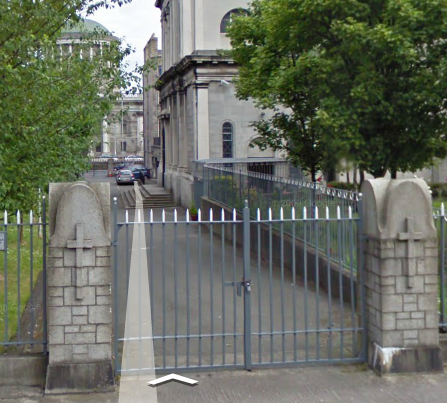
The (locked?) entrance to Skippers Alley from Cook Street:
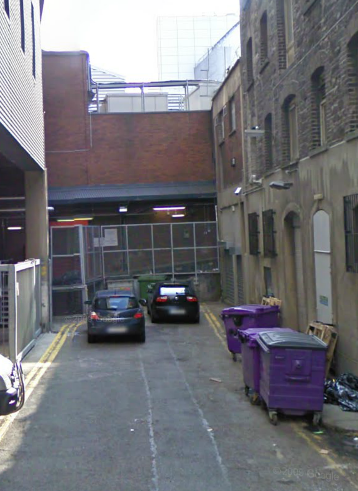
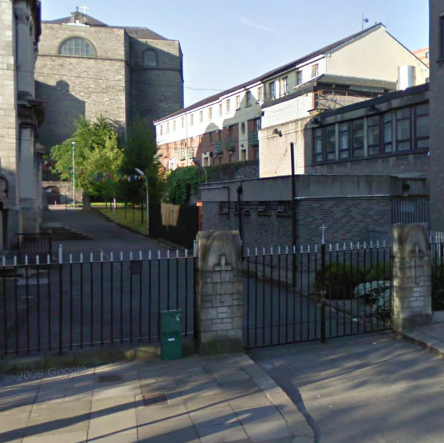
The view from the Merchant Quay side. It doesn’t look like much of an alley anymore:
Rosemary Lane used to be a continuation of St. Michael’s lane. What ever happened to it? I’m not sure. No doubt it was redeveloped at some point. A little bit on its history:

A passage extending from the north-eastern side of Cook-street to the Merchants’ Quay, is styled in a lease of 1403 “Lovestokes-lane,” a name subsequently changed into “Longstick-lane,” and “Woodstock-lane;” but from the early part of the 17th century this locality has been generally known as “Rosemary-lane.” The “Golden Lion” is noticed in Rosemary-lane in the reigu of James I., and in the middle of the last century there was standing in this lane part of the wall of an old cagework house, over the door of which, cut in timber, were two escutcheons, and between them the date of 1600 (J.T. Gilbert, A History Of The City of Dublin, 1861)

Read Full Post »

Its been a while since I’ve done one of these posts. Normally I take a load of snaps in one afternoon and pick out the seven or eight that stand out the most. I haven’t done so in the last while but I have managed to cobble together a few pictures I’ve taken over the last couple of weeks for a post anyways.

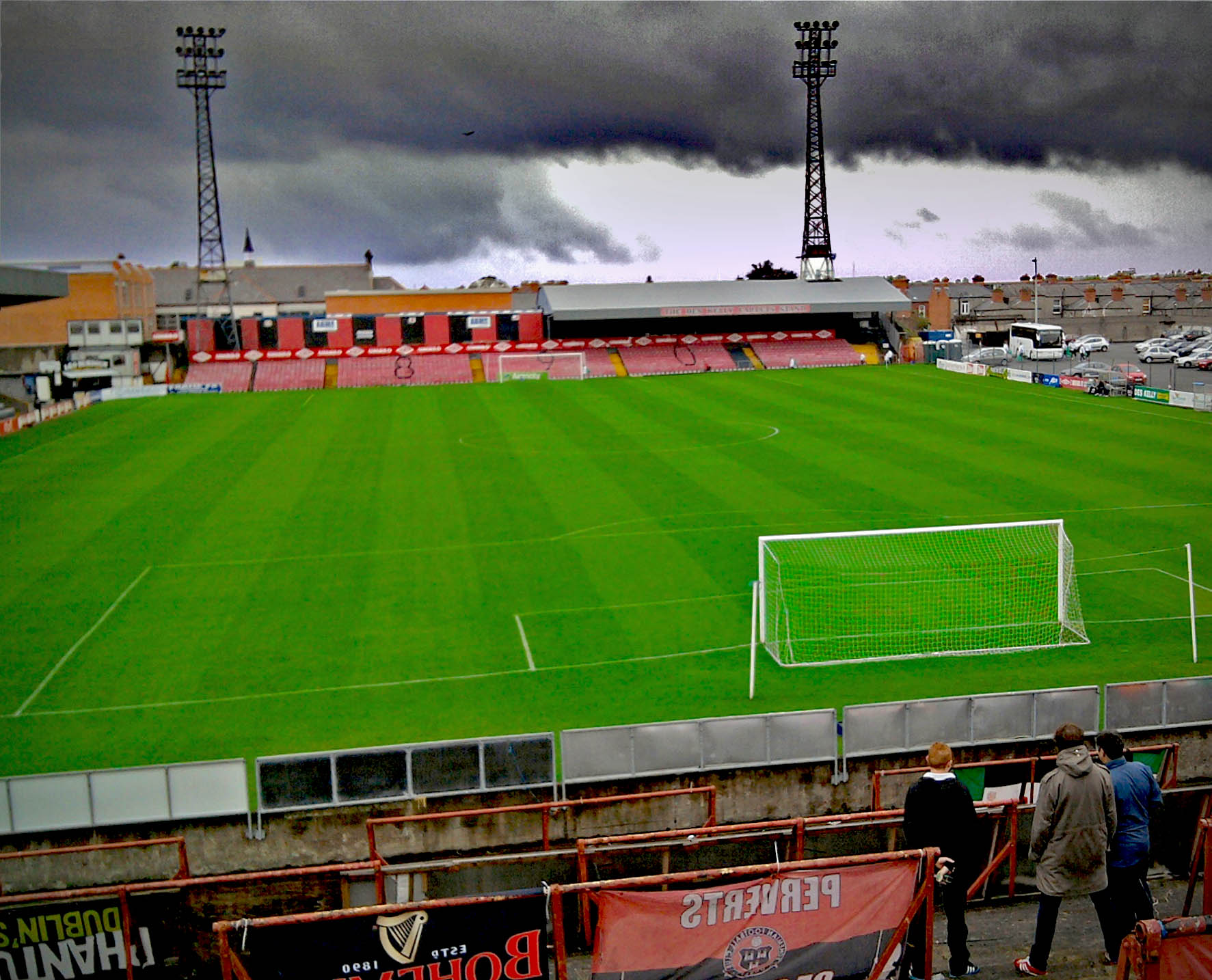
Below is a picture I took whilst putting up flags pre-game a couple of weeks ago, I think against Sligo. Obviously I’ve photoshopped it ever-so-slightly, but I like the contrast between the pitch and the dark clouds on the horizon. Arty.

Dark clouds over Dalymount

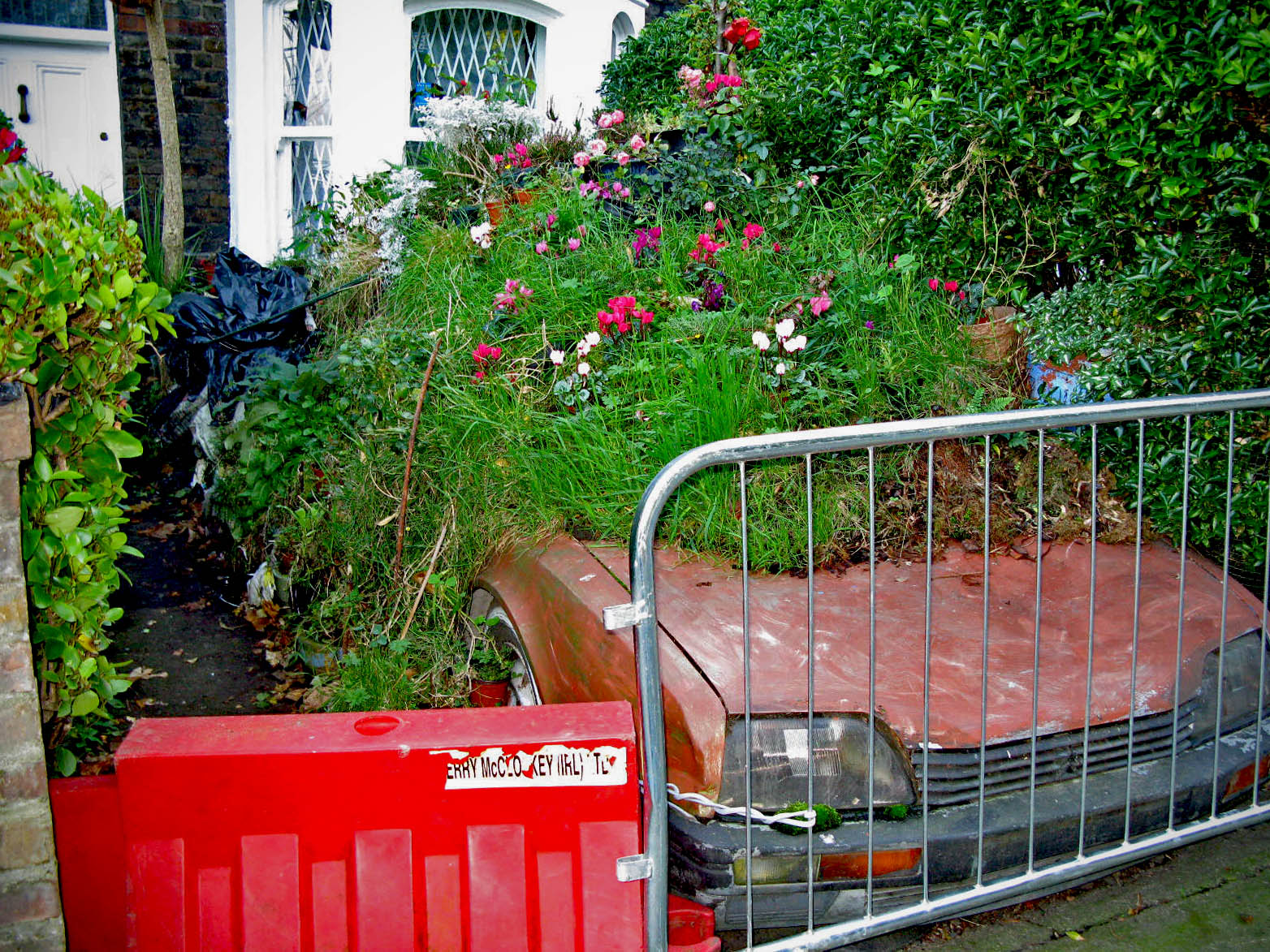
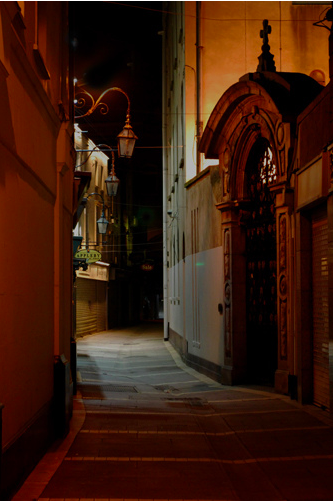
Below is a mad spot on the way home from work the other day. Anyone who can tell us where this is wins a date with your choice of CHTM! author at a venue and date of your choosing. You’re paying though.

There's a car under there somewhere

(more…)

Read Full Post »

Once connected Chapel Lane & Sampsons Lane’s relationship was ended forever, in the late 1970s, with the construction of the Ilac centre.

This development also saw the destruction of a whole host of streets and lanes: Norfolk Market, Horseman’s Row, Mason’s Market, Riddall’s Row, Market Street, Moore Place, Coles Lane, Rotunda Market, Denmark Place, Kanes Court and most importantly Denmark Street which used to be a continuation of Liffey Street.

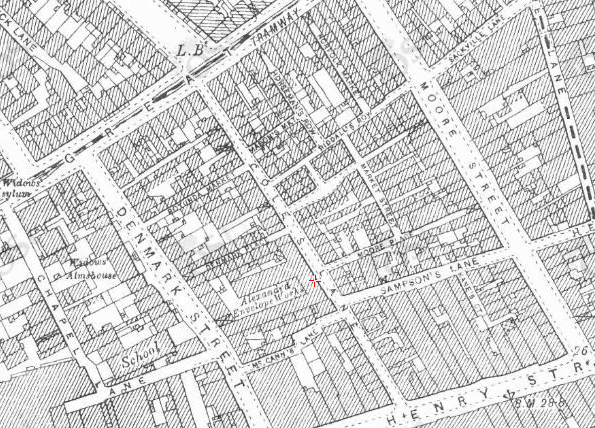
What the area used to look like in the early 20th century:

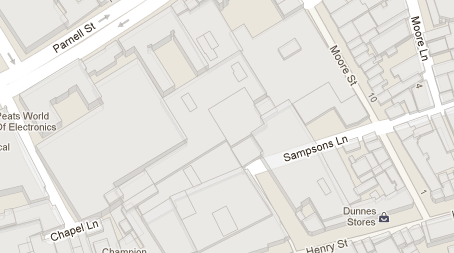
Today, only half of Chapel Lane & Sampsons Lane survive:

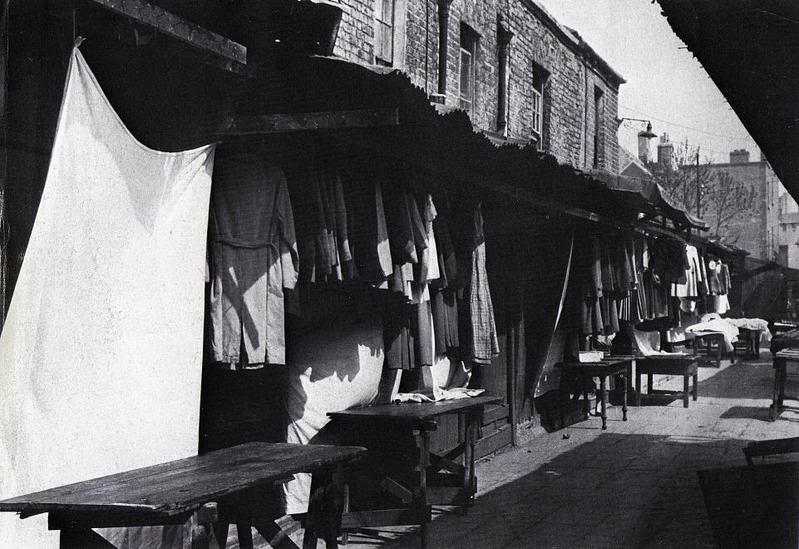
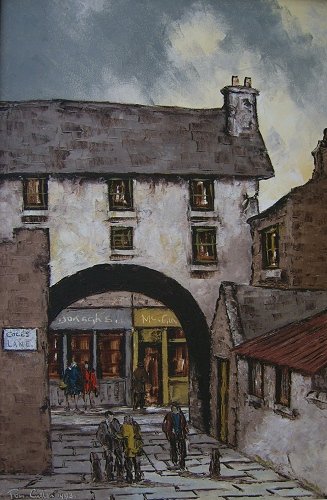
Between Denmark St. and Moore St, there used to be Coles Lane:

Coles Lane, 1950s. (Picture - Rashers)

Coles Lane, nd. (Tom Cullen)

Looking down what’s left of Sampsons Lane today:

From the other side, looking at where Chapel Lane has been cut off:

I don’t think any other shopping development in the city centre (e.g. Stephens Green S.C. and Jervis St. S.C.) ‘redeveloped’ an area so traumatically as the Ilac Centre which led to the disappearance of at least eleven streets and lanes.

Read Full Post »

A lovely series of lanes just off O’Connell Street.

Today it looks like this:

As you can see O’Connell Street, Cathedral St., Thomas Lane and Cathal Brugha St. form a sort of rectangle. This was not always the case.

This map from 1907 shows that Cathal Brugha St. is a relatively newly laid out street and that before that Findlater Place used to connect with O’Connell Street. On the other hand, Cathederal St. and Thomas Lane remain unchanged.

Findlater Place was known as Greggs Lane (until 1881) as this map from 1848 shows:
Looks the same going back to 1818:

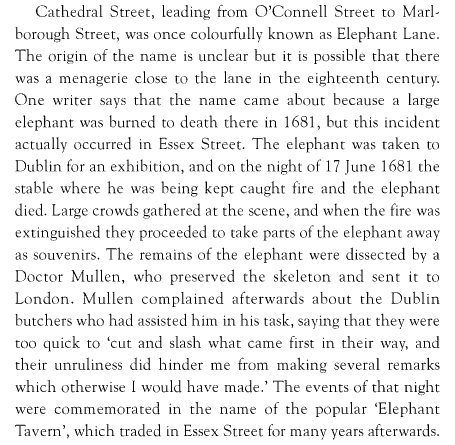
How did Elephant Lane get its unusual name? Frank Hopkins, in the ever wonderful Rare old Dublin: heroes, hawkers & hoors (Dublin, 2002) speculates:
p107

Elephant Lane became Tyrone Place in 1870 before being renamed as Cathedral St. in 1900. The view from O’Connell Street today:

One view of relatively ugly Thomas Lane:

”]

Read Full Post »

Reviews a week after a gig don’t generally make sense so I’m sorry. My excuse here is that a gig it took me two days to get over and then a further three days to get my act together and get the pictures up online whilst struggling to get coherent words together to get out into the blogosphere MUST have been good. That, and the fact that I haven’t written a review or well… anything on here in ages. (Again, my apologies.)

The legend that is Bik McFarlane

Probably Dublin’s worst kept secret started doing the rounds last week after it was announced  Brendan “Bik” McFarlane was to play his first gig in Dublin. The secret being that Damien Dempsey was to share the stage with him in a fundraiser for the Preda foundation, an organisation whose purpose is the ” promotion and protection of the dignity and the Human Rights of the Filipino people, especially of women and children.” Initially to be held out in the Setanta Club in Ballymun, due to circumstances  beyond the organisers control it was moved to Cassidy’s on Westmoreland Street in what I think may have been the first gig downstairs since its recent re-opening. DFallon has spoken of Cassidy’s highly on here before and I love the place so much its starting to vie with Brogan’s for my local, and thats saying something.

Daaaaaaaaaaaaaaamo

And what a night it turned out to be. There was nobody stealing the limelight at this gig, both of the lads more than willing to chat to the seventy or so people who paid in, mingling with the crowd and sharing the mic. There was definitely no headliner and no support, each of the lads equally supporting the other – Bik got up, then Damo, then Bik, the two of them, Damo again before it became a bit of a free for all. Cassidy’s was the perfect venue for the gig; no stage, no queue for the bar and an appreciative audience.

(more…)

Read Full Post »

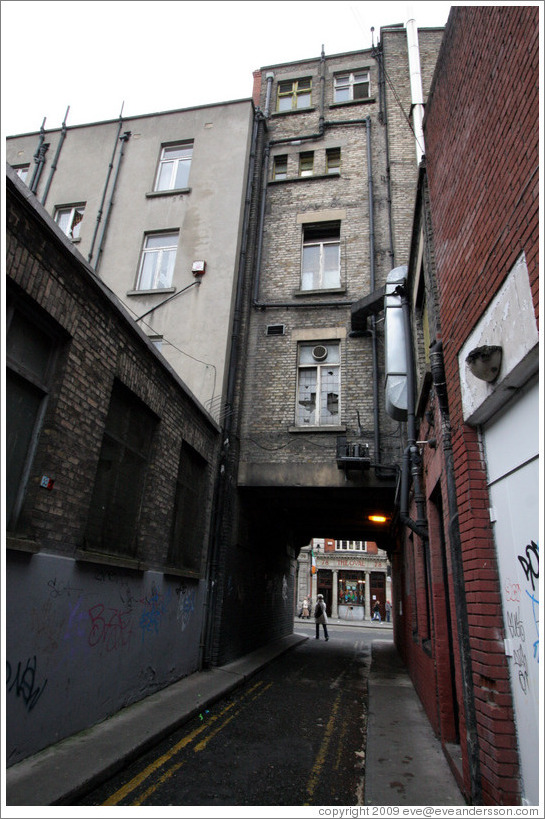
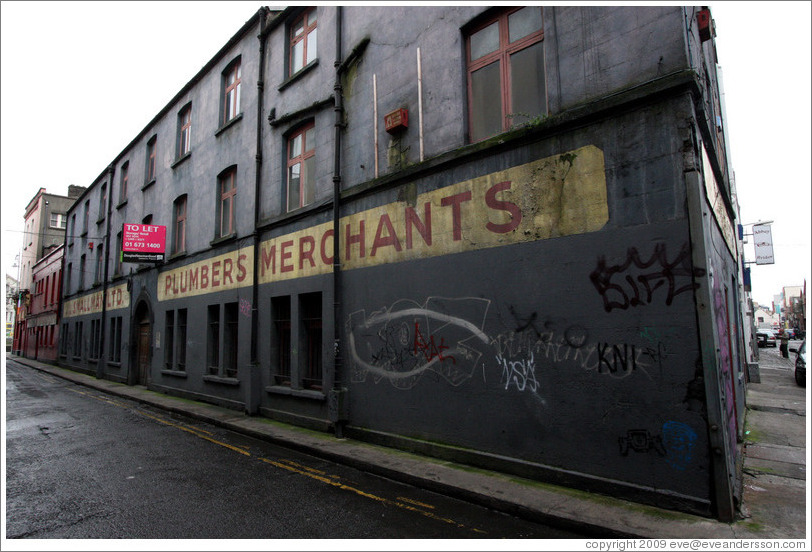
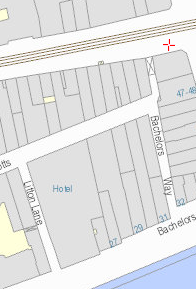
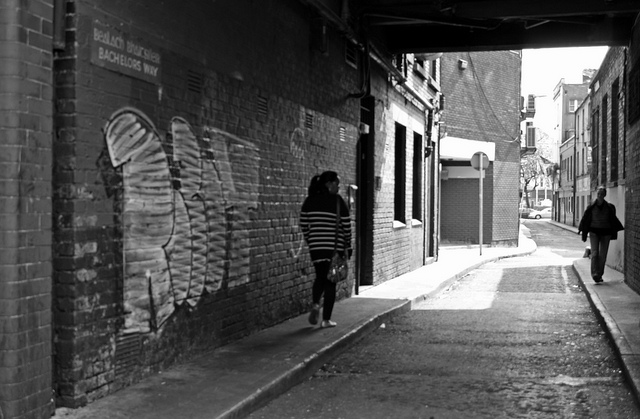
Bachelors Way, looking down to Middle Abbey Street and the Oval (Picture credit - Eve Andersson)

A dingy but practical little lane that links Bachelors Walk (entrance just beside the Bachelor Inn pub) on the quays and Middle Abbey Street (entrance between Supermacs and Book Worms).

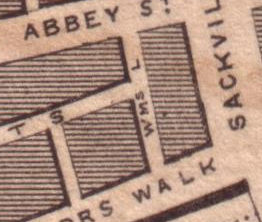
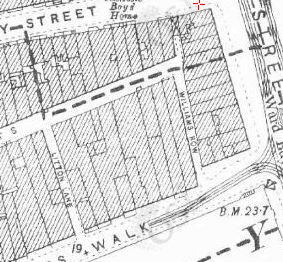
According to some maps, it used to be called Williams Lane. Confusing as there still is a Williams Lane a stone throws away. Other map mark it as Willams Row.

It is by Williams Row that the lane gets a fleeting mention in Joyce’s Ulysses (1922):

‘Mr Dedalus, tugging a long moustache, came round from Williams’s row. He halted near his daughter.’

Bachelors Way. Bachelors Inn to the left (Photo credit - Eve Andersson)

Tracing the history of the lane through maps:

1848, Williams Lane.

1907, Williams Row

2011, Bachelors Way

Not a particularly picturesque lane, I reckon most people today associate it as a public toilet and a place where junkies occasionally loiter.

Bachelors Way, looking down from Middle Abbey Street. (Photo credit - Ester Esther Moliné)

Read Full Post »

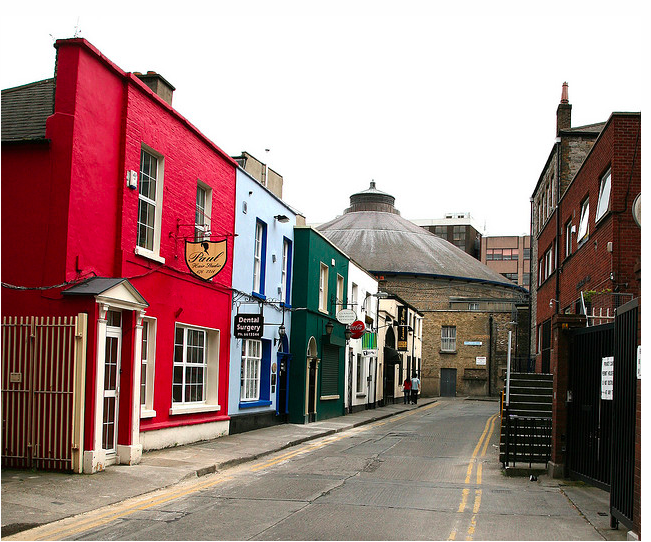
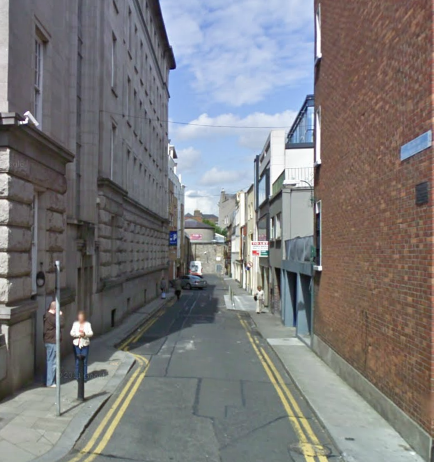
Looking from Molesworth St. down to Molesworth Place. (Picture - Kieran Murphy)

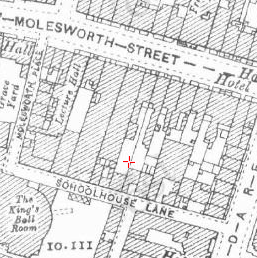
A pretty ugly (the Schoolhouse Lane side anyway) but none the less useful shortcut that links Kildare St. (entrance between the Department of Industry and Commerce and Clerkin Lynch Solicitors) and Molesworth St. (entrance between Whytes Auctioneers and the Irish EU HQ).

Molesworth Place joins into School Lane East. Presuming the latter was named after a school, I wonder where it was and what it was called? (Thanks to comments, I’ve found out there used to a be a school on Kildare Street called ‘Kildare Place National School’)

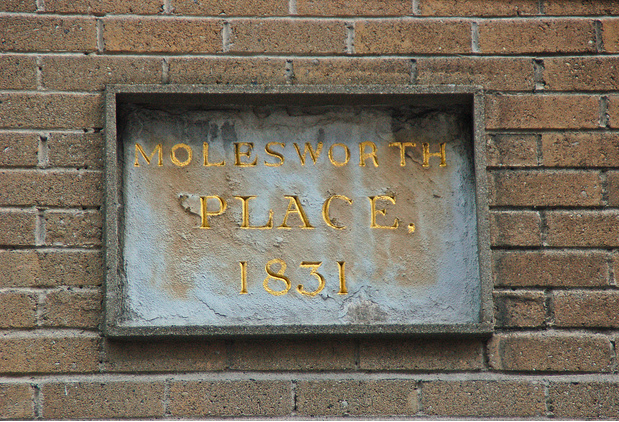
Beautiful plaque to Molesworth Place (Picture - Monceau)

Now home to the Dawson Car Park, Molesworth Court apartment, One Pico restaurant and Paul’s hair studio. Apparently it’s also been used by protesters in the past (particularly students) to slip by cops and get towards the Dail!

Looking from Kildare St. down to Schoolhouse Lane East

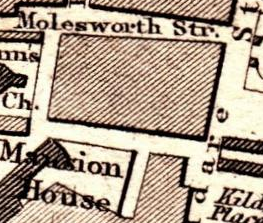
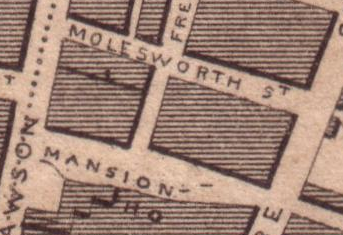
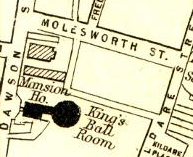
Charting its history using a number of maps:

Looking prominent in 1836 map

Still looking well in 1848

Looks like it was made more narrow and dropped to 'lane status' by 1885

View by 1907

Read Full Post »

Johnsons Court, looking from Grafton Street. (Photo credit - Paul Feeney)


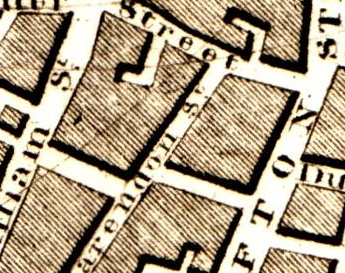
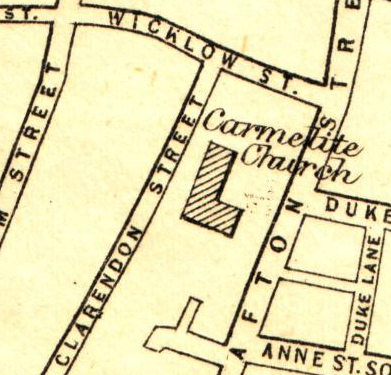
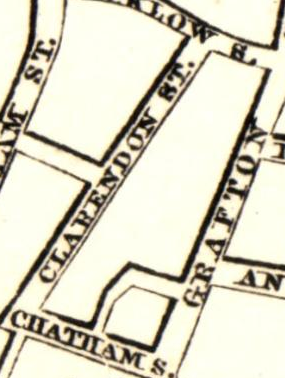
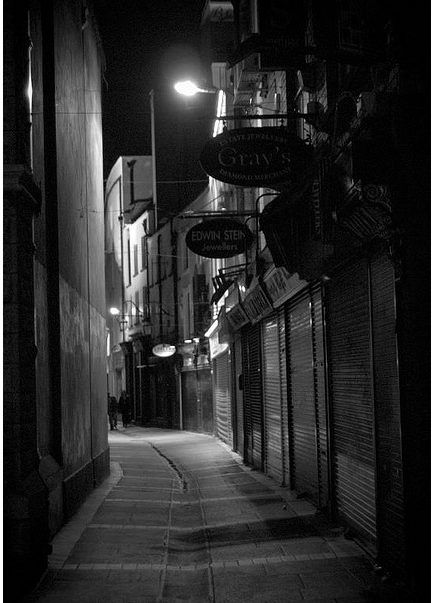
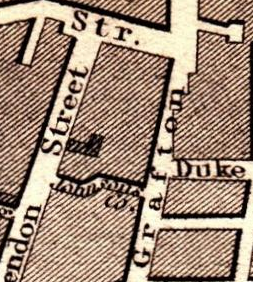
A beautiful little, narrow lane linking Grafton St. and Clarendon St., probably best known for its regular buskers, its jewellery stores and for the side entrance to St Teresa’s Church.

Visible in 1836

Visible but without title in 1840

Disappared from 1885 map


Still AWOL in 1912

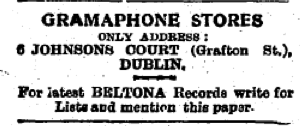
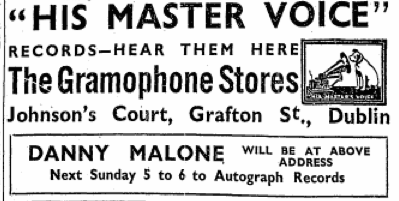
As far I can tell, it was also the site of HMV’s first Dublin store, 6 Johnsons Court, dating back to at least the mid 1920s.

Dec 19, 1925. Nenagh Guardian

May 12, 1933, Irish Independent

View from Clarendon St. (Picture credit - hc1916)

Read Full Post »

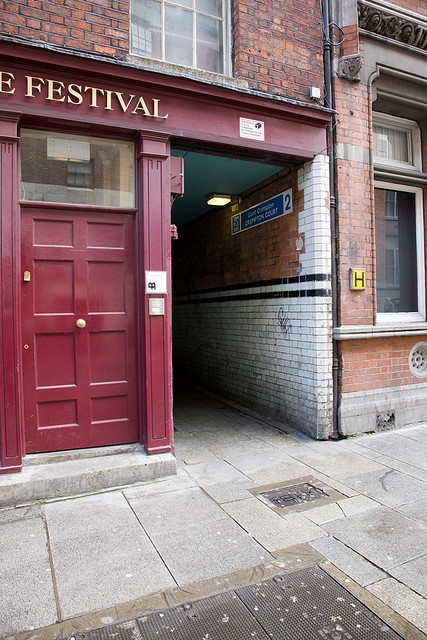
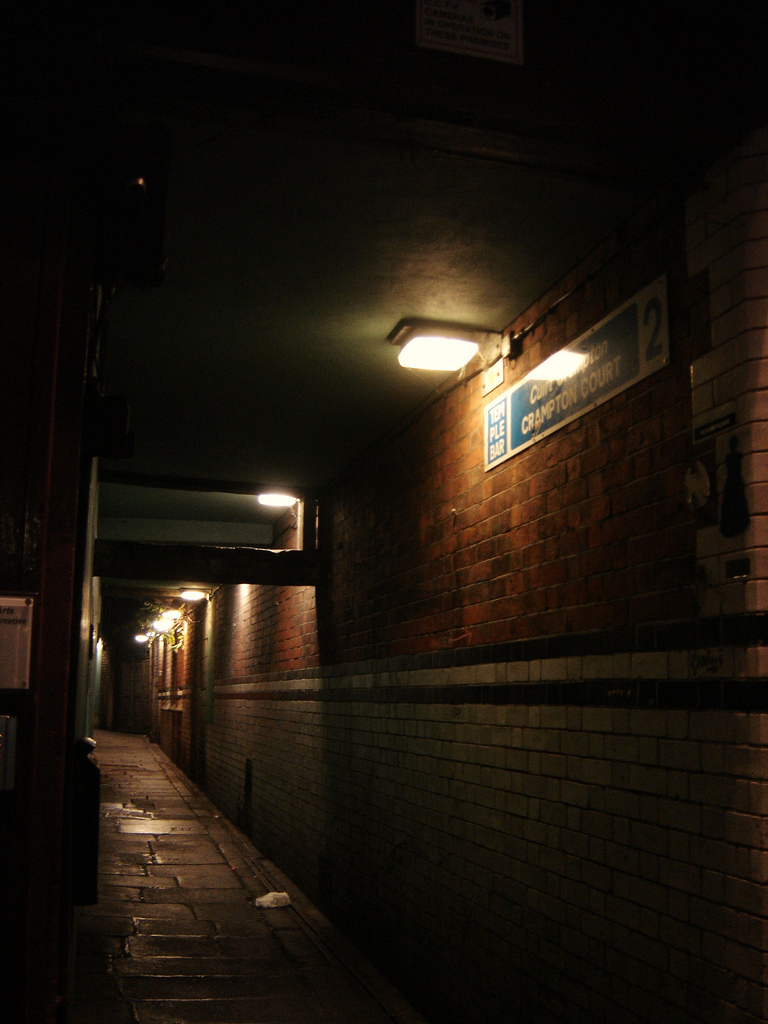
View from Dame Street down to Crampton Court (Photo credit - Trevs Photos)

This is probably my favourite little lane or passage way in Dublin. Not least because it’s not featured on any maps, it was the site of two of Dublin’s most famous 18th century coffee houses – ‘Little Dublin Coffee House’ and ‘Royal Exchange Coffee House’ and as I’ve had some memorable personal experiences in the lane (nothing dirty!)

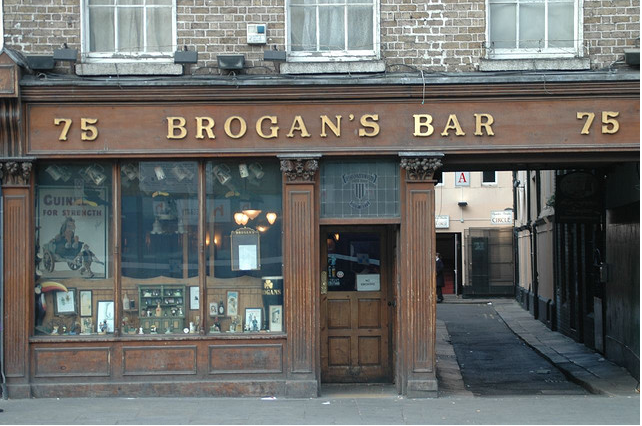
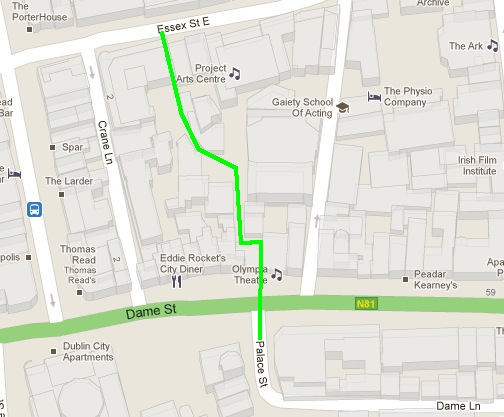
Crampton Court links Dame Street (entrance just under ‘BAR’ in the sign for Brogans BAR) and leads right down, past the back entrance to The Olympia Theatre, to Essex Street East (entrance just beside the Dublin Theatre Festival office)

Flora H. Mitchell in her excellent Vanishing Dublin (1966) described it as being

“… the unofficial “exchange” of Dublin until the “commercial buildings” were opened in 1799. No 20, “The Little Dublin Coffee House” provided the merchants with a meeting place prior to this. Crampton Court had been used as a short cut from the Olympia Theatre to the well known Dolphin Restaurant prior to it being demolished in 1963.”

Entrance to Crampton Court from Essex St. East (Photo credit - infomatique)

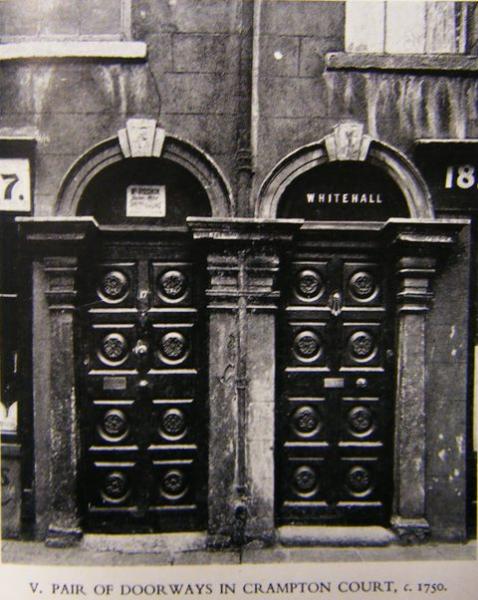
The doors in Crampton Court were famous in their own right:

Uploader credit - Jimmymac

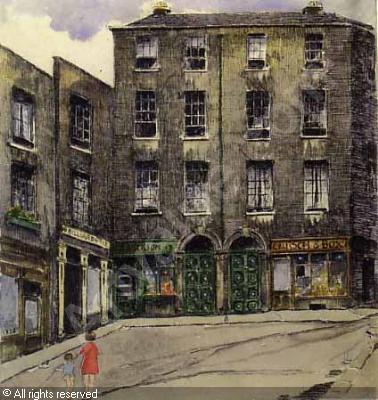
This is how it looked in the 18th century when the court was bustling with trade and housing:

Artists interpretation of those doors (and buildings) in 18th century

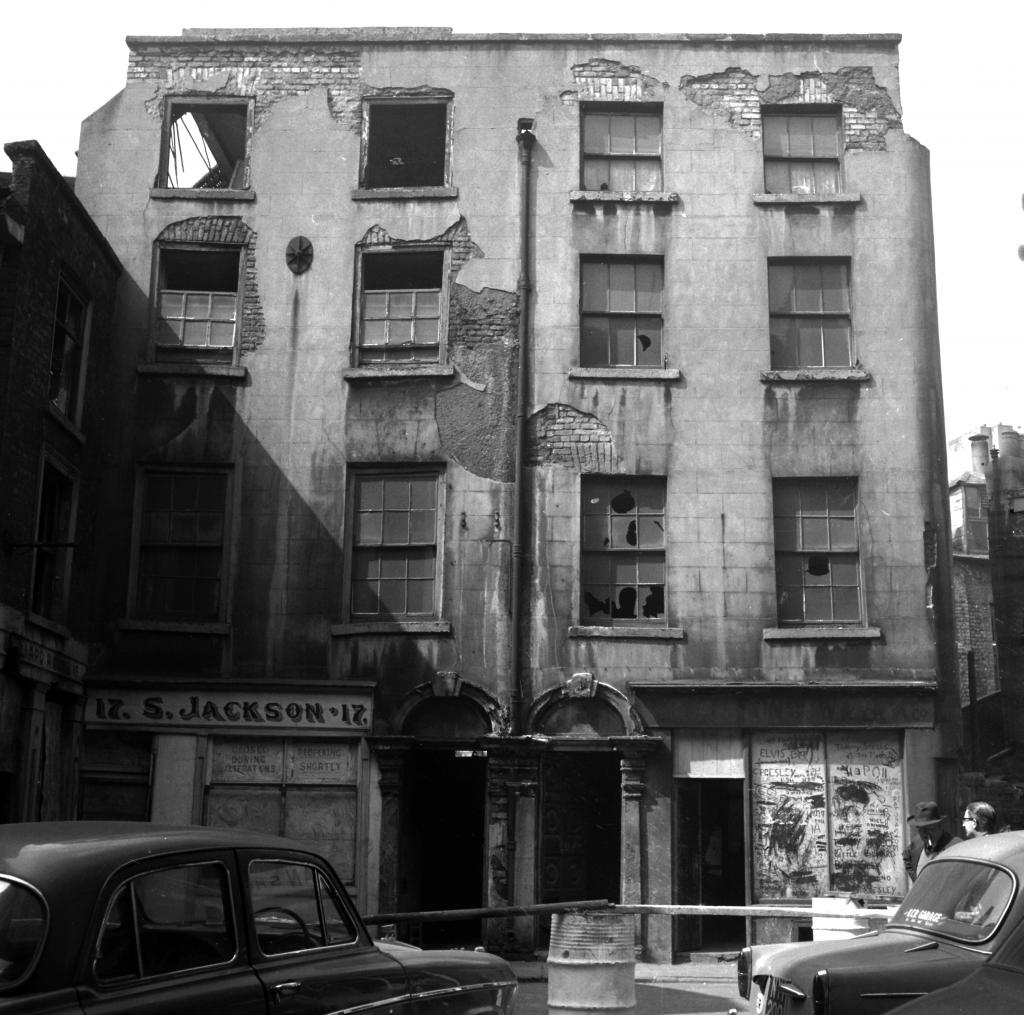
Like so many beautiful and historical sites, it fell into decay in the 1950s and 1960s:

How it looked in 1959. Photo - Dublin City Library

A real pity. An anonymous letter to The Irish Times (May 23rd, 1931) described it as ‘a part of Dublin which still seems to suggest its ancient history’.

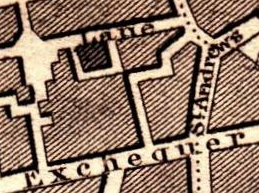
No doubt at one stage Palace Street used to run right across Dame Street and into Crampton Court:

While Palace St. is still visable on maps, Crampton Street has been lost.

So next time your heading down Dame Street, when not pop through Crampton Court and have a gawk at an old, forgotten part of Dublin.

Entrance just beside Dublin International Theatre Festival Essex St. East. Notice wooden rafter across frame (Photo credit plattbridger)

Plus see if you can spot the wooden rafter above your head, as you come from the narrow Essex St. East side, that looks especially old! Perhaps original?

Read Full Post »

View looking up to Exechequer St.

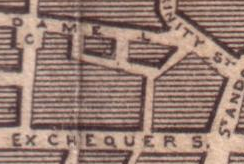
A bendy little lane that links Exchequer St. (entry is between Boulevard Cafe and Music Maker) and Trinity St. (entry is between Hilfiger Denim and Leon: The Pastry Cafe), synonymous with the Andrew’s Lane nightclub, Maser graffiti and Grift’s old Batman piece.

Cars still drive through it, so you have to be careful while walking down it (especially at night) because it’s very narrow.

Bendy as ever, 1818

Showing how the courtyard on Dame Lane and St Andrews lane nearly touch, 1836

Showing how the courtyard on Dame Lane and St Andrews lane nearly touched, 1836

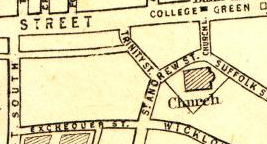
In 1863, apparently that courtyard lane on Dame Lane linked up with St. Andrew's Lane.

In 1885, the lane disappeared!

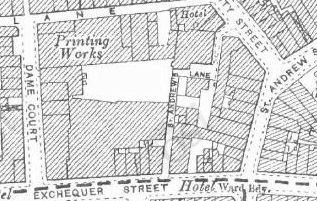
Clear view of it in 1907

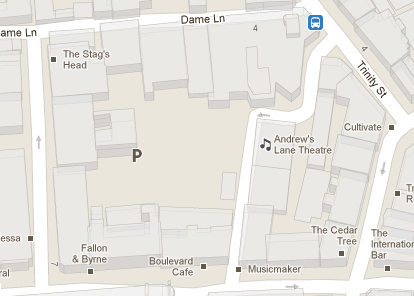
View in 2011, featured on Google Maps because it's not pedestrianised

Read Full Post »

1. Williams Lane

Looking from Middle Abbey Street. Photo credit - Matthew S.

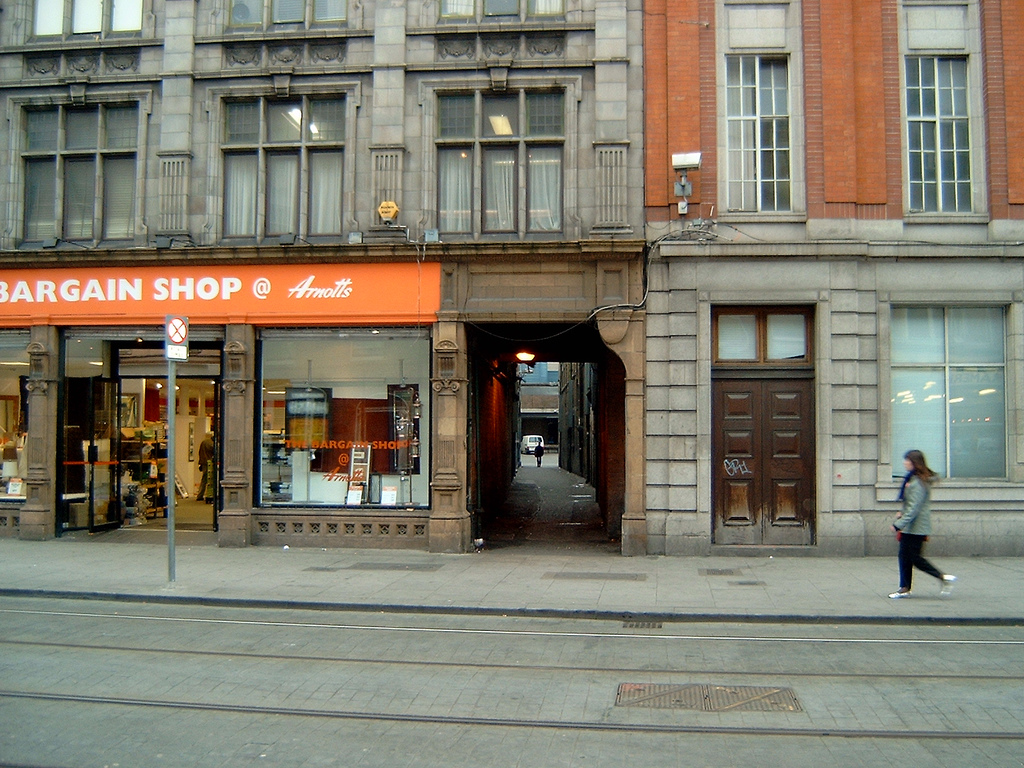
One of my favourite little lanes in Dublin is Williams Lane which (handily) links Princess Street North and Middle Abbey Street. It’s one of those hidden lanes that actually takes a good few minutes off your journey if your coming from Middle Abbey Street and want to head up the north side of O’Connell Street or when your coming from that direction and are heading towards Liffey Street and the ha’penny bridge. (It’s also handy for finishing your last can before heading into the Twisted Pepper across the road! Shhhh)

The view from Princes' North Street. Photo credit - Matthew S.

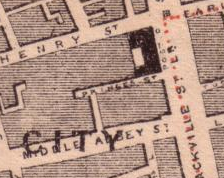
As you can see, it’s clearly marked (though not named) in these maps from the early/mid 19th century.

Visible in 1818

Visible in 1836

Visible in 1863

Visible in 1863

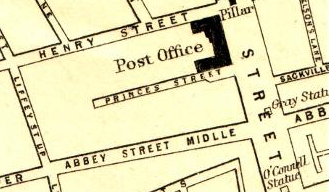
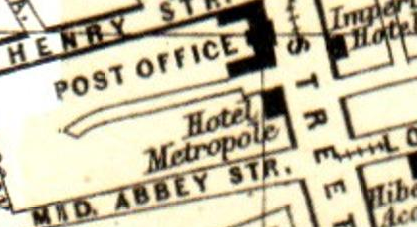
Then suddenly it disappears from all the maps!

Oh, where did it go? 1885 map

Still missing in 1913

According to Google Maps (2011), there's no lane!

Odd isn’t it? Anyone have any ideas? Anyone know why it’s known as Williams Lane? Answers on a postcard.

Read Full Post »

NAMAland.

Today sees the repayment of an unsecured Anglo Irish Bank bond of E700,000,000, which the state has no obligation to pay but will. It seems a more than fitting day to post these great images from a recent action highlighting a very peculiar aspect of the baNAMA republic in the form of buildings in the city which sit empty, boarded-up and out of our hands.

Read Full Post »

« Newer Posts - Older Posts »