Feeds:
Posts
Comments

Archive for the ‘Social History’ Category

Dole TV.

Includes an interview with Sam Nolan (Trade Unionist)
Street Literature- Products Of Our Environment (1.48 in)
and Brian Cowen boozing around Dublin (8.00 in)

Well done to Dublin Community Television on this one, the first episode of Dole TV. Offering a fine mix of content, what begins with a great interview with Sam Nolan goes on to feature a great parody on the Taoiseach’s love for a good pint and an excellent hip hop effort from some younger Dubliners, in the form of Street Literature. Give it a watch.

We’ve briefly touched on the unemployed workers movement in Dublin in the fifties, about which Sam Nolan speaks here, before. The post I have linked to above includes video footage of a protest rally in 1953.

We are putting out an appeal to all those talented video editors, graphic artists, writers, music producers and others to send in their media and ideas for inclusion in the show. Get them in. You can reach out at doletv@dctv.ie

Read Full Post »

A portrait of legendary bare-knuckle boxer Dan Donnelly.

Ye sons of proud Britannia, your boasting now give o’er,
Since by our hero Donnelly, your hero is no more;
Eleven rounds he got nine knocks down, broke his jawbone,
Shake hands, says she, brave Donnelly, the battle is our own.
(from the ballad “Donnelly and Cooper,” words here.)

Irish history is rich in stories of playwrights and poets whose characters matched if not outshone their talent with a pen. When it comes to sports people, we are arguably equally rich in those characters. When it comes to boxing, one name that comes to my mind (and in honesty, only because I saw an excellent documentary on TG4 about the man) is Dan Donnelly, beknighted (though that tale behind this is a story in itself) prize fighter who won the hearts and minds of Irish men and women in the early 19th Century.

Dan Donnelly

With Ireland still under British rule, and with ten years yet to pass until the uprising of 1798, Dan Donnelly was born into poverty and a house already full of children (eight before him, with another eight to come after him) in the heart of Dublin’s Docklands. He trained as a carpenter at early age, but it was with his fighting prowess that he excelled, garnering a reputation as a man “handy” with his fists with a few pints in him; what wages he had left after he had provided for his family, he spent on drink, or on some occasions, the other way around.  He grew to be a formidable beast of a man, standing six foot and one half inch tall and weighing fourteen stone. His arms were said to be unnaturally long (a fact since proven false) giving him a reach to worry opponents. But as scary as he looked, he was said to be a man of manners, and on more than one occasion stepped in to stop muggings or assaults around the area of Townsend Street where it is said he lived. (His introduction to boxing came from fighting, and beating, a bullying English sailor in a bar close to his home.)

Dan’s infamy as a bareknuckle boxer grew, and he soon progressed from drunken brawls outside taverns to organised fights, with a purse to be taken home by the winner; and though it is said he only ever took part in three of these bouts, it is the manner of the victories and the opposition he faced and defeated that ensure his place in history.

The fight he is remembered for was his second and took place on December 13th, 1815 in The Curragh of Co. Kildare. Now called Donnellys Hollow, the area was a natural amphitheatre with sloping hillsides surrounding a flat area of ground where the fight took place. It is said that over 30, 000 people made the trek to Kildare for the fight by foot and carriage, with the upper classes mixing with slum dwellers, as each had a stake on the outcome.

The fight itself was said to be a dour affair, with the favourite Cooper (1/ 10 to win) using dirty tactics and falling to his knees on a couple of occasions in order to get a round to be stopped. Donnelly put paid to the Englishmans arrogance when he broke his jaw with a right hook in the eleventh round, taking the fight in the process.

A victory against English opponents these days is greeted with a cheer, so it’s hardly suprising that Donnellys victory against Cooper was seen as a national event. His trip back to Dublin is said to have taken over two weeks, so many were his stops, doing his best to spend the £60 purse he earned from the fight in taverns along the way. His footsteps from the Hollow itself are still there to be seen, as supporters, keen to follow in his footsteps, did so physically, marking out the steps on the landscape, as people still do to this day- as can be seen from the photograph above.

The stone obilisk surrounded by an iron fence below marks the spot where the fight took place, bearing the inscription “Dan Donnelly beat Cooper on this spot 13th Dec. 1815.”

The Obelisk marking the spot.

Donnelly decided to make his way to England where he became parlour entertainment for the wealthy upper classes who welcomed him at their parties, no doubt as a lumpen Irishman with extraordinary strength. it was at one of these parties that Donnelly (according to legend as there is no documentation to prove so) knelt before the Prince Regent, George IV and was granted knighthood with a sword tap on each shoulder- an Irish pugilist who once worked with the brother of Anne Devlin, a figure central to Robert Emmets revolt of 1803 receiving knighthood from the future King of England. Implausible, but apparently true.

He moved back to Ireland and with the money he had earned from his fights (and with his reputation still intact,) he decided to go into business, opening four bars in succesion. But, as is often the case, he was often the bars best customer and this was eventually his undoing. Of all the bars, Fallons Capstan Bar is the only one that remains in business today. He died broke and lonely on February 18th, 1920 at the young age of thirty two. The procession that followed his coffin numbered in the tens of  thousands and he was buried in Bullys Acre- a paupers graveyard and one of Dublin’s oldest. Within days, his body was stolen by grave robbers; Riots broke out in Dublin upon the news and Surgeon Hall, who had purchased the body, returned Donnelly to his grave in Bully’s Acre- minus his right arm. The arm was transported to Edinburgh University where it was used in anatomy lessons, was taken around England by a travelling circus, was brought back to Ireland and displayed in several pubs throughout the twentieth century, and went to New York and back before it found its resting place in The Hideout Bar, Kilcullen where it remained on show until 2006 before being removed from public viewing.

Dan Donnelly's arm

While undoubtedly, it’s Dan’s arm that garners most interest in him, its his story that gets me most. Maybe I’m just a sucker for social history but the thought of 30, 000 people making the trek out to the Curragh in the days before Bus Eireann to see what equates to an amateur bare- knuckle fight, the image of the streets lined on his victorious return, and the 70, 000 that showed up at his funeral, and yet I only know about him because of a chance viewing of a documentary on TG4 makes you think how many other stories like Dan’s have gone beneath the radar.

Underneath this pillar high,
Lies Sir Dan Donnelly;
He was a stout and handy man,
And people called him buffing Dan.
Knighthood he took from George’s sword,
And well he wore it by my word!
He died at last from forty seven
Tumblers of punch he drank one even.
O’erthrown by punch, unharmed by fist,
He died an unbeaten pugilist.
Such a buffer as Dan Donnelly,
Ireland never again will see.

—————————-

Links used for research on the above piece:

http://issuu.com/onlinemedia/docs/nw-19-08-2008/11?mode=a_p

http://sportsillustrated.cnn.com/vault/article/magazine/MAG1072458/index.htm

http://en.wikipedia.org/wiki/Dan_Donnelly_(boxer)

Read Full Post »
A documentary called ‘Hill Street’ which deals with the history of skateboarding in Dublin is currently in post-production. Produced by JJ Rolfe and directed by Warrior Films, the film will deal with skateboarding in Dublin from the late 1980s to the present today. It will include contributions from many legends of the local scene including Clive Owens, Roger Kavanagh, Mike Keane, Graham McPhearson and Wayne Gallagher.

This will obviously be of interest to anyone who has ever skated in the city. My early teenage years were made up of skating the Central Bank, the ESB, Three Steps, the Conrad and the early days of Ramp n Rail every weekend.

It’s great to see a documentary being made about a Dublin youth culture at a time when the people involved are firstly, still alive and secondly, when they can still remember the details. Sadly, it’s far too common that people leave it too late to make documentaries or write books about social history, waiting for the individuals to either hit their 80s or 90s or pass away.

Read Full Post »

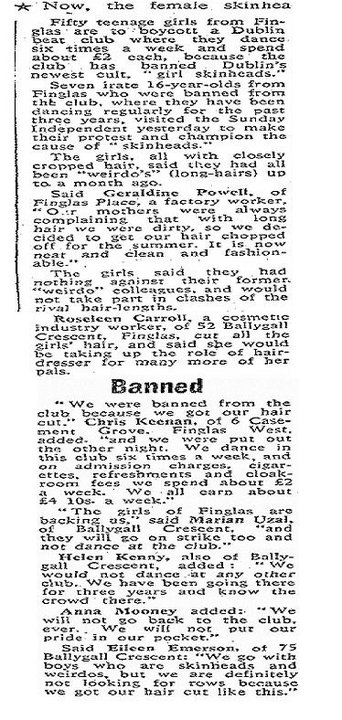
Our friend Garry O’Neill (author of an anticipated photographic book on Dublin youth culture) is trying to get in contact with any of the girls mentioned in the following news article. You can reach Garry at cru71(at)hotmail.com

Read Full Post »

The younger Fallon picked this up recently in a second-hand bookshop, for the great price of a single Pound.

In Dublin’s Fair City, by G. Ivan Morris, was a London published guide to Ireland for visitors.

“The author is a well-known Dublin publisher and master-printer who, in the midst of an unprecedented pressure of business, has taken the time to write this book for the guidance of visitors to Ireland.”

Here are a few scans of note, on everything from Yo-yo’s to Grafton Street.

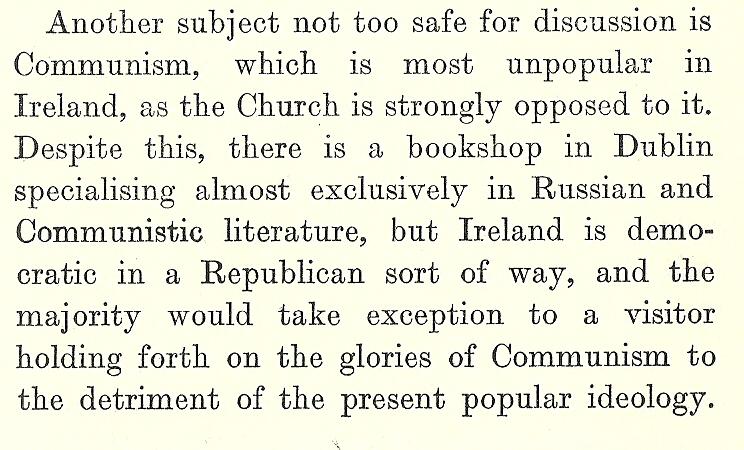
We’ll begin with this, a warning on discussing Communism in Dublin. Notice it gives reference to New Books, a bookshop selling “Communistic literature”.

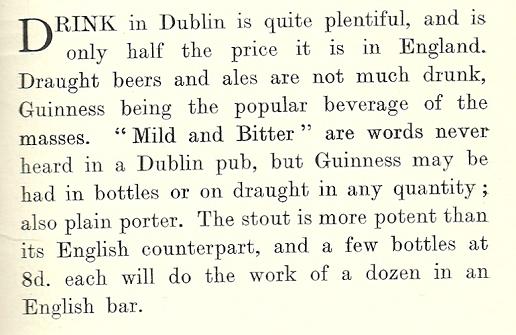
Apparently, drink used to be cheaper than in England. Half the price in fact.

(more…)

Read Full Post »
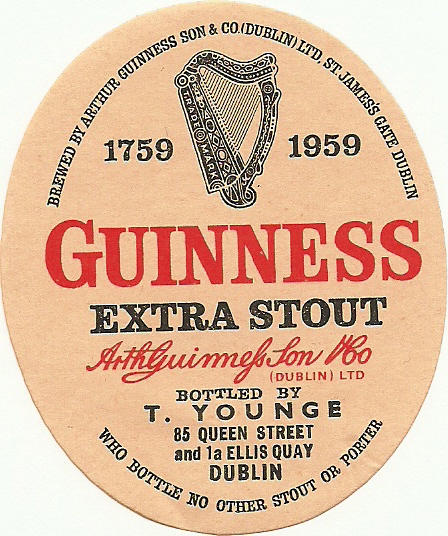
A few Guinness labels which were hiding in the cupboard right opposite this very PC.

What do I know about them? Very little. Obviously, they come from the period when Guinness was bottled by the seller. Interestingly, three of them read “Who bottle no other stout or porter” or variations thereof.

The beautiful Irish language label from D Ó Sciatháin’s notes the same As Gaeilge.

The P. Lynch label, from 144 Thomas Street, is by far the oldest. T.Younge, at the time based at 85 Queen Street and 1a Ellis Quay, became a Ballyfermot fixture. D Ó Siachtháin gives a Dorset Street address. The other two come from outside the capital.

With the week that’s in it, they’re a lovely oddity if nothing else. A recent post on the Jewish Museum included snaps of Guinness labels from Dublin’s Little Jerusalem.

(more…)

Read Full Post »
From archaeological excavations to Northside soul bands, it’s a varied night to kick off the weekend. Here’s a few I think are worth a look.

This Friday ,September 24, is Culture Night in Dublin. What’s that? A chance for Dubliners to switch off the telly (Ryan Tubridy, no thanks.), hit the streets and enjoy what the capital has to offer. Here’s my pick of what to do. For the most part, this is my own plan of action, so you know it’s a good one.

First of all, for the early birds: The Abbey are giving away thirty free tickets to the Plough and the Stars. I’m excited about the arrival of The Silver Tassie in Dublin soon, by far my favourite O’ Casey play, but The Plough and the Stars is perhaps ‘the’ play of what is often labelled O’ Casey’s Dublin trilogy. First come, first served Friday morning from 10.30am. You have to be there yourself at the box office, so set the alarm all you unemployed Come Here To Me readers.

Fans of O’ Casey should note that this isn’t the only chance you’ll have to take in some of his work on the night. Up on the Sean O’ Casey Bridge, at 5.30, 6.30 and 7.30, pieces from Shadow Of A Gunman and The Plough and the Stars will be performed. At the same times, the James Joyce and Samuel Beckett bridges will come to life with similar tributes to their namesakes, though you won’t catch me at either.

That great Dublin historian, Pat Liddy, is also lending his services to the night. Merrion Square and its Writers promises to be an excellent walking tour, kicking off from the Georgian House Museum, 29 Fitzwilliam Street Lower. Bring an umbrella, you never know.

Smithfield has plenty on offer on the night. The Jameson Distillery for example are offering free guided tours of the Distillery, which includes a free drink(!!!!!). First come first served over there. I imagine many will come, and many will be served. A fine start to the night perhaps. Space 54 and the Light House Cinema are both involved too on the night. The Complex play host to DIG, an exhibition of drawings and photographs from the Smithfield archaeological excavations.

In several cases the drawings record what was found under the actual gallery where the exhibition is displayed.

DIG opens tomorrow night, with Dr Ruth Johnson, Dublin City Archaeologist on hand to do the honours, but on Friday it remains open until 10pm, with the night that is in it.

A short walk away, at St. Mary’s Abbey, an exhibition titled ‘Vintage Irish Bookcovers’ is taking place from 6 to 9 pm. I’ve been known to lose lunch time to Niall McCormack’s Vintage Irish Bookcovers Blog, where everyone from Peadar O’ Donnell to Pádraic Ó Conaire features.

Free tours of Christ Church are on offer on the night, a must do for anyone who has been putting it off or writing it off as ‘too touristy’. Right next to it, by the site where Handel’s Messiah was first performed, The Contemporary Music Centre will host a night of music, “reflecting the very latest trends in contemporary music and sound art”. Handel’d love it.

In the belly of the beast, or Friday night Temple Bar, there are some more hidden gems. The Quakers Meeting House, where “Quakers have met in silence in Temple Bar for over 300 years”, opens its doors to the public and a one hour play titled ‘On Human Folly’ will be performed at 8pm. Filmbase are running a night of free activities for people like me who have no clue whatsoever how to edit or film. Exchange Dublin, The Gutter Bookshop and others down in the sometimes overlooked ‘Old City’ part of Temple Bar are also participating.

By this stage, you’re exhausted. You’ve knocked out one or two of the events above and you want to relax. Well, in Meeting House Square will find Dublin classic The Commitments being screened at 10.15pm. A nice way to bring it all to an end, even if we’ve all seen it a dozen times and own the VHS. One more viewing might convince me to buy the DVD.

See you on the streets.

Read Full Post »

One of my very first posts on this blog (back in November 2009) was an appeal to the public to upload, digitize or give me a long list of 1st wave Dublin Punk/New Wave singles that were out of print and hard to find.

Surely but slowly these singles have been uploaded online and now are available to all to enjoy.

On February 11 2010, I uploaded The Blades’ fourth single ‘Revelation of Heartbreak’.

The Blades - Revelations of Heartbreak (1982)

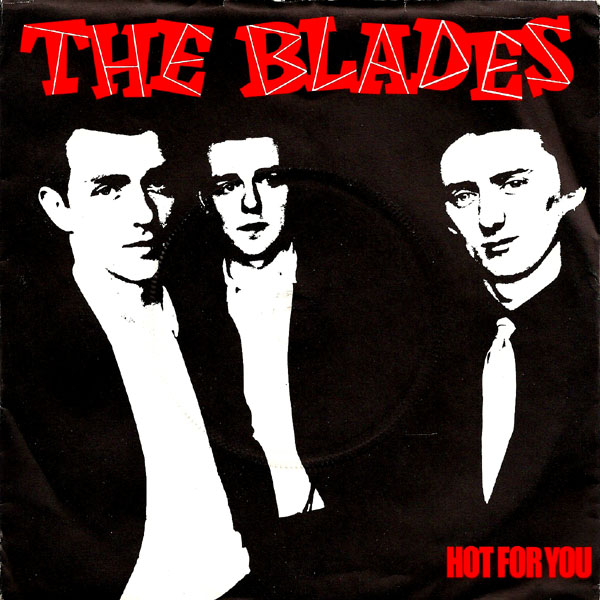
On March 29 2010, I uploaded The Blades’ first single ‘Hot For You’.

The Blades - Hot For You (1980)

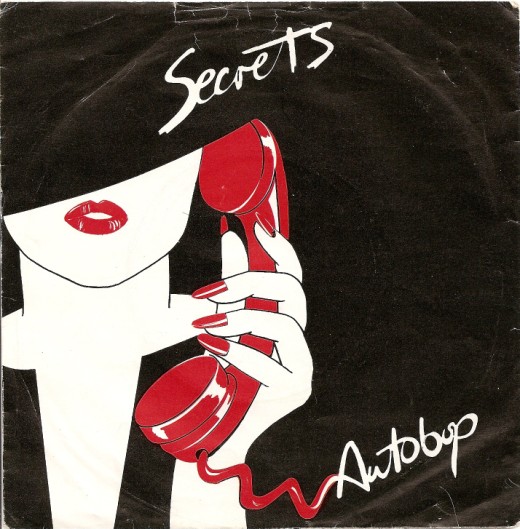
On June 5 2010, our close friend Conor McCabe from Dublin Opinion uploaded the 1983 single ‘Secrets’ from Autobop.

Autobop - Sercrets (1983)

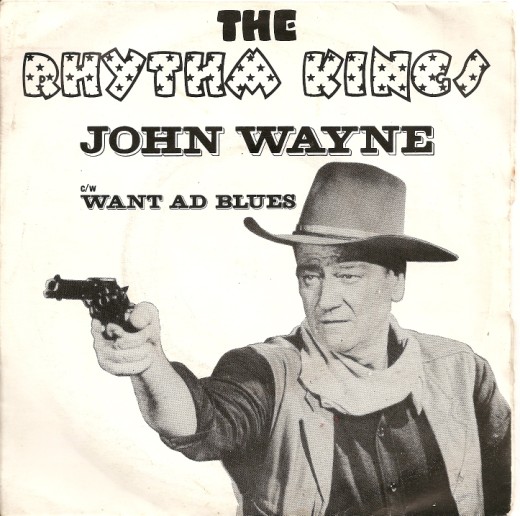
Also on June 5 2010, Conor, got there before me and, uploaded The Rhythm King’s second single ‘John Wayne’.

The Rhythm Kings - John Waybe (1981)

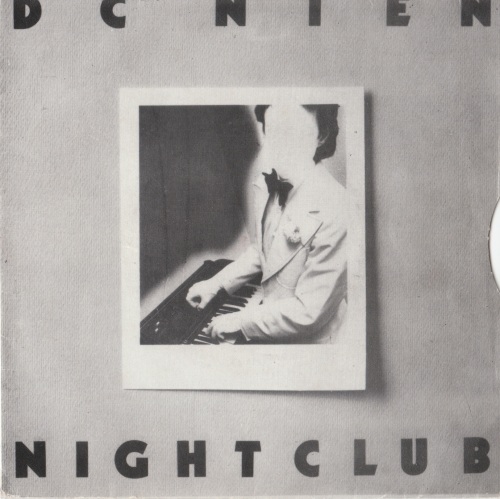
On June 19 2010, I was finally able to get my hands on and upload the classic first and only single from D.C. Nien. (If anyone has their Red Tapes recording, please get in touch!)

D.C. Nien - Nightclub (1980)

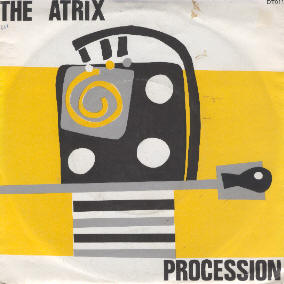
On June 23 2010, I finally got around to uploading the 3rd single ‘Procession’ from The Atrix

The Atrix - Procession (1981)

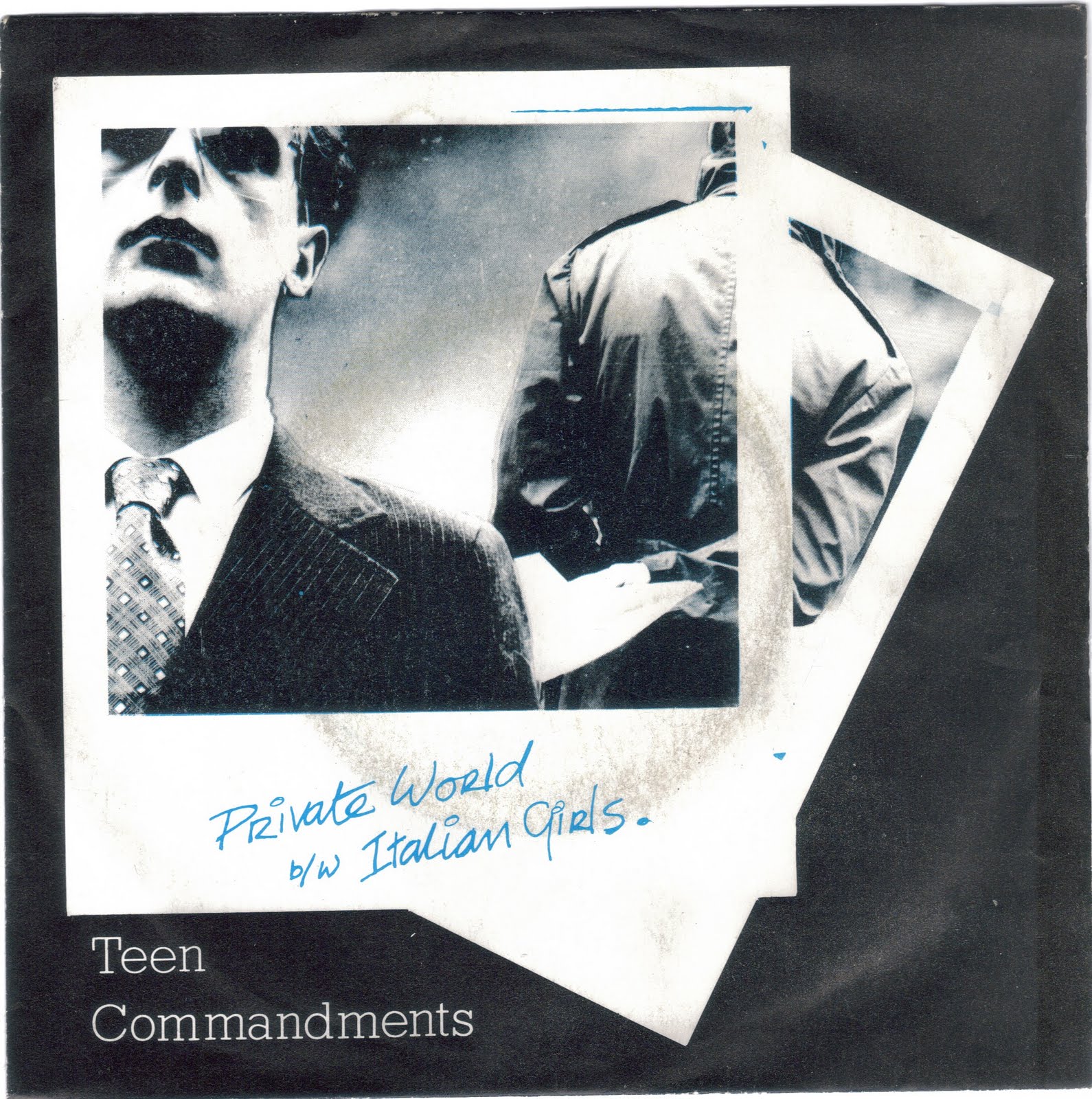
On August 11 2010, Bristol Boy from the My Life’s A Jigsaw blog made my month by uploading the first and only single ‘Private World’ from The Teen Commandments.

The Teen Comandments - Private World (1981)

However, there are still a lot of classic singles still not online. If you have the following, please get in touch.

Alsatians:

5 Honours & A 175 / Denise Denise
7″ – Libra Records – LHS002 – IRL – June 1982 – PS

• I Wanna Be Your Man / Money Back
7″ – Libra Records – LHS003 – IRL – 1982

• I’ll Never Forget It (AKA Two Sucks) / Suicide
7″ – Scoff Records – DT028 – IRL – 2 September 1983 – PS

The Blades: (Note: I’m only looking for the B-Sides)

Ghost of a Chance / Real Emotion
7″ – Energy/Polygram Records – NRG-5 – IRL – 1981 – PS paper labels

Last Man In Europe / Sadlands
7″ – Reekus Records – RKS013 – IRL – 1984 – PS

The Boomtown Rats:

• Neon Heart, Etc.. (At Home And Away)
K7 – Demo – 1976

Camino Organisation:

• Human Voices // Executivity / The Bust Up Of Love
7″ – Reekus Records – RKS 004 – 1982 – PS

New Versions:

• Like Gordon of Khartoum / What You Want
7″ – Mulligan Records – LUNS 744 – IRL – 1981 – PS

Negatives:

• Love Potion No.9 / The Prize
7″ – WEA Records – K18420 – 1980 – PS

Pop Mechanics:

• Soldier Boys / It Feels Like I’m Alone Again
7″ – Polydor Records – 2078 144 – IRL – 1982 – PS

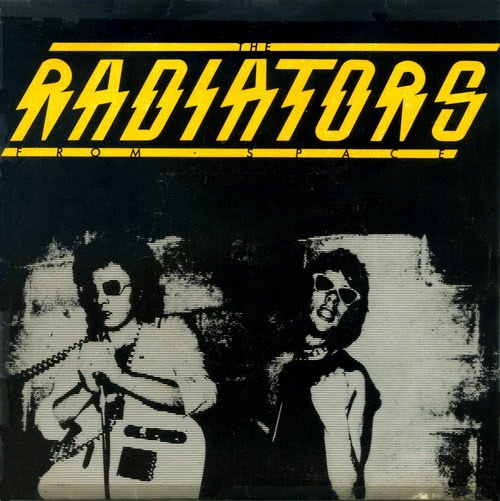
The Radiators From Space: (Note: I’m only looking for the B-Sides)

Enemies // Psychotic Reactions
7″ Chiswick NS-19 – 1977

Sunday World//(Why Can’t I Be) A Teenager In Love
7″ – CBS Records – 5527 – IRL – 1977

Let’s Talk about Weather//Hucklebuck //Try & Stop Me
7″ – Chiswick NS-45 & CHIS-113 1979

Kitty Rickets/Things (with Peter O’Brien)
7″ – Mulligan Records – LUNS720 – IRL – 1979

Revolver:

• Silently Screaming / On The Run
7″ – Rockburgh Records – ROCS203 – UK – 1978 – PS

The Romantiks:

• Said If You Needed Me / Little Queenie
7″ – G.I.Records – GI003 – 1978 – no PS

The Shade:

• 6:05 / Talk To Me
7″ – Juverna Records – JUV-001 – 1981 – no PS?

Watching You / Touch Sensitive
7″ – EMI Records – IEMI 5093 – 1982 – PS

Strange Movements:

• Dancing In The Ghetto / Amuse Yourself
7″ – Good Vibrations International – GVI GOT-5 – N.IRL – 1980 – poster PS

The Sussed:

Don’t Swim On The East Coast / I Wanna Conform

7″ – Dead Records – DEAD U2 – 1981 – PS

The Tabs:

Million Miles / Gotta Get Away
7″ – Vixen Records – FM001 – 1982 – PS

Read Full Post »

Unless you’ve been hiding under a rock for the last 16 years, you will most definitely have heard about the annual Absolut Fringe Festival. In those 16 years, it has grown from humble begininnings to become Ireland most exciting multidisciplinary festival covering all walks of culture; music, art, literature and performance.

Spanning over two- and- a- bit weeks, and visiting over twenty venues, the festival is ambitious in it’s enormity, but then again, why shouldn’t it be going on the successes of the last couple of years.  While it would be close to impossible to list a full programme here ( you can check that out on the official website @ www.fringefest.com , or alternatively pick up the free guide from cafés and bookshops citywide,) below are some of the events I hope to attend, and suprise suprise, they’re Dublin-centric.

As You Are Now, So Once Were We

As You Are Now So Once Were We, The Company

Blurb from the fringefest site:

“Why haven’t you read Ulysses? Ulysses is Dublin. You live in Dublin. So do we. Four actors in a city we don’t really know pick up the most important and unread book in Irish history and follow James Joyce as he invents a whole city and its people. Returning to this year’s Festival with the Spirit of the Fringe 2009 award for ‘Who is Fergus Kilpatrick?’, The Company are back to delve into Joyce’s seminal work and ask – where are you in this story? Join us as we rediscover what it means to be Irish. By the way, we haven’t read Ulysses either… yet. The Company are part of Project Catalyst, an initiative of Project Arts Centre.”

—-

Having laboured my way through Ulysees in my UCD days, I’m interested to see what the good folks from The Company make of it. The questions of nationhood and identity always stood out in the book, and this show looks set to examine both.

The Project Arts  Centre Space Upstairs, Sat 11th – Wed 15th, 9pm, €14/12

World’s End Lane

World's End Lane, Anu Productions

Blurb from the fringefest site:

“For over 100 years, Monto was the most notorious red light district in Europe. Presided over by infamous Madams and fortune-tellers, lost strangers sought sex, guidance and the divine. You and I will be the strangers. Immerse yourself in a fragile and intimate encounter, exhuming an area of Dublin that no longer exists, as presented by the multi-award winning company that brought you last year’s festival favourite, ‘Basin’. Presented in association with The Lab. Supported by Rough Magic Hub.”

—-

Monto; An area sung about in a thousand songs and the backdrop for a hundred thousand stories of woe and debauchery, lonliness and violence, intrigue and legend. Some say that a branch of the current Monarchy flourishes in Dublin City due a night on the town by a British prince here in the late 19th Century. It is written into revolutionary lore as it’s many brothels and slums were used as safehouses in the period 1916- 22. In World’s End Lane, we get a unique look at this unique period in Dublin’s past.

The Lab,  Foley Street, Mon 13th- Sat 25th, (times can be found here ,) €15.

The Hidden Garden

The Hidden Garden, Garvan Gallagher Photography

Blurb from the fringefest site:

“‘It’s like going to mass’ is how one local resident describes her time in one of the most charming and unlikely secret retreats in the city. This uplifting film maps the transformation of an urban dumping ground in the North Inner City into a vibrant community growing space. Winter surrenders to spring as the characters and the space come to life while the goodwill and honest nature of the local residents spill out like the cups of tea poured in their hundreds. As informative as it is inspirational, don’t miss the chance to see this heart-warming film screened in The Hidden Garden. Arrive early if you’d like to potter around the garden!”

—-

Whilst over the last couple of years, developers have tried to rid us of any green spaces we have in the inner city, there has been a struggle within some local communities to take back some peace and tranquility. With inner- city community spirit diminishing as office and retail developments push people into the suburbs, projects like the Summer Row Community Garden are to be applauded.

Summer Row Community Garden, Summer St. North. Thurs 23rd – Sat 25th, 8.30pm, €8.

——

All details, blurbs and pictures (apart from my own interjections of course) are taken from the excellently informative www.fringefest.com . For up to date information, tickets and more details, check it out.

Read Full Post »

Without a doubt, C.S Andrews penned one of my favourite books.

Dublin Made Me covers two lives. One, the life and memories of a Dublin youth. The other, a life within the revolutionary movement, serving as adjutant to Liam Lynch during the traumatic Irish Civil War. On reading it, I was struck by Andrews account of the day he made his Confirmation, at the Holy Faith in Dominick Street.

Anyway, on the great day, my mind was more preoccupied with football than with religion because my father had promised to take me to a cup match that afternoon between Bohemians and Shelbourne at Dalymount Park and I was afraid that the ceremony would not finish on time.

At the time, as Andrews noted, Shelbourne and Bohemian F.C were the only senior soccer clubs in the city, and he notes that “the people on the south side followed Shelbourne” He went on to write that the supporters and indeed players of the game were “..exclusively of the lower middle and working classes.” Men would travel north to see one of the Dublin sides take on Linfield, Belfast Celtic, Glentoran, Distillery, Cliftonville or Derry Celtic. These were the first ‘Away Days’, the roots of what we still do today.

Football has a habit of popping up in any account of growing up in Dublin. A love of the beautiful game was not only to be found among native Dubliners, but within immigrant communities too. Nick Harris touched on the love of the game in the Jewish community of ‘Little Jerusalem’, as Clanbrassil Street became known. His account of growing up there, Dublin’s Little Jerusalem ,is a Dublin classic. The local lads, he noted, tended to follow Shamrock Rovers. In the book he recounts stories of away trips, noting his brothers would follow the Hoops all over Ireland.

Once in Sligo, when Rovers were playing Sligo they were leading one goal to nil and Sligo were awarded a penalty. As the Sligo man was about to take the kick, Hymie(his older brother) jumped over the fence and kicked the ball away from the spot.

The Jewish youth evem established a team among themselves, naming it New Vernon, a nod to a “Jewish club that played in Dublin some years earlier”. They played frequently in the Phoenix Park, and Harris noted that the team “… played some great matches with various non-Jewish teams, and we were often applauded by people who stopped to watch the game.” Recently when passing through what was once the Jewish area of Dublin, I spotted a child kicking a football against a wall and was reminded of this tale. Harris also remembered a raid on the house next door by Black and Tans in 1921. The family next door were the Clery’s, one of whom was a footballer for Bohs. “From the noise that was going on, it sounded as though they were playing football” he noted. They were, with a football they found in one of the rooms.

(more…)

Read Full Post »

The seizure of the Rotunda concert hall by a reasonably large group of unemployed workers, and the hoisting of the red flag over the premises, remains one of the most bizarre and understudied events of the Irish revolutionary period.

In his excellent history of the ITGWU, The Irish Transport and General Workers’ Union: The Formative Years C. Desmond Greaves wrote that, early in 1922 “….industrial conflict took the form of individual struggles rather than a concerted class war.” The occupation of the Rotunda came two days after the foundation of the new state, and was perhaps the earliest example of class anger within it, a direct response to the existing high levels of unemployment. One of the leading figures of this occupation was Liam O’ Flaherty, today well-known as the author of The Informer, the classic novel, but then acting as a dedicated socialist.

He, like so many other unemployed men in Dublin, had served in the Great War, serving with the Irish Guards. He had been on a strange journey before returning to Dublin, and Emmet O’ Connor notes in Reds and the Greens that “After being invalided out of the British Army he set off trampling about the Mediterranean and the Americas, joining the Wobblies in Canada and the Communist Party in New York. He returned to settle in Ireland in December 1921….”

Liam O' Flaherty.

On January 18 1922, a group of unemployed Dublin workers seized the concert hall of the Rotunda. The Irish Times of the following day noted that “The unemployed in Dublin have seized the concert room at the Rotunda, and they declare that they will hold that part of the building until they are removed, as a protest against the apathy of the authorities.”

“A ‘garrison’, divided into ‘companies’, each with its ‘officers’ has been formed, and from one of the windows the red flag flies”

Liam O’ Flaherty, as chairman of the ‘Council of Unemployed’, spoke to the paper about the refusal of the men to leave the premises, stating that no physical resistance would be put up against the police and that the protest was a peaceful one, yet they intended to stay where they were.

“If we were taken to court, we would not recognise the court, because the Government that does not redress our grievances is not worth recognising” O’ Flaherty told the Times.

(more…)

Read Full Post »

This one, from the History Ireland Hedge School, looks interesting. Sam in particular has frequently uploaded slabs of classic Dublin vinyl to the site here, and the blog has been known to be a bit nostalgic for a period, although not being old enough to recall it ourselves! We’ll be on hand at this event to provide the noise, so come along. I can hear you now, “Really, is that them?”

The event is taking place as part of the Phizzfest in Phibsborough.

Date: Sunday, 12th September 2010
Time: 3pm
Title: ‘Dublin’s late ‘70s New Wave scene’
Description:A History Ireland Hedge School-Blasting back to the70’s.
Venue: Phibsborough Library,
North Circular Road,
Dublin 7.
Tickets: N/A, show up on the day.

Tommy Graham from History Ireland will host the event, joined by a varied group of individuals, including our favourite journo Fintan O’ Toole, Counciller Cieran Perry, Eamon Delaney, David Donnelly and Billy McGrath. Each of these people bring something unique to the discussion, ranging from organising concerts at the time, to an understanding of the diverse youth cultures and cliques that emerged from the scene at the time, sometimes quite literally clashing. Some of the bands that emerged at the time remain household names, the likes of U2 coming to mind instantly. Others have become cult classics. Bands like DC Nien, The Atrix and their kind still hold pride of place in many vinyl collections.

If this period interests you, check out previous posts here like this one on DC Nein or this gem from our first week in existence, looking at some of the main first-wave Dublin punk singles. When you’re feeling nostalgic (Maybe you were there?), write the date down and come along on the day and share a story. If you’re younger like ourselves come along and hear a story or two. Regardless, come along.

The History Ireland Hedge School will be hosting some historical discussions at this years Electric Picnic too, a slighty more muddy setting than Phibsborough.

Read Full Post »
« Newer Posts - Older Posts »