Feeds:
Posts
Comments

Archive for the ‘Social History’ Category

Lansdowne Road Stadium, February 15 1995

Republic of Ireland versus England, February 15 1995.

The disgraceful behavior at last night’s football international in Dublin must throw into grave doubt England’s role as hosts of next year’s European Championship. It was appalling enough that the pond life who purport to follow England should riot at all. But in Ireland of all places, at such a politically sensitive time, defies belief.

Today Newspaper Editorial, on the day following the riots.

I dug this match Programme out recently, and thought it would be of interest to some of our readers. Page 3, the notes from the manager, is signed. Sadly, it is addressed to Donal, and not eBay.

In all seriousness however, this encounter between the Republic of Ireland and England on February 15 1995 marked one of the worst moments for soccer in this country. Largely believed to be as a protest against the peace process in Ulster, and centering around a few fringe groups from London clubs, a small band of fascist supporters within the English away support brought the match to a halt amid scenes of flying chairs and wood. Ireland were 1 nil up in the encounter, before it was called off. Both National Anthems had been greeted poorly at the beginning of the match, and near constant chants of ‘Never surrender to the IRA’ can be heard in footage of the encounter. The damage done to the image of the game in Ireland was quite bad, and the UK tabloids seized the day too to make quite sweeping statements about English football supporters.
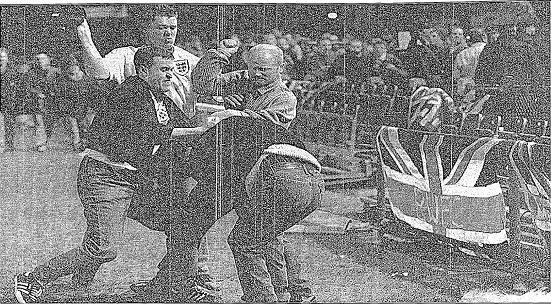
Many of the trouble makers had, almost laughably, purchased their tickets from Dublin. The Football Association of Ireland made a haims of the affair, and English fans were located in an area of the stadium one can only describe as madly short sighted in retrospect, with little to no screening of their support. Searchlight magazine told The Irish Times that its “spotters” had noticed a huge number of hooligans from right wing firms and political groupings in the North among the away support. The video footage from the moments following the calling off of the game is incredible, showing a clearly raging Jack Charlton, a man who won a World Cup medal with England in 1966.

There was little evidence of orchestration but many signs of the disturbing presence of the right-wing thugs who have attached themselves to club around the south east of London. Forearms bearing Union Jack tattoos jerked skywards in Nazi salutes. Several skinheads carried the legend “Made in the UK” in blue ink above their ears. There was some excited talk about “doing like the paras” and getting the “Fenian scum”, but for the most part the trouble was caused by dull young men looking for the rush that violence can provide

Tom Humphries writing in The Irish Times , February 18 1995

Interestingly, in 2008, John Delaney remarked to The Guardian that

At some stage, I would like to see England play in Lansdowne Road because there is a game owed. (…)Bringing them to the old Lansdowne Road would have been difficult, and bringing them to Croke Park wouldn’t have been correct given the history.

So, here is a selection of content from the match programme. Enjoy. League of Ireland fans should note the fantastic article on the first English visit to Dublin, an encounter at Dalymount Park.
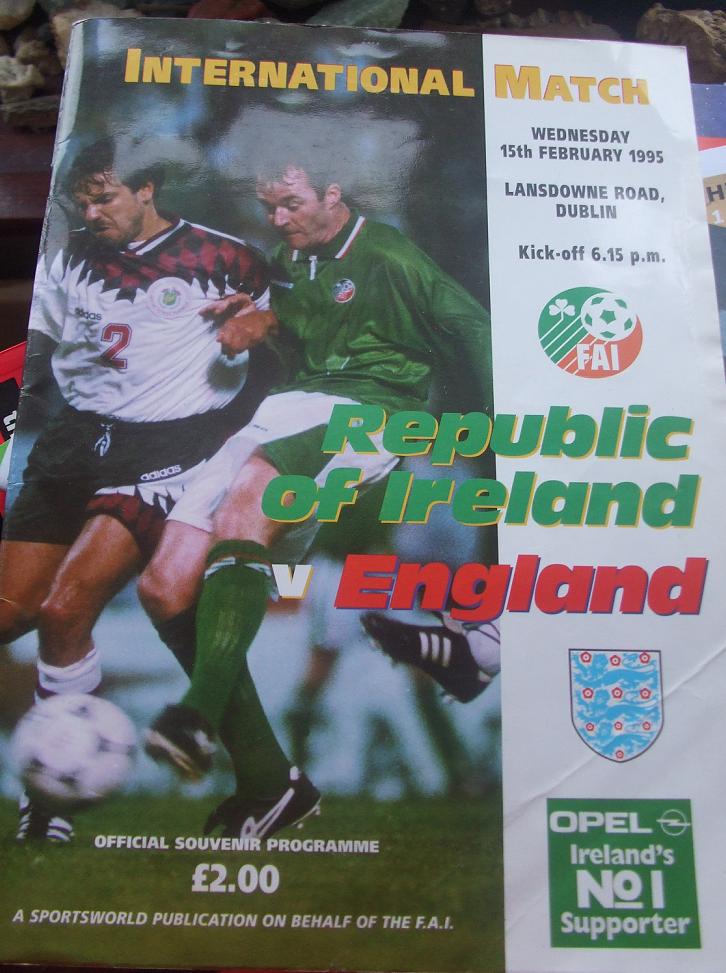
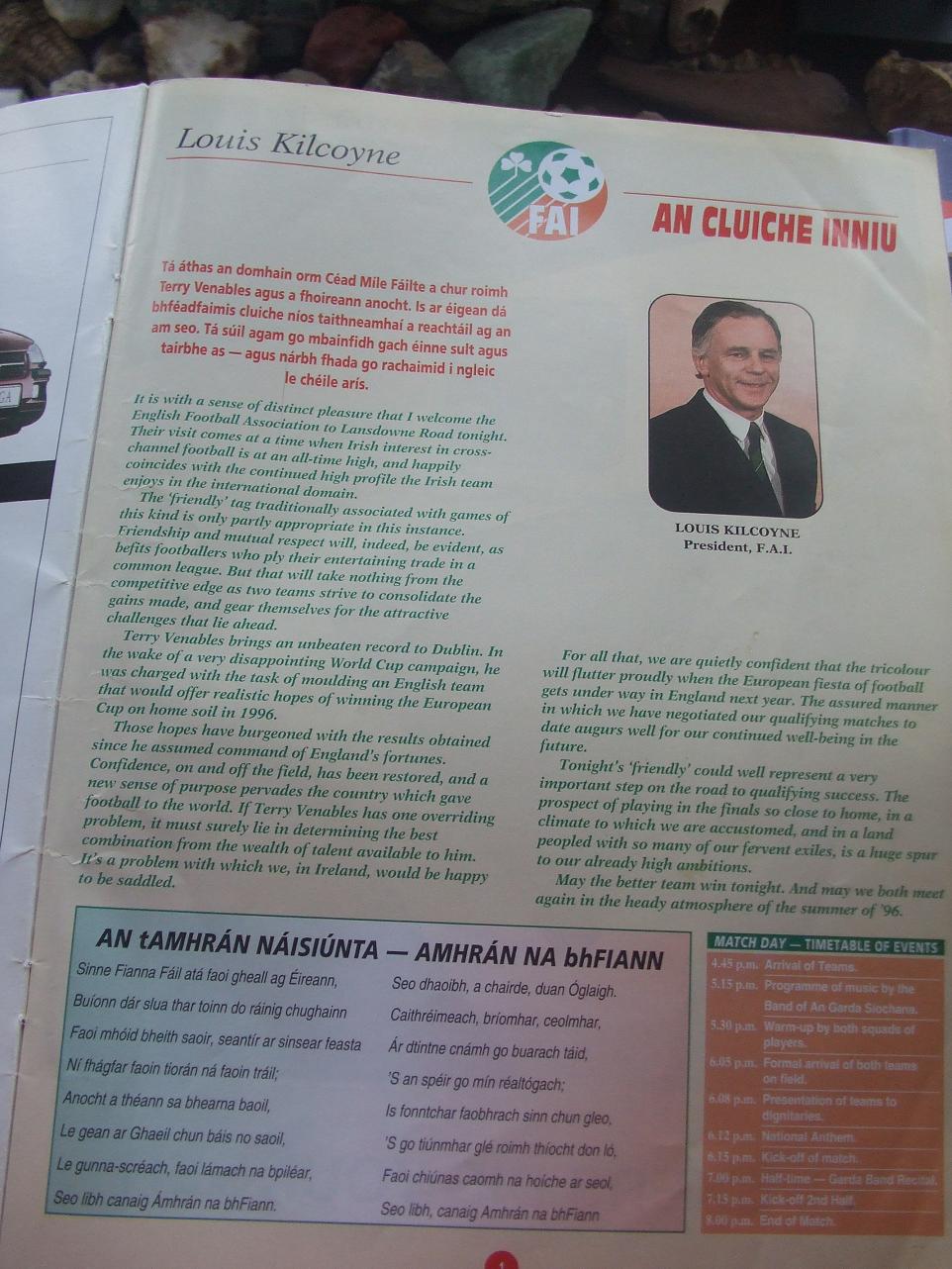
FAI Welcome

(more…)

Read Full Post »

Jumping into the River Liffey has been a dangerous pastime for Dubliners for centuries. Some do it for kicks, others for bets and others just to cool down during hot summer days. A quick scan of The Irish Times archive showcases the long running (and often deadly) activity.

An Irish Times article from March 1890 relates the story of a Miss Marie Finny, “a professional swimmer” who was arrested just before she attempted to jump into the river off O’Connell Bridge. [1]

In 1909, a hotel porter called Hugh Bernard McGrath was rescued from the Liffey after he got into difficulty swimming after jumping from the eastern parapet of O’Connell Bridge. [2]

A “strange affair” was reported in 1932 which concerned an “unknown man” who was seen swimming in the liffey late one Monday evening. It was reported did not “take any notice” of two life buoys that were thrown towards him or a boat that passed. He soon got into difficulty and drowned. [3]

In 1939, a soldier named James Donlan (25) “disappeared” while swimming in the Liffey. It took a extensive search operation to find his body. [4]

The body of Michael Kinsella, 35, a labourer in the Guinness brewery was found in the Liffey in 1954. It was believed that he entered the river “to settle a wager”. [5]

There were also cases of young men drowning in the Liffey in August 1968, January 1977 and December 1986.

In 1994, a Scottish tourist drowned after trying to swim across the Liffey in the early hours of Saturday morning. [6]

As you can see from the youtube clips below, jumping into the Liffey is as popular as ever. (Come Here To Me! does not reccomend it.)

1. Anon, Attempt to jump from O’Connell Bridge into the Liffey, The Irish Times Saturday, March 29, 1890
2. Anon, Rescue from the Liffey, The Irish Times, Saturday, July 10, 1909
3. Anon, Man Drowned In The Liffey, The Irish Times, Tuesday, January 19, 1932
4. Anon, Soldier Drowned In The Liffey, The Irish Times, Friday, August 18, 1939
5. Anon, Swimmers Body Taken From Liffey, The Irish Times, Monday, November 15, 1954
6. Anon, Tourist Dies Trying To Swim Liffey, The Irish Times, Monday, May 30, 1994

Read Full Post »

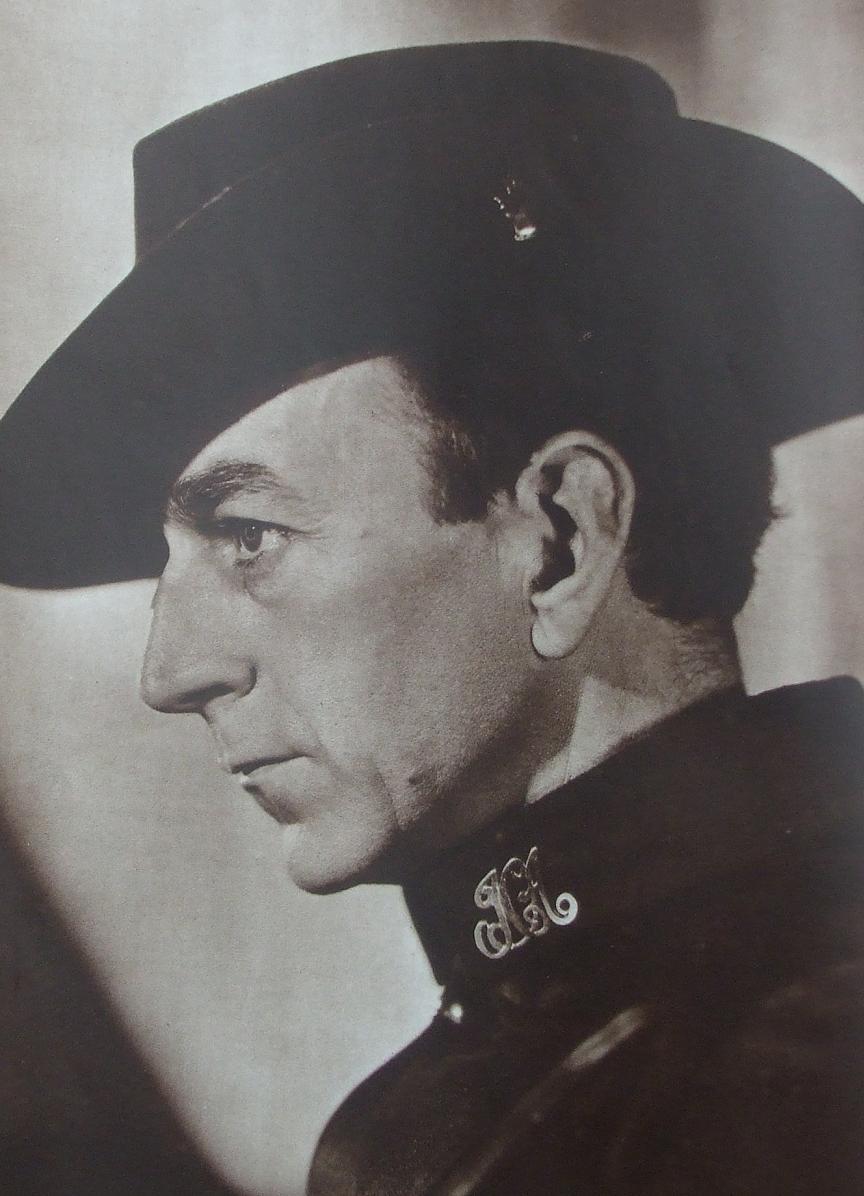
F. J McCormick in The Plough and the Stars as Captain Brennan.

The above image is taken from page 184 of the Capuchin Annual 1948.

The Plough and the Stars returns to The Abbey this summer, hopefully for a far less dramatic run than that of 1926, when the play inspired people to riot. “The Ireland that remembers with tear-dimmed eyes all that Easter Week stands for, will not, and cannot, be silent in face of such a challenge”, said Hanna Sheehy Skeffington, the feminist and social activist.

Sean O’ Casey remarked in the preface to his work on the Irish Citizen Army, The Story Of The Irish Citizen Army, that “It appears certain that Nationalism has gained a great deal and lost a little by its union with Labour in the Insurrection of Easter Week, and that Labour has lost much and achieved something by its avowal of the National aspirations of the Irish Nation.” This feeling is evident in this play, and the work is as tragic as it is funny.

The play is one that can spark debate in a way few others can. It’s run at the Abbey this summer is something I’ve been excited about for some time now. To coincide with the run, The Abbey are hosting a number of Talks and Workshops on the play.

Thursday 29 July, 6pm
Shivaun O’ Casey

Distinguished theatre director Shivaun O’ Casey discusses her father’s work.
Tickets: €3

Tuesday 7 September, 6pm
Keepers Of The Flame

Join us as we trace the political and performance history of The Plough and the Stars at the Abbey Theatre.
Tickets: €3

Saturday 4 September 10am
Talking Text

Voice Director Andrea Ainsworth leads a voice workshop using text from The Plough and the Stars
Tickets: €40 (Includes a light lunch and a ticket to the matinee showing)

Read Full Post »

Garda Museum and Archives
Opening Hours:9am to 5pm, Monday to Friday
Dublin Castle Record Tower.

Michael Staines (right) and Eoin O' Duffy. Two first Garda Commissioners.

The Garda History Museum is one of individuals, as much as of the force.

Michael Staines was an interesting Volunteer. The son of an RIC man, he was the Quartermaster General within the General Post Office in 1916. When sent to Frongoch, he became ‘Camp Leader’ among the men, and upon his release became active once more at home in the Volunteer movement. On August 17, 1922, as Garda Commissioner he would lead his new police force through the castle gates.

He would be followed by Eoin O’ Duffy, another character of the republican movement, and a most controversial one to boot. Ironically, O’ Duffy had been one of the Republicans involved in the first ever capture of a Royal Irish Constabulary Barracks, in the company of Ernie O’ Malley.

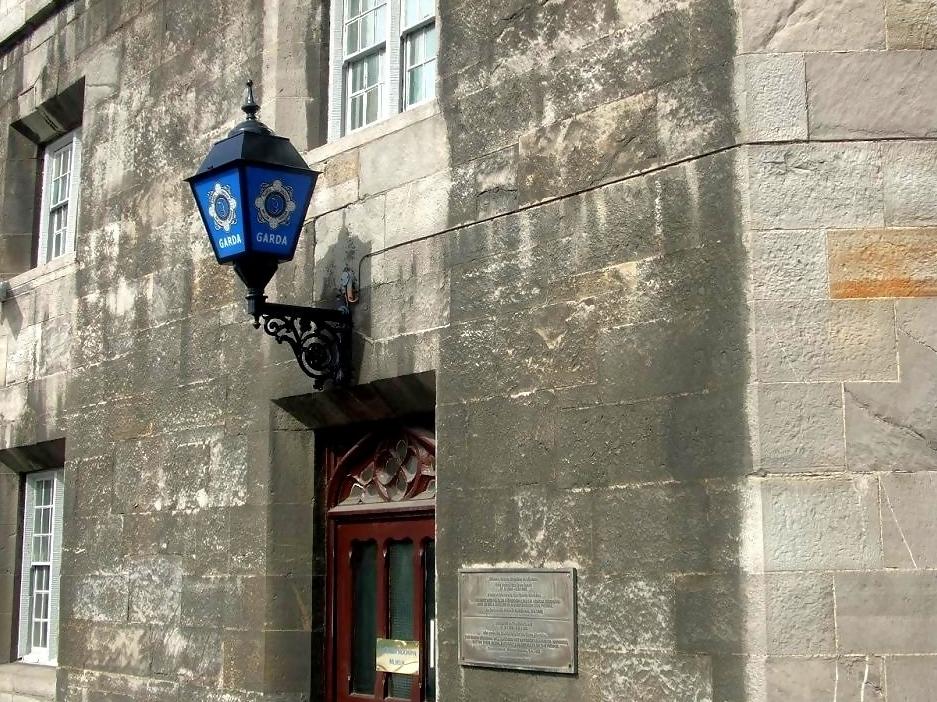
Front of Museum, Dublin Castle.

This Museum, while covering the history of that force which marched into Dublin Castle in 1922, does not shy away from the forces that called it home before them. Rather, it is a comprehensive look at the history of policing in Ireland. The Royal Irish Constabulary and Dublin Metropolitan Police feature prominently in the Museum, featuring both on occasion as a political force (For example the 1913 riots, which resulted in the deaths of several workers) and a day to day police force. The history of the Royal Irish Constabulary in particular is a loaded one, when one considers that, to give one example, the Black and Tans were directly employed by the RIC. Preserving history is not a matter of politics however, and to see so many quality RIC and DMP historical pieces displayed as well as they are here is a treat, and of great assistance to anyone who believes a complete picture is needed when studying some of the most remarkable years in Irish history.

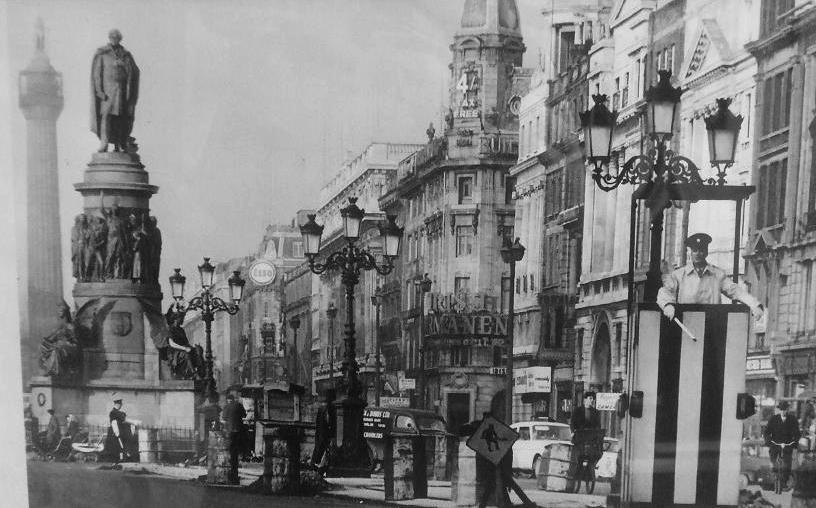
Garda traffic box, a great Dublin shot.

The Museum, spanning an amazing four floors, is one of the last old-fashioned Museums in the city centre in my humble opinion. In fact, along with the Natural History Museum, it is a sort of throwback to Museums of old, and what I feel Museums should be. All the more incredible considering Dublin Castle is only home to the Museum since 1997. The correct approach to displaying items like those in the Garda Museum is simple: Allow the pieces to speak for themselves, and provide the information clearly alongside the items. There is no shortage of information available, in the form of information panels and wall displays, but unlike some museums there is no overpowering audio-visual element.

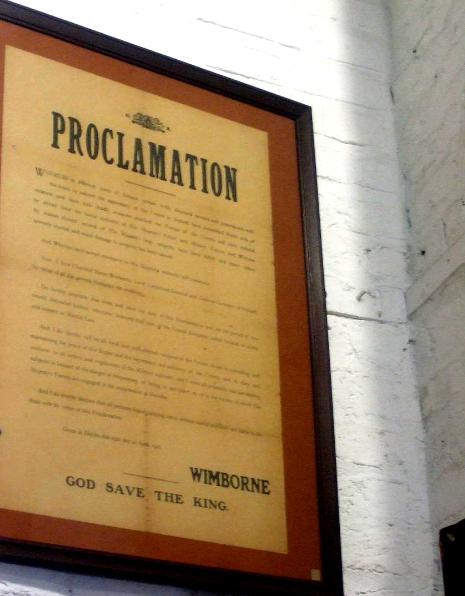
Proclamation issued April 25th, 1916.

One should not attempt to focus on individual pieces in a Museum like this, as in every corner something new grabs your attention. The Museum holds a variety of War of Independence medals for example, belonging to men who would later join the ranks of An Garda Síochanna. The above Proclamation however stands out for me, issued on April 25th in response to the Rising which began a day previous.

“WHEREAS, in the City of Dublin and County of Dublin certain evilly disposed persons and associations, with the intent to subvert the supremacy of the Crown in Ireland, have committed divers acts of violence, and have with deadly weapons attacked the Forces of the Crown, and have resisted by armed force the lawful Authority of His Majesty’s Police and Military Forces. AND whereas by reason thereof several of His Majesty’s liege Subjects have been killed and many others severely injured, and much damage to property has been caused”

The role of the Gardaí in the new state, in its first few years, is covered, where the force was to follow Staines belief that “The Garda Síochána will succeed not by force of arms or numbers, but on their moral authority as servants of the people” Early Garda documents (for example dealing with the unarmed nature of the force), uniforms and insignia are all on display.

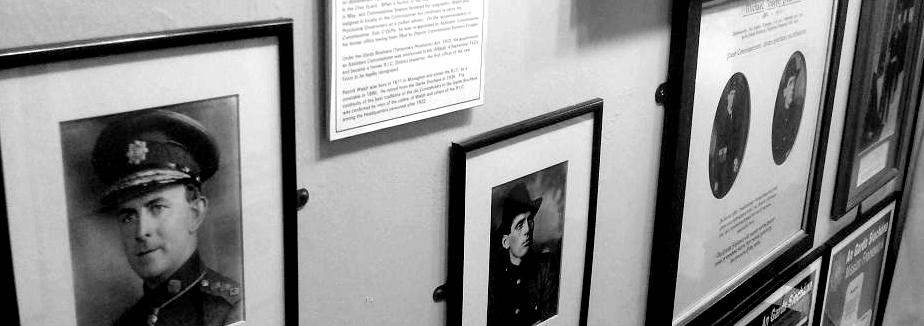
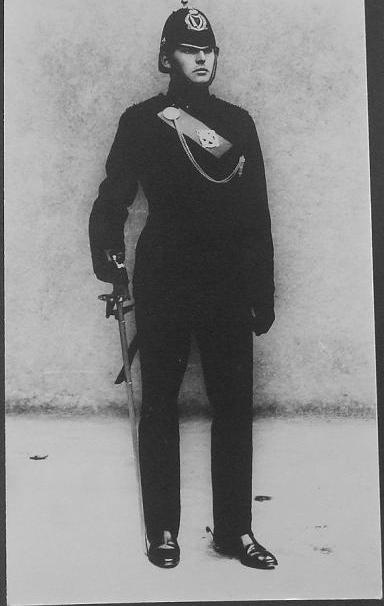
RIC Officer.

Of course, the 1900-22 period is of particular interest to me. Perhaps for other visitors, this isn’t the case. Yet, the story of policing in Ireland told here is so long and broad that certain aspects of it will no doubt appeal to others the way parts of it did to me. Even the stairs here play home to wonderful photographs and pieces, there is not an inch of this Museum left without an item. From my own perspective, approaching the centenary of the 1913 lockout, the Easter Rising and the conflicts that followed on from it, it is no doubt time many of us with a keen interest in the period attempted to increase our understanding of the state forces in Ireland at the time.

I will conclude with a verse from ‘Good Bye RIC’, which I have taken from Jim Herlihy’s wonderful history ‘The Royal Irish Constabulary’

‘We once could walk the city too,
Dressed neatly in our suits of blue,
With polished feet and all complete,
Our heads erect going down the street,
But now we are scattered everywhere,
Far from the dear old Depot Square,
Some of them lie in graves from Foyle to Lee,
Fell fighting in the RIC’

Read Full Post »

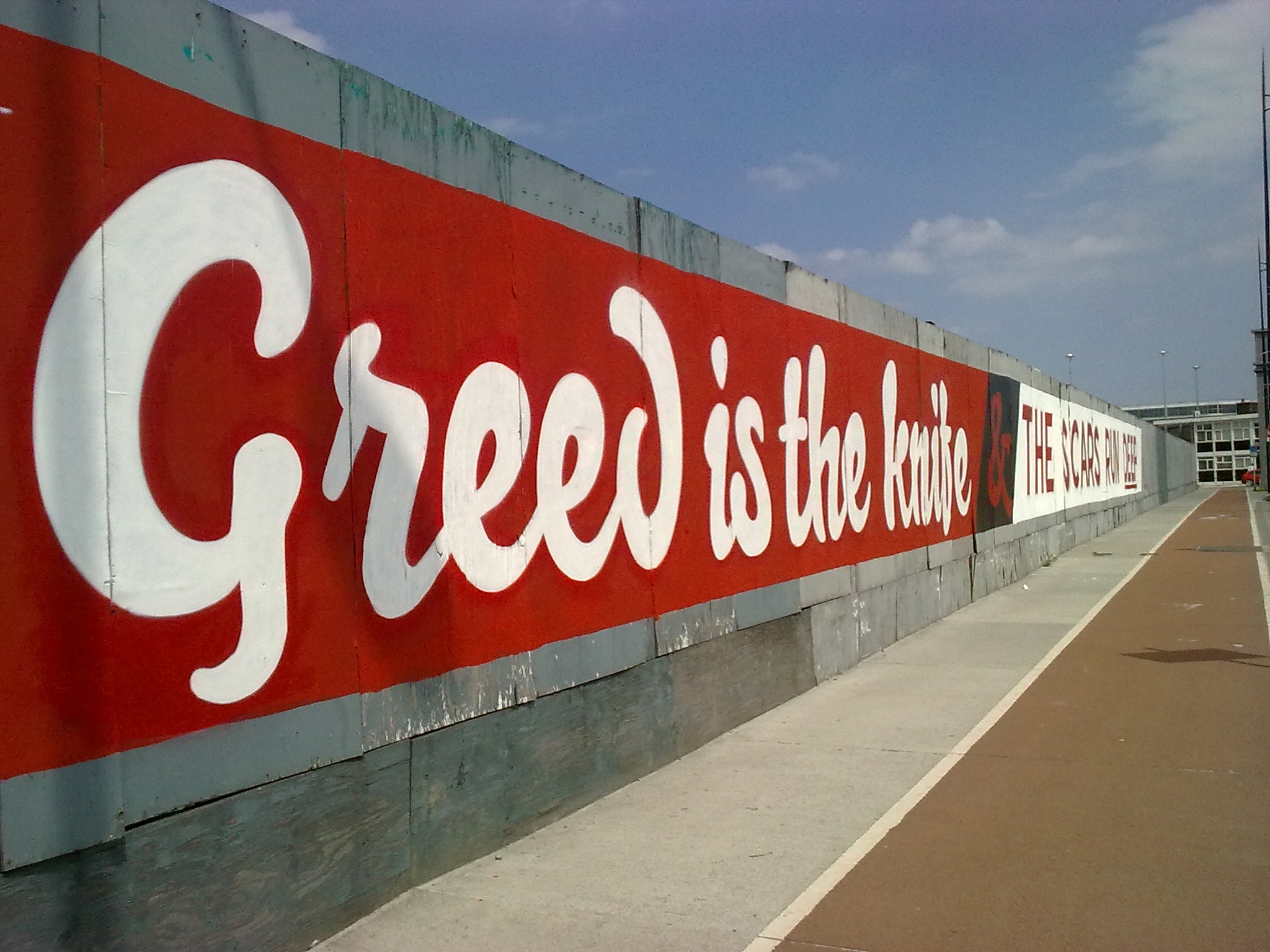
Greed is the knife and the scars run deep...

 Any regular readers will know that we’ve been following the Maser/ Damien Dempsey project very closely; And on Sunday I came across my favourite piece from the project so far. Located between the Point and the Port Tunnel,  and spanning close to fifty feet are the words “Greed is the knife and the scars run deep,” lyrics taken from one of my favourite Damo songs, Colony. Youtube it, the song sends shudders up my spine every time. The raw anger in his voice when he sings the line “But if you’ve any kind of mind, you’ll see that all of humankind are the children of this earth, and your hate for them will chew you up and spit you out” will forever be one of my favourite lyrics. Amazing. Just… Amazing.

We’ll continue to keep you posted with pictures of the pieces as we find them; Rumour has it a new one has gone up at the Bernard Shaw. Anyone who spots new ones, please give us a shout on here.

Read Full Post »

Sunday week, the 30th of May, I will be one of the guides on a walking tour taking in some of the radical history of Dublin city centre.

The Walking Tour is taking place as part of the Fifth Dublin Anarchist Bookfair, hosted by the Workers Solidarity Movement. Many of our readers here have a keen interest in radical history, and talks like “A History of Irish Revolutions” (Conor Kostick) and “The Lost Revolution – the Success & Failures of the Workers Party” (Brian Hanley and Scott Millar) at the bookfair are of particular note in that field.

The tour is completely free (I felt the need to ‘bold’ that, students eh?) and I would hope will end with some good discussion. Many of my own chosen sites have a particular focus on Dublin through the revolutionary years, with some unusual War of Independence and Civil War sites. Union history, feminist history, student history and much more besides will feature.

So, come meet dfallon in real life ( “Him? Really?”), learn something new, and enjoy a walk around our lovely and historic city.

The tour has a Facebook event page, here.

Read Full Post »

The annual Match Programme Fair is coming up again, at St Andrews Parish Centre on Pearse Street.

It takes place on Sunday, May 30th

I only recently uncovered a box of copies of the SuperSaint programme from 1998-1999 and 1999-2000 under the bed, absolute gems. Every programme from 1999-2000 in particular opens with a 1,000 word essay from Pat Dolan on whatever was getting on his nerves that week.

For example,in Issue 13 of the campaign, Galway United at home, Dolan noted that

It is certainly not satisfactory for our youth to believe that supporting their team is about sitting in front of the TV. It is something bordering almost on fraud for RTE’s over exposed Premiership to rely on opinions of people not qualified to comment. As someone who has analysed games for TV and radio, both live in the stadium and ‘live’ in the studio in front of the telly, I can tell you that you can only truly appreciate the pattern of the game and the wider picture if you actually attend the match! How gullible as a nation have we become that we accept people pontificating about the merits of English soccer and decrying the merits of Irish soccer, who attend neither.

Indeed.

As well as a trip to Pearse Street, you could do worse than to make a trip out to the Phoenix Park for a free month long exhibition there on the history of football in the park.

“The exhibition was launched to mark the FAI taking over the lease for the football facilities in the Phoenix Park, which are known as ‘the Fifteen Acres’. The exhibition contains photographs documenting the history of football in the Fifteen Acres, beginning with the foundation of Bohemian Football Club at the Gate Lodge of the Phoenix Park on September 6th 1890 and including photographs of football clubs from the late 19th century right through to the present day”

Do both on the same day and then go home, stick the scarf on, play some Subbuteo and give Jack’s Heroes a spin.

Read Full Post »

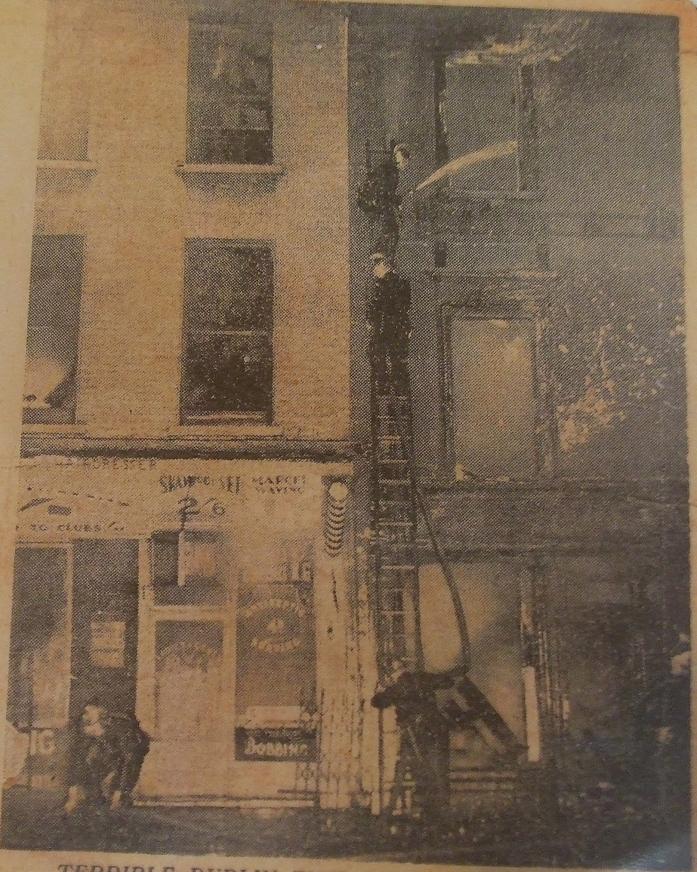
This article aims to provide a brief overview of the Pearse Street Fire of 1936. It is by no means a complete overview of events and I recommend anyone seeking more information on the incident consult ‘A Triple Tragedy in Dublin, The Pearse Street Fire, 1936’, by A.P Behan. That paper was published in the Dublin Historical Record (ISSN 0012-6861, Spring 1997). I have relied on it, and newspapers of the period, for much of the information below.

Men fight the blaze, image taken from Independent. This image was taken moments before an explosion in the premises.

Writing in the Irish Independent in the immediate aftermath of the event , Anthony Flynn wrote of the risks men in the Dublin Fire Brigade faced in the line of work.

The fireman himself thinks only of duty. That duty is clear and defined. And our Dublin firemen do not hesitate. In Pearse Street, as on countless other occasions, these men faced death. Three of them died, displaying a courage equal, if indeed, it does not transcend, that of the battlefield.

The premises of Exide Batteries, at 164 Pearse Street, had been the site of a horrific blaze on the night of Monday October 5th. Due to the proximity of Tara Street Fire Station, it took less than two minutes for the men to arrive on scene. The fire had been detected by the tenants above Exide Batteries at 10.50 p.m. In the definitive history of the Dublin Fire Brigade (The Dublin Fire Brigade: A History of the Brigade, the Fires and the Emergencies, by Trevor Whitehead and Tom Geraghty)they note that

Number 163 housed a barber’s shop at ground level and a private hotel occupying the upper floors. Number 164 had a retail shop belonging to Exide Batteries Ltd. on the front ground floor, vacant offices on the first floor and a family of seven living on the top floor. The basements, although not connected,were the location of a factory in which Exide batteries were assembled….

The fire was fought in terrible conditions. The water supply in the area was nowhere near adequate, for example. A.P Behan stated in his paper ‘A Triple Tragedy in Dublin, The Pearse Street Fire, 1936’ that

There was practically no volume of water and no pressure. Onlookers were incensed at the firemen having to fight such fire in these conditions, and the absence of adequate water supply had the result that the firemen had to get so close to the fire that their uniforms were scorched

Two explosions ripped the premises apart. Initially, two firemen were thought missing in the premises, but quickly it became apparent a third was missing. It was not until about 10 in the morning the next day that the third body was found. The three Dublin firefighters killed in the line of duty were:

Fireman Robert Malone– a veteran of the 1916 Rising who had served as a Lieutenant with “D” Company 3rd Battalion at Bolands Mills Garrison, under Eamon de Valera. He left a wife and child behind.

Fireman Thomas Nugent– who was engaged to be married.

Fireman Peter McArdle– who left a wife and seven children (His funeral mass card is shown below)

(more…)

Read Full Post »

My brother is now the king of the car boot sales. He comes back with some top class stuff. Like this timely tune.

Last Sunday, he arrives home from Harold’s Cross with a bag of records. Loads of the things. Spanish folk to ‘novelty’ records and everything in between. A Crashed Records 7″ from 1983 caught my eye, if only for the title.

‘Cause I’m On The Dole – Don’t Mean I Can’t Rock N’ Roll was a 1983 number from the band Jukebox. The B Side is ‘I Washed My Jeans’ (No point really if you’re on the Dole, who is going to see them?) The single was released on Crashed Records, based in the Donaghmede Centre of Dublin 13. Google has heard very little about the tune it seems, tragic as at the minute it’s National Anthem material. It’s not half bad either.

So turn up the speakers there (If you haven’t sold them yet) and give this one a play.

A cartoon from The Irish Times,July 9th 1983. Not much Rock N' Roll there.

Read Full Post »

May 24th marks the end of the National Library of Ireland’s wonderful W.D Hogan photo exhibition at the National Photographic Archive. Below are two samples from the NLI Facebook page to promote the exhibition, and I’ve also included a wonderful W.D Hogan snap of Liam Mellows delivering the oration at Bodenstown cemetery during a Wolfe Tone commemoration.

Opening times are below the images, seize the day and get into this one before it’s too late. Due to the nature of W.D Hogan’s work (He was in the company of the Free State Army during much of the civil war) there is, of course, a greater amount of images from one side of the civil war conflict than the other, but it is the shots of civilian life that make this exhibition what it is.


“Man examining remains after the fire at the Custom House, 26 May 1921”


“National Army troops shell the occupied Four Courts”


Liam Mellows addresses rally at Bodenstown, County Kildare.

National Photographic Archive, Temple Bar.
Mon – Fri: 10am – 5pm
Saturday: 10am – 2.00pm

Read Full Post »

The Tolerence of Crows

Death comes in quantity from solved
Problems on maps, well-ordered dispositions,
Angles of elevation and direction;

Comes innocent from tools children might
Love, retaining under pillows
Innocently impales on any flesh.

And with flesh falls apart the mind
That trails thought from the mind that cuts
Thought clearly for a waiting purpose.

Progress of poison in the nerves and
Discipline’s collapse is halted.
Body awaits the tolerance of crows.

Charlie Donnelly b. 10 July 1914, d. 27 Feb 1937

I’m not cheating here; I know Charlie Donnelly wasn’t a Dub, but he lived here for many years, and studied at UCD as JayCarax covered here in his Hidden History Blog. He was a complex character; a college drop-out, political activist and member of the national executive of the Republican Congress. And a poet. A very good poet.

And for while we have a history of revolutionary poets in this country, most of them fought in the years 1916 to 1922. Charlie wasn’t born in time for that revolution but travelled to London in 1936 where he joined the International Brigades. On the 23rd December of that year headed to Spain where he fought on the republican side against Franco’s Counter Revolution.

On the 27th February, 1937, in the rank of Field Commander, he was sent with his unit to launch a frontal assault on the Nationalist positions on a hill named Pingarron. They were pinned down and Donnelly was hit by three Nationalist bullets- One to his right arm, one to his right side and an explosive bullet to the head that killed him. He uttered his oft repeated words “even the olives are bleeding” during that assault. His body lay prone for four days before it could be recovered by Irish brigadier Peter O’Connor.  His body was buried in an unmarked grave. He was only 23 years of age.

His story, along with the stories of so many others who fought and died in that war never cease to move me; Absolute selflessness from people united against Fascism. While Spain is a stones throw across the water now with it easier (and probably cheaper) to get a flight there than a taxi home from Dame Street on a Saturday night, back then it meant getting a boat to England, and then another one from there to France and then the long trek down by train, bus and foot. Yet you wonder would people do it these days.

Absolute Legends. Picture by Asile, from Indymedia

Right. The reason for the article. On the 27th February this year, family and friends of Charlie Donnelly unveiled a beautiful memorial to him in a park in Rivas. The story of how the memorial came to be is one could not do justice to, but you can read about it here. The memorial consists of a stone from the 32 counties of Ireland and was paid for by donations not only from Ireland but from across Spain also. Next Friday, in the Teachers Club on Parnell Square, sees the launch of a DVD that tells the story  of the project and promises to be a night to remember. Titled “Stones to Remember: Charlie Donnelly and the XV Brigade” there will be music, song, poetry and I’m sure, plenty of tears. Admission is €5 and it kicks off at 8.30. I hope to be in attendance to pay homage to the man himself.

Details and the poster for the event can be found at: http://www.indymedia.ie/article/96544

Read Full Post »

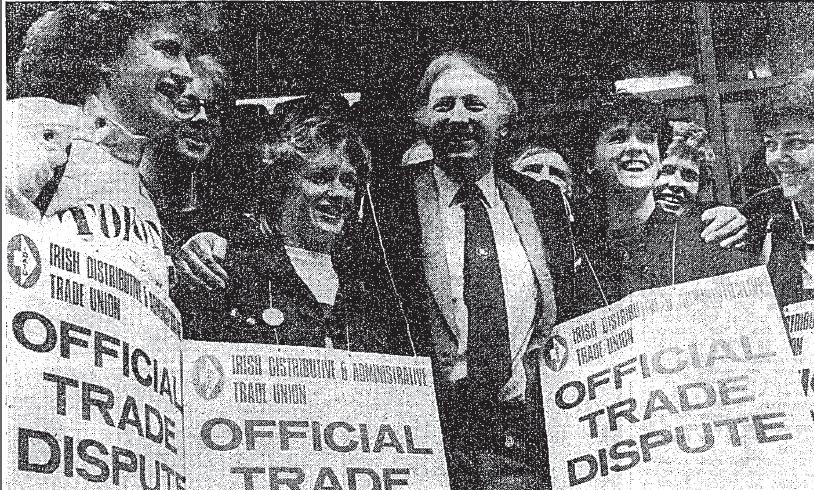
Arthur Scargill at Dunnes Stores, Henry Street with striking workers (Irish Times April 20th 1985)

Arthur Scargill, the (in)famous trade union leader of the National Union of Miners, is to address the upcoming May Day rally in Dublin. There is something about seeing Scargill speak that makes you feel almost entitled to a badge yourself, like you’ve ticked something off some imaginary list. He is, afterall, renowned for his ability in the field.

When I saw him last year, at the Unite union hall (which you can view here) I understood where the reputation comes from. Often humourous, sometimes biting and always engaging, he is in a field of his own when microphones are involved (And the same can be said of megaphones)

While aspects of his own politics remain open for debate among the left, and some debate the tactics and even the ideology of the strike Scargill led, it doesn’t change the fact he remains a speaker most worthy of your ears and time. He is a character of some magnitude.

DCTU May Day Rally:
2 pm , Saturday 1st May
Garden of Remembrance,
Parnell Square, Dublin.

March to Liberty Hall

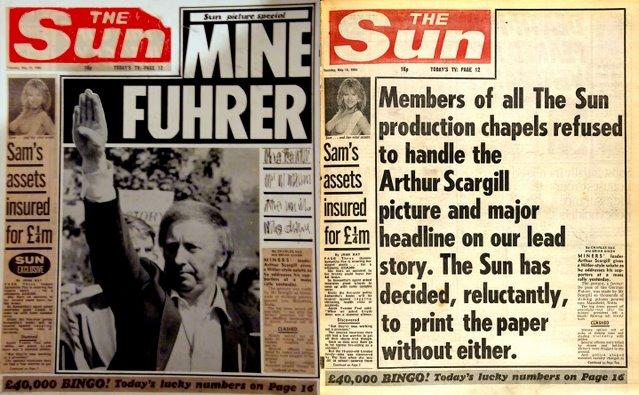
The red-top smear the staff wouldn't print.

Read Full Post »

« Newer Posts - Older Posts »