Feeds:
Posts
Comments

Archive for the ‘Social History’ Category

Who was the first man shot that day?
The player Connolly,
Close to the City Hall he died;
Carriage and voice had he;
He lacked those years that go with skill,
But later might have been
A famous, a brilliant figure
Before the painted scene.

From mountain to mountain ride the fierce horsemen.

W.B Yeats.

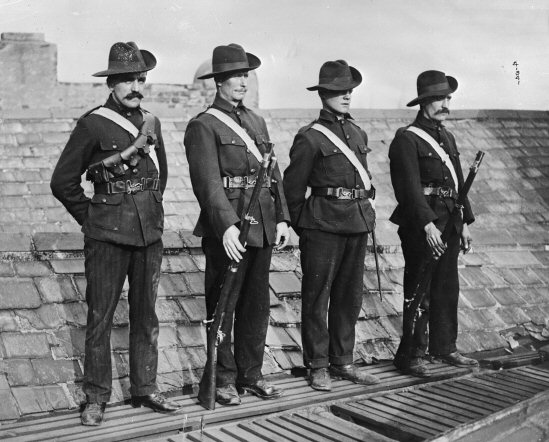
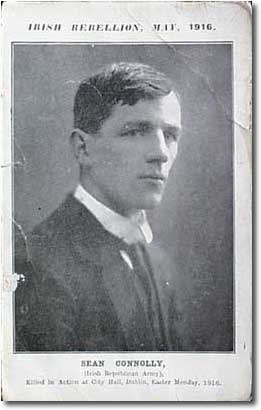
This Easter Monday sees a new plaque unveiled in Dublin, a plaque to the memory of Sean Connolly and his siblings ( Joe, Mattie, George, Eddie and Katie, who all served with the Irish Citizen Army during the Easter Rising) and young Molly O’ Reilly who raised the green flag over Liberty Hall in April, 1916.

In The History of the Irish Citizen Army, by R.M Fox, he wrote that:

In front of the hall itself the Citizen Army cleared a space and formed up on three sides of the square. Inside this square was the women’s section, the boys scouts’ corps under Captain W. Carpenter, and the Fintan Lalor Pipe Band. Captain C. Poole and a Colour Guard of sixteen men escorted the colour bearer, Miss Molly O’ Reilly of the Women Workers’ Union who was also a member of the Citizen Army.

….. “I noticed” said a member of the Colour Guard, “That some men, old and middle aged,and a great number of women were crying. and I knew then that this was not in vain and that they all realised what was meant by the hoisting of the flag

Sean Connolly famously starred in a play by James Connolly entitled ‘Under Which Flag?’ a week before the insurrection, which went hand in hand with the symbolic raising of the green flag over the hall. He was shot on the roof of City Hall on Easter Monday by a British Sniper who had taken up position in Dublin Castle. His brother, Mattie, was with him as he died. Sean is remembered not only as a captain within the Citizen Army but also as an actor at the Abbey, with Lady Gregory writing a poem in his memory after 1916.

James Connolly himself wrote in an article titled The Irish Flag published on the 8th April 1916 in the Workers Republc newspaper, that

For centuries the green flag of Ireland was a thing accurst and hated by the English garrison in Ireland, as it is still in their inmost hearts. But in India, in Egypt, in Flanders, in Gallipoli, the green flag is used by our rulers to encourage Irish soldiers of England to give up their lives for the power that denies their country the right of nationhood. Green flags wave over recruiting offices in Ireland and England as a bait to lure on poor fools to dishonourable deaths in England’s uniform.

On Easter Monday, April 5th the flag will be raised at Liberty Hall by a relative of Molly O’ Reilly. This flag will be presented by the great grandson of James Connolly. This ceremony will begin at 12 noon. After this, the crowd will move on to Sean McDermott Street where the plaque will be unveiled on 58/59 Sean McDermott Lower, where the home of Sean Connolly once stood.

There will be a photographic exhibition of images from the revolutionary years in the nearby Community Hall at Killarney Court.

This is all being carried out by the North Inner City Folk Project, the people behind fantastic events like the commemoration of the forgotten women of 1916, and promises to be a good one. I look forward to it!

Update: Images and audio from the launch can be found here

Read Full Post »

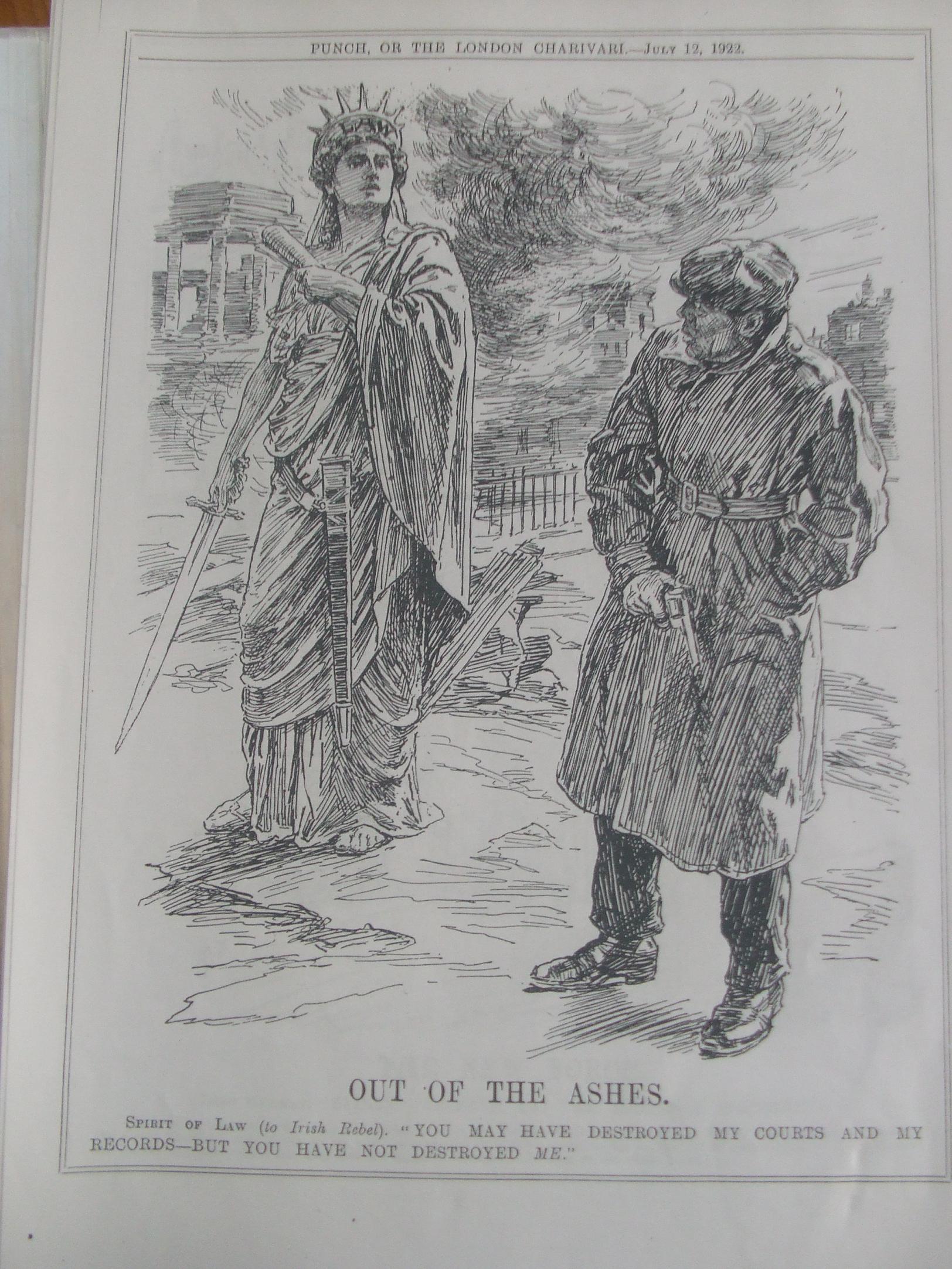
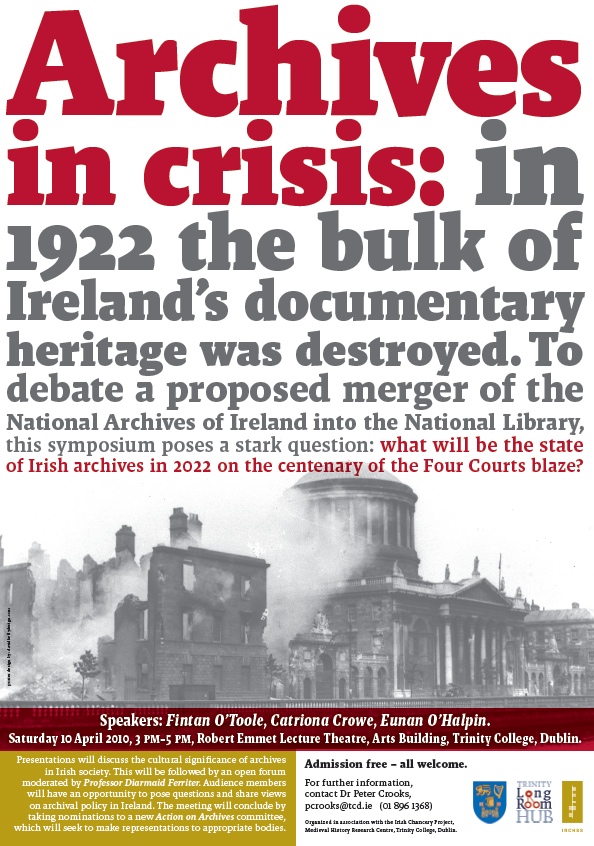
The poster in a recent post on archives and the burning of the Four Courts reminded me to root out this old punch cartoon upstairs.

Taken from the July 12th 1922 edition of Punch, or the London Charivari, it shows the ‘Spirit of the Law’ in discussion with a menacing looking republican figure, with the smouldering remains of the Four Courts in the background.

OUT OF THE ASHES.
Spirit of Law (To Irish Rebel): “You may have destroyed my courts and my records, but you have not destroyed me!”

At least two thirds of Come Here To Me will be at this, feel free to say hello.

Here is that poster one more time, as posted by jaycarax

Read Full Post »

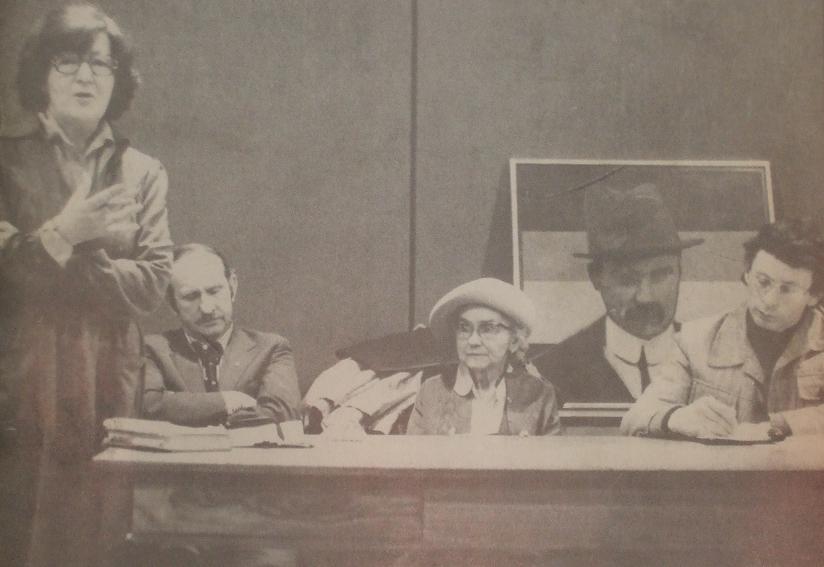
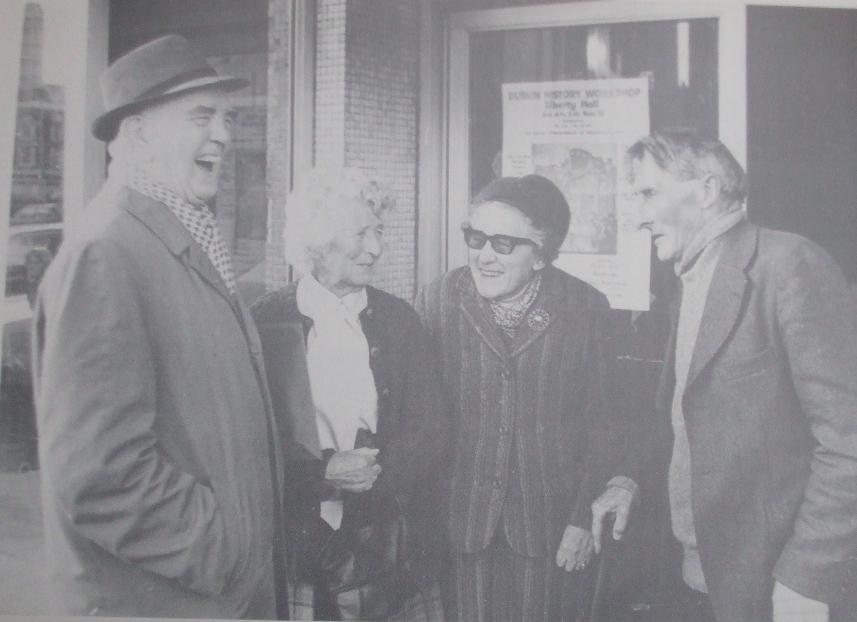
Just a quick post, two fantastic images from an Irish History Workshop/ Saotharlann Staire Éireann workshop report dealing with a Dublin History Workshop at Liberty Hall between the tenth and the twelfth of March, 1978. The workshop report was found hiding in the wrong section at the recent Trinity College Dublin booksale. It includes the text of varied reports given at the conference such as Dr O’ Connor Lysaght’s talk on ‘The Munster Soviet Creameries’ and Margaret Ward’s presentation on ‘The Ladies Land League’

(l-r: Miriam Daly, Matt Merrigan, Nora Connolly O’ Brien, Jack Gannon)

The inside page notes that Miriam Daly was “the victim of a sectarian assasination” between the time of the conference and the time of publication, and that Nora Connolly O’ Brien, daughter of James Connolly, had passed away since the conference.

From the symposium ‘The Relevance of Connolly’

Chair:
Matt Merrigan (Dist. Sec. ATGWU, Socialist Labour Party)
Speakers:
Dr. Noel Browne T.D
Miriam Daly (Queens University and Irish Republican Socialist Party)
Nora Connolly O’ Brien
Michael O’ Riordan (Gen. Sec. Communist Party of Ireland)

An interesting photo this, from page 54 of the report.

4/5.11.1978 Dublin. Dublin History Workshop

(l-r: Michael McInerney, Sheila Humphries (Sighle Bean Ui Dhonnchada), Babs O’ Donoghue, George Gilmore)

Snapped outside Liberty Hall, this is just a great shot.

Sheila Humphries of course was a key member of Cumann na mBán at the time of (and long before) the Republican Congess who, along with Eithne Coyle, had become involved with the new venture before leaving due to unease within CnamB with their involvement.

George Gilmore was a key player in the foundation of the Republican Congress, who resigned from the IRA at the same time as Frank Ryan and Peadar O’ Donnell.

I would welcome information on Michael and Babs, who complete this fantastic shot.

Read Full Post »

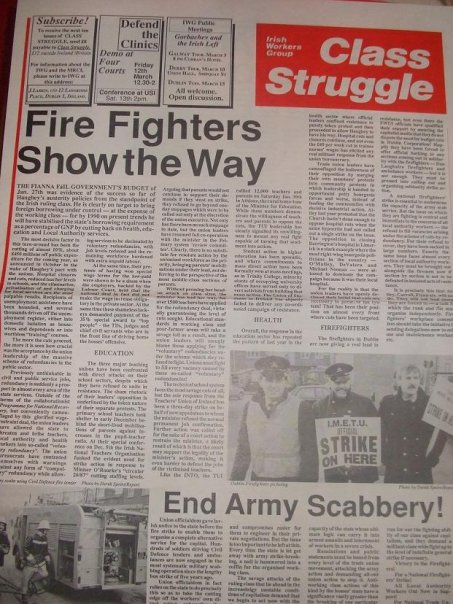
Front page article End Army Scabbery reproduced in full below introduction.

A nice find this, a copy of Class Struggle (the paper of the Irish Workers Group) from 1988, during the Dublin Fire Brigade strike. Up top there is an ad for a public meeting on the subject of ‘Gorbachev and the Irish Left’ and those wishing to subscribe to the paper are told to address their envelopes to a certain ‘J.Larkin’. The paper also features a lengthy piece on the situation in Palestine at the time.

The Irish Workers Group (Workers Power) emerged out of the Socialist Workers Movement in the 1970s.

” It was formed as a separate organisation after being expelled from that group in 1976. It affiliated to the League for the Fifth International (L5I). By the 2000s, it had ceased producing Class Struggle, its publication, instead distributing the publications of the Workers Power group in Britain. The group was active in several places in Ireland, notably Dublin, Derry and Galway, and, amongst others, published a book on James Connolly”
(sourced from Wikipedia)

This newspaper was handed to my father on route to a Union meeting in Liberty Hall during the dispute. I’ve always been intrigued by the strike for a variety of reasons. While troubles raged in the North for example, firemen from Derry stood outside Dublin firestations with signs proclaiming ‘Londonderry FBU Support Dublin Firefighters’. Despite media smear campaigns, the workers managed to hold some degree of popular support, and perhaps nothing was more poignant than the sight of relatives of Stardust fire victims supporting the Brigades workforce.

(Article from front page, on Fire Brigade strike)

End Army Scabbery!

Union officialdom gave lavish notice to the state before the fire strike to enable them to organise a complete alternative service for the capital. Hundreds of soldiers driving Civil Defence tenders and ambulances are now engaged in the most systematic military scabbing operation since the lengthy bus strike of five years ago.

Union officialdom in fact relies on the state to do precisely this so as to take the cutting edge off the workers’ own direct action, exhausting the strikes and making sellouts and compromises eaiser for them to engineer in their private negotiations. But the issue is too important to be left at this. Every time the state is let get away with army strike-breaking, a nail is hammered into the coffin for the organised working class.

The savage attacks of the ruling class that lie ahead in the increasingly unstabble conditions of capitalism demand that we begin to act now with the sharpest possible response to neutralise the strike breaking capacity of the state whose ultimate logic can carry it into armed assaults and internment of workers in severe cases.

Resolutions and public statements must be issued from every level of the trade union movement, attacking the army action and demanding all out union action to stop it. Anti working class actions of the kind by the bosses state have a significance vastly greater than the breaking of one particular strike. They add up to a question of life and death in the long run for the fighting ability of our class against capitalism, and they demand a militant class wide fight up to the level of indefinite general strike if neccessary.

Victory to the Firefighters!

For A National Firefighters Strike!

All Local Authority Workers Out Now In Support!

For National Trade Union Action To Break The Army Scabbery!

Read Full Post »

“We built this city on debts and booze…”


Molly and her admirers...


Having only remembered on Thursday previous it was my turn again to choose our route for Sunday, I hastily cobbled together a list of potentials, had a quick scout on the interweb and took a little time to whittle my list down to five. If only we could visit them all; give it time and we will have I guess.  An interesting weekend it was turning out to be with the madcap encounter described by DMcHugh below on Friday evening, a great Punky Reggae Party in Seomra Spraoi later that night, a large slice of luck on Saturday afternoon (many thanks to Ringsend Rose;) and a beautiful Sunday afternoon. What better day for a walk around the city…  Waiting at Molly Malone for the lads, I was witness to streams of tourists pause and giggle at Molly’s… ahem… appendages, funny photos  to be taken back home and talked about, and no doubt the source of many profile pictures on Facebook and Bebo alike. I couldn’t believe it- a queue actually started to mount- I’d say if you stood there with a Polaroid camera and a sign saying “Photographs, €10” you’d be worth a fortune. Anyways, I’m losing the run of myself. A quiet start this week, just the three of us mainstays meeting for the start, to be joined later by Antrophe, DSmith and JFlood.

The Duke, Duke Street

So… first stop. I had decided to cover old territory; Around Grafton Street, we had already stopped off, with varying degrees of success, in Nearys, McDaids, The Bailey, Kehoes and Davy Byrnes. One pub missing from this list, one we should have included before now but neglected, is of course The Duke, on Duke Street. The outside of this pub belies a certain grandeur within; it really is a large premises that you can’t imagine ever being packed, what with the same floorspace in the upstairs bar as down. The end of the milk cup or tin cup final or whatever piece of silverware it was the Manchester Reds and the Birmigham Clarets were battling out for was on the big screen but the barman pointed out that there were a couple of quieter seats down the back or upstairs. (You might have noticed a theme of disdain towards the English Premier League in mine and DFallon’s posts, thats pretty much because we do hold it in disdain, and well, something akin to hatred, preferring to support teams actually on this island.) I didn’t do my duty and write the prices of the pints down in each place but if memory serves, pints here were €4.45 and very enjoyable indeed. A nice crowd in too but well dispersed, such is the lay out of the place. JayCarax led the way and we captured a nice quiet table near the back of the pub. Another venue for the pour your own pint initiative that seems to be popping up all over the place, you wonder if the characters historically connected with this place (It was, for a time, purported to be the favourite watering hole of Behan, O’Brien and other Dublin literary luminaries, and after that, Ronnie Drew and his cohorts) would take to such a thing, I can imagine them pouring and drinking the pints alright, its the paying for them that I’m not sure about.

The Gingerman, Fenian Street

We didn’t linger too long, aware that the night had to end earlier than usual with JayCarax spinning the decks at the The Magnificent 7’s Session in 4 Dame Lane later that night. A nice place this, innocuous enough to be honest, historically important when it comes to Dublin social history but not much you can say after that; A fine pub, with fine pints and fine staff, certainly one that didn’t jump out as being outstanding having lost the characters of old  but I don’t have a bad thing to say about it either.

So we upped and headed out the door, to our next stop which was to be The Gingerman on Fenian Street. The Gingerman, which takes it’s name from the famous novel by JP Donleavy (a Mullingar resident now, strangely enough.) The first thing that hit us walking in the door was the smell, and that’s never a good thing- Close your eyes and you could well be in the Markievitz swimming pool down the road; bleach or chlorine or both… At least its an indication the place is clean I guess! I wasn’t over-awed by this place to be honest, nice and all as it was. None of us ventured a try at their home brew, all sticking to pints of plain at a relatively expensive €4.60. I guess the fact it’s attached to the Davenport Hotel drives the price up. DFallon was happy to see “real, actual books” on the shelves though, after his terrible let down out in the airport. The table opposite us was surrounded by young Trinners types sipping on “min-er-dils;” 7-ups and Fantas all around for some reason, maybe they didn’t trust the drink or were just the athletic type, who knows. Joined on this stop by JFlood, three became four and we headed off after another couple of mediocre pints.

Ned Scanlons, Townsend Street

The next stop was probably the strangest of our stops so far on this run. Ned Scanlons (Or just plain and simple “Neds”) on Townsend Street is an institution in itself. They make absolutely no qualms about being a spit-and-sawdust  local and rumour has it that it’s not long since they stopped spreading sawdust on the floor, having recently undergone “renovation” and adding quite a nice beer garden/ smoking area out the back. Now, it would be suicidal of me to criticize this place too much, as a few old friends and work-mates count it as their home-away-from-home but to say it’s “quaint” will do. You can’t give out, the pints ring in at €3.80 a pop. This was no student deal (You get the feeling students would be torn alive in here,) just one of the cheapest pints in Dublin. And a nice pint it was too, served by a jovial barman with his shirt hanging out at the back and looking like he had been indulging in the stock himself. I like this sort of pub, I’m not sure if the others do though. Going to the jacks is like heading into a dungeon, the womens was only added as an afterthought a couple of years ago, and the mens not far before that. Renowned as an early house, Neds is in the same tradition as Kennedys at Tara Street station and certainly one of a dying breed. As four became five, with Antrophe joining us, and inebriation setting in, we started on the short hop to our next stop, The Longstone down the other end of Townsend Street.

The Long Stone, Townsend Street

I’ve already written a bit about this place below but I didn’t really go into it other than discuss the beautiful banners they have hanging on the walls. Aesthetically beautiful, this place and Davy Byrnes probably fight it out for the title of Dublins best looking pub. Although large and imposing,  a lot of work has gone into ensuring that it remains authentic and doesn’t turn into a faceless beerhall. The front part of the pub is anonymous enough, small tables in areas squared off by the couches but when you get to the back of the pub… wow. This area is enclosed on three sides by a natural stone framed staircase on the left,  a large landing area with quiet low tabling to the front and a narrow natural timber staircase to the right . We took up positon next to the ornate fireplace, said to represent Lugh, the norse god of light and heat… or something. We were joined here by DSmith, on his first venture along to the CHTM pubcrawl. As I said, I did a sizable piece on this pub below so don’t want to harp on about it. It’s beautiful to look at, I think pints were somewhere in the €4.60 range and weren’t too shabby. The banners I talked about below, obviously, inspired a great deal of conversation as again and little known facts and titbits of history started to flow and we lost ourselves, yet again. I’ve been here on a Friday evening before and it does tend to get busy, as do most Dublin pubs on Friday, an onslaughtg of office workers from all over the city who stagger from work to pub and merrily home.

Bowes, Fleet Street

Merrily we left this place too, and after a brief run in with an Gardaí Siochána who demanded JayCarax list off what records were in his case before letting us go on our way (a truly comic… or tragic moment, a young man with a suitcase full of records; unheard of) muttering that it must be a quiet night on Dublin’s streets. Last stop, and new ground for us all- Bowes on Fleet Street.

I only realised the existence of this pub a couple of months back, one of the blokes in work telling me of “a fine little shop,  next door to that student kip;” his words, not mine. You could be fogiven for missing the place, the narrow frontage often disguised by the busses parked outside. Attached to Doyles, this place often gets by-passed and forgotten about but not anymore with me. If I’m thirsty and in this part of town, I’ll be sure to drop into Bowes again. Definitely not what I was expecting, having been told that this is an “old-mans-pub,” no spit-and-sawdust nor tobacco stained walls anywhere to be seen, just a quiet, well kept, lovely pub, with  couples chatting quietly over pints and a few more tables occupied by stragglers, quietly reading the days news before joining the Sunday evening exodus out of the city. Pints rang in at €4.50 and were more than acceptable. I don’t know what to say about this place really, I know nothing of its history, I’d never been here before and was relying purely on the recommendation of a friend but I really liked it. It is certainly a “home-y” sort of a place, very relaxed in atmosphere and everyone seemed to be on first name terms with the lady behind the bar. I was delighted to hear a bit of music start up in the other corner, starting off with a lone Uileann Piper, one of my favourite instruments, I’d love to pick a cheap set up but apparently there’s no such thing as a cheap set, the things cost a bloody fortune. If there’s one good thing to come out of this little experiment of ours, we’ll all have the ability to walk through the streets of Dublin and say “I know a lovely spot not too far away” no matter where we are.  I have a feeling I might not be too far away from Bowes tomorrow evening, I might drop in and see if the pints are still as good…

So, the end of the night was upon us, and a communal visit to Supermacs for their snack-box special and we we’re off. Another five pubs down, making it thirty four or so we’ve reviewed already, and many, many more to go.

Read Full Post »
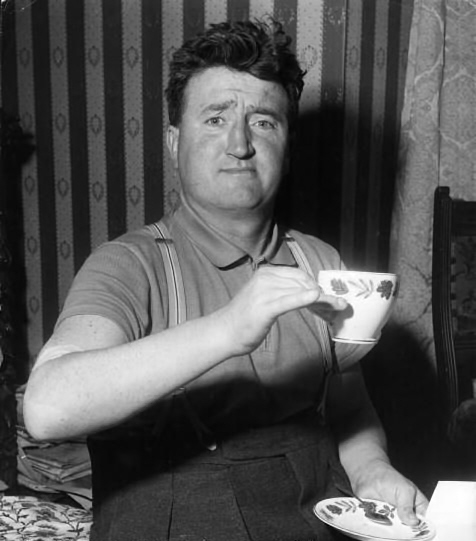
They say it’s a fine line between genius and madness and I reckon Behan made a good attempt at finding the middle ground.

Now here’s a good one; I have few heros (or, as Public Enemy said,  “Most of my heroes don’t appear on no stamps,”) but I unashamedly pronounce Brendan Behan one of mine. Never one to be shy, he announced freely in the media that he was an unavowed and unabashed communist. Now, I suppose this was likely to draw some deal of attention to him considering the second Red Scare was in full swing in 1957. What you wouldn’t expect is for him to be bugged by MI5. But bugged he was, as records released today show and I’d love to hear some of the recordings as the man himself was pronounced as “A little mad, or a little drunk” by the officer investigating the case. We, of course, know that he was a good dollop of both.

Mona Lisa

An Fear féin

It was a call to Barbara Niven, editor of Communist Party of Great Britain’s paper, the Daily Worker that attracted MI5 attention. The MI5 officer consistently misspells Behan’s Christian name as Brandon in the transcripts.

“He said he had his mother with him. Did Barbara understand him? Barbara said she did not understand him. Brandon said he was going to give a subscription to the Daily (Worker) for a year.”

“Barbara said that was wonderful. Brandon said he understood that canvassing was very bad. Brandon said could he call around to see her. Barbara said she was very busy as she was writing something which had to be finished by that evening.

“Brandon said he wanted to give the money to her himself and he wanted to see her because he was a first-class man and no one would call for him. Not even his own class would talk to him, he said,” the officer wrote.

“He said he had got the embassy working for him. He hoped that they would get him a plane.”

“He wanted to go home to Ireland where he lived. His brother Brian had dragged his name in the mud by his interview in the Daily Express,” the officer wrote, adding, “I assumed Brandon was either a little mad, or drunk.”

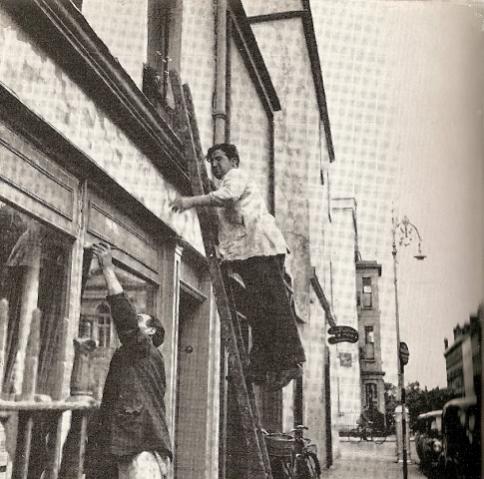
As well as songwriters and storytellers, the Behan clan were always great painters and signwriters.

I can only imagine a high paid civil servant sitting in a top-secret office somewhere in London trying to decypher the conversation; was it some form of uncracked code? Who is “mother“? And what of this “embassy“? I wonder how long it took them to realise the man was just twisted and leary. They say its a fine line between genius and madness and I reckon Behan made a good attempt at finding the middle ground. And I doubt many will disagree.

(Míle buíochas le mo dheartháir Liam chun fáil airteagal seo.)

Read Full Post »

Land League banner in The Longstone

One of our stops on the last pubcrawl (the review is yet to be finished- this weekend hopefully!) was The Longstone pub in Townsend Street. I won’t say too much about the place apart from the fact that we liked it and were taken aback by the decor; for the walls were adorned with what look like original Union banners dating from the late 19th Century. One that caught our attention was the one above, a banner with the words “Kinlough,” “Down With Landlordism,” “Union is Strength” and “Branch in League” painted on it, along with a picture of Michael Davitt. Now my knowledge of the Land League isn’t the best but I do know that the bottom part of Michael Davitts right arm was amputated at a young age after he got it caught in a cog wheel while working in a cotton mill, yet here he is in his resplendant glory with both arms intact! (Although it took me until I got home and looked at the pictures closely to realise that- the paint is very faint, and therefore could well depict Charles Stewart Parnell!)

Anyways. A little known fact about Davitt is he was invited to lay the centre turf at Celtic Park at the clubs inauguration in 1888. Thieves sneaked in that night and stole the very sod he lay, giving inspiration to the poem that begins:

“The curse of Cromwell blast the hand that stole the sod that Michael cut; May all his praties turn to sand – the crawling, thieving scut.”

Old man, old banner.

We mused how the banners got there and whether they were original or not. Now I was under the impression that this place had been in the hands of the same family for generations but apparently not- The Longstone, though it looks as if it’s been there forever, has changed hand a few times over the last couple of decades. The lady behind the bar was unable to shed any light on the situation, other than saying she always believed them to be originals.

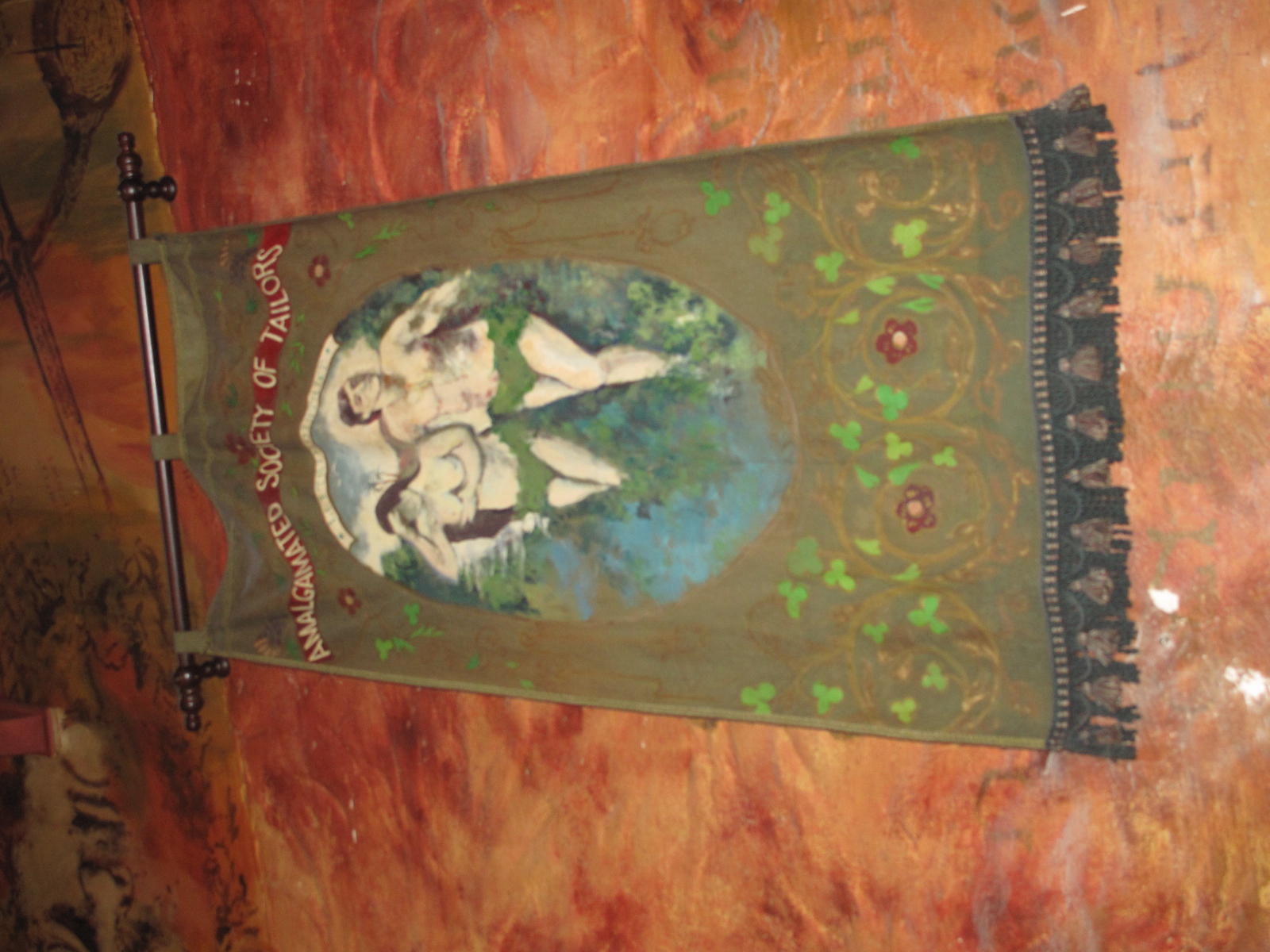
Amalgamated Society of Tailors

We’d love to get a history of these banners, I’ll be mailing the folks from the Longstone anyways and will keep people posted about anything I hear. Alternatively, if anyone knows anything about them, drop us a line on here!

The Davitt banner in.. full.

Read Full Post »
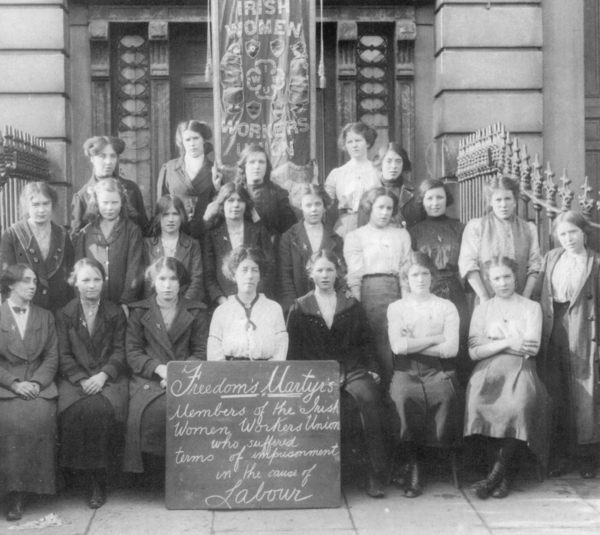
The Irish Women Workers Union. Liberty Hall.

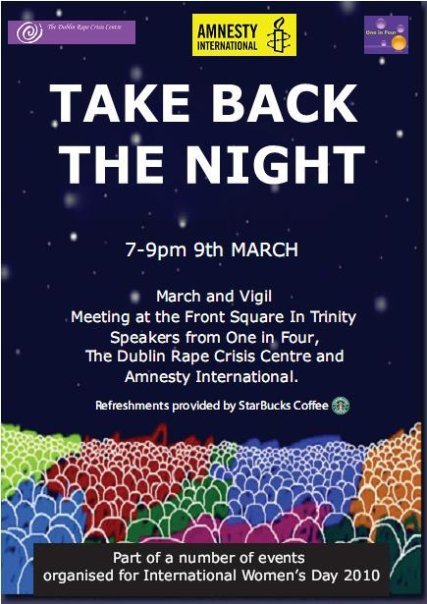
Over the last couple of years, it’s been fantastic to see International Womens Day marked properly in Dublin. While it seems there is a wide range of events planned this year to mark the occasion, ranging from a showing of the fantastic I Was A Teenage Feminist as part of the (very much free) Progressive Film Club to the ever-popular and highly regarded Feminist Walking Tour hosted by Choice Ireland, the RAG collective and the Lashback collective (and more on that below), the event that’s grabbed my attention is undoubtedly the ‘Take Back The Night’ march planned for Tuesday night.

Event Poster

The march/vigil will meet at 7pm on Tuesday at the front square of the University.

Take Back the Night (also known as Reclaim the Night) is an internationally-held march and vigil that is organised with the purpose of unifying women, men, and children in awareness of sexual violence and rape. TBTN is about taking a stand against violence and making the night safe for everyone.

The event at Trinity is one part of many events being organised in honour of International Women’s Day. It will include speakers from the Dublin Rape Crisis Centre, One in Four, an Irish based support service for women and men who have experienced sexual abuse/violence, and Amnesty International, an international human rights organisation.

As a protest and indeed direct action against sexual assault and rape, Take Back The Night marches have occured all over the world in cities, towns and Universities.

As for the Choice Ireland/RAG/Lashback walking tour, I have to confess to not getting along to either of the previous Feminist Walking Tours of Dublin, despite hearing nothing but praise for both tours. Dublin has a tremendous social history with so many female figures neglected from popular history, but none the less inspiring. From the women who led the anti-apartheid actions at Dunnes Stores to the women of the Labour and Republican movements, there is a hidden history just below the surface. Hopefully the walking tour will help fill in some of the blanks for those who attend!

I should stress these are but two events occuring to mark the day and the week around it. Be sure to look around for more events, for example by checking the event guide on Indymedia.

Choice Ireland/Rag/Lashback Feminist Walking Tour
This Sunday, 1 pm.
Meet at the Central Bank , Dame Street.


Take Back The Night Vigil
Next Tuesday, 7PM
Front Square of TCD

Read Full Post »

Before Dublin’s Feminist Walking Tour on Sunday (see dfallon’s post above for more information), why not head down to the Spire at midday to hear Eamonn Campbell and others sing in honour of ‘Mad Mary’, the beloved Dublin street character who danced on O’Connell Street from the late 1970s to 2002. Due to a deteriorating eyesight Mary has had to hang up her dancing shoes and move back into her family home.

A facebook page called ‘WHO REMEMBERS THE WOMAN THAT DANCED ON O CONNELL ST BESIDE THE ANNA LIVIA’ has already attracted over 14,000 fans. The growth of the page and the flood of comments wishing her well has also prompted articles in the Irish Daily Mail and The Star in recent days. Though she might have been known for her conservative catholic views, no one can deny her importance in the social history of the capital.

Mad Mary, the dancing woman of O'Connell Street.

Read Full Post »

Edit: Here is the translation.

A 1902 election leaflet for James Connolly, Wood Quay ward

Serious praise is due to Tomás O’Riordan and all involved with the University College Cork MultiText Project in Irish History , which has become an online home to many rare Irish historical photos and texts from the revolutionary years, ranging from characters like Jim Larkin and James Connolly to WB Yeats and Hanna Sheehy Skeffington.

The above find is undoubtedly one of my own personal favourites.

Some great insight into the election of 1902 can be found in Samuel Levenson’s fantastic biography of Connolly.

“As usual, Connolly’s campaign consisted for the most part of open air meetings, his favourite location being in New Street. The support of the Trades Council did not do much to make Connolly respectable, he recieved the usual amount of vilification. Sermons were preached in which he was termed an anti-Christ, and Catholics were forbidden to vote for him under pain of excommunication. It was charged that his children attended Catholic school only to camouflage his own beliefs”

Connolly was one of three Irish Socialist Republican Party candidates. None of the three managed to get elected on the day, with the other two candidates losing by decisive majorities. Connolly ultimately polled 431 votes, while the winning candidate achieved 1,424 votes.

An address made by Connolly “to the electors” and “fellow workers” of Wood Quay can be read online here

“…remember how the paid canvassers of the capitalist candidate – hired slanderers – gave a different account of Mr. Connolly to every section of the electors. How they said to the Catholics that he was an Orangeman, to the Protestants that he was a Fenian, to the Jews that he was an anti-Semite, to others that he was a Jew, to the labourers that he was a journalist on the make, and to the tradesmen and professional classes that he was an ignorant labourer; that he was born in Belfast, Derry, England, Scotland and Italy, according to the person the canvasser was talking to”

Read Full Post »

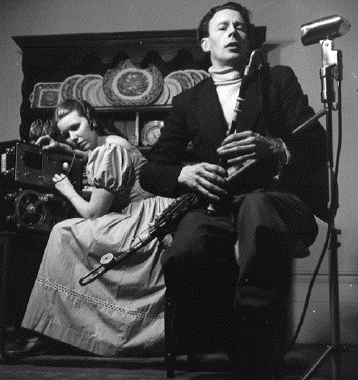
There was a great reaction to Mise An Fear Ceoil, a recent post I did on Seamus Ennis, the great piper of the Naul, North Dublin.

Recently, we stumbled across The World Jukebox website, which collects international folk and traditional music.

Here, from the World Library of Folk and Primitive Music vol.1:Ireland, we hear his voice. Proof Ennis could hold his own on the strength of his vocals, and not just his legendary musicial ability with regards the pipes.

Seamus Ennis, being recorded by Jean Ritchie

Read Full Post »

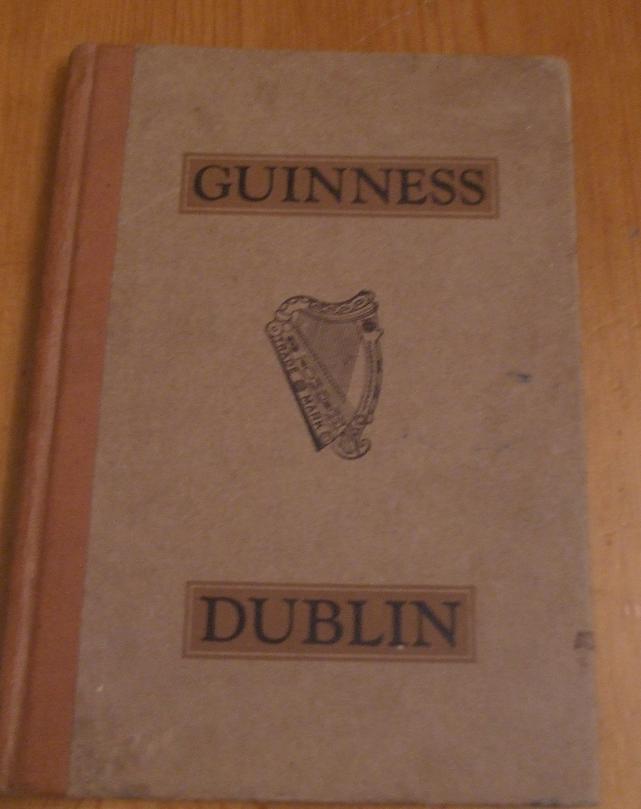
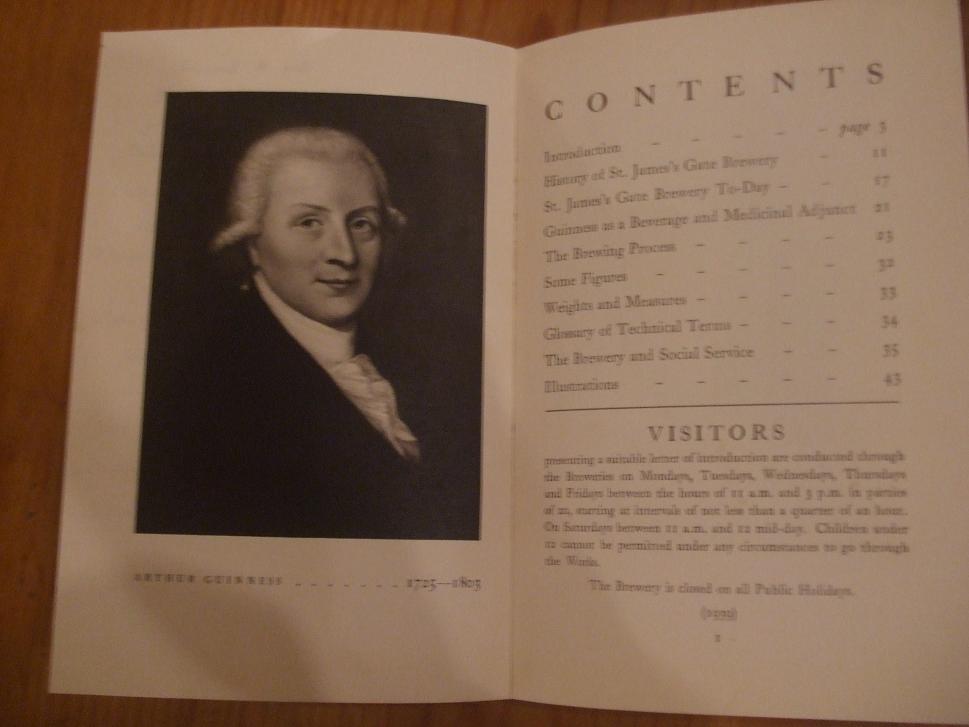
The Front Of The Guinness Guidebook, 1939.

VISITORS
Presenting a suitable letter of introduction are conducted through the Breweries on Mondays, Tuesdays, Wednesdays, Thursdays and Fridays between the hours of 11 a.m and 3 p.m in parties of 20, starting at intervals of not less than a quarter of an hour. On Saturdays between 11.am and 12 mid-day. Children under 12 cannot be permitted under any circumstances to go through the works.

The Brewery is closed on all Public Holidays.

(1939)

Arthur Guinness himself, and the Contents page.

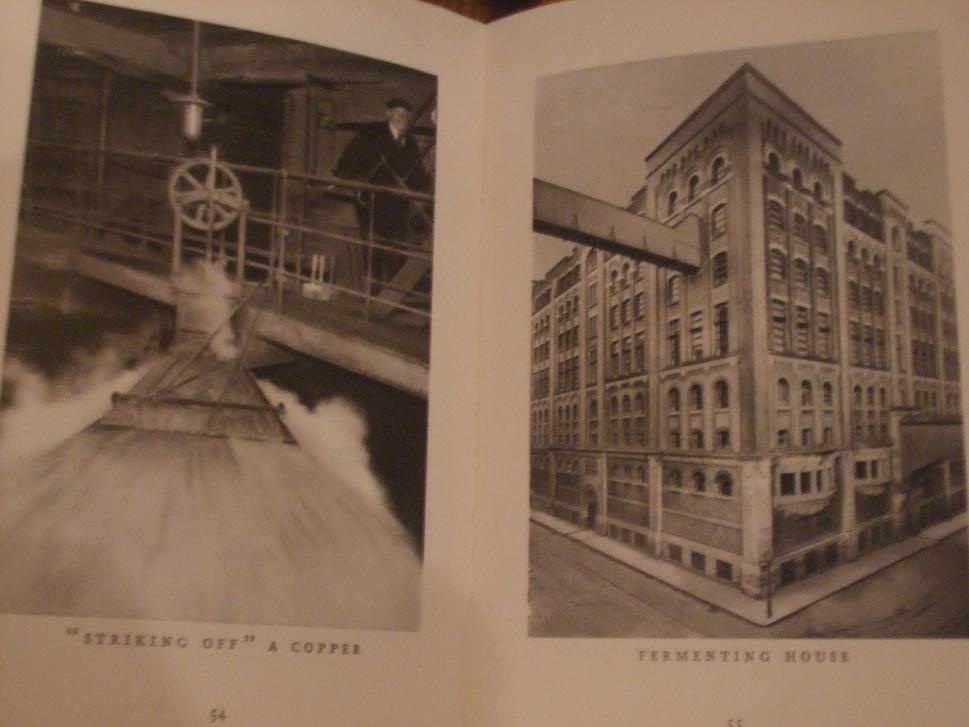
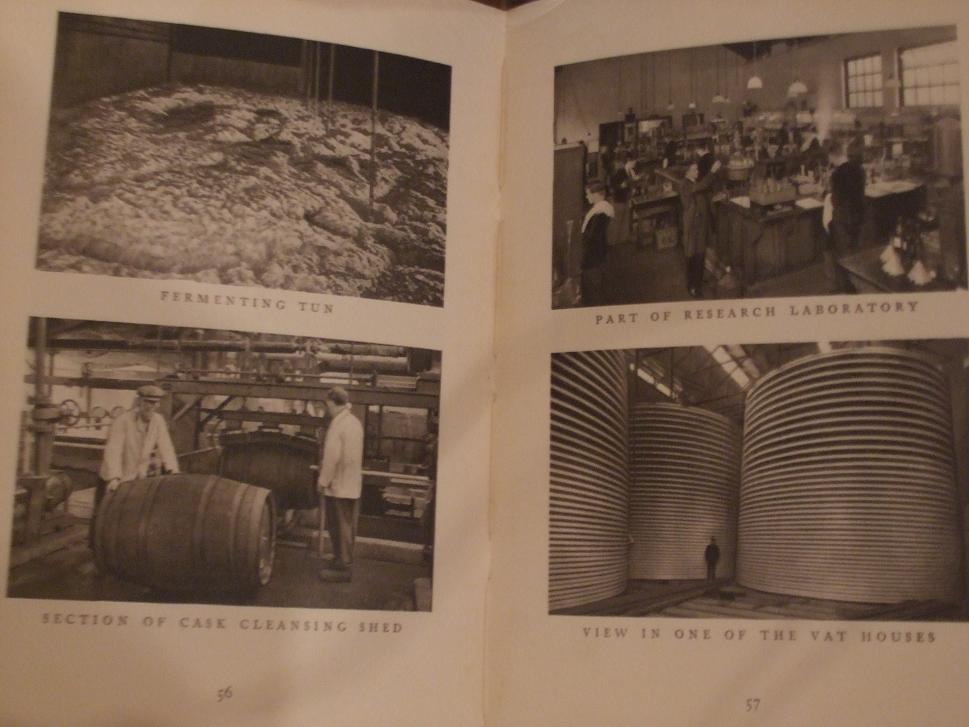
The trip down Guinness memory-lane continues with this nice piece. Long before the Guinness Storehouse, visits to the Guinness Brewery were literally just that- visits to the Guinness Brewery. This interesting little book boasts some fantastic illustrations of the process of Guinness brewing, along with information on life for employees of the company.

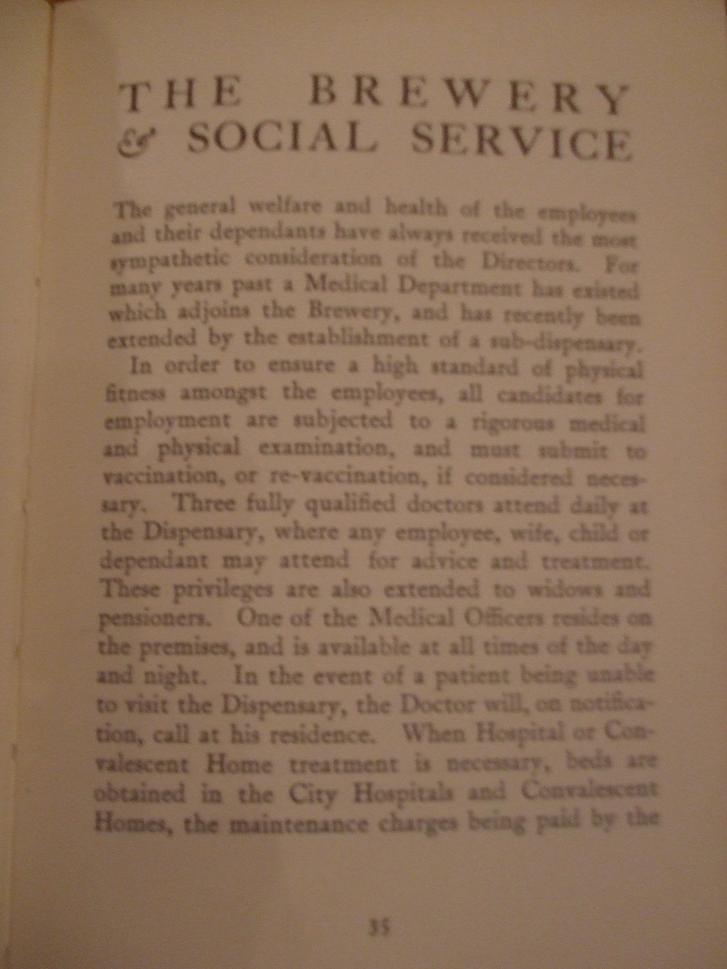
Workmen are supplied with meals free of charge when engaged on work of a special nature. Motor drivers on early duty (6-7 a.m) are provided with a substantial breakfast. All messenger boys and boy labourers are supplied free of charge with a substantial meat meal in the middle of the day. Free dinners are also supplied to the sons of widows and pensioners who are attending school in the neighbourhood.

Page 42

Illustrations from the Brewery

Illustrations from the Brewery

An example of the contents of the book, detailing social services at Guinness

GA369B

Book of British Authorship
Printed in Great Britain by John Waddington Ltd., Leeds
2/5/39

A fantastic insight into life at the Brewery at the time. A company that took great care of its workers and expected the utmost back in return (for example, during the Dublin Lockout the company dropped a Guinness shipworker with decades of service for refusing to engage with scab-labour on the Dublin docks) The welfare and working conditions at the Brewery were unrivalled in Dublin at the time, and t he fact a guidebook like this was produced long before the Brewery became a tourist attraction in any real form shows the level of professionalism at the Brewery.

My own mother, the daughter of a Guinness worker, still remembers the perks my Grandfather recieved until his death only a number of years ago. A true cornerstone of Dublin life for so long, I hope that with posts like this and earlier posts like that on the Guinness Fire Service, we here at Come Here To Me can shine a light on more than just the black stuff itself.

Read Full Post »

« Newer Posts - Older Posts »