Feeds:
Posts
Comments

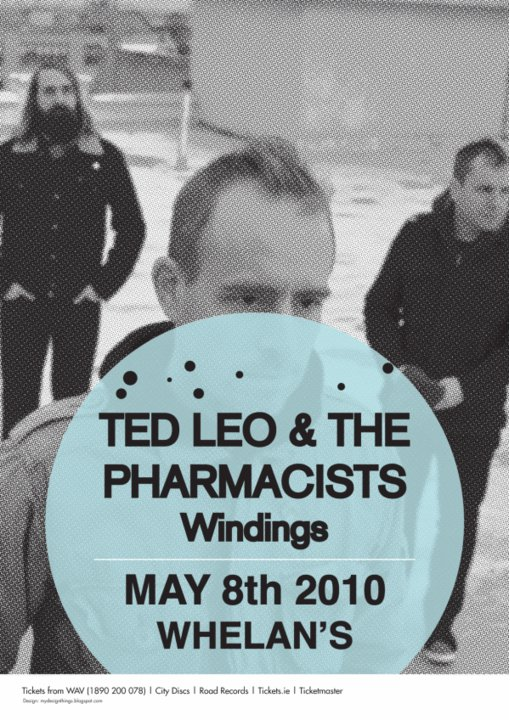
Ted Leo and the Pharmacists- I Got Your Number

I’m really off the radar at the minute, to the extent I’ve got plenty of those “where are you” texts that when you respond with something like “in the library” you get another one two minutes later saying “No, I mean like in general lately”. I’m AWOL, shit-deep in Microsoft Word.

This made my day. I check those Facebook events too late to spot anything anymore (Nothing worse than spotting a great gig advertised over there and realising it started…..five minutes ago) but this stood out a mile.

Ted Leo and the Pharmacists have released three of my favourite albums to date. Shake The Sheets, Hearts Of Oakand Living With The Living. I play all three constantly, and even have a Ted Leo t-shirt (OMG) which is one of very few band shirts I’d wear around to be honest,it’s been there since I was 15 or 16 too.


Ted Leo And The Pharmacists- The Mighty Sparrow (From new album ‘The Brutalist Bricks’)

They’re neither an indie nor a punk band in my mind, and near impossible to label within traditional genres of music. They should appeal to fans of either genre. Their release of Rapid Response, an EP to benefit those arrested at the Republican National Congress in the U.S showed their political leanings.

This isn’t meant to be some grand sweeping statement on our part – it’s just a way for us to contribute SOMETHING real to the lives of real human beings, and show our material support for those whose actions and thoughts we value in this ideological struggle

Recent releases have hade a stronger sense of political identity, with songs like Bomb.Repeat.Bomb dealing with U.S Foreign Policy. Ted also writes a very good blog, over on the band site, which is worthy of a read. Read his post on Record Store Day, and nod in agreement.

The list of Ted Leo covers is mindblowing too, off the top of my head (with a sneaky MP3 player peek) it includes Samhain, Billy Bragg, The Waterboys, Cock Sparrer, Amebix, Generation X, Eddie And The Hot Rods, The Jam and eh…R Kelly. Along with Face to Face, they’re one of the only bands I think ever got away with a Stiff Little Fingers cover. Ted Leo, I salute you.


Ted Leo And The Pharmacists- Fisherman’s Blues

Tickets priced €14.50 are available from Tickets.ie
You can buy ‘The Brutalist Bricks’ from Matador Records here

As you probably know by now, every month this blog organises a pub-crawl. In rotation, a different person chooses the five pubs in advance, picks a meeting point in the city and makes sure not to let any details slip to the rest of the group about what pubs are to be visited.

April was my turn and I chose the area of Portobello.

I set the meeting point for the corner of Harcourt Street and Stephens Green. This was once the site of Little’s Pub, now the Stephens Green Hotel, which was taken over by members of the Irish Citizen Army (ICA) during Easter Week 1916.

This location was also chosen to confuse people on the route we were going to be taking that day. We could of easily headed off towards the direction of Wexford St, Leeson St. or back towards Grafton St. One of the joys of these pub-crawls, in my mind, is having no idea where your ‘tour guide’ for the day is going to bring you.

Dfallon and Hxci were on time as usual, with CHTM! crawl regular JFlood only a couple of minutes late.

I led them up Harcourt St., stopping briefly to point out Edward Carson’s birthplace, and through Camden Place where we spotted this little letterbox. I crossed the road at Camden Street in order to point out the (mostly) hidden plaque at No. 34 where Na Fianna Éireann were founded in 1909. The plaque can be only been if you face the building from the opposite side of the road.

Our first stop was Cassidy’s. I was surprised to see the place so busy on a sunny Sunday afternoon. There were a number of families and punters dotted around the long, narrow bar. It is hard to talk about Cassidy’s without mentioning that it was a stopping point of Bill Clinton in December 1995 where he was photographed enjoying a pint of Murphy’s Irish Stout. Apparently, the Cassidy’s are ‘distant cousins’ to the Clintons. We were able to get the best seats in the house, by the window immediately on the left when you enter. The pints, were as far as I can remember, perfectly fine. In truth, we didn’t explore the pub or stay long enough to get a real feel out of the place. But I liked what I saw. Especially the prime spot, where we sat at the window, perfect for people watching.

Not an amazing bar but a lovely one none on the less. Definitely one to pop into if your ever going to try The Camden Crawl.
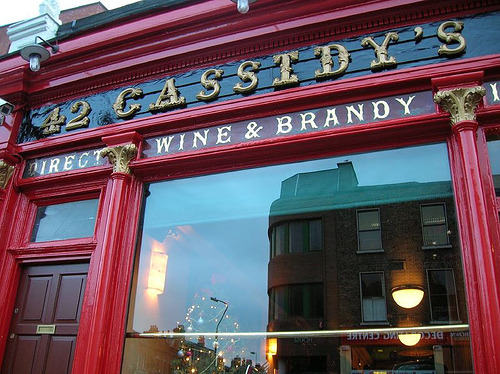
Cassidy's on Camden St. Not to be confused with the pub of the same name on Westmoreland St.

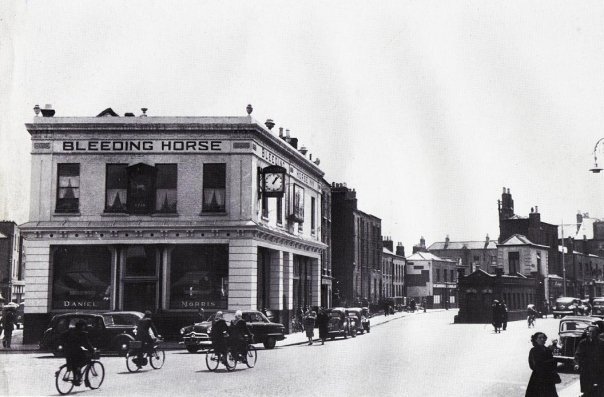
We only had to cross the road for our next stop. The historic, imposing Bleeding Horse. When we walked in, the place was blaring from the sound of the premiership. Far too loud to warrant the little amount of people in the bar. Usually thronged with after work types on the weekday, the immense pub seemed ghostly empty at this time on a Sunday. We were able to find two lovely sets of tables at the very back of the bar by the window. (For me, this pub-crawl was characterised by the great seats we got in every pub). The pints were lovely and it was nice to have our numbers boosted as we were joined by recent CHTM! pub crawl enthusiast Angela and veteran Hamada.
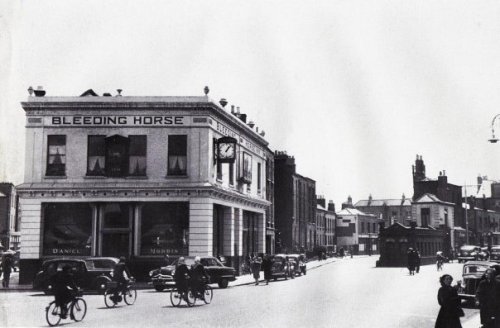
The Bleeding Horse, 1950s.

The Bleeding Horse dates back to 1649 and claims to be the second oldest pub in Dublin. There are many stories on how the tavern got its name. The most frequent one told is that during The Battle of Rathmines (1649), Cromwellian forces brought their wounded horses to the thatched, timber inn that stood here.
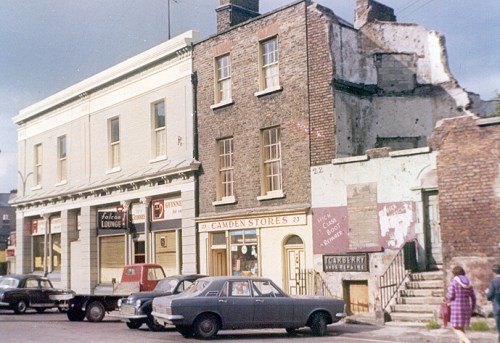
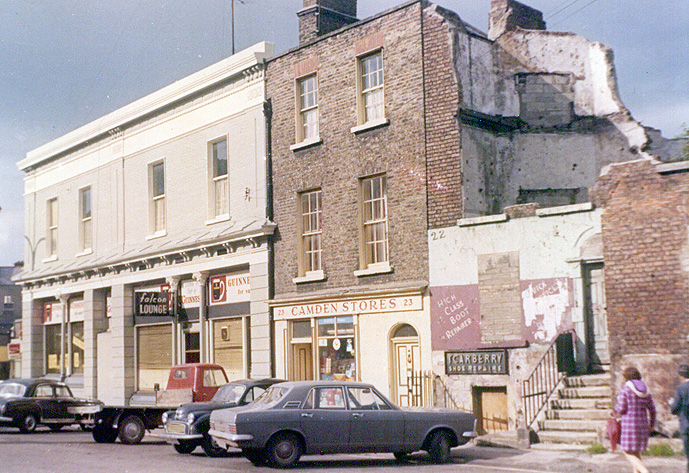
The Bleeding Horse, 1972. (It renamed 'The Falcon Lounge' for a time in the 1970s) Photo credit - Hohenloh

The Irish Times, surprisingly, does not wield many interesting stories relating to the pub. The only one that stood out was that Countess Markievicz presided over a Republican meeting in the premises in September 1923 at which Madeleine Ffrench-Mullen and Helena Maloney spoke.
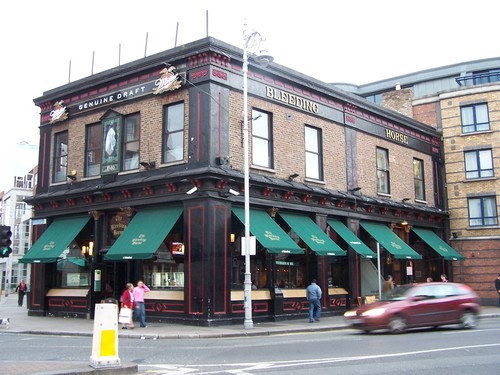
The Bleeding Horse as it looks today. Photo credit - Ingawh

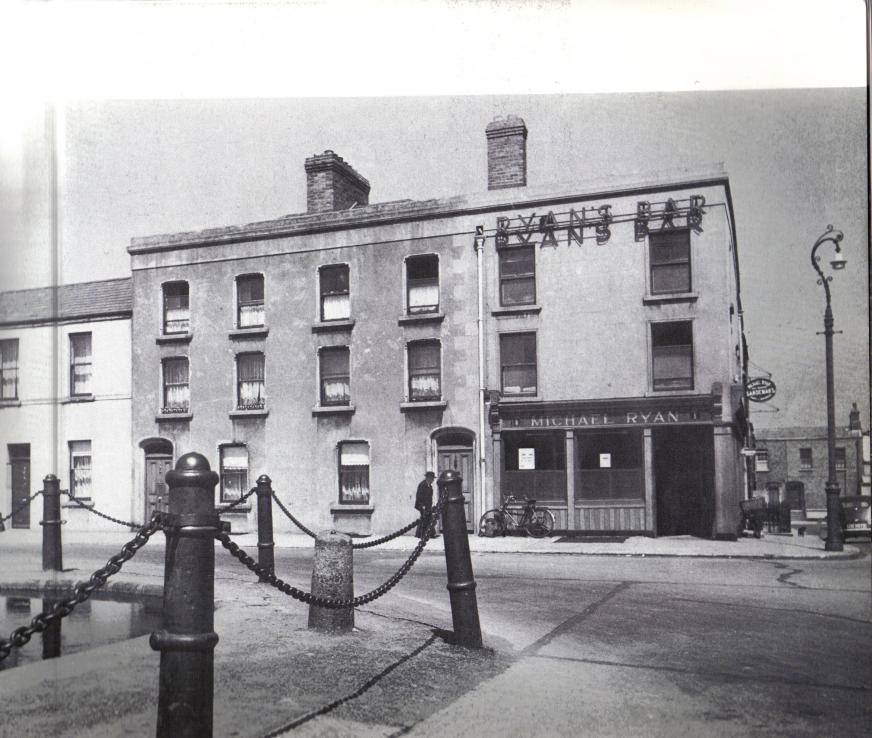
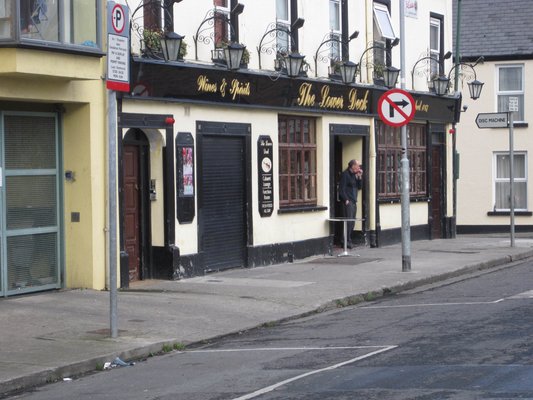
Across Kelly’s Corner, we swung by the renowned Bretzel Bakery and up to The Lower Deck, known locally as “Ryan’s of The Harbour”. There’s been a tavern on this site since the 1830s. Though I’ve spent many evenings down in the basement at various gigs during 2007-8, I don’t think I’d ever properly been upstairs. We managed (again) to get great seats by the window beneath the array of GAA merchandise.
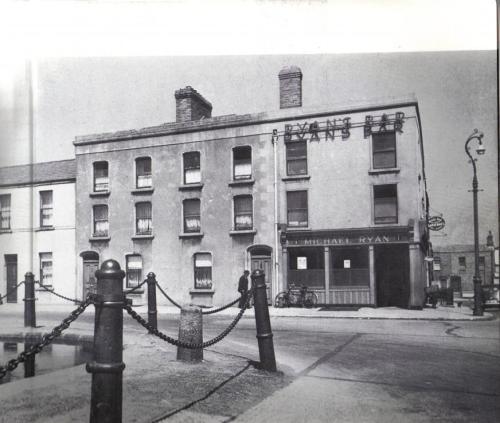
The Lower Deck, 1960s (?) then called 'Ryan's Bar'.

The pints were grand and the barman friendly. My only complaint was the eager, acoustic cover singer who was playing far too loud at such an early time of the evening in the middle of the bar. We finished our pints up quicker than usual because we could barely hear ourselves chat.
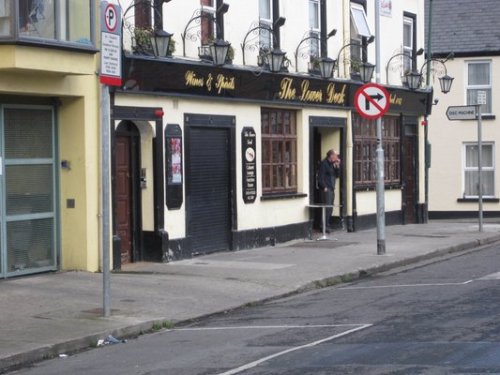
The Lower Deck as it looks today. Photo credit - Kelly T.

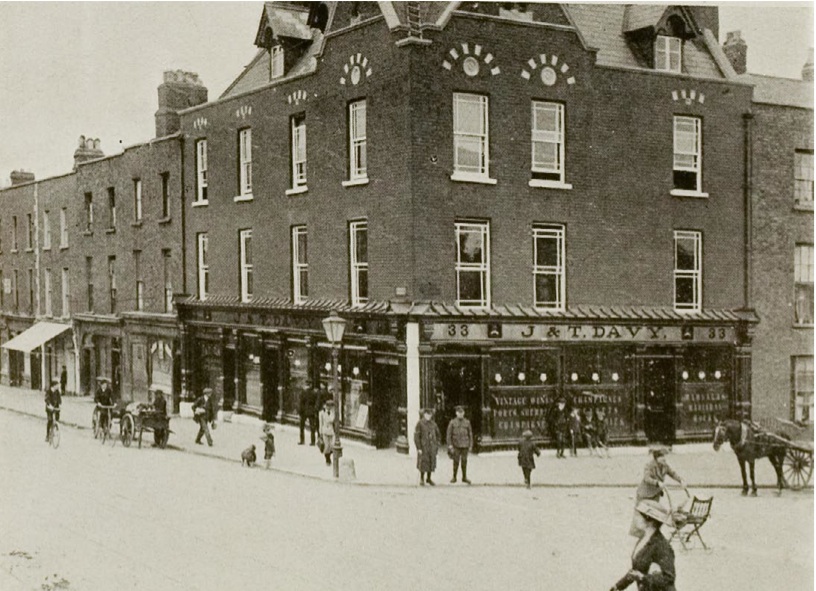
Moving on, we crossed the road and into The Portobello. I had thought that this pub had completely gone down the tacky tourist route but I was pleasantly surprised by the lovely, wooden interior and lack of ‘paddy tourist’ vibes in the place. (The bartender said that the first half of the pub has barely been altered since the Easter 1916 Rising when the ICA occupied the premises then called Davy’s).
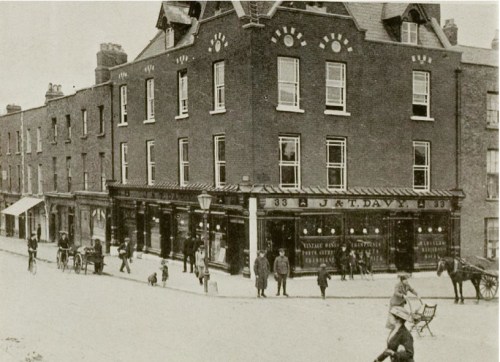
Davy's, early 1900s (?). It is now a bar and hotel called The Portobello.

We took seats in the middle of the premises beside an unusually placed vending machine. On the other side of us, a large trad session had begun involving up to a dozen people. The pints were again grand (I should of really taken notes during the night). A nice pub, full of history, but I’m not sure if I’d feel the need to come back anytime soon. The fact that there’s an over 30s disco called Rain attached to the pub isn’t a real selling point for me personally.
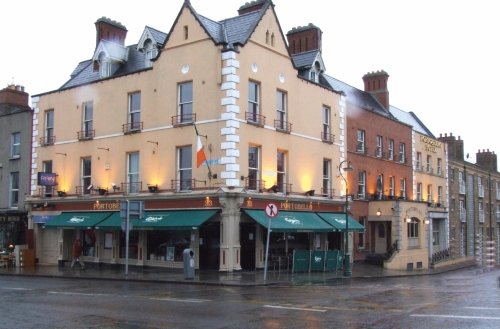
The Portobello as it looks today. As you can see, there's been little structural change to the front of the pub.

Stomachs were grumbling at this stage so we dropped into the quality Aprile (Est. 1969) chipper on the corner opposite The George Bernard Shaw. A feed of chips by the canal hit the spot nicely. Here, we were joined by our red-haired Italian friend Julian, in a jolly mood due to a Roma win, who had missed the last few pub crawls.

Next up was O’Connell’s on Richmond Street. This was my ‘pièce de résistance’. I for one had never set foot in the place before and I was pleased to hear that no one else besides DFallon had. This is what makes our pub crawls. Being brought into areas of the city and pubs that you’d never usually venture into. Definitely one of the few bars in the city that you’d have to point out to someone. It’s not loud. No neon lights, flags or banners outside. Deceptively small from the outside, the bar was unusually put together with various seats of different sizes all over. A little corner on your left as you go in, a thin row of seats directly opposite the bar and a whole separate section, slightly raised at the very back. We ordered our pints off the pleasant proprietress and settled in for the night. At €4 for a pint of Guinness, they were definitely the bargain of the evening.
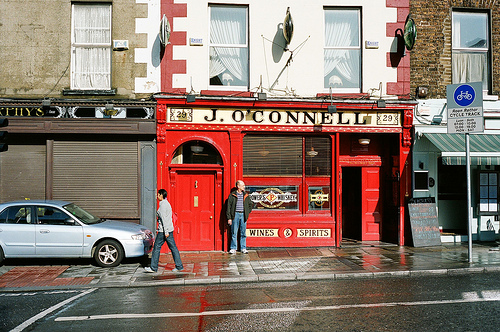
J. O'Connell's on Richmond Street.

All in all, I thought it was a success. Certainly compared to my last effort, which saw three of my five pubs closed.

I might find myself back in Cassidy’s soon with a newspaper in hand, ready for an afternoon of people watching if I see that those seats are empty or The Bleeding Horse to watch ‘the football’ (there’s even a TV in the beer garden!) or indeed O’Connell’s for an (agreeably cheap) Guinness filled session.

Though you might not find me there, if GAA is your interest, check out The Lower Deck and if it’s Trad music, The Portobello might be your place.

Next up is JFlood who will be escorting us around the city at the end of May.

April’s five pubs were:

1. Cassidy’s, 42 Lower Camden Street.
2. The Bleeding Horse, 24 Upper Camden Street.
3. The Lower Deck, 1 Portobello Harbour.
4. The Portobello, 33 South Richmond Street.
5. J. O’Connell’s, 29 South Richmond Street.
I love this photo. Taken in 1900, it shows two tug-of-war sides. On the left, and boasting some quality custom ‘DMP’ shirts, we have the Dublin Metropolitan Police. On the right, and winning the war of the mustaches, the Dublin Fire Brigade.

Tug-of-war was a hugely popular sportstime in the early twentieth century, and The Irish Times of October 17th, 1908 noted that the Dublin Metropolitan Police team became the “World Champions” of the sport by overcoming the Liverpool Police at Ballsbridge during the August Bank Holiday.

In 1924, the Dublin Metropolitan Police team returned home from England with the ‘City of Hull Tramways Challenge Cup’ and, The Irish Times noted, were recevied by a large crowd which included Mr. Kevin O’ Higgins, Minister for Home Affairs.

Another 1924 report indiciates that along with the DMP, the Gaelic Athletic Association and the Royal Ulster Constabulary among others had strong tug-of-war sides.

While I don’t know the outcome of the 1900 encounter between the DMP and the Dublin firemen, the track record of the DMP in the sport means it doesn’t look good for the firemen. I’d love to hear from you if anyone knows more of their encounters!

Arthur Scargill addressing the May Day Rally in Dublin.

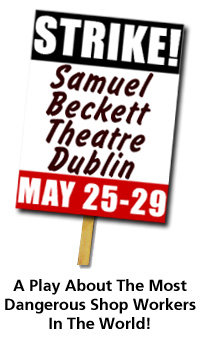
Strike! (25 – 29 May)

In Dublin in 1984, the economy was failing, unemployment was rife and 10 young women and one young man were about to change the world. In July a shop worker on Henry Street refused to sell South African fruit to a store customer and was suspended. Ten colleagues followed her out on strike; they thought it would last 2 weeks – it went on for nearly three years.

STRIKE! is a fictionalised account of the famous anti-apartheid shop strike on Henry Street. STRIKE! will use visuals and music of the time to tell the story of a group of young people – the most dangerous shop workers in the world – who went on strike to protest against apartheid and confronted the establishment, caused a state of emergency in South Africa and eventually saw the banning of South African produce in Ireland.
This certainly looks like an interesting play. It’s running for five nights only (May 25 – 29) at the Samuel Beckett Theatre in Trinity College.

Information on tickets can be found here. The €4.99 concession for ‘young adults’ for the matinees on Wednesday 26 and Saturday 29 May at 2pm certainly looks like the best deal (Concession tickets can only be booked by telephone to the box office (01) 896 2461) I suggest booking yours soon in case they sell out.
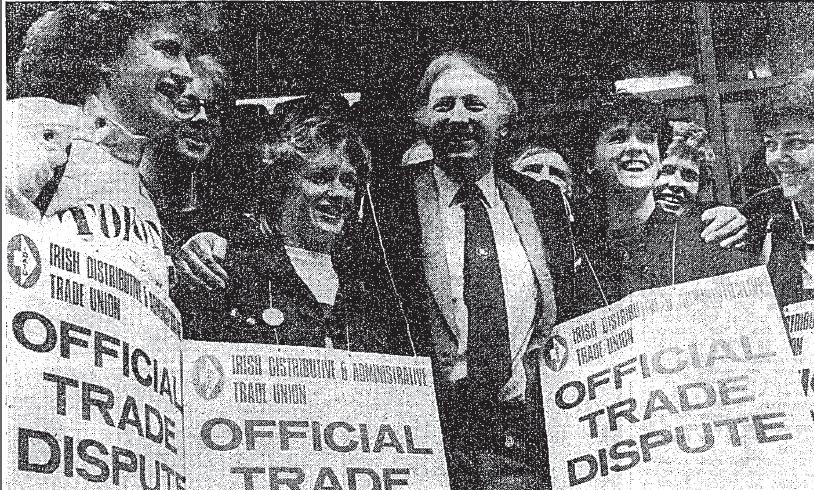
Arthur Scargill at Dunnes Stores, Henry Street with striking workers (Irish Times April 20th 1985)

Arthur Scargill, the (in)famous trade union leader of the National Union of Miners, is to address the upcoming May Day rally in Dublin. There is something about seeing Scargill speak that makes you feel almost entitled to a badge yourself, like you’ve ticked something off some imaginary list. He is, afterall, renowned for his ability in the field.
When I saw him last year, at the Unite union hall (which you can view here) I understood where the reputation comes from. Often humourous, sometimes biting and always engaging, he is in a field of his own when microphones are involved (And the same can be said of megaphones)

While aspects of his own politics remain open for debate among the left, and some debate the tactics and even the ideology of the strike Scargill led, it doesn’t change the fact he remains a speaker most worthy of your ears and time. He is a character of some magnitude.

DCTU May Day Rally:
2 pm , Saturday 1st May
Garden of Remembrance,
Parnell Square, Dublin.

March to Liberty Hall

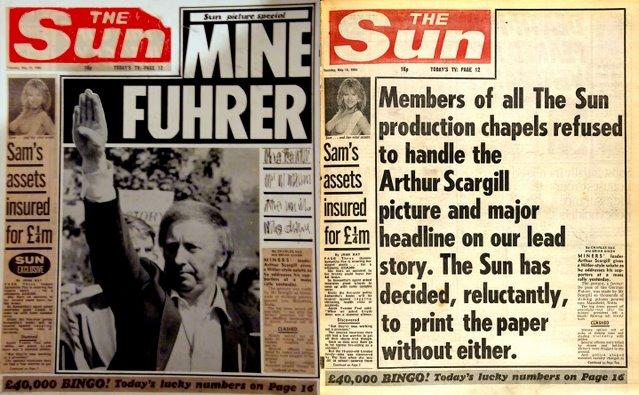
The red-top smear the staff wouldn't print.

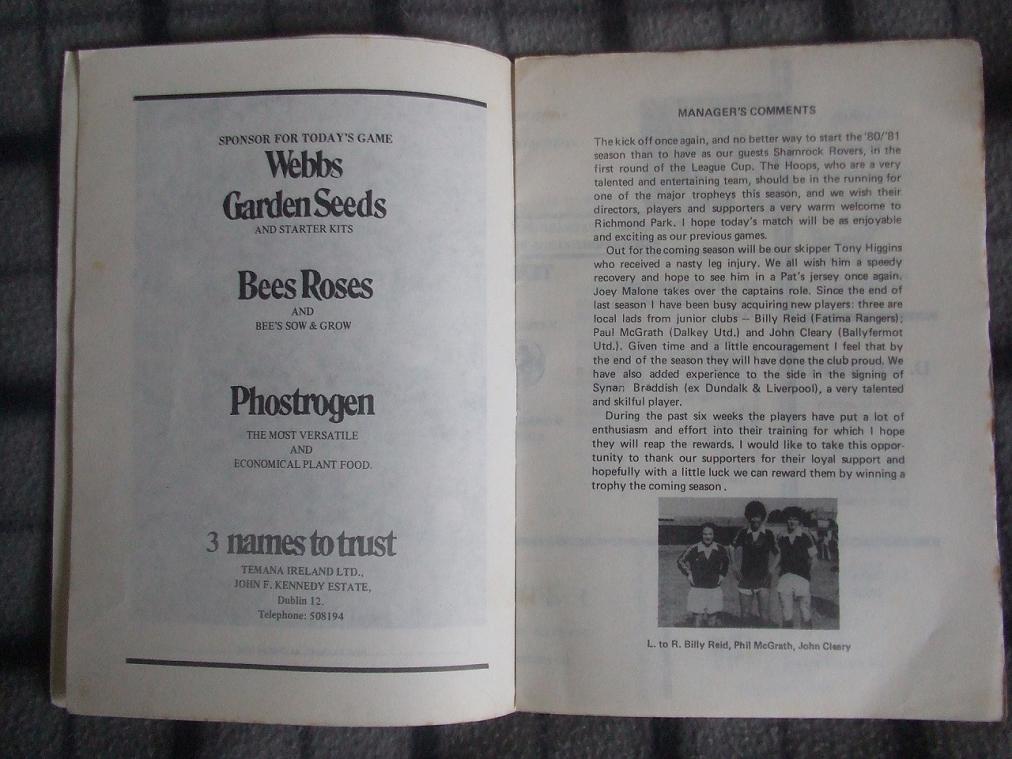
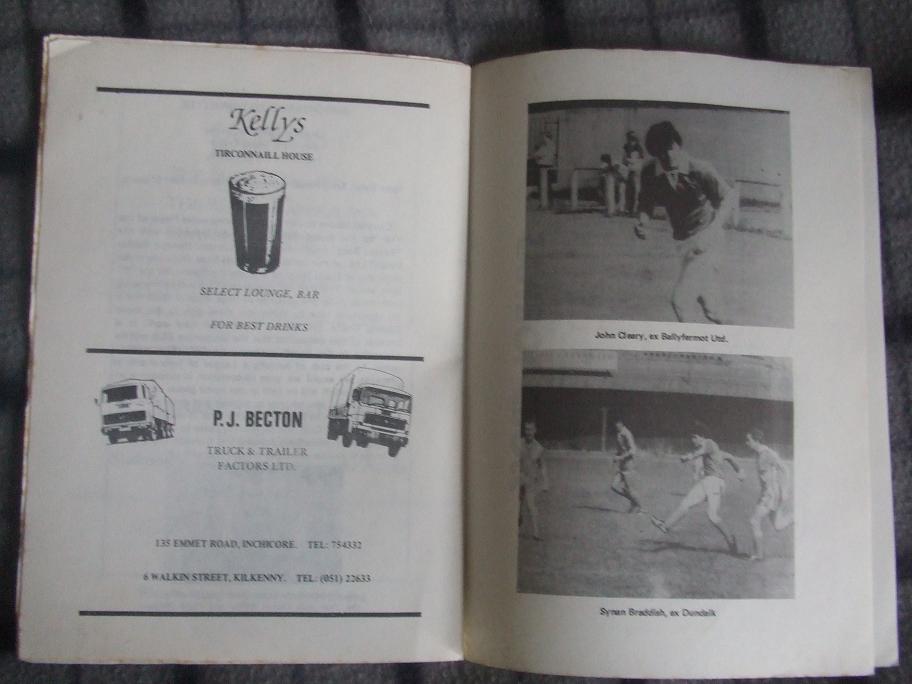
“Since the end of last season I have been acquiring new players: three are local lads from junior clubs- Billy Reid (Fatima Rangers) Paul McGrath (Dalkey United) and John Cleary (Ballyfermot Utd.)”

Ooh Ah Paul McGrath. With “..a bit of time and encouragement” he won’t be a half bad player. Not a bad call.

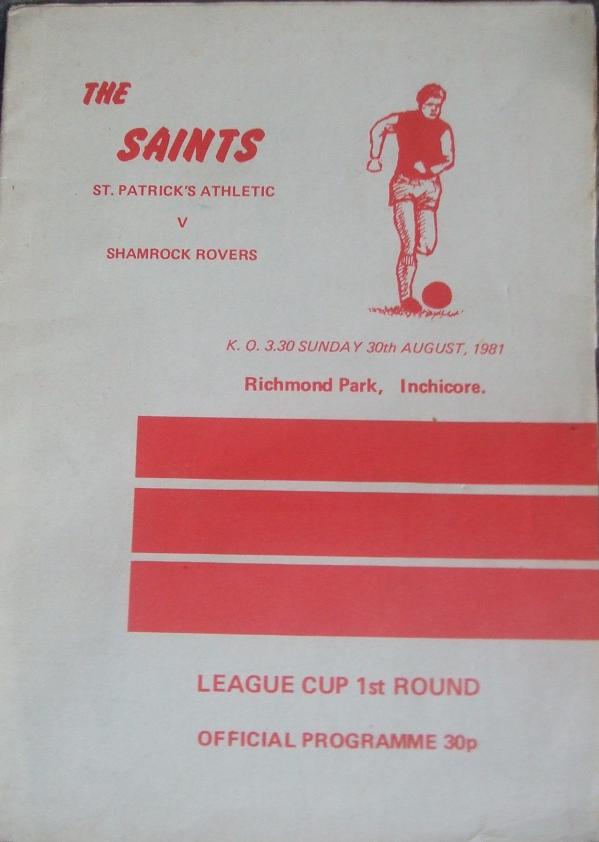
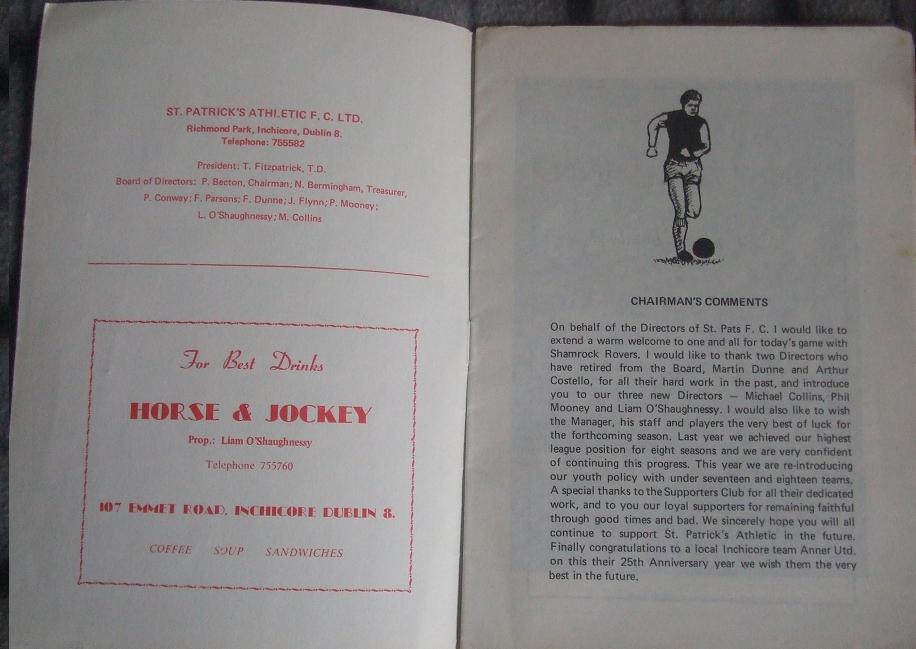
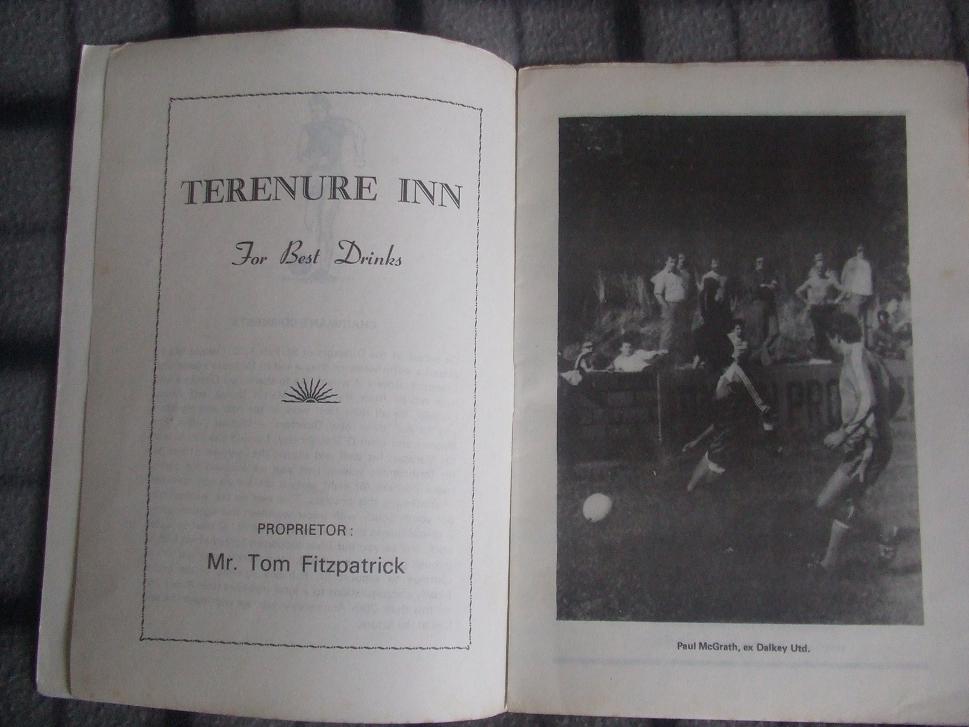
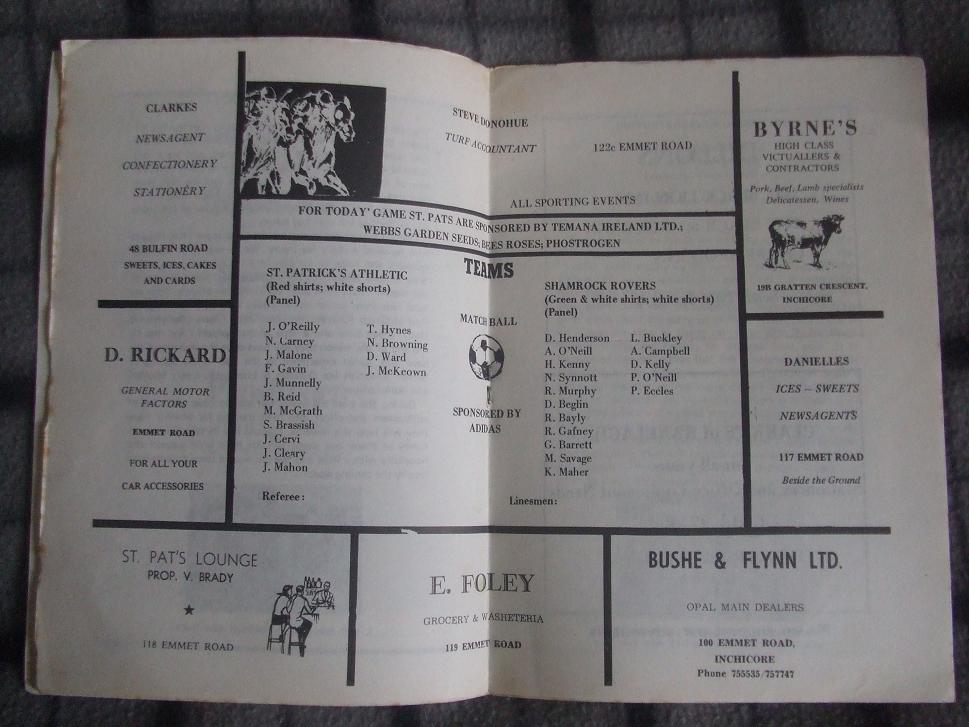
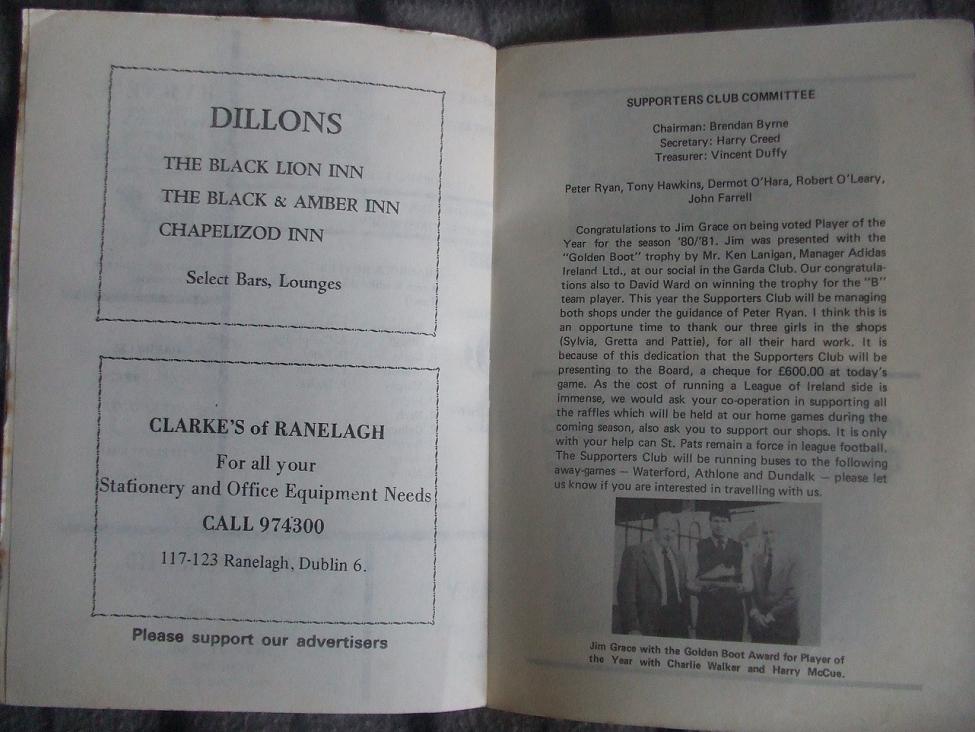
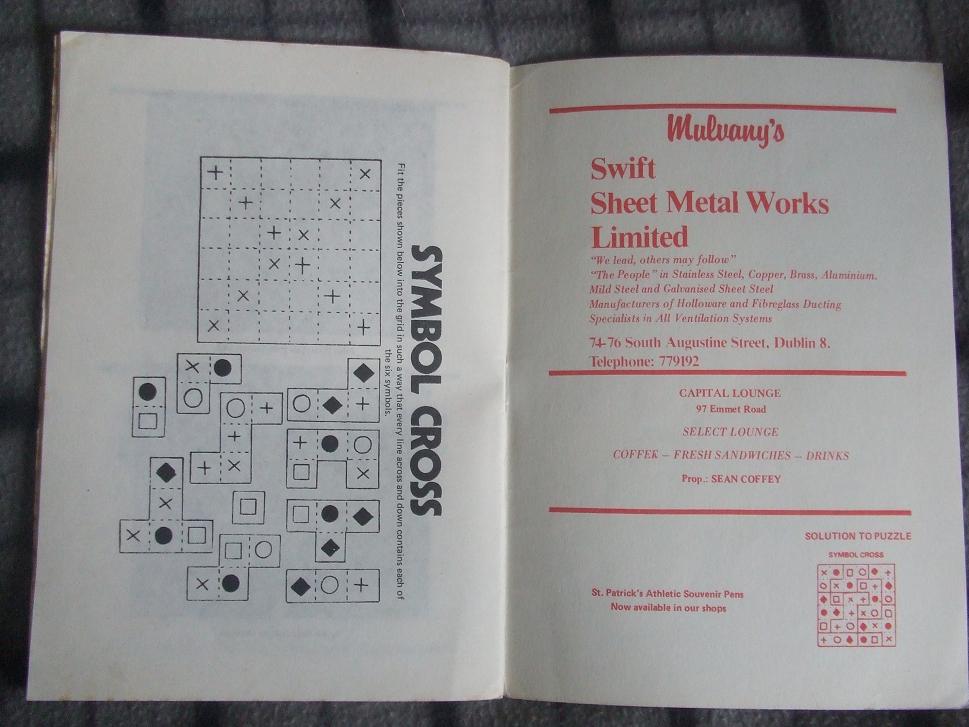
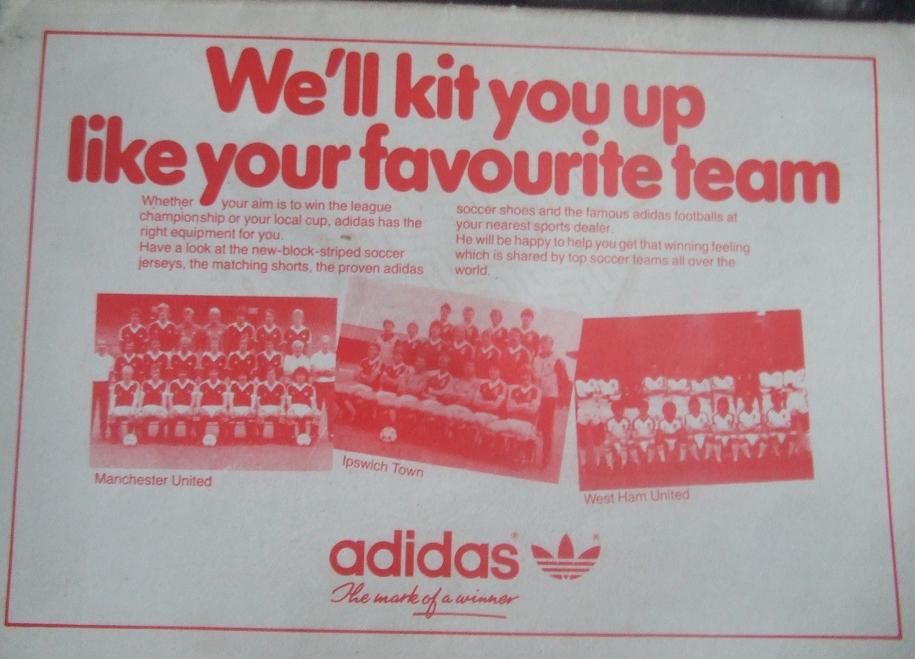
This one showed up recently, and should be of interest to not just Saints but maybe Rovers fans and League of Ireland fans in general. The team listings in the central page for example makes for interesting reading. There is so much to this though, the ad’s for local businesses, the simplicity of the match programme, the irritating game of ‘Symbol Cross’ on the last page, and the annoying fact the backcover Adidas ad features snaps of Manchester United and Ipswich Town (not many Irish Ipswich Town fans at the moment). Suppose Barstool culture goes back a bit itself.

So, from the First Round of the League Cup, at a bargain 30p, here it is. Enjoy.

In the Dublin of the revolutionary period, ‘G Men’ would have been a familiar sight on street corners, never quite as inconspicuous as they sought to be. G Division of the Dublin Metropolitan Police served as the eyes and ears of the intelligence community, tasked with observing political subversives in the city. Their ‘Movement of Extremists’ files record the whereabouts of republicans, socialists and other radicals in the city, noting where they loitered and who they talked to.

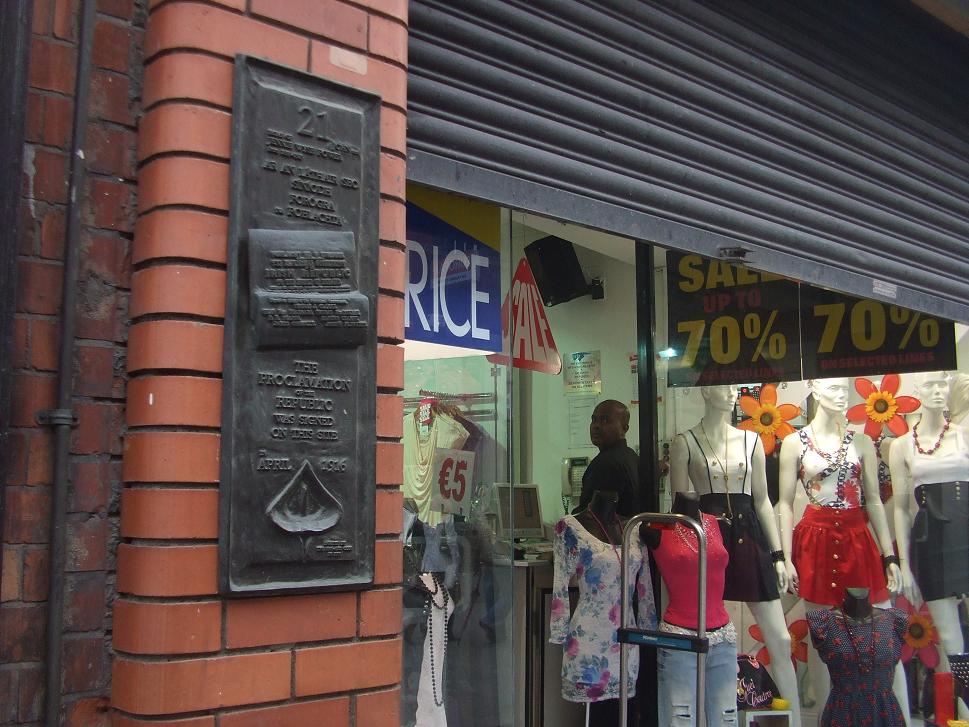
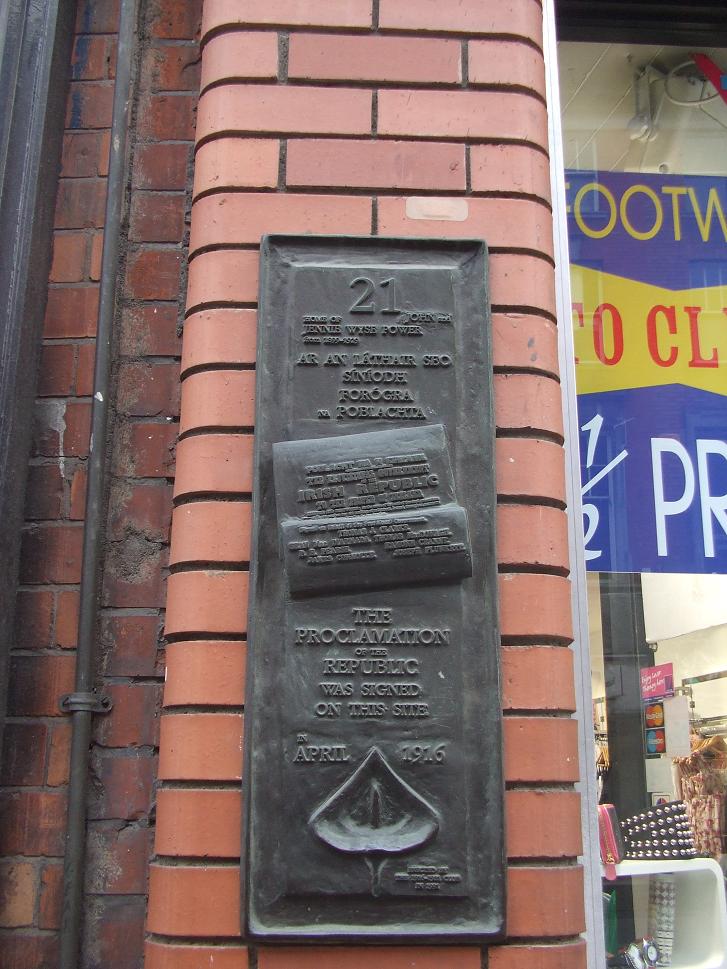
One business they would have come to know quite well was found at 21 Henry Street, the location of the Irish Farm Produce Company, a shop and restaurant (specialising in vegetarian cuisine) run by veteran nationalist campaigner Jennie Wyse Power. It was popular with Dublin’s small Indian community (and perhaps even smaller vegetarian community) but owing to its proprietor it also became a rendezvous point for advanced nationalists. A plaque on the site today marks the fact that the drafted 1916 proclamation was signed on the premises days before insurrection.

Amidst the wave of cultural nationalism of the late nineteenth and early twentieth centuries, an ‘Irish Ireland’ movement emerged which sought to promote the native language, native games and native culture over that of the neighbouring island; Archbishop Croke (he of Croke Park fame) complained that the Irish were importing from England, “her fashions, her accents, her vicious literature, her music, her dances, and her manifold mannerisms, her games also and her pastimes” among other corrupting influences. But what about what was on our tables? The Irish Farm Produce Company boasted of its “all-Irish produce”, a reminder that even dinner could be a political choice.

Jennie Wyse Power, born in Baltinglass in 1858, moved through the ranks of many important political movements in her lifetime, and had earned the respect of the men and women who frequented her business. Active in the Ladies Land League of the 1880s, which sought to advance the rights of Ireland’s tenant farmers, she was later a founding member of the Sinn Féin political party and close to Countess Markievicz.  While serious about her politics, Wyse Power was also regarded as one of the friendliest faces in Irish nationalism. Sinn Féin Executive member Seamus ua Caomhanaigh remembered that “she always left out the Wyse part of her name. She said there was nothing ‘wise’ about her. She was a remarkably able woman, very brainy, full of fun and a great teller of humorous stories.”

Some of the most watched individuals in the city frequented her restaurant in the years before the Rising, including Major John MacBride, who had fought in the Second Boer War alongside his Irish Brigade. Seán T. O’Kelly, later President of Ireland, remembered holding court there most days in the company of MacBride and Arthur Griffith. Wyse Power’s business remained popular after the Rising too, though unsurprisingly the authorities were still vigilant. P.J Paul, a prominent republican in Waterford, remembered visiting the restaurant while in Dublin, as “most of the Volunteer and Irish-Ireland people went there.” On one occasion during the War of Independence, he was having a meal “when suddenly a number of Auxiliaries rushed into the shop and began turning the place upside down.”

Dublin’s small Indian community, primarily formed from medical students in the city, would be drawn towards Wyse Power’s restaurant too, at a time when there was little in the line of vegetarian offerings in the city. Dublin’s first vegetarian restaurant, The Sunshine (advertised as ‘vegetarian dining rooms’), had opened its doors in the 1860s on Grafton Street, though such endeavours tended to be short-lived. Indian students in the capital during the revolutionary period included V.V Giri, later President of India, who studied under the poet and revolutionary separatist Thomas MacDonagh. As historian Conor Mulvagh has suggested, “in searching for routes of entry for Indian students into Irish radical politics, it is perhaps the dinner table as much as the lecture theatre that provided them with introductions.” The cause of the Indian people received sympathetic coverage in Irish nationalist newspapers, including Arthur Griffith’s Sinn Féin and The Irish Volunteer.

While the female republican body Cumann na mBán flatly rejected the Anglo-Irish Treaty of 1921, Jennie Wyse Power came to support it, which created friction between her and many former comrades. In 1923, her business premises was entered by young men who at first appeared to be ordinary customers, but “as the tea was about to be served the raiders suddenly took petrol bottles from their pockets and announced their intention of setting the house on fire.” Her other business premises, located on Camden Street, had already been attacked by republicans, with “bombs being hurled through the plate glass window.”

Despite her support for the Treaty, Wyse Power later joined the Fianna Fáil party, and elected for the party in the 1934 Seanad elections.  She died in January 1941, and was buried in Glasnevin Cemetery. The plaque on Henry Street today honours the signing of the proclamation on the premises, but in truth there was much more to the story of the Irish Farm Produce Company, and its place in Dublin’s political and culinary history should be noted.

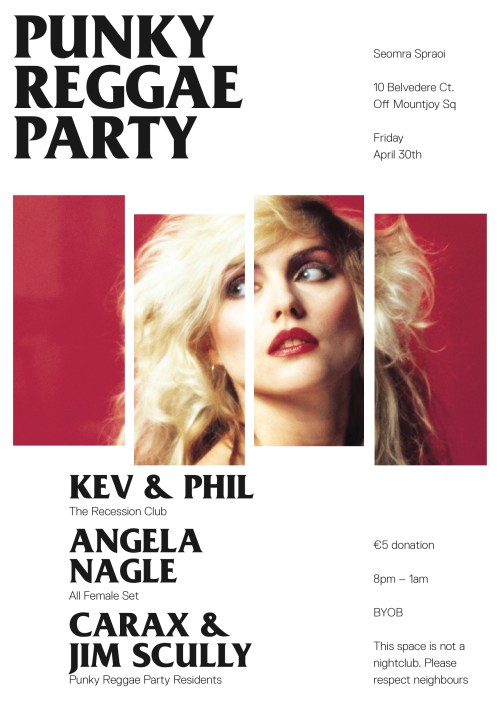
Punky Reggae Party (Vol. 7)

This Friday sees the seventh installation of the Punky Reggae Party. It will be my last blow out before my summer university exams, so hope to see you there.

Click to visit the PRP facebook page.

Woody Allen: Part One.

” I think people should mate for life, like pigeons or Catholics.”

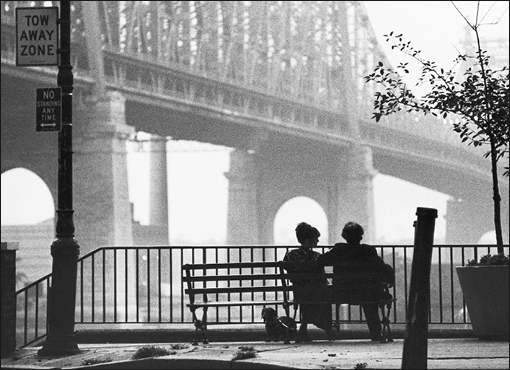
Woody Allen’s Manhattan is one of my favourite films. Most student flats I’ve entered seem to boast a copy, and it is just as bittersweet as you’d expect. I put off watching it for a long, long time. It made it’s way into most of those ‘Films you’d like’ lists, but I’ve been let down by them one too many times. It was one of those ‘€3.99 in HMV‘ films that I consistently overlooked.

Then, when it came on telly, I decided to watch it. “Beats studying”. Turns out it beats most things. A beautiful black and white film, it had me from the get go. In fact, even just look at its opening moments:

The dialogue, the imagery, it all comes together wonderfully. It’s not a love letter to New York (God knows there are enough of them out there) – but like everything Allen has produced to date, a little more complex than that. It opens and closes with Rhapsody in Blue, which- since the time I first saw Manhattan– has been the soundtrack for many bus trips.

A festival of Woody Allen’s work is an exciting idea. To mark the world premiere of Allen’s latest effort, You Will Meet A Tall Dark Stranger, the IFI are doing just that, with Woody Allen: Part One running all through the month of May.Opening with Bananas, and concluding with Hannah And Her Sisters most films will be shown for one or two days apiece. Amazingly, this is just the first part of what will be a three part festival.

There is something to be said for the big screen, even if you’ve watched a DVD (Or, heaven forbid, VHS Tape) a hundred times. No film is the same away from the big screen, and a chance to catch Manhattan (and several other Allen films) in the right environment is something I’ll jump on.

Bananas – May 1st & 2nd (2pm)

Everything You Always Wanted To Know About Sex* But Were Afraid To Ask – May 1st & 2nd (4pm)

Sleeper- May 4th (2pm & 6.30pm)

Love and Death – May 6th (2.30pm & 6.45pm)

Annie Hall – May 9th (2.15pm)

Interiors – May 10th (7pm)

Manhattan – May 11th and 12th (7pm)

Stardust Memories – May 13th (7pm)

Zelig – May 15th (3pm) & 16th (3.25pm)

The Purple Rose of Cairo – May 16th (1.45pm)

Broadway Danny Rose – May 22nd & 23rd (1.20pm)

Hannah and Her Sisters – May 29th & 30th (8.30pm)

Tickets are available from the IFI Box Office on 01 679 5744 or online at http://www.ifi.ie

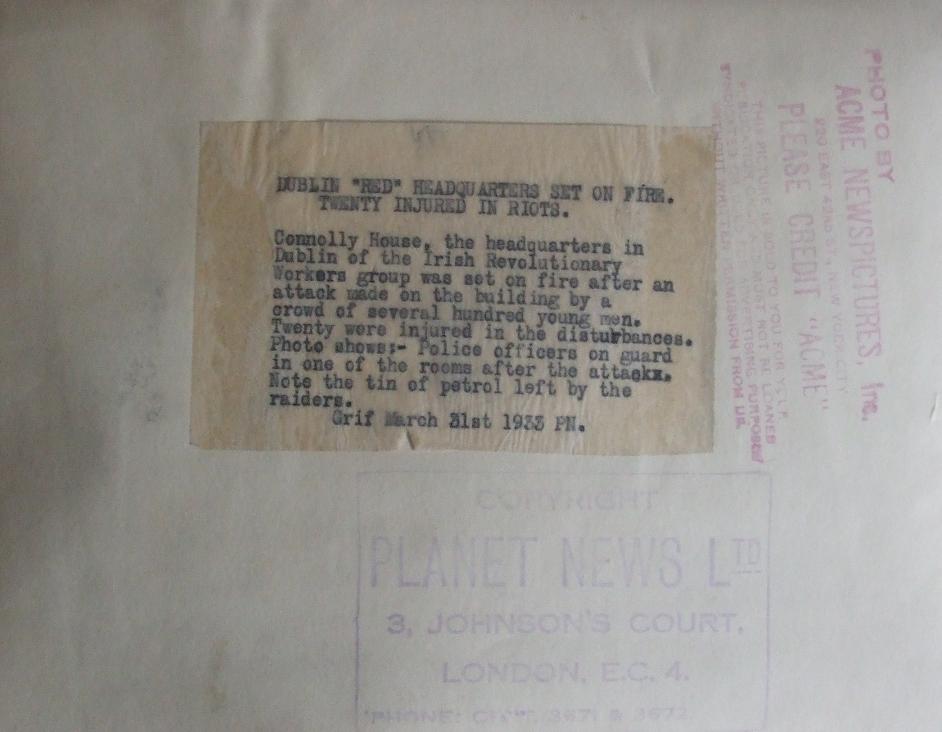
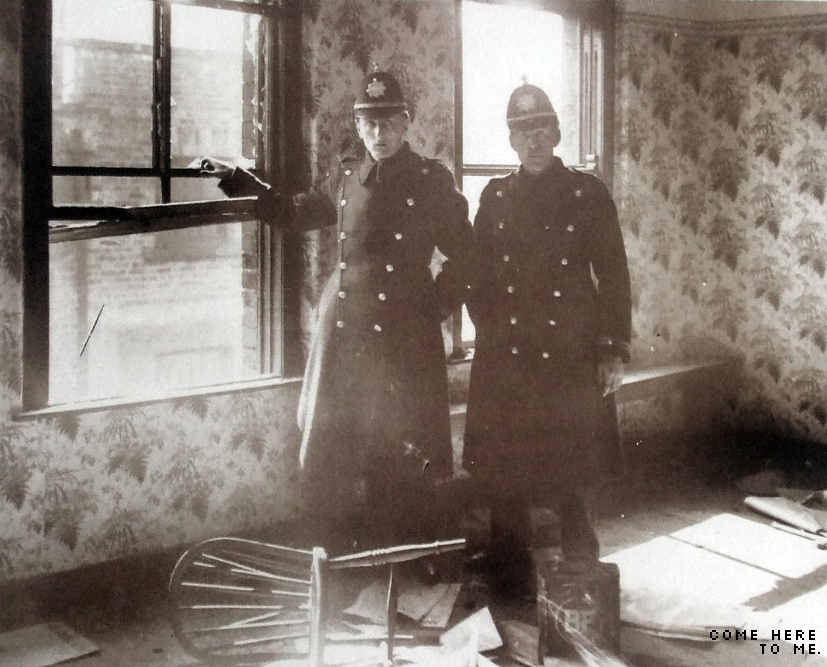
I’ve had the image below for quite a well now, a fantastic old press snap of two Gardaí inside Connolly House (located on Great Strand Street) after the attack on the premises in March 1933 by an anti-communist mob. Accounts of the night are always chaotic, for example in Pat Feeley’s wonderful article “The Siege of 64 Great Strand Street” (Old Limerick Journal,Vol. 9, Winter 1981) it is noted that:

“As the house filled with smoke and the mob began to occupy it, the defenders were making their escape across the rooftops. The fire brigade tried to rescue two women who were in difficulties on the slates but they were prevented by the crowd who slashed their water hose”

The fact a Webley and Colt. 45 Revolver were found by the Gardai behind the shop counter perhaps best indicates the political tension and state of fear at the time.

Feeley’s article also mentions a meeting held a number of days later where Maud Gonne McBride condemned those behind the scenes at Connolly House, to which a voice in the crowd responded that those involved were Catholics. When she continued to speak, and condemned the broader attacks of the street mobs:

Again the voice repeated, “It was Catholics”. To which this time she replied, “They were hooligans”

Bob Doyle, one of the men who was in the mob that attacked Connolly House, would go on to join the International Brigade forces opposing fascism in Spain. In his memoirs Brigadista, he wrote that:

“I had attended the evening mission on Monday 27 March 1933 at the Pro-Cathedral, during the period of Lent where the preacher was a Jesuit. The cathedral was full. He was standing in the pulpit talking about the state of the country, I remember him saying – which scared me – “Here in this holy Catholic city of Dublin, these voile creatures of Communism are within our midst.” Immediately after the sermon everybody then began leaving singing and gathered in a crowd outside, we must have been a thousand singing “To Jesus Heart All Burning” and “Faith of our Fathers, Holy Faith”. We marched down towards Great Strand Street, to the headquarters of the socialist and anti-Fascist groups in Connolly House. I was inspired, of you could use that expression, by the message of the Jesuit. There was no attempt by the police to stop us”

This, and other insightful accounts, can be read on the fantastic ‘Ireland and the Spanish Civil War’ website located here.

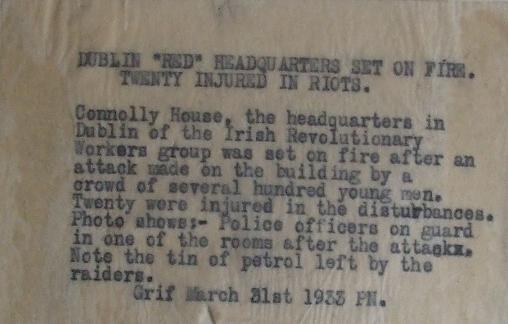
Connolly House, the headquarters in Dublin of the Irish Revolutionary Workers Group was set on fire after an attack made on the building by several hundred young men. Twenty were injured in the disturbances.

Photo shows:- Police officers on guard in one of the rooms after the attacks. Note the tin of petrol left by the raisers.

Grif March 31st 1933 PN.

Two stamps on the back of the photograph point to News Media companies in both London and New York.

ACME, Newspictures, Inc.
220 East 42nd St. New York City
‘THIS PICTURE IS SOLD TO YOU FOR YOUR PUBLICATION ONLY AND MUST
NOT BE LOANED OR, SYNDICATED OR USED FOR ADVERTISING PURPOSES
WITHOUT WRITTEN PERMISSION FROM US.

COPYRIGHT
PLANET NEWS LTD.
3, JOHNSON’S COURT
LONDON, E.C 4

The Communist Party of Ireland site notes, in its biography to Charlotte Despard (an unlikely rebel, owing to her brother being none other than Lord Lieutenant of Ireland John French) that:

“On the 29th the mob attacked Charlotte Despard’s house at 63 Eccles Street, also home to the Irish Workers’ College and Friends of Soviet Russia, but a defence had been prepared in the form of a large crowd of workers, and it escaped with broken windows. Also attacked were the offices of the Workers’ Union of Ireland in Marlborough Street and the Irish Unemployed Workers’ Movement in North Great George’s Street.”

On a lighter note, notice the can of petrol left behind by the mob is ‘BP’, or British Petroleum. You couldn’t make it up.

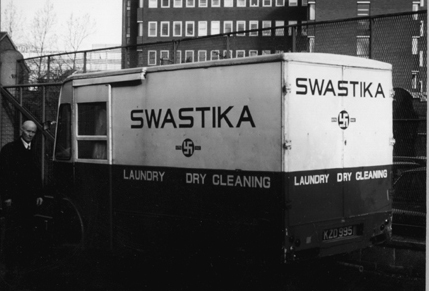
The Swastika Laundry operated from the Shelbourne Road in Ballsbridge, Dublin 4 for 75 years.

It was founded by John W. Brittain (1872 – 1937) from Manorhamilton, Co. Leitrim who was one of the “pioneers of the laundry business in Ireland” having founded the Metropolitian and White Heather Laundries in 1899. He was also the owner of a famous horse called Swastika Rose which was well known “to frequenters of the Royal Dublin’s Society’s Shows“. (The Irish Times, March 27, 1937)

(c) Life Magazine. David E. Scherman, 1943.

(c) Life Magazine. 1943, David E. Scherman.

An Irish Times advertisement from Thursday, March 15, 1928

The fact that people still talk about the laundry today is, for the most part, based on the fact that a swastika was used for their logo. As you can see from the title and picture above, the laundry was founded in 1912, eight years before the German Nazi party decided to formally adopt the symbol. (This important detail was promoted by the company at the outbreak of WWII when they changed the company’s name to The Swastika Laundry (1912) to distance themselves from the NSDAP)

Swastika Laundry van. Date unknown.

"A street scene in Dublin during the war". Marshall Cavendish Corporation, History of World War II, 2005, p. 610

In his travel memoir Irisches Tagebuch (Irish Diary) (1957) the future Nobel Laureate, Heinrich Böll had an unpleasant run in with a Swasika Laundry van. He notes that he

was almost run over by a bright-red panel truck whose sole decoration was a big swastika. Had someone sold Völkischer Beobachter delivery trucks here, or did the Völkischer Beobachter still have a branch office here? This one looked exactly like those I remembered; but the driver crossed himself as he smilingly signalled to me to proceed, and on closer inspection I saw what had happened. It was simply the “Swastika Laundry”, which had painted the year of its founding, 1912, clearly beneath the swastika; but the mere possibility that it might have been one of those others was enough to take my breath away.

The vans used by the Swastika Laundry didn’t operate on diesel or petrol, they were electric, quite ahead of their time.

"Observed in Shelbourne Road, Dublin, 1960s" - http://www.photopol.com/signs/swastika.html

The Spring Grove Laundry bought the company out in 1987 and sold the land for redevelopment in the early 2000s. The only reminder of the Swastika Laundry at the site today, now known as The Oval, is the huge chimney, now a protected structure, which was emblazoned with a huge swastika until the late 1980s.

The Oval. Chimney on the right. (The Irish Times, Wednesday, March 28, 2007)