Feeds:
Posts
Comments

Archive for the ‘Dublin History’ Category

We’re buzzing around these parts this morning. The Punks or Posers discussion managed to draw a huge crowd of ex punks, current punks, music lovers and the generally curious to the northside yesterday for an exciting conversation which didn’t disappoint. Sam has promised to upload his playlist here soon, so look out for that. My thanks to all who approached us at the end to say they enjoy the blog. A blog without readers wouldn’t make much sense…..

Thanks to Andrew Flood for these excellent images.

You can check out History Ireland over here, and if you’re new to ourselves you can get Come Here To Me updates delivered to your (virtual) front door via Facebook, over here.

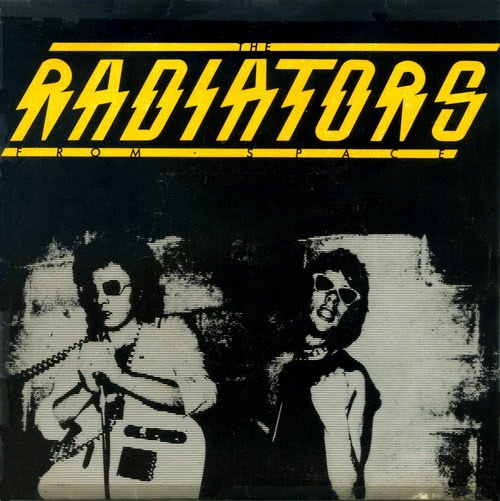
Pete Holidai of The Radiators From Space, sitting next to Eamon Delaney.

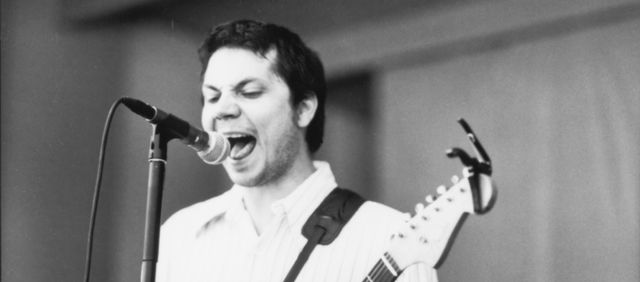
A varied group of panelists

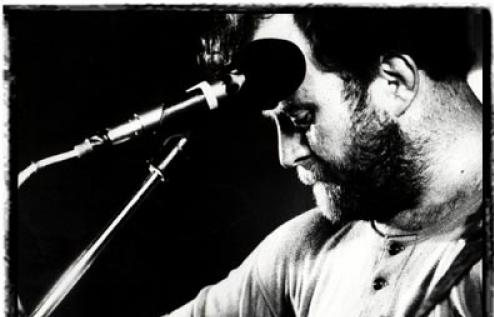
A little rain couldn't stop the show.

Read Full Post »

You have to go abroad to find the gems. In a second hand bookshop in Edinburgh, a copy of Dublin:A Travellers’ Companion showed up, which features many excerpts from classic Dublin books and accounts.

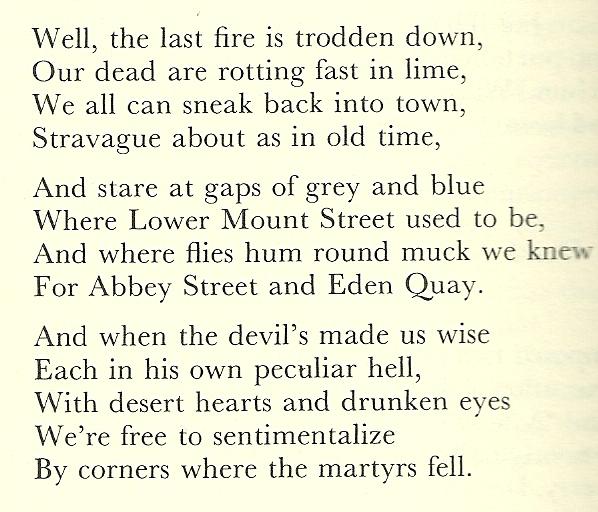
This Dublin ballad by Dermot O’ Byrne, which was taken from An Anthology of 1916 by Edna Fitzhenry, is one I had not come across before and deemed worthy of sharing here.

Read Full Post »

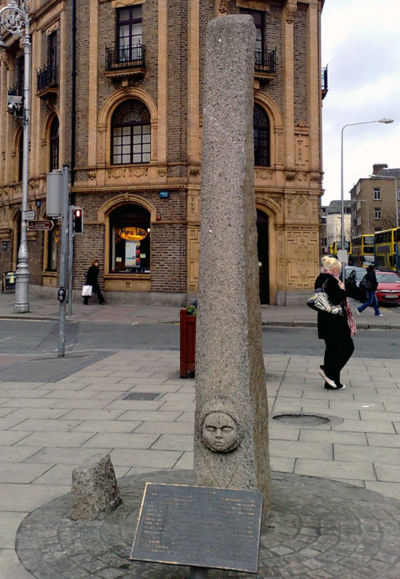
For nearly 1,200 years there has been a continuous sculpture at the junction of College St. with Pearse St. and D’Olier St. The following is a rough description:

~ 837 – 1720 = The Long Stone, otherwise known as  The Steyn(e) or Stein.
~ 1862 – 1959 = The Crampton Memorial.
~ 1986 – Present = The Long Stone replica.

The old Viking ‘Long Stone’ was first constructed by Norsemen in 837 AD to symbolise their possession of the surrounding lands. The historic stone itself “escaped all the vicissitudes of time, the invasions of the Danes, the wars of Celts and Saxons, the struggles of Royalists and Republicans” (Ireland and the Celtic church, (1907) p. 281) but was eventually stolen in 1794. Does anyone know where it is now?

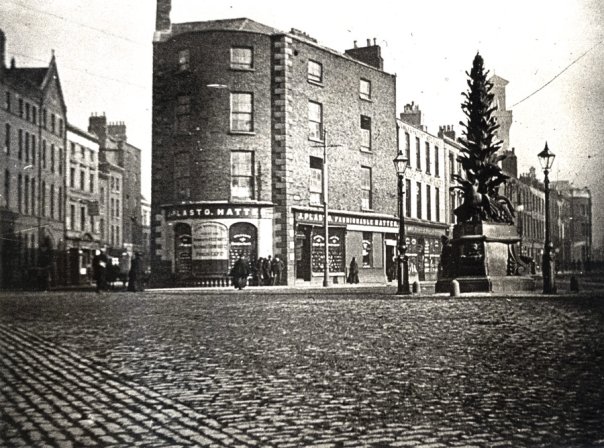
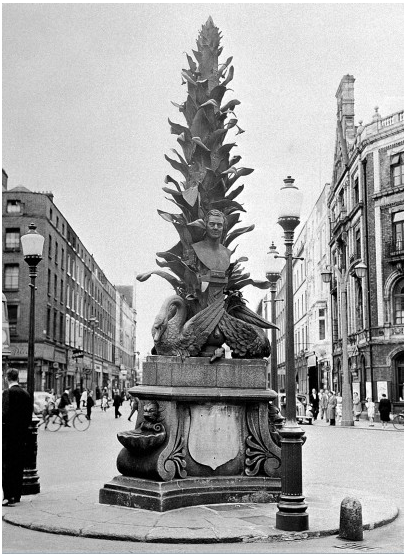
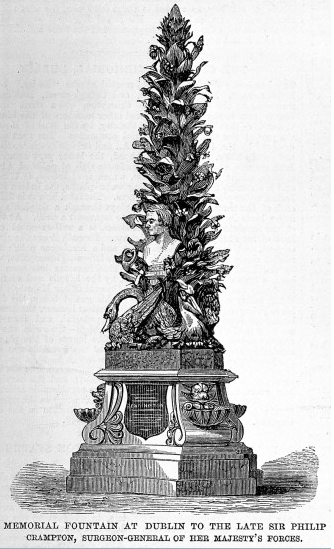
The Crampton Memorial, known colloquially as ‘The Water Baby’ and ‘The Cauliflower’, took its place and was situated at the junction of College St. with Pearse St. and D’Olier St. for nearly one hundred years. It was designed by John Kirk (son of Thomas Kirk (1781 – 1845)) and is named after Sir Philip Crampton (1777–1858), an eminent surgeon and anatomist. The memorial, which was made up of a stone base with three drinking fountains, slowly fell apart and was finally removed in 1959.

The Crampton Memorial (1900)

The Crampton Memorial (1930s/1940s?)

Sketch of The Crampton Memorial

In 1986, a replica of the Long Stone (designed by Cliodhna Cussen, mother of Aengus Ó Snodaigh and Rossa, Rónán, and Colm of Kíla) was erected. The 11 foot granite sculpture has the head of Ivar, the first Norse king of Dublin and who is believed to have erected the original Stein, on the base of one side and a head of a nun, from All Hallows monastery, which is thought to have been situated on the site in the Middle Ages, on the other.

The present day Long Stone replica sculpture (Erected, 1986)

Read Full Post »

I’m hoping to write a piece on the history of reggae in Dublin, similar to what I’ve done so far on the Mod scene in Dublin and the Rockabilly scene.

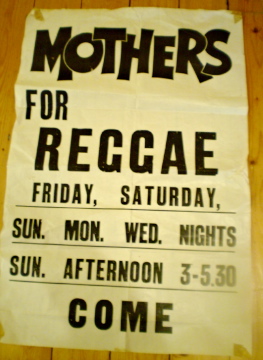
From anecdotal evidence, I’ve heard the first places to play reggae in Dublin was Mothers nightclub on Mary Street and the Osibisa on King Street South both in the early to mid 1970s. (The Cimarons playing Cork in c. 1978/9 was the gig that really put reggae on the map in Ireland. Probably similar enough to what it did for punk in the city when The Clash played the exam hall in TCD in 1978.)

There was of course Zebra, Ireland’s first reggae band, and their 1979 single Repression.

Does anyone have any more information on these clubs, the DJs, the people who went  or anything else on the history of reggae in the city? Please email me directly at matchgrams(at)gmail.com

Mothers poster (C.Fisher, personal collection)

Read Full Post »

“We no longer have a retail outlet in Dublin, but visitors to our new base, in a converted stables, near Lucan, just outside Dublin, are welcome, by appointment.”
Irish Historical Picture Company online.

——

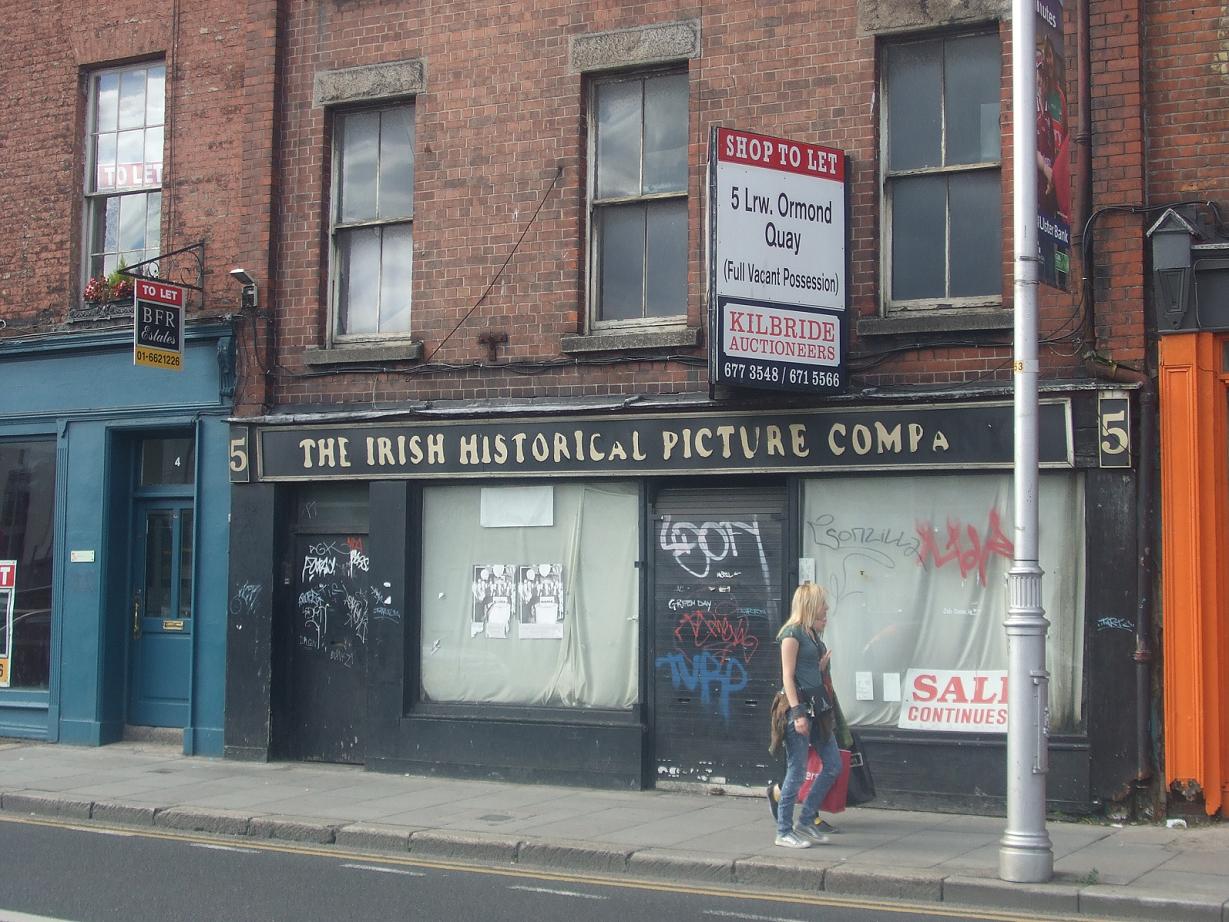
I used to spend a good bit of time in here, The Irish Historical Picture Company.

In truth, there probably wasn’t a street in Ireland they didn’t have a snap of in a previous life. Sometimes however it was more fun to just browse random parts of the country, looking at amazing images that in some cases gave life to the old saying, the one about a thousand words and all that.

Of course, a simple eBay search shows it isn’t impossible to find such images. Yet the sheer volume of them, under one roof, was staggering. From the revolutionary years to quiet rural roads of the nineteenth century, headline news to daily routine was well documented. Occasionally, if I am giving a walking tour, a tourist will ask about this place, saying they spotted it across the Liffey. At this time of year in particular it is missed.

I only spotted it again recently in all truth from the upstairs window of the Workman’s Club pub, which provides a look down over the Liffey. It’s shopfront is redecorated in the way closed down shops tend to be, a mix of idiotic tags nobody can read, notices for this, that and the other and pasted political posters. A few letters have vanished too, but not enough to confuse anyone about what existed there before.

How funny the snap above now shows the past life of a place that frequently amazed me itself with an image of a familiar site in days long gone by.

Read Full Post »

Without a doubt, C.S Andrews penned one of my favourite books.

Dublin Made Me covers two lives. One, the life and memories of a Dublin youth. The other, a life within the revolutionary movement, serving as adjutant to Liam Lynch during the traumatic Irish Civil War. On reading it, I was struck by Andrews account of the day he made his Confirmation, at the Holy Faith in Dominick Street.

Anyway, on the great day, my mind was more preoccupied with football than with religion because my father had promised to take me to a cup match that afternoon between Bohemians and Shelbourne at Dalymount Park and I was afraid that the ceremony would not finish on time.

At the time, as Andrews noted, Shelbourne and Bohemian F.C were the only senior soccer clubs in the city, and he notes that “the people on the south side followed Shelbourne” He went on to write that the supporters and indeed players of the game were “..exclusively of the lower middle and working classes.” Men would travel north to see one of the Dublin sides take on Linfield, Belfast Celtic, Glentoran, Distillery, Cliftonville or Derry Celtic. These were the first ‘Away Days’, the roots of what we still do today.

Football has a habit of popping up in any account of growing up in Dublin. A love of the beautiful game was not only to be found among native Dubliners, but within immigrant communities too. Nick Harris touched on the love of the game in the Jewish community of ‘Little Jerusalem’, as Clanbrassil Street became known. His account of growing up there, Dublin’s Little Jerusalem ,is a Dublin classic. The local lads, he noted, tended to follow Shamrock Rovers. In the book he recounts stories of away trips, noting his brothers would follow the Hoops all over Ireland.

Once in Sligo, when Rovers were playing Sligo they were leading one goal to nil and Sligo were awarded a penalty. As the Sligo man was about to take the kick, Hymie(his older brother) jumped over the fence and kicked the ball away from the spot.

The Jewish youth evem established a team among themselves, naming it New Vernon, a nod to a “Jewish club that played in Dublin some years earlier”. They played frequently in the Phoenix Park, and Harris noted that the team “… played some great matches with various non-Jewish teams, and we were often applauded by people who stopped to watch the game.” Recently when passing through what was once the Jewish area of Dublin, I spotted a child kicking a football against a wall and was reminded of this tale. Harris also remembered a raid on the house next door by Black and Tans in 1921. The family next door were the Clery’s, one of whom was a footballer for Bohs. “From the noise that was going on, it sounded as though they were playing football” he noted. They were, with a football they found in one of the rooms.

(more…)

Read Full Post »

The seizure of the Rotunda concert hall by a reasonably large group of unemployed workers, and the hoisting of the red flag over the premises, remains one of the most bizarre and understudied events of the Irish revolutionary period.

In his excellent history of the ITGWU, The Irish Transport and General Workers’ Union: The Formative Years C. Desmond Greaves wrote that, early in 1922 “….industrial conflict took the form of individual struggles rather than a concerted class war.” The occupation of the Rotunda came two days after the foundation of the new state, and was perhaps the earliest example of class anger within it, a direct response to the existing high levels of unemployment. One of the leading figures of this occupation was Liam O’ Flaherty, today well-known as the author of The Informer, the classic novel, but then acting as a dedicated socialist.

He, like so many other unemployed men in Dublin, had served in the Great War, serving with the Irish Guards. He had been on a strange journey before returning to Dublin, and Emmet O’ Connor notes in Reds and the Greens that “After being invalided out of the British Army he set off trampling about the Mediterranean and the Americas, joining the Wobblies in Canada and the Communist Party in New York. He returned to settle in Ireland in December 1921….”

Liam O' Flaherty.

On January 18 1922, a group of unemployed Dublin workers seized the concert hall of the Rotunda. The Irish Times of the following day noted that “The unemployed in Dublin have seized the concert room at the Rotunda, and they declare that they will hold that part of the building until they are removed, as a protest against the apathy of the authorities.”

“A ‘garrison’, divided into ‘companies’, each with its ‘officers’ has been formed, and from one of the windows the red flag flies”

Liam O’ Flaherty, as chairman of the ‘Council of Unemployed’, spoke to the paper about the refusal of the men to leave the premises, stating that no physical resistance would be put up against the police and that the protest was a peaceful one, yet they intended to stay where they were.

“If we were taken to court, we would not recognise the court, because the Government that does not redress our grievances is not worth recognising” O’ Flaherty told the Times.

(more…)

Read Full Post »
This one, from the History Ireland Hedge School, looks interesting. Sam in particular has frequently uploaded slabs of classic Dublin vinyl to the site here, and the blog has been known to be a bit nostalgic for a period, although not being old enough to recall it ourselves! We’ll be on hand at this event to provide the noise, so come along. I can hear you now, “Really, is that them?”

The event is taking place as part of the Phizzfest in Phibsborough.

Date: Sunday, 12th September 2010
Time: 3pm
Title: ‘Dublin’s late ‘70s New Wave scene’
Description:A History Ireland Hedge School-Blasting back to the70’s.
Venue: Phibsborough Library,
North Circular Road,
Dublin 7.
Tickets: N/A, show up on the day.

Tommy Graham from History Ireland will host the event, joined by a varied group of individuals, including our favourite journo Fintan O’ Toole, Counciller Cieran Perry, Eamon Delaney, David Donnelly and Billy McGrath. Each of these people bring something unique to the discussion, ranging from organising concerts at the time, to an understanding of the diverse youth cultures and cliques that emerged from the scene at the time, sometimes quite literally clashing. Some of the bands that emerged at the time remain household names, the likes of U2 coming to mind instantly. Others have become cult classics. Bands like DC Nien, The Atrix and their kind still hold pride of place in many vinyl collections.

If this period interests you, check out previous posts here like this one on DC Nein or this gem from our first week in existence, looking at some of the main first-wave Dublin punk singles. When you’re feeling nostalgic (Maybe you were there?), write the date down and come along on the day and share a story. If you’re younger like ourselves come along and hear a story or two. Regardless, come along.

The History Ireland Hedge School will be hosting some historical discussions at this years Electric Picnic too, a slighty more muddy setting than Phibsborough.

Read Full Post »
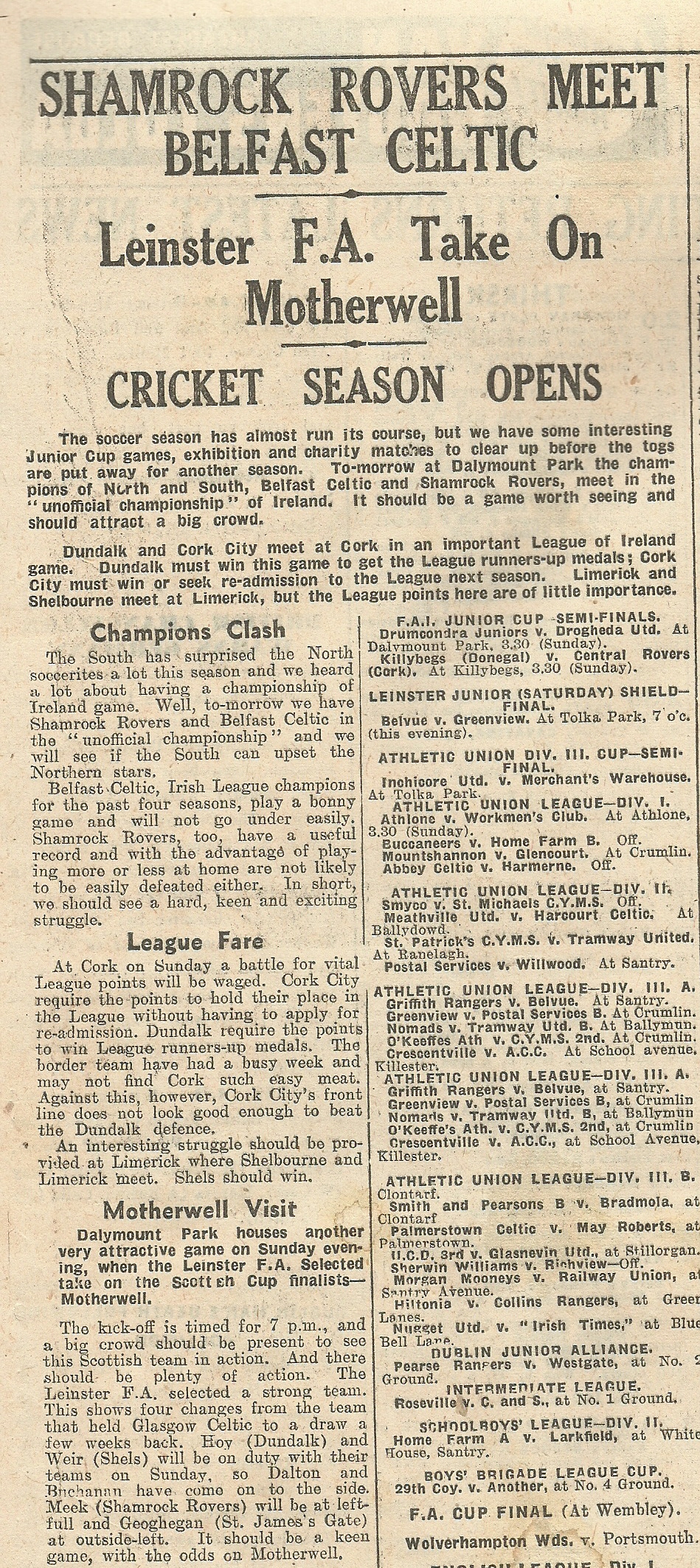
An interesting one this, the soccer section of the papers sports section.

Shamrock Rovers and Belfast Celtic, Dundalk and Cork City, Limerick and Shelbourne and a Leinster F.A selection against Motherwell at Dalymount Park feature.

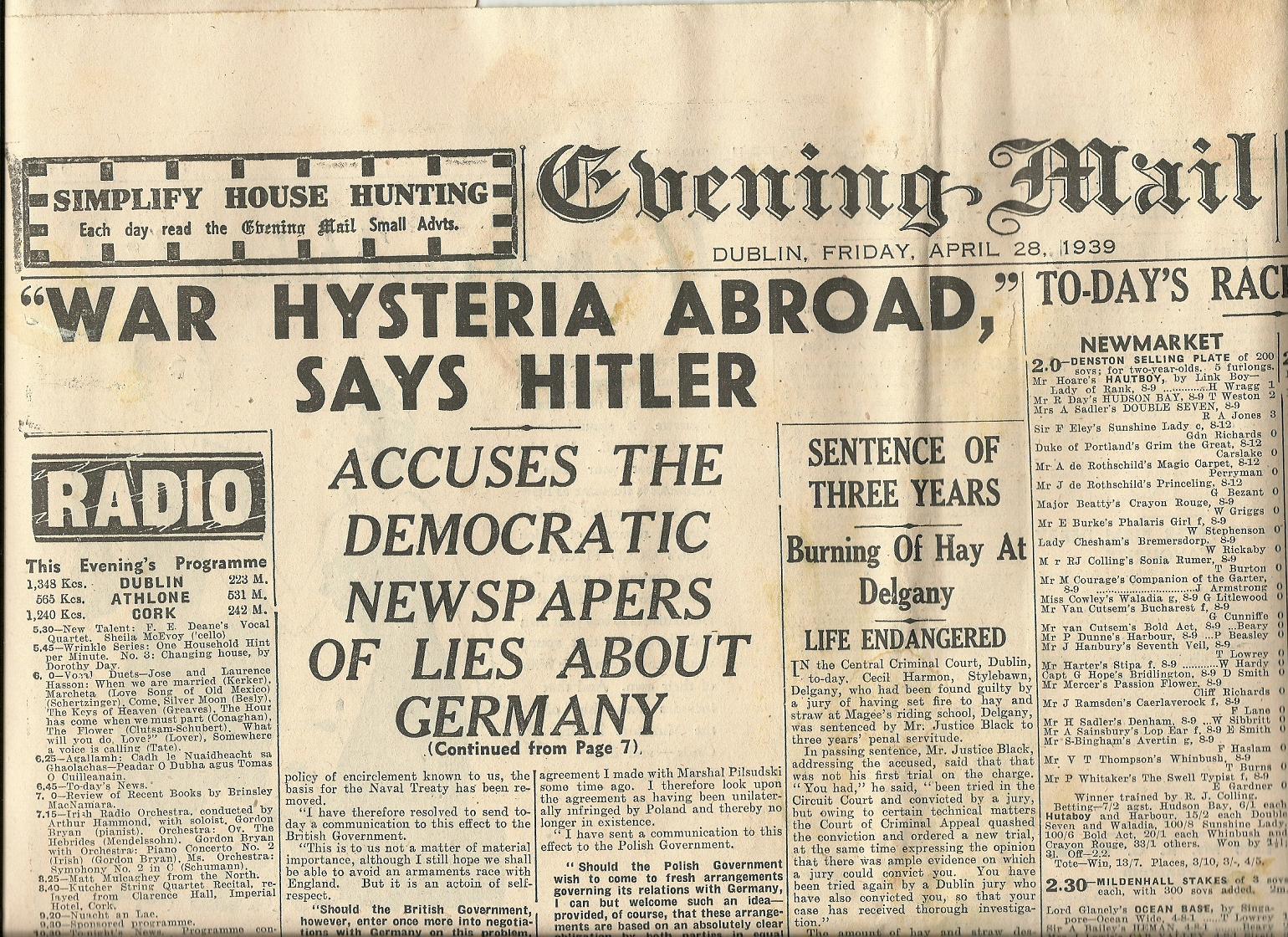
This is a gem from inside the paper. Hitler Says Relax!

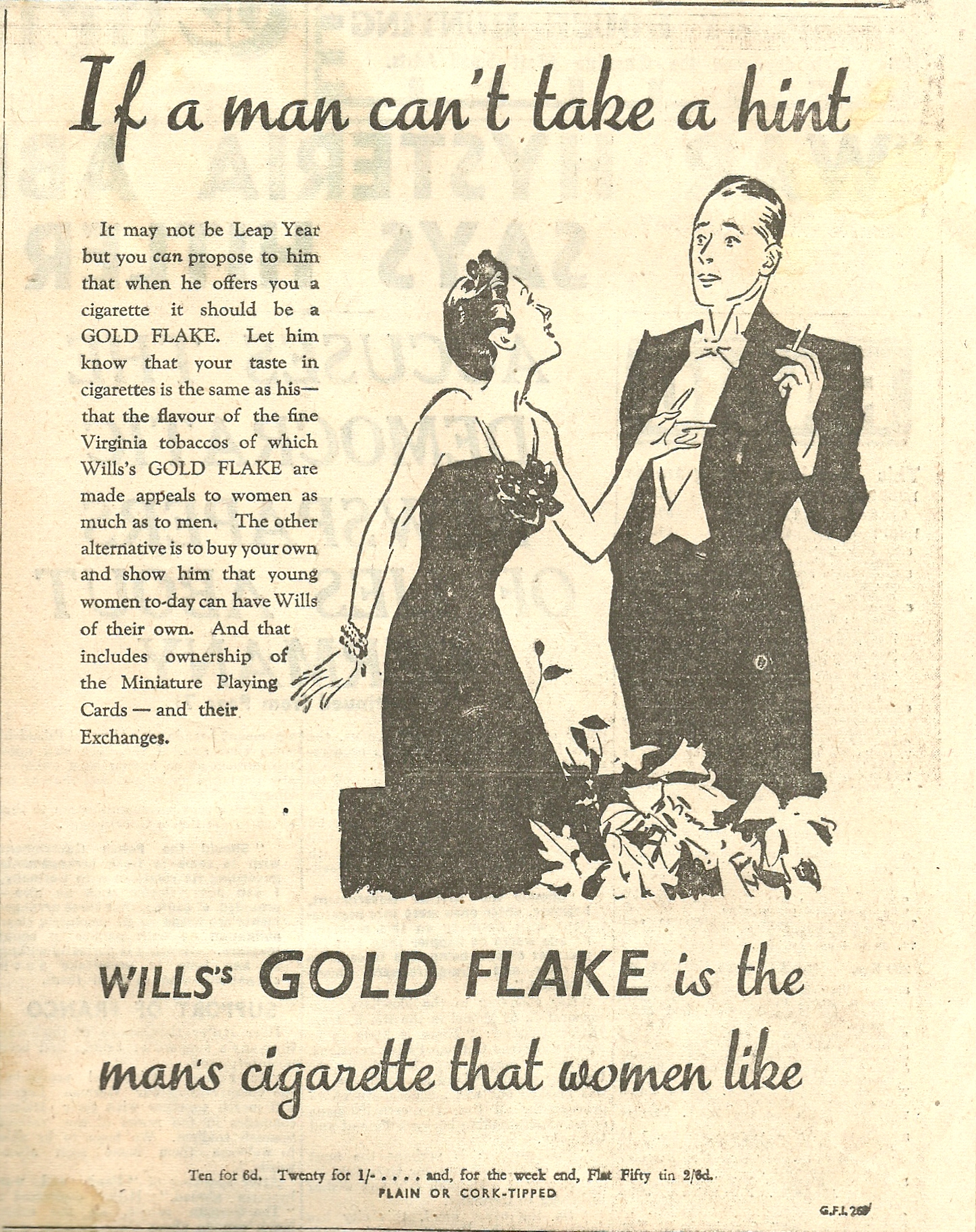
Lastly, this ad for Wills’s Gold Flake cigarette’s is a bit bizarre.

Read Full Post »
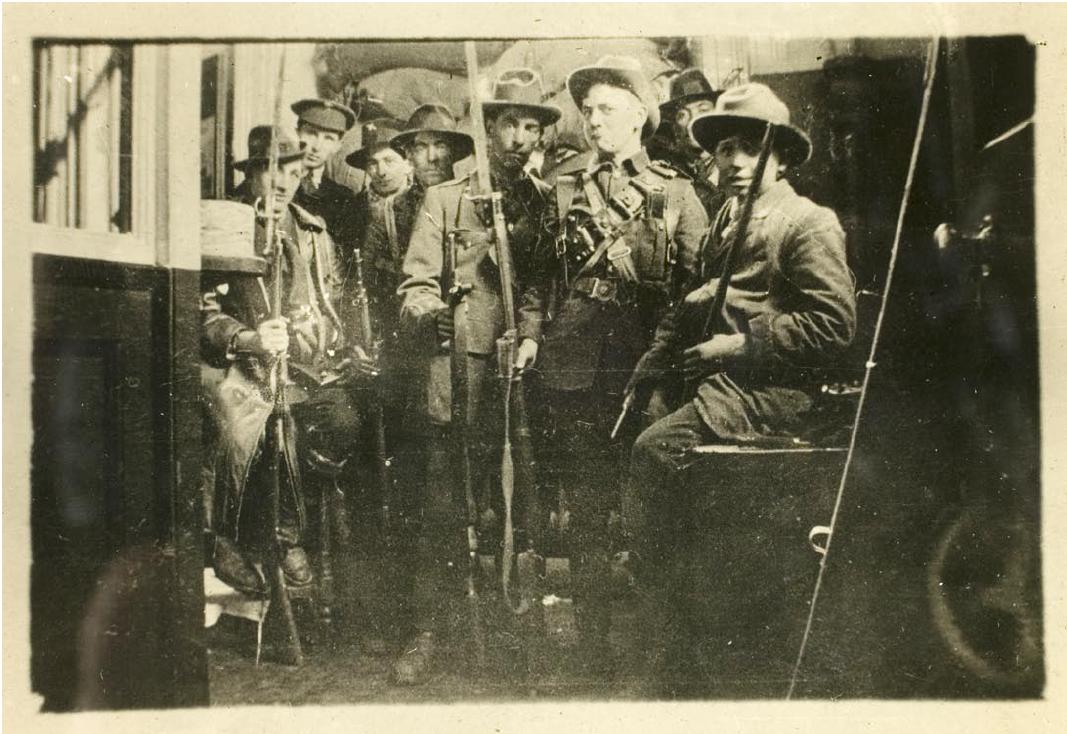
Members of the Irish Volunteers and the Irish Citizen Army photographed inside the GPO.

This looks excellent and most worthy of support. The free tours detailed below are part of National Heritage Week and will be conducted by relatives of those involved in the Rising. We recently published the audio of a speech delivered by the great-grandson of James Connolly at the launch of a plaque to Sean Connolly, on the subject of 16 Moore Street and the campaign to save a key site of historical importance in Dublin. The campaign to save the site continues. The street itself is a treasure, and long may it remain as it is today.

Date & Times
28 August : Noon 3pm 6pm 9pm
29 August : Noon 3pm 6pm 9pm
Meeting point: GPO
Admission: free
Event Description: A walking tour through the GPO/ Moore Street battlefield of Easter Week 1916. Uniquely guided by descendants of those who took part

Read Full Post »
It only dawned on me recently how many versions of The Auld Triangle I have in my collection. By ‘my collection’, I mean Windows Media Player. Anyway, I thought a few were worth posting in case you haven’t heard them. I love some of these.

Cat Power: No doubt inspired by Bob Dylan, this cover from Cat Power is more than decent. I enjoy her cover records as much as her own material in all truth.

Jeff Tweedy from Wilco has covered the song live, and it is one of my favourite versions. This sounds excellent.

Christy Moore recorded an excellent rendition of the song, which can be heard on his Box Set.

This Pogues version comes from a Peel Session.

All great, and this is before taking other versions like Ewan MacColl’s into account, not to mention the numerous versions of bands like The Dubliners and The Clancy Brothers. Enjoy.

The song was of course written by Brendan Behan and features in The Quare Fellow, a play currently running at The New Theatre on Essex Street, at the back of Connolly Books.

Read Full Post »

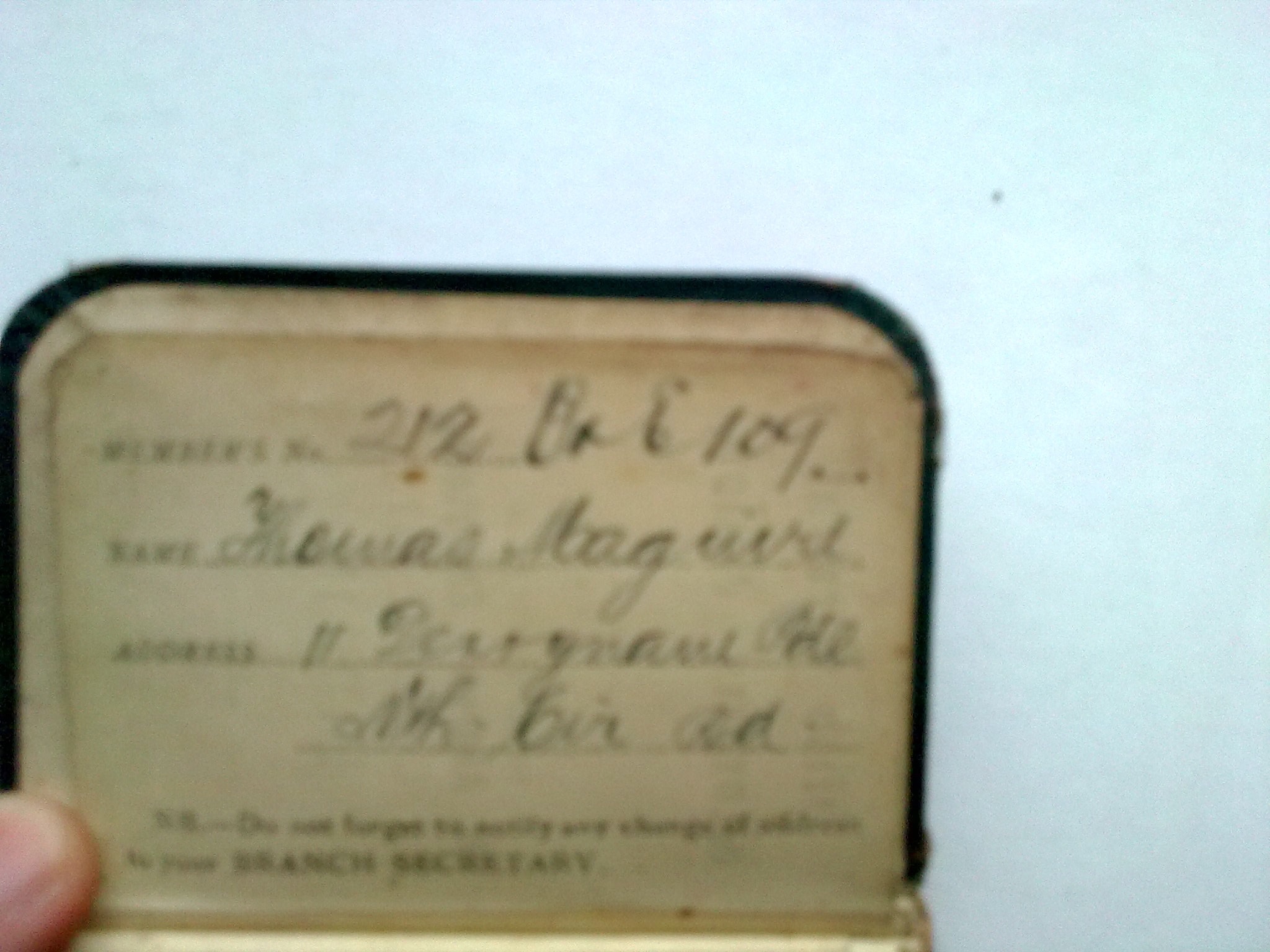
As well as an impressive collection of old union stickers, I found this Irish Clerical Workers’ Union membership card from 1918 in the Irish Labour History Museum last week.

Info on the union from the Historical Directory of Trade Unions (2006)

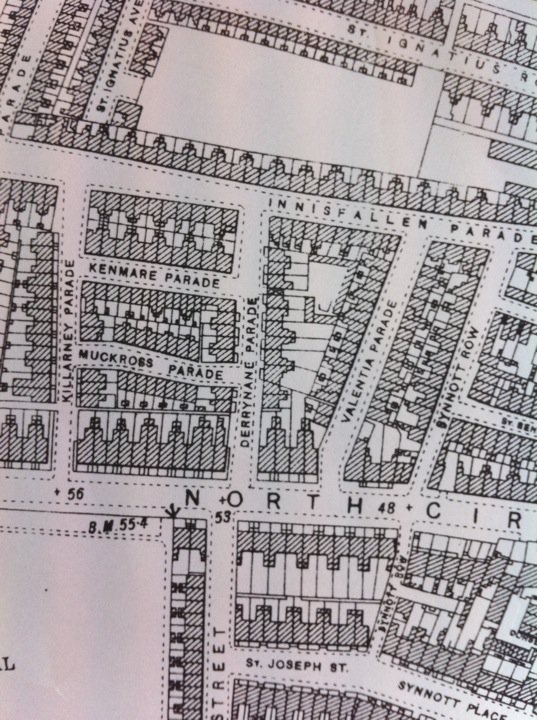
It appears to have been the possession of a Thomas Maguire who lived at 11 Derrynane Hll (sp?) off the North Circular Road. Thanks to some helpful friends on facebook, I’ve been able to track down a Derrynane Parade (which is indeed off the NCR) but have found no reference to a Derrynane Hill or a Derrynane Hall. Perhaps the street was renamed or his address was written in by someone who misheard him.

for passing this on)”]

The 1911 census shows that there are no Maguires living at Derrynane Parade. There are approximately 53 Thomas Maguires living in Dublin that year. Discounting anyone under the age of 17 and 60, that leaves us with 21 Thomas Maguires. I’m going through them now to find any possible match i.e. someone working in a clerical job.

Read Full Post »
« Newer Posts - Older Posts »