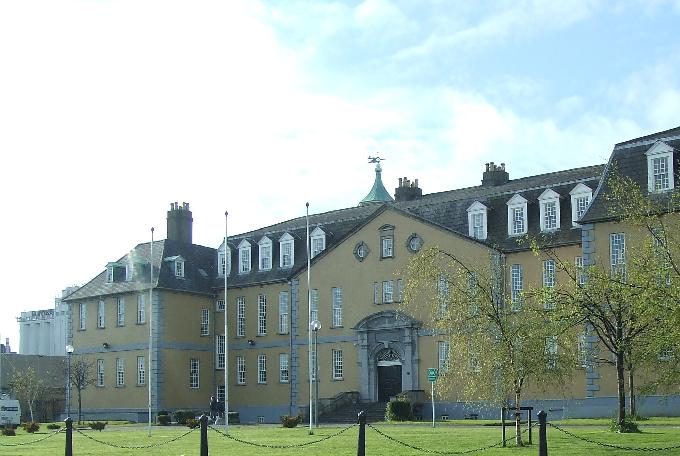
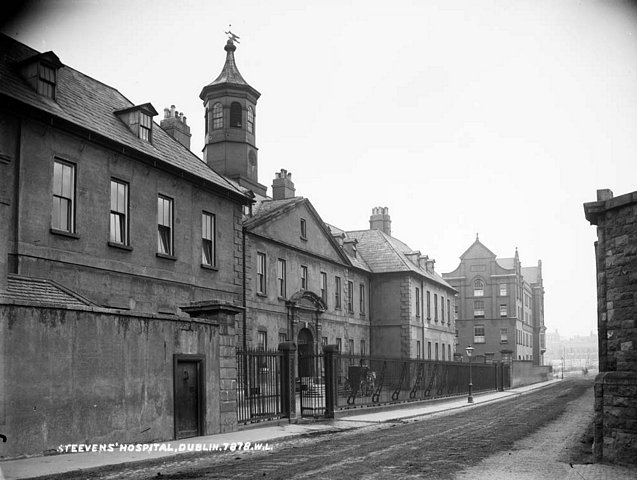
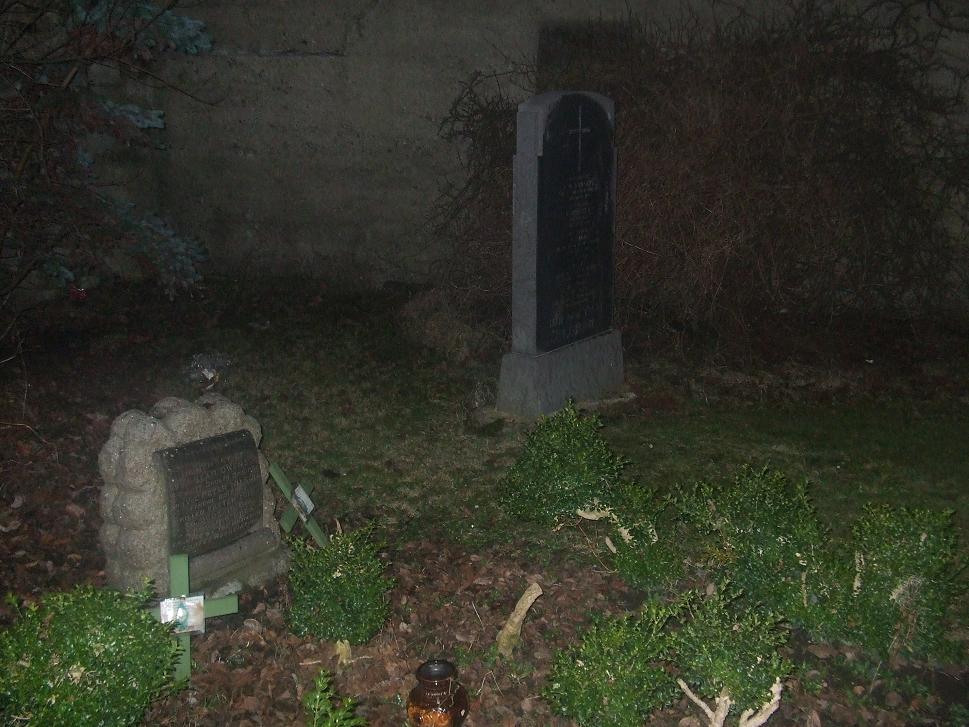
Seven men, two members of the Irish Volunteers and five British Army soldiers, are buried side by side in what is literally the back garden of Dr. Steeven’s Hospital.
This is not a graveyard, but as stated above quite literally a garden. The two graves could not be physicially closer, or more symbolically diffferent, than they are.
Of the British Army men, almost all belong to Irish Regiments.
The names of the men are provided in the images below underneath their respective headstones. Of the rebel casualties, one belonged to the Fingal Battalion and one to the 4th Battalion Dublin Brigade. The Fingal Battalion, or ‘North Dublin Battalion’, for the most part fought with Thomas Ashe during the insurrection. His burial here shows that sometimes people ended up in random locations owing to their time of arrival or other commitments, or simply due to the need for reinforcements in parts of the city. The 4th Battalion are associated with the action at the South Dublin Union where they served under Éamonn Ceannt. His Battalion is said to have numbered around 120 men. Volunteer Sean Owens, who belonged to that Battalion, was twenty four years old at the time of the insurrection, and from the Coombe area of Dublin.Interesting information regarding the fight leading to his death can be found in Uncommon Valour by Paul O’ Brien, published by Mercier Press. He is said to have been killed less than two hours into the taking of the South Dublin Union, and is therefore one of the earliest casualties of the Republican side.
Volunteer Peter Wilson, a Swords native, was shot after the surrender of the Mendicity Institution. This group of Volunteers were to hold the position for a number of hours, but managed to hold out until Wednesday. Despite emerging under a white flag, Wilson was shot and killed. He was 40 years old at the time.
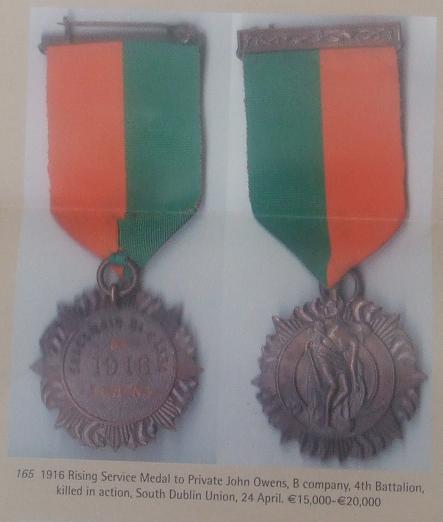
By pure chance, the 1916 service medal of Volunteer Owens is currently listed in an upcoming auction at Whytes auction house in Dublin City. It is valued, amazingly, at €15,000 to €20,000.
Lot 165, its description reads:
“1916 Rising Service Medal to Private John Owens, B Company, 4th Battalion, killed in action, South Dublin Union, 24 April. €15,000- €20,000”
The medal of one of our Volunteers below
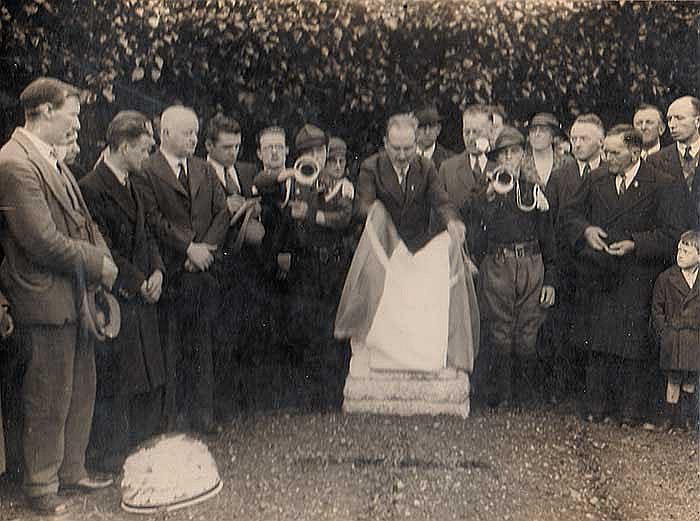
This amazing photograph below from the gravesite at Steeven’s Hospital is included in the lot, and more information is available here at invaluable.com
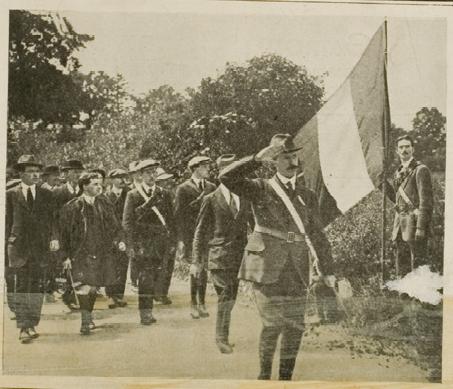
Photo of a memorial service in the hospital grounds, from the Irish Press September 1935
Notice that one of the British Army men buried here is a Lancer who died on the 24th of April, 1916. Lancers came under fire on the first day of the rebellion from the Four Courts Garrison and, more famously, the rebel headquarters at the General Post Office. Other Lancers are buried in Grangegorman Cemetery today, where one grave notes that the man was “Killed during the Irish Rebellion”
Three of the men buried here belonged to the 3rd Battalion of the Royal Irish Regiment, which was based at Richmond Barracks, under Lt.Col R L Owens. Their strength at the time of the insurrection was 18 officers and 385 other ranks.
Ceannt photographed with Irish Volunteers
A grave holding two Irish Volunteers sits right next to one holding five British Army soldiers (Four from Irish Regiments)
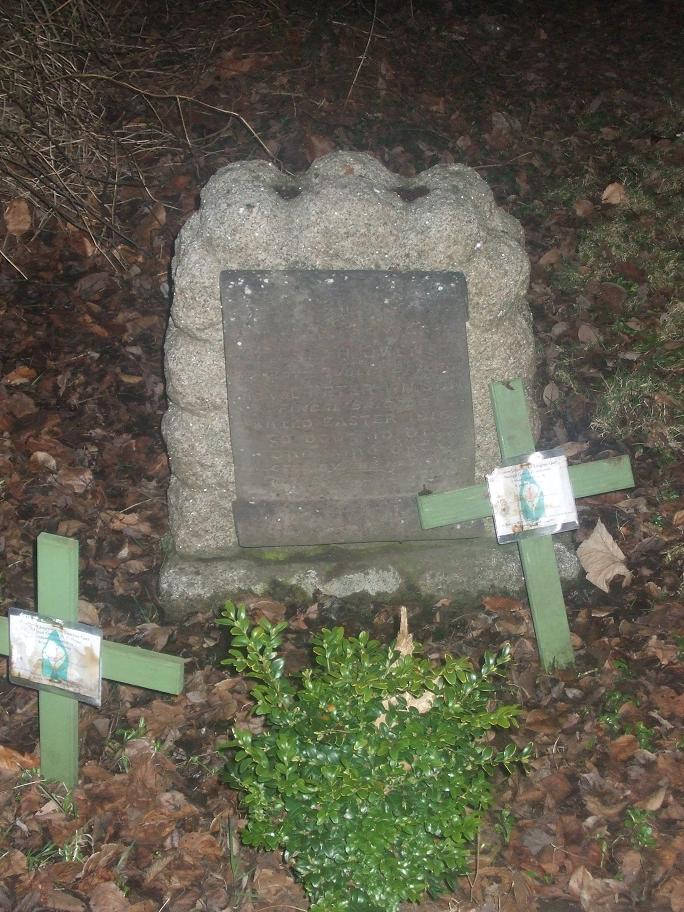
Easter lillies on the grave of the two Irish Volunteers
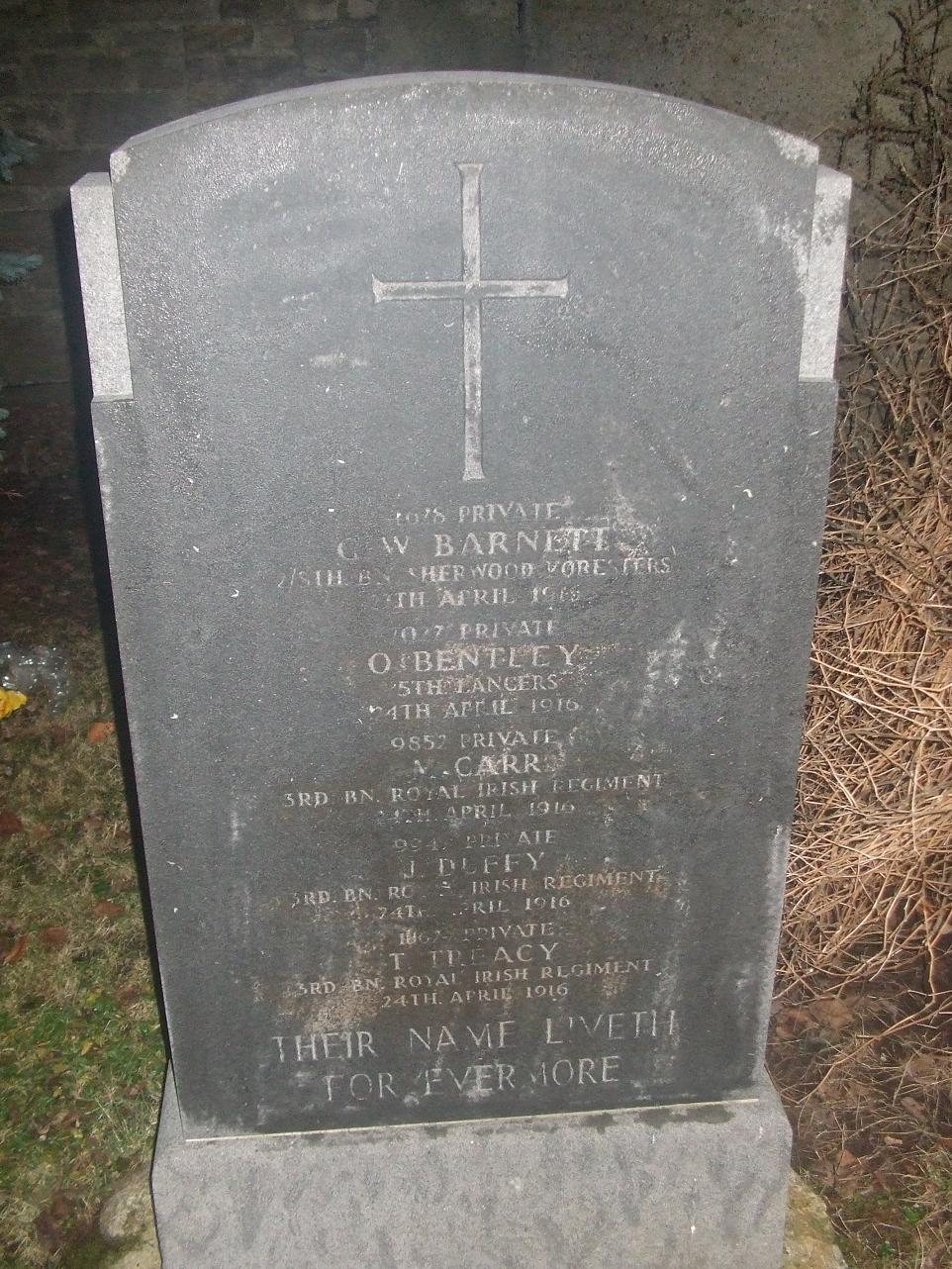
We had to rub the British Army headstone down with a wet cloth to be able to read the text, which I think you can see clearly below.
The headstone to the British Army casualties
G.W Barnett Sherwood Foresters 27th April 1916
O. Bentley 5th Lancers 24th April 1916
M. Carr 3rd Bn. Royal Irish Regiment 24th April 1916
J. Duffy 3rd Bn. Royal Irish Regiment 24th April 1916
T.Treacy 3rd Bn. Royal Irish Regiment 24th April 1916
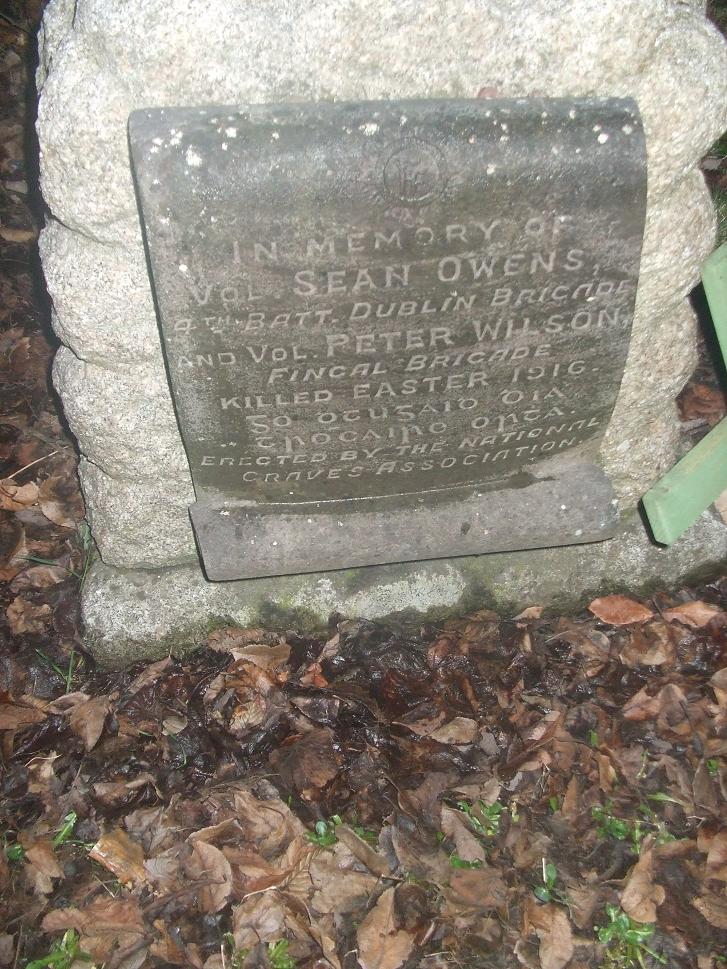
The text of the Volunteers gravestone. Notice the 'Oglaidh na hÉireann' logo.
Vol. Sean Owens 4th Batt. Dublin Brigade
Vol. Peter Wilson Fingal Brigade
Want to visit the graves? Dr. Steeven’s Hospital is the building right across the way from Heuston Station.
On April 13th 1742, Handel’s Messiah, one of the most famous musical pieces in the world, was first performed on Fishamble Street in Temple Bar. We will commemorate this with a fun and uplifting outdoor event Messiah on the Street, as well as a range of highlights including an extra special performance of A Global Hallelujah by three national schools in Dublin. We are also very excited to be able to expand this year’s programme to include traditional Irish music; as well as offering dance workshops and an outdoor Movie on the Square. .
Some highlights:
10am: Handel & Dublin in 1742 – Talk By Professor Barra Boydell
What did Handel encounter when he visited Dublin?
Professor Barra Boydell, music historian and expert presents a fascinating talk about the life, times and music of Handel in 18th century Dublin.
Venue: The New Theatre, 43 East Essex Street, Temple Bar, Dublin 2
Tickets: FREE – No booking required just come along.
11am: Let’s Walk & Talk: Handel’s Dublin—Then & Now
Historical walking tour with Pat Liddy.
A walk around some of the Dublin streets that still echo with the sounds of George Friderich Handel’s visit in 1742/3 and finishing in Fishamble Street to hear the annual performance of excerpts from his Messiah.
Meeting Point: Wolfe Tone Park, Mary Street, Dublin 1 (beside Jervis Shopping Centre)
Tickets: FREE – No Booking required, just come along!
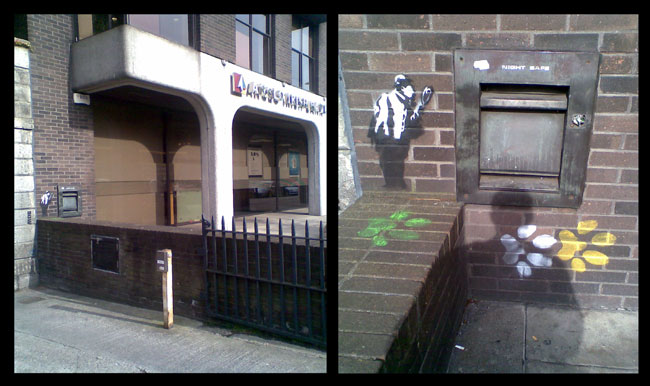
This looks interesting. From Thursday through to Sunday, there will be an exhibition of the stencil work of the artist ADW in town, at The Back Loft Gallery.
At first, I didn’t connect the name with anyone in particular, but after a brief look at the website I went “oh! Yer man!”. The broke leprauchan with his pockets stretched, the Gardaí arresting Monopoly Man, Brian Cowen with his “Laugh now, but one day I’ll be in charge” signboard, all great images.
And so it begins! My new show will be opening on the 15th of April at the very stylish Back Loft Gallery. There will be an opening reception on Thursday the 15th of April 6pm-8pm and all are welcome. Then daily viewings from Friday the 16th until Sunday the 18th, 1-7pm and Sunday until 5pm
Despite currently getting to terms with a serious mountain of essays, I hope I can swing into this on Sunday.
Sadly, in Dublin, this kind of stuff rarely lasts too long and the shite nobody wants or needs to know about Anto and his girlfriend stays up on the wall forever. No justice.
That time of the year again, when the Irish Film Institute roll out their annual Stranger Than Fiction festival. “Four days of documentaries that promise to entertain, inform and inspire” You can check out the complete line up over on the official IFI website, here.
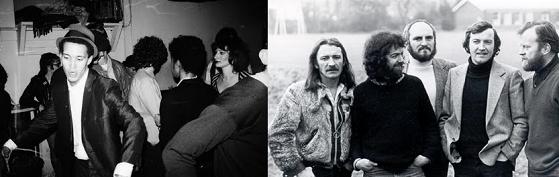
Among the latest in the IFI Archive screenings, I am very, very excited about The Irish or the Memory of a People. Commissioned by French broadcaster ORFT3 in the early 1970s, this one was filmed at the height of the folk and trad revival in this country. It features performances from the likes of The Dubliners, Tony MacMahon, Willie Clancy and even Planxty. The Planxty footage was recorded at UCD Belfield campus, so bad jumpers and beards can be expected from the student folkies. The documentary features footage from inside Dublin trad and folk haunts like the Pipers Club, but indeed is much broader in scope than just the capital city.
The film will be shown on the 18th April (a Sunday) at 12.15
I’m also really excited by this one, which is getting its International Premiere in Dublin. I’m sure it will appeal to our own jaycarax and other fans of subcultures like it. From the time I heard ESG and Talking Heads in the trailer to when I read that Debbie Harry of Blondie fame is narrating the documentary, I’ve been on a google quest over this one.
“In the late 1970s New York City was teetering on the edge of total chaos. A failed economy, crime and en masse housing corruption gave way to a city in crisis. Yet, as is often the case, out of the economic and social strife that held the city hostage, a family of homegrown cultures that would forever change the world began to emerge and thrive”
This one will be shown on Friday the 16th April, with a 18.45 start. The producer, Michael Holman, will be on hand for a Q&A session afterwards.
Two very different documentaries.
Two very different cultures.
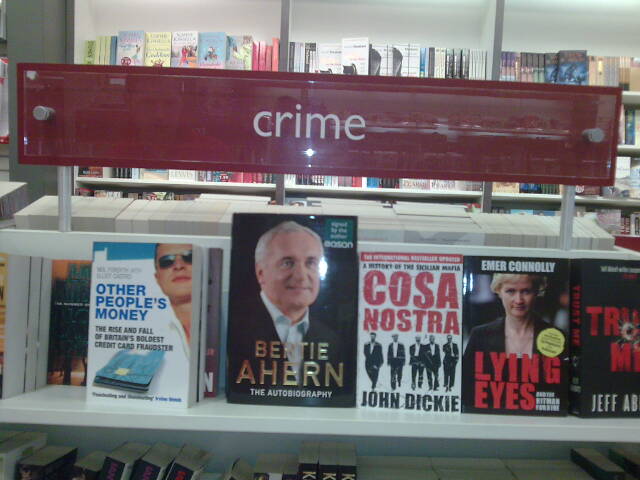
My thanks to my friend Emma for the snap, this is why we have camera phones.
Notice the book to the left? You couldn’t make it up. Snapped in Liffey Valley Shopping Centre, West Dublin.
“Well Bertie pronouncing himself as a socialist wasn’t a surprise to me because funny enough, I believe Bertie Ahern is one of the few socialists in Dáil Eireann, and would have said that many many years ago”
-Charlie McCreevy
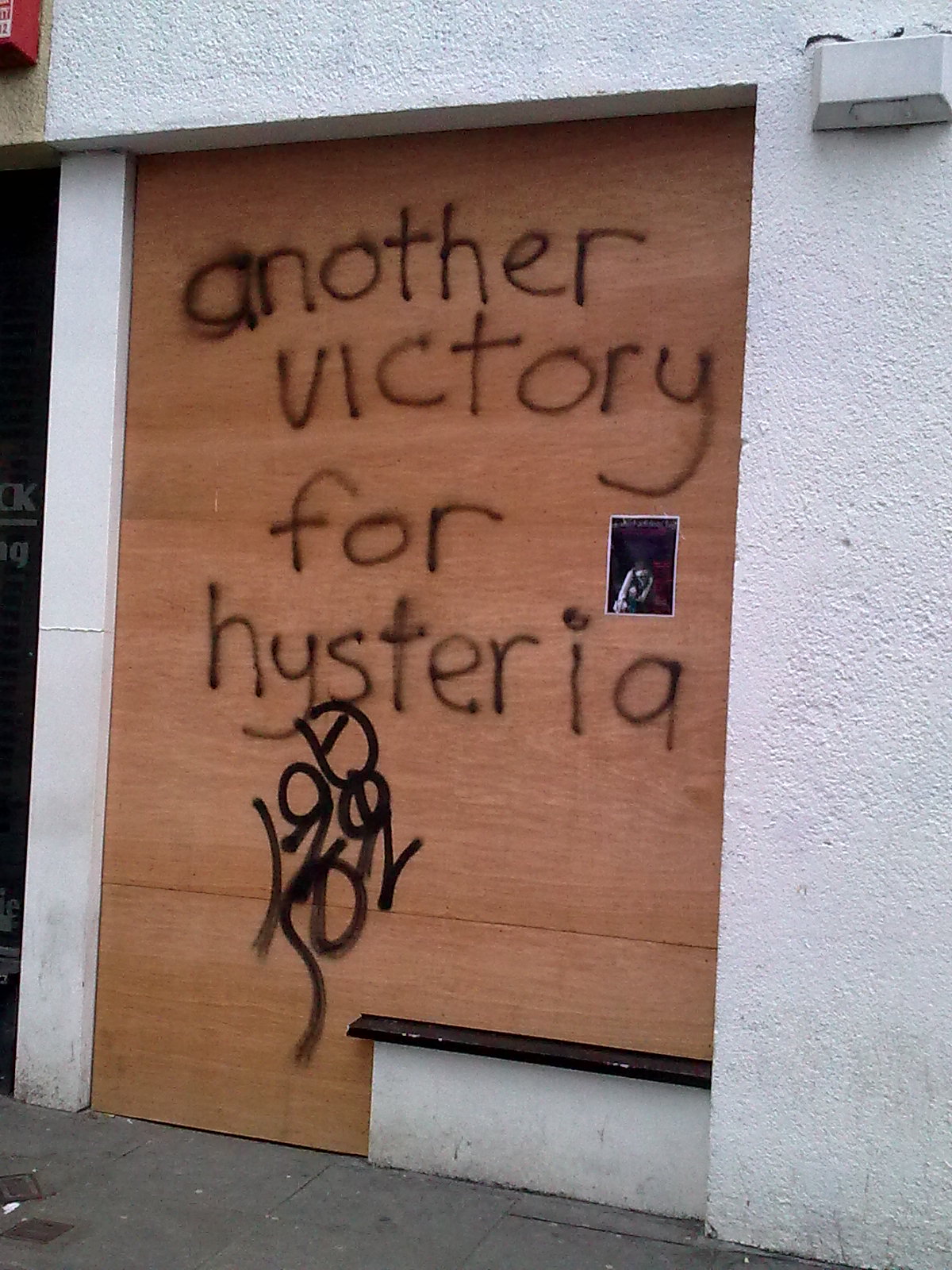
The simply named 'The Head Shop' on Fownes St., Temple Bar has at its windows put through. The owners left this message. Picture taken by JayCarx, 8/4/10
As Dfallon said earlier today, why are people attacking head shops but not banks?
Never Again! Rally in memory of Toyosi, this Saturday
Stemming from a post on the Bohs forum, some of us have decided to form a League of Ireland block on the Toyosi demo this Saturday. We plan on meeting at the front doors of the Ambassador at 1:45 then marching up together. Wear colours and bring banners if thats your thing- This is about uniting against a racism that is alive and well in this country and is just brandishing its ugly head now… It has indeed invaded our League, as documented in a good article by Sporting Fingal’s Eamonn Zayed.
Now is as good a time as ever to unite on the issue. Racism in any form should not be tolerated at League of Ireland games, or anywhere.
Meet at the front of The Ambassador, this Saturday at 1:45… See you there!
(Little has been written on the Dublin Punk & New Wave scene of the late 1970s and early 1980s, next to nothing on the Rockabilly revival scene and even less on the Mod Revival/Northern Soul scene of the 1980s. This is a small attempt to ratify this. I’ve chosen to focus on the Bubbles Mod Night as there is a reunion this Saturday at the Grand Central Hotel. Thanks to Paul Davis, Joe Moran and Karl Carey for talking to me and also Anthony Healy, Morgan Nolan and Anne Doyle for the photos.)
Bubbles was the most important and influential mod revival night in Dublin’s history. Located in what is now the basement of the Temple Bar Hotel in Adair Lane, the night ran from 1981 to 1987 – the golden years of the mod revival scene in Dublin.
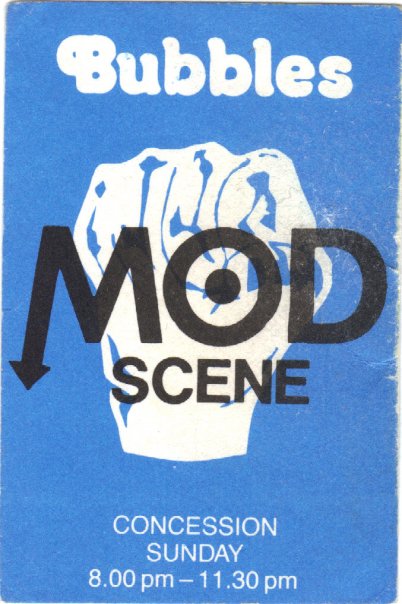
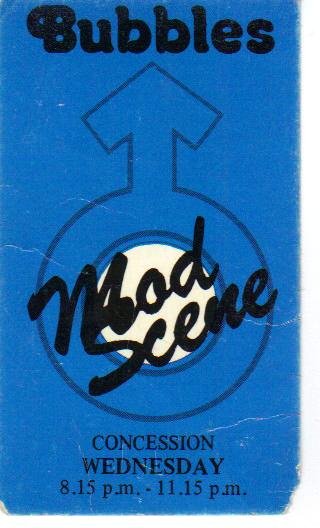
Starting as a weekly event (Wednesdays from 8pm till 11.15pm), it became twice a week (Wednesday and Sunday nights) to accommodate the growing subculture. The 11.15pm curfew was to facilitate punters getting the last bus.
Admission price was £1.50 (or a pound if you were a member). The cloakroom was 20p and, if you could afford it, a coke was 50p. Alcohol was not on sale. This was, uniquely, an all ages event. However, as Paul Davis, who is organising this weekend’s reunion, remembers, this didn’t stop a “few enterprising lads” selling a cans of beer at a couple of all-nighters. There was also one individual who did a “lucrative trade” in pills.
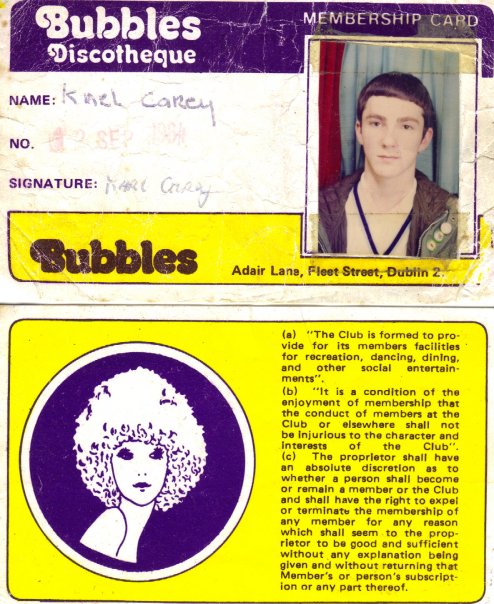
Karl Carey’s ‘Bubbles Discotheque’ Membership Card
At the start, the music policy was pure 1960s mod and soul with a dashing of ’79 revival. Original Trojan/Studio One ska also made an occasional appearance. As time went on, Northern Soul became a staple part of the Bubbles diet.
Bubbles ‘Mod Scene’ Concession
A funny anecdote relates to a number of TV theme songs that were played every week at Bubbles. The theme from Joe 90 and Hawaii 5-0 were long-established tunes that were attached to the Northern Soul scene (for what particular reason I’m not quite sure). The third song that was played every week was the Match of the Day melody. As Paul Davis explains; “this was never regarded by anyone as northern soul, mod or anything like that, it was Noel’s (the DJ) way of saying, that’s your lot, it’s over till next week.” Nevertheless you still had ‘newbie’s’, who were on their first visit to Bubbles, thinking that the Match of the Day tune was also a Northern Soul cult classic and they’d get up and dance to it. The regulars saw it as a great (and often humorous) way to distinguish the posers from the genuine fans on their first visit.
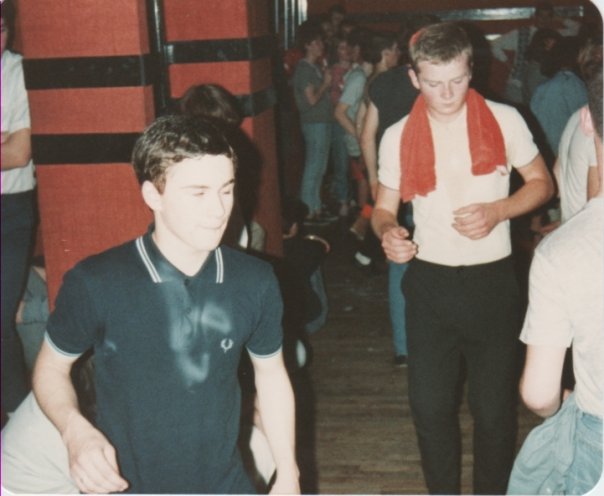
Mods in Bubbles.
Joe Moran recalls his first time in Bubbles:
I think it was the summer of 1984 when a friend of mine gave me a Motown LP. I had just turned Mod and for me I just couldn’t fit the style with the post 79 new wave and angry Pop and was searching around for musical satisfaction … with an older guy who had been a mod from the seventies when no-one else was and he had a huge collection of mainly white RnB British stuff and he had me listening to that. He pointed out when I told him about the Motown Lp that the original Mods were big lovers of RnB and Motown in particular so I was very firmly on the right track.
So my summer exams finished and I had told my folks that I was going to this Disco (Bubbles) in town and that it finished at 11.30 etc. etc. you know how it was when you’re young. And after some misgivings on their part they gave their blessing once I agreed to be on the last bus home ( I never got on that bus but walked home with my companions talking nine to the dozen and skipping along like a three-year old, gesticulating and investing a teenagers perceived importance onto all the things I had seen that night and they were smiling at my mad capering antics)
Anyways I organise with my cousin Karen and her friend to come along with me as all the Mods from East Wall I knew were non-committal (their mod life was on the wane) but as I knew a few Mods from school who’d be there I knew I wouldn’t be on my own. I remember the clothes I wore that night, Black and white golf jacket, Polka dot shirt, grey sta-press and bowling shoes. I looked the business (or so I thought)…
So with trepidation we head into town and down the lane and up to the doors where we are greeted by some bouncers all dressed up and me thinking “they are either going to a ball or serving at one with their evening suits and dickey bows on”
“First time tonight?” Says the small bouncer
“Eh, yeah, can I go in?” says I nervously trying to swallow with a dry mouth
“Okay, you need to get a membership, you got photos, give them to the girl downstairs and she’ll sort you out”
“yeah I got them, okay”
“And here….”
“Yeah?”
“Any fucking messing and you’re barred”
“okay no problem…no messing”
Down the stairs and pay in and then through the arch and I’m there. There’s some track playing I don’t know, some band belting out the power chords. I see Mods everywhere as I stand against the wall, getting sized up by the regulars who are kitted out in some sensational (to my eyes anyway) styles. Guys in suits smoking and chatting up fashionable girls with big hair, heads thrown back at some witty repartee and I feel like a hick in the big smoke for the first time, aware of his quaint fashions and demeanour and I try to blend into the scenery whilst attempting to look cool. The girls have fucked off to the jacks leaving me on me Sweeney but I spot a Mod from my School, Peter Ragazolli, and he waves and beckons me over and introduces me to some of his crew and before I know it there’s a host of us back slapping and sizing each other up – its blur of names and interestingly for those who went to bubbles and probably has some importance that seemed so important in those days all this takes place over by the deejay box on the dance floor (one of the very few times I ventured past the pillars) I forget the names and faces now but for a time most of those people were a big part of my life.
And then suddenly the mood changes, the deejay starts playing a slow set – To Sir, with Love is playing and there is a slow enough take up from the punters to start the lurching. The crew moves up to the bar for a smoke and a talk and I get the usual questions from the guys I don’t know “ where you from” “Do you know so and so” how long you been into Mod” “what music you into” and it’s all easy and relaxed and my musical taste are getting nods of approval from one or two and soon we are parrying records and tunes back and forth – as I scan the bar I see that not everyone is wearing tailored clobber and I don’t feel so bad but make a mental note to sharpen up next time I come out.
I note a crew of Faces and realise that I recognise one of them and he wanders over and chats to me for a while and I’m introduced as a “friend of ours” its like the mafia – I’m in. I’m treading carefully around subjects and trying to fit in – laughing at the right places most of the time though in fairness most of the adventures and personalities in the stories are unknown to me
The slow set is fading out and the crowd start to walk back down the tunnel past the jacks (some months later I was to realise that once you started going regularly you got to know the deejays set inside out so rarely did he play a new tune) and then I feel my heart start to throb as a bass-line attacks me from the speakers. A tambourine kicks in and then some falsetto harmonising rounds out the sound “Before, I go forever, be sure of what you say” and then it sounds like the place is collapsing and there are people leaping over each other to get to the dance floor and the place goes mental. I’m looking at Jimmy Mulvaney (I found out his name later) doing what can only be described as the most spectacular dancing I had seen up to that point in my life. He looks almost like a mod with his neat hair, Fred and bowling shoes but his trousers are a little too wide and they flap as he kicks his leg high in the air and pirouettes and stops dead on the beat and then he’s off again doing some more footwork.
I’m stunned – I look around and Ragger and the guys are laughing and joking as if there’s nothing happening – I’m in awe I had never had a song grip me like that with its raw power, its beat and pure exuberance
“Ragger – what the fuck is that song?”
“Franie Valli – The Night”
“Where do I get one?”
“Ah ask the soul boys when they are finished dancing – they’ll get you one, probably cost you about 2 or 3 quid”
The floor is jammed with bodies, slim tall mods, cigarettes in their hands doing a variation of the block, bobbed black-haired girls doing this dainty stepping dance and the soul boys moving around the floor like manic spinning tops
The song finishes and the next tune on the decks is as fast and as hard-hitting as the previous . Another Motown sound though more Motown-ish than the previous one and as different to my Motown Gold LP than if they’d been made on two different planets. ‘(There’s a) Ghost in My House’ has the same intensive beat and the dancers are getting up into a lather, even the contoured Mods are starting to show the heat in this humid cellar club and the girls are disappearing to the jacks to powder their noses (today they just head to the jacks to stuff powder up their noses but different times eh?).
The deejay keeps the tempo going and its obvious that the crowd know all these songs and as people leave the Dance floor someone will take up the vacant real estate like some telepathic signal to “ keep the space warm for me while I go grab a fag”.
And then after some more glorious vocal tunes and instrumentals the tempo changes and I recognise Secret Affair’s ‘Time For Action’ and as one the soulies move off and the Mods reclaim the dance floor.
There were other songs that I heard over that first year/two years that turned my head – Eddie Holman’s I Surrender is an all time favourite of mine, Epitome Of Soul – ‘You Don’t Love Me’, The Metros – ‘Since I Found My Baby’ and a whole host of other top-notch sounds but I can arguably say that ‘The Night’ and ‘(There’s a) Ghost in My House’ were the two songs that got me into Northern Soul.
Bubbles closed in early 1987 after the owners didn’t renew the lease on the venue. It moved to a new premise in Abraxis on Sackville Lane beside Cleary’s but many saw this as the beginning of the end for the Mod scene in Dublin. Davis remembers that the venue didn’t suit us; “it was a bit too trendy and bright”. By 1987, the Mod scene was dying a death. In the UK, the scene “had already gone way underground” while in Dublin it was on its last knees.
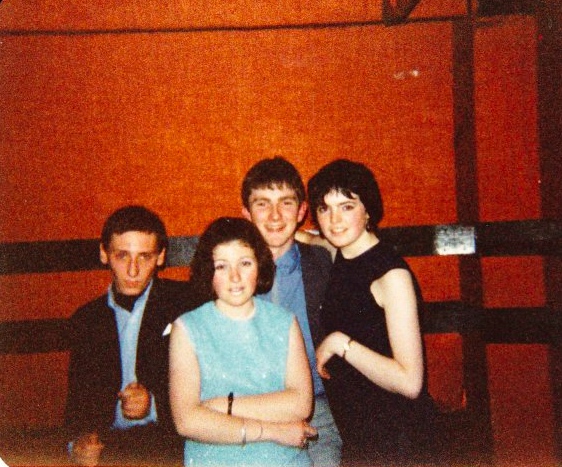
Ben, Nicky. Karl and Linda in Bubbles
Karl Carey (42) looks back on Bubbles fondly:
“My first time at Bubbles was late September 1984. I was 16. Suits, Parkas, Loafers, Fred Perry’s, Scooters and oh yeah, girls! My mod music was based around the 79 sounds, Bubbles introduced me to new mod sounds – Northern Soul (yeah I still have to explain what it is to people). As I get older I prefer to keep it my treasured secret.
Every Wednesday and then also every Sunday night I couldn’t miss Bubbles. To be honest, some nights were just ok but when they were good WOW! The All – nighters were ours and ours alone, don’t think any other scene had or has anything like it. Met the most wonderful people at Bubbles and even got the most gorgeous girlfriend and then wife because of Bubbles.
25 years, 2 sons and 6 scooters later I find myself getting more and more back into the scene … Some things have changed and I realise you can’t hold on to everything you might want, but your memories will last forever…………….”
After Bubbles, Joe Moran, Eamonn Flavin and Mark Byrne set up the This Is It Soul Club in the basement of The Plough on Abbey Street which then moved on to The Fox & Pheasant on Great Strand Street, close to Capel Street Bridge. This shared alternate Fridays with the Night Owl Soul Club, which Paul Davis ran with Stuart Chaney and Mick Duffy. Both clubs ran for less than a year. The early 1990s saw most of the original Dublin Mods pack up and move to London.
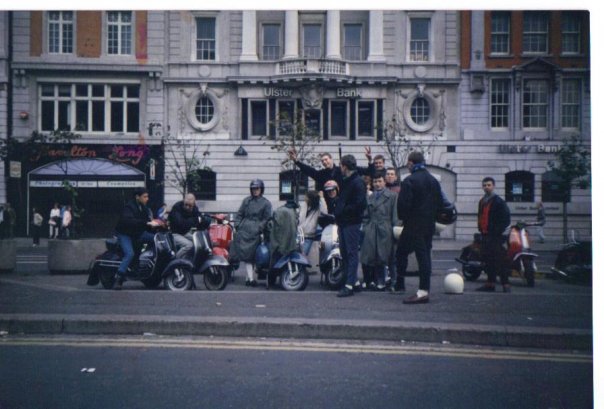
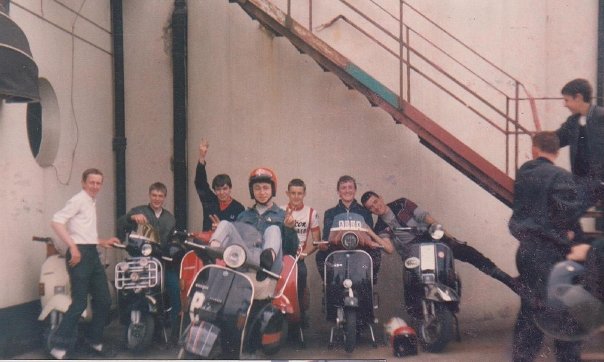
Mods in Dublin. Location unknown.
There wasn’t another regular club in Dublin until the Dublin Soul Club was set up in 1995 by Paul Davis, John Dunne and Ray O’Reilly. Their night ran for six successful years in The Plough.
The Sleepless Nights Soul Club took up the torch in 2002 and the scene has been burning bright since. They are celebrating their 8th anniversary with a weekend of Northern and Motown soul on April 30 and May 1 in McGrattan’s.
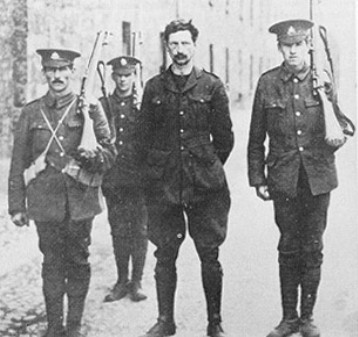
Sherwood Foresters photographed with captured rebel leader, Eamon de Valera.
A nice piece this, an eyewitness account from Captain A.A Dickson of the Sherwood Foresters. It, and other accounts like it, are available in ‘True World War I Stories’ published by Robinson Press. While many of the tales deal with trench life, for some the first combat they would see would be street fighting in Dublin.
Then, Easter 1916, at 2 a.m came another entrainment order.
Half the battalion didn’t believe it: many a one had no razor in his kit when the next chance to shave came. For the trains that we really did entrain into sped off not south-westward for the Plain of France, but away and away up the “North Western”, and it wasn’t until they disgorged us on Liverpool Docks that rumours could be swopped about “Sinn Fein gentry- broken bottles and shillelaghs.”
It was a baptism of fire alright, with flintlocks, shot-guns, and elephant rifles, as well as more orthodox weapons. And 100 casualties in two days’ street fighting was a horrible loss to one battalion: the more so since my one friend from the ranks, commissioned same day, was shot through the head leading a rush on a fortified corner house, first day on active service, and it was my job to write and tell his mother, who thought him still safe in England.”
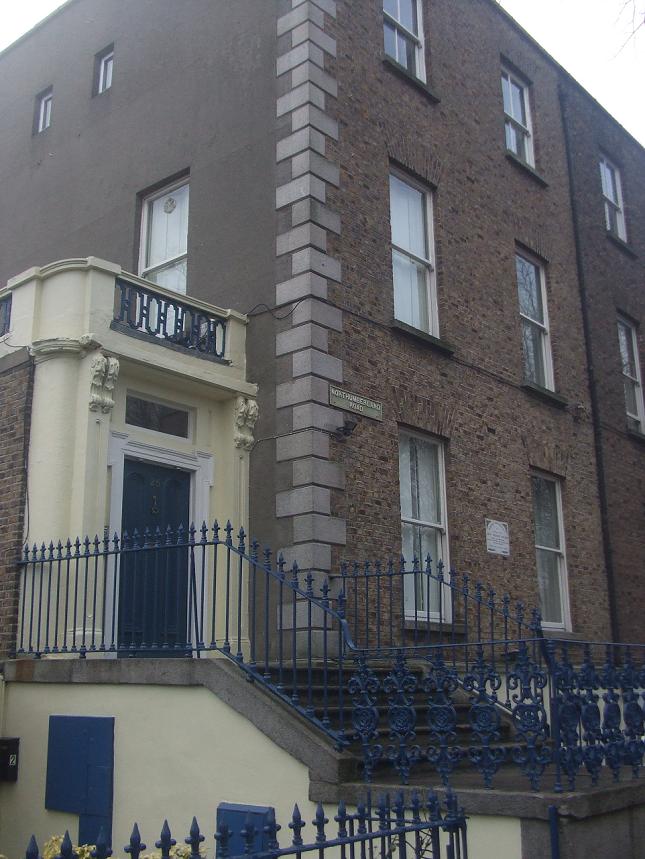
That “fortified corner house”, of course, is 25 Northumberland Road.
25 Northumberland Road Today. I took a series of photographs of the battle area recently.
I have dealt briefly with events at Mount Street Bridge in a previous piece published before the launch of the latest work from Paul O’ Brien, Uncommon Valour. In short, a small grouping of well placed Volunteers, situated in a small number of buildings strategically, managed to inflict almost half of the overall British Army casualties of the insurrection. Ultimately, Michael Malone and James Grace would hold 25 Northumberland Road alone after Malone dismissed younger Volunteers for their own safety. This ‘fortified corner house’, and Clanwilliam House on the far side of Mount Street Bridge, provided serious resistance to Sherwood Foresters wishing to advance onwards in the direction of Trinity College Dublin.
General Sir John Maxwell himself noted that:
“Four officers were killed and fourteen wounded and of the other ranks, 216 were killed and wounded”
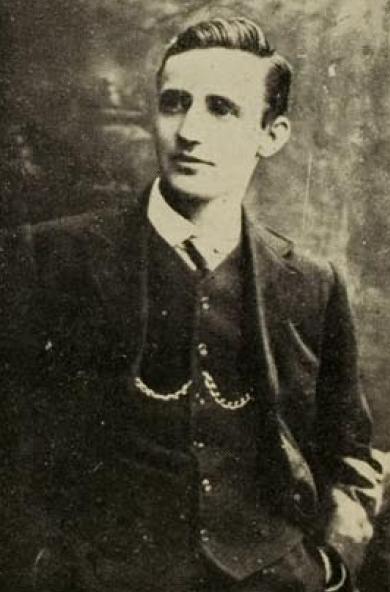
Lieutenant Michael Malone, who died at 25 Northumberland Road. His fellow Volunteer James Grace survived.
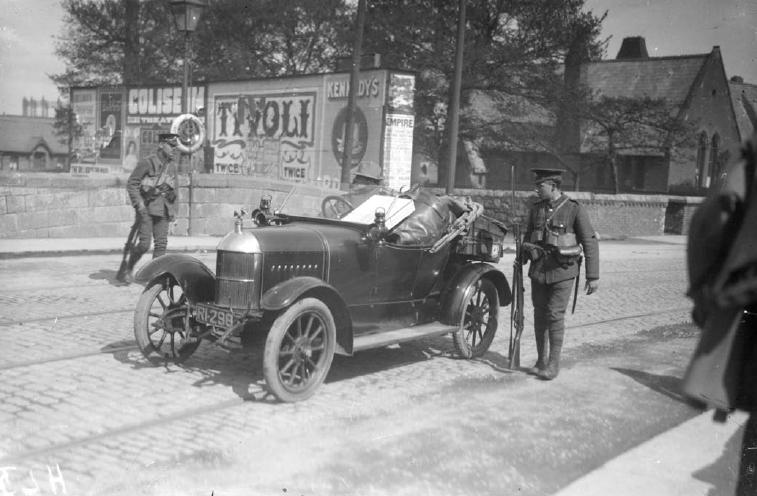
A checkpoint is established on Mount Street Bridge after the bloody battle
Perhaps nothing humanises the conflict more than when A.A Dickson goes on to state
“A hateful task: so was another duty of one misty dawn soon after, when four young officers had to command four firing parties, and four rebel leaders stood in turn blind-fold against a wall”
On the 94th Anniversary, perhaps it’s time to stop and think of the experiences of the Sherwood Foresters and Regiments like them over the course of the rebellion. A.A Dickson finally made it to France, in January 1917. Wounded in April 1918 during a German attack, he was demobilised from hospital in January 1919.
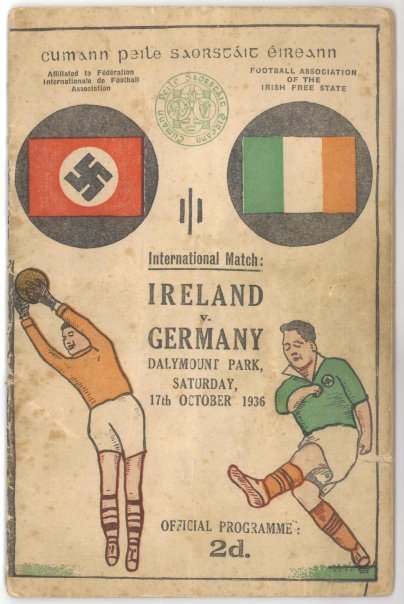
Firstly, I’ve always supported the claim by some (mainly Bohemian F.C) football supporters that Dalymount Park merits national monument status. It’s well known the national team played there of course, but beyond that- you could get a fantastic book out of this place (and I hope someone does)
Even Nazi Germany have graced the pitch. Image taken from the Facebook Group 'Dalymount Park is a National Monument'
Pele and Zidane have graced the pitch, and closer to home some English legends like Bobby Charlton and Bobby Moore. 22,000 people went along to Dalymount Park in 1959 to watch Saint Patrick’s Athletic take on Waterford in a Cup Final. That was typical enough. Some matches were a tad odder, like a bizarre charity match in 1952 (“stage artists carrying huge mallets and wearing massive fur coats”, and “Big man stretches arm, holds off midget who swings wildly at nothing” for example) between a press team and a stage team. Why even limit a discussion of Dalymount to football? Thin Lizzy, Boomtown Rats, Bob Marley,Motorhead- all have taken to the stage here.
Why then did it feel like a trip to the DDR on Tuesday night?
Granted, it wasn’t the Connaught Stand (shudders) and the Des Kelly stand we were put in was quite nice, had a roof and was generally fine, but the turnstiles on the way in and the Gulag-like jacks are tragic at best. Imagine bringing your kids to their first League of Ireland game, at a stadium with such diverse and wonderful history, and being put in the Connaught Stand or coming through those turnstiles.
The atmosphere under that roof was electric, Mark Quigley was given a few healthy renditions of ‘White Joey Ndo, you’re just a white Joey Ndo….’ and he didn’t seem to mind the abuse as he stretched beside the away section. I don’t want to guess the away crowd, but it was very respectable and in fine voice and spirits. In truth I thought the Bohs lot were unusually quiet,the roar out of the Jodi can be thunderous on a good night, last night something was amiss over there. It happens at any ground on occasion, maybe it was a Tuesday night thing. I’ve often loved the displays that have come out of that section, like Zapata on his horse on the night of that Fahey goal.
When we got our goal (as you’ll see below in the YouTube video you’re all going to watch) our subs were STRAIGHT over to celebrate with the lads. At the end of the match the players and fans connected on a level I haven’t seen in a long time, and the chanting continued for a few minutes after the final whistle. Gold. Great to see a return to that kind of relationship.
Dalymount Park remains one of my favourite football stadiums to visit, if only for the history of it and the great pubs that you find on the street outside. In fact, I wouldn’t object to a Phibsboro pubcrawl for Come Here To Me in the nearish future. Still, Dalymount Park also remains in dire need of some sort of urgent fix-up. It is a disservice to the history of soccer in Ireland, and not just the resident Bohemian F.C, that the place is in the state it is.
All in all, for Saint Patrick’s Athletic though, a good performance on and off the pitch.
This is worth a look, on the history of Dalymount Park.
Jaycarax, who would know that kind of thing, insists The Clash never played there. They do tell you not to use Wikipedia, sometimes they’re right.
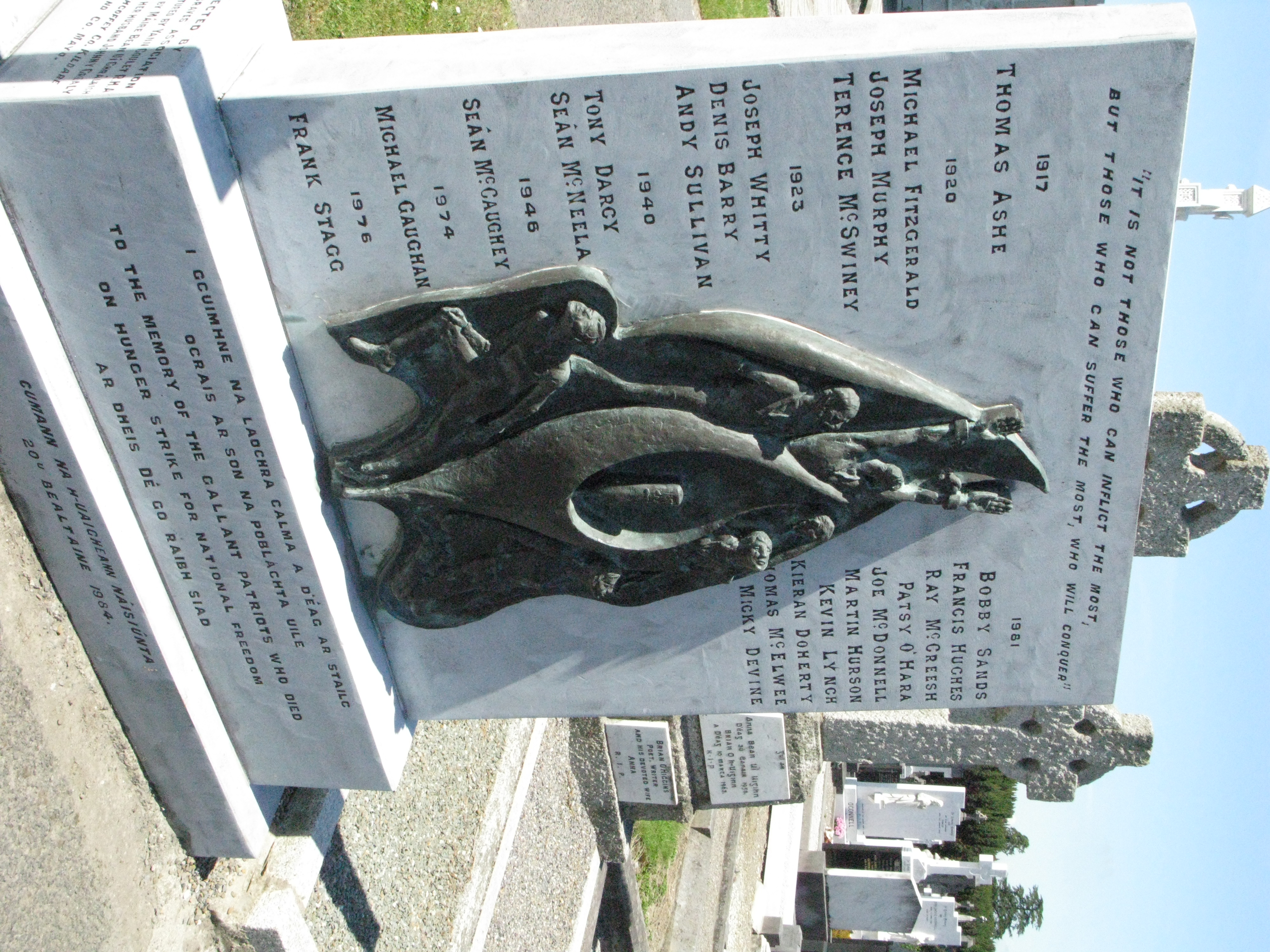
I’ve been up around Glasnevin before in a vain attempt to find Brendan Behan’s grave; I don’t know what possessed me, it was a beautiful day, I’d just finished reading The Hostage and it seemed like a good idea at the time. Of course, I failed in the attempt, but promised myself I’d come back some day and have another look. So, given the oppurtunity this weekend, the three CHTM heads, accompanied by LukeF (of LukeF Comics,) took a walk to Irelands largest necropolis where we hooked up with the official tour- led by Shane MacThomáis, son of the great Dublin historian Eamonn MacThomáis, a man who I personally have a lot of time for, and I’m sure the other two lads here are the same. Some of his documentaries can be found here.
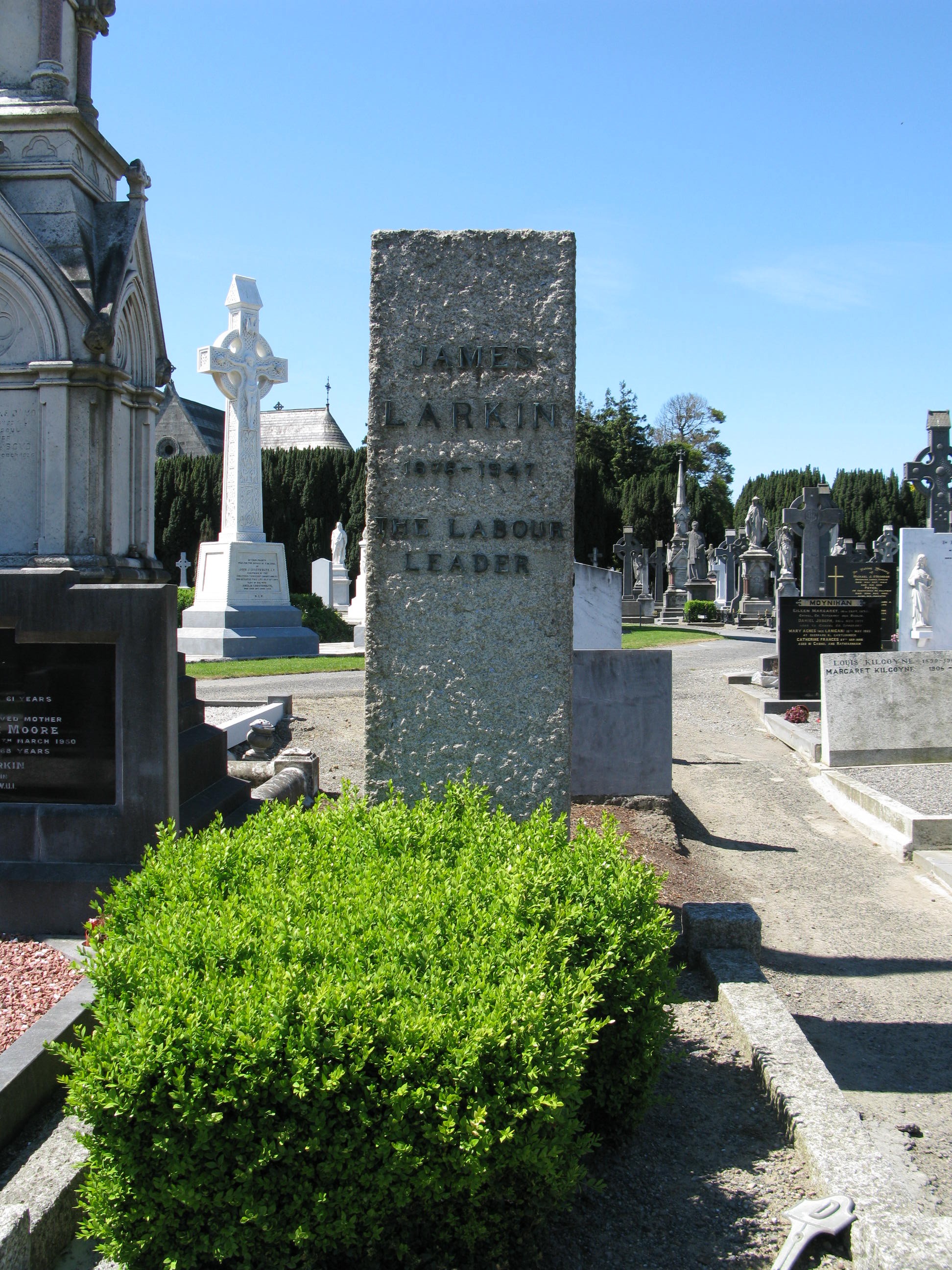
A modest grave for a big character; Jim Larkin
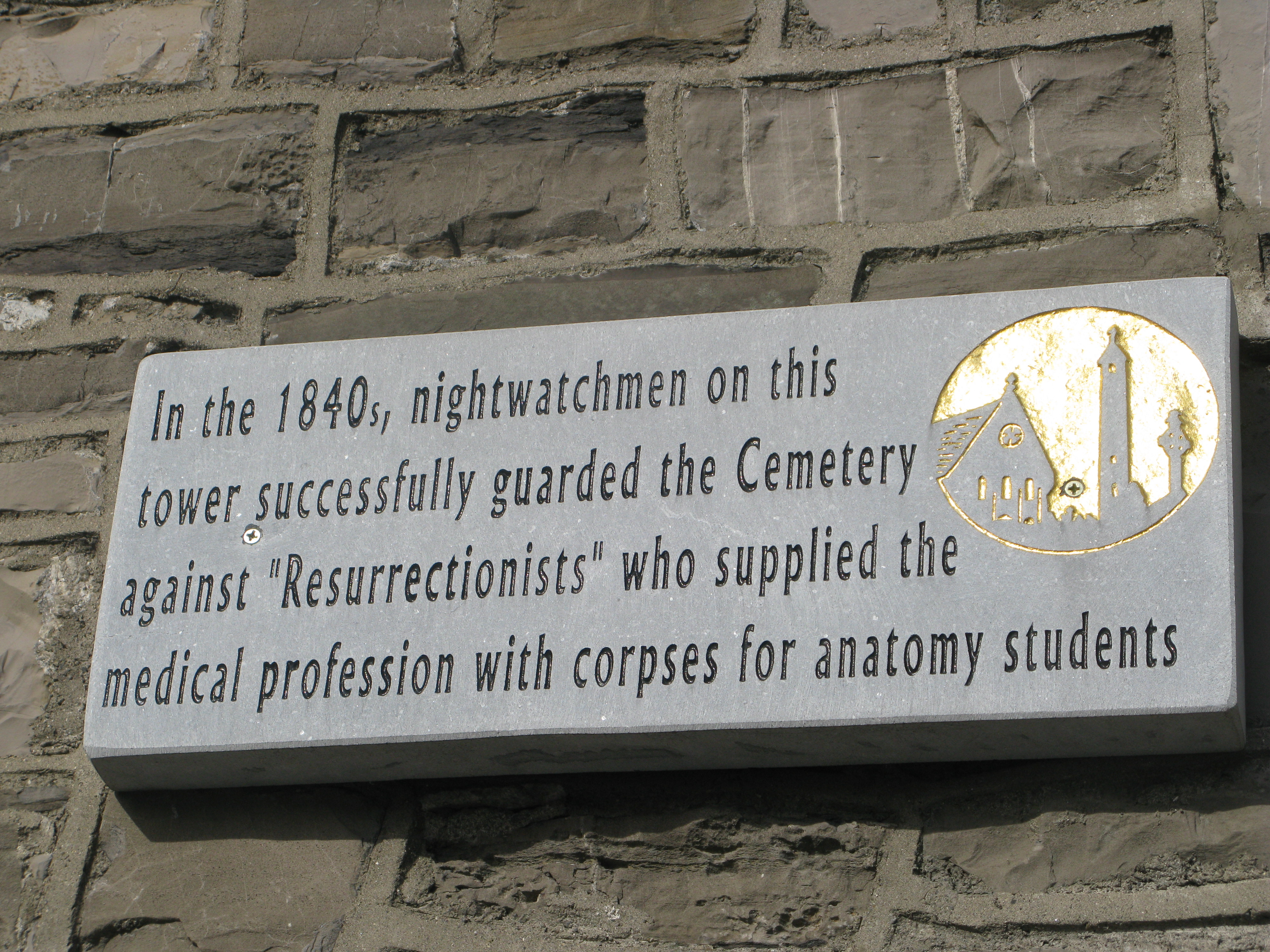
The cemetary is home to the graves of approximately 1.2 million people; A far cry from the nine acres it started out with in 1832,the area now stands at over 120 acres on one side of the road and a further 40 acres on the other, where the body of Luke Kelly now rests. It came into being initially due to reforms pushed through by Daniel O’Connell, whose tomb sits at the entrance to the cemetary. Prior to it’s existence, death was an expensive thing to endure, there being no Catholic burial grounds in Dublin and it costing a small fortune to bury a Catholic in a Protestant one. O’Connells tomb is of course marked by a 170ft tall round tower, which tends to stand out a wee bit! The tomb was the target of a loyalist bomb attack in the seventies, which shook the tomb itself, and blew up the stairs encircling the inside of the tower, closing it to the public. The Cemetary is surrounded on all sides by high stone walls, with towers on each corner. Not there to keep the dead in, they were built to keep grave robbers out. Grave robbing was a lucrative business in the 19th Century, corpses fetching £2, quite a sum in those days. Guards manned the towers from dusk to dawn, armed with muskets and pistols.
Plaque Commemorating the Cemetary Watchmen
JayCarax said it on the way up here and he was right: It isn’t a case of who is buried here, it’s easier to say who isn’t. For within a stones throw of the gate, you have Daniel O’Connell, as mentioned above, Eamonn DeValera, Michael Collins, Michael Malone, Maud Gonne, Jim Larkin, Roger Casement, Cathal Brugha, The O’Raghallaigh and Frank Ryan, amongst any number of important historical figures. The virtual map on the Glasnevin Trust site gives you a better of who is buried, and where, and is definitely worth having a look at.
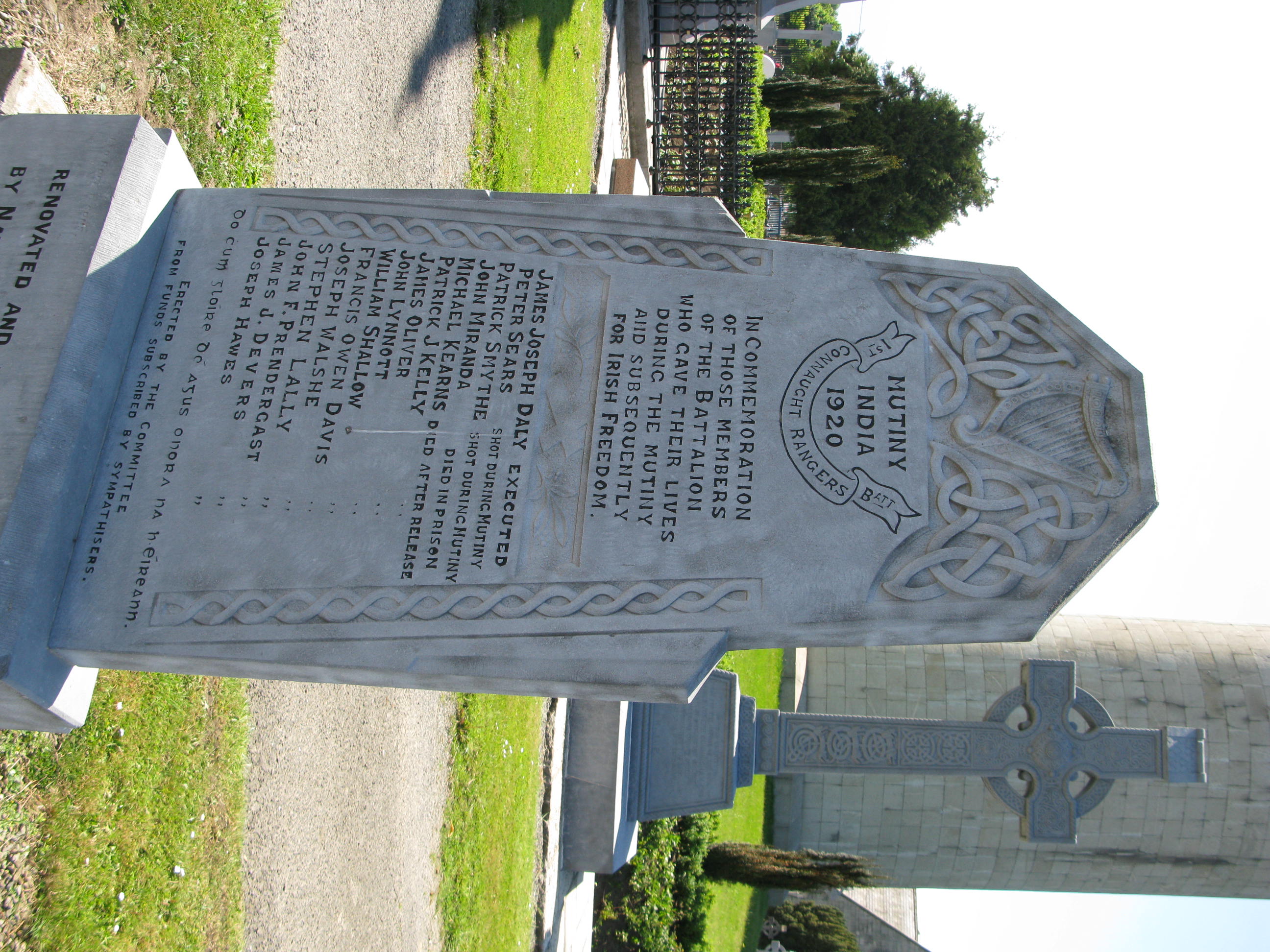
One of the more interesting gravestones; The Indian Mutineers
Whilst amongst the masses of graves friends and comrades lay side by side, mortal enemies are often not within spitting distance of each other either. For while Big Jim Larkin turns to dust beneath the Glasnevin soil, likewise does William Martin Murphy whose palatial tomb is within sight of the modest grave Jim and his family are buried in. While Frank Ryan is buried within sight of the gate, Eoin O’Duffy is also. Glasnevin is, and has always been, a multi-denominational cemetary. Buried and cremated here are Catholic and Protestant, Sikhs and Jews. Rich and poor also, the cemetary is home to the Millenium Plot (what would have formerly been known as a “paupers plot.”) This is looked after by the charity “Alone” who maintain the plot and make sure people buried there are buried with dignity, giving them a full funeral, headstone and flowers. Fair play due there. In one of the older paupers plots, up to 25,000 bodies are buried in a relatively tiny area, not far from Parnell’s grave. Many of the dead were victims of a cholera outbreak in the late 19th century. A couple of years after their burial, fresh outbreaks of Cholera were reported in the Drumcondra / Ballybough area. For not far beneath the soil where their bodies lay is a maze of underground streams, all emtying into the Tolka River- the disease had assimilated into the soil and on into the water, making its way back into circulation. Nasty times.
Above is a stone that caught my attention the first time I visited, and again on our visit on Monday, a memorial to the Indian Mutineers of 1920. Theres is an interesting story. Upon hearing of the uprising in their homeland, hundreds of Irish Soldiers fighting in the British army in India turned their guns on their generals. Though close to 400 men took part, the mutiny was quickly suppressed and eighty-eight of those men were court martialled. Fourteen were sentenced to death and the rest given up to 15 years in jails in Dagshai and Solan. Two died in the mutiny, Pte Sears and Pte Smyth. Thirteen of the men sentenced to die had their sentences commuted to life imprisonment, though one man, James Daly was shot dead by firing squad. He was considered the leader of the mutiny at just 21 years old.
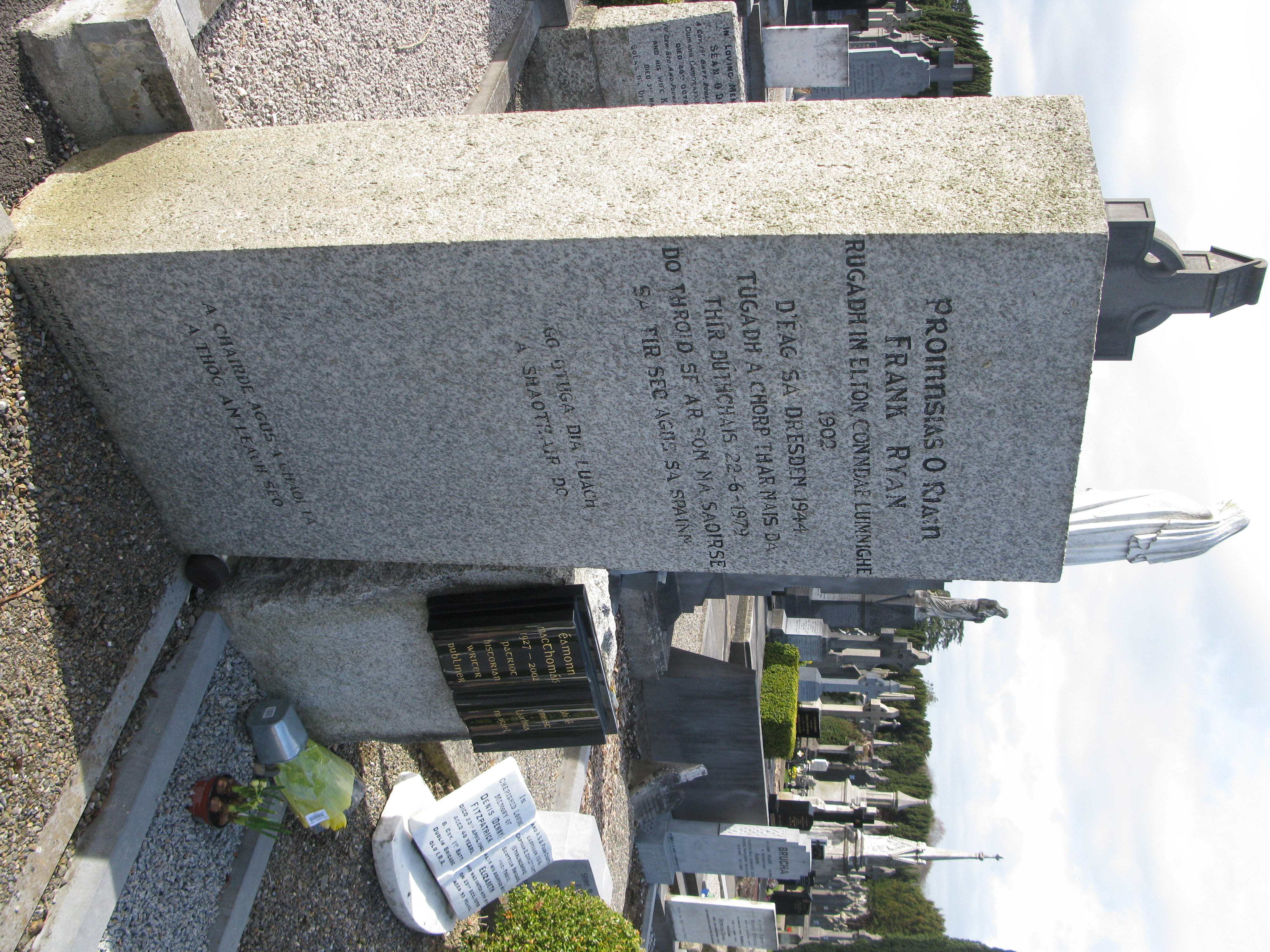
Frank Ryan & next to him, the great Eamonn Mac Thomais
The tour eventually took us to the grave of Brendan Behan in the end, and my search was over. Not far from him lies the burial place of Francis Sheehy- Skeffington, brutally murdered by an Anglo-Irish officer of the 3rd battalion Royal Irish Rifles, Captain J.C. Bowen-Colthurst. Another sad story, one of 1.2 million sad stories you might say. You get the sense when walking around here that each grave has a history attached, each person buried here has had trials and tribulations of their own. And while visitors come here to see the burial sites of the famous and influential, there are others here whose personal struggles surely matched the struggles of those marked on their maps.
The new Glasnevin Visitors Centre opens this Friday. There are daily tours of the cemetary, led by Shane MacThomáis, costing €5. A bargain, tours last approx. 2 hours. Without donations and support, Glasnevin would be forced to close its gates as a national monument. Be sure to visit and support it however you can. Check out http://www.glasnevintrust.ie for more details.
I’ve been irregularly updating my blog ‘Hidden History of UCD’ with pieces related to the radical and social history of the college. Some CHTM! readers might be interested in some of my recent posts:
– In 1962, Anthony Clare wrote an article for the T.C.D. Miscellany about the censorship regime in UCD at that time.
– In 1967, Joseph Matthews wrote an article for Hibernia about Student Politics in UCD at the time (it includes a picture of a very young Vincent Browne, Chairman of Young Fine Gael)
– In the early 1970s, an Oz like radical paper was published in Belfield called Instead.
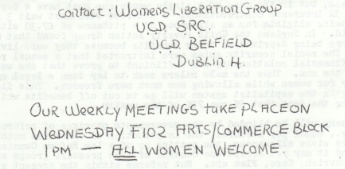
– In the mid 1970s, a Womens Lib. fanzine was published in Belfield called Bread and Roses.
In the late 1980s, Belfield enjoyed a healthy rave scene. I’ve interviewed François Pittion (Ents Officer 1988/89) about the period.
Taken from Bread and Roses (Issue 2, c. 1974) Click to read full issue.












 Click on the book for more.
 Click on the book for more.
 Donal
Donal Ciarán
 Sam
Sam


 Come Here To Me!