Feeds:
Posts
Comments
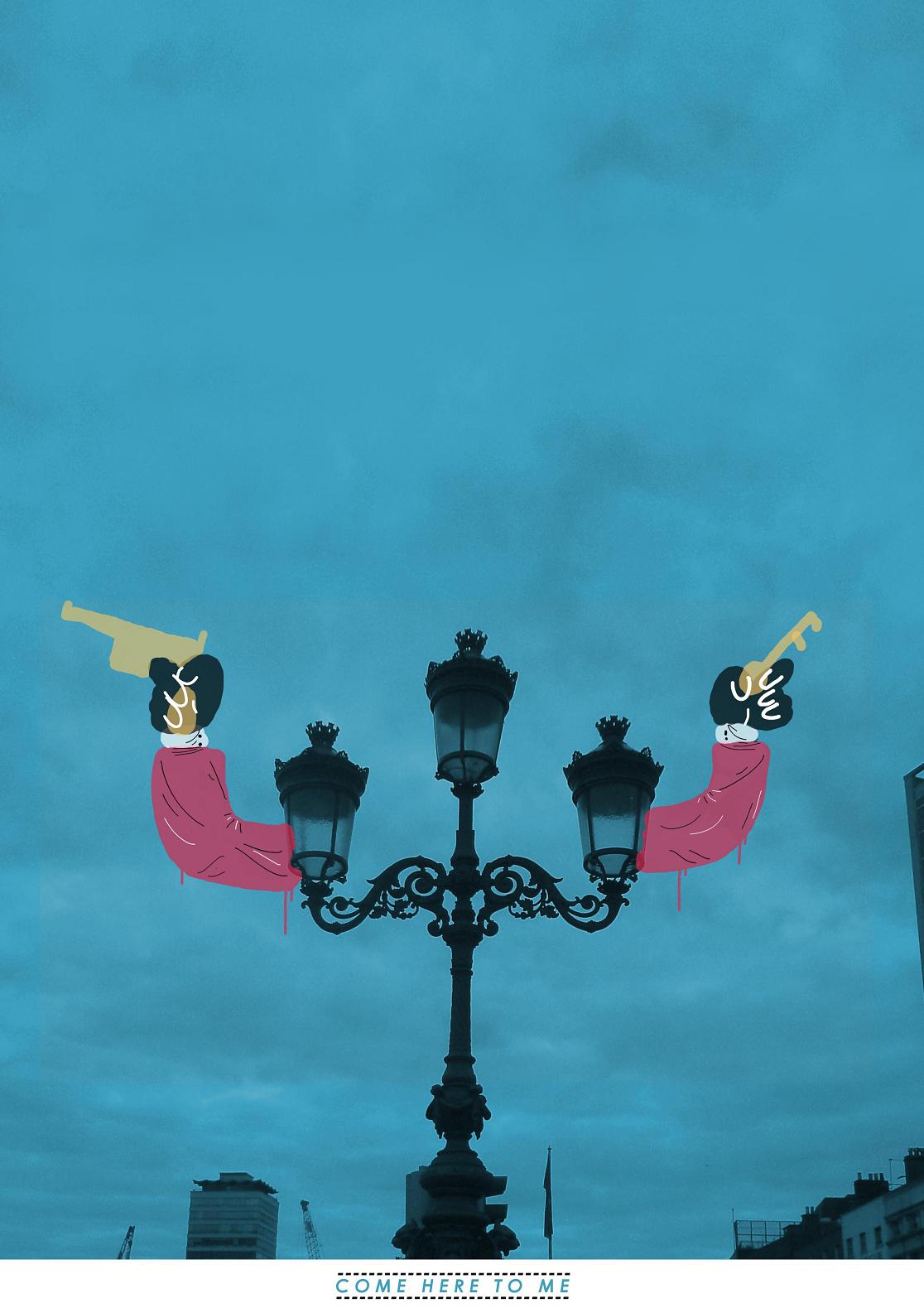
Print by Luke Fallon.

Print by Luke Fallon.

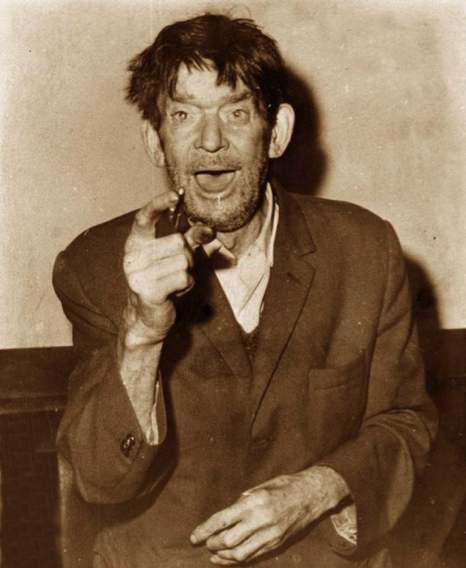
We’re delighted with this beautiful print, which we will be selling on the night of our launch, on Wednesday the twelfth of December. The print is a tribute to Thomas Dudley, better known as Bang Bang, who roamed the streets of Dublin playing mock shoot-outs with a large key he’d use as a gun.

All the profits from the sale of this print will go to a homeless charity in Dublin. It’s a miserably cold time of the year and hopefully we can raise a few quid from these, they’d look beautiful in a frame which is my plan. Our thanks to Luke for this brilliant idea. You can purchase his print of Garda Lugs Branigan from our friends at Rabble over here.

Thomas Dudley.

Thomas Dudley.

Our friends at Storymap have recorded a short little video about Thomas Dudley, which you can view here. “A big child, who lived his life as one long game of cowboys and indians, shooting people with a steel key”

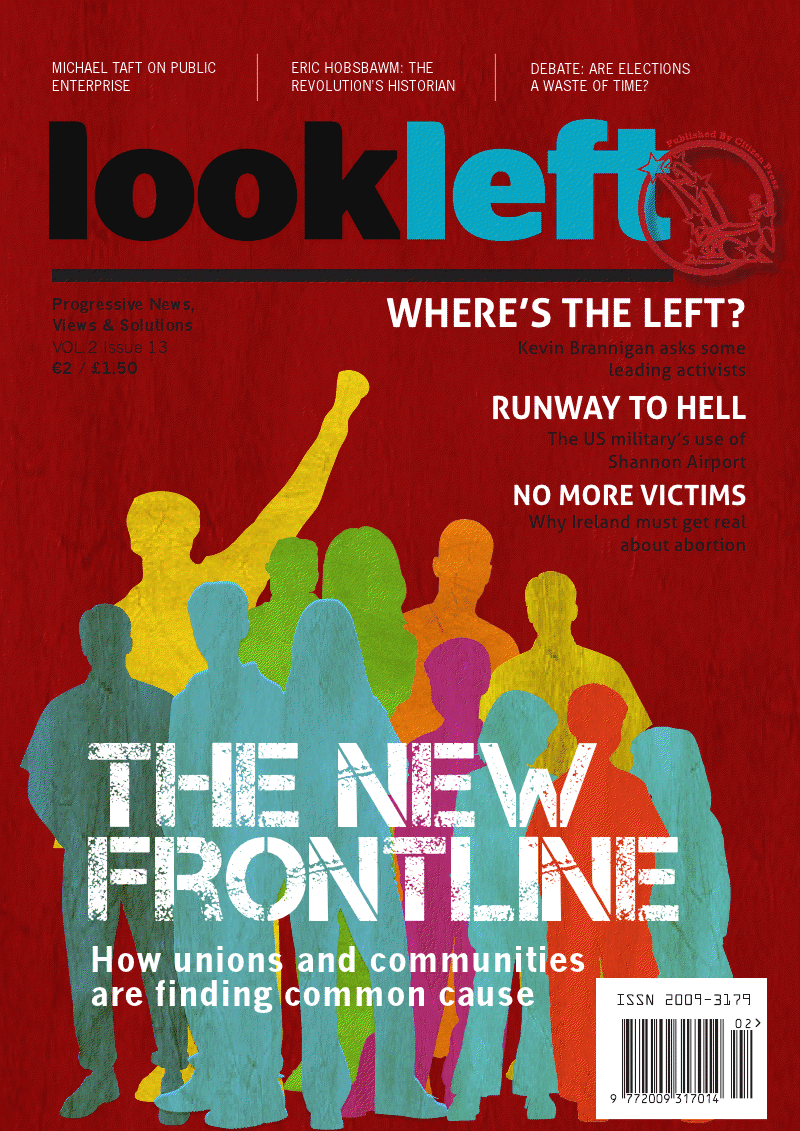
New Lookleft in shops now.

Issue 13 of Lookleft Magazine is in shops now, and it’s another interesting issue. Irvine Welsh throws his weight behind the campaign to name Dublin’s newest bridge in honour of fellow-Hibernian F.C fan James Connolly, while my favourite article in the issue looks at the topic of Dublin Bus and the potential privitisation of that service.

LookLeft-13

From ourselves, I have a report on a recent meeting in Barcelona of historians interested in promoting the idea of a ‘History From Below’ of Europe, through walking tours and indeed websites like this one. An interview with Boots Riley of the brilliant hip-hop act The Coup must be one of the magazines most high-profile interviews to date. There’s plenty in here for the €2 asking price, and it’s available now from all Easons nationwide.

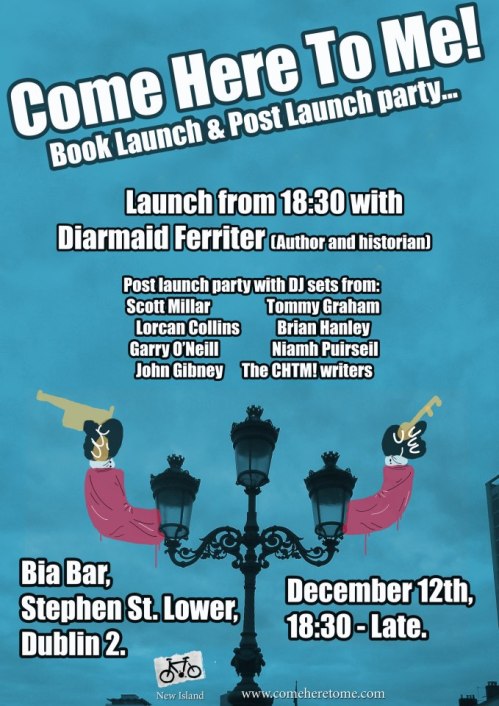
After the official launch of the book by Diarmaid Ferriter, Professor of Modern Irish History at University College Dublin (UCD) – we are going to make “history” ourselves by organising the world’s first known DJ night made up purely of Historians.

CHTM! Book Launch & After Party. Design - Ci.

CHTM! Book Launch & After Party. Design – Ci.

Seven “friends of Come Here To Me!”, all historians who we are told have good taste in music, will step up to the decks and DJ for twenty minutes each. Who will be crowned king in the first annual “Irish Historian DJ of the Year 2012”? We’re taking bets now!

Our illustrious line up:

Lorcan Collins, founder of the 1916 Walking Tour and co-author of The Easter Rising (O’Brien Press, 2000) and author of James Connolly (O’Brien Press, 2012).

John Gibney, author of Sean Heuston (O’Brien Press, 2013) and The Shadow of a Year: The 1641 Rebellion in Irish History and Memory (University of Wisconsin, 2013)

Tommy Graham, founder of the Historical Walking Tours of Dublin and editor of History Ireland magazine.

Brian Hanley, lecturer and author of The IRA, 1926-1936 (Four Courts Press, 2002) and The IRA: a Documentary History 1916-2005 (Gill & Macmillan, 2010) and co-author of The Lost Revolution: The Story of the Official IRA and the Workers’ Party (Penguin, 2009).

Scott Millar, journalist and co-author of The Lost Revolution: The Story of the Official IRA and the Workers’ Party (Penguin, 2009).

Garry O’Neill, editor of Where Were You?: Dublin Youth Culture and Street Style 1950-2000 (Hi-Tone, 2011).

Niamh Pursell, author of The Irish Labour Party, 1922-1973 (UCD Press, 2007) and co-author of We Declare.  Landmark documents in Ireland’s History (Quercus, 2008).

Medical Mission

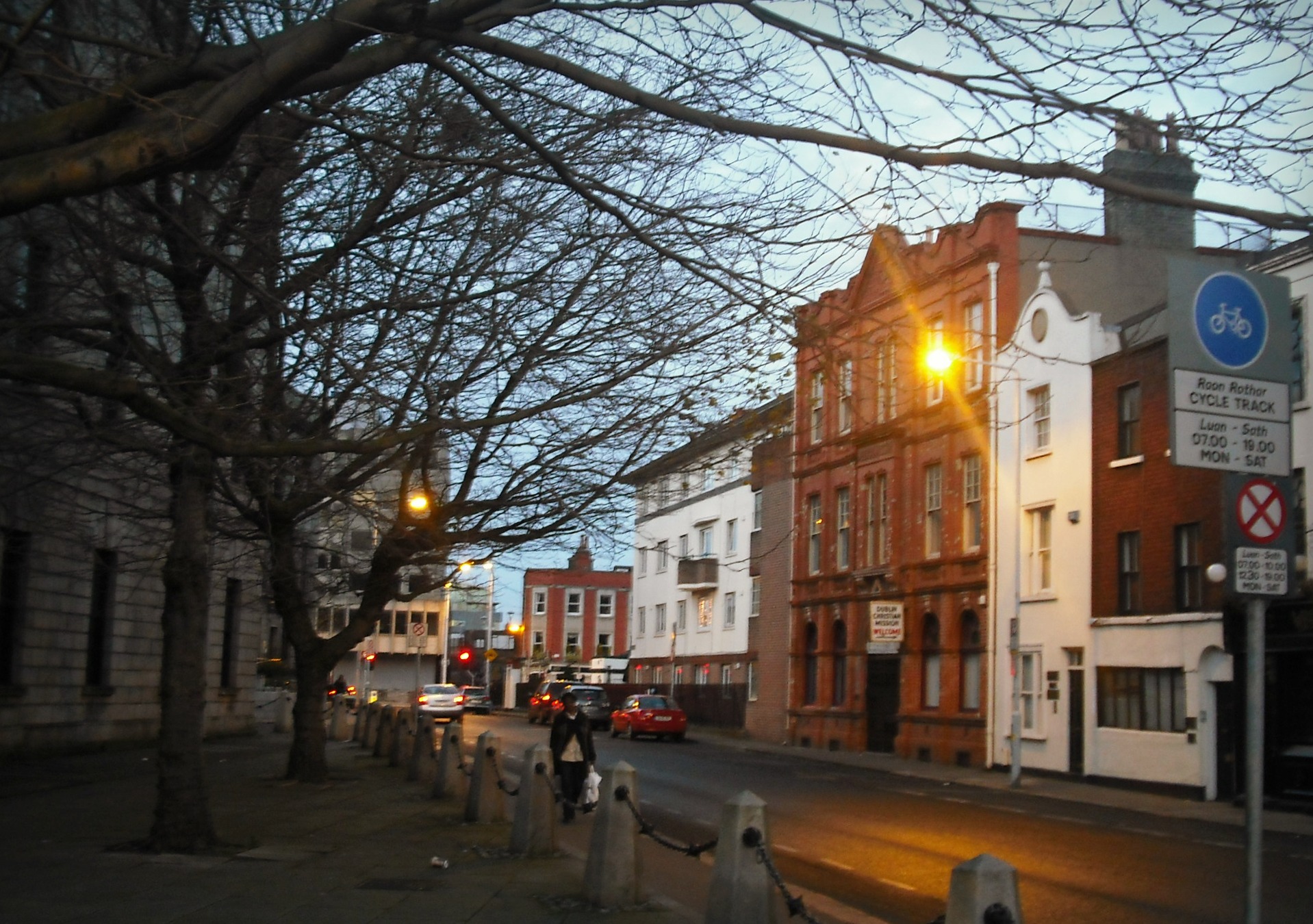
Chancery Place, next to the Four Courts

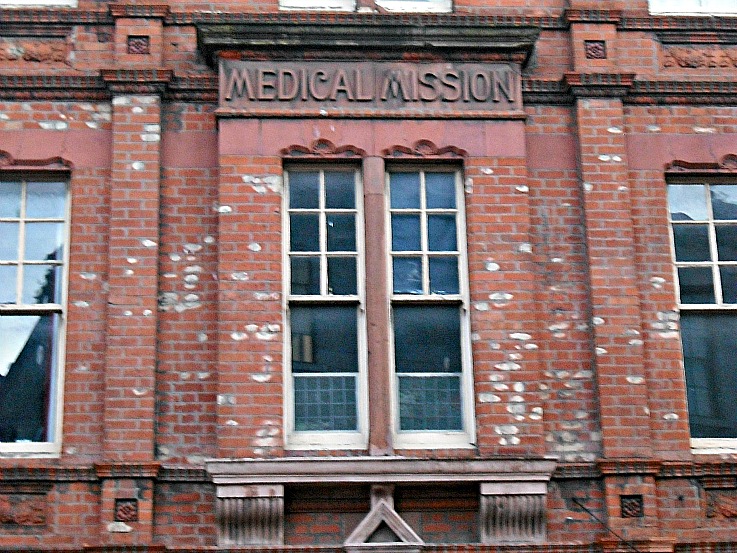
While most Dubliners are familiar with the bullet holes of the Daniel O’Connell monument and other Dublin landmarks, there are other buildings and monuments which show the scars of the Easter Rising. One particularly interesting example is the Medical Mission at Chancery Place, today the Dublin Christian Mission building.

During the rebellion, the Four Courts was occupied by the 1st Battalion of the Dublin Brigade of the Irish Volunteers, led by Edward Daly. Only 150 men, of a 400 strong Battalion, showed up for service at the beginning of the insurrection. On Easter Monday, the men of the Four Courts came into contact with a party of Lancers (cavalry) who were escorting ammunition along the River Liffey.

As Michael McNally has detailed in Easter Rising 1916: Birth of the Irish Republic, upon being fired upon the Lancers dismounted and “broke into the Collier Dispensary and the Medical Mission opposite, and began to fortify their position, bringing the bulk of the arms and ammunition into the building.” Paul O’Brien has written in Crossfire: The Battle of the Four Courts, 1916 that “the Lancers hauled boxes of ammunition through the door, overturned the wagons to form a barricade and the troopers took up firing positions in the windows. Horses were cut loose and the riderless mounts ran wild, the sound of their hooves clattering along the cobbled streets.”

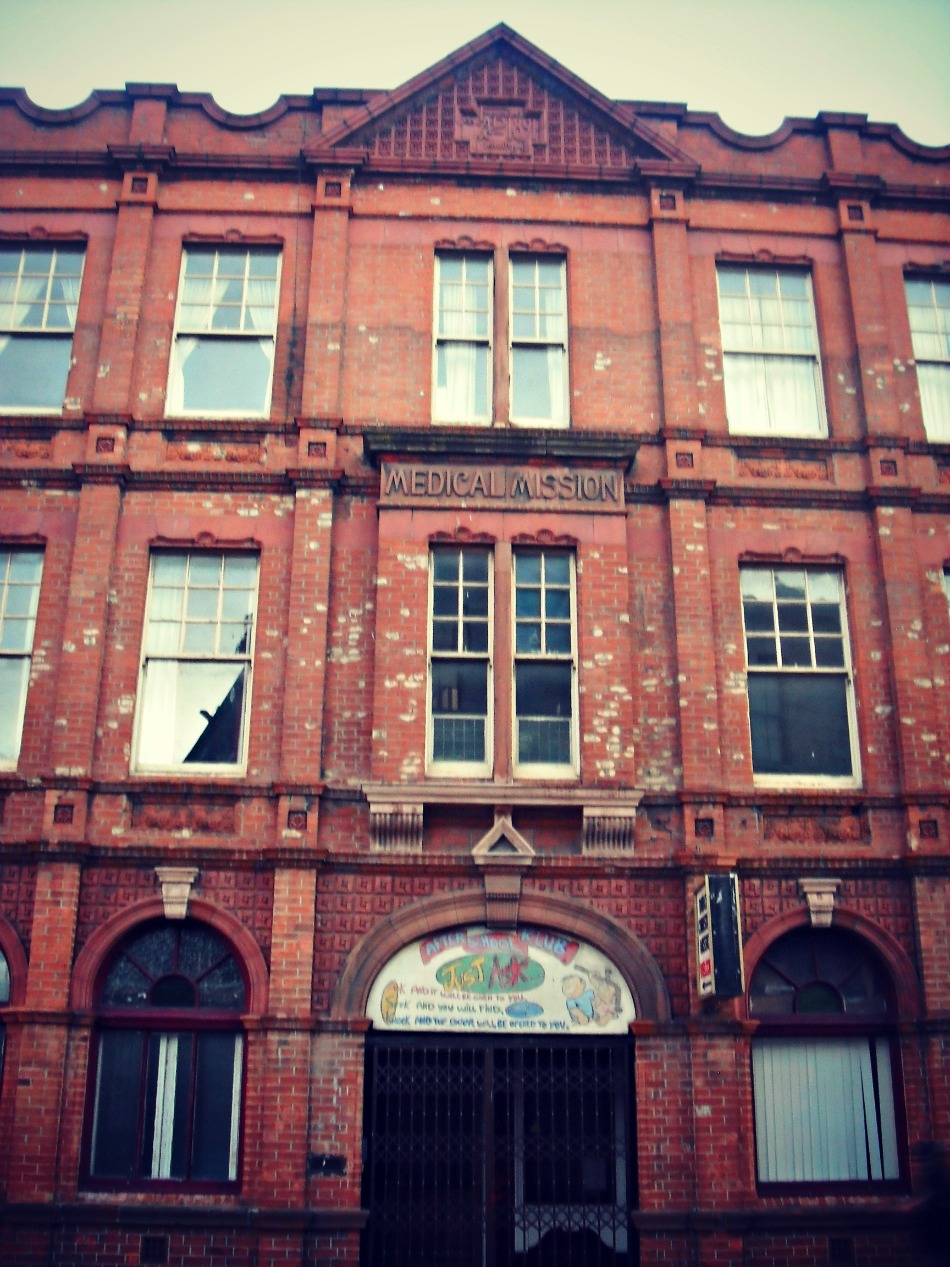
Having occupied the Medical Mission, the Lancers were holed up there for much of Easter Week, and were caught in sporadic firefights with republicans. The Medical Mission today tells the story of that firefight, and the incredible damage to the front of the building speaks for itself:

Medical Mission

Medical Mission

Notice that the marks are particularly evident around the windows of the building:

Medical Mission

Medical Mission

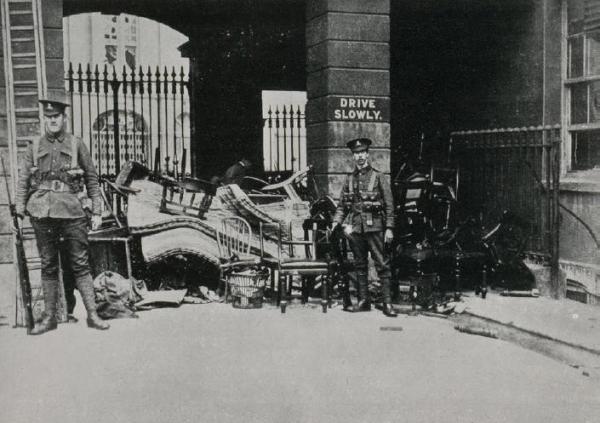
In this image taken at the conclussion of the insurrection showing a barricade at the Chancery Place gate of the Four Courts, the Medical Missionn can be seen behind the gate:

Four Courts, 1916. Image uploaded to dublin.ie by 'boxman'.

Four Courts, 1916. Image uploaded to dublin.ie by ‘boxman’.

Today, the Medical Mission of 1916 is the Dublin Christian Mission, which serves the poor and homeless of the city.

The Millenium Arch.

Postcard showing the Pillar.

Postcard showing Nelson’s Pillar.

Following the destruction of Nelson’s Pillar by a republican explosion in March 1966, Owen Sheehy Skeffington would later remark in the Seanad that “The man who destroyed the Pillar made Dublin look more like Birmingham and less like an ancient city on the River Liffey, because the presence of the pillar gave Dublin an internationally known appearance.”

Regardless of what one thought of the Pillar as a symbol, its absence was certainly noted. One attempt at replacing Nelson with a more fitting symbol for the city of Dublin was the Pillar Project in 1988. 1988 was the year of Dublin’s official (but not actual!) Millenium, and the Pillar Project was designed to “find a new symbol for Dublin, playing much the same role as the Eiffel Tower does for Paris or the Statue of Liberty for New York”.

The Pillar Project involved 15 different separate teams of artists and architects, proposing different monuments for the site once occupied by Admiral Nelson. Organised jointly by the Royal Institute of the Architects of Ireland, the Sculptors Society of Ireland and the Architectural Association of Ireland, the various entries were put on public display in the General Post Office, where the public could vote for their favourite proposal. Robert Ballagh opened the exhibition to the public, and a ‘Ballot Paper’ option allowed the public to cast their vote.

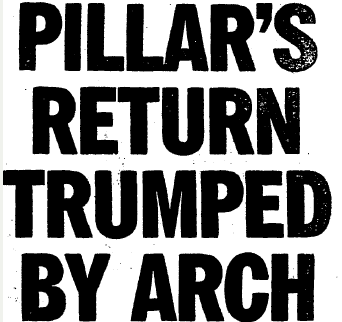
The Irish Press announces the winner.

The Irish Press announces the winner.

In the end, the winning entry was the ‘Millenium Arch’, described in The Irish Times as being “twice the height of the GPO”. It received almost 50% of the public votes, and was designed by Michael Kinsella and Daniel McCarthy. Interestingly, in third place was the idea of “rebuilding the Pillar without Nelson”!

.

The Millenium Arch was never seriously considered for construction sadly, and it was not until 2003 that Nelson would be permanently replaced by the Spire, known officially as the Monument of Light. Costing a rather unbelievable four million Euros, this monument was different from the proposed arch in that it did not seem to enjoy the same popularity among the locals!

Come Here To Me! turns three years old today, having begun in November 2009. The last year has been a good one for us, with the blog building a Facebook following recently just passing the 3,000 mark and bringing a ‘Best Of’ the website to the public thanks to New Island Books.

Far from running out of content as we may have once feared, the city and its history has continued to throw up subjects and ideas!
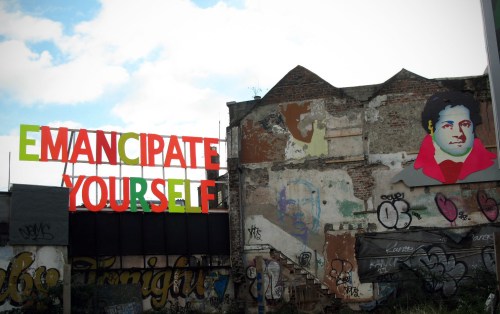
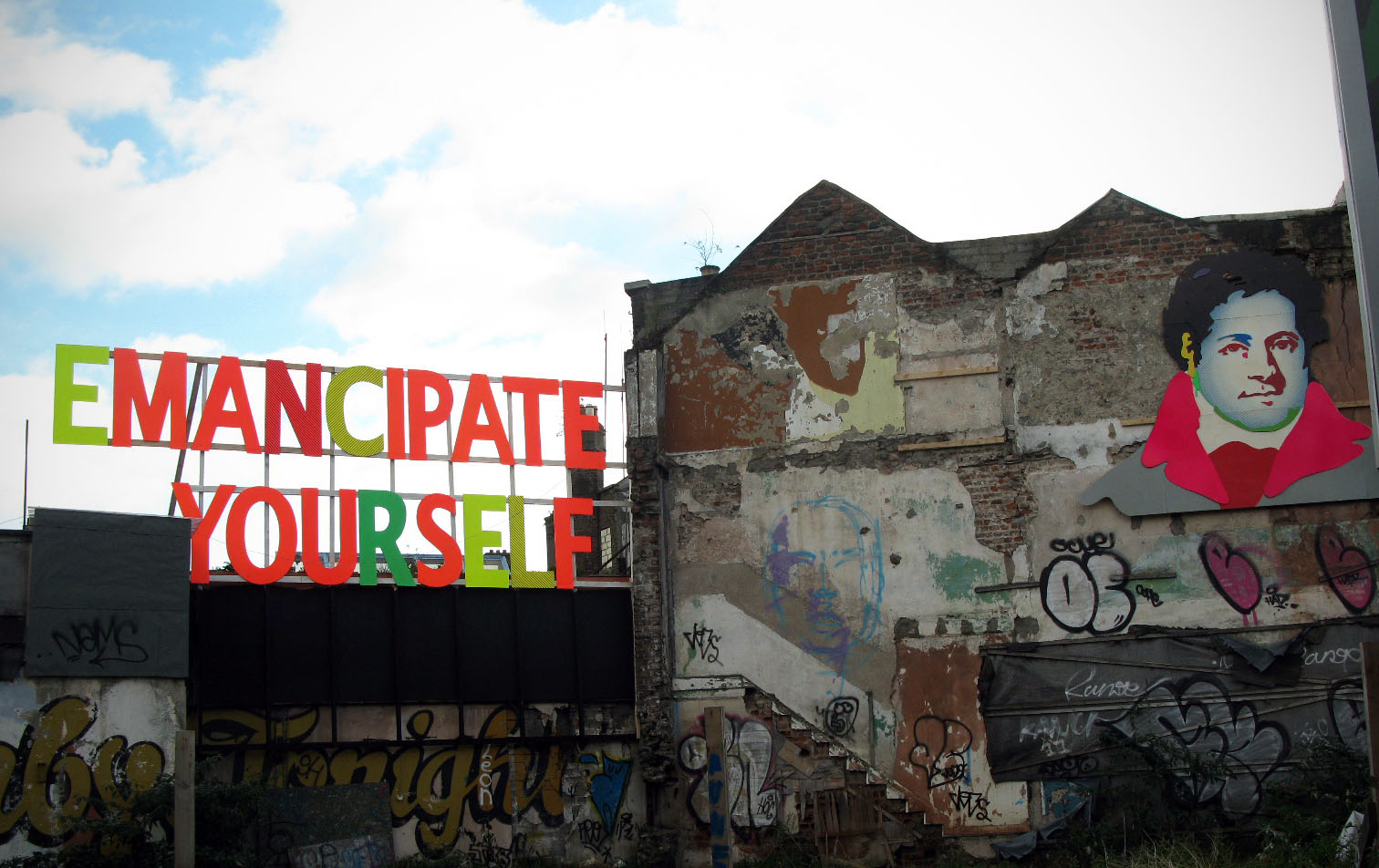
‘Emancipate Yourself’ (Image first posted on CHTM! in November 2012)

Today, the blog has received over 5,000 comments from readers, and published in excess of 1,720 articles, on everything from the back lanes of Dublin to the history of football in the capital. We’ve continued some long running series’ such as the pub crawls of Dublin (albeit with less regularity!) and had new series’ on subjects like the 1911 census returns.

On Wednesday December 12th our book will be launched by Professor Diarmaid Ferriter, and we’d love to see you there.

Below, each of the three writers have chosen some of their articles from the last year. All published since November 29th 2011, this is a taster of what’s been produced. Some of these stories feature in the forthcoming book, and others remain exclusive to the website.

Thanks for all your comments, input and support. Here’s to another year!
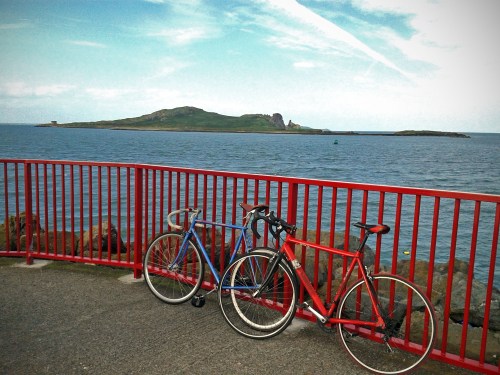
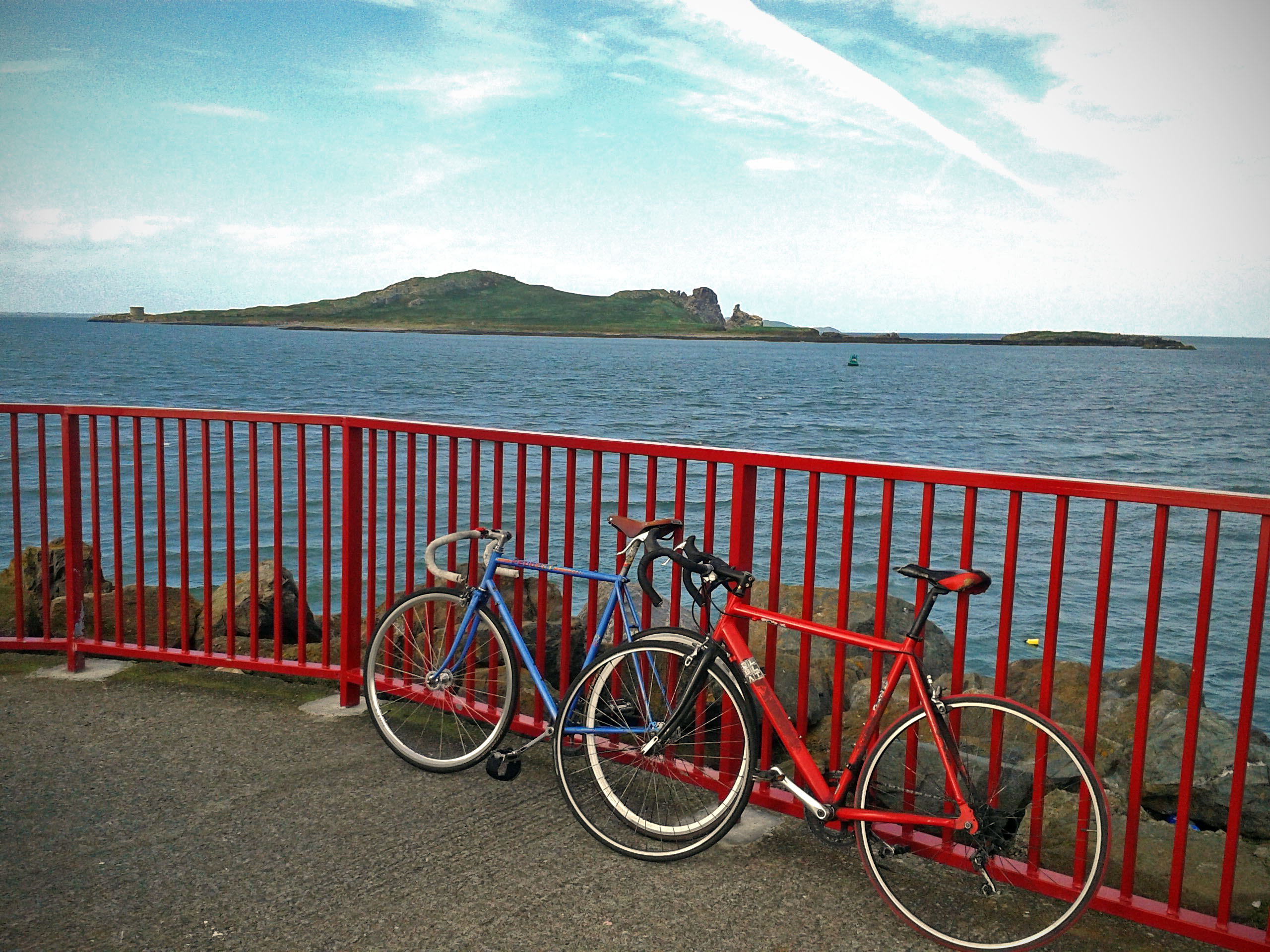
A cycle to Howth (Image first posted on CHTM! in September 2012)

Ci: An eventful start to the year, with Unlock Nama’s Occupation, finding out that Soviet Russia mapped Dublin in Cyrillic, a continuation of the “A Few Quick Snaps” series, as I tried my shot at photography here, here, here and here. In addition to the random snaps, I took a trip to Howth with the camera and started a new series on those “semi-legal” spots in this city where Dublin’s street artists to their thing; the Tivoli Carpark, Richmond Villas, Liberty Lane and Windmill Lane. A look at the history of Dalymount Park’s Floodlights, a beautiful plaque dedicated to the Irish Volunteers in Wynn’s Hotel, and a look at how they were perceived in the Birmingham Gazette. A look at Dublin Trams from a time long before the Luas, a floating ballroom on the Liffey and a quick look at a Dubliner who may have designed the Academy Award; the theft of the Irish Crown Jewels, a student Anti-Fascist meeting in 1934 attended by some well known characters,  remembering the Manchester United Store on Westmoreland Street and probably my favourite bit, a look at where the term “Donnybrook Fair” comes from!

Donal:

The story of ‘Fascist warships in Dublin Bay’ in 1938, the story of Constable Sheahan, the idea of moving Nelson’s Pillar to the Hill of Howth, the infamous ‘Animal Gangs’ of the 1930s, Liberty Hall before Liberty Hall, the story of the ‘African Boy’ John Mulgrave, a crazy trip to Sudan for UCD AFC, foreign media coverage of the Irish Civil War, when Dublin Fire Brigade rushed north during World War II, the earliest sex shops in Dublin, the Behan family and Siberia, the infamous ‘Pinking Dindies’, the Dublin Working Boys Home, Wood Quay vandalism, the first man to parachute over the capital, the Marian statues of Dublin, a chat with Maser, an easy to miss firemark in Kilmainham , some political art from Jim Fitzpatrick, the story of pirate television in the capital, Illustrated London News coverage of the War of Independence, when Hopalong Cassidy came to town, the GAA ‘Vigilance Committee’ of old, Bertie and Brendan, Dubliners with statues beyond these shores, ‘The Heart Of The City’, our first traffic lights and King Billy on his high horse.

Sam:

Trying to figure out what Dublin’s oldest hotel was, the Dublin strike that lasted fourteen years, Phoenix Park’s Free Peace Festivals in the late 1970s, early days of Stand Up comedy in Dublin, depressing snaps of Sandyford post-Celtic Tiger, the Dublin cinema manager who was imprisoned in Dachau during WW2, Vladimir Lenin’s apparent Rathmines accent, Dublin’s first gay bar, figuring out what the shortest street was in the city, another feature on the The Blades, the David vs Goliath battle between Stein Opticians and the developers, Nazi spy funeral in Deansgrange, Philip Chevron interview, breaking the story about the friendship between Bob Marley and Johnny Giles, Kildare Street Club monkeys debate, Stop Making Sense in 1980s Dublin, Dublin New Wave band Sacre Bleu, the City’s first Drugs cases, mysterious Karl Schumann, the much missed Mena Cribben of Santry, origins of the word Quiz, Maynooth’s spooky room, Dublin’s first Chinese restaurants, Una Bean Mhic Mhathuna‘s illustrious political career, Colloquial areas of the city,  1970s Triad violence, the late night cafe The Manhattan, Foreign Nationals in 1911, Atheists and Agnostics in 1901 and 1911unusual religions in the 1911 census, daylight robbery – Hugh Lane paintings and The Hill – Rathmine’s working class enclave.
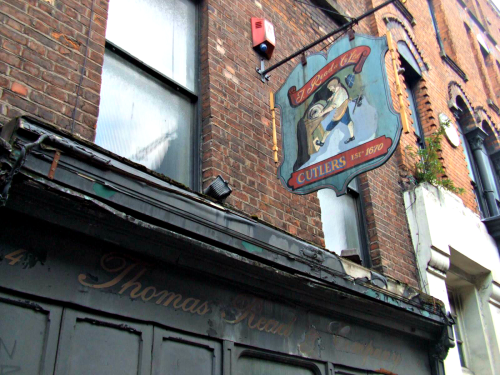
The signage of what was once Dublin’s oldest shop, Thomas Read’s. (Image first posted to CHTM! in May 2012)
(Thanks to Brian Kirby of the Capuchin Archives for bringing my attention to this)

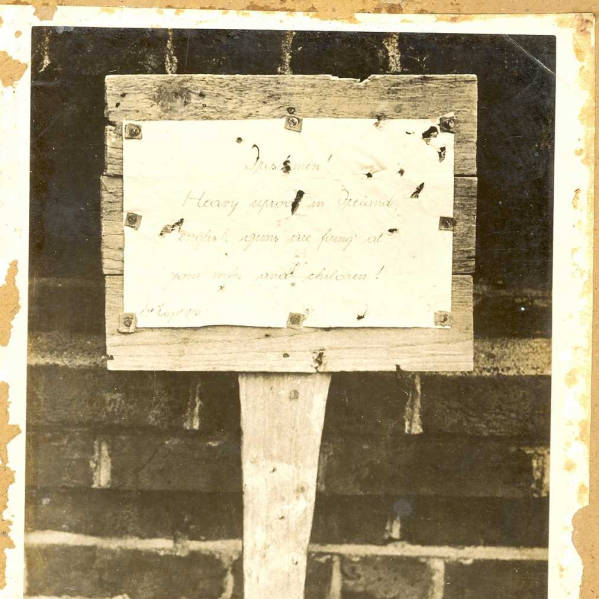
Fascinating photo showing a handmade sign made by German soldiers in the trenches during World War 1, telling the Irish regiment of the British Army in the trench ahead of them that Dublin was being bombarded in response to the Easter Rising.

The wooden board with pinned paper message reads:

Irishmen! Heavy uproa[.] in Ireland, english guns are firing at your wives and children | 1st May 1916

1916 Trench Sign – Irish Regiment. Copyright – The Great War Archive, University of Oxford / Primary Contributor.

The photograph was uploaded by Peter Carolan onto the The First World War Poetry Digital Archive website. Regarding the photo’s background, he has said:

… it given to my granddad by a Major Hand in the 1930’s. My granddad was working for the Major (a retried British Army Officer) as a gardener in Mooncoin, Co. Kilkenny … the Major told my Granddad that they fired a few rounds at the sign and did not believe or understand what the sign was about till weeks later when the news filtered through about the 1916 rising … The Major took the photo, after the British had captured the German trench a month later.

Massive thanks to Damian Shiels (Rubicon Heritage) who sent us on this picture.

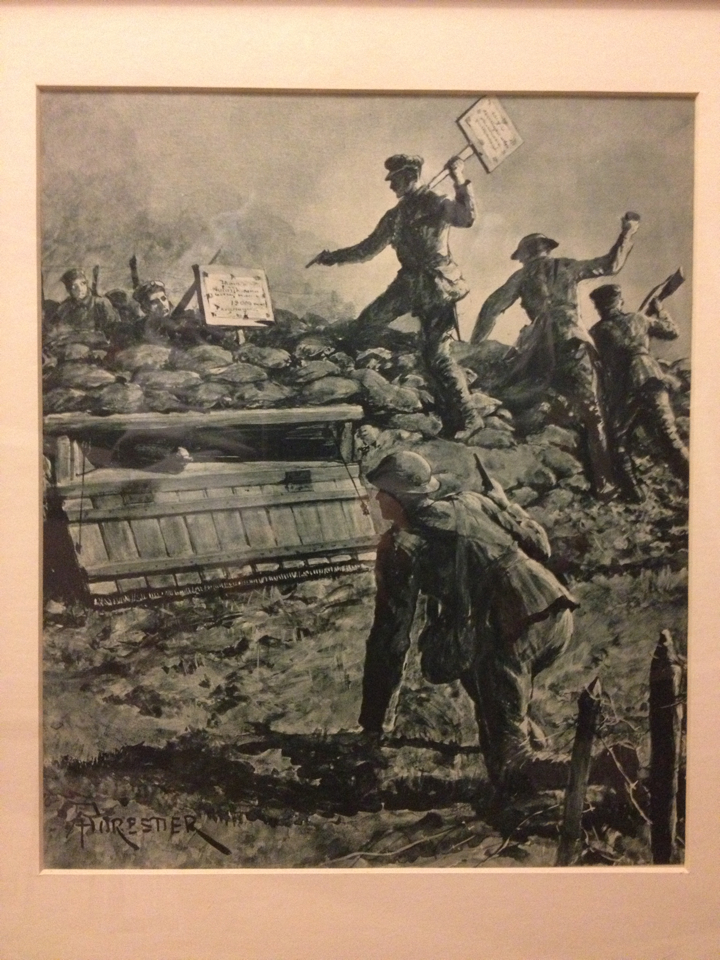
Raid to capture sign. Credit – Imperial War Museum.

He told us:

… (the trench sign) was placed across from a battalion of the Royal Dublin Fusiliers (if I remember correctly) who opened fire on the sign, and actually launched a trench raid to capture it. They afterwards officially presented it to the King to show their loyalty, and it was from there it eventually ended up in the IWM. It got quite a bit of coverage at the time, and a number of periodicals ran sketches of the Dubs taking the sign during the raid…


We are very excited to announce, just a few days before our third birthday, that our long-awaited book is now available to pre-order from the publishers, New Island. Click here to reach the page.

A perfect Christmas present for any of your family, friends or pets! 🙂

Available now from New Island

The beautifully illustrated hardback of over 300+ pages contains seventy of the best stories from the last three years, including a number of new articles never published online.

The launch is happening on Wednesday, 12th December. We hope you can join us. RSVP here.

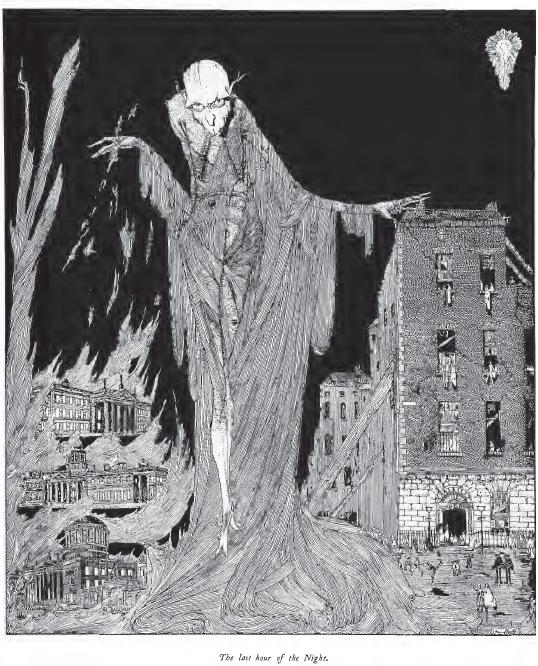
‘The Last Hour of the Night’ (Harry Clarke, 1922)
Dating back to 1922, this image from the celebrated stained-glass artist and illustrator Harry Clarke shows the ruins of the revolution in Dublin. The General Post Office, Four Courts and Custom House are all shown destroyed and in flames, while to the right a miserable Dublin tenement can be seen. While many talk about independence as heralding a new era for the city and nation, Clarke showed that Dublin lay in ruins, and that the shocking poverty of the city was unavoidable.

The work served as frontispiece to Patrick Abercrombie’s Dublin of the Future: The New Town Plan (1922) This very interesting work, published under the auspices of the Civics Institute of Ireland, put forward a number of proposals for the city. Originally aimed for publication in 1914, by 1922 the work would include detail of the destruction caused to Dublin during the Easter Rising and later Civil War fighting. It is available to read in full here.
Few towns but have suffered a change, physical and psychological, during these intervening years of war, trade boom and subsequent depression : but Dublin has added the double tragedy of war and civil war within her gates. Of her six glorious buildings in the Renaissance manner only three remain—Post Office, Custom House and Four Courts at intervals of years or months have been destroyed ;her greatest street has been twice bombarded and part once renewed.

Dublin is a city of fantastic archives, but many of us will only ever explore a small selection of them, if we can find the time to explore any at all! In recent years social media has allowed archives and institutions like the National Library to share some of the items within their collections with the general public. One particularly interesting archive which has recently begun sharing some of its items on Facebook is the Capuchin Archive on Church Street. The friars of the Capuchin Order from Church Street attended those executed in 1916 at Kilmainham Gaol and administered the last rites, and their archive contains incredible items from the Irish revolutionary period and beyond.

Do you know of any other archives or institutions sharing their content in this way?

Civil War propaganda poster from the Anti-Treaty side, ‘Easter Week Repeats Itself’. Posted to Facebook by Capuchin Archive.

c.1964, a brilliant photograph of Admiral Nelson gazing down over O’Connell Street. Posted to Facebook by Capuchin Archives.

Continue Reading »

Image: Wally Cassidy

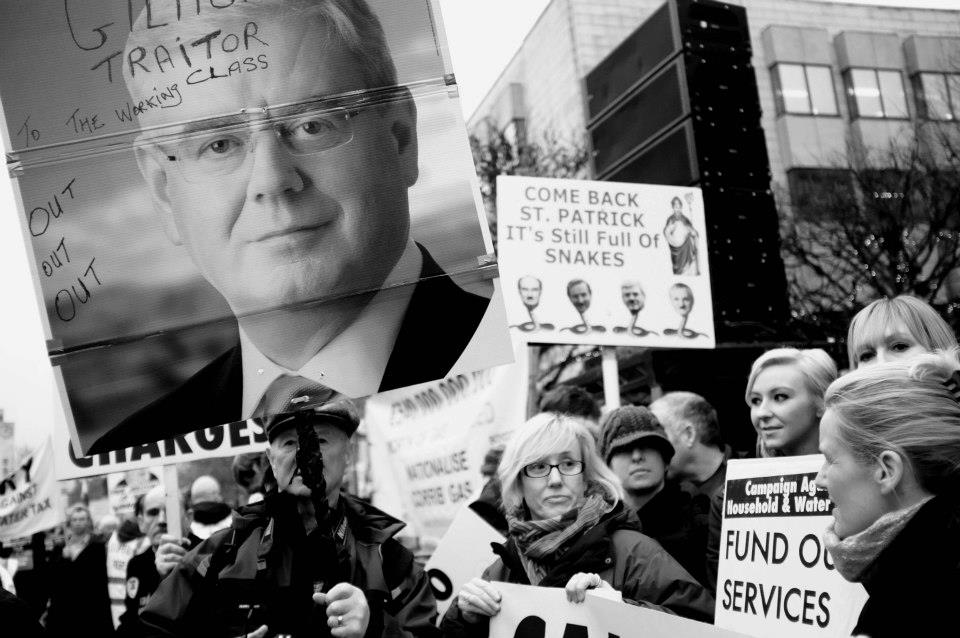
We’re big fans of Wally Cassidy’s photography, and have shared some of his brilliant shots from the 1980s both here and on our Facebook page. From youth subcultures to great moments of protest and rage, Wally captured some real gems in black and white. There is something about the medium of black and white with photography, it remains timeless. Yesterday, Wally took a series of brilliant photographs at the Anti-Austerity demonstration, and has allowed me to share a few here.

On the march itself, to me it felt a bit like going through the motions. The hostility towards the overpaid union top-brass was totally unsurprising, and Jack O’Connor’s absence from the speakers list notable. I don’t blame him!

You can see some of Wally’s classic images, and some more recent shots, over here on his Facebook page.

Image credit: Wally Cassidy

Image credit: Wally Cassidy

Image: Wally Cassidy

Continue Reading »

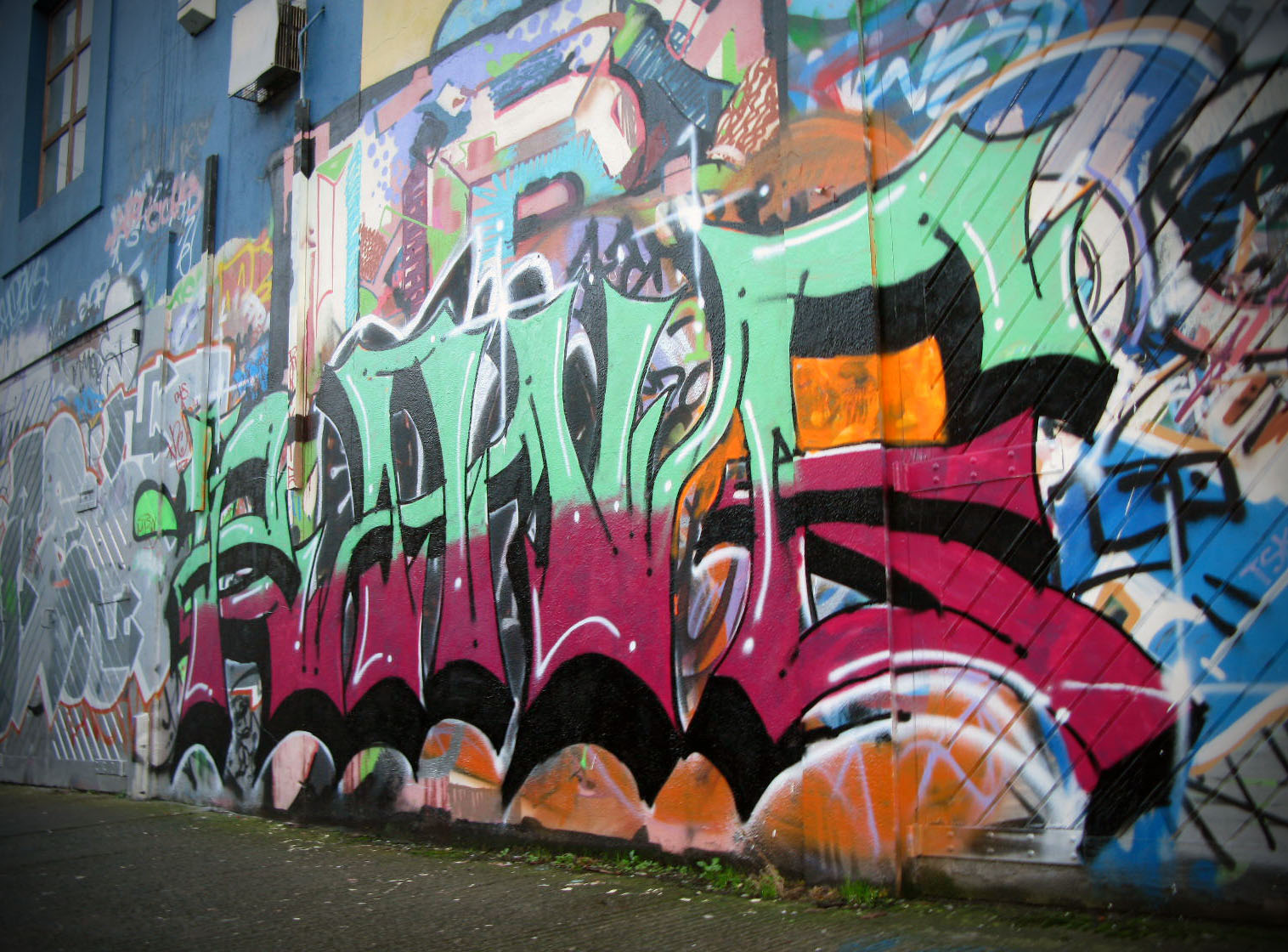
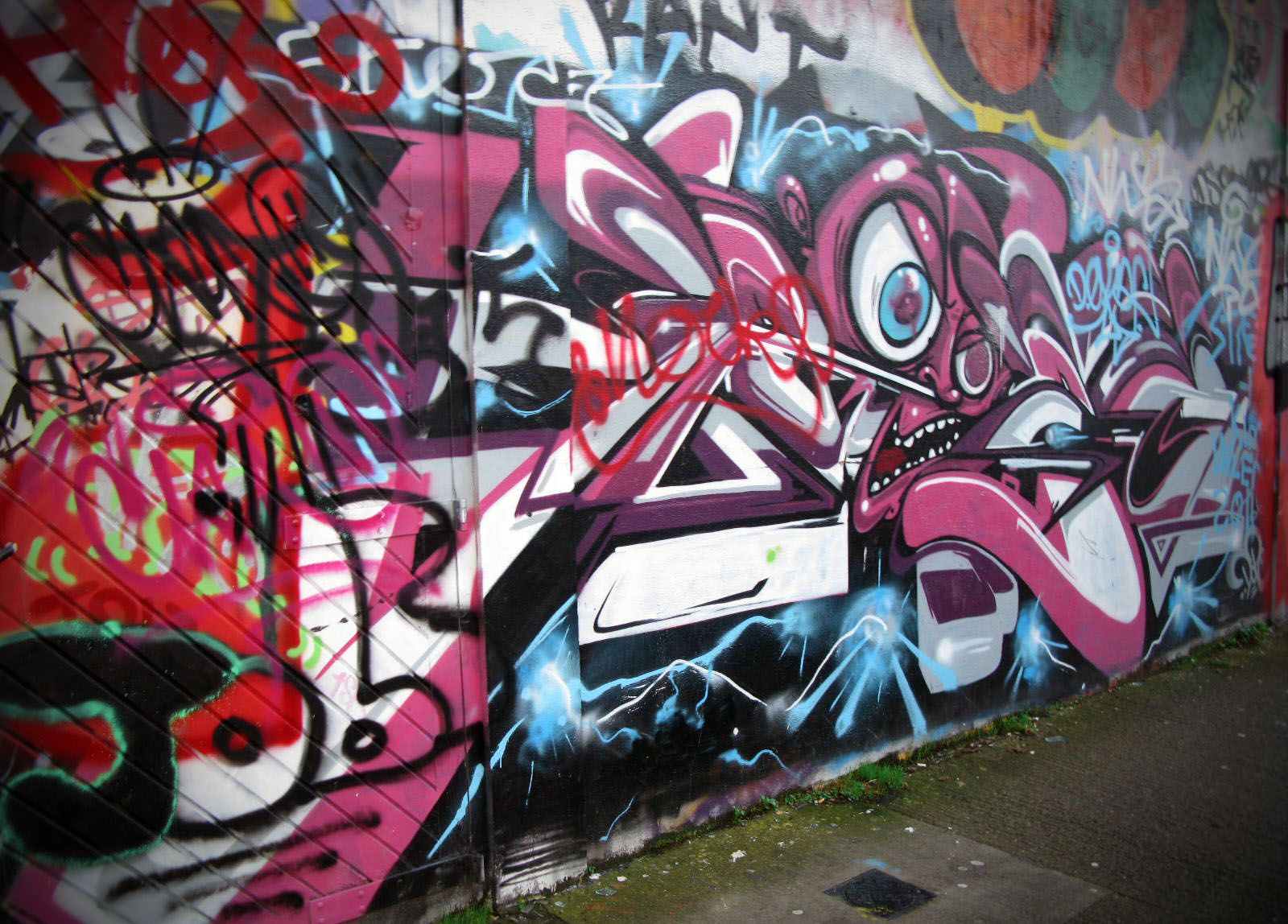
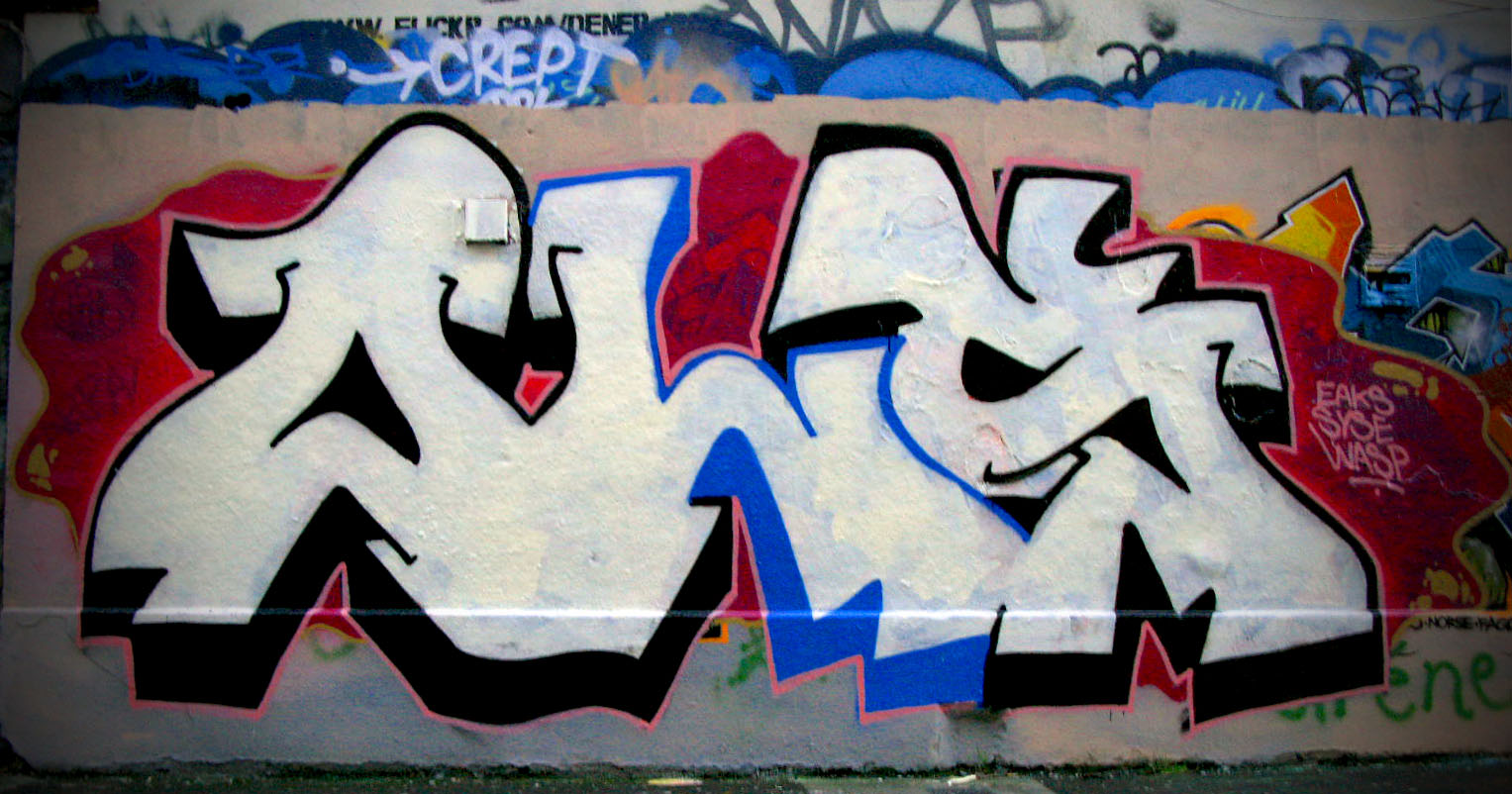
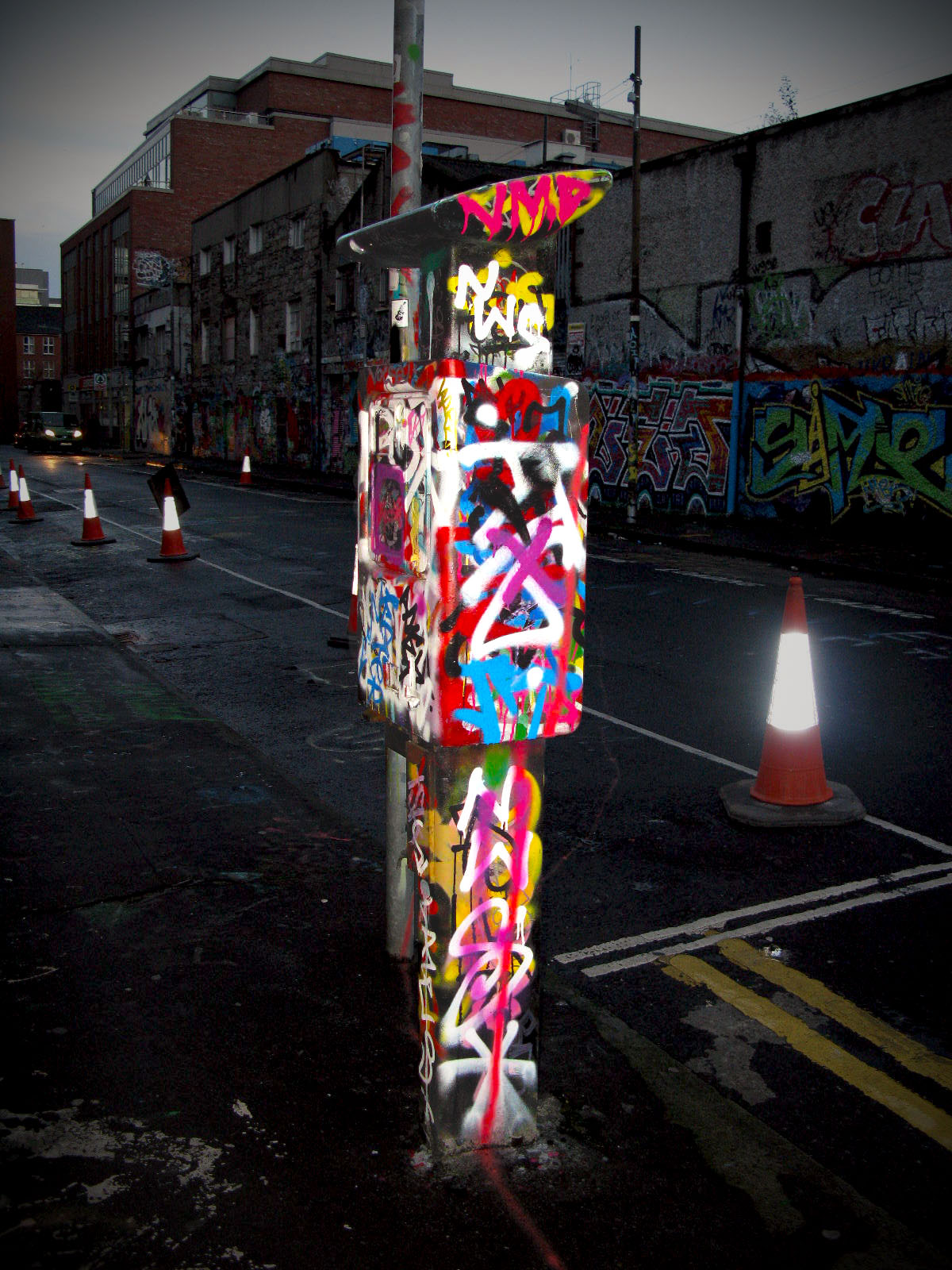
It took longer than I imagined it might to get down to Windmill Lane for this, the third in a series of posts looking at some of Dublin’s lesser known street art spots. I’ve been to Richmond Villas and Liberty Lane in the first two posts, and am on the look out for other gems. Strange though it may seem, given Windmill Lane’s historical connection to U2, that amongst the thousands of tags that cover the street, I couldn’t find one “Bono is a pox.”

Continue Reading »