Feeds:
Posts
Comments

Posts Tagged ‘dublin’

“The delights a stroll around Dublin can bring you. I’ve always carried my camera around with me, but have only recently started to take it out and not give a shite that I look like a tourist.”

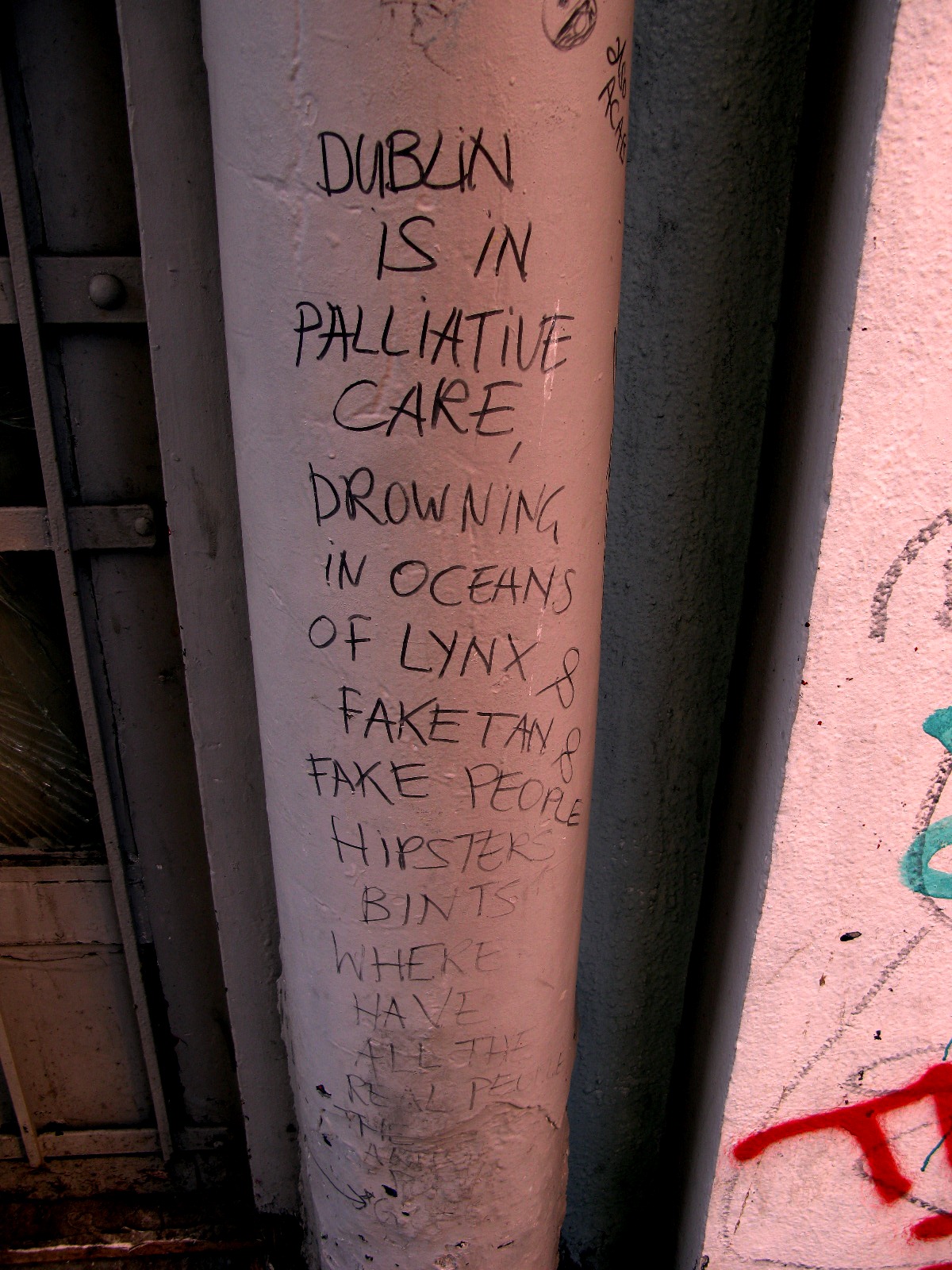
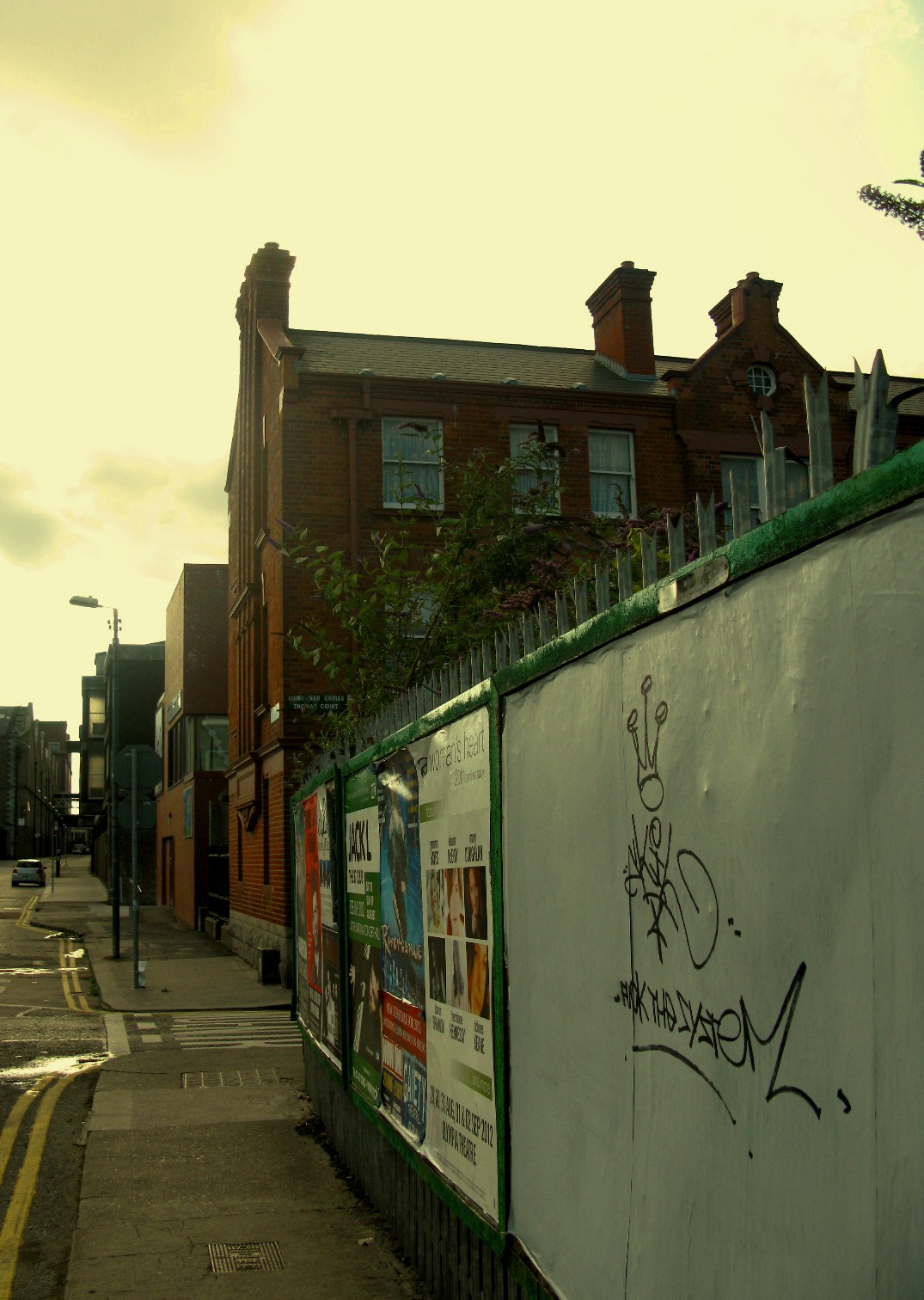
The last couple of months have been busy, and I haven’t gotten out with the camera as much as I would like. Hence, I’m a little rusty. I hope to remedy this though, and over the next while, hope to get one post of pictures up a fortnight… I’ll start off with the below, looking down toward School Street from Earl Street South- “Fuck the System.”

“Dublin is in palliative care, drowning in oceans of Lynx and fake tan and fake people. Hipsters, bints, where have all the real people…” something, something, angry rant, something.

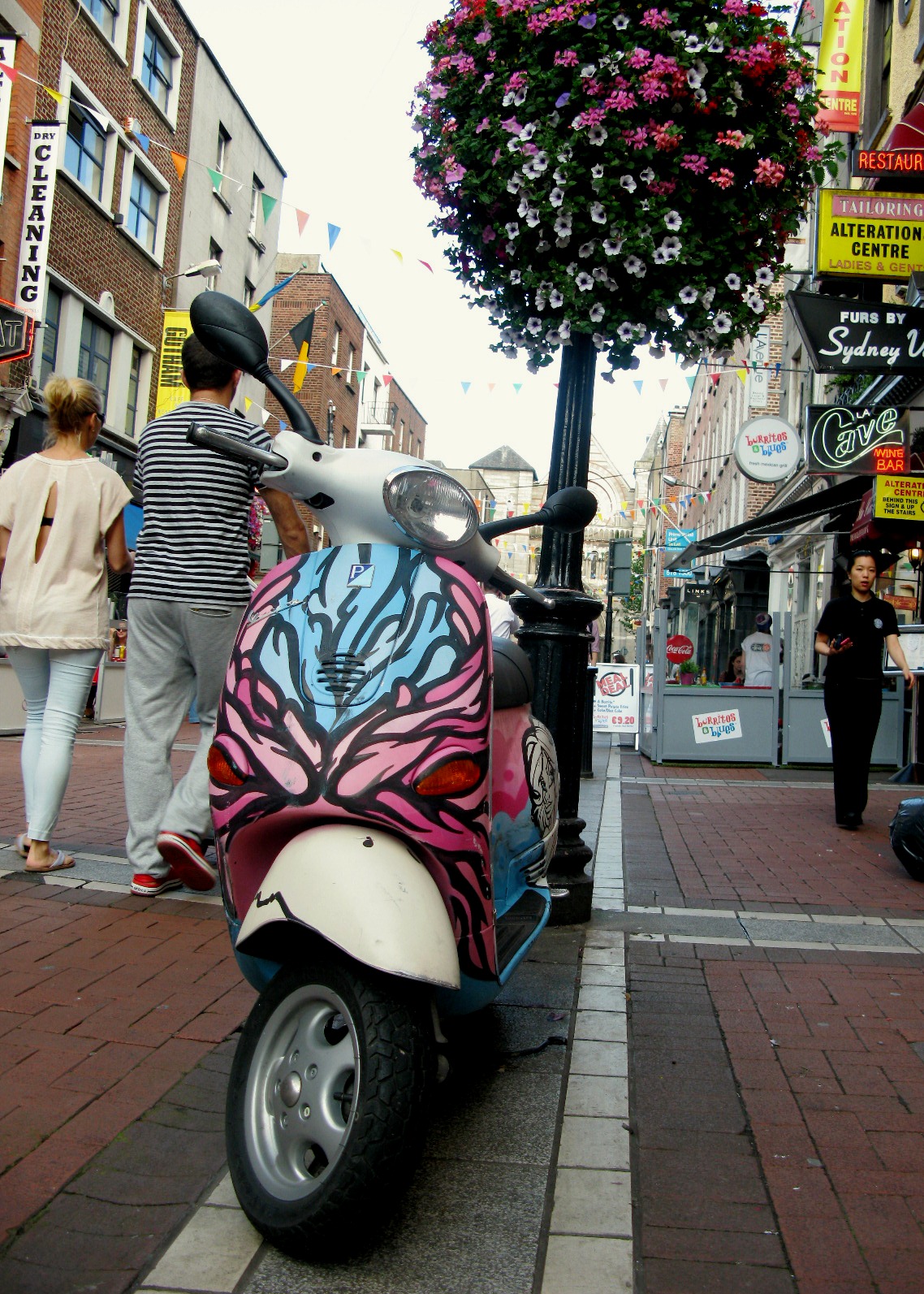
I hoped to have two scooters in this piece, one far more impressive than the one below, but an unfortunate incident of a disappearing memory card means there’s just this one. Just off Grafton Street, a beauty. The blokier version will appear in the next “A few quick snaps” post.

(more…)

Read Full Post »

There was a time when transport by tram around Dublin wasn’t restricted to two bizarrely unconnected routes, when tramlines extended miles in every direction, spreading from O’Connell Street outwards like arteries from a heart to Dublin’s rapidly expanding suburbs.

Three companies operated the trams initially, the Dublin Tramways Company, the North Dublin Street Tramways Company,  and Dublin Central Tramways. These companies united in 1880, forming the Dublin United Tramways Company, with 137 trams running routes which totaled over 32 miles. The last horse tram ran in January 1901,  by which time Dublin had completely electrified it’s system, now with 66 miles of track, of which nearly 50 were owned by the DUTC.
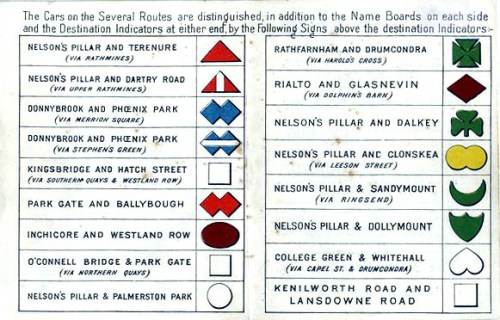
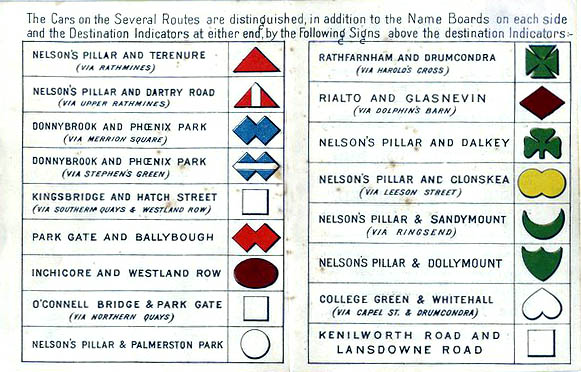
As well as numbers, the trams also had colourful route indicators. Uploaded by JadedIsle

The first tram came into service in February 1872, and ran from College Green to Rathgar. The trams generally operated within the City Centre or stretching to the more affluent South Dublin suburbs. Traveling on the trams, in the early days at least, was a luxury only Dublin’s white collar workers could afford. The majority of trams started at, or stopped nearby Nelson’s Pillar, and their terminus’  stretched to the likes of Sandymount, Blackrock, Dun Laoghaire, Dalkey and Terenure, as can be seen on the route identifier above. As well as featuring in a high percentage of photo’s of Dublin streets at the turn of the last century, they played parts in the Easter Rising, being toppled and bombed and their wreckage used for barricades, and feature in Joyce’s Ulysses.
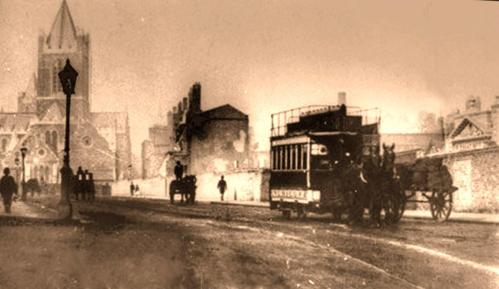
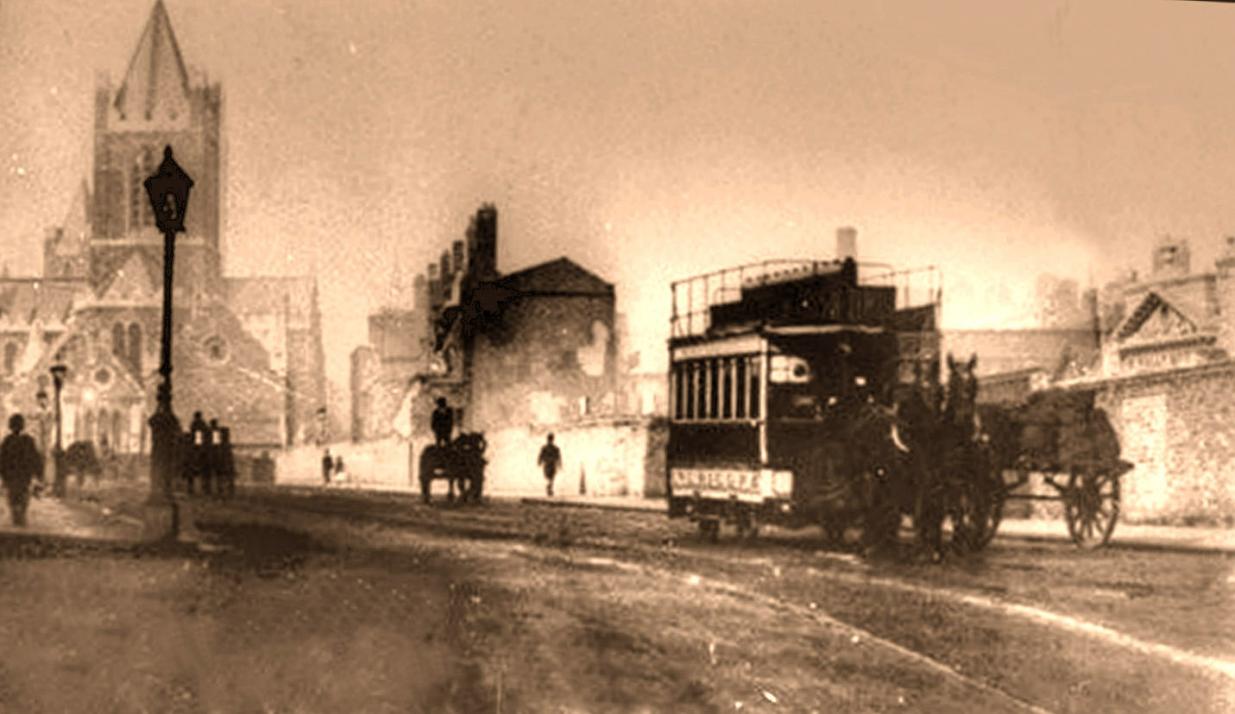
Uploaded by Cracker on dublin.ie

What must have been the 21 tram to Inchicore

For over twenty years after the introduction of electric trams here, Dublin was a pioneer in tram building, the works in Inchicore churning out carriages whose design would be copied worldwide. But the introduction of the car to Irish roads, the growth in their use in the twenties,  and the newly designed four wheeled “bogey,” or basically a precursor to the bus saw the abandonment of many trams. The last tram in Dublin City ran on on 9th July 1949,  with the Howth Head line lasting another ten years before it too succumbed to progress. Some of their lines can still be found around the city, relics of a time past.
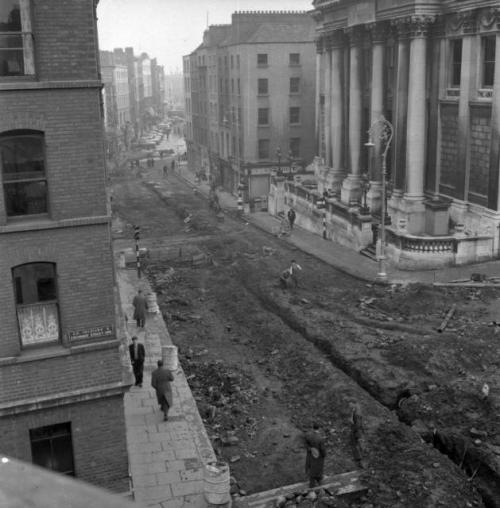
Removing the tracks at Lord Edward Street

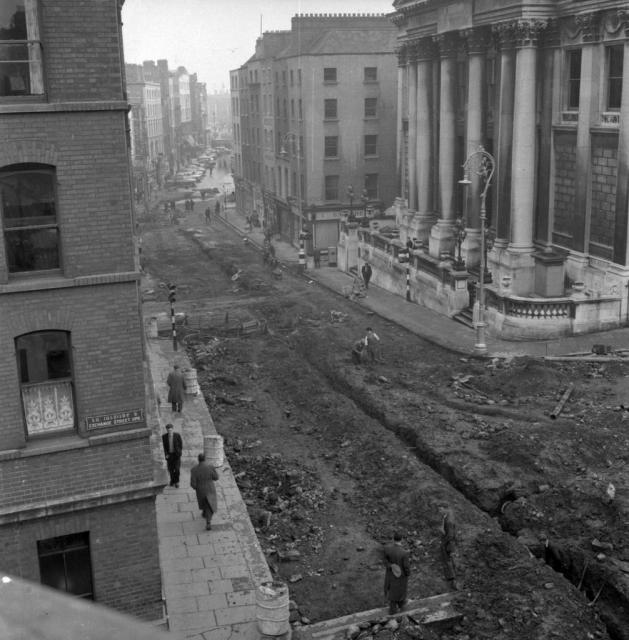
A copy of the Dublin United Tramways Company from 2010 has been uploaded by the National Archives of Ireland and can be found here. The image of workers removing the tracks from Cork Street is from the Dublin City Council’s Photographic Collection.

Read Full Post »
“The delights a stroll around Dublin can bring you. I’ve always carried my camera around with me, but have only recently started to take it out and not give a shite that I look like a tourist.

Sometimes I even post the resulting photographs up here. Below are the fruits of this weeks labours…

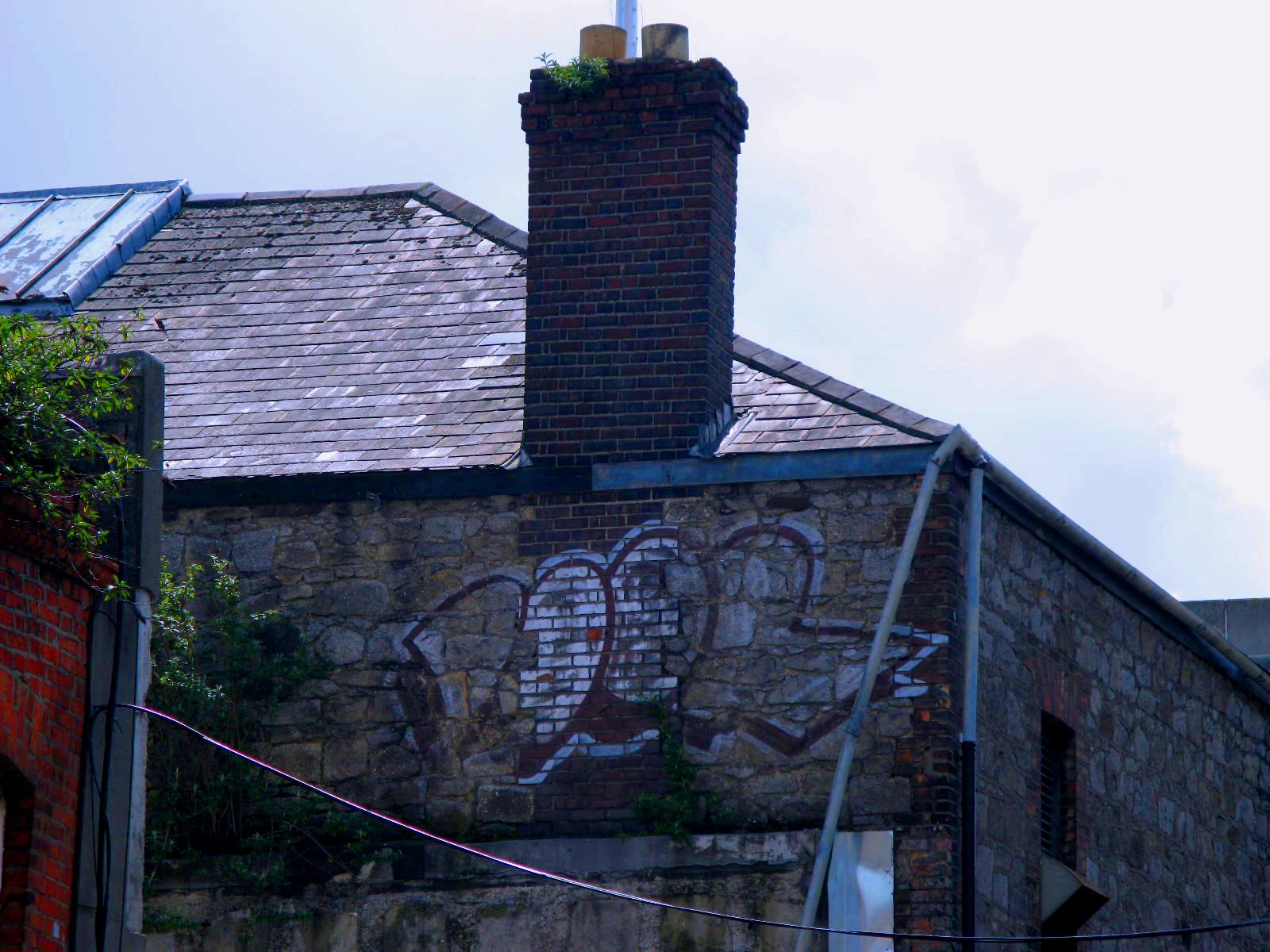
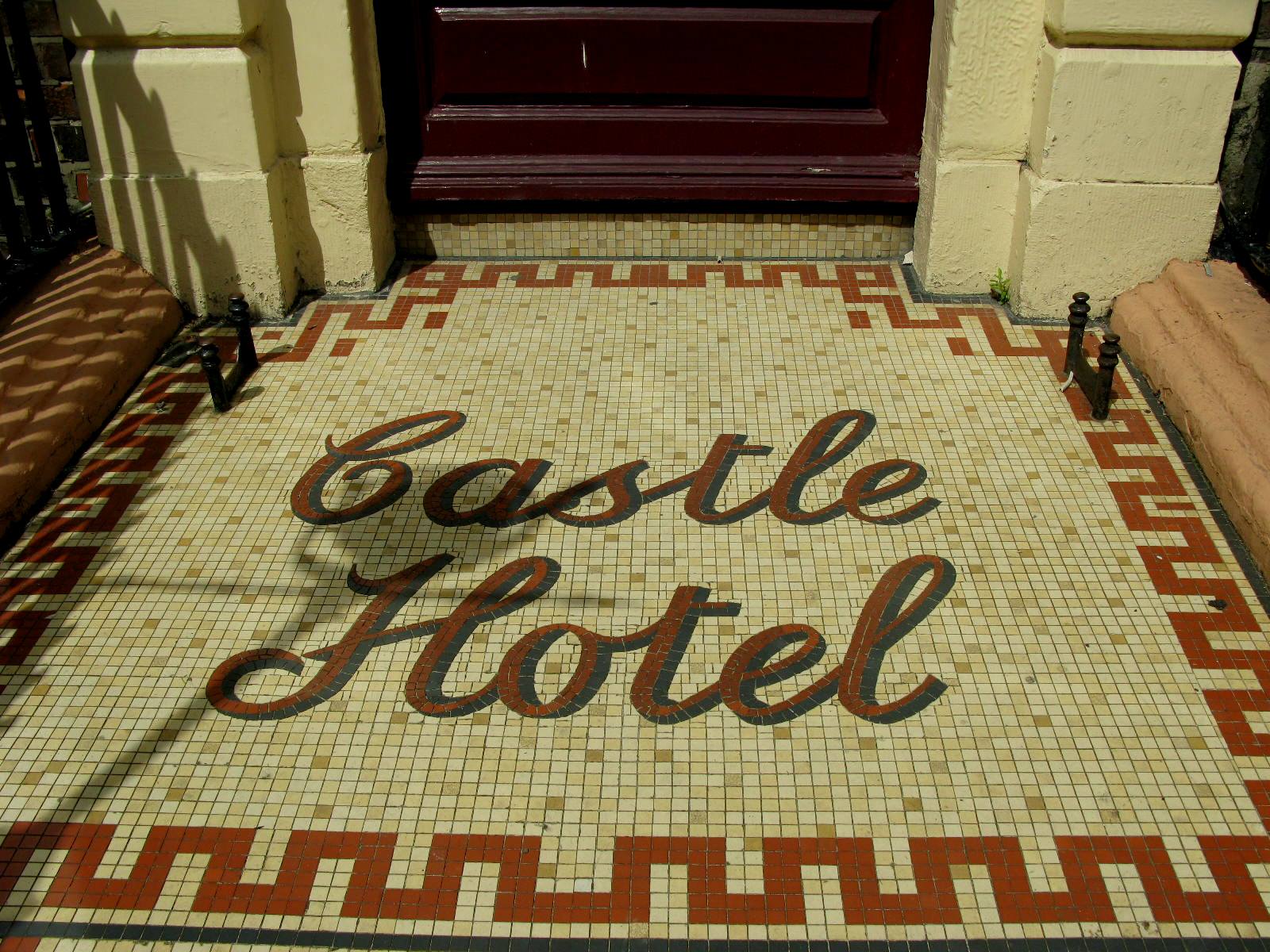
Anyone who can tell me where the above is, I’ll buy you a pint. Below, the Castle Hotel on Great Denmark Street.

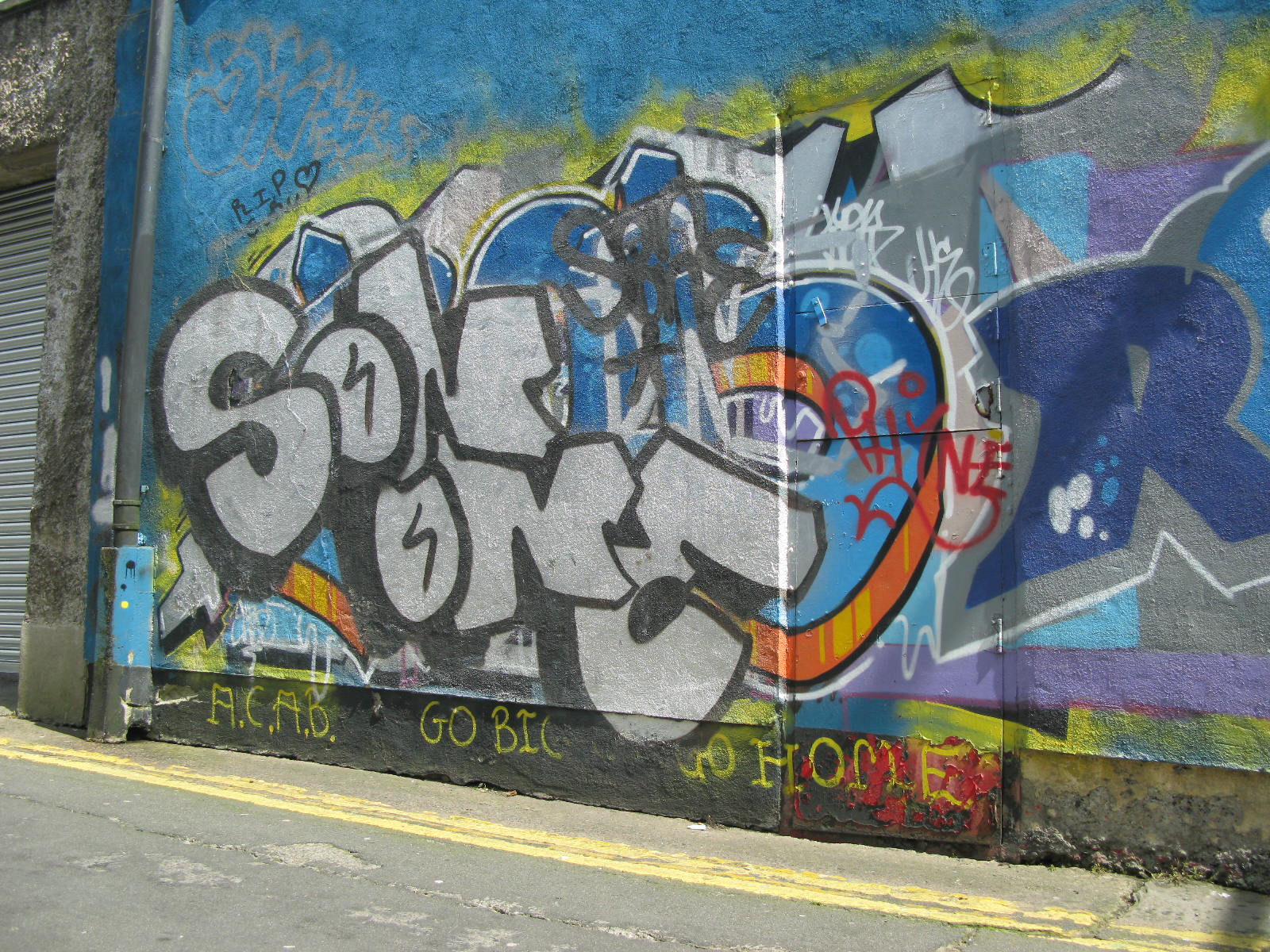
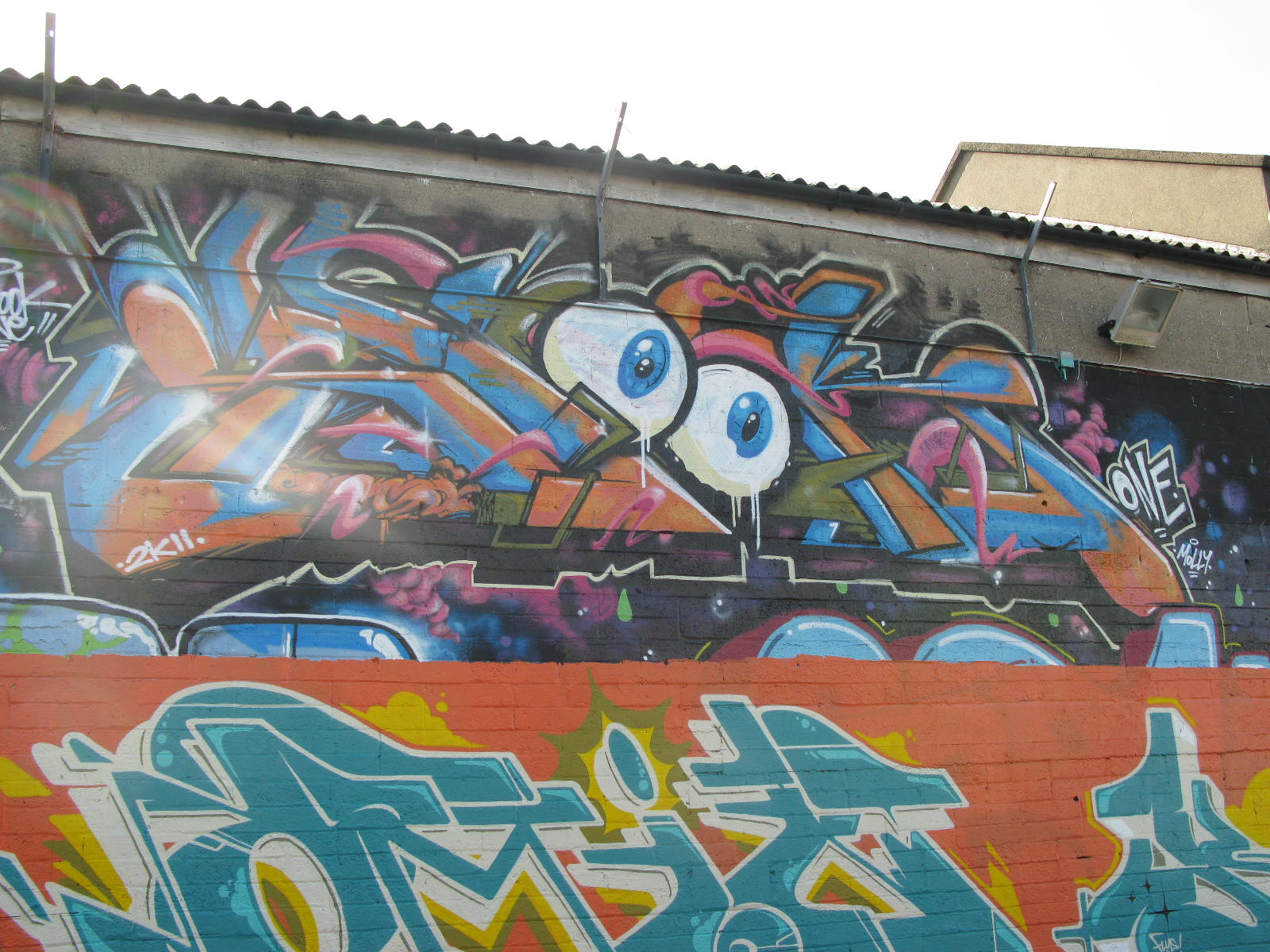
Below is a selection of graffiti from Rutland Place, a street in Dublin I’d never been down prior today… Bizaarely enough, you think you know the city inside out and then somewhere new suprises you. Pics read left to right, a good 30 foot of tags.

(more…)

Read Full Post »

Of all the legends and stories the Easter Rising produced, I’ve always taken an interest in that of The O’Rahilly. Born to a prosperous merchant family in Co. Kerry in 1875, he had a privileged upbringing and received his secondary education in Clongowes Wood College. He began studying medicine in 1893, but was forced to take a hiatus after a year after contracting tuberculosis and quit altogether after his fathers death in 1896, when he moved home to look after the family business. Not long afterwards, he sold the business and moved to the US, where he married in Philadelphia.

His next ten years were spent back and forward between the States and Ireland, and O’Rahilly and his bride, Nancy Brown, traveled Europe and Ireland extensively. They settled in Dublin in 1909 where he took up a job managing the journal An Claidheamh Soluis, later publishing the article by Eoin MacNeill that lead to the foundation of the Irish Volunteers. Despite being a founder member of the Irish Volunteers, he was not privy to the plans for the Rising, but took part in it regardless, arriving at the mobilisation at Liberty Hall and uttering the infamous line, “Well, I’ve helped to wind up the clock — I might as well hear it strike!”

The O'Rahilly around the time of his marriage to Nancy Browne

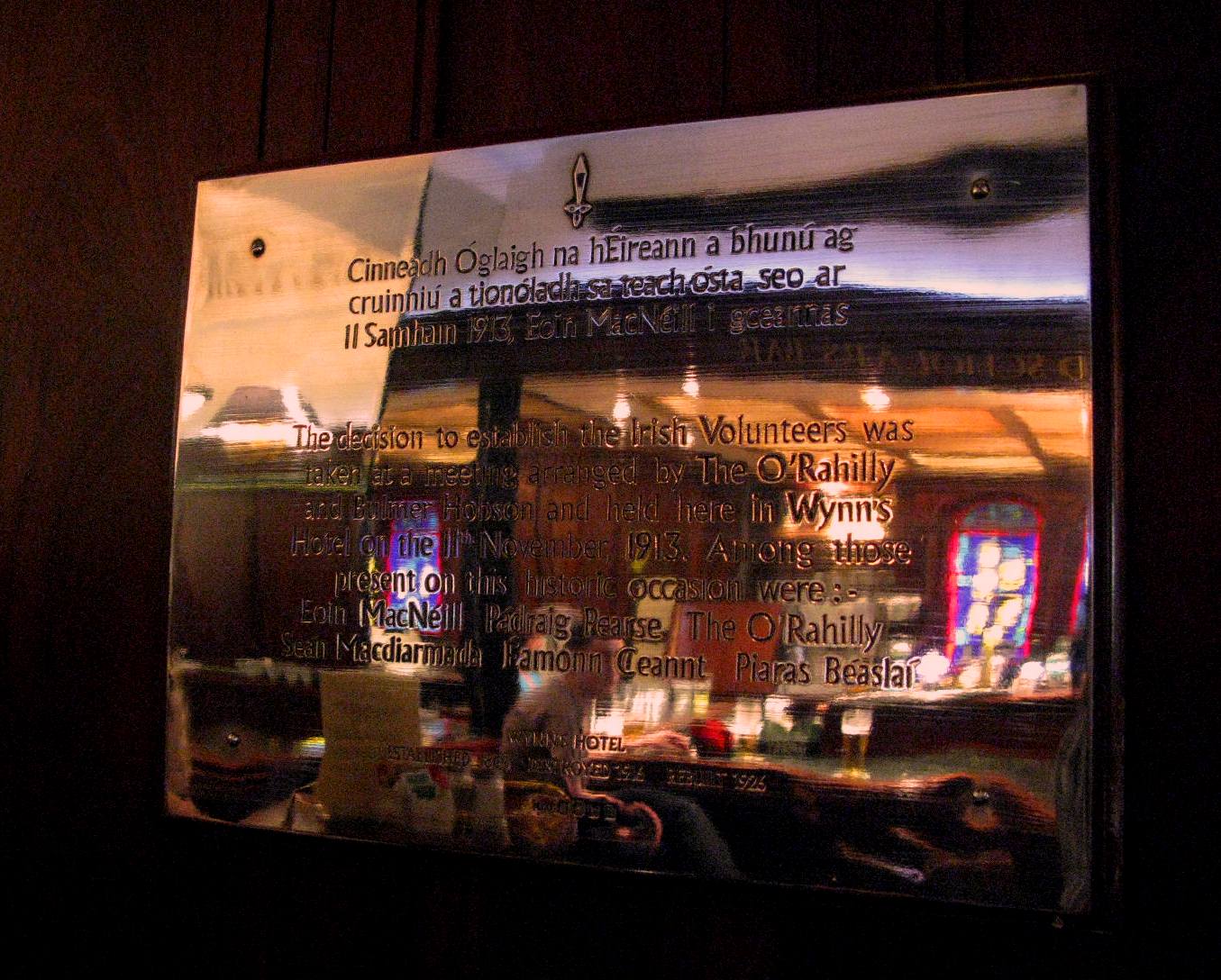
While most of the above is an ode to The O’Rahilly, and I hope to do another piece on him shortly, the subject of this piece is the plaque in the bar of Wynn’s Hotel on Abbey Street commemorating the founding of the Irish Volunteers there by The O’Rahilly and Bulmer Hobson in 1913. Hobson’s legend is that he never partook in The Rising, and was in fact kidnapped by the IRB before it in case he tried to pull the plug on it. Apologies for the quality of the picture below, Wynn’s obviously take great pride in it, and the sheen off it made it close to impossible to photograph. Inscription below.

The plaque reads:

Cinneadh Óglaigh na hÉireann a bhunú ag cruinnií a tionóladh sa teach ósta seo ar 11 Samhain 1913, Eoin MacNéill i gceannas.

The decision to establish the Irish Volunteers was taken at a meeting arranged by The O’Rahilly and Bulmer Hobson and held here in Wynn’s Hotel on the 11th November, 1913. Amongst those present on this historic occasion were: Eoin MacNéill, Padraig Pearse, The O’Rahilly, Seán MacDiarmada, Éamonn Ceannt (and) Piaras Béaslaí.

Wynn’s Hotel, Established 1845, Destroyed 1916, rebuilt 1926.

Given the weekend that’s in it, I’ll finish the piece by quoting another O’Rahilly line… When he realised the rising could not be stopped, he reportedly turned to Markievicz and said “It is madness, but it is glorious madness.” Hopeless romantics the lot of them.

Read Full Post »

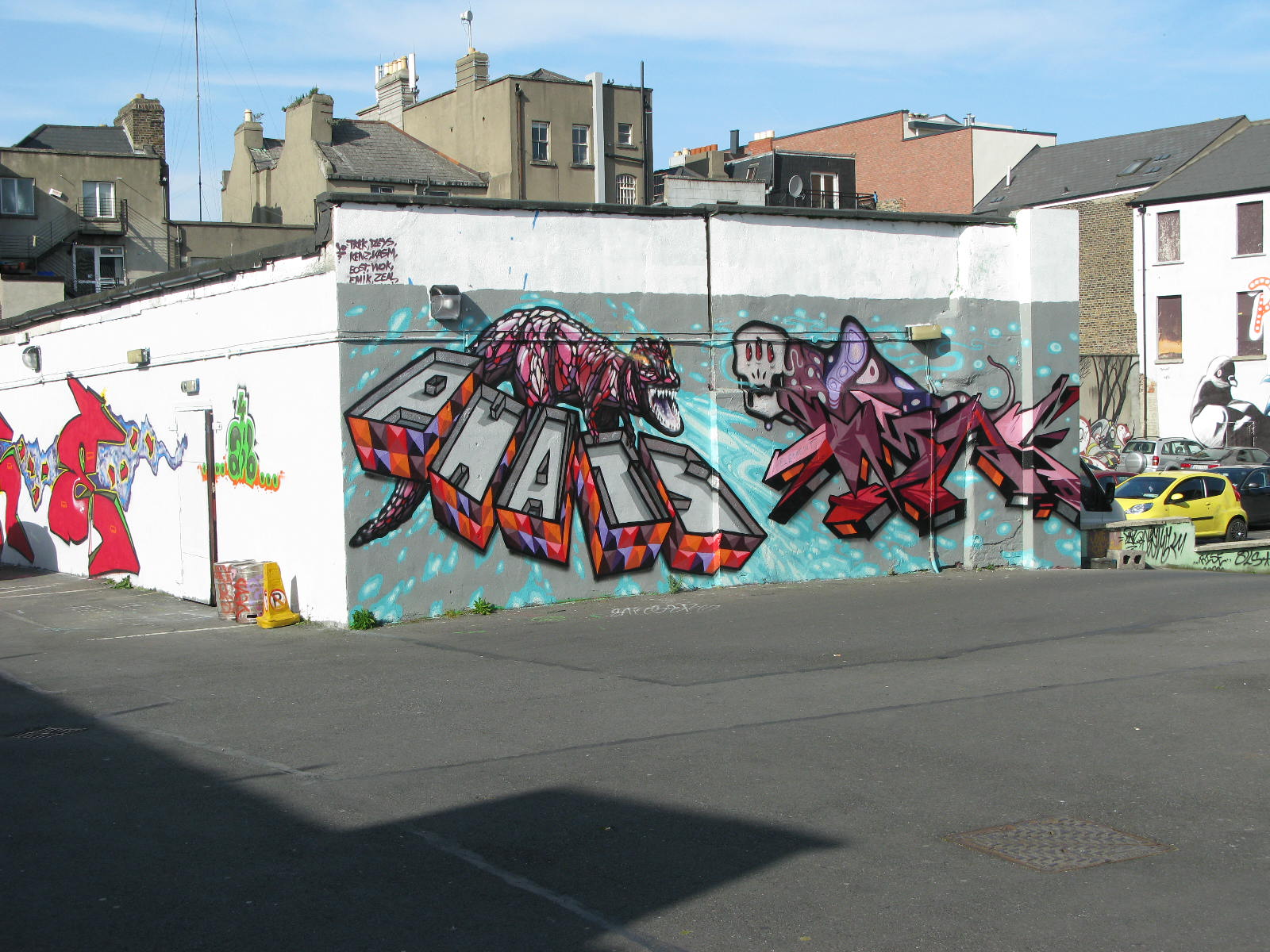
Its a scary thought,  but its almost two years since I went down to the Tivoli Theatre carpark to check out the art on display. I ventured down during the week to have another look and wasn’t disappointed. The results of the annual All City Easter Jam, and its coming up to that time of year again. Details of the event can be found here and the Facebook event is here.

(more…)

Read Full Post »

Unceremoniously swiped from the excellent balls.ie this. Someone obviously took inspiration from RTÉ’s recent screening of “Knuckle,” an insight into bare knuckle boxing the Irish travelling community and decided to throw up a dedication to Big Joe Joyce on Leeson Street Bridge.

Update: Apparently it’s been there for months. Ah well, just goes to show you the gems this city is hiding!

Read Full Post »

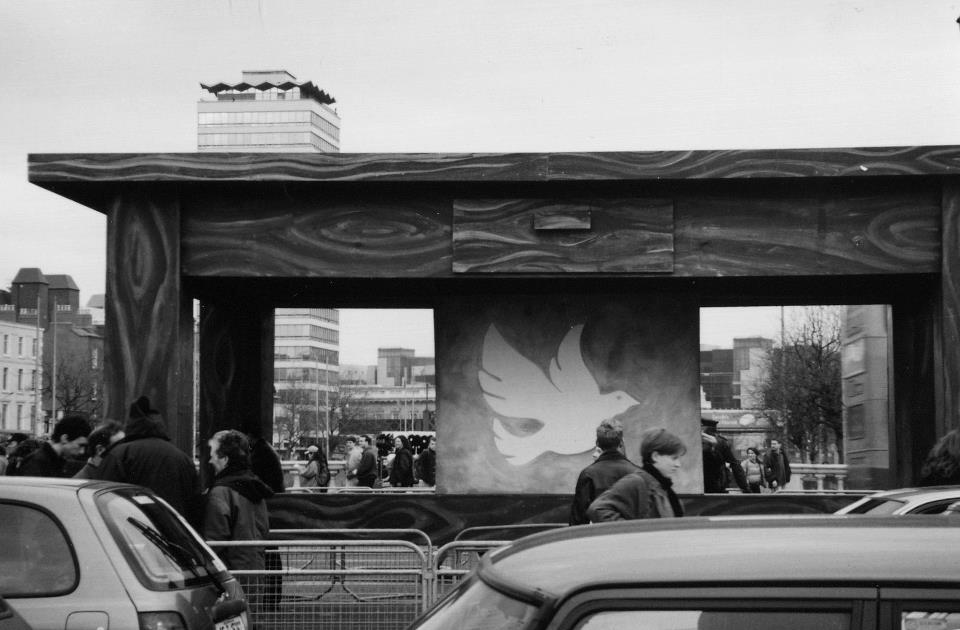
An interesting image and quote this. The Table Campaign was founded in 1996, around the time of the IRA’s shattering of the 17 month ceasefire, with the Canary Wharf bombing on 9th February that year.

The concept was to set up a load of tables on O’Connell bridge and invite people passing by to sit down and discuss what peace should look like at those tables. There was some Sinn Fein involvement and they argued for a giant table as a striking press image. On the day of the event however all that appeared was a giant table, maybe 3m high, far too high in the air for anyone to sit at, dominating the bridge. The lesser tables for the ordinary people to sit and discuss what a popular peace process might look like did not appear. Symbolic, if perhaps accidentally, of the process as a whole where the rest of the population were limited to the role of watching the drama around the big table at Stormont.”

Thanks to Andrew Flood for the image and accompanying quote.

Read Full Post »

The Dublin skyline outside my window earlier this evening. Beautiful… (Apart from the Civic Offices on Wood Quay of course.)

Read Full Post »

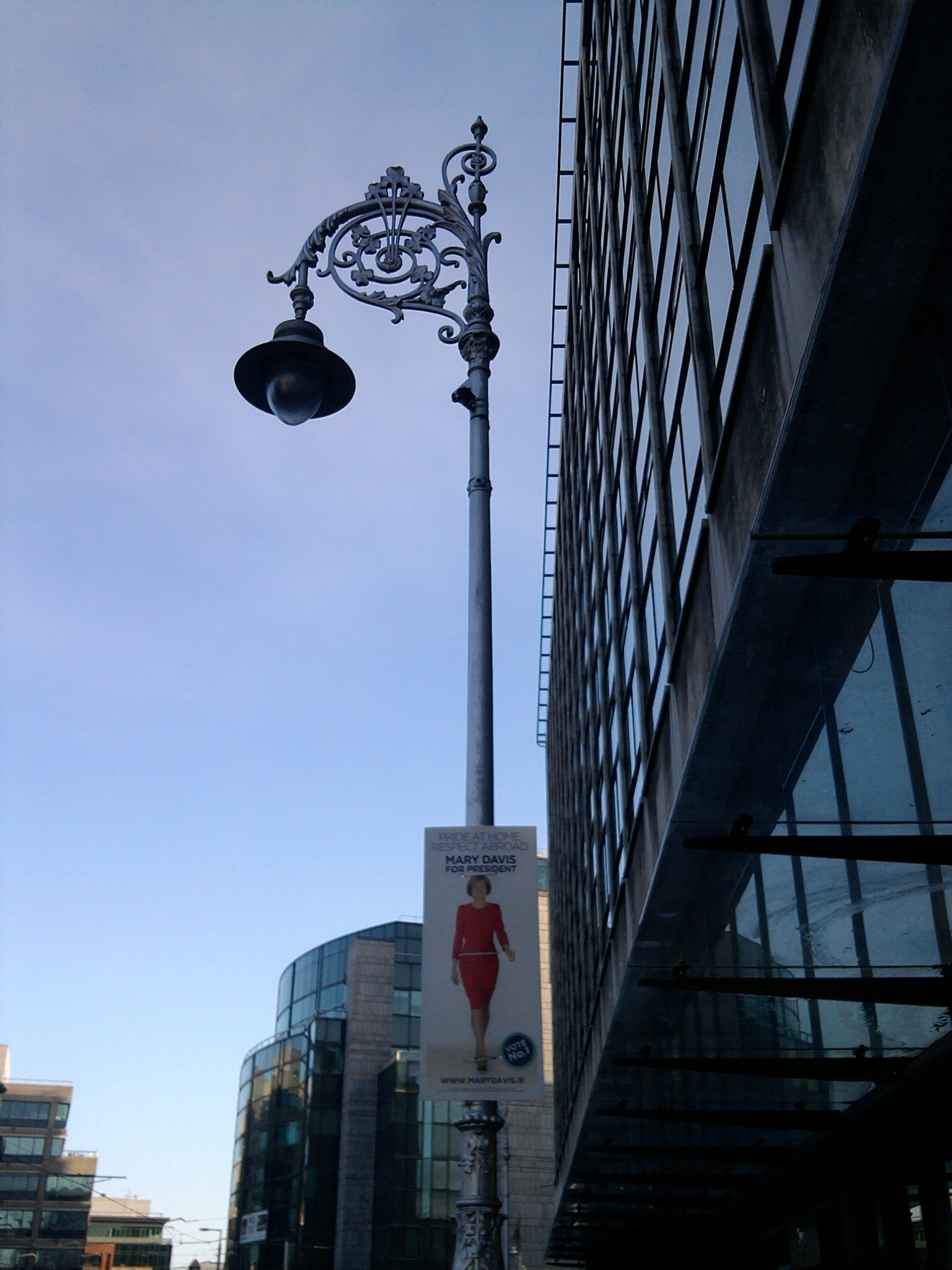
Six weeks later and yer one from Legally Blonde is still hanging about on lamp-posts… Really?

Oh Mary...

Read Full Post »

Its been a while since I’ve done one of these posts. Normally I take a load of snaps in one afternoon and pick out the seven or eight that stand out the most. I haven’t done so in the last while but I have managed to cobble together a few pictures I’ve taken over the last couple of weeks for a post anyways.

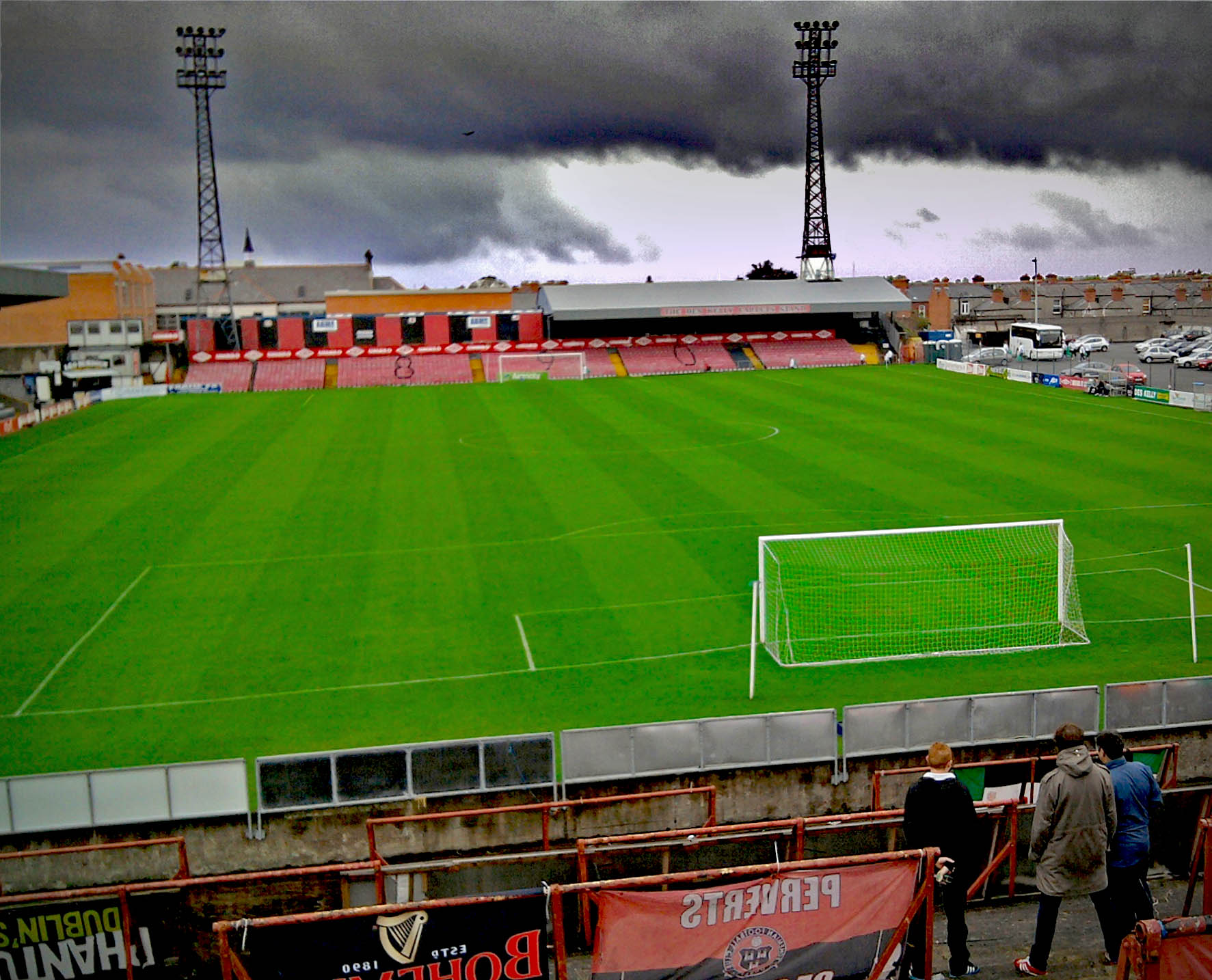
Below is a picture I took whilst putting up flags pre-game a couple of weeks ago, I think against Sligo. Obviously I’ve photoshopped it ever-so-slightly, but I like the contrast between the pitch and the dark clouds on the horizon. Arty.

Dark clouds over Dalymount

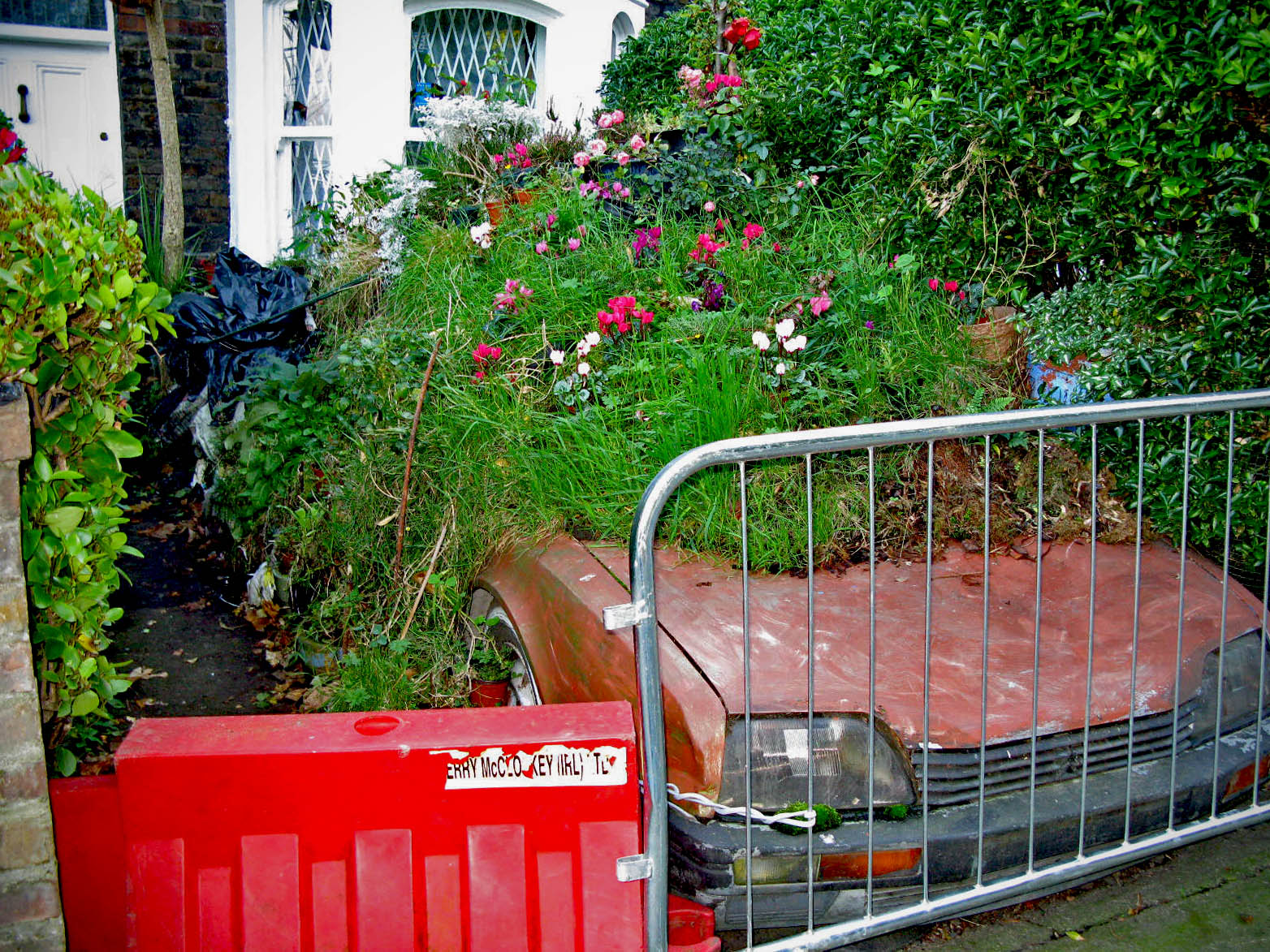
Below is a mad spot on the way home from work the other day. Anyone who can tell us where this is wins a date with your choice of CHTM! author at a venue and date of your choosing. You’re paying though.

There's a car under there somewhere

(more…)

Read Full Post »

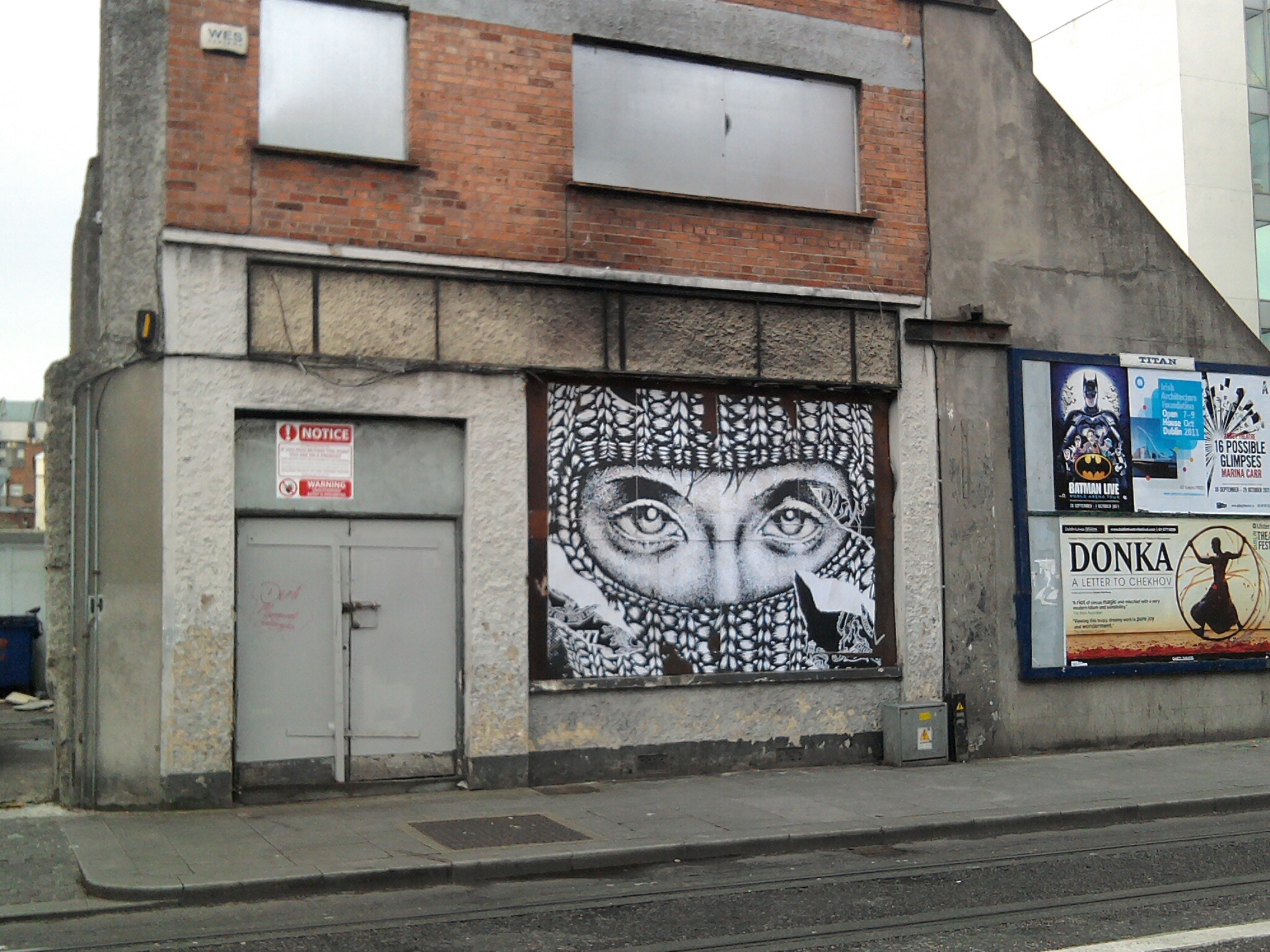
Spotted this morning next to the Jervis Street Luas stop. Pretty sure it wasn’t there yesterday but then again, I hadn’t had my morning coffee when I walked past the spot then. I’m of the opinion things like this brighten up dreary canvasses and make this city a more interesting place.

Spotted this morning

And yet someone has had a go at it already…

Read Full Post »

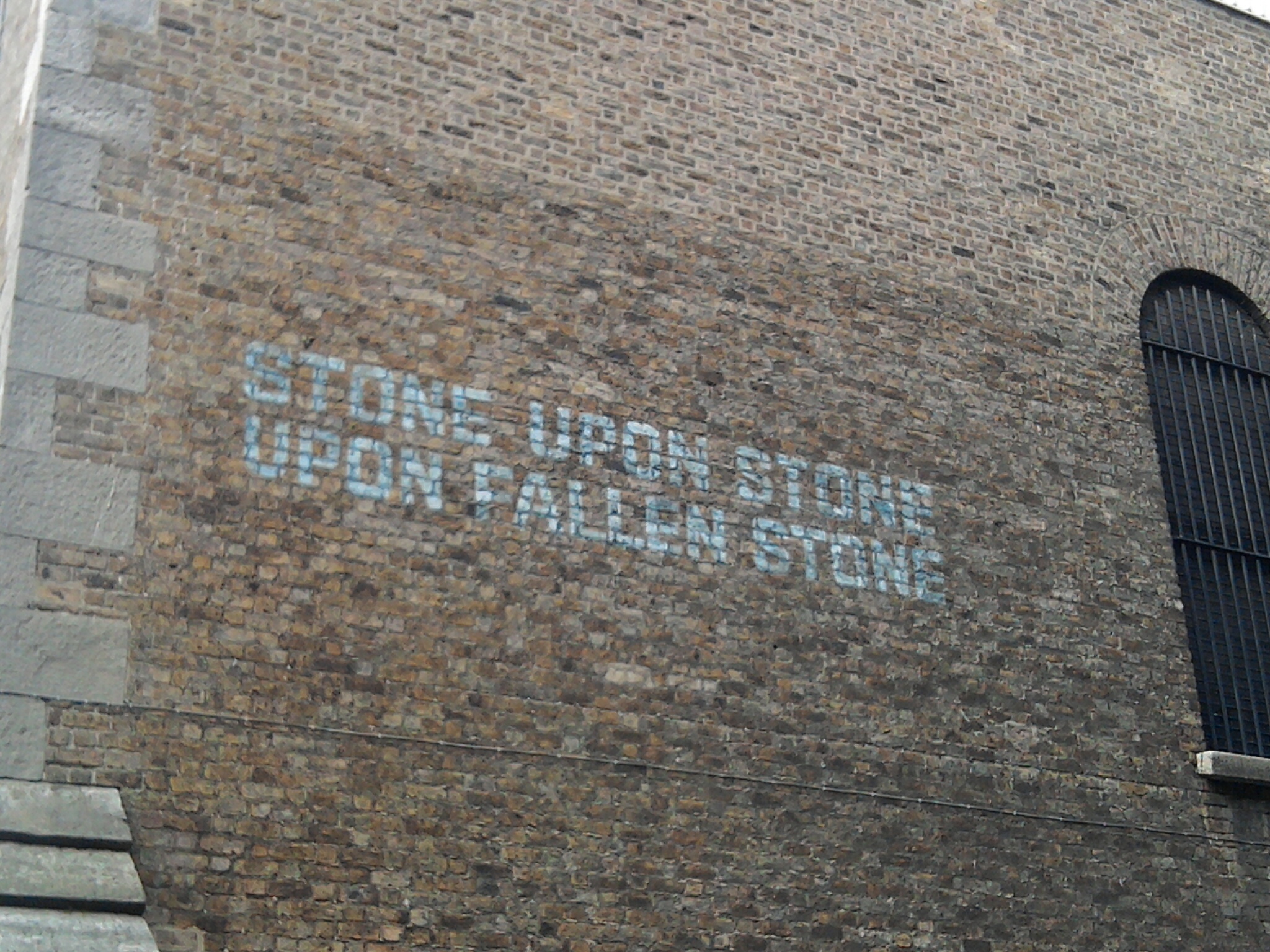
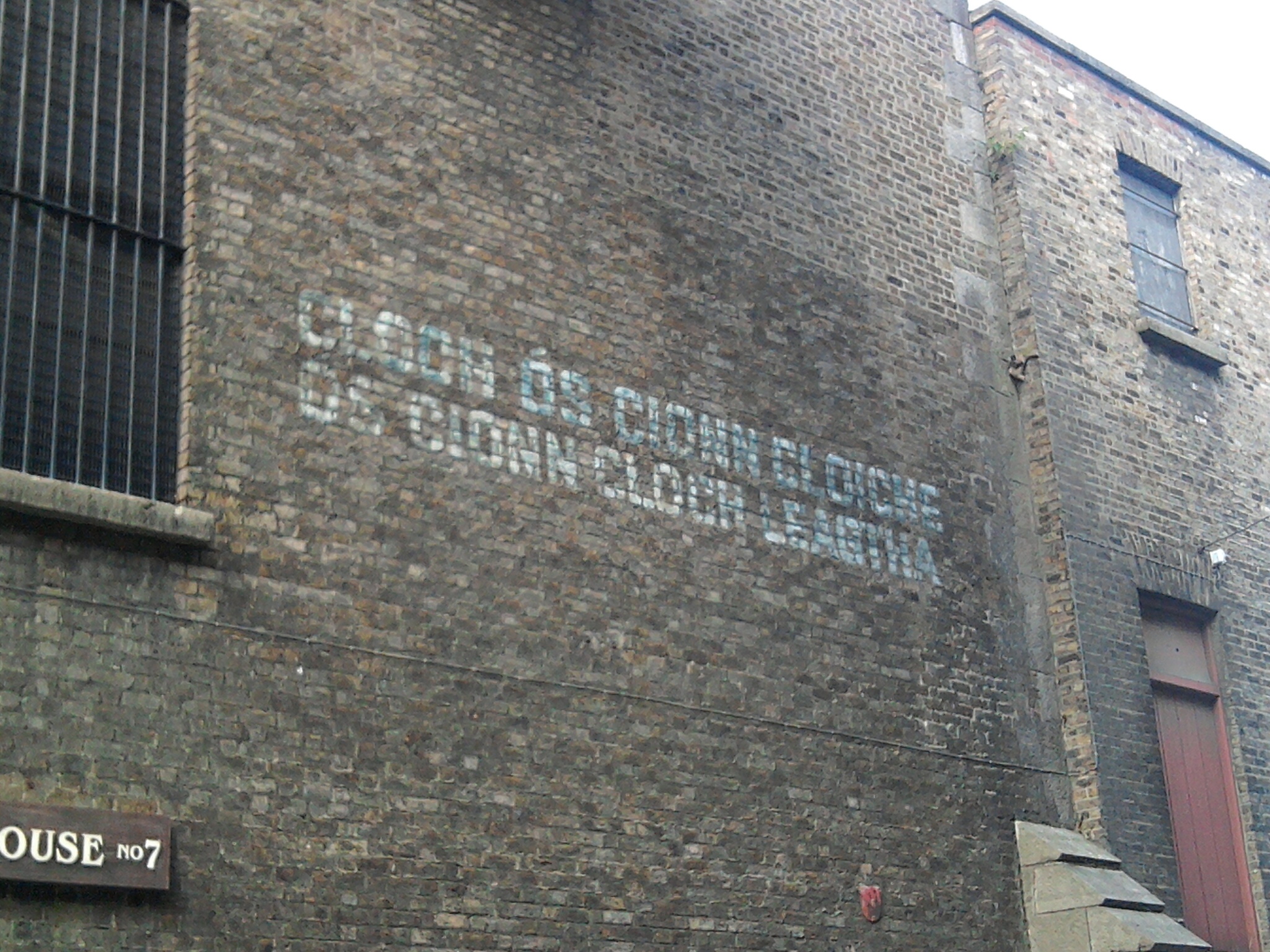
Its a pity, but we rarely get grafitti “i nGaeilge” in this city. Its even rarer to have grafitti in our own native tongue created by someone whose native tongue it isn’t. Below are two shots taken on the corner of Rainsford Street and Crane Street, in the bowels of the Guinness brewery, an area that, unless showing tourists around,  few city dwellers get to explore.

Stone upon stone upon fallen stone

A bit of research into whose the piece was, (i.e. typing the words into Google and hitting search) brought up the name Lawrence Weiner, a conceptual artist from the Bronx, who in his Declaration of Intent in 1968 stated his mantra:

1. The artist may construct the piece.
2. The piece may be fabricated.
3. The piece need not be built.

Each being equal and consistent with the intent of the artist the decision as to condition rests with the receiver upon the occasion of receivership.

Some of his work was part of an exhibition in the IMMA circa 2008, but either this piece has ages very quickly or it has been around a lot longer than that. Judging from his other work, its his first venture outside the English language too! Either way, its a bit of a curiosity.

Cloch ós cionn cloiche ós cionn cloiche leatha

A list of his work can be found here, though I’m of the opinion the above is his best:

http://radicalart.info/concept/weiner/

Read Full Post »

« Newer Posts - Older Posts »