Feeds:
Posts
Comments

Archive for the ‘Social History’ Category

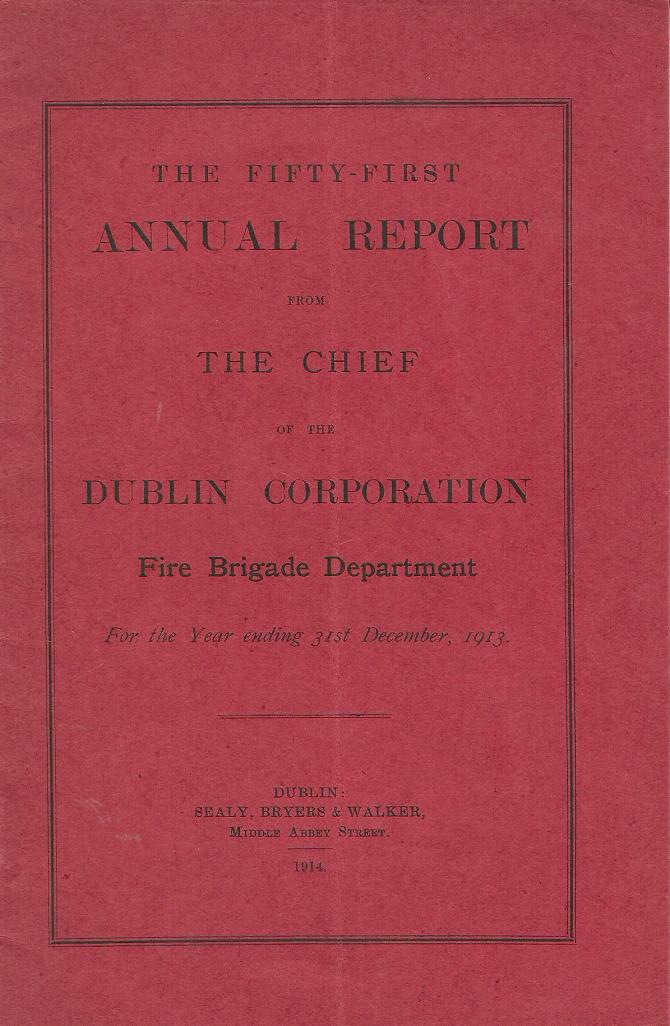
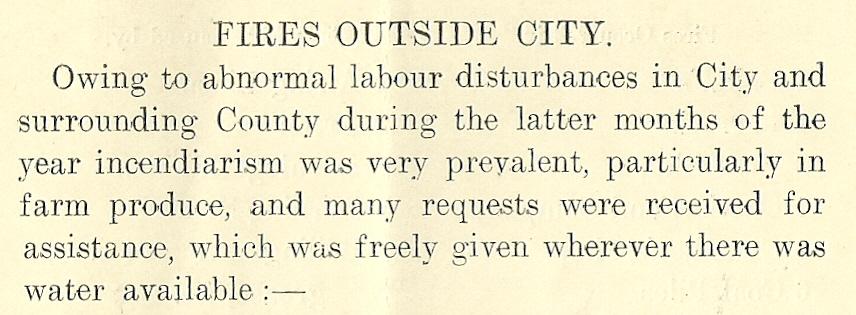
Below are some scans from the Annual Report of the Dublin Fire Department, as the service was known, in 1913. It details the work carried out by the fire service in 1913. The scans below offer some interesting insight into what was going on in the city at the time.

The report is signed off Thomas P. Purcell, Chief Officer. It was concluded on March 6th at Central Station,Tara Street.

(more…)

Read Full Post »

This quote is not in relation to last week’s police violence at the student demonstration but instead is taken from The Irish Times editorial of May 14, 1968. It is in reference to a Garda baton charge on 50 supporters of the Dublin Housing Action Committee, most of whom were students, outside City Hall the night before. The attack left three protesters needing hospital treatment.

The baton-charge on City Hall was the start of one of the most eventful weeks, in one of the most eventful years of radical student politics in Dublin.

A couple of days after, Gardai attacked around a dozen members of the left-wing group The Internationalists, outside Trinity Library, who were protesting against the visit of the Belgian King and Queen. The violence was prompted after the police took exception to the student’s banner which read ‘Lumumba – Killed by Belgian Imperialism’.

The sight of police beating students on campus along with the uninformed press coverage that followed prompted an almost spontaneous demonstration against police brutality. Over a thousand students marched on Pearse Street police station the day after. (This has to be one of the biggest anti-police brutality marches in Dublin’s history). After reading out a letter of protest, they marched on the Independent House on Middle Abbey Street to voice their anger at the way the Evening Herald covered the story.

The newspaper reports show an eerily similar rundown of events to what happened at the student protest last week.

“… a group of peaceful demonstrators, including students, were carrying on a picket when, without provocation, Gardai moved in and physically manhandled them. Many of these Gardai were without visible identification numbers. In the ensuing fracas is (sic) seems many Gardai used methods which would justify the use of the term ‘police brutality'” – Mr. Alan H Matthews (President, TCD SRC). The Irish Times, May 14, 1968 (Note: Alan is now a Professor of Economics at TCD)

“… But there are too many accounts by reliable witnesses of acts of unnecessary roughness and sometimes brutality by individual guards to make the most recent complaint seem frivolous” – Editorial, The Irish Times May 14, 1968

“Later in Grafton street students were again manhandled. We deplore as police brutality this needless use of force involving the striking of students and onlookers. We must further protest at the inaccuracy of the press reports.” – Labour Party, TCD. The Irish Times, May 16, 1968
 

If anyone has photographs or memories from this period of student protests, please get in touch.

These two articles may also be of interest:

+ A brief look at UCD’s radical history from 1968-70; The move to Belfield and the ‘Gentle Revolution’.

+ One activist’s account of student politics in TCD in the 1980s; http://anarchism.pageabode.com/andrewnflood/dublin-student-activism-tcd-1980s

Read Full Post »

It’s a rare occurence these days that I stay in Dublin on a Saturday night and am still able to get up bright and early on the Sunday morning. Having spent yesterday in a dark basement singing/ screeching with a guitar strapped to my back,  drinking someone elses beer (cheers Chris lad,) I decided to take a stroll around the city and take a few pictures, it being a lovely morning and all. A guesstimate on Google Maps afterwards worked out at 7.8 kilometres. Not bad for a mornings work.

Dublin on a sunny Sunday morning. Nowhere in the world comes close.

All the threat of floods, gale force winds and rain seem to be out by a day or so, there was no sign of it on my adventures…

Hadn't seen these before, up there with the new Bertie ones.

Political stickers are making a resurgence in Dublin, it makes for a change, lampposts that were once covered in stickers from obscure Eastern European Ultras groups now sport piss-takes of Bertie, Brian Cowen and the rest…


I love this one, from around the back of Shebeen Chic.

(more…)

Read Full Post »

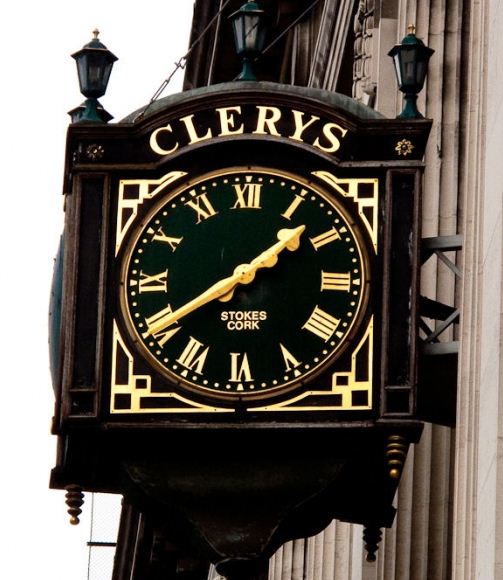
It is said that countless country folk have used it as a rendevous point, and that thousands of relationships, amorous and otherwise have been formed under it. Phillip Chevron of The Radiators even wrote a song about it. As landmarks go, it’s pretty, though rather unimpressive, but the saying “I’ll meet you under Clery’s Clock ” has been coined for generations.

The spot of many a life changing moment; Clery's Clock

Clery’s is an integral part of the social history of Dublin, as much as it is the actual history. It’s ties with the Imperial Hotel and the Martin Murphy empire, the lockout of 1913 and Jim Larkin, and the events of Easter week in 1916 are irrefutable. It was the scene, as has been mentioned here before, of Jim Larkin’s arrest for addressing the crowd at a rally from the upper balcony of the building while dressed in a priests robes and a fake beard.

But as I said, there is an important social history to be told about the building, and Media Arts Student Sinead Vaughan is looking for people to tell it. I came across this plea for help this morning while browsing the Dublin City section of boards.ie and thought it an excellent idea. So anyone with a story about meeting there, or especially anyone who was at the unveiling of the new clock in 1990, contact sineady_vaughan@hotmail.com

Read Full Post »

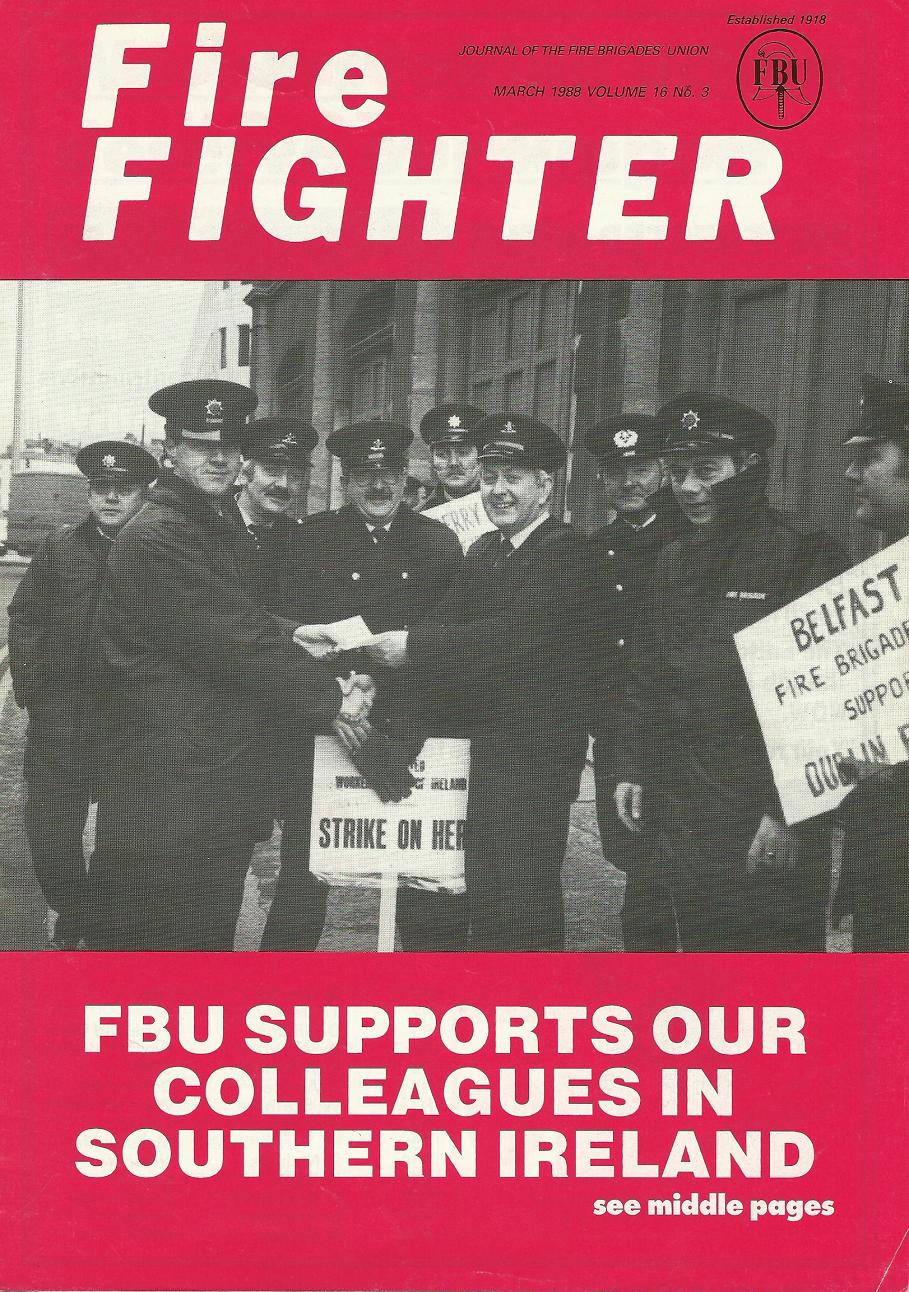
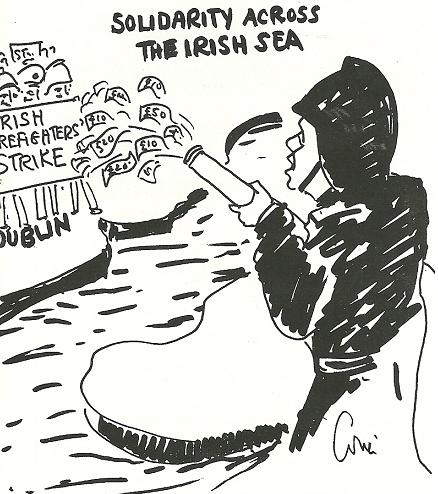
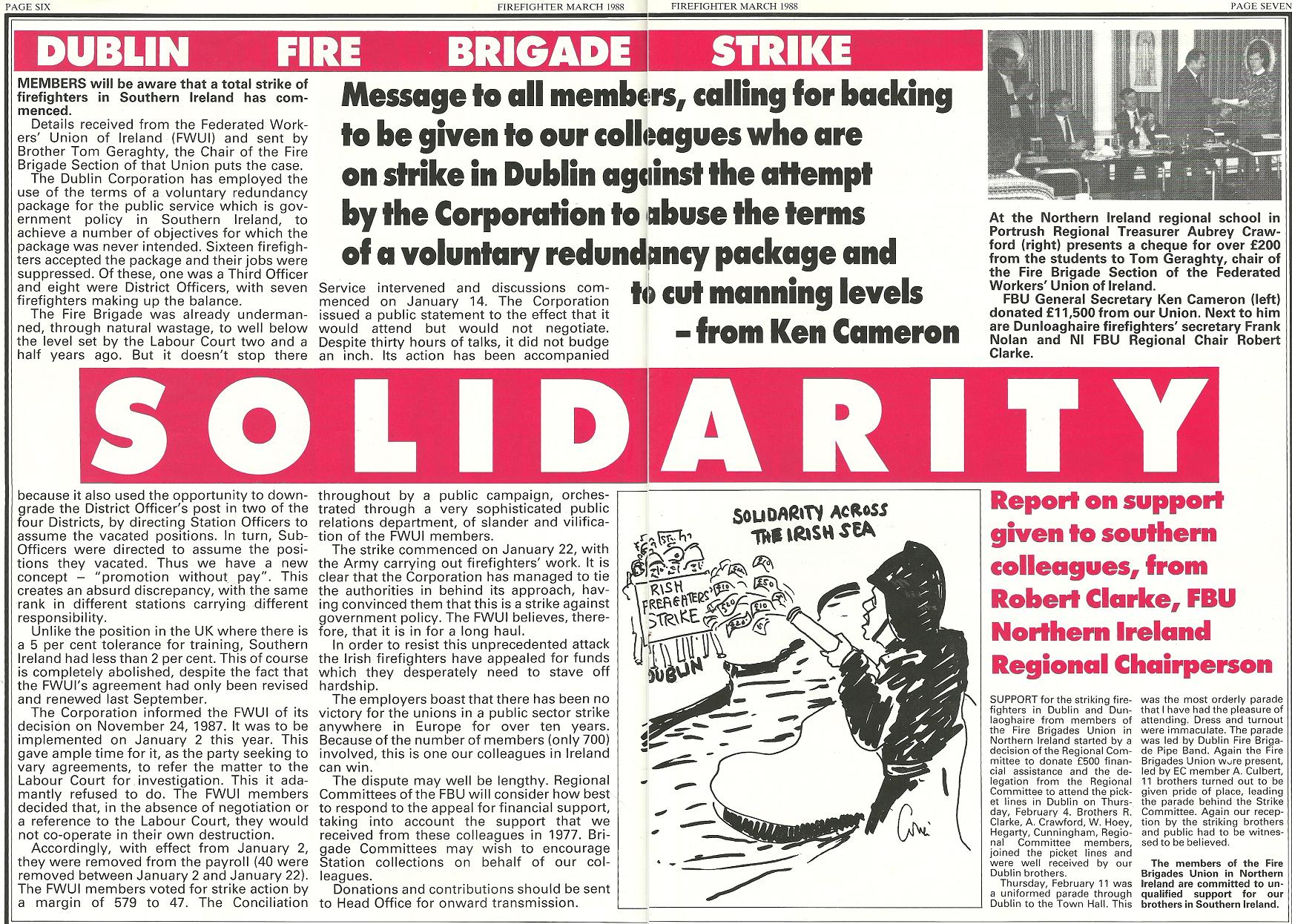
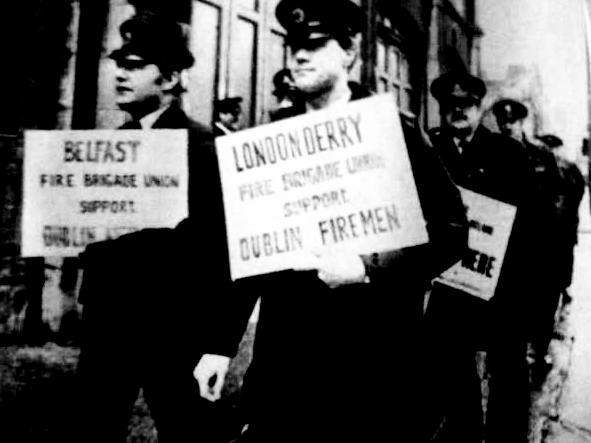
Firefighters in London have been in the news recently as a result of industrial action against savage attacks on their working conditions. These scans come from the magazine of the FBU,Firefighter, during the 1988 dispute in Dublin. It is a show of solidarity from the UK union to the Dublin firefighters. I have also scanned up an image from the strike, showing a ‘Londonderry FBU’ placard on the streets of Dublin. At a time of political tension in the six counties, firefighters there ignored sectarian divisions and supported their Dublin colleagues. With events in London, this is a timely reminder of what international support can mean to a strike. It has never been scanned online before.

Read Full Post »

“Luke (Kelly) also opened our eyes to the working class songs from the north of England. Songs that we never knew existed before. The geordie songs. The songs of the miners….”

One of my biggest regrets of the summer just gone is missing the excellent Frank Harte Festival, a tribute to one of the cities greatest singers, the late Frank Harte. He was raised only a stones throw from me in Chapelizod. There, his father ran the public house ‘The Tap’. Frank, an architect by trade, was not alone an unrivalled singer but also a collector of songs.

“The thoughts of a song dying with a singer or lying in a book or a tape on a shelf gathering dust fills me with horror.” So wrote Frank in his introduction notes to his timeless ‘Songs of Dublin’ collection.

Singing Voices was a collection of five broadcasts Frank did for RTE. We’ve only stumbled across them here and they all make for excellent listening. I hope you enjoy them as much as I have.

Songs of work and social protest – The Labouring Voice

Famine Songs – The Hungry Voice

Songs of the capital city – The Dublin Voice

Songs of Emigration – The Irish American Voice

Traditional singing styles in Ireland – The Singers’ Voices

They can be played over here, on the RTE site.

Also, here are two tunes from Frank I had uploaded months ago with the aim of sharing with you to promote the festival. The Shan Van Vocht is a song dealing with the 1798 rebellion, while Building Up And Tearing England Down is a well known song about Irish emigrants in England.

Shan Van Vocht by Frank Harte.

Building Up And Tearing England Down- Frank Harte

Read Full Post »

“At first my only reaction was horror that Irishmen could commit such a crime against England. I was sure that that phase had ended with the Boer War in which father had fought, because one of his favourite songs said so:

You used to call us traitors because of agitators,
But you can’t call us traitors now.”

But the English were calling us traitors again, and they seemed to be right”

From Frank O’Connor- An Only Child.

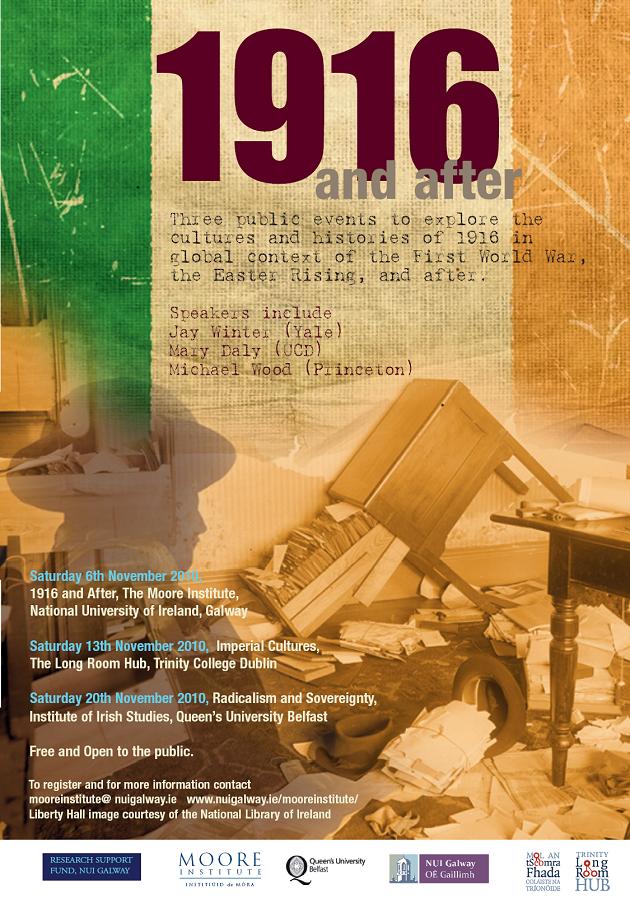
This upcoming series of talks on the 1916 rebellion is interesting in that it is not geographically limited to the capital, but includes events at NUI Galway and Queens University Belfast. The event in Dublin, at Trinity College Dublin, will focus on ‘Imperial Cultures’. I will be on hand to provide a brief walking tour of some key sites to those attending the event. It is free to the public, but you’re requested to register in advance.

If you are attending, or are interested in the rebellion, perhaps these Come Here To Me pieces will be of interest to you:

This 1966 Irish Socialist booklet on the rebellion includes a number of rare articles.

How They Saw The Rising. The words of British Soldiers, Anarchists, Novelists, Poets, Medical Students, Revolutionaries and Daughters.

Sean Connolly plaque launch report. Includes audio and images from the launch of a plaque to Sean Connolly and his siblings, as well as Molly O’ Reilly.

Another perspective on the rebellion, from a Sherwood Forester who witnessed a friend “..shot through the head leading a rush on a fortified corner house”

The Thomas Weafer plaque on O’ Connell Street, so often overlooked.

The Pearse Street Fire Disaster. This article includes some previously unpublished images. Volunteer Robert Malone died in this fire in 1936.

Jennie Wyse Power’s shop on Henry Street is a unique plaque frequently overlooked.

The Teachings Of Patrick Pearse pamphlet from 1966 is interesting. It is the work of A. Raftery.


“James Connolly- Murdered May 12th 1916”

A familiar sight to Dubliners inside Dublin Castle ,a key site of the rebellion, frequently missed by the visiting eye.

The Yiddish election leaflet of James Connolly (1902)

An interesting piece on the Dublin home addresses of James Connolly.

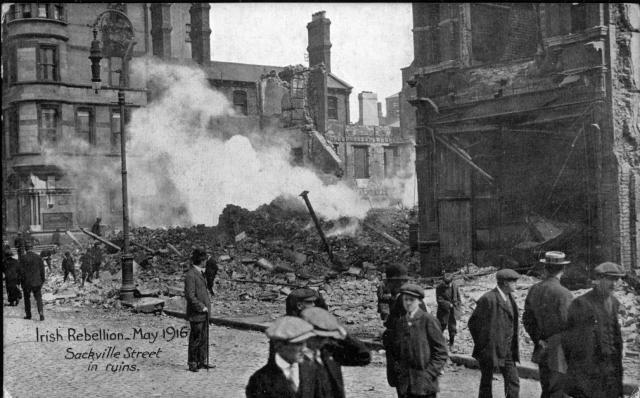
Sackville Street.

Read Full Post »

I love going through items relating to the family history, and this is an interesting piece from my grandfather on my mothers side. It’s an Irish ex-servicemen’s card from the Guinness brewery. My grandfather, A/Cpol. Philip Tierney, served as a military policeman during the ‘Emergency’. His reference signed by his commanding officer,Capt. Edward Cassidy, notes that “The a/n (above named) has served in the Military Police Service since 29/8/1941 and has been directly under my command for the past two years. During that time he has proved himself an excellent Police-man, diligent, and thoroughly concientious in the performance of all duties assigned to him. He is of excellent character and familiar with all aspects of Police duty.”

The ‘ex-servicemen’s association’ in the brewery was comprised of those who had served with the British army, while after the second World War in light of the vast numbers of men who served during the ‘Emergency’, the creation of this association came about. It seems to have been short lived. It is an unusual piece of Guinness history.

On a personal note, it’s pretty cool to know where my grandparents were living at the time (Philip Tierney is listed as having lived at 43 Camden Street). With granny coming from Cornmarket, and her mother the same, we’ve remained true to the southside. They later moved to Ballyfermot.

Read Full Post »

To those who missed it last week, you have till November 1st to watch this fascinating documentary about the murders of two Jewish men in Dublin in the early 1920s.

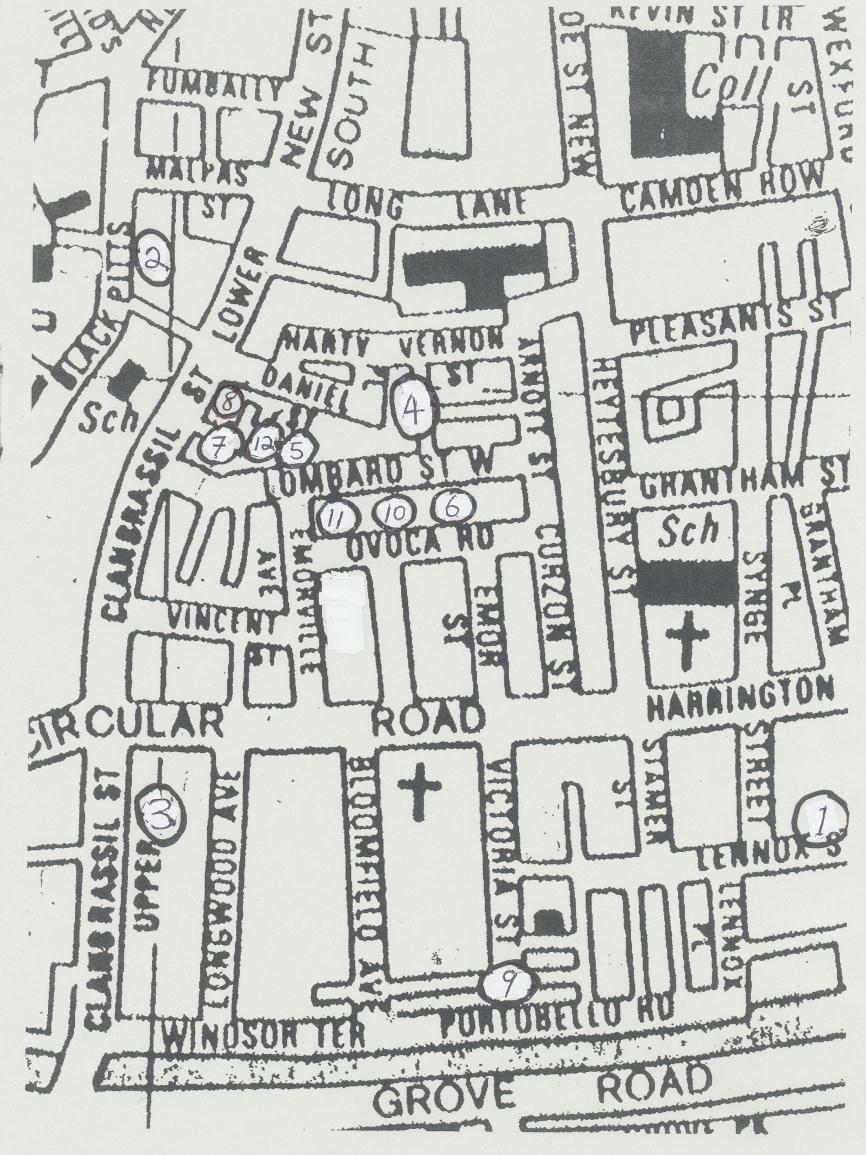
Even though the Dublin of 1923 was a troubled place, recovering from the war of independence and the very recent civil war, the city was shocked by a spate of murderous attacks on Jewish men walking home to the area off the South Circular Road, known then, as “Little Jerusalem”. Bernard Goldberg, a 42 year old jeweller from Manchester and Ernest Kahan, a 24 year old civil servant in the Dept of Agriculture, were attacked and shot dead. Within the space of two weeks, two Jewish men had been shot dead and two more had been badly injured – the tightly knit jewish community in Dublin now feared the worst – that this was the beginning of a cold blooded anti-semitic campaign.

Despite extensive Police investigations – the killers were never found.

This is a story of intrigue, mystery, scandal, divided loyalties and cover up. For over 80 years the details of the story have remained shrouded in secrecy. For the first time on television CSÍ will piece together what really happened. Who the chief suspects were and what happened to them. And we uncover the trauma that the murders inflicted on the families of those left behind, trauma that ripples on to this day.


Map of Dublin’s “Little Jerusalem” (Adapted from Educational Jewish Aspects of James Joyce’s “Ulysses,” 5)


Read Full Post »

A History of the City of Dublin, Volume Three (1859) by John Thomas Gilbert (1829-1898) describes, in passing, a dramatic sounding story involving the “notorious” Catherine Netterville and her lover “Mr. Stone of Jamacia” who killed himself in Netterville’s Grafton Street mansion.

John Thomas Gilbert, A History of the City of Dublin, Volume 3 (Dublin, 1859), p. 221

Who was Catherine Netterville? Why was she “notorious”? Who was her insane Jamacian lover Mr. Stone?

The book The Pursuit of the Heiress: Aristocratic Marriage in Ireland 1740-1840 offers a little background to the Netterville family namely that Catherine Netterville (1712-84) was the daughter of Samuel Burton (1687-1733) of Burton Hall, Co. Carlow.

A. P. W. Malcomson, The Pursuit of the Heiress: Aristocratic Marriage in Ireland 1740-1840 (Belfast, 2006), p. 12

I then was able to find out that Catherine Netterville married Nicholas, 5th Viscount Netterville who died in 1750.

Sir Bernard Burke, A genealogical history of the dormant, abeyant, forfeited, and extinct peerages of the British empire (London, 1866), p. 392

After that, the online trail went dead. I quickly found out why. Catherine Netterville also has been referred to as Katherine.

The story then begins to unravel. It would appear that Catherine (Katherine), in her later life, was a famous Dublin prostitute.

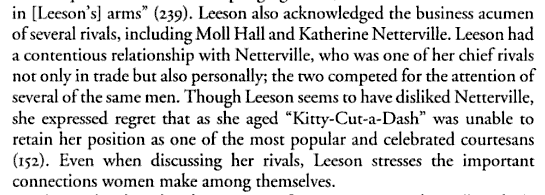
In describing the rise of Margaret (Peg) Plunkett (a.k.a Mrs. Leeson), “the best-known brothel-keeper of eighteenth-century” Dublin it is said that she outmanouvered “established women like Katherine Netterville, alias Kitty ‘Cut-A-Dash'”[1] and Netterville has been described as her “earliest rival”[2]

Kirsten Pullen is able to describe in more detail, the relationship between Mrs. Leeson and Katherine Netterville:
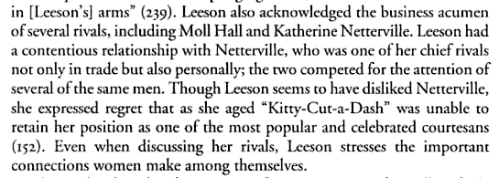
Kirsten Pullen, Actresses and whores: on stage and in society (Cambridge, 2005), p. 78

So, I think I’ve discovered why Mrs. Netterville was described as “notorious” but who was Mr. Stone? If anyone has any information, do leave a comment or email me.

==

[1] Unknown, Irish economic and social history, Volumes 31-32, 2004. Available here.

[2] Margaret Leeson, The memoirs of Mrs Leeson (Unknown, 1995) ed. Mary Cecelia Lyons, p. xiii

Read Full Post »
Last night myself and hxci popped down to the They Are Us exhibition for a looksie, and to support an excellent cause. Getting there at 5.15 or so, we were well ahead of time and ended up carrying sambos up the stairs with a woman who told us “you’s will get your reward in the next life lads”.

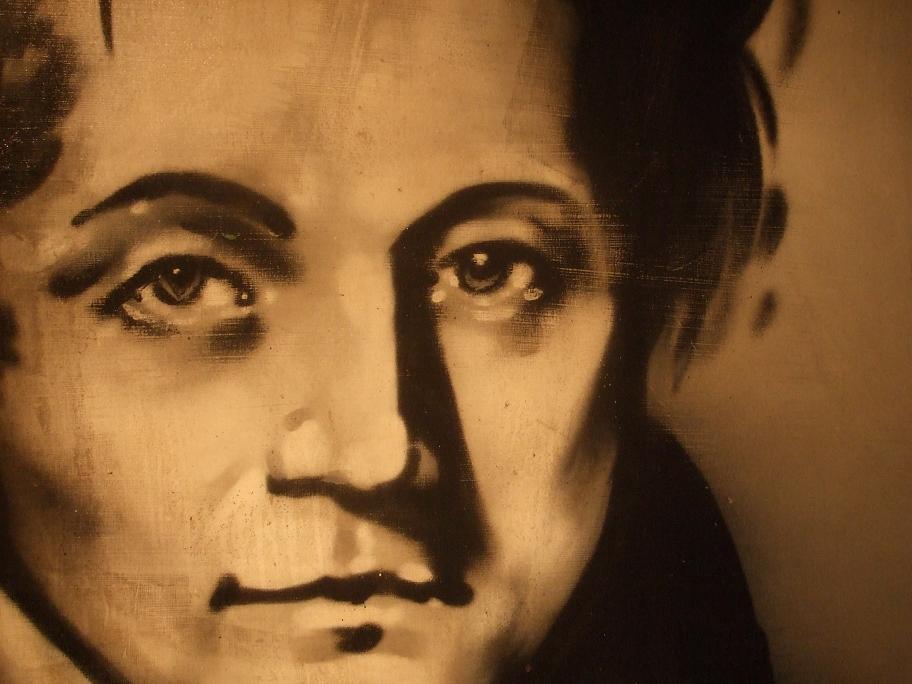
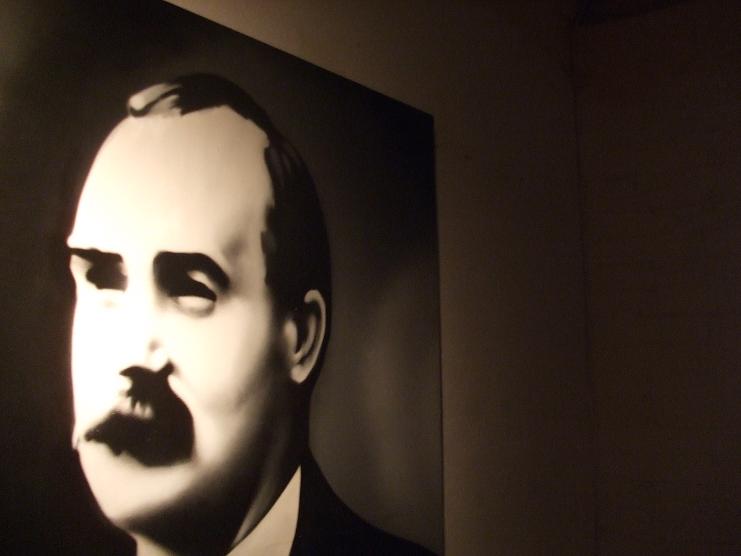
We got a sneak peak on this trek up the stairs however, and a huge image of James Connolly which dominates the first room of a three room exhibition had us dying to see more. We resisted, and went to The Cobblestone. Oisin, a friend who completed the trio, went for a wander around the exhibition like a child who finds all the presents on Christmas Eve. He then came to the pub and told us all about it.

Enjoy the snaps, but get down to the exhibition in Smithfield. The aim is ambitious, €30,000 for the Simon Community. You can pick up one of the four prints you’ll see below here for €25, or €50 signed. It runs tomorrow, and more details are available on the site here. Lets hope they make the €30,000, and the rest.

(more…)

Read Full Post »

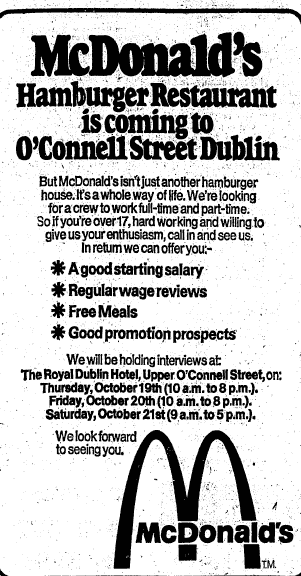
I’m addicted to newspaper archives. From The Times to The Indo and a number of rural papers too, I could spend hours browsing. Sometimes, it’s not the articles that grab your attention but the ads instead. The one above is a classic, and below I’ve added three more. The guinshops are a long gone part of the city, and the rest grabbed my attention for various reasons. I’ve previously scanned up a few from old newspapers I have at home, and there are plenty more on the way.

(more…)

Read Full Post »

« Newer Posts - Older Posts »